

Friday, December 12, 2014
Listen up, Foothills folks—there’s a new dining option for you. The team behind Union Public House is opening a Mexican joint near their other restaurant on Sunday, Dec. 14
Located at 4340 N. Campbell Avenue at St. Philip’s Plaza, the restaurant will try to bring the cosmopolitan vibe of Mexico City and Guadalajara to Tucson, according to owner Grant Krueger.
“Think of it like a cross between Café Poca Cosa and Penca,” Krueger says. “But with a much better patio.”
Chefs Patrick Malarchik and Edward Dick of Union Public House will be heading the kitchen, which aims to make literally everything from scratch. That means the team will be buying corn and grinding it down to make their own masa for corn tortillas. The restaurant will also feature front of house salsa and flour tortilla preparation for your viewing pleasure.
Krueger says some of his favorite dishes on the menu include the pato ($22) with guajillo duck confit, chorizo, plantain, and housemade mole poblano as well as the carnitas ($19), which are braised with Mexican lager and paired with pickled jalapeños. He also says to expect more seafood than you might be used to with Sonoran cuisine.
In terms of imbibing, the bar boasts 229 tequilas and mezcals, as well as eight draft brews and 40 wines. Bartender Dylan Higgins, who is a sommelier, will be running the bar program, which features fresh juices and, of course, a paloma. Discounted drinks and food will be available during the “hora feliz,” which runs daily from 3 until 6 p.m. and again from 10 until 11 p.m.
Reforma Cocina will be open daily from 11 a.m. until 11 p.m. beginning Sunday, Dec. 14. For more information, visit the restaurant’s website.
Tags: reforma , cocina , cantina , grant krueger , union public house , tucson , mexican , upscale , central
Since the TUSD board passed a $4.4 million package of pay raises Tuesday, I've been bothered by the way the money was divided among TUSD staff, because teachers got a significantly lower percentage raise than administrators and classified staff (classified staff are, basically, everyone who's not a teacher or an administrator). Teachers got a $500 raise across the board regardless of their current salary. That means a beginning teacher received about a 1.5 percent pay boost while teachers near the top of the pay schedule got more like one percent. Everyone else, administrators and classified staff, got a 2.5 percent raise. A few people were excluded from the raises entirely, but for everyone else, that's how it worked.
Why did teachers get a significantly lower percentage raise than everyone else? That doesn't sit right with me, and based on what I've seen and heard in discussions on Facebook and elsewhere, it doesn't sit right with others either.
So I asked Superintendent H.T. Sanchez to explain the discrepancy in the raises, which he did in some detail. Since I wasn't a fly on the wall during the meetings where the raises were worked out and I don't claim to be an expert on district administrative matters (I was a classroom teacher, and I didn't pay a whole lot of attention to administrative stuff except when it affected me or my colleagues directly), I can't say whether the facts as he presented them give an accurate or complete picture of the process. So I'm going to summarize what Sanchez explained to me and leave it to commenters to discuss whether they think his explanation is adequate.
Sanchez told me the raises were negotiated with the unions representing TUSD employees: the teachers union, the administrators union and a few unions representing classified staff. No one was popping champagne corks when the deal was concluded — it's not a hell of a lot of money for anyone, especially since raises have been few and far between for years — but they all agreed to the deal.
The reason teachers got a significantly lower raise than the others, according to Sanchez, is because about 1,600 TUSD teachers had already benefited recently from fixes made to teacher salaries. There was a problem with salary compression. Some of the yearly step raises in the salary schedule were so small as to be almost insignificant, and those were increased. Also, some teachers who came into the district with previous experience ended up with higher salaries than TUSD teachers with the same amount of experience, and that problem was corrected as well. According to Sanchez, those salary adjustments — they can't be called raises since they didn't affect all teachers — added $5 million a year to the amount spent on teacher salaries. Neither administrators nor classified staff got similar adjustments.
Tags: TUSD , Pay raises , TUSD board , Superintendent H.T. Sanchez
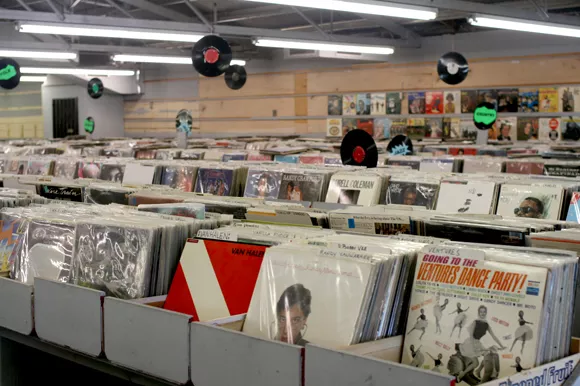
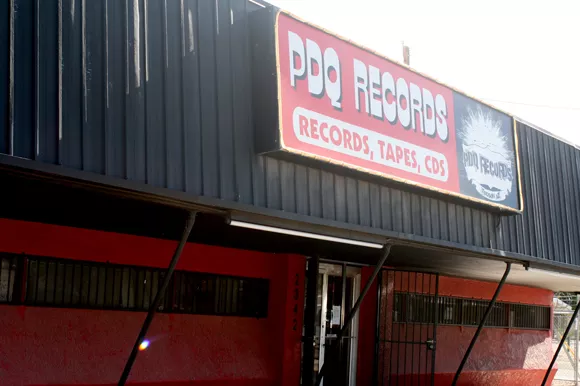
Take a very deep breath and try to remain calm, vinyl aficionados. It’s been four years since you’ve been inside PDQ Records off of Grant Road and Dodge Boulevard and it’s been nearly ten years since you’ve been in PDQ a la original owner Jack Grossi.
Well, PDQ is back under Grossi’s care and that means you have approximately one bazillion records to sift through this weekend. Seriously, I went in there and felt like Indiana Jones finding the Grail or the Arc or whatever else (not a crystal skull). No one’s seen these records for four years and they’ve been sitting there all sealed off in the closed down store just waiting to be bought.
That’s why manager Duane Miller is so excited to see PDQ, a store he worked at from 1994 until 2005 when it was sold to new owners, back in action.
“I really am just looking forward to getting this stuff back in circulation,” Miller says. “We’re here for the music enthusiast who wants vinyl.”
Although the shop has tapes and CDs, the vinyl selection really is staggering. Miller says it’s mostly full of great basics for any vinyl catalog with rock, soul, R&B, jazz, and country featured predominantly.
He says that in the future they may start buying newly released vinyl, but right now they’re focused on building up their rarities selection—the kind of stuff that makes real record store junkies go crazy.

PDQ Records is now open for all your buying and selling vinyl needs Wednesday through Sunday from 12 p.m. until 6 p.m. at 2432 N. Dodge Boulevard.
Tags: pdq , records , vinyl , open , jack grossi , buy , sell , trade , Image
Thursday, December 11, 2014
In the latest episode of our cable access show, Education: The Rest of the Story, Ann-Eve Pedersen discusses the court decision against charter schools' suit to increase funding for charter schools and why charter supporters are incorrect when they say they receive less funding than district schools.
Tags: Education: The Rest of the Story , Ann-Eve Pedersen , Charter schools , Charter school funding. , Video
Diane Ravitch, education historian, author, former U.S. Assistant Secretary of Education, co-founder of Network for Public Education, will be speaking at University of Arizona, College of Education—KIVA room, 1430 E. Second Street, Tucson (parking available for free at 2nd street parking garage), 2:30-4:00 p.m.
Join us for a thought-provoking conversation about the current state of K-12 education with Dr. Diane Ravitch.A prolific writer, renowned researcher and one of the nation's leading public education advocates, Ravitch is the author of "Reign of Error: The Hoax of the Priatization Movement and the Danger to America's Public Schools," a New York Times best-seller. Jonathan Kozol describes the book as "a fearless book, a manifesto and a call to battle."
Last year Ravitch co-founded the Network for Public Education, a national organization to support public education as a cornerstone of our democracy, to elevate and defend the teaching profession and to protect children against the abuses of high stakes testing and data mining.
RSVP: Seating is limited, please rsvp by December 11, 2014 to
[email protected]
Tags: Diane Ravitch , Progressive education , Public schools
If you've been patiently waiting for the Cashew Cow Dessert Parlor to open its doors between tastes of their wares at the Heirloom Farmers Market, the wait is nearly over. On Monday, Dec. 15, the ice cream like dessert purveyor will start serving up scoops of the cashew-based iced dessert at their new storefront.
The opening line-up flavors at the shop includes green tea, pumpkin, coffee, chocolate, vanilla, mint chip, and one surprise flavor to be announced.
Cashew Cow will open in just four short days at 16 S. Eastbourne Avenue. Until then, you'll just have to bide your time on So Delicious coconut milk ice cream if you're looking for a chilly dairy free dessert fix before then.
Tags: cashew cow , dessert , dairy free , vegan , tucson , ice cream , open

Alt-J fans likely fall into two camps: there are the ones that nearly destroyed their vocal cords when the band started playing “Breezeblocks” and there are the ones that jumped on the Alt-J train after “Left Hand Free” was released as a single.
There’s no reason to disparage the latter group and it has nothing to do with the single peaking in the top 10 for the U.S. rock charts. The song is intentionally insulting and once you know the reason behind it, it’s hard to even listen to the song.

In an interview with The Guardian earlier this year, the band explains that the song was written in about 20 minutes after their label told them the song that they wanted to be the new single wasn't going to cut it... Labels, am I right? What resulted was a song built on a “joke riff” that was the “least Alt-J song ever” and pretty much means nothing, as they insist in other interviews. What resulted was "Left Hand Free."
“I can imagine it appealing to American truckers with Good Riddance To Bin Laden stickers!,” singer Joe Newman said in the Guardian’s interview… Yikes.

So, you know, if you like the song, please continue to. I just thought you should know that they’re kind of making fun of us. If you can move past that, the number one thing you’ll notice about seeing the band live is that they’re one of the rare examples of live performances that sound studio quality every time.
Blending songs from An Awesome Wave and their newest release This Is All Yours, the crowd at Rialto Theatre last night seemed equally responsive to new and old tracks, even throwing up the requisite triangle during “Tesselate.” With heavy bass and lighter, more agile melodic elements, the band’s performance was funky enough to keep the crowd dancing throughout the set, but transitioned easily into the more delicate moments.
While starting with a one-two punch of the haunting “Hunger of the Pine” followed by the groovy, kind of creepy “Fitzpleasure” set the tone for the night, it seemed like the intense, cascading lighting was about as fun to watch as the band themselves, creating a strong visual component to accompany the sound. If you want to see a light show, they're the band to oblige.

Overall, the live set was pretty near flawless, but that doesn’t mean they even needed to play “Left Hand Free,” which they did do about fourth. At least they got it over with and we all got to see Alt-J headline a relatively intimate venue compared to their booked gig headlining Madison Square Garden next year.
Tags: alt-j , rialto theatre , tucson , live , review , left hand free , this is all yours , Image
Wednesday, December 10, 2014
I was hoping to find a fresh video of Nandi, the Reid Park Zoo's cute baby elephant, but had to settle for this clip of a Fennec Fox chasing after soap bubbles. But after the jump, you can see an older clip of Nandi splashing around in a pool, in case you missed it when it was first posted last month.
Don’t look for Southern Arizona Congressman Raul Grijalva to vote in favor of the CROmnibus deal that is supposed to stop the government from running out of money in a couple of days.
Grijalva and his Congressional Progressive Caucus Co-Chairs Keith Ellison (D-MN) denounced the bill today:
We support a government funding bill that invests in creating jobs and American families. Unfortunately, the CROmnibus fails to do that.Republicans, who learned nothing from the financial crisis of 2008, included a provision that allows Wall Street to engage in some of the same risky practices that crashed the world economy. The short-term funding of the Department of Homeland Security sets up another government shutdown battle in February and is motivated by Republicans who refuse to fix our broken immigration system. Continuing cuts to education and environmental protections while spending billions on endless wars is the wrong priority for American families. Sneaking in last minute provisions, like turning our democracy into an auction house by raising campaign contributions, is the wrong way to govern.
Republicans are once again using a potential crisis with the federal budget to hurt working families. The Progressive Caucus stands with the American people and opposes the bill.
The New York Times rounds up some of the provisions under discussion here. Wonkette unpacks the campaign-finance elements here. The Planetary Society notes that NASA appears to be a winner in the budgetary battle.
The Skinny noted last week that President Barack Obama’s executive action on immigration had helped him approval rating among Latino voters.
But a new survey shows that Obama’s move—using prosecutorial discretion to defer deportation of up to 4 million undocumented immigrants now in the United States—has also hardened Republican attitudes toward immigration reform.
Polling numbers from Quinnipiac University show that before Obama announced his executive action last month, 43 percent of Republicans were supportive of a path to citizenship, while 38 percent thought all undocumented immigrants should be required to leave the country. In the wake of Obama’s new policy, 54 percent of Republicans now want all undocumented immigrants to leave the country, while just 27 percent believe they should be granted a path to citizenship.
The Washington Post’s Aaron Blake concludes that comprehensive immigration reform is now less likely than ever to happen:
And here's the real kicker: The shift is almost completely among Republicans. Although they supported citizenship over deportation 43 to 38 percent in November 2013, today they support deportation/involuntary departure over citizenship, 54 to 27 percent.That's two to one—a stunning shift. And if it's even close to accurate, there are very few Republicans in Congress who will be eager to vote for comprehensive reform in the 114th Congress. The fear of primary challenges was already strong enough when the party was split on citizenship and deportation; now it's probably overwhelming (at least in the minds of self-preservation-minded incumbents).
The changes described above, of course, might not be only a result of what Obama did. They also could be influenced by the summer border crisis, for instance. But it's pretty logical to assume that Obama's actions pushed things in this direction (and the border crisis's effect on polling pretty well dissipated in recent months).

