

Friday, December 11, 2015
ZonaPol12-11-15_fin from Zona Politics with Jim Nintzel on Vimeo.
On this week's episode of Zona Politics: Democratic strategist Rodd McLeod and former state lawmaker Jonathan Paton debate Gov. Doug Ducey's proposal to dig into the state land trust to fund schools over the next decade; weigh whether the Democrats can knock out Congressman Martha McSally; discuss whether the Supreme Court will order a redrawing of Arizona's legislative district; and smoke out the likelihood of voters approving marijuana for recreational use next year.You can catch the Zona Politics at 8 a.m. Sunday mornings on the CW Tucson, Channel 8 on Cox and Comcast and Channel 58 on DirecTV, Dish and broadcast. You can also listen to the show at 5 p.m. Sunday on Community Radio KXCI, 91.3 FM.
Here's a transcript of the show:
Hello, everyone. I'm Tucson Weekly senior writer Jim Nintzel, and we're here to talk Zona Politics Today, we're going to look ahead to what we can expect in 2016 as part two of our year-end extravaganza. Joining me today, Democratic strategist Rodd McLeod, and he's come down from Phoenix, as well as Jonathan Paton, a former state lawmaker and Republican strategist. Thank you both for joining me.
(Paton) Thanks.
(Nintzel) One of the big things that happened at the end of 2015 was the special session in which Governor Doug Ducey persuaded the legislature to put a big school-funding proposal on the May ballot to ask voters to dig deeper into the state trust land fund and take care of the education lawsuit in which schools have said they were under-funded. Jonathan, your thoughts on how this package came together and the likelihood of success at the ballot box.
(Paton) Well I think that the obviously, in the first session, you had the state in dire economic straits. They needed to make some fixes. They ended up cutting a lot. Education obviously was one of the items that they still had to deal with because of the lawsuit that was going on. They finally came to an agreement with individual school districts and educators that were suing and you essentially had a group of people come together that really normally do a lot of fighting with one another. They actually came together, and you had an interesting spectacle. I don't think I've ever seen this. You had Doug Ducey, you had Andy Biggs on his right and you had Andrew Morrill, the president of AEA, on his left, and they were both saying good things about each other and they put this item on the ballot. I think it's going to be a slam dunk to pass, and I think it also is going to put the governor in a very unique position in the next election cycle.
(Nintzel) Rodd, your thoughts on how this came together and is it a good strategy?
(McLeod) Well, first of all, I'm glad to hear Jonathan say that six years of leadership of Jan Brewer followed by the election of Doug Ducey left the state in "dire economic straits."
(Paton refers to Janet Napolitano)
(McLeod) Right. But she did it 20 years ago. So the schools need the money. I mean our schools are criminally under-funded. The teachers are paid so poorly in our state that a third of the education workforce, a third of the teachers turn over every year. So it's a real serious problem. And it’s good that the lawsuit, that the state law for underfunding school has been settled. So the governor deserves credit for having settled the lawsuit. Unfortunately, the long-term financing this plan is a little dicey. Ducey sometimes works things out that are dicey. And we've seen, you know, the conservative state treasurer says that it's not a fiscally sound funding model to take money out of the state land trust. But I agree with Jonathan. It will likely pass because the schools do desperately need the money, and then we'll go from being like the 50th worst-funded school system in the nation to about the 49th. So, we still need to have, as Andrew Morrill from the education association has said, a real debate about a serious investment in Arizona schools, and this ballot initiative is the start of that but it is by no means going to solve the problem of half of the high schools in Arizona, when you look at their graduating class five years later, actually half of our high schools, five years later have not had a single graduate go on to graduate from college.
Regan's book, which was excerpted in the Tucson Weekly earlier this year, has won acclaim for examining the lives of undocumented immigrants who get caught up in the legal system. In a starred review, Publishers Weekly said that Regan captures "intimate and heartbreaking" stories in "an authentic look at people caught between borders"; Kirkus Reviews said that "Regan's books bring into focus the fates of undocumented people fighting against the odds to make it into America and then, if they get here, struggling, and often failing, to build a life"; and Booklist noted that "with other horrifying case studies, Regan provides discomfiting statistics to document the rise of the detention-industrial complex."
If you're looking around for a gift for the book lover on your holiday list, Detained and Deported is a worthy candidate.
Here's the complete list of Southwest Books of the Year.
Investigative journalist John Dougherty's documentary about Hudbay Minerals, the new owners of the proposed Rosemont Copper mine in the Santa Rita Mountains, will be coming to your living room this weekend.
Flin Flon Flim Flam, which explores Hudbay's history in its native Canada, as well as its operations in Latin America, will show at 4 p.m. Sunday, Dec. 13, on KGUN-9.
Here's how Dougherty describes the film:
InvestigativeMEDIA turns its unflinching focus on Canadian miner Hudbay Minerals Inc. and its controversial plans to construct the massive Rosemont open-pit copper mine in the Santa Rita Mountains on the Coronado National Forest southeast of Tucson. InvestigativeMEDIA’s John Dougherty documents Hudbay’s legacy of lead poisoning in a remote Manitoba community where the company operated a notorious copper smelter for 80 years. He then turns to Hudbay’s former operations in Guatemala where the company stands accused of murder, rape and shootings in a precedent setting civil trial. Dougherty travels to the Peruvian Andes documenting indigenous villagers occupying a mine site after Peruvian police beat and teargased protesters angry over Hudbay’s failure to abide by an agreement. Dougherty uncovers Hudbay’s misleading statements over its proposed Rosemont copper project and the ecological treasure that would be destroyed if the mine were constructed.A few points of full disclosure: The film was paid for by Farmers Investment Company, which owns pecan groves in Sahuarita and whose owners, Dick and Nan Walden, are opposed the plan for a mile-wide open-pit mine in the Santa Ritas, although they did not have editorial input into the film. Dougherty's journalism nonprofit, the Arizona Center for Investigative Journalism, serves as a fiscal sponsor for your Skinny scribe's own nonprofit, the Arizona Watchdog Alliance, which funds Zona Politics with Jim Nintzel. Dougherty talks about the latest on the Rosemont project with me ahead of the documentary as part of the hour-long special edition of Zona Politics.
Oh man, is it the weekend already? We've had a busy week with restaurant protests, restrictions on what we can offer Tucson's homeless and new local album releases.
Get out and do something cool, finish up your holiday shopping (don't worry, we made a list for you) and then maybe pick up a recently released flick to help you come down from fighting those crowds.
Editor Mari Herreras put it best in this week's gift guide:
Casa VideoEnough small talk. Here's the list of movies you and everyone else want to pick up from Casa Video this weekend:
2905 E. Speedway Blvd.
casavideo.com
Before you make some comment to your movie lover that it's time for Netflix or lament about the death of the video store, shut your mouth and head over to Casa Video. Are you a movie-watching family during the holiday? Go. Like to drink some good craft brew what you're watching a movie? Go. It's a Tucson institution made for movie lovers and one of the best places to stroll, with popcorn in hand, picking that special movie.
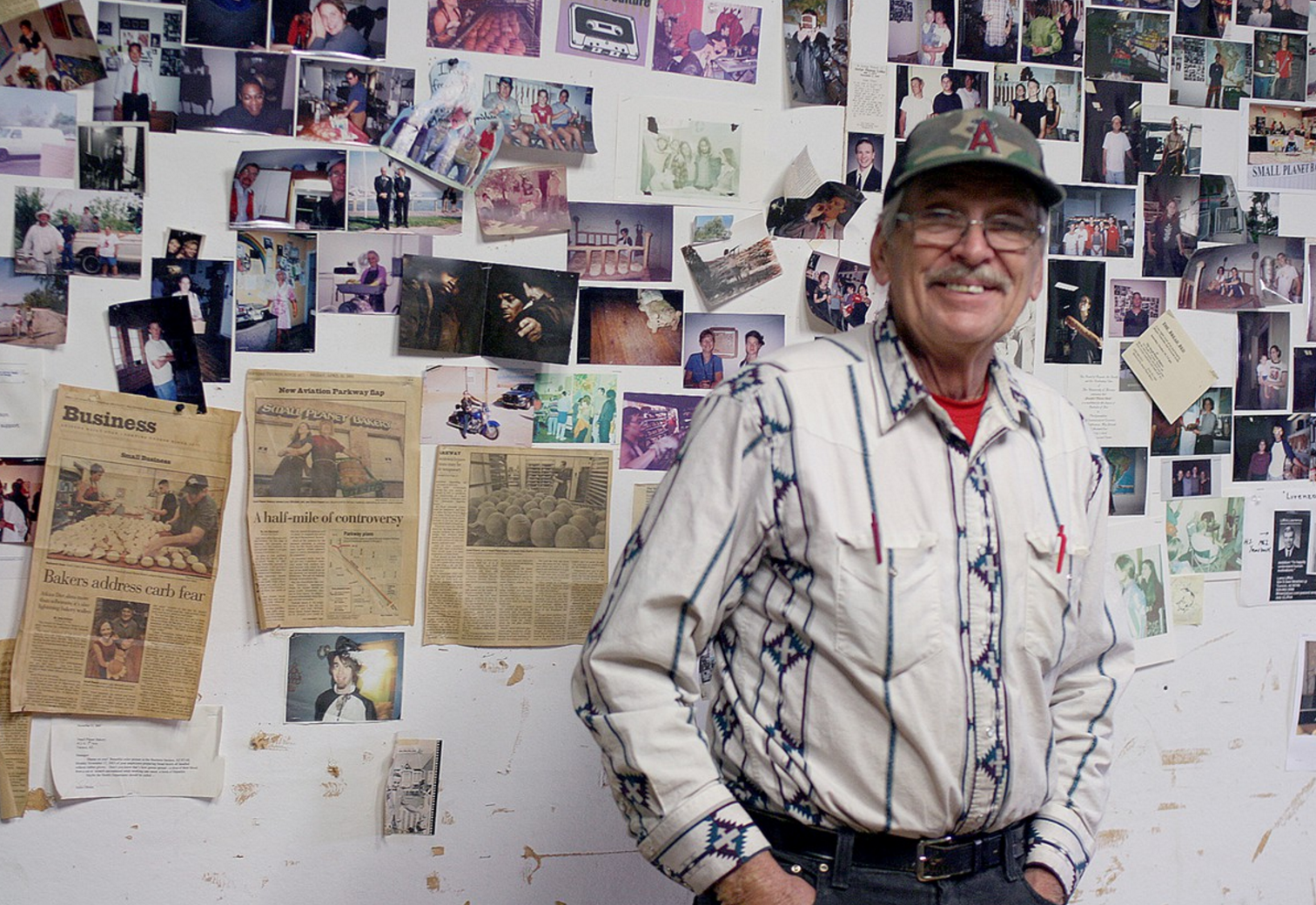
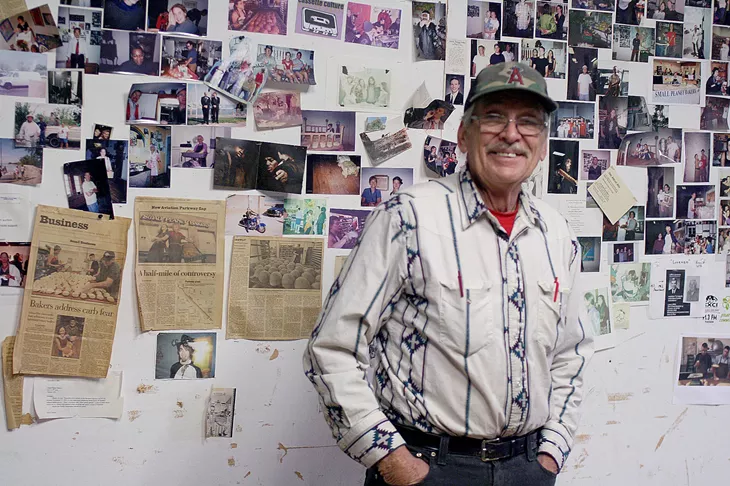
After four decades in the same location serving up over 20 different varieties of bread, Small Planet Bakery is closing its doors. The historic building that houses the bakery at 411 N. Seventh Ave. is to be demolished as a part of the Aviation Extension Freeway.
While many have taken up the torch around town baking artisan bread, Small Planet’s long history in local restaurants and farmers markets left an indelible mark on the city’s food scene. The building itself, which was built in the ‘20s, will be replaced by a new Seventh Avenue bike underpass. The closure marks more than a decade of talks between Small Planet and the city about the new development plans. Longtime owner Lucy Mitchell and baker Chris French will be retiring after 40 years running the bakery.
French spoke with the Weekly about some of the building and bakery's history in a March 2015 feature. You can say farewell to this Tucson food institution on Saturday, Dec. 12 beginning at 5 p.m. at the bakery’s location. Live music from Cassette Culture, Texas Trash and the Trainwrecks and more will provide the night’s entertainment.





Tags: small planet bakery , bread , tucson , closing , artisan , aviation extension , downtown links , Slideshow , Image

It's official: Tucson is indeed a world capital of gastronomy. UNESCO announced their 2015 additions to the Creative Cities Network, and after the second year applying, Tucson's application to be recognized as a gastronomic site was approved.
As hashed out in last week's Tucson Weekly cover story, Tucson's application for the honor hinged largely on the region's 4,000 years of continuous agriculture, progressive native seed line preservation programs and the huge impact food-related jobs and businesses have on the local economy. Those reasons, among many others, were enough for the global organization to add Tucson to the network.
With the 2015 additions, Tucson became the first city in the U.S. to receive the gastronomy designation—one of 18 cities recognized for gastronomy through this program in the entire world. Ensenada, Mexico, Parma, Italy, and Phuket, Thailand, among several others, were also honored with the gastronomy designation. Other U.S. cities recognized this year include Austin (Media Arts) and Detroit (Design).
For more information on just what makes Tucson a creative city of gastronomy, check out The Road to UNESCO from the Dec. 3 issue of Tucson Weekly.
Tags: tucson , gastronomy , food , capital , unesco , designation , creative city , first , u.s. , america , Image
1. The vote on Prop 123, which will decide whether the state can dip into the principal of the state land trust to bring school funding up to what the courts say the state owes the schools — or to be more accurate, up the 70% of what the courts ordered.This whole thing can play out in a number of ways. I'm betting that Ducey and his cronies have a clear idea of what they want to see happening and when they want it to happen, but they're playing their cards close to the vest (Chess. Cards. I'm mixing game metaphors here, but you know what I mean), because the order in which they dribble out information and the element of surprise are key to their success. Timing, I think, is everything. The Prop 123 election has a set date — May 17, 2016. Last year the state budget was passed in a hurry on March 7 during a marathon legislative session. If the legislature plays hurry-up again this year, the budget, with or without additional funding for schools, will be passed well before the Prop 123 vote, though the vote can come later if they think it will improve the chances of passing Prop 123. And the recommendations from the Classrooms First Initiative Council were first set to come out this month, but the date has been delayed, maybe by as much as six to nine months. I'm sure they can put together their findings pretty much any time they think it will be to their advantage. Ducey and the major players on the council already know what they want to recommend. All those meetings and press releases have more to do with political theater than decision making.
2. The legislature's state budget, which may or may not include additional funds for K-12 education.
3. The recommendations of Ducey's Classrooms First Initiative Council, which are likely to ask for a restructuring of the school funding formula that will reward schools with "high achieving" students — meaning, usually, students from high income families — as well as charter schools (and maybe private schools).
So. Will the passage of Prop 123 be jeopardized if the legislature refuses to increase education funding in its state budget and instead squanders the current surplus on tax cuts for Ducey's buddies? Is there a sweet spot where the legislature can make a token funding increase that will be just enough for voters to decide to tap the land trust funds but not enough for them to decide we don't need the extra money (and not enough to cancel out Ducey's beloved tax cuts)? Should the budget be delayed until after the vote on Prop 123? Will the Classrooms First Initiative Council release its findings in time for the legislature to rewrite some of the state's funding provisions to create the winners and losers they want but not jeopardize the shaky Prop 123 coalition that includes the teachers union and other pro-public education groups which would frown on a increase in education inequality in the state?
I'm not making any predictions right now. There are far too many moving parts, far too many variables, far too many hidden agendas for me to figure out what's going to happen. Stay tuned.
Tags: Prop 124 , Classrooms First Initiative Council , Arizona state budget , Doug Ducey , State land trust funds
Keeping primates, like baboons and other monkeys, as pets will be illegal in Arizona starting Saturday. The regulation was recently passed by the Arizona Game and Fish Commission.Good news: If you already have a chimps or other sub-human primates around the house before Saturday, you get to keep ’em.
Officials say the main reason was a concern over human health and safety.
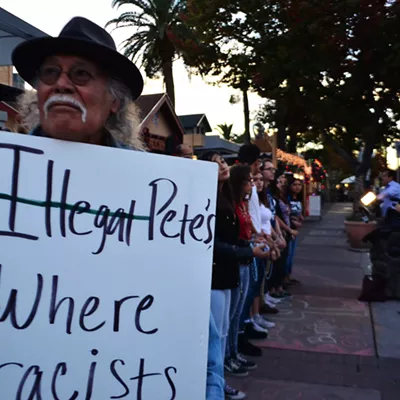
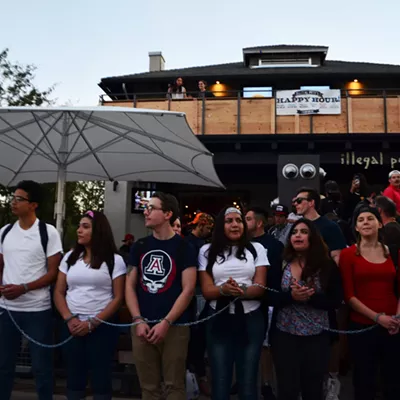
The now-infamous Mexican fast food restaurant Illegal Pete's opened Thursday evening despite protests and a petition, which gathered close to 3,000 signatures demanding the owner to "change the name or shut it down."
Community members are outraged over the use of the word "illegal." Critics argue the use of "illegal" in the name of a Mexican restaurant is racist, and solidifies a term that is often used to insult undocumented immigrants and many people of color.
At the rally a small group of the 60-plus protesters (many of whom were members of the UA student activist group Movimiento Estudiantil Chican@ de Aztlán, or MEChA, immigration rights advocates and other allies), handcuffed and chained themselves as they stood in front of the entrance.
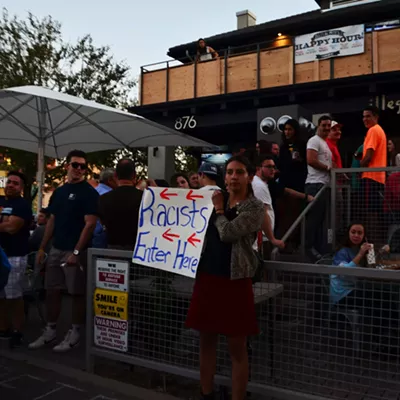
Upon entering, all restaurant visitors walked past a sign that read "Racists Enter Here." A couple of demonstrators took photographs of all of those who walked into the place, which nearly caused a fight.
Preparing for the big opening, Illegal Pete's staff had written messages and drawn symbols with chalk, such as peace signs and the restaurant's logo, on the surrounding sidewalks but protesters sprayed water on them and erased most with their shoes.
The gathering began at around 5 p.m., a few minutes after the official opening of the place, and was still going past 8 p.m. There were at least four Tucson Police officers on the scene. An hour into the protest, the cops told the students who were chained at the front entrance to move in case there was a fire, or another emergency, inside the restaurant.
I guess on the business side of things, Illegal Pete's was doing pretty well, because the line was long and tables were full.
Owner Pete Turner says the "illegal" in Illegal Pete's was never intended to be used in a bigoted connotation. He hopes to work with the community and alleviate the tension. In the meantime, he just wants everything to remain civil.




Tags: illegal pete's , Movimiento Estudiantil Chican@ de Aztlán , mecha , immigration , tucson , Slideshow
Thursday, December 10, 2015
In this week's print edition, I wrote about the political fight over whether suspected terrorists on the no-fly list should be able to purchase guns.
Democrats say that if someone is on the no-fly list shouldn't be able to get guns; Republicans say the list has errors and doesn't have clear guidelines about how names are added or removed.
Now the Democratic Congressional Campaign Committee is up with an ad on local radio stations, highlighting Congresswoman Martha McSally's numerous votes against adding the names of terror suspects on the no-fly list to the national background-check database.
Here's the script of the radio ad:
Congresswoman Martha McSally voted to keep allowing suspected terrorists to buy assault rifles. Call her at (520) 459-3115 and demand she keep us safe. Paid for by the DCCC, dccc.org. Not authorized by any candidate or candidate’s committee. The DCCC is responsible for the content of this advertising.“Congresswoman McSally’s refusal to act and ensure suspected terrorists can’t legally buy guns and explosives is really beyond reason,” said DCCC spokesman Tyler Law. “Arizonans deserve a representative with some backbone – not someone who is more beholden to special interests than her constituent’s safety.”
McSally spokesman Patrick Ptak told the Weekly earlier that McSally believes the no-fly list is flawed.
McSally spokesman Patrick Ptak said that McSally opposed the legislation because "this list has a lot of problems that make it a bad tool for restricting Americans' rights."Meanwhile, Congresswoman Ann Kirkpatrick, who is seeking the U.S. Senate seat now held by John McCain in 2016, noted yesterday that McCain had opposed adding people on the no-fly list to the background-check database as far back as 2008.
"The exact criteria that will get your name on this list or removed is vague and secretive," Ptak said. "You don't need a warrant against you. You don't have to be convicted or even charged with a crime to be added to the list. Organizations across the political spectrum have raised significant civil rights concerns with using it to take away rights. It has problems with accuracy, and people who have been falsely added include toddlers, those with similar names to suspected criminals, and even former Senator Ted Kennedy. Because of these flaws and the lack of due process—a core pillar of our justice system—for anyone placed on this list, Rep. McSally has serious concerns right now about using it as a blanket tool to take away Americans' rights."
"John McCain may talk tough about fighting terror, but his actions expose a politician afraid of losing his primary election,” Kirkpatrick said in a prepared statement. “The bottom line is, opposing the terror gap allows suspected terrorists to legally buy guns. Given the threat of terror around the world and here at home, it’s pathetic that the NRA stranglehold on Republican politicians is as strong as ever.”
National Journal looks at how Democrats are pushing the issue around the country:

