

Wednesday, July 31, 2019
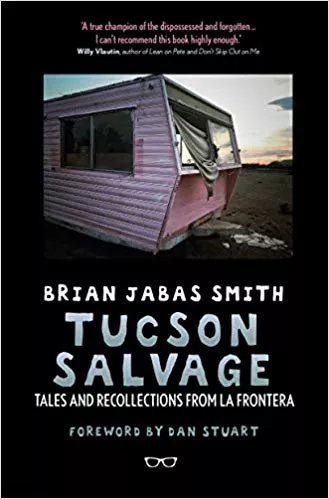
Dusenberry-River Library, 5605 E. River Rd.
Saturday, August 17 from 3–4 p.m.
Brian Jabas Smith is an award-winning journalist, editor and the author of "Spent Saints & Other Stories" and "Tucson Salvage: Tales and Recollections from La Frontera."
Maggie Smith is a filmmaker, writer, mother and human rights activist. She has adapted, co-written and executive produced the web series Spent Saints and co-written and directed the festival-winning documentary Tucson Salvage.
Tucson Salvage is based on Smith’s columns for the Tucson Weekly. Offering sharp, empathic commentary on diverse subjects, Smith channels the people not usually seen or valued in society, and in doing so, holds a mirror to us all. The Asheville Scene called it “an artful collection that reads like the diary of an observant poet.”
Tucson Salvage the Documentary is a 30-minute meditation on five humans profiled in Smith’s columns. Forged by adversity and united by humanity, the people in this documentary allow us to witness those we might never approach and hear them tell their own life stories.
Brian and Maggie have traveled across the United States stunning audiences at such well-known places as The Hudson Theatre in Los Angeles, Elliot Bay Bookstore in Seattle, Bookbeat in Detroit, and Malaprop’s Bookstore in Asheville.
This event is free and open to the public. Copies of "Tucson Salvage" will be available for sale. For more information visit library.pima.gov or call Infoline at (520) 791-4010.
Tags: Tucson Salvage , Brian Smith , Maggie Smith , documentary , library , Image

HSSA’s Dog Days in the Desert Summer Campers learned how to make dog friendly Frosty Paw treats during their last week of camp. HSSA’s volunteers will be going around on Thursday, Aug. 1st giving each dog a delicious Frosty Paw treat and giving them some extra TLC.
Frosty Paw treats are easy to make and you only need a few ingredients.
Ingredients:
· 32 ounces of plain yogurt
· 1 jar of baby food carrots, or baby food meat, or one mashed banana
· 2-3 Tablespoons of Honey
· 2-3 Tablespoons of Peanut Butter
Mix all the ingredients and freeze in an ice cube tray. Once fully frozen you can give the treats to your pup to enjoy.
You can help make a difference for homeless dogs at HSSA by making a donation at www.HSSAZ.org/DONATE.
*Always check with your veterinarian before giving to your pet to verify there are no health risks for your pet.
Tags: dog birthday , dog treats , Humane Society , HSSA , pets , adoptions , shelters , Image

Tuesday, July 30, 2019

Instead of arguing about the strengths and weaknesses of the district, let's consider a different question: Who benefits when TUSD is trashed incessantly? Who wins when TUSD loses?
The short answer is, the winners are the enemies of public education. They have spent decades building a multi-billion dollar campaign to make terms like "failing schools" and "government schools" part of our vocabulary. They portray our public schools as a national disgrace, then figure out ways to move as many students as they can into charter and private schools. It began as a conservative, Republican-based effort, but an increasing number of progressives, and even people who consider themselves further to the left than garden variety progressives, have joined in.
It's not surprising to hear people on the political right singing in the anti-TUSD chorus. It's built into their anti-"Big Government,” anti-regulation DNA. If you want to shrink government to the size where it can be drowned in a bathtub as Grover Norquist, a man who never saw a tax or a government program he didn't hate, famously said, getting rid of all those nasty "government schools" makes perfect sense.
But when people on the political left join the chorus and sing, "TUSD is awful, let me count the ways," most of them don't realize that they're being played, that they’re singing a tune out of the conservative playbook. I can almost see the players on the right high-fiving each other every time someone on the left lends the anti-public school cause a helping hand.
Unfortunately, this phenomenon isn’t limited to Tucson. The anti-public school movement has been alarmingly successful at working its way into the national consciousness.
Let me go into more detail about the people who win when people trash our systems of public education.
The Demonizers, Privatizers and Profitizers
Demonize. Privatize. Profitize. Those are the three pillars of the “education reform” movement.
It begins with demonizing our system of public education. Before you can persuade parents of public school students to move their children to charter and private schools, you have to convince them their schools are so bad that anything would be better.
There's nothing new about people criticizing the ways we educate our children or suggesting ways we can improve the educational process. It's been going on as long as we have been a country. Way back in 1819, Washington Irving wrote the classic tale, The Legend of Sleepy Hollow, which featured a pompous, undereducated, incompetent schoolmaster named Ichabod Crane. The story lampoons him and the meager education provided in the one room schoolhouses of the day. Many of our greatest writers have continued Irving's tradition of depicting schools and teachers in less-than-flattering, and sometimes damning, lights. Journalists and educators regularly publish articles and essays describing the problems plaguing our schools and suggesting ways to improve them.
All with good reason. The process of educating young people will always be a flawed enterprise. Criticism and constructive suggestions for change are part of the continuing process of figuring out ways our schools can better serve our children.
But today’s “A pox on all your public schools” style of blanket demonization is a recent phenomenon. Its purpose is not to improve the schools. It is to weaken and eventually dismantle them.
If we’re looking for a moment when the demonization movement began in earnest, it would be the Reagan administration's 1983 publication, A Nation at Risk, which argues that the way we educate our children is so deficient, it threatens our nation’s survival. The pamphlet’s thesis is summed up in its most famous passage, which compares the failures of our schools to an attack by a foreign power.
“If an unfriendly foreign power had attempted to impose on America the mediocre educational performance that exists today, we might well have viewed it as an act of war. As it stands, we have allowed this to happen to ourselves. . . . We have, in effect, been committing an act of unthinking, unilateral educational disarmament.”A Nation at Risk took the country by storm. It had people asking, is public education really so bad it poses a risk to our national security?
Yes, replied the demonizers. It really is that bad.
Tags: David Safier , TUSD , Charter schools , Private schools , Education reform movement , Charter management organizations. , Image


From Grenoble, France, electronic duo Lovataraxx bring their intoxicating darkwave/coldwave minimalist sound to Blacklidge Community Collective. Locals Lav Andula, Glacier.WAV and Sally Roundhouse add warm and light. Details here.
Tags: Xoxo , music , concerts , musicians , shows , fun , electronic , trumpet , Image
Monday, July 29, 2019
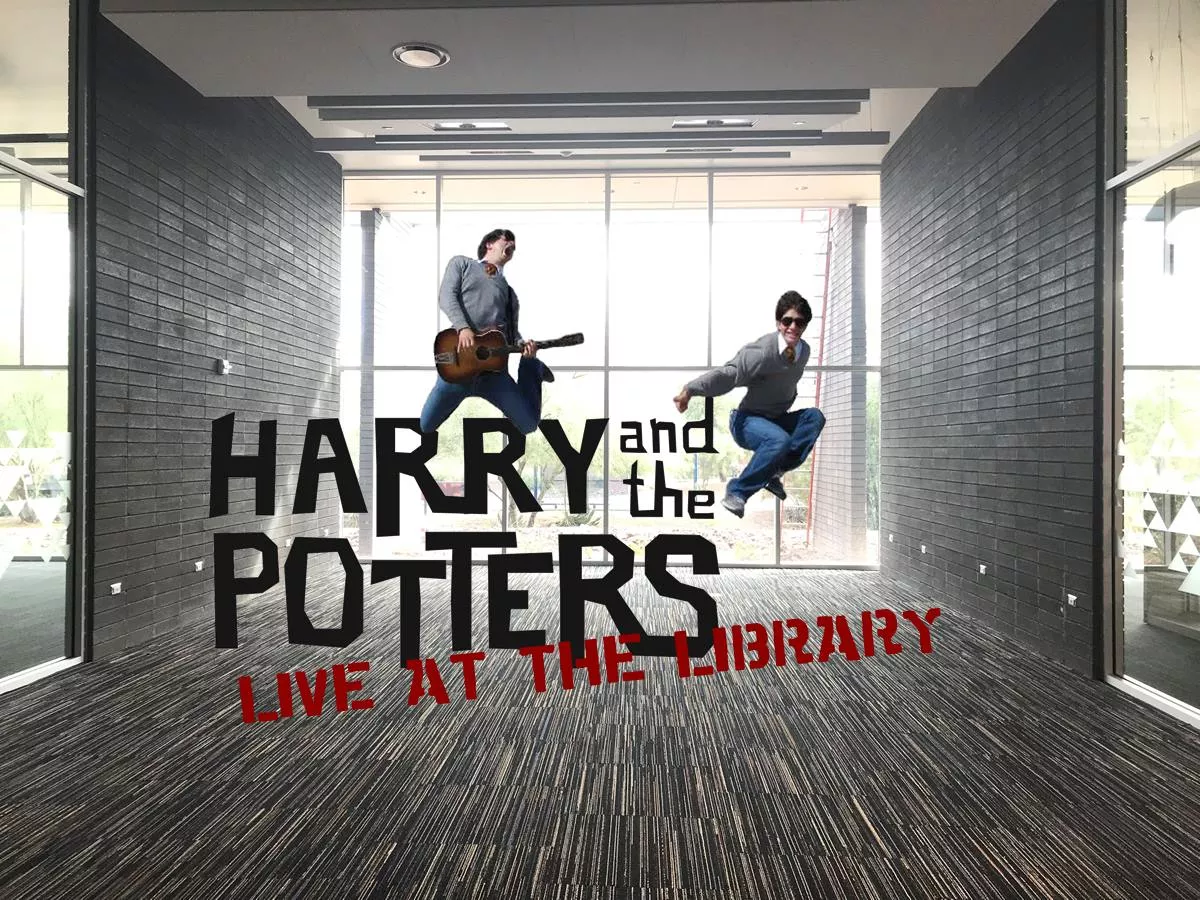
Wizards, muggles and fantastic beasts, rejoice! Harry and the Potters are returning to the Library for their 2019 Summer Tour!
Saturday, August 3, 2019 from 5 to 6 p.m.
Flowing Wells Library, 1730 W. Wetmore Rd.
This event is free, but space is limited to the first 200 people who arrive.
What would happen if Harry Potter quit the quidditch team, stole a time turner and started a punk rock band with himself from an earlier point in the time-space continuum? The answer is Harry and the Potters!
Costumes are encouraged.
Tags: Library , Harry Potter , music , activities , free events , muggles , punk rock , books , Image
Tags: celebrations , galleries , Tucson Convention Center , Juneteenth , abolition , Slideshow , Image
Deeming itself "the chic resale boutique", the shop gives customers a collection of designer items as well. You can find an assortment of clothing, bags, shoes and accessories. A $5 sales rack is also accessible daily. Girlfriend's Closet is a veteran-owned boutique that gives other veterans a 10% off discount. You can find Girlfriend's Closet at 60 N. Harrison Rd. and you can learn more about it at www.girlfriendscloset.shop.
Tags: Girlfriend's Closet , clothes , boutique , resale , shopping , shoes , veterans , business , Slideshow , Image

Hello! I’m a mellow 1-year-old boy named Dex. I am friendly, happy-go-lucky, and enjoy meeting new people. I walk well on a leash but prefer to be cuddled up next to your or sitting on your feet. My favorite thing in the world is food! I’ll do anything for a treat. I already know sit, down, roll over, but am best at beg,” Dex (873432)
Fall in love with Dex at HSSA Main Campus at 635 W. Roger Rd. Have questions? Give an adoptions counselor a call at 520-327-6088, ext. 173.
Tags: pets , Humane Society , dogs , adoption , furry , cuddle , Dex , Image

