

Tuesday, August 25, 2020
This story was supported by the Pulitzer Center.
PHOENIX – Nearly 200 tents stand inches apart on the scorching gravel lots, many covered in blankets for an extra layer of relief from the desert sun. Outside, their occupants sit on hot ground or in folding chairs, nearby palm trees providing no shade. Despite 12-foot-square sections painted in the gravel, there is little social distancing for Phoenix’s homeless population.
Created by local officials in late April as a temporary solution for some of the estimated 3,700 unsheltered homeless, the fenced-in lots on the edge of downtown promised round-the-clock security, social distancing and access to water and toilets. But residents complain that hygiene supplies have become scarce, and measures meant to contain the spread of COVID-19 are not enforced.
“We have been, like, ignored,” said Elisheyah, 61. “There’s no safety, nothing to guarantee you can be safe out here.”
Homeless people are one of the most vulnerable populations in the coronavirus pandemic, yet they’re largely invisible victims of the crisis. Very little is known about how they’re faring, in part because the Department of Housing and Urban Development – the main federal agency overseeing programs for them – has not required its national network of providers to gather information on infections or deaths. That’s despite the fact that unlike other high-risk, congregate-living groups, such as nursing home residents and prisoners, homeless people interact more with the general public.
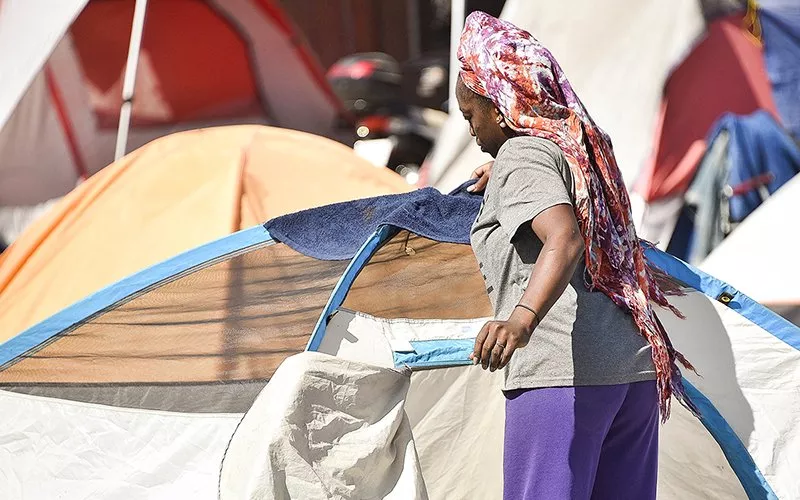
PHOENIX – Nearly 200 tents stand inches apart on the scorching gravel lots, many covered in blankets for an extra layer of relief from the desert sun. Outside, their occupants sit on hot ground or in folding chairs, nearby palm trees providing no shade. Despite 12-foot-square sections painted in the gravel, there is little social distancing for Phoenix’s homeless population.
Created by local officials in late April as a temporary solution for some of the estimated 3,700 unsheltered homeless, the fenced-in lots on the edge of downtown promised round-the-clock security, social distancing and access to water and toilets. But residents complain that hygiene supplies have become scarce, and measures meant to contain the spread of COVID-19 are not enforced.
“We have been, like, ignored,” said Elisheyah, 61. “There’s no safety, nothing to guarantee you can be safe out here.”
Homeless people are one of the most vulnerable populations in the coronavirus pandemic, yet they’re largely invisible victims of the crisis. Very little is known about how they’re faring, in part because the Department of Housing and Urban Development – the main federal agency overseeing programs for them – has not required its national network of providers to gather information on infections or deaths. That’s despite the fact that unlike other high-risk, congregate-living groups, such as nursing home residents and prisoners, homeless people interact more with the general public.
Courtesy photo
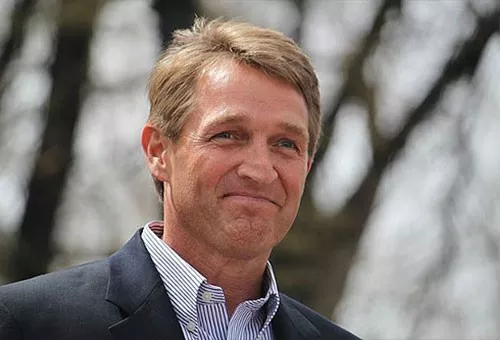
"It is because of my conservatism, and because of my belief in the Constitution and the separation of power, and because I am gravely concerned about the conduct and behavior of our current president, that I stand here today, proudly and wholeheartedly, to endorse Joe Biden as the next president of the United States of America," Flake said.
Flake has been a longtime vocal critic of Trump, decrying his moral ambiguity and childish behavior in an op-ed in 2017.
"These former members of Congress cited Trump's corruption, destruction of democracy, blatant disregard for moral decency, and urgent need to get the country back on course as a reason why they support Biden," the Biden campaign said in an announcement.
Flake summarized his decision with this: "After the turmoil of the past four years, we need a president who unifies rather than divides."
Monday, August 24, 2020
The number of Arizona’s confirmed novel coronavirus cases closed in on 199,000 as of Monday, Aug. 24, according to the Arizona Department of Health Services.
Pima County had seen 20,535 of the state’s 198,414 confirmed cases.
With 0 new deaths reported today, a total of 4,771 Arizonans had died after contracting COVID-19, according to the Aug. 24 report.
The number of hospitalized COVID cases continues to decline. ADHS reported that as of Aug. 23, 908 COVID patients were hospitalized in the state, the lowest that number has been since June 1, when 1,009 people were hospitalized. That number peaked at 3,517 on July 13.
A total of 896 people visited ERs on Aug. 23 with COVID symptoms. That number, which peaked at 2,008 on July 7, has been on a plateau for most of this month, bouncing between 1,100 and 900 since Aug. 8.
A total of 345 COVID-19 patients were in intensive care unit beds on Aug. 23, with lows rivaling numbers since May 25, when 337 people were in ICU. The number in ICUs peaked at 970 on July 13.
In Pima County, the week-by-week counting of cases peaked the week ending July 4 with 2,398 cases, according to an Aug. 19 report from the Pima County Health Department. Those numbers have dropped with Pima County requiring the wearing of masks in public but they have plateaued in recent weeks, with 832 cases in the week ending Aug. 8 and 819 cases in the week ending Aug. 15. (Not all recent cases may have been reported.)
Deaths in Pima County are down from a peak of 54 in the week ending July 4 to 19 for the week ending Aug. 8.
Hospitalization peaked the week ending July 18 with 247 COVID patients in Pima County hospitals. For the week ending Aug. 8, 88 COVID patients were in Pima County hospitals.
Ducey: Stay the Course
In a brief press conference last week that did not include Ducey’s usual PowerPoint presentation regarding statistics, Gov. Doug Ducey thanks the Trump administration, local authorities and the National Guard for their work during the pandemic.
Ducey said the state was making progress in the fight against the virus and Arizonans should continue taking precautions such as avoiding large gatherings, staying home when possible, washing hands and wearing a mask.
“We’re going to continue to be guided by the data and the doctors,” Ducey said. “Returning our kids to the classroom, reuniting with our loved ones, all of these depend on continued responsible behavior you have demonstrated so well for so long. So I urge everyone to stay the course, stay physical distanced, stay smart and healthy and continue to mask up.”
Unemployment numbers creeping upward
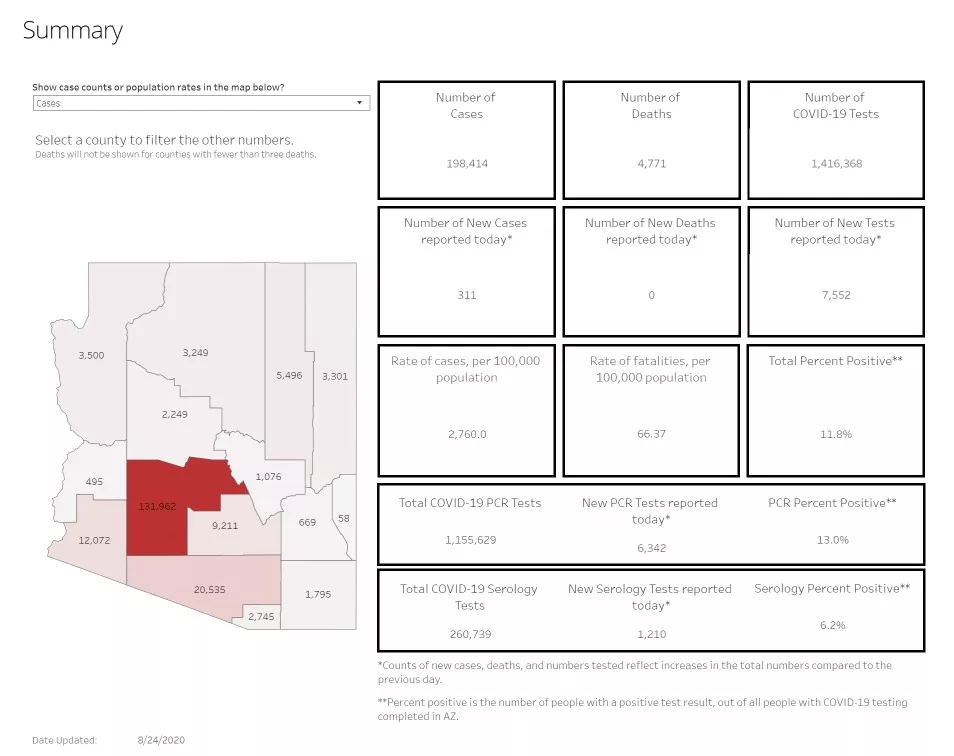
Pima County had seen 20,535 of the state’s 198,414 confirmed cases.
With 0 new deaths reported today, a total of 4,771 Arizonans had died after contracting COVID-19, according to the Aug. 24 report.
The number of hospitalized COVID cases continues to decline. ADHS reported that as of Aug. 23, 908 COVID patients were hospitalized in the state, the lowest that number has been since June 1, when 1,009 people were hospitalized. That number peaked at 3,517 on July 13.
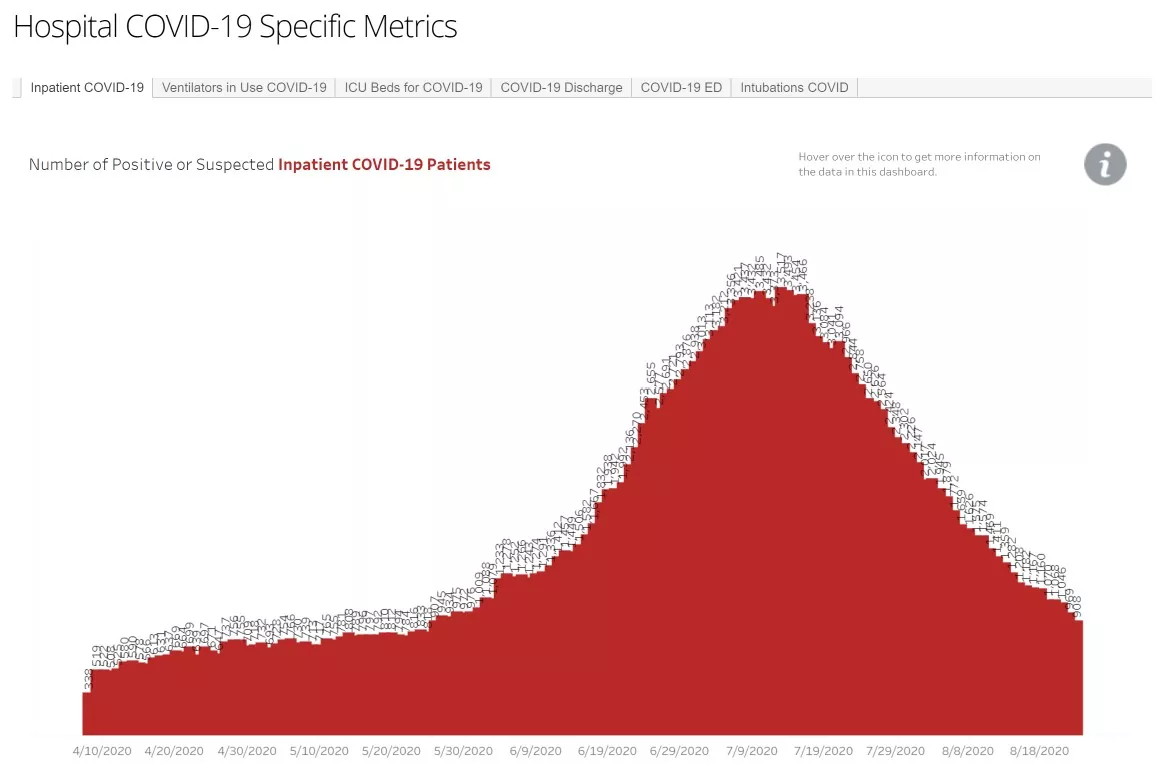
A total of 896 people visited ERs on Aug. 23 with COVID symptoms. That number, which peaked at 2,008 on July 7, has been on a plateau for most of this month, bouncing between 1,100 and 900 since Aug. 8.
A total of 345 COVID-19 patients were in intensive care unit beds on Aug. 23, with lows rivaling numbers since May 25, when 337 people were in ICU. The number in ICUs peaked at 970 on July 13.
In Pima County, the week-by-week counting of cases peaked the week ending July 4 with 2,398 cases, according to an Aug. 19 report from the Pima County Health Department. Those numbers have dropped with Pima County requiring the wearing of masks in public but they have plateaued in recent weeks, with 832 cases in the week ending Aug. 8 and 819 cases in the week ending Aug. 15. (Not all recent cases may have been reported.)
Deaths in Pima County are down from a peak of 54 in the week ending July 4 to 19 for the week ending Aug. 8.
Hospitalization peaked the week ending July 18 with 247 COVID patients in Pima County hospitals. For the week ending Aug. 8, 88 COVID patients were in Pima County hospitals.
Ducey: Stay the Course
In a brief press conference last week that did not include Ducey’s usual PowerPoint presentation regarding statistics, Gov. Doug Ducey thanks the Trump administration, local authorities and the National Guard for their work during the pandemic.
Ducey said the state was making progress in the fight against the virus and Arizonans should continue taking precautions such as avoiding large gatherings, staying home when possible, washing hands and wearing a mask.
“We’re going to continue to be guided by the data and the doctors,” Ducey said. “Returning our kids to the classroom, reuniting with our loved ones, all of these depend on continued responsible behavior you have demonstrated so well for so long. So I urge everyone to stay the course, stay physical distanced, stay smart and healthy and continue to mask up.”
Unemployment numbers creeping upward
Wednesday, August 19, 2020
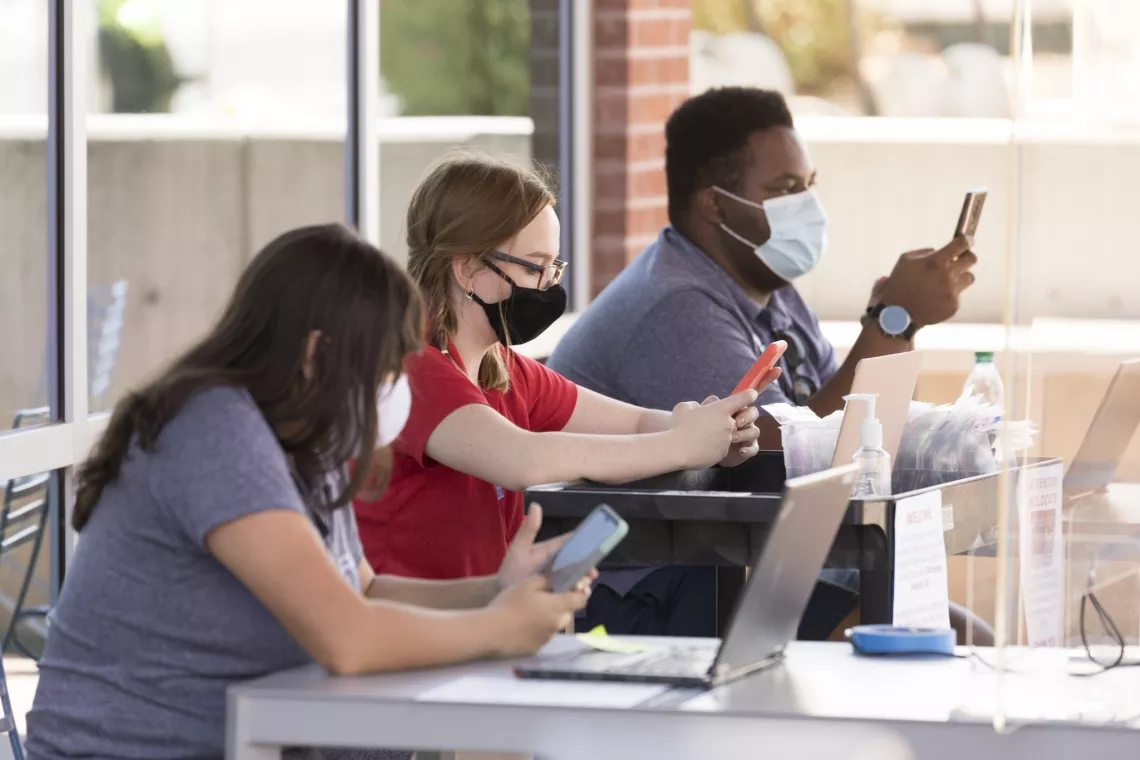
The University of Arizona has announced it is employing a new app where students, faculty, and staff who have been diagnosed with COVID-19 can anonymously notify others who may have been exposed. The COVID Watch app is available on Google and Apple devices, and is "able to calculate a person's level of exposure risk by assessing duration of exposure to an infected person, distance from an infected person and the point in the infection arc at which a user was exposed."
The COVID Watch app is being developed by UA in partnership with the nonprofit organization of the same name, co-founded by a UA alum Tina White.
According to UA, once installed, the app generates random codes while logging anonymous codes from other nearby COVID Watch apps. These anonymized codes are exchanged via Bluetooth signals. To prevent false alarms, users who test positive for COVID-19 must input a verification code from a lab, doctor, or medical center. At UA, this code will come from Campus Health. The app will then send an exposure notification alert to other COVID Watch users whose phones were registered as being near the infected patient's phone.
However, this means the app can only track possible infections through the population if users have their phones on them.
However, this means the app can only track possible infections through the population if users have their phones on them.
"The app is a vital part of our plan to mitigate the risk of COVID-19 as we return to campus over the coming weeks with our on-ramp approach,” said UA President Robbins Robbins in an announcement for the app.
Joyce Schroeder, head of UA Department of Molecular and Cellular Biology, is leading the app's development for the campus.
Joyce Schroeder, head of UA Department of Molecular and Cellular Biology, is leading the app's development for the campus.
While the app isn't mandatory for UA students and faculty, Schroeder encourages all members of the UA community to "do their part" to maintain a low level of viral transmission.
For more information, visit covidwatch.org
While other infection tracking apps use GPS to track location, Schroeder says Bluetooth is preferable because it allows users to be "completely private."
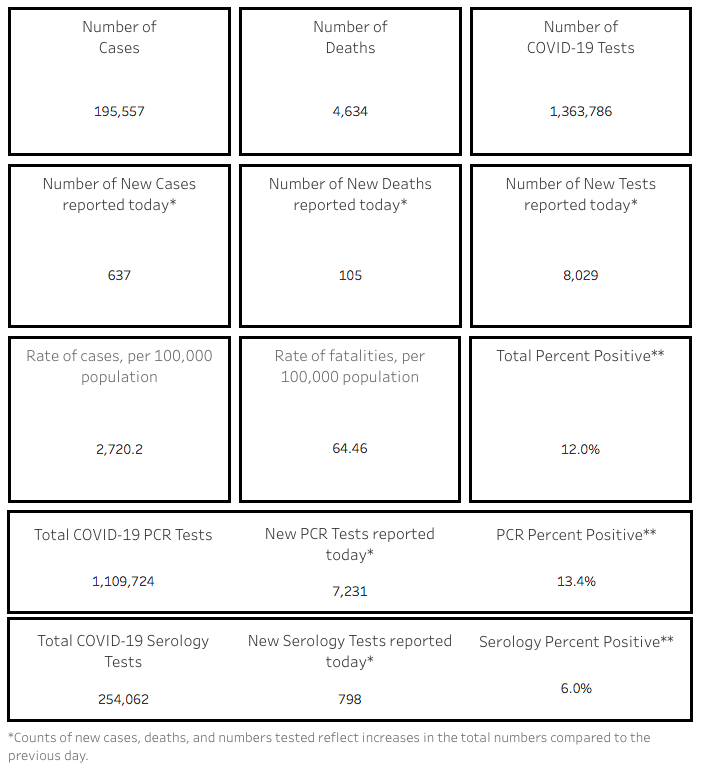
The number of Arizona’s confirmed novel coronavirus cases topped 195,000 as of Wednesday, Aug 19, according to the Arizona Department of Health Services.
Pima County had seen 20,047 of the state’s 195,557 confirmed cases.

With 105 new deaths reported today, a total of 4,634 Arizonans had died after contracting COVID-19, according to the Aug. 19 report.
The number of hospitalized COVID cases continues to decline. ADHS reported that as of Aug. 18, 1,160 COVID patients were hospitalized in the state, the lowest that number has been since June 6, when 1,079 people were hospitalized. That number peaked at 3,517 on July 13.
A total of 1,000 people visited ERs on Aug. 18 with COVID symptoms. That number peaked at 2,008 on July 7.
A total of 414 COVID-19 patients were in intensive care unit beds on Aug. 18, the lowest that number has been since June 9, when 413 people were in ICU. The number in ICUs peaked at 970 on July 13.
Pima County: Schools remain unsafe to open for in-person instruction
The Pima County Health Department is cautioning local school districts against bringing students back to campus.
According to the county's nine metrics based on local public health data, the current COVID-19 situation is too dangerous for schools to reopen for in-person classroom instruction.
Pima County Administrator Chuck Huckelberry said that when progress is made in all nine metrics, schools should be allowed to operate in a hybrid fashion with some in-person instruction combined with online learning, according to his Aug. 17 memo to the Board of Supervisors.
“The key concern for students, parents, teachers, administrators and all support personnel is when it is safe for schools to begin to transition and ultimately return to face-to-face classroom instruction,” Huckelberry wrote. “The scientifically based criteria offered by the State of Arizona and Pima County have been aligned to avoid any possible contradiction or confusion.”
The metrics include a variety of data concerning disease spread, healthcare capacity and public health capacity. As of Aug. 10, some had reached the “progress” state, but none have been fully met.
See the details on metrics and progress here.
The committee will determine the appropriate timing for face-to-face classroom instruction based on ADHS guidance, the current Pima County COVID-19 Progress Report and the latest scientific information available, according to Huckelberry's memo.
The county health department also recommended the committee develop a “written, worksite-specific COVID-19 prevention plan for every school district or facility.” This plan will include a “comprehensive risk assessment” of all work areas in all districts. The department is already working to develop a guidance document that will assist schools with their individual prevention plans.
City of Tucson offering rental assistance, grants for those affected by pandemic
The City of Tucson has allocated $4.5 million of federal CARES Act funding for an emergency rent and utility assistance program available to city residents.
To be eligible for the financial assistance, participating renters must have been financially impacted by the COVID-19 pandemic and the household income cannot exceed $68,400.
One application will be accepted per household, and each household can receive up to $2,500 to cover up to three months of late or upcoming rent or utility payments that were incurred after March 1, 2020.
All applicants will need to provide copies of their identification, bills, proof of income and other household information. The city’s Housing and Community Development department is partnering with several nonprofit organizations to administer these funds, including Primavera, Interfaith Community Services, Catholic Community Services and the International Rescue Committee.
Representatives from one of these agencies will contact applicants within five days for a phone interview and may ask for additional information. The funds will be sent directly to each applicants’ landlord and/or utility company.
“Keeping Tucsonans safe and healthy in their homes is the most important thing as many of our residents have been greatly impacted financially by this pandemic,” said Housing and Community Development Director Liz Morales in a press release.
The application process opened yesterday and renters are encouraged to apply as soon as possible. Visit www.tucsonaz.gov/hcd/rent-help to complete an application. If you need assistance or are unable to complete the application online, call (520) 837-5364 or email [email protected].
The city is also setting aside $3 million of CARES Act funding to be distributed to local workers and families that have been negatively impacted by the crisis.
The grant program, named the “We Are One | Somos Unos Resiliency Fund” will focus on individuals and households that have not received any state or federal COVID-19 relief money and whose income does not reach Pima County’s self-sufficiency standard.
The self-sufficiency standard measures how much money an individual or family needs to earn to be able to meet their basic needs with no public or private financial assistance. In 2018, the self-sufficiency standard for a single adult in Pima County was $9.66 per hour or $1,700 per month. For a household with two adults and two young children, the standard was $13.22 per hour for both adults, or $4,711 per month.
The city is partnering with the Women’s Foundation of Southern Arizona, who will administer the grants and begin accepting applications at 10 a.m. on Wednesday, Aug. 19 until 5 p.m. on Wednesday, Sept. 9.
County delays hike in restaurant permit fees
With local restaurants hit hard by the COVID-19 pandemic, the Pima County Board of Supervisors voted this week to delay a previously scheduled restaurant permit rate increase and provide credits to businesses that have already paid the higher fee.
The fee increase was originally adopted in 2016 as a way to recover costs incurred by the Pima County Health Department Consumer Health and Food Safety department, according to a county press release. The department performs regular restaurant safety inspections and has recently been tasked with enforcing increased health and safety standards in restaurants related to the current public health crisis.
The fee was planned to increase gradually over five years, and the supervisors’ decision yesterday will delay the final increase of 25 percent. The county says these extra costs were partially offset by their Restaurant Incentive Program, which allows restaurants to save up to 25 percent on their permitting fees if they adopt certain practices such as having a certified food handler on staff, eliminating trans-fats in their food and posting nutritional information on their menus.
Restaurants can still apply for these savings through the program, as it is not affected by this recent change in fees. It is currently unclear when the fee might be reinstated.
“The pandemic was a big blow to many local restaurants. We’ve strived to support our restaurants as they adapt, while keeping the broader community safe,” said Director Loni Anderson of the Consumer Health and Food Safety Division. “We know that the vast majority of restaurants have a passion for what they do, and want to do right by their customers. The Restaurant Incentive Program, and today’s delay, are designed to benefit restaurant owners, and the whole of Pima County.”
Get tested: Pima County has several testing centers, including pop-up sites this week
The Pima County Health Department has rolled out new pop-up COVID-19 testing sites that are available in areas of the county that have had limited testing availability.
Through their partnership with the Arizona Department of Emergency and Military Affairs, Pima County is wrapping up its free minimal contact testing operation today from 10 a.m. to 6 p.m. at Tucson Rodeo Grounds, 4823 S. Sixth Ave. Pre-registration is strongly encouraged and can be completed at www.pima.gov/covid19testing.
Participants can access their test results by logging into www.doineedacovid19test.com within a few days.
Pima County has three other testing centers with easy-to-schedule appointments—often with same-day availability—and you get results in less than 72 hours.
Centers offering a nasal swab are at the Kino Event Center, 2805 E. Ajo Way, and the Udall Center, 7200 E. Tanque Verde Road. The center at the northside Ellie Towne Flowing Wells Community Center, 1660 W. Ruthrauff Road, involves a saliva test designed by ASU.
Schedule an appointment at pima.gov/covid19testing.
The centers are also tied into Pima County’s developing contact tracing operation, which aims to be able to identify potential clusters and warn people if they have been in contact with someone who is COVID-positive.
If you’re interested in a test to determine if you’ve already had COVID-19, the UA has expanded a free COVID-19 antibody testing program to include 15 new categories of essential workers considered at high risk for exposure. The antibody test, developed by researchers at UA Health Sciences, determines who has been exposed to and developed an immune response against COVID-19.
In addition to healthcare workers and first responders, the test program is now open to educators, childcare workers, agriculture, grocery and foodservice workers, hospitality employees, solid-waste collection workers, transportation services workers and members of the National Guard. More information and registration for the test is available at covid19antibodytesting.arizona.edu.
—with additional reporting from Kathleen B. Kunz, Austin Counts, Jeff Gardner and Tara Foulkrod
Tuesday, August 18, 2020
A wildfire is burning southwest through the Tortolita Mountains parallel to Cochie Canyon Trail Road near the Dove Mountain area. The 2,200-acre Westridge Fire ignited on Monday, Aug. 17 and has since spread along the mountainous ridges through the desert brush.
According to the Arizona Department of Forestry and Fire Management, air and ground forces have responded to the fire, which threatens a few structures in the rugged terrain. The fire has increased today due to high temperatures, and fire crews are planning for additional air support to hold the fire at the roadline.
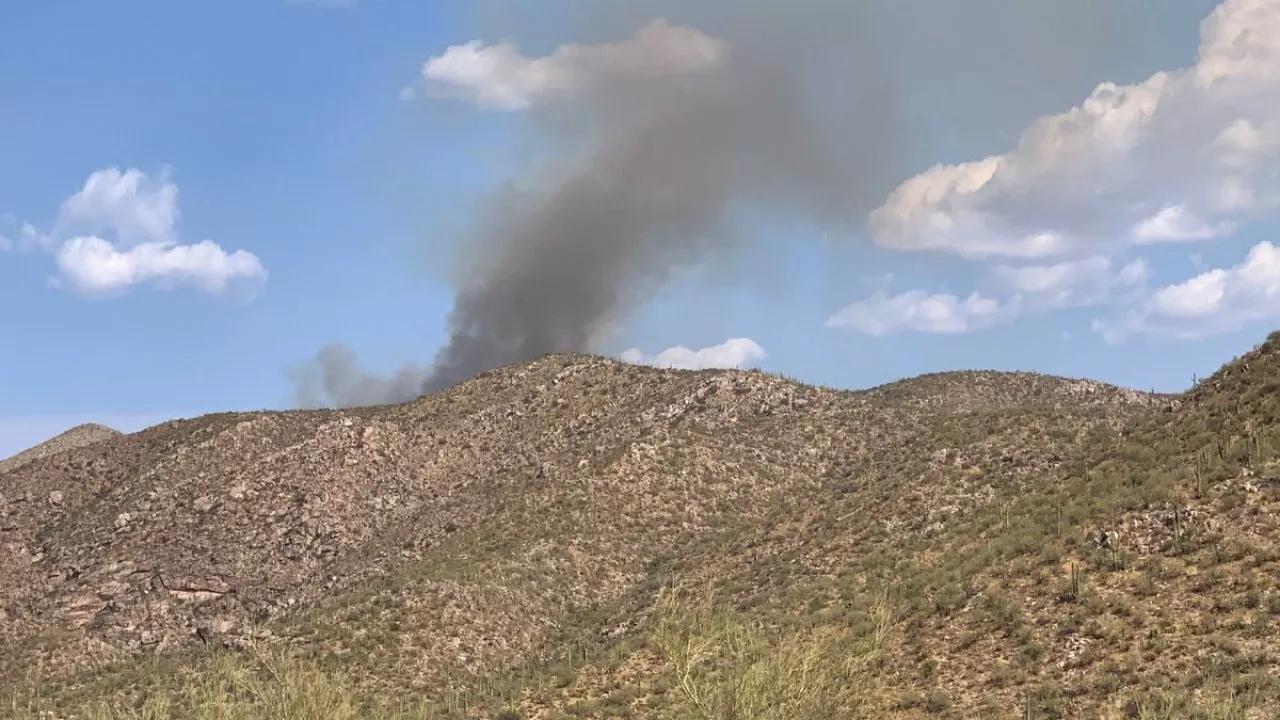
According to the Arizona Department of Forestry and Fire Management, air and ground forces have responded to the fire, which threatens a few structures in the rugged terrain. The fire has increased today due to high temperatures, and fire crews are planning for additional air support to hold the fire at the roadline.
While there is some increase in activity, fire crews report they are making progress with suppression.
ProPublica is a nonprofit newsroom that investigates abuses of power. Click here to read their biggest stories as soon as they’re published.
When it comes to COVID-19, what happens in Vegas doesn’t stay in Vegas.
Las Vegas casinos reopened June 4, and they have become a likely hotbed for the spread of the novel coronavirus, public health experts said. But if tourists return home and then test positive for COVID-19, the limitations of contact tracing in the midst of a pandemic make it unlikely such an outbreak would be identified.
Contact tracing, one of the pillars of stopping the pandemic, is a labor-intensive process where a health official tracks down anyone who’s been in contact with an infected person and takes steps to prevent the disease’s spread. But there is no national system in place for contact tracing, said Joshua Michaud, an epidemiologist and associate director of global health policy for the Kaiser Family Foundation. It’s decentralized and performed by local health agencies that may not communicate with one another, especially given their caseloads. So, if a casino had a “cluster outbreak” or “superspreading event” among visitors, it’s unlikely contact tracing would catch it, Michaud said.
“The way it’s set up right now, contact tracers are not looking for clusters that might identify outbreaks tied to traveling to a casino or other specific locations,” Michaud said. “You’re not actively looking for it, so you might miss that event. Contact tracing is not set up to answer those questions, so you’ll still be in the dark.”

When it comes to COVID-19, what happens in Vegas doesn’t stay in Vegas.
Las Vegas casinos reopened June 4, and they have become a likely hotbed for the spread of the novel coronavirus, public health experts said. But if tourists return home and then test positive for COVID-19, the limitations of contact tracing in the midst of a pandemic make it unlikely such an outbreak would be identified.
Contact tracing, one of the pillars of stopping the pandemic, is a labor-intensive process where a health official tracks down anyone who’s been in contact with an infected person and takes steps to prevent the disease’s spread. But there is no national system in place for contact tracing, said Joshua Michaud, an epidemiologist and associate director of global health policy for the Kaiser Family Foundation. It’s decentralized and performed by local health agencies that may not communicate with one another, especially given their caseloads. So, if a casino had a “cluster outbreak” or “superspreading event” among visitors, it’s unlikely contact tracing would catch it, Michaud said.
“The way it’s set up right now, contact tracers are not looking for clusters that might identify outbreaks tied to traveling to a casino or other specific locations,” Michaud said. “You’re not actively looking for it, so you might miss that event. Contact tracing is not set up to answer those questions, so you’ll still be in the dark.”
Monday, August 17, 2020
ProPublica is a nonprofit newsroom that investigates abuses of power. Click here to read their biggest stories as soon as they’re published.
The Trump administration is predicting years of dramatically reduced international demand for U.S. visas, and planning for drastic budget cuts to visa services worldwide as a result, according to an internal memo seen by ProPublica.
The projections made by the U.S. State Department in a memo signed by Secretary of State Mike Pompeo on Monday contrast with the rosier outlook expressed repeatedly by President Donald Trump. As recently as Aug. 5, Trump predicted that the coronavirus “will go away” and that a vaccine will be available before the end of the year. But internally, the memo shows, the government is planning for the pandemic to drastically reduce international travel to the U.S. through at least 2022.
The memo projects steep reductions, in particular, to non-immigrant visas. Trump has issued restrictions on some categories of non-immigrant visas, citing the economic impacts of the pandemic, but the majority of non-immigrant visas processed by the State Department are temporary visas for business travel and tourism.
The Trump administration is predicting years of dramatically reduced international demand for U.S. visas, and planning for drastic budget cuts to visa services worldwide as a result, according to an internal memo seen by ProPublica.
The projections made by the U.S. State Department in a memo signed by Secretary of State Mike Pompeo on Monday contrast with the rosier outlook expressed repeatedly by President Donald Trump. As recently as Aug. 5, Trump predicted that the coronavirus “will go away” and that a vaccine will be available before the end of the year. But internally, the memo shows, the government is planning for the pandemic to drastically reduce international travel to the U.S. through at least 2022.
The memo projects steep reductions, in particular, to non-immigrant visas. Trump has issued restrictions on some categories of non-immigrant visas, citing the economic impacts of the pandemic, but the majority of non-immigrant visas processed by the State Department are temporary visas for business travel and tourism.
PHOENIX – High school athletic directors and football coaches are eager to kick off the season – assuming the season even happens – but the COVID-19 pandemic likely means no fans in the stands, tough safety protocols for players on the field and tighter budgets for high school sports.
That could lead to cuts to equipment expenditures and, perhaps, to smaller sports programs that depend on revenue from football in the fall and basketball in the winter.
High school sports in Arizona have been stopped, revived and delayed again under state orders and limits issued by the Arizona Interscholastic Association, the governing body for high school sports. But the situation is fluid, similar to that of college and professional sports pondering whether it’s possible to have a 2020 season at all.
“You miss hearing the sounds of the gym and the weight room,” said Pete Jelovic, athletic director at Centennial High School in Peoria. “Even when school starts, the passing periods or the lunch periods, you hear all of those things and you get to interact and you build up towards events.
“We miss having that interaction on our campus and that routine, and just the daily things that happen on a high school campus. We would like to get back to normal as quickly as possible, but we also have to do it safely.”

That could lead to cuts to equipment expenditures and, perhaps, to smaller sports programs that depend on revenue from football in the fall and basketball in the winter.
High school sports in Arizona have been stopped, revived and delayed again under state orders and limits issued by the Arizona Interscholastic Association, the governing body for high school sports. But the situation is fluid, similar to that of college and professional sports pondering whether it’s possible to have a 2020 season at all.
“You miss hearing the sounds of the gym and the weight room,” said Pete Jelovic, athletic director at Centennial High School in Peoria. “Even when school starts, the passing periods or the lunch periods, you hear all of those things and you get to interact and you build up towards events.
“We miss having that interaction on our campus and that routine, and just the daily things that happen on a high school campus. We would like to get back to normal as quickly as possible, but we also have to do it safely.”
PHOENIX – Arizona has failed to conduct robust contact tracing, which was considered a vital tool to slowing the spread of COVID-19 and proved effective in other parts of the world, public health experts say.
And it’s not just Arizona. Contact tracing has “largely failed in the United States” because of long waits for test results and the speed at which the novel coronavirus that causes the disease has spread, the New York Times reported July 31.
Contact tracing allows public health officials to determine how many people were exposed to someone who tested positive for COVID-19, according to the federal Centers for Disease Control and Prevention. The investigative method has been used to successfully control the spread of measles, tuberculosis and sexually transmitted diseases.
Since the novel coronavirus was detected in China late last year, contact tracing has proven effective in reducing the spread of the illness in China, South Korea, Germany and other countries.
“It’s a tried and true method that lowers spread of infectious diseases, and it would be useful for COVID-19 if it’s done right,” said Will Humble, a former director of the Arizona Department of Health Services who now heads the Arizona Public Health Association, which represents health workers and organizations.
For contact tracing to be effective, the patient should be interviewed within 24 hours of testing positive, CDC guidelines say. After the patient identifies where he or she has been and the people with whom they’ve had contact, health officials attempt to reach each of those contacts.
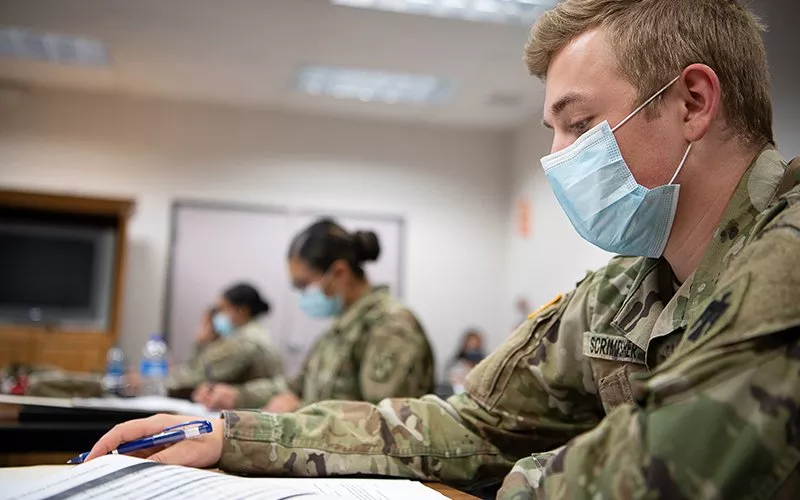
And it’s not just Arizona. Contact tracing has “largely failed in the United States” because of long waits for test results and the speed at which the novel coronavirus that causes the disease has spread, the New York Times reported July 31.
Contact tracing allows public health officials to determine how many people were exposed to someone who tested positive for COVID-19, according to the federal Centers for Disease Control and Prevention. The investigative method has been used to successfully control the spread of measles, tuberculosis and sexually transmitted diseases.
Since the novel coronavirus was detected in China late last year, contact tracing has proven effective in reducing the spread of the illness in China, South Korea, Germany and other countries.
“It’s a tried and true method that lowers spread of infectious diseases, and it would be useful for COVID-19 if it’s done right,” said Will Humble, a former director of the Arizona Department of Health Services who now heads the Arizona Public Health Association, which represents health workers and organizations.
For contact tracing to be effective, the patient should be interviewed within 24 hours of testing positive, CDC guidelines say. After the patient identifies where he or she has been and the people with whom they’ve had contact, health officials attempt to reach each of those contacts.

