

Tuesday, April 28, 2020

As some governors prepare to relax social distancing restrictions in their states, ProPublica hosted a digital event on Thursday answering your questions on how to safely leave home, reopen businesses and return to work. Based on a recent ProPublica article that pulled together seven key lessons learned by scientists, doctors and researchers in other countries that have battled the virus, the digital event assembled Editor-in-Chief Stephen Engelberg; health care reporter Caroline Chen; and Andy Slavitt, former head of the Centers for Medicare and Medicaid Services, to take questions and share what they’ve learned that can help all Americans for the days, weeks and months ahead.
“I think the big takeaway is there’s no such thing as returning to normal,” Chen said of what she learned after interviewing front-line officials from Italy, Germany, Spain, Singapore, Taiwan and South Korea. “And the goal should not be ‘normal.’”
She found that the experts she consulted consistently recommended that governors should plan to track where the virus is spreading by coordinating a large army of contract tracers and have a well-thought-out plan for isolating infected people. Across the board, they expressed the idea of never letting one’s guard down. “You cannot relax,” she said. “Because the second you relax, there’s going to be a second wave.”
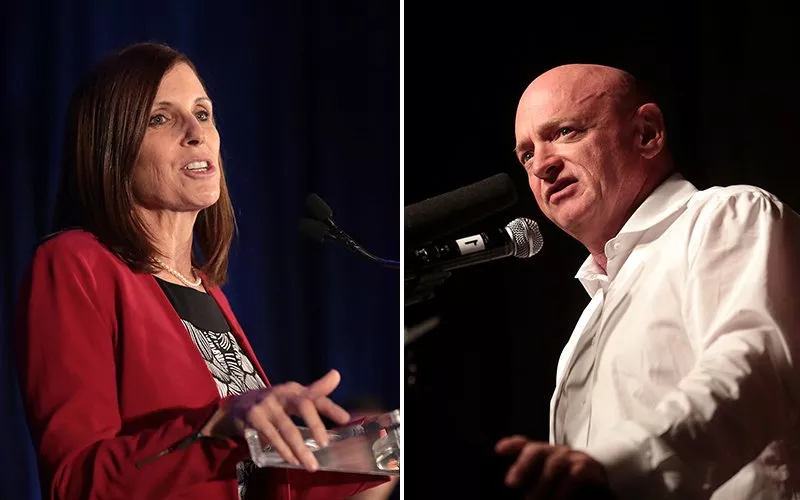
Democratic hopeful Mark Kelly continued to lead all Senate candidates, bringing in $11 million in the first quarter of 2020 to bring his campaign total to $31.3 million, according to his latest Federal Election Commission filing.
The senator he’s targeting, Sen. Martha McSally, R-Arizona, brought in $6.3 million in the quarter, raising her total to $19 million – good enough for fifth-highest among all Senate candidates, but still well below Kelly’s funds.
In the House, Rep. David Schweikert, R-Fountain Hills, raised $221,000 in the first quarter for a total of $1.1 million this campaign. But that trails Hiral Tipirneni, one of his Democratic rivals, who raised $507,000 this year for a total of $1.7 million. She had $1.2 million on hand as of March 31 compared to Schweikert’s $226,000 in the bank.
By contrast, four other House incumbents had fundraising advantages of at least $1 million each over their challengers. Two other incumbents with less than $1 million in contributions still had 10 times as much campaign cash as their challengers.
Political analysts have a range of theories on why some challengers have raced ahead of the incumbents, from the effect of coronavirus on fundraising, to the president’s unpopularity to factors specific to each race.
Tags: kelly , mcsally , election , race , funding , politics , Image

Gregg Murset of Scottsdale, a certified financial planner and father of six, also is chief executive and co-founder of BusyKid, a money-management app based on chores. The online tool, for children 5 to 15, is among several apps that teach children about finances, including Chore Check, Homey, Rooster Money and Greenlight.
Murset said BusyKid was launched in 2011 with input from psychologists, psychiatrists and data on parent’s interactions with their children and money. The app, he said, has 125,000 families signed up with a company goal by the third quarter of 2021 of having 1 million families.
Cronkite News recently spoke with Murset, Gilbert mom Milissa Chanice and her children Vincent, 10, and Vanessa, 7, who have used the BusyKid app for three years, to discuss how money management tools are valuable – especially for families with younger children who are sheltering at home.
Here are eight takeaways for parents and children. (Interviews were edited for clarity and length.)
Starting May 2, the state and its health partners plan to mount an Arizona Testing Blitz, with onsite and drive-thru testing. Testing sites include some Banner Health facilities and Walgreens stores, and criteria will be set by each individual location. Testing sites and dates will be continuously updated, the announcement said.
“Arizona has placed an emphasis on ramping up testing, but we need more,” wrote Ducey, whose March 30 stay-at-home order is set to expire Thursday.
Blue Cross Blue Shield of Arizona is among the organizations addressing the need for more testing. About 5,000 local firefighters, law enforcement officers and other first responders will have access to COVID-19 antibody testing starting Monday, the insurance giant said.
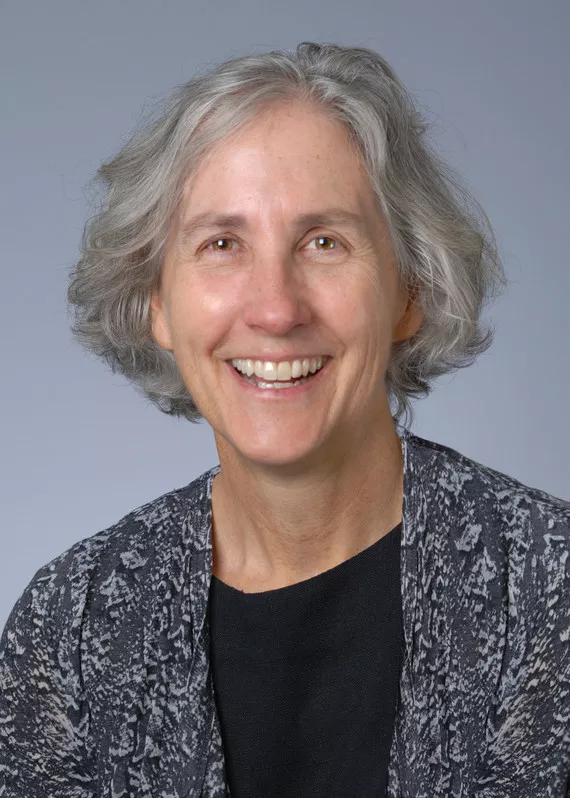
Cullen will replace interim health director Dr. Bob England, who came out of retirement to fill the role until the county replaced Marcy Flanagan, PhD. Flanagan left Pima County to take the director’s spot at the Maricopa County Health Department in 2019.
England will stay on as a part-time physician to assist the county through the COVID-19 pandemic and recovery. Cullen will begin working part-time May 4 as vice-chair of the county’s Back to Business Task Force.
“This is huge for Pima County. I am thrilled to have Dr. Cullen join our team,” said Pima County Chief Medical Officer and Deputy County Administrator Dr. Francisco Garcia, in the announcement. “Dr. Cullen is a respected and eminent public health physician who also is an exceptional administrator. She knows Pima County and Southern Arizona well and will build upon the strategies and programs we’ve established over the past decade to improve the health and wellbeing of everyone in Pima County.”
Cullen is a graduate of the University of Arizona College of Medicine, where she is also a clinical professor.
In her new role with Pima County, she will be responsible for leading the response to COVID-19. Cullen previously worked during the 2014/15 Ebola crisis as a volunteer physician with Partners in Health in Sierra Leone.
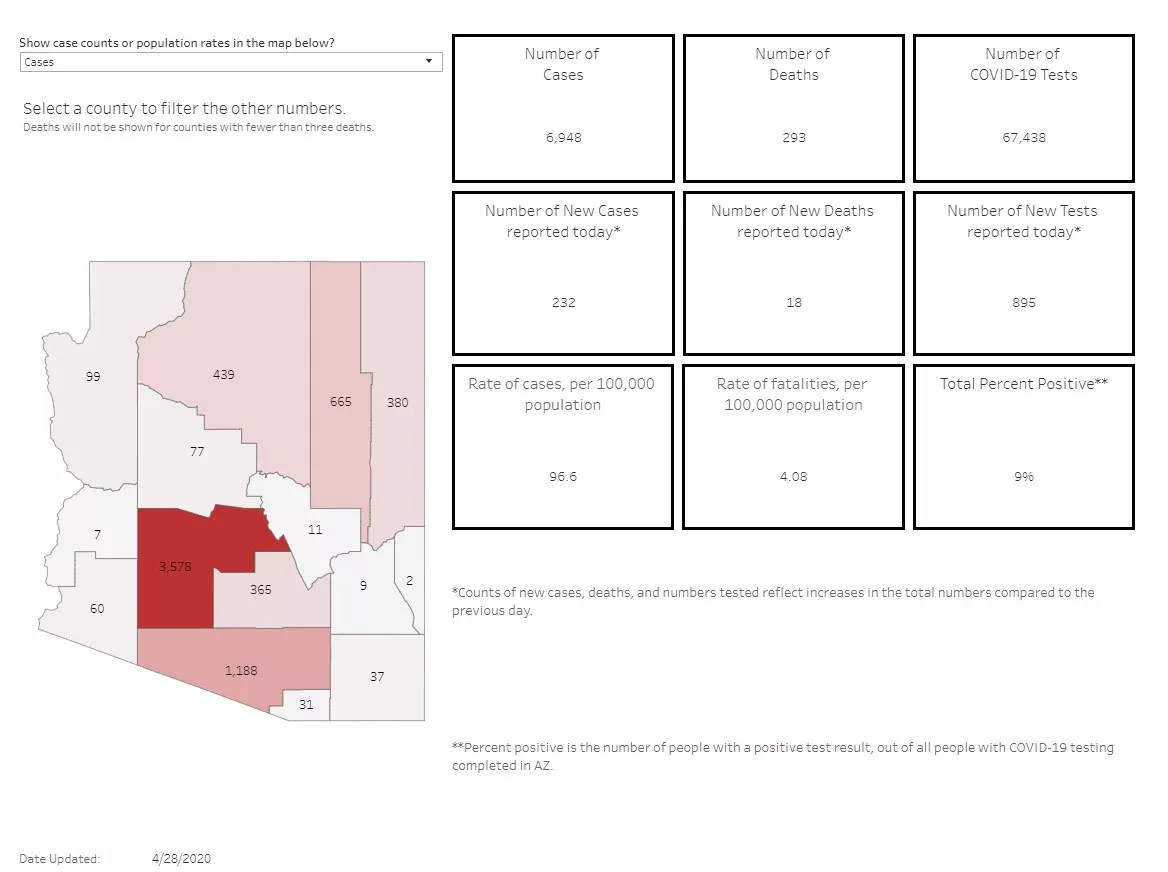
Pima County had 1,188 confirmed cases.

The coronavirus had killed 293 people statewide, including 76 in Pima County, according to the report.
In Maricopa County, the number of confirmed COVID-19 cases had risen to 3,578.
Because testing remains limited in Arizona and COVID-19 symptoms can take as long as two weeks to appear after exposure to the virus (while some people can remain entirely asymptomatic), health officials continue to urge the public to avoid unnecessary trips and gatherings of more than 10 people and have advised people to cover their faces with masks in public.
This week, Gov. Doug Ducey’s stay-home-home order, which drew a two-day protest earlier this month at the state Capitol, expires on Thursday, April 30.
The order has closed a wide variety of “non-essential” businesses, including bars, barbershops, salons, theaters, gyms, swap meets and many retail stores. Restaurants may remain open but only for takeout and delivery service. Public parks remain open but amenities such as playgrounds and restrooms are closed.
Ducey spokesman Patrick Ptak said that administration officials were still tracking data to determine the best course of action regarding whether the stay-at-home order would be extended into May. Ptak said there were three options under consideration.
“We can let the order expire. We can extend it as is. Or we can extend it with changes and modifications that reflect Arizona’s improving situation on the ground,” Ptak said. “The decision will be based on the data over the next week as well as the guidance and recommendations of public health officials.”

Tags: maga , trump , claytoonz , yankees , political , cartoon , Image
Monday, April 27, 2020

The delay will affect programs at the Catalina, Ellie Towne Flowing Wells, Littletown, Robles Ranch, Arivaca, Drexel Heights, and Picture Rocks community centers.
The delay is in order to wait for updated guidance from the state regarding operations during the COVID-19 pandemic.
According to Pima County Natural Resources, Parks and Recreation Program manager Kelly Cheeseman, staff will need time to reevaluate their programs to meet upcoming phases for re-opening.
“We need to figure out how we’re going to manage programs based on limitations of the current state of the world,” Cheeseman said.
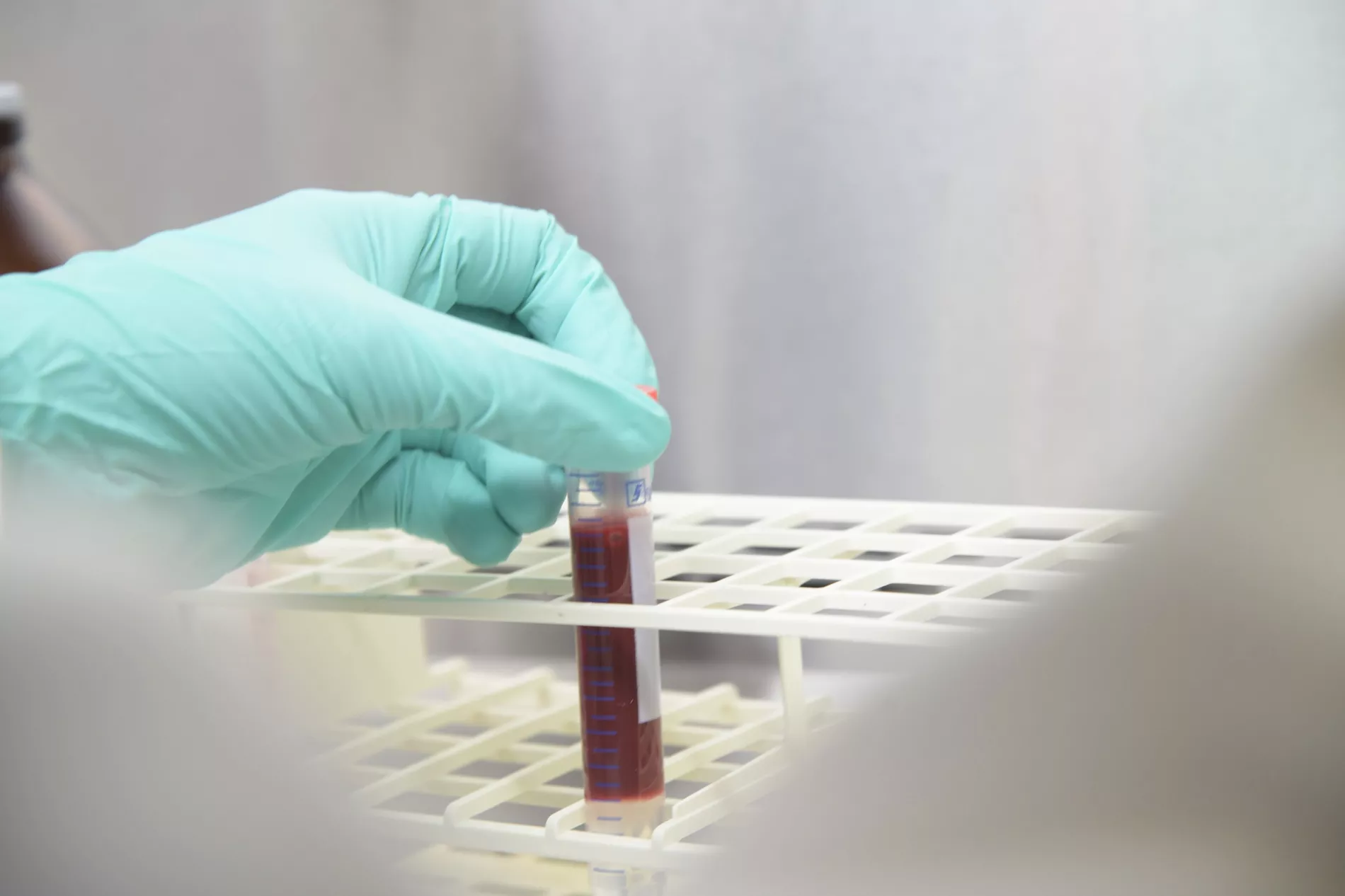
As previously reported by Tucson Local Media, the university was awarded the funding for 250,000 tests. The first phase of testing will begin in Pima County this Thursday, April 30, according to UA, and will include 3,000 samples.
Testing for the rest of the state’s front line workers will take place through May 7. With separate funds, the university will also test 1,500 members of the Pima County community. UA President Robert Robbins also recently announced plans to test the majority of the university’s 45,000 students and 15,000 employees.
The antibody tests are built upon the work of UA immunobiology professor Janko Nikolich-Žugich and associate professor Deepta Bhattacharya. The test will help determine how many people have been exposed to COVID-19 and how many have built an immunity against it.
Pima County Supervisor Sharon Bronson and Santa Cruz County Supervisor Bruce Bracker have teamed up to address the needs of not only their respective counties but Yuma County and Cochise County as well.
Last week the Pima County Board of Supervisors unanimously voted to amend the City of Tucson and Pima County Consortium 2014-2019 HUD Consolidated Plan and the Pima County Annual Action Plan to free up $630,000 split between various agencies addressing the public’s needs during the pandemic. Bronson was instrumental in making sure the county took action quickly.
It took the county about a week to diagnose who needed funding and where the county could get the funding, said Bronson.
“When you have to do something, you have to do it—you don’t wait,” Bronson said. “We needed to rethink what we’re doing with our COVID-19 response. If we don’t respond quickly, we’re negligent.”

