

Monday, August 31, 2020
ProPublica is a nonprofit newsroom that investigates abuses of power. Sign up to receive our biggest stories as soon as they’re published.
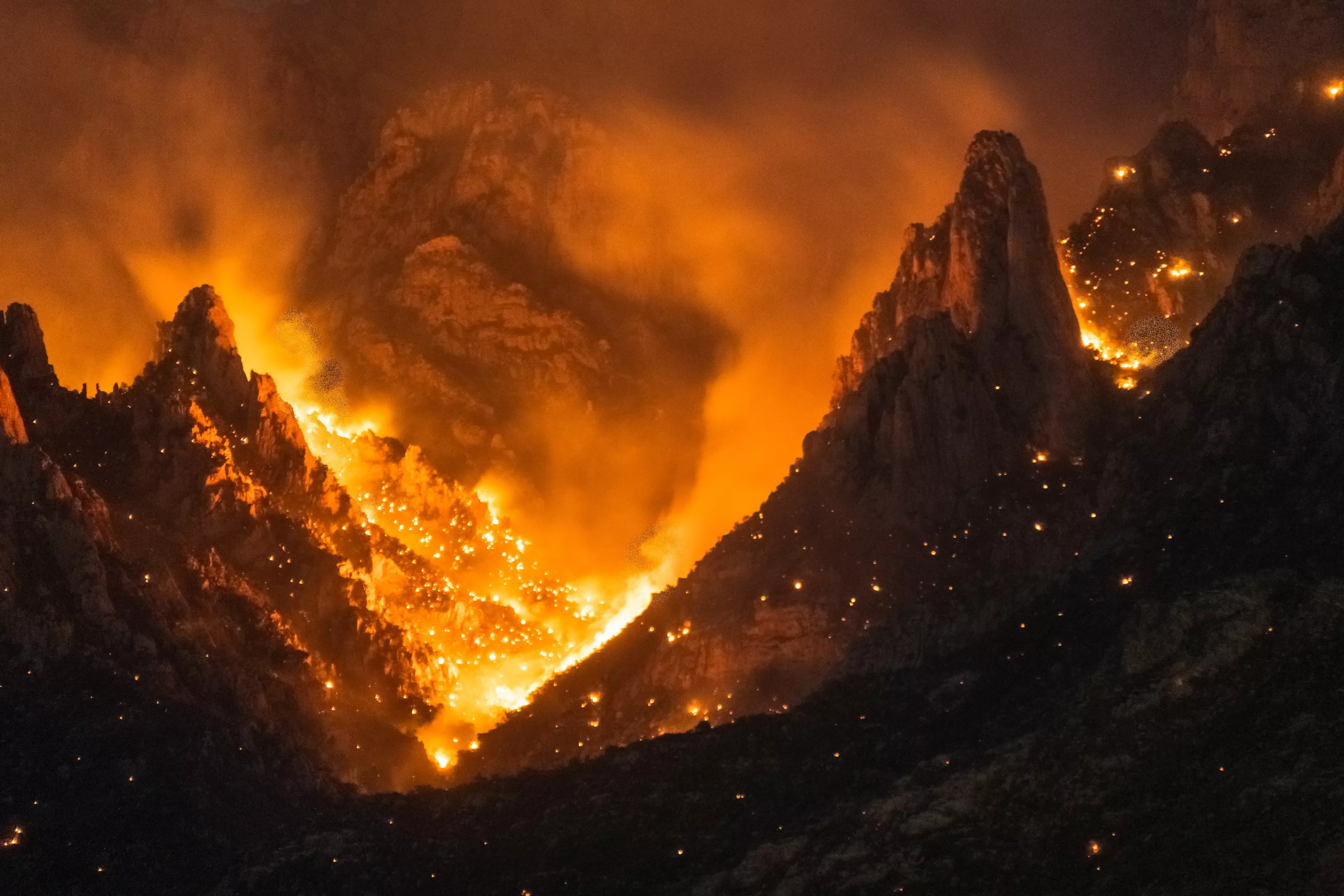
What a week. Rough for all Californians. Exhausting for the firefighters on the front lines. Heart-shattering for those who lost homes and loved ones. But a special “Truman Show” kind of hell for the cadre of men and women who’ve not just watched California burn, fire ax in hand, for the past two or three or five decades, but who’ve also fully understood the fire policy that created the landscape that is now up in flames.
“What’s it like?” Tim Ingalsbee repeated back to me, wearily, when I asked him what it was like to watch California this past week. In 1980, Ingalsbee started working as a wildland firefighter. In 1995, he earned a doctorate in environmental sociology. And in 2005, frustrated by the huge gap between what he was learning about fire management and seeing on the fire line, he started Firefighters United for Safety, Ethics, and Ecology. Since then FUSEE has been lobbying Congress, and trying to educate anybody who will listen, about the misguided fire policy that is leading to the megafires we are seeing today.
So what’s it like? “It’s just … well … it’s horrible. Horrible to see this happening when the science is so clear and has been clear for years. I suffer from Cassandra syndrome,” Ingalsbee said. “Every year I warn people: Disaster’s coming. We got to change. And no one listens. And then it happens.”
The pattern is a form of insanity: We keep doing overzealous fire suppression across California landscapes where the fire poses little risk to people and structures. As a result, wildland fuels keep building up. At the same time, the climate grows hotter and drier. Then, boom: the inevitable. The wind blows down a power line, or lightning strikes dry grass, and an inferno ensues. This week we’ve seen both the second- and third-largest fires in California history. “The fire community, the progressives, are almost in a state of panic,” Ingalsbee said. There’s only one solution, the one we know yet still avoid. “We need to get good fire on the ground and whittle down some of that fuel load.”

Inside Tucson Business, a sister paper of Tucson Weekly, will focus on nonprofit organization in its Sept. 11 edition.
As part of this project, ITB is inviting regional nonprofits to submit guest commentaries of 500 to 1,000 words about how their organization has pivoted as a result of the COVID-19 pandemic. While not all guest commentaries will be published in the print edition, we will publish them on the ITB website.
Please email your submissions to [email protected] with a photo of the author by Friday, Sept. 4.

Tags: music , jazz , tucson jazz festival , downtown , Image
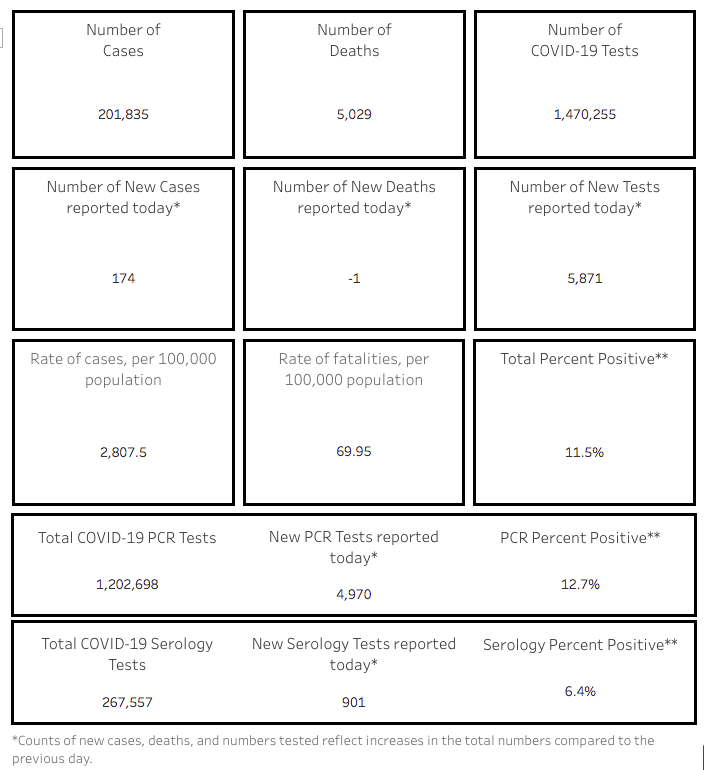
Pima County had seen 21,221 of the state’s 201,835 confirmed cases.
A total of 5,029 Arizonans had died after contracting COVID-19, including 576 deaths in Pima County, according to the Aug. 31 report.
The number of hospitalized COVID cases continues to decline. ADHS reported that as of Aug. 30, 786 COVID patients were hospitalized in the state. That number peaked at 3,517 on July 13.
A total of 894 people visited ERs on Aug. 30 with COVID symptoms. That number peaked at 2,008 on July 7 and has bounced between 900 and 1,100 for most of August.
A total of 256 COVID-19 patients were in intensive care unit beds on Aug. 30, the lowest that number has been since April 9, when 248 people were in ICU. The number of COVID patients in ICUs peaked at 970 on July 13.
In Pima County, the week-by-week counting of cases peaked the week ending July 4 with 2,398 cases, according to an Aug. 26 report from the Pima County Health Department. Those numbers have dropped with Pima County requiring the wearing of masks in public but they have bumped upward recent weeks, with 804 cases in the week ending Aug. 8 and 930 cases in the week ending Aug. 15. (Not all recent cases may have been reported.)
Deaths in Pima County are down from a peak of 54 in the week ending July 4 to 35 for the week ending Aug. 8 and 15 for the week ending Aug. 15.
Hospitalization peaked the week ending July 18 with 247 COVID patients admitted to Pima County hospitals. For the week ending Aug. 15, 63 COVID patients were admitted to Pima County hospitals.
Gyms, movie theaters, other biz reopening
Gyms, movie theaters and water parks were allowed to reopen last week in Pima, Maricopa and six other counties after they hit certain benchmarks that indicated “moderate” COVID-19 transmission category last week.

Friday, August 28, 2020

Taste of the Fair & Drive-In Movie Weekend. Ahh, remember the fair? Remember being in crowds of people, touching door handles and sitting at dirty picnic tables? The cool thing about this weekend is that it has the good parts of the fair without so many of the bad parts: Just visit the five concession stands and pick up some treats, then enjoy them either at spaced out picnic tables or on your own lawn chairs. Entry and admission are free! If you want to stay late and pay $15 per vehicle, check out this week’s drive-in movies too: Friday is Secret Life of Pets 2 (8 p.m. showtime) & The Karate Kid (10:30 p.m. showtime), and Sunday is Jumanji: Welcome to the Jungle (10:30 p.m. showtime). Friday, Aug. 28 and Saturday, Aug. 30. Doors for Taste of the Fair open at 5 p.m. Pima County Fairgrounds, 11300 S. Houghton Road. Details here.
Sculpture Showing: The Return of Angelica. Back in May, local artist John Benedict had one of his statues, Angelica, stolen. Angelica was recently recovered, and will be on display for the public at the Hacienda del Sol Guest Ranch Inner Courtyard through Saturday, Sept. 12. This is the last time to see the statue before John places it in his permanent collection! He’ll be around on select days for a socially-distanced meet and greet, including from 6:30 to 7:30 p.m. this Friday, Aug. 28. While you’re there, enjoy a special Angelica’s Revenge cocktail. In honor of Angelica, and of justice, of course. On display 8 a.m. to 2 p.m. daily through Saturday, Sept. 12. Hacienda Del Sol Guest Ranch Resort, 5501 N. Hacienda del Sol Road. Details here.
The Positivity of Art. What’s been keeping you sane these days? For us, one of those things is art, and thank goodness for the local artists who still have it in them to create during these crazy times. The Wilde Meyer Gallery is featuring a group show of gallery artists throughout August and September, in a space that’s carefully following COVID-19 guidelines. Wilde Meyer Gallery, 2890 E. Skyline Drive, suite 170.
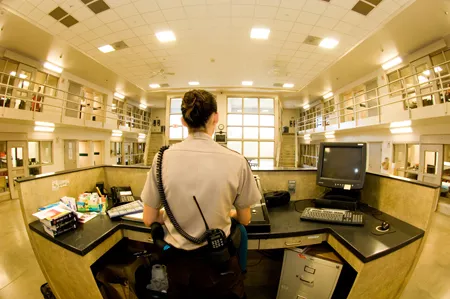
Since 2018, Pima County’s criminal justice agencies have been working on a proposal for a new Community Bond Program wherein the county would fund a non-profit bonding agency and help bail out qualifying defendants in the Pima County jail, under certain circumstances.
The program is intended to help reduce the size of the county jail population, and help prevent defendants from being incarcerated for weeks, months or years when they have not been convicted of a crime. It would apply to defendants in both felony and misdemeanor cases.
“Individuals who are incarcerated pre-trial are mostly confined not because they were denied bail or were a flight risk or were a danger to the public, but rather because they could not muster the financial resources needed to secure their freedom,” said Public Defense Services Director Dean Brault in the proposal. “An individual’s inability to afford monetary bail is not an indicator of that individual’s guilt, an accurate predictor of the risk of danger that individual poses to others, or an indicator of whether that individual will show up for a scheduled court proceeding.”
Brault said incarcerating individuals who cannot afford money bail without meaningfully considering other alternatives is a violation of those individuals’ due process and equal protection rights under the law.
The non-profit in charge of the Community Bond Program would offer to bail out any defendant who Pretrial Services recommends be released, and their bond is $30,000 or less. This program would not be available in cases with homicide, sex or child exploitation charges or if the defendant has a hold from another jurisdiction.
Tags: Public Defense Services , Pima County , Community Bond Program , Image

The Latest From ProPublica
Hundreds of Thousands of Nursing Home Residents May Not Be Able to Vote in November Because of the Pandemic
Renowned inventor Walter Hutchins has voted in every presidential election since 1952. This year, as many states stopped sending teams to help seniors vote, his nursing home was on coronavirus lockdown and his streak was in jeopardy. Read the story.
What to Know About Voting in 2020
- Here’s how to vote in all 50 states. (FiveThirtyEight, Axios)
- Here’s what to know about vote by mail and making sure your ballot counts. (The Guardian, US News & World Report, The Washington Post, The Wall Street Journal, Cyberscoop)
- Here’s what to know about voting by mail in Texas. (The Houston Chronicle, The Texas Tribune)
- Here’s how the mail voting process works in Colorado. (The Denver Post)
- Here’s what to know about voting in Pennsylvania. (The Philadelphia Inquirer)
- Here’s how the voting process is changing this year due to the pandemic. (BuzzFeed News)
- The USPS launched a site to answer questions on mail voting. (USPS)
- Here’s advice on how to prepare your newsroom to cover voting this year. (Knight-Cronkite News Lab)
Vote by Mail News
- More than 550,000 mail ballots were rejected in this year’s presidential primaries, per a new analysis. (NPR)
- University of Florida professor Michael McDonald is tracking mail ballot requests by party in several states. (Michael McDonald)
- North Carolina is the first state to begin voting for president and has seen 10 times the number of absentee ballot requests as in the same period in 2016. (ABC News)
- Democratic super PACs plan to spend more than $7 million on ads encouraging mail voting. (CNN)
- Some Black and Latino voters are distrustful of mail voting, surveys show. (Politico)
- Missouri spent tens of thousands of dollars on ballot drop boxes that won’t be used the fall. (KSN)

Multiple Major League Baseball teams followed their lead. The Arizona Diamondbacks did not on Wednesday, but on Thursday elected not to play.
“Today is not necessarily about not playing. It’s about creating an avenue to discuss why we aren’t playing. … It’s about making people better, making people aware,” pitcher Archie Bradley said.
For those who have been keeping tabs and partaking in The Loft's streaming services during the pandemic, you already know; your favorite local theater has kept it going with the good movie fuel, with fresh films every week to enrich your forced-home entertainment soul.
To stream these films, visit loftcinema.org
House of Cardin
A career retrospective on fashion great Pierre Cardin.
The August Virgin
A Madrid based, breezy romantic charmer from director Jonas Trueba.
Nomad: In the Footsteps of Bruce Chatwin
A new documentary from director Werner Herzog. What more do you need to know? Have at it.
Epicentro
A doc on post-colonial Cuba.
Mr. SOUL!
A film studying Ellis Hazlip, host of Amerca's first "Black Tonight Show."

