

Wednesday, August 19, 2020

The Arizona Supreme Court will allow the Invest in Education initiative to appear on the November 2020 ballot after it was previously tossed out by a Maricopa County Superior Court Judge, who ruled its petition summary was “fraudulent or substantially confusing to Arizona voters."
The initiative proposes a 3.5 percent surcharge in state income tax on Arizona’s wealthiest residents—individuals earning more than $250,000 per year or couples earning more than $500,000 per year.
The measure could potentially raise about $940 million in tax revenue per year for the benefit of Arizona public schools and their stakeholders and would affect only the top 1 percent of Arizona earners, according to the Invest in Ed campaign.
Maricopa County Superior Court Judge Christopher Coury made the ruling to toss the initiative last month, saying that their 100-word description on petitions signed by voters didn’t include key components of what the initiative would actually do.
The Invest in Education campaign appealed his ruling, and today the Arizona Supreme Court unanimously agreed that the initiative’s description “did not create a significant danger of confusion or unfairness and reverses the trial court ruling.”
“Today’s ruling by the Arizona Supreme Court keeping Invest in Education on the November ballot is an important victory because it gives millions of Arizona voters the opportunity to put more resources into our schools,” said Invest in Education Chairwoman Amber Gould in a press release. “We are confident voters will say ‘yes’ to improving Arizona’s K-12 schools by voting ‘yes’ on Invest in Education this November. The Invest in Education Initiative was crafted to benefit all Arizona’s 1.1 million K-12 students while not taxing working and middle-class families impacted by the pandemic.”
Election officials are expected to complete a review of petition signatures for the proposition this week.
To learn more about the ballot initiative, visit investined.com.
Tags: Invest in Ed , Ballot Initiative , Arizona Supreme Court , Image
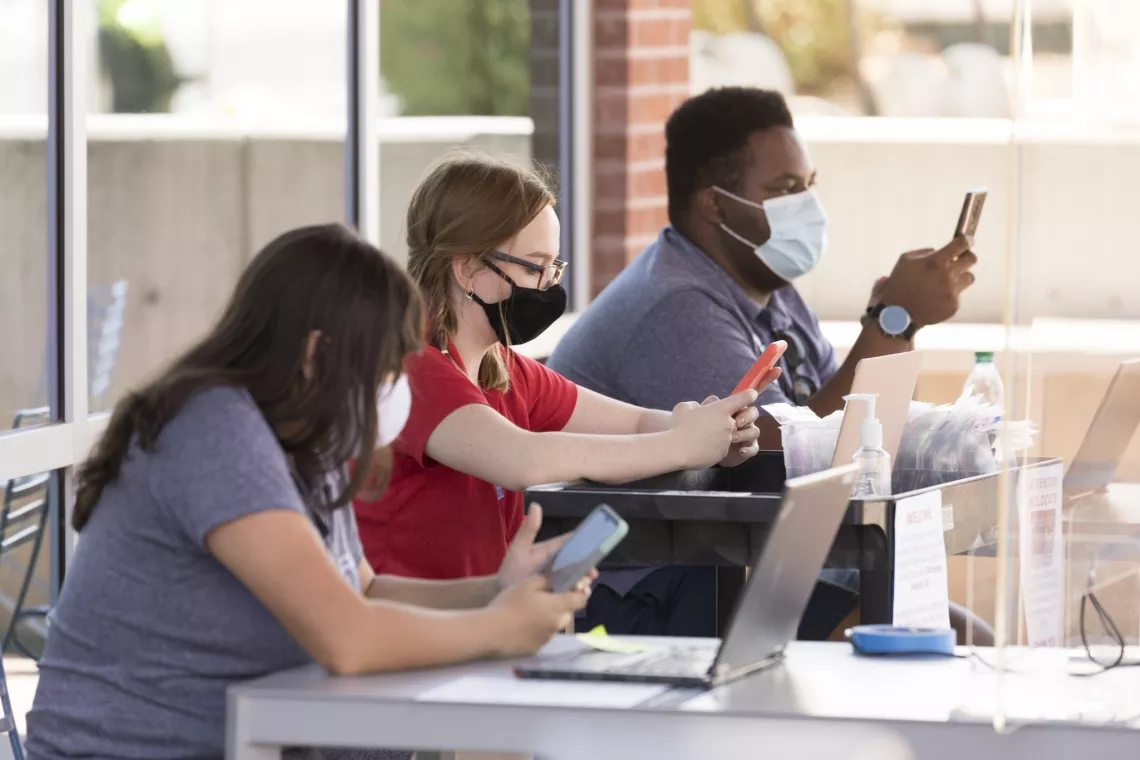
The University of Arizona has announced it is employing a new app where students, faculty, and staff who have been diagnosed with COVID-19 can anonymously notify others who may have been exposed. The COVID Watch app is available on Google and Apple devices, and is "able to calculate a person's level of exposure risk by assessing duration of exposure to an infected person, distance from an infected person and the point in the infection arc at which a user was exposed."
The COVID Watch app is being developed by UA in partnership with the nonprofit organization of the same name, co-founded by a UA alum Tina White.
However, this means the app can only track possible infections through the population if users have their phones on them.
Joyce Schroeder, head of UA Department of Molecular and Cellular Biology, is leading the app's development for the campus.
Who spent much of her allotted 30 seconds in the national spotlight talking about the reopening schools during the COVID-19 pandemic.
It was part of an unorthodox roll call of the states during an unorthodox Democratic National Convention, where almost all of the business is being conducted virtually because of coronavirus concerns.
As they announced the voted that led to former Vice President Joe Biden’s official nomination Tuesday, delegates from each of the 50 states and seven U.S. territories were encouraged to spend part of their time talking about an issue important to them – and the party.
For Garcia, that was the challenges schools are facing.
“So clearly as an Arizona educator I wanted to talk about what reopening schools is looking like for us. I wanted to talk about being a mother of a high school freshman,” she said Tuesday.
“I wanted to talk about being a union leader in this state and then I also wanted to talk about the fact that I am a very proud Chicana Latina living in Arizona where the majority of us are really going to take our chance and have our voices heard this fall,” Garcia said.
The speakers will deliver their addresses virtually to the convention, which has been forced mostly online because of concerns over COVID-19 – a pandemic that has hit the Navajo Nation particularly hard.
Nez, a member of Arizona’s Democratic delegation, talked to Cronkite News reporter Tyler Manion in a video call Tuesday about the honor of being a keynote speaker at the convention.
“It is an opportunity also to remind the U.S. citizens throughout this country that tribal nations have contributed greatly to the freedoms of this country and have also contributed on a daily basis to make this nation the most powerful country in the world,” Nez said.

If the multiple wildfires that flared throughout Arizona this summer didn’t already strain fire districts’ resources, the COVID-19 pandemic surely did.
The virus outbreak has incurred costs on fire districts ranging from overtime pay for firefighters who cover for their sick co-workers to replacement costs for equipment that was contaminated by COVID-19, according to Pima County officials.
Assistant County Administrator John Voorhees wrote in a memo that the federal government usually provides fire districts with direct emergency funding in a “disaster scenario” such as this, but the process is slow and districts are understandably anxious for extra funds during this time.
In addition, county officials are uncertain about whether the federal government will even approve these types of cost reimbursements.
“Given the rapidly evolving nature of the COVID-19 pandemic, the federal government has not provided well defined guidance regarding acceptable costs under the emergency program,” Voorhees wrote in his memo.
So in the meantime, Pima County has become the go-to agency for doling out emergency federal aid through their pot of CARES Act money. However, the county doesn’t want to be in this position.
“Maintaining accountability for federal funding would be a convoluted task if Pima County were to assume fiscal responsibility for every fire district, charitable organization, and non-profit in the region (over 200 separate entities),” Voorhees wrote.
On April 9, the Arizona Department of Emergency Management and Military Affairs provided training to all affected agencies within Pima County on how to apply for and meet reporting requirements for these types of grants. The training showed agencies how to navigate the application process under the Stafford Act, which dictates how the federal government distributes emergency funding to state and local governments.
According to the memo, Avra Valley Fire District, Drexel Heights Fire District, Green Valley Fire District, Northwest Fire District, Rincon Valley Fire District and Three Points Fire District have submitted applications for funding so far.
But the fire districts are interested in Pima County’s CARES Act funds because they are already accessible at the local level and can be disbursed faster with much less administrative action, Voorhees wrote.
In Maricopa County, some fire districts asked their Board of Supervisors to allocate a portion of their federal CARES Act funding to the districts. On July 29, the Maricopa supervisors set aside $5 million of the $399 million they received from the federal government for the fire districts, according to the memo.
Voorhees recommended the county “encourage each of them to become applicant agents for reimbursement under the Stafford Act.” He wrote this would give each district the autonomy to request funds for their own applicable expenses during the pandemic, while CARES Act funding will only be available until December 31, 2020.
In addition, Voorhees recommended Pima County ask the Board of Supervisors to set aside a portion of their CARES Act funding in order to “meet the immediate needs of the agencies.” In proportion to the funds Maricopa County allocated, this would be around $1.1 million.
He noted that Maricopa County only has four fire districts in their unincorporated jurisdiction, while Pima County has 21 districts.
“The individual impact of the $1.1 million in Pima County will be substantially less, but it will be a good start toward making the fire districts whole as they pursue reimbursement under the Stafford Act process,” Voorhees wrote.
Tags: COVID-19 , Coronavirus , Fire District , CARES Act , Emergency , Federal , Aid , Voorhees , Pima County , Image
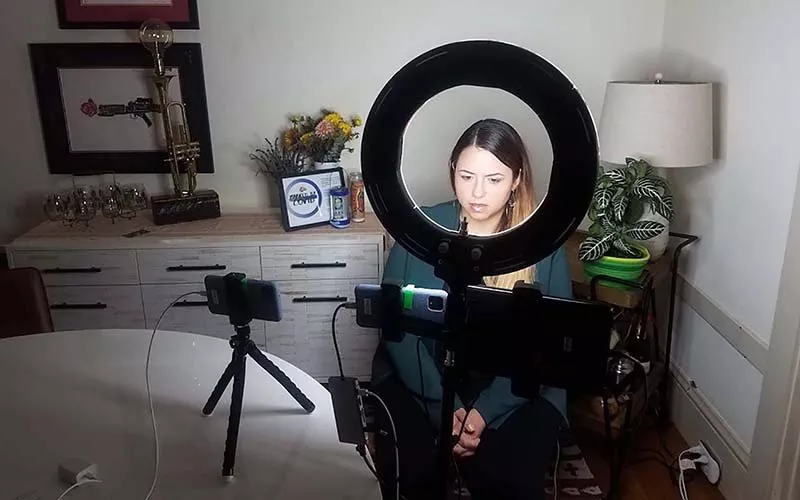
But that’s where Urquiza found herself Monday night, telling a national audience that her dad’s “only pre-existing condition was trusting Donald Trump, and for that, he paid with his life.”
Urquiza is one of two Arizonans bringing their personal struggles with health care under the Trump administration to the convention. Sedona resident Jeff Jeans, once a staunch opponent of the Affordable Care Act, is scheduled to speak Tuesday about how Obamacare saved his life after he was diagnosed with Stage-4 throat cancer.
“I sat in the hospital bed and cried because the things that I thought were important in my perceptions of the health care system and politics were so wrong,” Jeans said Monday, reflecting on his cancer treatment in 2012.
The speeches come at a convention where Democrats are highlighting what they call Trump’s failures in handling the COVID-19 pandemic that as of Monday had killed 169,350 in the U.S. and 4,506 in Arizona. Almost 5.4 million Americans, and 194,005 Arizonans, had tested positive for the disease.
The coronavirus is just one of the health care issues in the Democratic platform, which also calls for an expansion of Medicaid and a reversal of GOP efforts to undo Obamacare.
Urquiza, a former Maryvale resident, said she did not set out to become an advocate after the death of her father, Mark, but she has embraced the role.
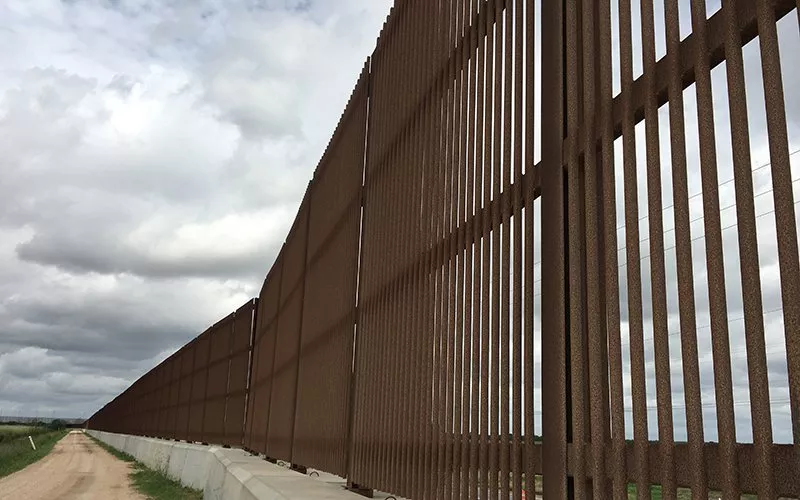
The visit came the same day that delegates to the Democratic National Convention were expected to formally nominate Vice President Joe Biden to challenge Trump this fall. Democrats quickly derided the president’s Yuma stop as little more than an “inaccurate and desperate” campaign stunt.
Democrats at the convention this week also adopted a campaign platform that pledges to undo much of the last four years of the Trump administration’s immigration policies. The platform’s immigration plank calls for more protection for DACA recipients, removal of some travel bans, expansion of asylum programs – and an end to border wall construction.
But Trump doubled down Tuesday, saying contractors could have 300 miles of border wall completed within the next week or two.
“Those are anti-climb plates at the top,” Trump said as he pointed to the top of the wall. “You see these guys climbing up with drugs on their back. They say, ‘Let’s take a pass on that.'”
But Santa Cruz County Sheriff Tony Estrada, in a conference call sponsored by Arizona Democrats before Trump’s visit, said a border wall is not a “silver bullet” for stopping drug trafficking, as most drugs come through ports of entry.
“We’re throwing money at something that’s not going to solve the problem,” Estrada said.
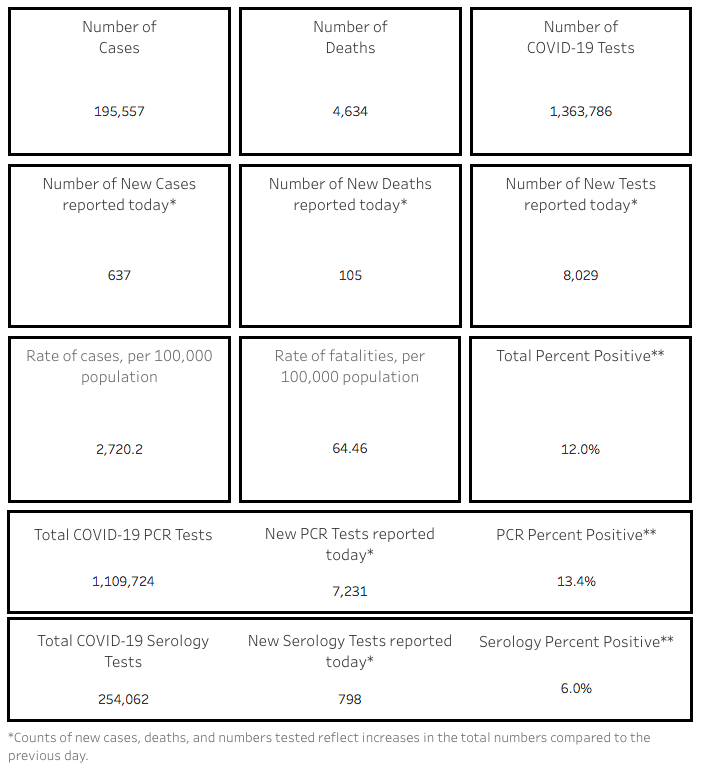
The number of Arizona’s confirmed novel coronavirus cases topped 195,000 as of Wednesday, Aug 19, according to the Arizona Department of Health Services.
Pima County had seen 20,047 of the state’s 195,557 confirmed cases.

With 105 new deaths reported today, a total of 4,634 Arizonans had died after contracting COVID-19, according to the Aug. 19 report.
The number of hospitalized COVID cases continues to decline. ADHS reported that as of Aug. 18, 1,160 COVID patients were hospitalized in the state, the lowest that number has been since June 6, when 1,079 people were hospitalized. That number peaked at 3,517 on July 13.
A total of 1,000 people visited ERs on Aug. 18 with COVID symptoms. That number peaked at 2,008 on July 7.
A total of 414 COVID-19 patients were in intensive care unit beds on Aug. 18, the lowest that number has been since June 9, when 413 people were in ICU. The number in ICUs peaked at 970 on July 13.
Pima County: Schools remain unsafe to open for in-person instruction
The Pima County Health Department is cautioning local school districts against bringing students back to campus.
According to the county's nine metrics based on local public health data, the current COVID-19 situation is too dangerous for schools to reopen for in-person classroom instruction.
Pima County Administrator Chuck Huckelberry said that when progress is made in all nine metrics, schools should be allowed to operate in a hybrid fashion with some in-person instruction combined with online learning, according to his Aug. 17 memo to the Board of Supervisors.
“The key concern for students, parents, teachers, administrators and all support personnel is when it is safe for schools to begin to transition and ultimately return to face-to-face classroom instruction,” Huckelberry wrote. “The scientifically based criteria offered by the State of Arizona and Pima County have been aligned to avoid any possible contradiction or confusion.”
The metrics include a variety of data concerning disease spread, healthcare capacity and public health capacity. As of Aug. 10, some had reached the “progress” state, but none have been fully met.
See the details on metrics and progress here.
The committee will determine the appropriate timing for face-to-face classroom instruction based on ADHS guidance, the current Pima County COVID-19 Progress Report and the latest scientific information available, according to Huckelberry's memo.
The county health department also recommended the committee develop a “written, worksite-specific COVID-19 prevention plan for every school district or facility.” This plan will include a “comprehensive risk assessment” of all work areas in all districts. The department is already working to develop a guidance document that will assist schools with their individual prevention plans.
City of Tucson offering rental assistance, grants for those affected by pandemic
The City of Tucson has allocated $4.5 million of federal CARES Act funding for an emergency rent and utility assistance program available to city residents.
To be eligible for the financial assistance, participating renters must have been financially impacted by the COVID-19 pandemic and the household income cannot exceed $68,400.
One application will be accepted per household, and each household can receive up to $2,500 to cover up to three months of late or upcoming rent or utility payments that were incurred after March 1, 2020.
All applicants will need to provide copies of their identification, bills, proof of income and other household information. The city’s Housing and Community Development department is partnering with several nonprofit organizations to administer these funds, including Primavera, Interfaith Community Services, Catholic Community Services and the International Rescue Committee.
Representatives from one of these agencies will contact applicants within five days for a phone interview and may ask for additional information. The funds will be sent directly to each applicants’ landlord and/or utility company.
“Keeping Tucsonans safe and healthy in their homes is the most important thing as many of our residents have been greatly impacted financially by this pandemic,” said Housing and Community Development Director Liz Morales in a press release.
The application process opened yesterday and renters are encouraged to apply as soon as possible. Visit www.tucsonaz.gov/hcd/rent-help to complete an application. If you need assistance or are unable to complete the application online, call (520) 837-5364 or email [email protected].
The city is also setting aside $3 million of CARES Act funding to be distributed to local workers and families that have been negatively impacted by the crisis.
The grant program, named the “We Are One | Somos Unos Resiliency Fund” will focus on individuals and households that have not received any state or federal COVID-19 relief money and whose income does not reach Pima County’s self-sufficiency standard.
The self-sufficiency standard measures how much money an individual or family needs to earn to be able to meet their basic needs with no public or private financial assistance. In 2018, the self-sufficiency standard for a single adult in Pima County was $9.66 per hour or $1,700 per month. For a household with two adults and two young children, the standard was $13.22 per hour for both adults, or $4,711 per month.
The city is partnering with the Women’s Foundation of Southern Arizona, who will administer the grants and begin accepting applications at 10 a.m. on Wednesday, Aug. 19 until 5 p.m. on Wednesday, Sept. 9.
County delays hike in restaurant permit fees
With local restaurants hit hard by the COVID-19 pandemic, the Pima County Board of Supervisors voted this week to delay a previously scheduled restaurant permit rate increase and provide credits to businesses that have already paid the higher fee.
The fee increase was originally adopted in 2016 as a way to recover costs incurred by the Pima County Health Department Consumer Health and Food Safety department, according to a county press release. The department performs regular restaurant safety inspections and has recently been tasked with enforcing increased health and safety standards in restaurants related to the current public health crisis.
The fee was planned to increase gradually over five years, and the supervisors’ decision yesterday will delay the final increase of 25 percent. The county says these extra costs were partially offset by their Restaurant Incentive Program, which allows restaurants to save up to 25 percent on their permitting fees if they adopt certain practices such as having a certified food handler on staff, eliminating trans-fats in their food and posting nutritional information on their menus.
Restaurants can still apply for these savings through the program, as it is not affected by this recent change in fees. It is currently unclear when the fee might be reinstated.
“The pandemic was a big blow to many local restaurants. We’ve strived to support our restaurants as they adapt, while keeping the broader community safe,” said Director Loni Anderson of the Consumer Health and Food Safety Division. “We know that the vast majority of restaurants have a passion for what they do, and want to do right by their customers. The Restaurant Incentive Program, and today’s delay, are designed to benefit restaurant owners, and the whole of Pima County.”
Get tested: Pima County has several testing centers, including pop-up sites this week
The Pima County Health Department has rolled out new pop-up COVID-19 testing sites that are available in areas of the county that have had limited testing availability.
Through their partnership with the Arizona Department of Emergency and Military Affairs, Pima County is wrapping up its free minimal contact testing operation today from 10 a.m. to 6 p.m. at Tucson Rodeo Grounds, 4823 S. Sixth Ave. Pre-registration is strongly encouraged and can be completed at www.pima.gov/covid19testing.
Participants can access their test results by logging into www.doineedacovid19test.com within a few days.
Pima County has three other testing centers with easy-to-schedule appointments—often with same-day availability—and you get results in less than 72 hours.
Centers offering a nasal swab are at the Kino Event Center, 2805 E. Ajo Way, and the Udall Center, 7200 E. Tanque Verde Road. The center at the northside Ellie Towne Flowing Wells Community Center, 1660 W. Ruthrauff Road, involves a saliva test designed by ASU.
Schedule an appointment at pima.gov/covid19testing.
The centers are also tied into Pima County’s developing contact tracing operation, which aims to be able to identify potential clusters and warn people if they have been in contact with someone who is COVID-positive.
If you’re interested in a test to determine if you’ve already had COVID-19, the UA has expanded a free COVID-19 antibody testing program to include 15 new categories of essential workers considered at high risk for exposure. The antibody test, developed by researchers at UA Health Sciences, determines who has been exposed to and developed an immune response against COVID-19.
In addition to healthcare workers and first responders, the test program is now open to educators, childcare workers, agriculture, grocery and foodservice workers, hospitality employees, solid-waste collection workers, transportation services workers and members of the National Guard. More information and registration for the test is available at covid19antibodytesting.arizona.edu.
—with additional reporting from Kathleen B. Kunz, Austin Counts, Jeff Gardner and Tara Foulkrod

Tags: coronavirus , mypillow , political , cartoon , claytoonz , Image
Tuesday, August 18, 2020
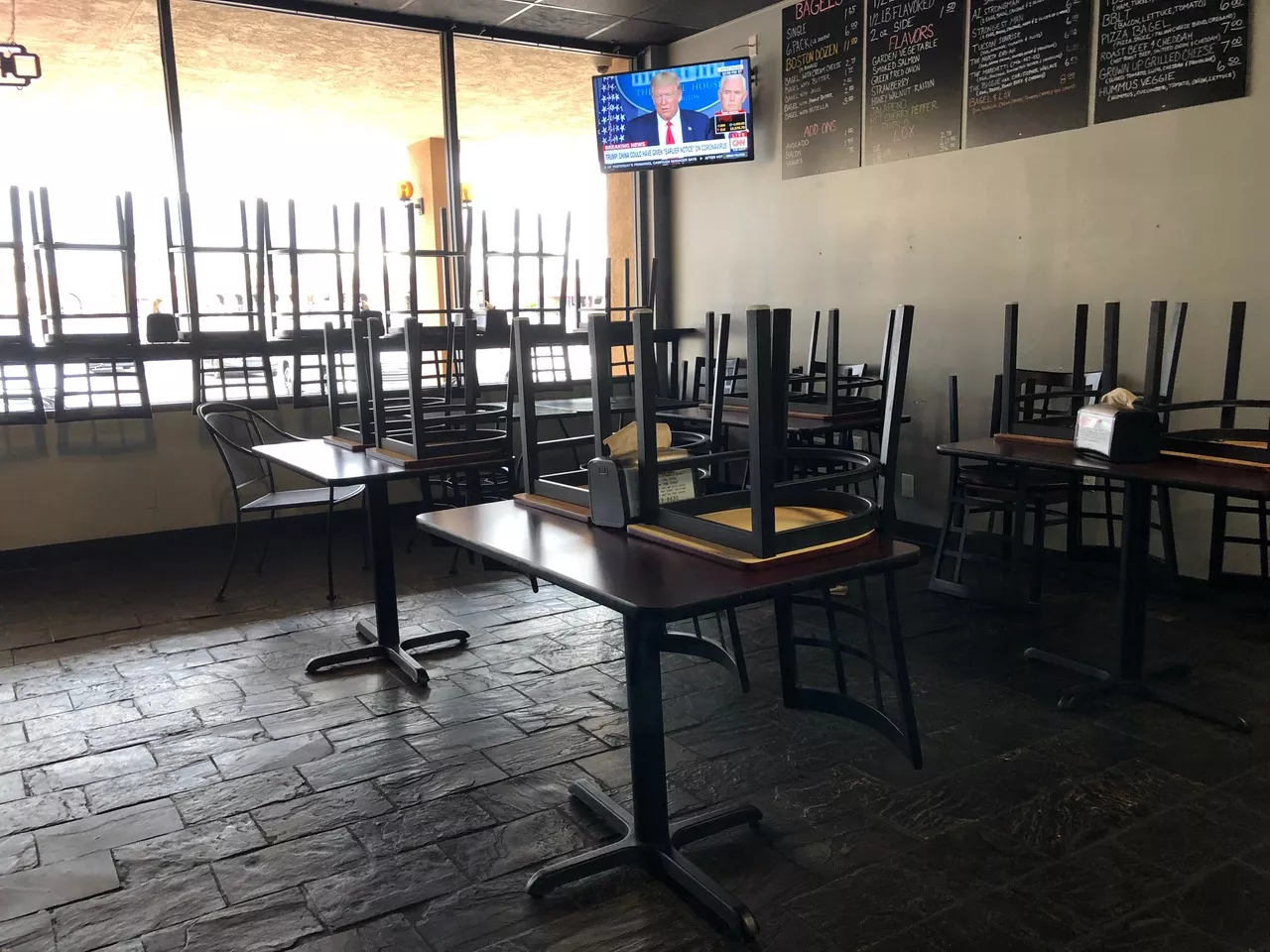
The COVID-19 pandemic has financially impacted a lot of economic sectors, but local restaurants remain one of the hardest hit sectors and they continue to struggle as Arizona and the larger United States fight to control the spread of the virus.
Because of this, the Pima County Board of Supervisors voted yesterday to delay a previously scheduled restaurant permit rate increase and provide credits to businesses that have already paid the higher fee.
According to a county press release, the fee increase was originally adopted in 2016 as a way to recover costs incurred by the Pima County Health Department Consumer Health and Food Safety department. They perform regular restaurant safety inspections and have recently been tasked with enforcing increased health and safety standards in restaurants related to the current public health crisis.
The fee was planned to increase gradually over five years, and the supervisors’ decision yesterday will delay the final increase of 25 percent. The county says these extra costs were partially offset by their Restaurant Incentive Program, which allows restaurants to save up to 25 percent on their permitting fees if they adopt certain practices such as having a certified food handler on staff, eliminating trans-fats in their food and posting nutritional information on their menus.
Restaurants can still apply for these savings through the program, as it is not affected by this recent change in fees. It is currently unclear when the fee might be reinstated.
“The pandemic was a big blow to many local restaurants. We’ve strived to support our restaurants as they adapt, while keeping the broader community safe,” said Director Loni Anderson of the Consumer Health and Food Safety Division. “We know that the vast majority of restaurants have a passion for what they do, and want to do right by their customers. The Restaurant Incentive Program, and today’s delay, are designed to benefit restaurant owners, and the whole of Pima County.”
For more information, visit www.webcms.pima.gov/health/food-safety.
Tags: COVID-19 , Coronavirus , Pima County , Consumer Health and Food Safety , Fee Increase , Restaurants , Image

