

Tuesday, August 18, 2020
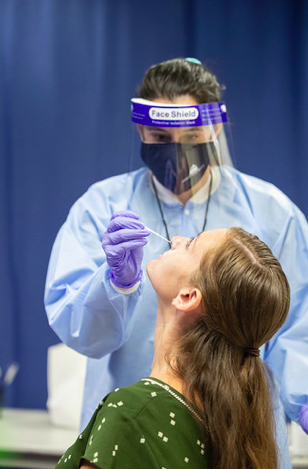
As Gov. Doug Ducey celebrates a significant decrease in COVID-19 cases across the state, the Pima County Health Department has interpreted the data more conservatively and is cautioning local school districts against bringing students back to campus.
According to the county's nine metrics based on local public health data, the current COVID-19 situation is too dangerous for schools to reopen for in-person classroom instruction.
Pima County Administrator Chuck Huckelberry said that when progress is made in all nine metrics, schools should be allowed to operate in a hybrid fashion with some in-person instruction combined with online learning, according to his Aug. 17 memo to the Board of Supervisors.
“The key concern for students, parents, teachers, administrators and all support personnel is when it is safe for schools to begin to transition and ultimately return to face-to-face classroom instruction,” Huckelberry wrote. “The scientifically based criteria offered by the State of Arizona and Pima County have been aligned to avoid any possible contradiction or confusion.”
The metrics include a variety of data concerning disease spread, healthcare capacity and public health capacity. As of Aug. 10, some had reached the “progress” state, but none have been fully met:
1. The county health department wants to see “decreasing cases over two consecutive weeks.” The number of new cases this week is currently lower than the number of cases last week, so the department designated progress made in this metric.
2. The health department wants to see “decreasing deaths over 14 days.” This data is delayed by four weeks, so as of Aug. 9 the data from June 21 through July 4 showed the death rate at a plateau. The department designated that this metric was not met.
3. The health department wants to see less than two new hospitalizations per 100,000 residents across a three-day average. As of Aug. 9, this metric was not met.
4. The health department wants to see a “sustained number of completed tests for 14 days.” Currently, the number of new tests being completed is beginning to increase after a seven-day period, so the department designated progress made in this metric.
Tags: COVID-19 , Coronavirus , Pima County Health Department , Back to School , School Reopening , Image

“We have about 10 years of Latino activism resistance that has been going on … and we have created this environment in Arizona,” that has primed the state for a fight, said Rep. Ruben Gallego, D-Phoenix.
Gallego’s comments came during a virtual meeting of Hispanic state lawmakers that also named Texas, Wisconsin, Michigan, Florida and Pennsylvania as battlegrounds. The panel, organized by the National Hispanic Caucus of State Legislators, came on the first day of the Democratic National Convention.
The Facebook Live event discussed strategies for mobilizing Latino voters in battleground states.
A request for comment from the Arizona Republican Party was not immediately returned Monday, but at least one political analyst agreed with Democrats that “Arizona is unequivocally a battleground state this year.”
Mike Noble, chief of research and managing partner at OH Predictive Insights, said the election outcome in Arizona will be a “coin flip” in November.
“I not only think that Arizona will be incredibly close,” but it could be a tipping point state that ultimately decides who sits in the White House,” Noble said.
He said former Vice President Joe Biden, the presumptive Democratic presidential nominee, holds a slight edge in traditionally red-state Arizona. A Real Clear Politics roundup of polls on Aug. 12 gave Biden 47% of the vote in Arizona, compared to 45% for President Donald Trump.
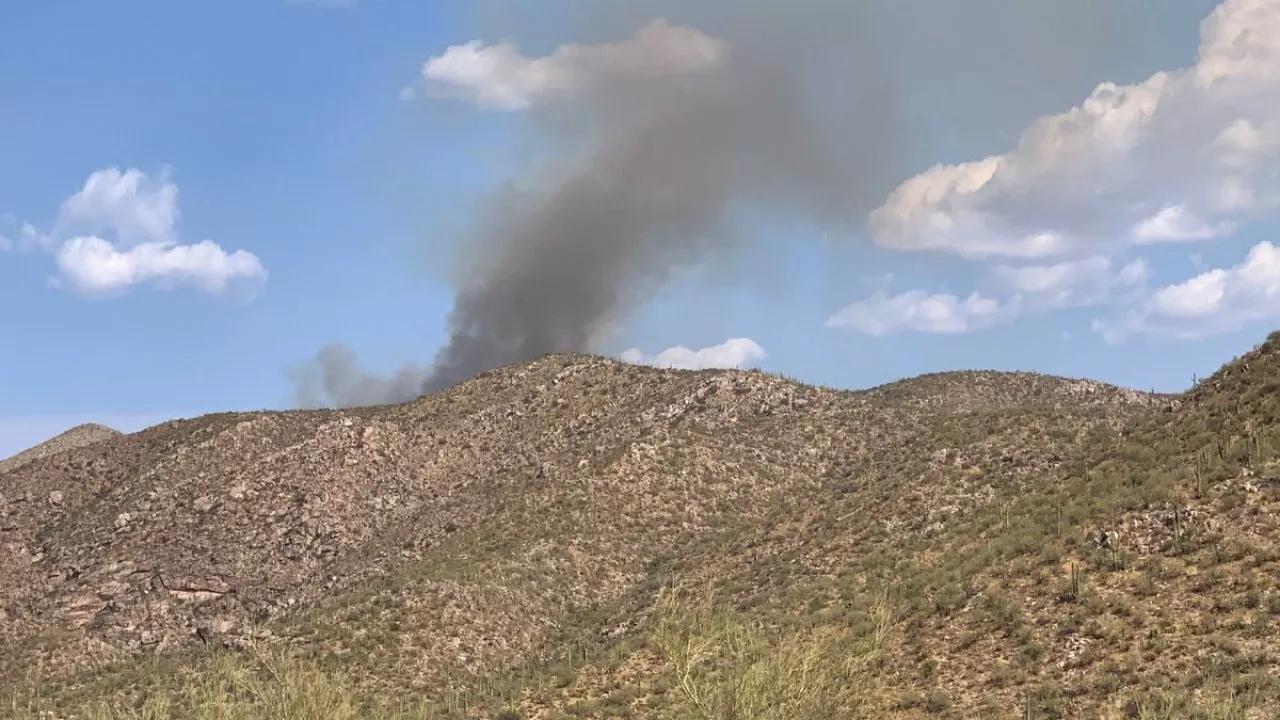
According to the Arizona Department of Forestry and Fire Management, air and ground forces have responded to the fire, which threatens a few structures in the rugged terrain. The fire has increased today due to high temperatures, and fire crews are planning for additional air support to hold the fire at the roadline.

When it comes to COVID-19, what happens in Vegas doesn’t stay in Vegas.
Las Vegas casinos reopened June 4, and they have become a likely hotbed for the spread of the novel coronavirus, public health experts said. But if tourists return home and then test positive for COVID-19, the limitations of contact tracing in the midst of a pandemic make it unlikely such an outbreak would be identified.
Contact tracing, one of the pillars of stopping the pandemic, is a labor-intensive process where a health official tracks down anyone who’s been in contact with an infected person and takes steps to prevent the disease’s spread. But there is no national system in place for contact tracing, said Joshua Michaud, an epidemiologist and associate director of global health policy for the Kaiser Family Foundation. It’s decentralized and performed by local health agencies that may not communicate with one another, especially given their caseloads. So, if a casino had a “cluster outbreak” or “superspreading event” among visitors, it’s unlikely contact tracing would catch it, Michaud said.
“The way it’s set up right now, contact tracers are not looking for clusters that might identify outbreaks tied to traveling to a casino or other specific locations,” Michaud said. “You’re not actively looking for it, so you might miss that event. Contact tracing is not set up to answer those questions, so you’ll still be in the dark.”
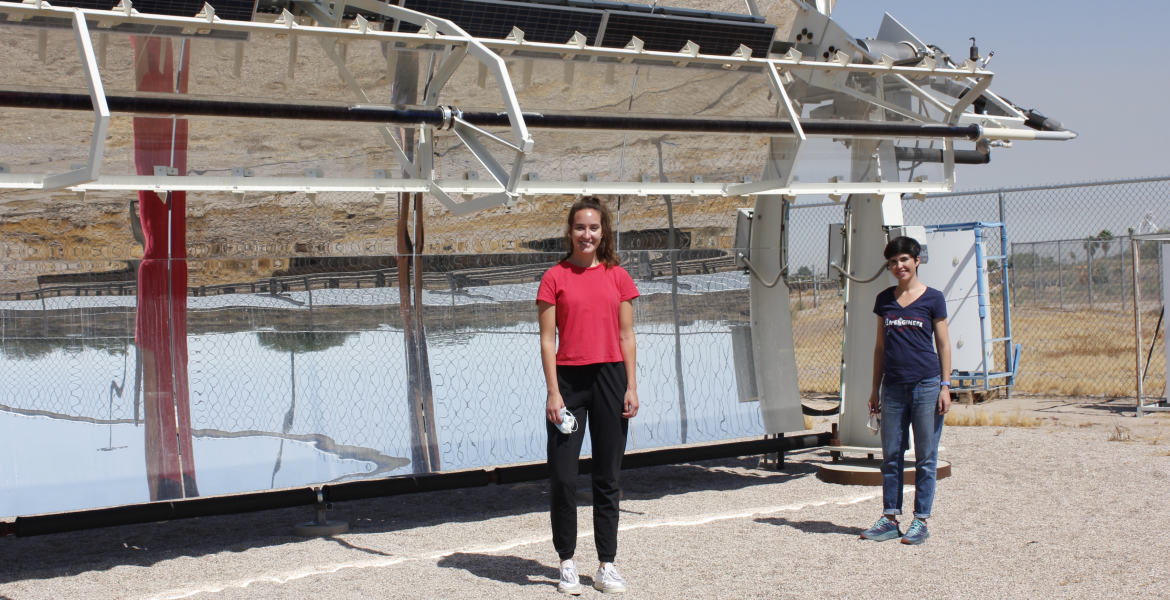
A team of University of Arizona scientists is developing a solar-powered desalination system that uses less energy and could provide more water for arid regions like Arizona. Funded by a $500,000 grant from the Department of Energy, the system recovers water from the “concentrated waste streams” formed from other types of desalination like reverse osmosis. When reverse osmosis occurs, 20 to 50 percent of the water that enters the system remains as a concentrated waste stream. This new solar-powered desalination system also uses photovoltaics and membrane distillation to capture water as efficiently as possible.
"The benefit of using both CSP (concentrated solar power) and PV (photovoltaics) is that we can double the energy efficiency compared to existing thermal desalination systems that just use PV or CSP," said Kerri Hickenbottom, assistant professor of chemical and environmental engineering and principal investigator for the project. "This off-grid system will use renewable energy resources to transform the way we manage high-salinity concentrate typically considered as waste streams."
The team is conducting their research at the UA Optical Sciences Center’s solar testbed. The system employs membrane distillation, which creates a temperature gradient to separate contaminants. The photovoltaics, which is the technology used in solar panels, convert the sun's light directly into electricity using semiconductor material. This means the system can serve off-grid areas, such as Native American reservations.
"You lose efficiency when you go from one form of energy to another, so using the solar energy to generate electricity and to heat the water directly is how we plan to be about twice as efficient as existing systems," Hickenbottom said.
The researchers have submitted their technology for the American-Made Challenges Solar Desalination Prize, sponsored by the U.S. Department of Energy. The four-phase competition, which offers more than $9 million in prizes, is designed to advance the development of solar-driven thermal desalination technologies. As part of the challenge, the team created a 90-second video about the project.
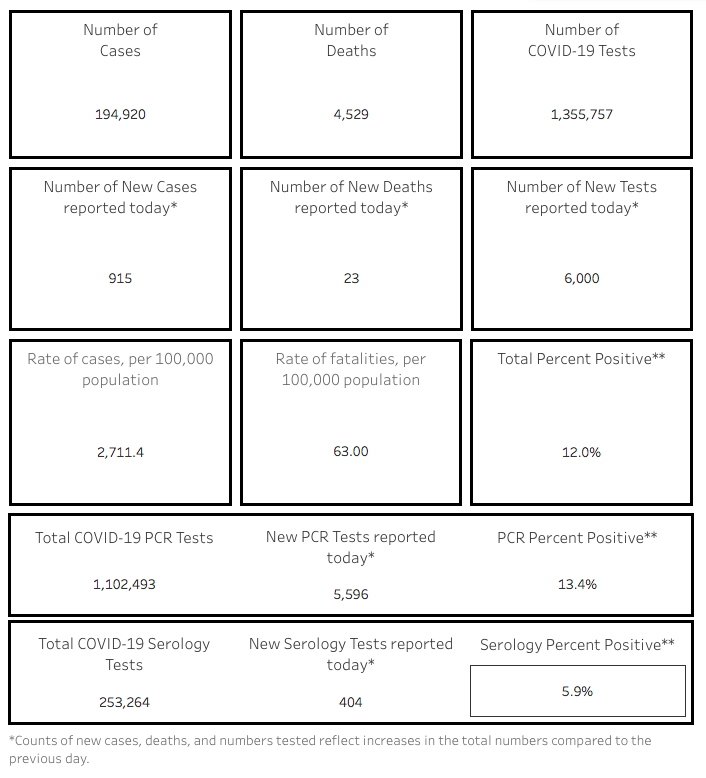
Pima County had seen 19,976 of the state’s 194,920 confirmed cases.

A total of 4,529 Arizonans had died after contracting COVID-19, according to the Aug. 18 report.
The number of hospitalized COVID cases continues to decline. ADHS reported that as of Aug. 17, 1,167 COVID patients were hospitalized in the state, the lowest that number has been since June 6, when 1,079 people were hospitalized. That number peaked at 3,517 on July 13.
A total of 960 people visited ERs on Aug. 17 with COVID symptoms. That number peaked at 2,008 on July 7.
A total of 427 COVID-19 patients were in ICU beds on Aug. 10. The number in ICUs peaked at 970 on July 13.
Trump traveling to AZ today
President Donald Trump is scheduled to visit Yuma today to highlight progress on the border wall.
“President Trump’s return to the Grand Canyon State is yet another reminder that voters have an easy choice this November," said Trump Victory Spokesperson Emma Hall. "As Joe Biden hides behind Zoom to push his extreme immigration policies that prioritize illegal immigrants over Americans, President Trump has fought to secure the U.S. border, dismantle sanctuary cities, and protect communities across Arizona.”
Arizona Democratic Party Chair Felecia Rotellini pointed to Yuma’s high incidence of COVID-19, as the border town has 5,169 confirmed cases of coronavirus for every 100,000 people, which is the highest concentration of any metro area in the country.
“No matter how hard he tries, Trump can’t distract from how badly his broken promises have failed Arizonans and left working families across the state demanding new leadership,” Rotellini said. “Arizonans need leaders with a plan to contain the virus and rebuild our economy—not another photo op or bus tour.”
City of Tucson offering rental assistance, grants for those affected by pandemic
The City of Tucson has allocated $4.5 million of federal CARES Act funding for an emergency rent and utility assistance program available to city residents.
To be eligible for the financial assistance, participating renters must have been financially impacted by the COVID-19 pandemic and the household income cannot exceed $68,400.
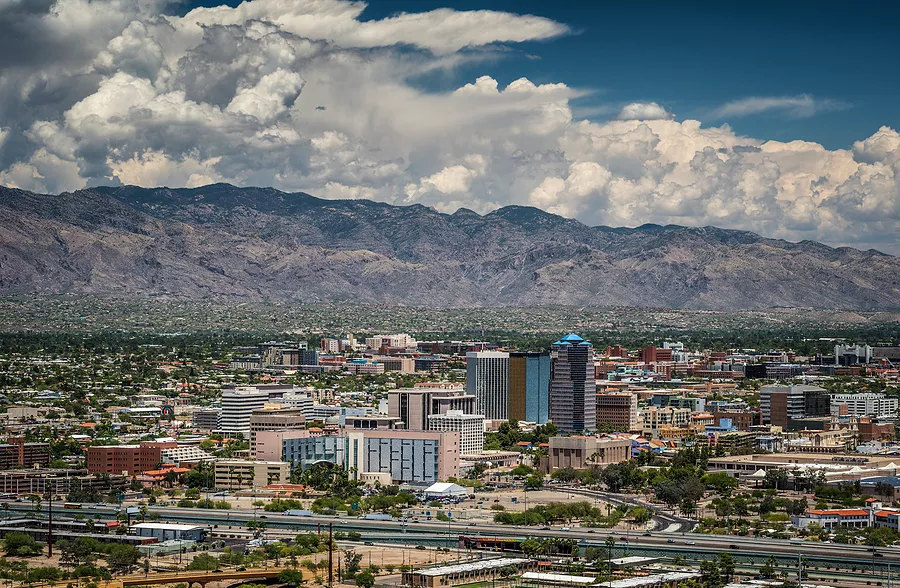
The City of Tucson has allocated $4.5 million of federal CARES Act funding for an emergency rent and utility assistance program available to city residents.
To be eligible for the financial assistance, participating renters must have been financially impacted by the COVID-19 pandemic and the household income cannot exceed $68,400.
One application will be accepted per household, and each household can receive up to $2,500 to cover up to three months of late or upcoming rent or utility payments that were incurred after March 1, 2020.
All applicants will need to provide copies of their identification, bills, proof of income and other household information. The city’s Housing and Community Development department is partnering with several nonprofit organizations to administer these funds, including Primavera, Interfaith Community Services, Catholic Community Services and the International Rescue Committee.
Representatives from one of these agencies will contact applicants within five days for a phone interview and may ask for additional information. The funds will be sent directly to each applicants’ landlord and/or utility company.
“Keeping Tucsonans safe and healthy in their homes is the most important thing as many of our residents have been greatly impacted financially by this pandemic,” said Housing and Community Development Director Liz Morales in a press release.
Tags: Rent , Utility , Emergency Assistance , Grant , Money , City of Tucson , Housing and Community Development , Image

Tags: maga , trump , ballot , voting , mail-in , absentee , elections , claytoonz , political , cartoon , Image
Monday, August 17, 2020
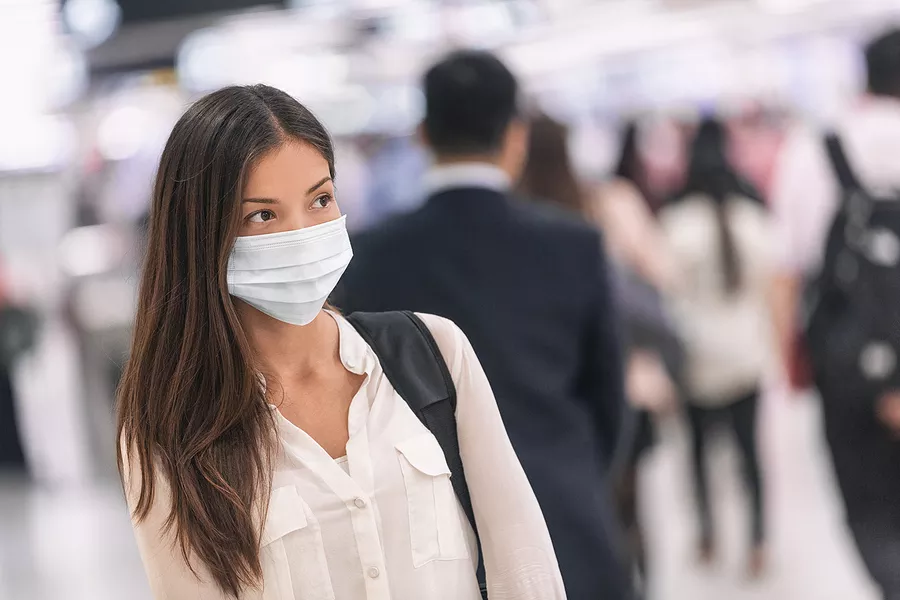
The Trump administration is predicting years of dramatically reduced international demand for U.S. visas, and planning for drastic budget cuts to visa services worldwide as a result, according to an internal memo seen by ProPublica.
The projections made by the U.S. State Department in a memo signed by Secretary of State Mike Pompeo on Monday contrast with the rosier outlook expressed repeatedly by President Donald Trump. As recently as Aug. 5, Trump predicted that the coronavirus “will go away” and that a vaccine will be available before the end of the year. But internally, the memo shows, the government is planning for the pandemic to drastically reduce international travel to the U.S. through at least 2022.
The memo projects steep reductions, in particular, to non-immigrant visas. Trump has issued restrictions on some categories of non-immigrant visas, citing the economic impacts of the pandemic, but the majority of non-immigrant visas processed by the State Department are temporary visas for business travel and tourism.

That could lead to cuts to equipment expenditures and, perhaps, to smaller sports programs that depend on revenue from football in the fall and basketball in the winter.
High school sports in Arizona have been stopped, revived and delayed again under state orders and limits issued by the Arizona Interscholastic Association, the governing body for high school sports. But the situation is fluid, similar to that of college and professional sports pondering whether it’s possible to have a 2020 season at all.
“You miss hearing the sounds of the gym and the weight room,” said Pete Jelovic, athletic director at Centennial High School in Peoria. “Even when school starts, the passing periods or the lunch periods, you hear all of those things and you get to interact and you build up towards events.
“We miss having that interaction on our campus and that routine, and just the daily things that happen on a high school campus. We would like to get back to normal as quickly as possible, but we also have to do it safely.”

