
Monday, September 28, 2020
WASHINGTON – Almost every Senate Democrat has come out against President Donald Trump’s plan to rush through a replacement for the late Supreme Court Justice Ruth Bader Ginsburg, saying the nomination should wait until after the looming elections.
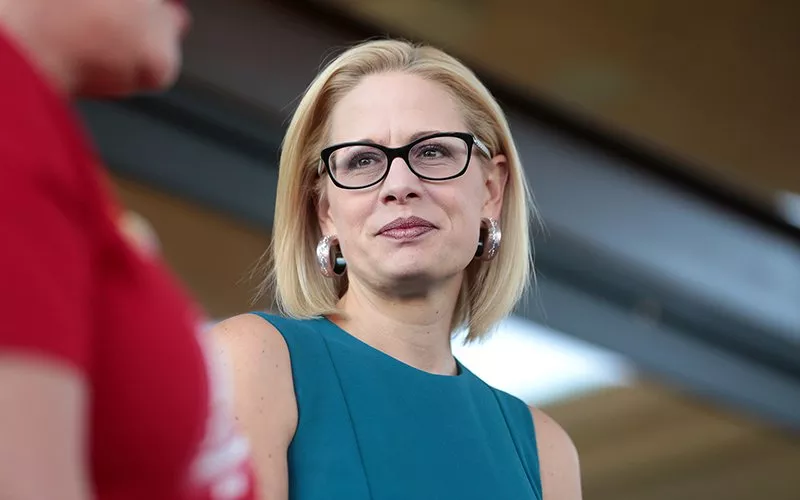
Every Senate Democrat but one – Arizona Sen. Kyrsten Sinema.
While other Democrats were using language like “shameful,” “brazen hypocrisy,” “horrible precedent” and “theft” of a Supreme Court seat in what they called a power grab, Sinema has only commented on Ginsburg’s legacy after the justice’s death last Friday.
Political analysts said Sinema’s silence is not surprising given her carefully cultivated image as bipartisan and moderate.
“If you’re going to be a Democrat that wins in a traditionally red state, you’re not going to be a super-progressive liberal democrat, you’re probably going to be more moderate,” said Frank Gonzalez, an assistant professor at the University of Arizona School of Government and Public Policy.
He said Sinema is a politician who wants to be viewed as an “independent thinker,” a posture echoed by Garrett Bess, vice president of government relations at the Heritage Foundation.
“I think it tracks with sort of her … quasi maverick-type record,” Bess said.
But it did not sit well with some progressive Democrats in Arizona.
“This is going to affect the country for another 30, 40 years,” said Signa Oliver, co-lead for Desert Progressives Indivisible. “Open your mouth.
“Those of us that knocked on doors for her to get her elected, have been very disappointed several times with her inability to, you know, step forward and represent the Democratic Party principles that we elected her to do,” Oliver said.
Sinema’s office did not respond to requests for comment on her position – or lack thereof – leaving her weekend tweet expressing “gratitude and service to our country” as her only comments on Ginsburg and the court vacancy she left behind.
Within hours of Ginsburg’s death last Friday, by contrast, Senate Majority Leader Mitch McConnell released a statement promising a Senate vote on Ginsburg’s replacement.
“We pledged to work with President Trump and support his agenda, particularly his outstanding appointments to the federal judiciary,” McConnell’s statement said. “President Trump’s nominee will receive a vote on the floor of the United States Senate.”
Trump is scheduled to announce his pick Saturday and most Republicans, including Arizona Sen. Martha McSally, rushed to agree with McConnell. But Democrats were livid.
They have repeatedly brought up McConnell’s refusal in 2016 to even grant a hearing to President Barack Obama’s Supreme Court nominee, Merrick Garland, because it was an election year. McConnell, who delayed action for almost the entire year, said then that voters should have a say in who makes the choice.
“Unfortunately, Sen. McConnell has decided to go against Justice Ginsburg’s dying wishes and is cementing a shameful legacy of brazen hypocrisy,” Vermont Sen. Bernie Sanders, an independent who caucuses with Democrats, said in a tweet the night of Ginsburg’s death. “The right thing to do here is clear, and Senate Republicans know it. We should let voters decide. Period.”
Even moderate Democrats jumped to criticize McConnell and the White House for rushing to fill the seat, an appointment that could give conservatives an unassailable 6-3 majority on the court.
“The American people deserve to choose the president who will fill this vacancy,” said Sen. Tom Carper, D-Del., the co-chair of the Moderate Democrats Working Group. “I will oppose any Supreme Court nominee until after Inauguration Day, and I will do everything I can to fight for fairness.”
Tags: scotus , sinema , supreme court , Image
Friday, September 25, 2020
Some movies are made to make viewers miserable. It’s what they set out to do, and if done well, cinema geeks such as myself will tip our hats to them.
The Devil All the Time is one of those movies. It’s an ugly film—and it’s supposed to be. I understand that a lot of people do not need this sort of movie in their lives right now. I, for one, found it a mildly rewarding viewing experience, even though I had to take two showers afterward.
The film starts in World War II, where soldier Willard Russell (Bill Skarsgard) makes a discovery that will pretty much fuck him up for the rest of his life. Upon returning stateside, he tries to live the American life: He gets married to Charlotte (Haley Bennett) and has a boy named Arvin (Tom Holland, when the character grows up). Try as Willard might to live a good, pious life, tragedy strikes multiple times.
Arvin grows up with a decent-enough head on his shoulders despite the trauma, and has a strong bond with his stepsister, Lenora (Eliza Scanlen). When a creepy preacher (Robert Pattinson) moves to town, things—rather predictably—go bad again.
Meanwhile, in another subplot, a sadistic couple (Jason Clarke and Riley Keough) drives around picking up hitchhikers and asking them to do some strange things. There’s also a corrupt sheriff (Sebastian Stan), the brother to the woman doing the strange hitchhiking things. There are a lot of other characters in the mix as well.
Bottom line: The film has way too much going on. It needed to be a miniseries rather than a single 138-minute film. That said, Holland and Pattinson are especially good, and the film is worth seeing for them. Skarsgard, Keough, Clarke and Scanlen all do just fine, but the movie is way too crowded.
The Devil All the Time is streaming on Netflix.

On Saturday, Sept. 26, the Tucson Musicians Museum will host its 15th annual Celebration of Music and Culture online. While this is the first time the fundraiser will be entirely virtual, they're sticking with the theme of honoring local music figures who have "generously given of their time and talents to the TMM’s Mentorship Program for young people in the community."
The 2020 honorees are Ed Alexander, Bruce Halper, Frances Clary Covington, Crystal Stark, Nancy McCallion, Catherine Zavala and Robert E. Zucker. In addition, TMM will honor Adrian Negrette, a former student of the Mentor Program, as the Up and Coming Musician of the Year.
Funds raised through the celebration are used to help purchase instruments and books for students and for financial compensation to musicians working as mentors. The evening will include performances, the honoree ceremony and presentations by guest speakers including Bud Foster, Hana Tiede, Mark Irvin and former mayor Jonathan Rothschild.
TMM's mission is also to "further assist in the preservation of Tucson's sound by matching qualified professional musicians as mentors with qualified young musicians, who might otherwise be unable to afford such guidance."
The induction ceremony takes place from 7 to 9 p.m. Saturday, Sept. 26 from the Tucson Musicians Museum's website. For more information, visit the event page.

Thousands of students across Pima County will soon return to their classrooms as local public school districts solidify their plans for new hybrid models of instruction.
According to the county health department’s COVID-19 Progress Report, five of the nine health criteria are making “progress” and three have been officially “met.” The progress report tracks local disease data, healthcare capacity and public health capacity.
As COVID-19 data trends downward from its spike in June and July, many families have expressed interest in sending their children back to school. As a precaution, most districts are preparing to offer a hybrid model of in-person and remote instruction.
However, the Marana Unified School District is planning to offer families a fully in-person traditional learning option beginning Monday, Oct. 19.
“This is a critical topic, it’s a challenging topic, it’s a topic that’s proven to be emotional and divisive at times, but I think this community has an opportunity to come out the other end together and stronger together as we work through this process,” said Superintendent Dan Streeter during the Sept. 17 special board meeting.
MUSD received about 12,000 responses to a parent survey about learning model preferences. Streeter reported about 70 percent of families want to return to in-person classroom instruction and 30 percent want to remain in remote learning.
These numbers allow the district to begin planning logistically about class sizes, physical distancing in schools and other mitigation strategies.
WASHINGTON – The number of Arizonans without health insurance jumped to more than 800,000 last year, the third consecutive year of increases for the state, according to the latest data from the Census Bureau.
The number of uninsured also rose nationwide, but not as sharply as in Arizona. Nationally, the share of people without insurance rose from 8.9% in 2018 to 9.2% last year, the bureau said, while Arizona went from 10.6% to 11.3% in the same period.
And health experts in Arizona note that the latest numbers do not reflect the onset of the COVID-19 pandemic earlier this year, which likely makes for an even gloomier picture this year.
“Probably anything you look at that’s estimated, as far as our uninsured rate, is an undercount of where things are right now,” said Dr. Dan Derksen, associate vice president of health sciences at the University of Arizona.
Analysts attribute the rise to a number of factors, not the least of which is uncertainty about the availability of coverage under the Affordable Care Act after years of attack by the Trump administration.
Allen Gjersvig, director of outreach and enrollment services for Arizona Alliance for Community Health Centers, points to what he calls an “awareness and education problem” that has left some uninsured unaware that they might still qualify for affordable coverage under the ACA, or Obamacare.
Gjersvig said “the vast majority” of the 809,000 uninsured people in Arizona could qualify for a tax credit that covers most of their monthly premiums, which could end up being less than $100 per month out of pocket. Some could even qualify for the tax credit and a reduction in deductibles and co-pay that Gjersvig said could cut out-of-pocket expenses to “less than $1 per month.”
“Based on Kaiser Family Foundation for 2018 data, we estimate that 323,000 or more Arizonans are eligible for no-cost coverage (AHCCCS) or low-cost coverage from the health insurance marketplace,” Gjersvig said.
The number of uninsured has crept up steadily for the past three years, after sharp drops after 2014 when the state expanded eligibility for coverage under the Arizona Health Care Cost Containment System, the state’s Medicaid system.
Currently, families earning up to 138% of the federal poverty level can qualify for Medicaid coverage in Arizona. The federal poverty threshold varies according to family size, but in 2019 it was set at $25,926 for a family of two parents and two children under 18 – so a family of four making about $35,000 would meet the 138% threshold.
Derksen said another factor behind the loss in insurance is the fact that U.S. health care remains “needlessly” complicated, with information so “fragmented” between different places that it requires navigators to help people understand the system.
That is not the case in other developed countries, which deliver health care at a much lower cost per capita, Derksen said. He pointed to an article in the Journal of the American Medical Association that said wasteful spending on fraud, abuse and administrative costs contribute to almost $1 trillion of the $4 trillion that is spent annually on health care in the U.S.
One resource Gjersvig recommends to people looking for insurance coverage is the Cover Arizona Coalition through Vitalyst, a coalition of resources throughout the state that helps people navigate the healthcare marketplace in Arizona.
He also touted two national grants that he said have helped his organization work with more than 180 locations across the state to have certified application counselors help consumers navigate the health insurance marketplace.
Arizona’s 11.3% uninsured rate last year tied with North Carolina for ninth-worst in the nation. Texas had the highest rate of uninsured residents, at 18.4%, while Massachusetts was lowest, with a 3% rate.
With a pandemic raging and an election nearing, health care remains one of the top priorities for many Americans, Derksen said. He encouraged voters to consider all health care options this fall.
“It doesn’t have to be a binary choice of Medicare-for-all vs. the private sector,” Derksen said. “Those aren’t the only two choices.”
Open enrollment for coverage through the federally facilitated ACA Marketplace starts Nov 1 and runs through Dec. 15.
The Beatles, Bruce Dern and Jessica Chastain Headline This Week's Streaming Films at The Loft Cinema
While at the site, also check out the popular and ongoing Open Air Cinema series.
This week's films:
The Artist's Wife
The wife of a famous artist tries to contact his estranged family before his dementia worsens. Starring Oscar-nominees Lena Olin and Bruce Dern.
Meeting The Beatles In India
Filmmaker Paul Saltzman retraces his journey of 50 years ago when he spent a life-changing time with the Beatles at the Maharishi Mahesh Yogi’s ashram on the banks of the Ganges River.
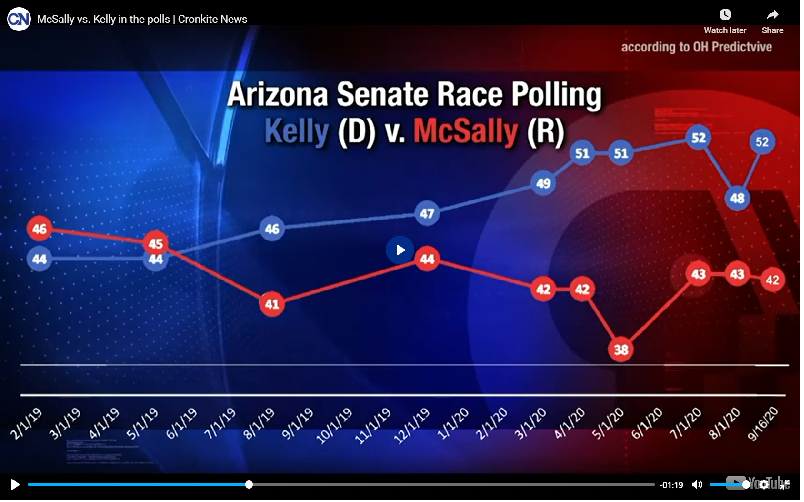
PHOENIX – Recent polling data in the Arizona Senate race suggests Democrat Mark Kelly has a large lead over incumbent Republican Sen. Martha McSally. However, the gap might not be as big as some polls show.
A recent poll from Fox News has Kelly 17 points up in the Arizona Senate race. The poll, conducted at the end of August, surveyed 772 likely voters and found a 56-39 split in favor of Kelly.
However, data from OH Predictive Insights, a Phoenix-based polling firm, suggests the gap is much smaller. Data analyst Jacob Joss said that, while Kelly is undoubtedly ahead, the race is actually closer to single digits.
“I wasn’t necessarily surprised that it was a large gap,” Joss said of the Fox poll. “I was surprised that it was a 17-point gap.”
OH Predictive Insight’s latest poll shows Kelly with a 10-point margin. Its data did show a wider gap in the summer. However, the race narrowed to as small as 5 percentage points in August.
The Fox poll claims to have a margin of error of plus or minus 3 percentage points while the OH Predictive Insights survey of 600 likely voters from Sept. 8-10 has a margin of plus or minus 4 percentage points.
“It looks like Kelly is the clear favorite right now,” Joss said. “But obviously the numbers are close enough that either party could come out on top.”
The election might be decided by voter turnout. According to data compiled by Arizona Highground, a public affairs consulting firm, Arizona will likely surpass 3 million voters for the first time in the state’s history.
The firm’s data also showed record turnout in the 2020 primary elections. This included a 30% increase from the 2018 primary among registered Democrats, compared with just a 7 percent increase among registered Republicans.
Arizona Highground President Chuck Coughlin said younger voters that often lean to the left might be driving the shift in the Arizona electorate.
“Republicans always turn out,” Coughlin said. “The sun rises in the morning. Republicans go vote. It’s who shows up around them in the cycle. And we’ve seen higher participation rates amongst nontraditional cohorts of the electorate.”
Just four years ago, Republican Sen. John McCain won re-election to this seat by nearly 13 points over Democratic challenger Ann Kirkpatrick. After McCain died in 2018, McSally was appointed to fill his seat. The election this November is to fill the final two years of McCain’s term.
If Kelly wins, it would mark the first time in nearly 70 years that Arizona had two Democratic senators in office concurrently. And because the election is filling a vacant seat, Kelly could be sworn in as early as Nov. 30, when Arizona election results are certified, according to Arizona law.
This could allow the winner of the race to cast a crucial vote on a potential Supreme Court nomination by President Donald Trump. It could also be a deciding factor in who controls the Senate for the next two years.
“Whoever wins the Senate seat here, whether that be Mark Kelly or Martha McSally, is going to play a key role in determining who gets 51 seats in the Senate,” Joss said.
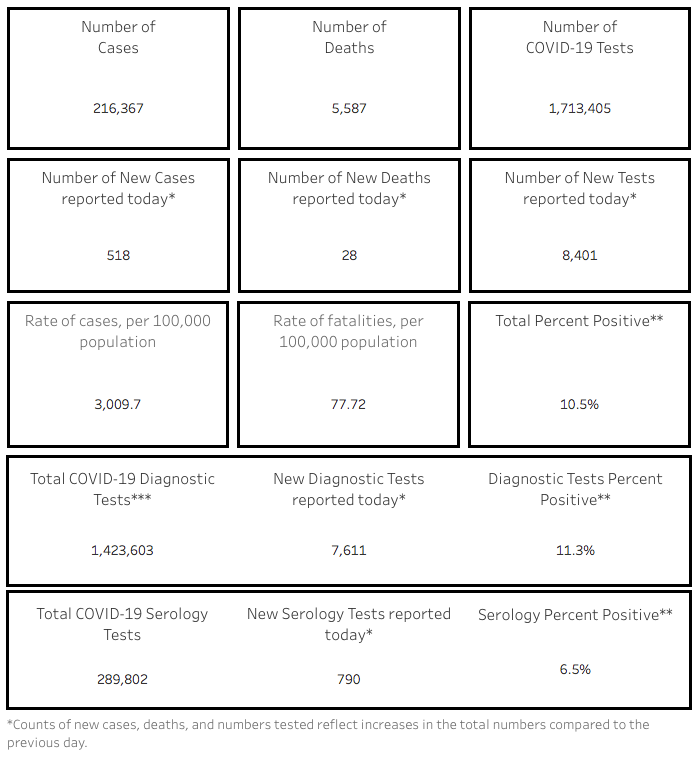
With 518 new cases reported today, the number of Arizona’s confirmed novel coronavirus cases topped 216,000 as of Friday, Sept. 25, according to the Arizona Department of Health Services.

Pima County had seen 25,265 of the state’s 216,367 confirmed cases.
With 28 new deaths today, a total of 5,587 Arizonans had died after contracting COVID-19, including 622 deaths in Pima County, according to the Sept. 24 report.
The number of hospitalized COVID cases continues to decline from July peaks, although it has ticked upward over the last week. ADHS reported that as of Sept. 24, 521 COVID patients were hospitalized in the state. The number of hospitalized COVID patients peaked at 3,517 on July 13.
A total of 721 people visited emergency rooms on Sept. 24 with COVID symptoms. That number peaked at 2,008 on July 7.
A total of 119 COVID-19 patients were in intensive care unit beds on Sept. 23. The number of COVID patients in ICUs peaked at 970 on July 13.
On a week-by-week basis in Pima County, the number of positive COVID tests peaked the week ending July 4 with 2,396 cases, according to a Sept. 17 report from the Pima County Health Department. While a vocal minority continues to insist that masks do no good, the spread of the virus began to decline within weeks of Pima County’s mask mandate, as more people began wearing them in public, although the level of new cases has creeped back up in recent weeks with the return of UA students. For the week ending Aug. 29, 507 new cases were reported; for the week ending Sept. 5, a total of 667 cases were reported; for the week ending Sept. 12, 584 cases were reported. (Recent weeks are subject to revision.)
Deaths in Pima County are down from a peak of 55 in the week ending July 4 to 19 for the week ending Aug. 15, 13 in the week ending Aug. 22, 10 in the week ending Aug. 29 and three in the week ending Sept. 5. (As above, these numbers are subject to revision as recent deaths may not have been reported.)

The Arizona Wildcats 2020-2021 football season is expected to resume on Nov. 6 after the Pac-12 CEO Group voted to bring back fall sports this week.
The Pac-12 conference season was originally suspended in early August due to coronavirus concerns.
University of Arizona Director of Athletics Dave Heeke applauded the CEO group’s decision.
“Arizona Athletics fully supports the decision from the Pac-12 Conference and its CEO Group to move forward with a plan for the safe and healthy return of football and men's and women's basketball,” Heeke said. “President Robbins and university leadership have been unwavering in their commitment to the safety, health and well-being of all students, staff, faculty and members of the Wildcat Family.”
UA football coach Kevin Sumlin said he is thrilled for his team to return to the gridiron this November so they’ll have a chance to compete in the 2020-2021 season.
“I am proud of the patience, resilience and commitment that our team has shown during an unprecedented time,” Sumlin said. “We will continue to work hard preparing for the moment when we once again take the field while staying committed to keeping each other and those around us safe and healthy."
No word on who the Wildcats will face when they take the field in November.
UA basketball season is slated to begin on Nov. 25.