

Friday, September 25, 2020
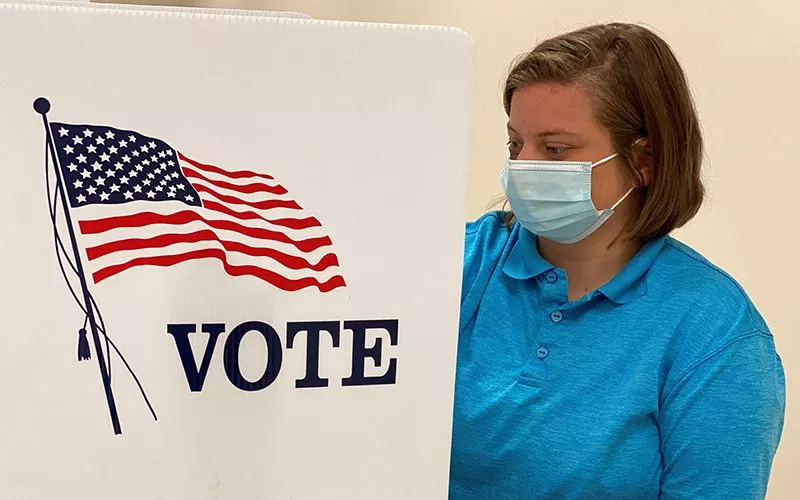
WASHINGTON – COVID-19 may be getting the headlines but it’s not the top health care issue on the minds of voters in a number of battleground states, including Arizona, according to a poll released Thursday.
The poll by the Commonwealth Fund found voters in seven of 10 battleground states said they were more likely to vote for a candidate who could protect health care for people with pre-existing conditions than one who could address the health and economic costs of the pandemic.

Thursday, September 24, 2020

WASHINGTON – Election officials need to be as concerned about voting disinformation as they are about people tampering with ballots themselves, a Maricopa County official said Wednesday during a forum on securing the election.
Michael Moore, information security officer for the Maricopa County Recorder’s Office, said “voter confidence is paramount,” but he worries that a breached social media account could allow misleading or hurtful information to get to voters.

Pima County is implementing a new grant program to help local small business owners affected by the ongoing pandemic.
Qualifying small businesses and nonprofit organizations are eligible for up to $10,000 as a part of the Pima County CARES for Small Businesses Grant Program. Grant funds can be used to pay past mortgage payments, lease payments, rent costs and utility expenses. However, future and on-going expenses are excluded.
Grants are awarded on a first-come, first-serve basis and the application process is open to small businesses in unincorporated areas of towns and cities in Pima County. Businesses located in cities and towns—like Tucson—are encouraged to apply for their local jurisdiction’s business assistance grant program.
To qualify, businesses need to have 30 or fewer employees, finances were negatively impacted by COVID-19, the business was legally established before February 2020, the owner must be 18 years old with a valid employee identification number or social security number.
Companies not eligible for the grant include cannabis dispensaries, lending institutions, life insurance companies, businesses involved in political or lobbying activity.
Funding for the $1.7 million Pima County CARES for Small Business Grant Program is provided by the federal CARES Act.
The application process begins Friday, Sept. 25. To apply, click here.
For more information, contact pima.gov/backtobusiness
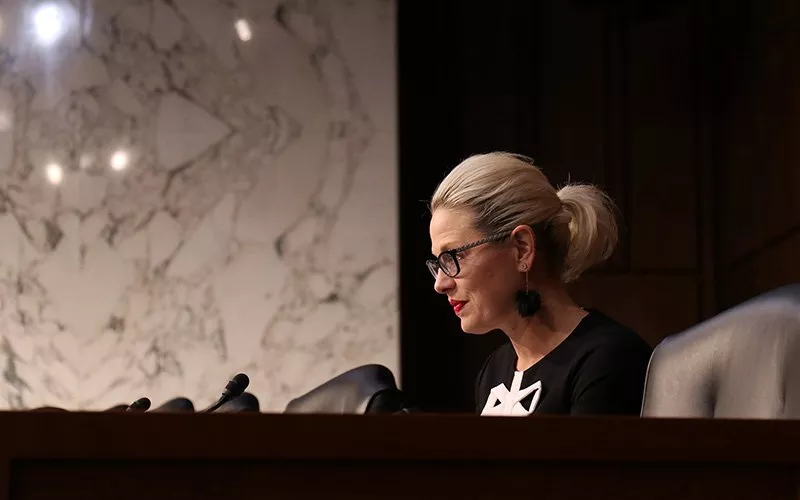
WASHINGTON – Arizona Sen. Kyrsten Sinema confronted the acting head of Homeland Security Wednesday over border wall construction she said has ignored the needs of local communities and bypassed environmental assessment reports.
The questions came during a Senate Homeland Security Committee confirmation hearing on the nomination of acting Secretary Chad Wolf – who has been serving in an acting capacity for close to a year.
“Construction began before mitigation plans were complete. I will note that my office received reports of dynamite blasting in Guadalupe Canyon yesterday related to wall construction,” said Sinema, a Democrat. “That will have a permanent impact on our land.”
But Wolf said his agency’s primary concern is national security, not environmental damage, to respond to the national emergency declared by the president.
“The president did issue a national emergency to build a new border wall system, so we’re appropriate. We are waiving regulations to make sure that that work does not slow down and is not delayed,” Wolf told Sinema.
The exchange came during a wide-ranging hearing that touched on everything from the actions of DHS officers during protests this summer in Portland, Oregon, to threats posed by states like Russia, China and Iran.
Republican lawmakers on the committee generally lauded the direction of the agency under Wolf. Sen. Ted Cruz, R-Texas, spent most of his time praising Wolf and defending his choices as acting secretary while Sen. Ron Johnson, R-Wisc. and the committee chairman, ceded his time to let Wolf address scandals affecting DHS.
But most Democrats on the committee grilled Wolf on his decision to send DHS officers to cities like Portland and his focus on left-wing anarchists over white supremacists. They also questioned the legitimacy of decisions made by a secretary who has served in an acting capacity for so long.
The border wall was just one of the immigration issues that was touched on. Lawmakers also asked about the care of migrants in Immigration and Customs Enforcement custody and reports that trafficking victims have been returned to their home countries where they could face further danger.
Complaints about the wall are hardly new. After Congress refused to meet his demands for border wall funding, President Donald Trump in February 2019 declared a national emergency at the border that he said allowed him to shift funding from other departments and let DHS waive environment and other regulations as necessary.
That has led to repeated run-ins with local communities.
In February of this year, the Tohono O’Odham Nation said that “dynamiting these sacred sites and burial grounds” where the wall is going up “is the same as bulldozing Arlington National Cemetery or any other cemetery. Our history as a people is being obliterated and our ancestors’ remains are being desecrated.”
“The National Park Service has acknowledged these areas are sacred to the Nation,” the statement said. “Yet in the rush to build the wall, U.S. Department of Homeland Security (DHS) has waived cultural preservation and environmental laws.”
Earlier this month, Border Patrol agents assisted the National Park Service with the arrest of two O’odham women for “interfering with agency functions” and “violating a closure” by trying to block construction equipment at Quitobaquito Springs, an oasis near the border. Environmental groups have charged that DHS’ use of groundwater to make cement for the wall has caused the spring’s water level to fall in recent months.
Sinema criticized the agency for rushing to construct the southern border wall before environmental assessment reports could be done and provided to Congress. She also accused the department of failing to communicate with local tribal leaders whose sacred sites are imperiled by the project.
“It seems like there’s a cart before the horse situation, and I do want to note that residents of southern Arizona have expressed intense concern about this,” she said.
But Wolf insisted that DHS, Customs and Border Protection and the Army Corps of Engineers were doing their part to minimize and mitigate damage to cultural resources along the southwest border, but the main goal is to build the wall.
Wolf said the department plans to deliver an environmental assessment of its actions on the wall to Congress in October, but did not specify when.
“We’ll continue to abide by our responsibilities to make sure that we’re good stewards of the environment … but it’s been very clear that that is a national security issue and we’re going to continue to build that new border wall system,” Wolf said.
Tags: border , immigration , homeland security , Image
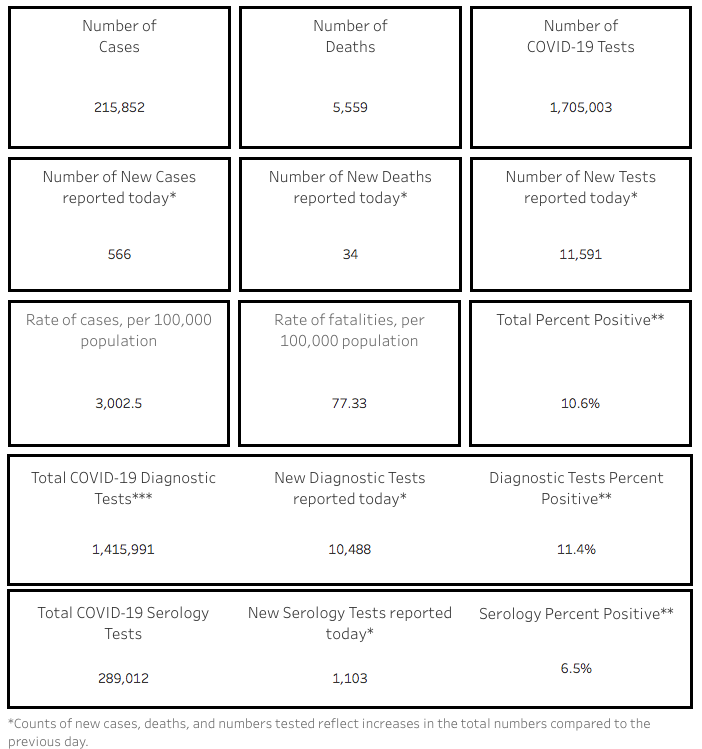
With 566 new cases reported today, the number of Arizona’s confirmed novel coronavirus cases closed in on 216,000 as of Thursday, Sept. 24, according to the Arizona Department of Health Services.

Pima County had seen 25,140 of the state’s 215,852 confirmed cases.
With 34 new deaths today, a total of 5,559 Arizonans had died after contracting COVID-19, including 617 deaths in Pima County, according to the Sept. 24 report.
The number of hospitalized COVID cases continues to decline from July peaks, although it has ticked upward over the last week. ADHS reported that as of Sept. 23, 565 COVID patients were hospitalized in the state. The number of hospitalized COVID patients peaked at 3,517 on July 13.
A total of 680 people visited emergency rooms on Sept. 23 with COVID symptoms, the lowest that number has been since June 3, when 638 people visited ERs. That number peaked at 2,008 on July 7.
A total of 122 COVID-19 patients were in intensive care unit beds on Sept. 23. The number of COVID patients in ICUs peaked at 970 on July 13.
On a week-by-week basis in Pima County, the number of positive COVID tests peaked the week ending July 4 with 2,396 cases, according to a Sept. 17 report from the Pima County Health Department. While a vocal minority continues to insist that masks do no good, the spread of the virus began to decline within weeks of Pima County’s mask mandate, as more people began wearing them in public, although the level of new cases has creeped back up in recent weeks with the return of UA students. For the week ending Aug. 29, 507 new cases were reported; for the week ending Sept. 5, a total of 667 cases were reported; for the week ending Sept. 12, 584 cases were reported. (Recent weeks are subject to revision.)
Deaths in Pima County are down from a peak of 55 in the week ending July 4 to 19 for the week ending Aug. 15, 13 in the week ending Aug. 22, 10 in the week ending Aug. 29 and three in the week ending Sept. 5. (As above, these numbers are subject to revision as recent deaths may not have been reported.)
Hospitalization peaked the week ending July 18 with 237 COVID patients admitted to Pima County hospitals. For the week ending Aug. 29, 38 COVID patients were admitted to Pima County hospitals; in the week ending Sept. 5, 24 patients were admitted to Pima County hospitals; and in the week ending Sept. 12, 16 patients were admitted. (Numbers are subject to revision.)
Campus cases push Pima County school benchmarks over the line
The increase in cases around the University of Arizona has pushed one of Pima County’s benchmarks for school reopening back into the red zone.
As of the week ending Sept. 6, Pima County no longer had fewer than 100 cases per 100,000 individuals or a decline in cases for two consecutive weeks.

Wednesday, September 23, 2020

The Tucson Humanities Festival, facilitated by the University of Arizona College of Humanities, will focus on justice and morality this year, with a wide range of events throughout October. Unsurprisingly, all of the events are virtual but are hosted on a variety of platforms and websites.
"We chose the theme out of a moral necessity and obligation. The college is committed to advancing the cause of justice, and the festival will demonstrate the various ways that the work of our faculty is action toward justice," said College of Humanities dean Alain-Philippe Durand. "The humanities are critical for creating the open-mindedness, understanding and shared perspective that can eradicate racism, prejudice and intolerance in our increasingly interconnected world."
Event schedule:
Thursday, Oct. 1, 4 p.m.
Everyday Justice: How Students Can Create Equality on Campus
College of Humanities Student Panel
Moderated by Marcus Hastings and Karina Rodríguez, College of Humanities
Live on Zoom
Monday, Oct. 5, 4 p.m.
Film Commentary: "Us"
Film commentary by Tani Sanchez, Africana Studies
View on the Tucson Humanities Festival website
Wednesday, Oct. 7, 4 p.m.
Freedom in Africa: A Documentary & Digital Humanities Archive
Introduction by Phyllis Taoua, French and Italian
View on the Tucson Humanities Festival website
Thursday, Oct. 8, 4 p.m.
Black Lives Matter: A Global Call for Justice and Liberation
Panelists: Bryan Carter, Africana Studies; Erika Gault, Africana Studies; Obenewaa Oduro-Opuni, German Studies; Praise Zenenga, Africana Studies
Moderated by Daisy Jenkins
Live on Zoom
Monday, Oct. 12, 4 p.m.
Film Commentary: "Purgatorio: A Journey into the Heart of the Border"
Film commentary by Chuck Tatum, Humanities Seminars Program
View on the Tucson Humanities Festival website
Thursday, Oct. 15, 4 p.m.
Religion, Race & Health: Solutions to Disparities in Care
Panelists: Jerome Dotson, Africana Studies; Kristy Slominski, Religious Studies and Classics; Johnathan Vaknin, Spanish and Portuguese; Dr. Francisco Garcia, Pima County
Moderated by Dr. David Beyda, College of Medicine-Phoenix
Live on Zoom
Part of the UA Foundation’s Wonder at Home Series
Friday, Oct. 16, 5 p.m.
The Criminal Song: Voicing Soviet Intelligentsia's Dissent
Guest DJ: Anastasiia Gordiienko, Russian and Slavic Studies
Live on KXCI
Monday, Oct. 19, 4 p.m.
Film Commentary: "Fire at Sea"
Film commentary by Francesco Rabissi, French and Italian
View on the Tucson Humanities Festival website
Wednesday, Oct. 21, 4 p.m.
Art for Justice: New Poems & Digital Humanities Archive
Introduction by Diana Delgado, Poetry Center
View on the Tucson Humanities Festival website
Thursday, Oct. 22, 5 p.m.
Justice Across Boundaries: Migration, Multilingualism & Exchange
Panelists: Carine Bourget, French and Italian; Wenhao Diao, East Asian Studies; David Gramling, German Studies; Anita Huizar-Hernández, Spanish and Portuguese
Moderated by Liudmila Klimanova, Russian and Slavic Studies
Live on Zoom
Friday, Oct. 23, 5 p.m.
Race and Religion in Contemporary Hip-Hop
Guest DJ: Alex Nava, Religious Studies and Classics
Live on KXCI
Monday, Oct. 26, 4 p.m.
Tuesday, Oct. 27, 4 p.m.
and Thursday, Oct. 28, 4 p.m.
Toward Justice for All: The Global Impact of Humanities Research
College of Humanities faculty will give PechaKucha presentations. PechaKucha is a storytelling format in which a presenter shows 20 slides for 20 seconds of commentary each, totaling six minutes, 40 seconds. Presentations are grouped together for a fast-paced, simple and engaging showcase of new topics and ideas.
View on the Tucson Humanities Festival website
Friday, Oct. 30, 5 p.m.
Makes Me Wanna Holler: The Minefield and Hopes of Being Black in America
Guest DJ: Ntare Gault, Africana Studies
Live on KXCI
For more information, visit humanitiesfestival.arizona.edu

