
Saturday, October 31, 2020

Friday, October 30, 2020

This year, Pima County voters will decide a new District 1 Supervisor after Republican Ally Miller held the seat for eight years.
Now, Republican Steve Spain and Democrat Rex Scott are vying for the Pima County Board of Supervisors’ seat in District 1, a position that determines a wide range of public policy in the county.
The district, representing Marana, Casa Adobes, Oro Valley, and the Catalina Foothills, has reliably voted for Republicans in recent decades. This year’s Republican candidate, has a history as a political pundit penning right-leaning opinion pieces for the online Arizona Daily Independent.
Spain has been unabashedly critical of the current Pima County Administrator Chuck Huckelberry. In an analysis of Pima County elections results in the 2016 general election, he criticized the election of District 4 Supervisor Steve Christy, calling him “the county establishment’s token quasi-Republican rubber stamp.”
“This, naturally, secures the position and malfeasance of Chuck Huckelberry, the nearly-half-a-million-dollar-a-year puppet of Diamond, Lopez, Click, Mehl, and the other members of the cabal that has this town by its short hairs,” Spain wrote.
But the latest campaign filing reports reveal Spain’s campaign for district supervisor took $12,000 from Humberto Lopez, Jim Click and David Mehl — presumably the same “members of the cabal” Spain mentioned.
The contributions from these individuals comprised 19% of Spain’s total campaign contributions as of Oct. 17.
The Spain campaign’s 2020 pre-general report shows he received $5,000 from Jim Click, the owner of several car dealerships in Tucson and Green Valley, on Oct. 8.
The third-quarter campaign finance report shows a $5,000 contribution from David Mehl, the owner of real estate development company Cottonwood Properties, on Aug. 27. Humberto Lopez, the president of real estate development and investment company HSL Properties, Inc., contributed $2,000 on Sept. 24.
As of Friday, Spain has not responded to Tucson Weekly’s request for comment.
The only entity Spain mentioned in the quoted portion of his 2016 article whom he didn’t receive funds from is “Diamond,” which presumably refers to the late legendary land speculator Don Diamond, who died in 2019.
Rex Scott’s campaign received $1,950 from individuals associated with Diamond Ventures, the company founded by Don Diamond.
The private company’s Vice President Priscilla Storm contributed $500 on Oct. 6. On Sept. 14, Diamond Ventures’ President David Goldstein gave $1,000. The company’s principal who oversees philanthropy, Helaine Levy, gave $200 on Sept. 10, and Chief Financial Officer William Kelley gave $250 on Sept. 9.
Since the last reporting date Oct. 26, Scott’s campaign had received $128,568.82 in total contributions, and Spain’s campaign received $61,842.05.
“There is no Clean Elections option for county elections, so we have to play by the rules that are set in front of us, and that means taking money from folks who are interested in the races,” said Adam Kinsey, a consultant for the Rex Scott campaign. “That's not the problem, the hypocrisy is when you slam these people and say that those contributions will result in actions as an elected official. When you say that they are buying the county administrator, they are buying these politicians, when you make claims like that, and then you take the money yourself, that's where we're got a problem.”
The Democratic candidate in the race for district 1 posted Spain’s comments about “the cabal that has this town by its short hairs,” and the revelations from his latest campaign findings on a website listing the Republican candidate’s past statements as a political pundit.
“We know that Steve Spain is largely unknown to most voters. But we know that he also has an incredible body of work that's out there in the public sphere, because he's been blogging on this sort of alt-right blog, the Arizona Daily Independent, for years,” Kinsey said. “Rex is a career educator, and he does not want to go negative. He does not want to mud sling, he does not want to make any baseless political attacks. So he said, one thing we can do is just share what Steve Spain has put out into the world with the voters and let his words speak for themselves.”
This article has been edited to include an additional quote from political consultant Adam Kinsey as well as the Scott campaign's fundraising totals.
An Oct. 29 Cronkite News story mischaracterized the Arizona Department of Health Services policy on in-person versus virtual schooling during COVID-19. The policy sets recommended guidelines for local schools, which have the ultimate authority on how to proceed.
WASHINGTON – The Ducey administration defended its decision Thursday to make it harder for Arizona schools to revert to virtual education, from in-person or hybrid schooling, in the face of surging COVID-19 cases.
Gov. Doug Ducey said the decision to require that three different criteria are met – the old standard was just one of the three – before schools consider returning to online teaching was made with input from “the superintendent of public instruction and education leaders.”
But in a statement Thursday, a spokesperson for the Arizona Department of Education said that the department “was not part of the decision-making process” on the change.
The back and forth comes as new COVID-19 cases are surging in the state, with more than 5,700 new cases reported this week alone and 49 deaths attributed to the disease.
As of Thursday, the state had confirmed 242,480 cases of COVID-19 since the virus was first discovered in Arizona in January, and had recorded 5,918 deaths from the disease, according to Arizona Department of Health Services data.
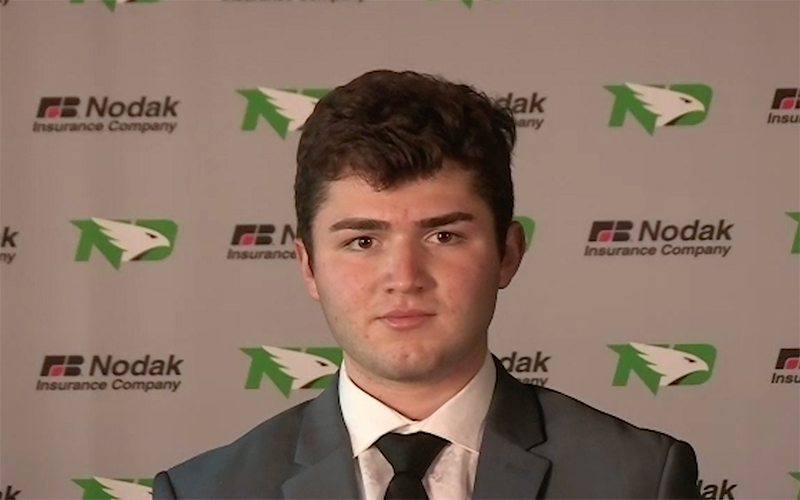
PHOENIX – The Arizona Coyotes’ decision to part ways with a draft pick accused of bullying a classmate with developmental disabilities has put the organization at the center of a national debate about forgiveness and cancel culture.
The Coyotes on Thursday renounced the rights to their 2020 fourth-round draft pick Mitchell Miller, 18, after more details surfaced about his role in the bullying of Isaiah Meyer-Crothers at an Ohio junior high school that led to a charge of assault in 2016. The Arizona Republic reported that Miller directed racial taunts at Meyer-Crothers, who is Black, and also forced him to eat candy that was in a urinal, according to a police report.
“We have decided to renounce the rights to Mitchell Miller, effective immediately,” Coyotes President & CEO Xavier Gutierrez said in a statement. “Prior to selecting Mitchell in the NHL Draft, we were aware that a bullying incident took place in 2016. We do not condone this type of behavior but embraced this as a teachable moment to work with Mitchell to make him accountable for his actions and provide him with an opportunity to be a leader on anti-bullying and anti-racism efforts.
“We have learned more about the entire matter, and more importantly, the impact it has had on Isaiah and the Meyer-Crothers family. What we learned does not align with the core values and vision for our organization.”
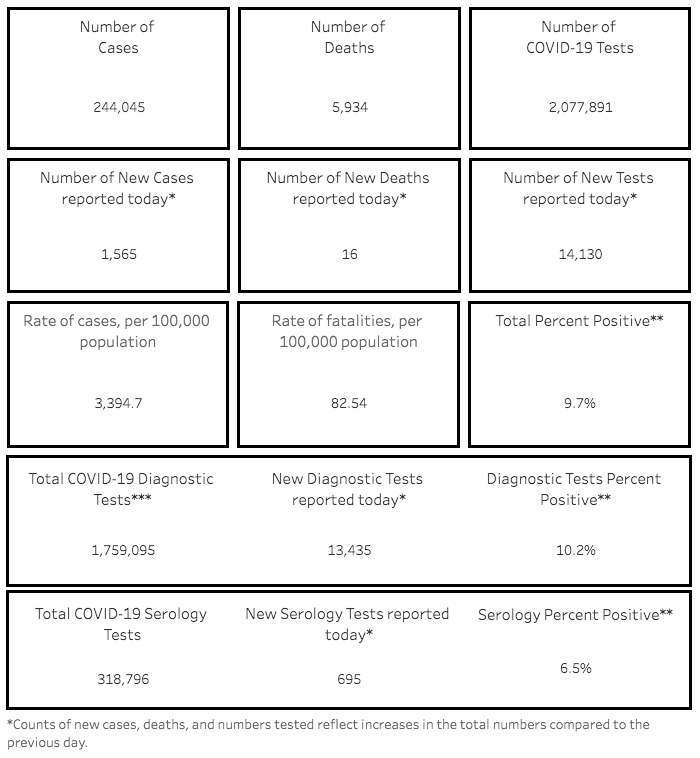
With 1,565 new cases reported today, the number of Arizona’s confirmed novel coronavirus cases topped 244,000 as of Friday, Oct. 30, according to the Arizona Department of Health Services.

Pima County had seen 28,296 of the state’s 244,045 confirmed cases.
With 16 new deaths reported yesterday, a total of 5,934 Arizonans had died after contracting COVID-19, including 639 deaths in Pima County, according to the Oct. 30 report.
The number of hospitalized COVID cases has declined from July peaks but has ticked upward in recent weeks as the virus has begun to spread more rapidly. ADHS reported that as of Oct. 29, 900 COVID patients were hospitalized in the state. That number peaked with 3,517 hospitalized COVID patients on July 13; it hit a subsequent low of 468 on Sept. 27.
A total of 898 people visited emergency rooms on Oct. 29 with COVID symptoms. That number peaked at 2,008 on July 7; it hit a subsequent low of 653 on Sept. 28.
A total of 188 COVID-19 patients were in intensive care unit beds on Oct. 29. The number of COVID patients in ICUs peaked at 970 on July 13 and hit a subsequent low of 114 on Sept. 22.
On a week-by-week basis in Pima County, the number of positive COVID tests peaked the week ending July 4 with 2,452 cases, according to an Oct. 29 report from the Pima County Health Department.
Pima County saw a big bump in cases following the return of UA students, followed by a steady decline and then a big bump upward. For the week ending Sept. 19, 1,230 cases were reported; for the week ending Sept. 26, 615 cases were reported; for the week ending Oct. 3, 533 cases were reported; for the week ending Oct. 10, 465 cases were reported; for the week ending Oct. 17, 512 cases were reported; and for the week ending Oct. 24, 829 cases were reported.

WASHINGTON – Phoenix resident Rey Torres is “very happy to have been born into my culture” of a Mexican-American family – just don’t ask him if that means Democrats will be getting his vote this fall.
President Donald Trump has “respect for American jobs and … a laser focus on bringing jobs back to our country” among other positives, said Torres, a member of the Arizona Latino Republican Association.
Torres is not an outlier: A Pew Research poll from June found that 32% of Latino voters said they support Trump. An Equis Research survey released in September put support for the president among registered Latino voters in Arizona at 29%.
But while the polls showed some support for Trump, including growing support among young Latino men, they also reflect the fact that Latinos as a whole are still firmly in the Democrats’ camp.
“Generally speaking, Latinos have leaned towards the Democratic Party more than the Republican Party over the last 30 plus years,” said Mark Lopez, the director of global migration and demography research at Pew Research.

Thursday, October 29, 2020
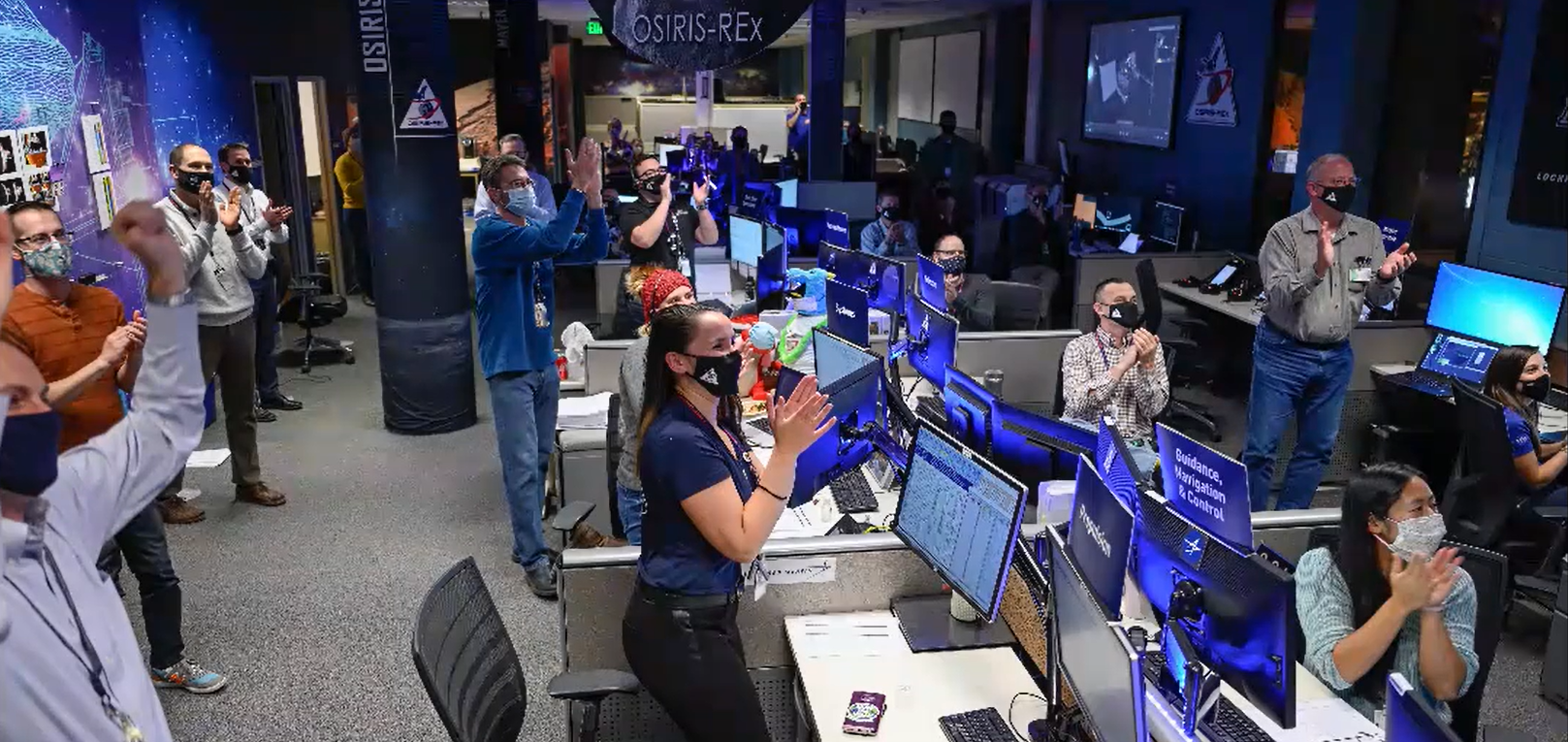
The University of Arizona-led space mission to retrieve a sample from an asteroid endured a tense day that turned out to be a blessing. On Tuesday Oct. 20, the OSIRIS-REx spacecraft touched down on the asteroid Bennu more than 200 million miles away to capture some of the rocks and dust on its surface. While the spacecraft successfully touched down and backed away, scientists soon realized the spacecraft’s sample collection compartment was overflowing with material., and some of the captured sample was slipping back into space.
“This turned out to be great news,” said OSIRIS-REx project manager Rich Burns. “But we knew we had to adapt our plans, because this definitely wasn’t something we planned for.”
Because there was an “abundant sample” and some was slipping out, the mission team quickly worked to stow away the collector head, a process that took two days, with preparations for the stowage event beginning Oct. 24. This loss of material required the team to redesign the timeline of their stowage process, which was originally slated for November.
According to the university, the process to stow the sample is unique compared to other spacecraft operations and required the team's continuous oversight and input over the two-day period. For the spacecraft to proceed with each step in the stowage sequence, the team had to assess images from the previous steps to confirm the operation was successful and the spacecraft was ready to continue. Because of the spacecraft’s distance there was roughly a 20-minute delay to receive messages and images. Ultimately, the team announced they were successful in stowing away the sample.
Agreements with NASA required the spacecraft to collect at least roughly 60 grams of material from the asteroid's surface — if that much was not collected, the team would have to try again. And although the collection compartment lost “tens of grams” worth of material, the OSIRIS-REx team estimates the spacecraft currently holds at least 400 grams worth of material. Because the images returned from the spacecraft only show a portion of the collection compartment, more than a kilogram of material may be captured, but we’ll have to wait until 2023 when the spacecraft returns to Earth to know for sure.
Data from the spacecraft also indicated that the sampling arm penetrated the asteroid’s rocky surface as deep as 48 centimeters. Dante Lauretta, OSIRIS-REx principal investigator and a professor of planetary sciences at UA, says it is likely some of the material captured is from that deep within the asteroid.
If successful, the OSIRIS-REx spacecraft will be the first American space mission to return a sample of an asteroid back to Earth. With the sample, scientists hope to better understand the formation of our solar system, and possibly even the origins of life on Earth.
Because the collected samples will be limited, Betsy Cantwell, UA’s senior vice president for research and innovation, says a major decision will be figuring out who gets to work with them. Cantwell expects a portion of the material will be investigated at UA, and some will even be stored for posterity to be examined when even more advanced scientific sensors are available in the future.
“Even though my heart breaks for the loss of sample, it turned out to be a pretty cool science experiment, and we’re learning a lot about how these particles behave in microgravity,” Lauretta said. “I'm very thankful that our team worked so hard to get this sample stowed as quickly as they did... Now, we can look forward to receiving the sample here on Earth and opening up that capsule."

Gov. Doug Ducey and Arizona Department of Health Services Director Dr. Cara Christ provided a COVID-19 update at a press conference today amid rising cases throughout the state.
On Oct. 29, the Arizona Department of Health Services reported 1,315 new COVID-19 cases throughout the state, with a percent positivity of 9.7%.
Pima County reported 105 new COVID-19 cases today and now has recorded 28,067 of Arizona’s 242,480 total positive cases.
“The recent increase in cases has resulted in an increase in the COVID-19 rates in many counties,” Christ said at the press conference. “At the Arizona Department of Health Services, we remain on high alert. We’ve worked to contain COVID-19 from all angles, and we continue to take further action in light of recent increases.”
Although Ducey acknowledged Arizona’s rising coronavirus numbers, he said in comparison to other states, “we’re not in that zone that we’re seeing in other places.”
“We do see this rising in different parts of the country, our expectation in Arizona has been that cases would continue to go up,” he said.
The governor recognized that the state’s current R naught number, which indicates how contagious a virus is, is currently at 1.16, which means coronavirus is spreading as fast as it did in June.
“Arizona did one of the best jobs in the nation when our time of challenge did come of driving it beneath one, but as we head into influenza season it becomes more challenging,” Ducey said.
Although the current rise in COVID-19 cases is alarming, Ducey said there’s even more to come.
“We know that there is a storm ahead of us, yet it’s not here,” Ducey said. “But those simple guidelines of wearing a mask, washing our hands, being socially distanced and using common sense have served us very well to date.”
However, the governor doesn’t plan on imposing new safety restrictions to prevent further spread of COVID-19.
“The mitigation that we’ve put out, the plan we put into effect remains in effect. I am proud that Arizona is open, that our economy is open, that our educational institutions are open and our tourist destinations are open,” Ducey said. “While at the same time, we do have mitigation steps in place that have allowed us to protect lives while protecting livelihoods, and we’re gonna continue to do that.”
Given the likelihood of travel and large gatherings, Christ says she anticipates seeing a spike 10-14 days after Thanksgiving that could potentially increase over the next 4-6 weeks.
In preparation for the holiday season, she said ADHS will be putting out guidance, working on mitigation strategies and making sure hospitals have enough resources, although she said the biggest barrier for hospitals is not “the beds, but could be the staffing.”
Christ urged citizens to continue mitigation tactics such as wearing a mask, maintaining social distancing and getting an influenza shot.
“We understand that this has been a difficult year, and many have grown tired of the mitigation strategies. But now is not the time to let up,” she said.
When asked about the example he’s setting for Arizonans after repeatedly attending public events sans-mask, including at a Trump rally at the Prescott Regional Airport Oct. 19 and as he spoke at today’s press conference, Ducey called upon the First Amendment.
“We’ve been consistent the entire time through the pandemic to protect people’s rights under the Constitution,” Ducey said. “There are five days left in the election cycle and we’ll continue to protect people’s rights.”
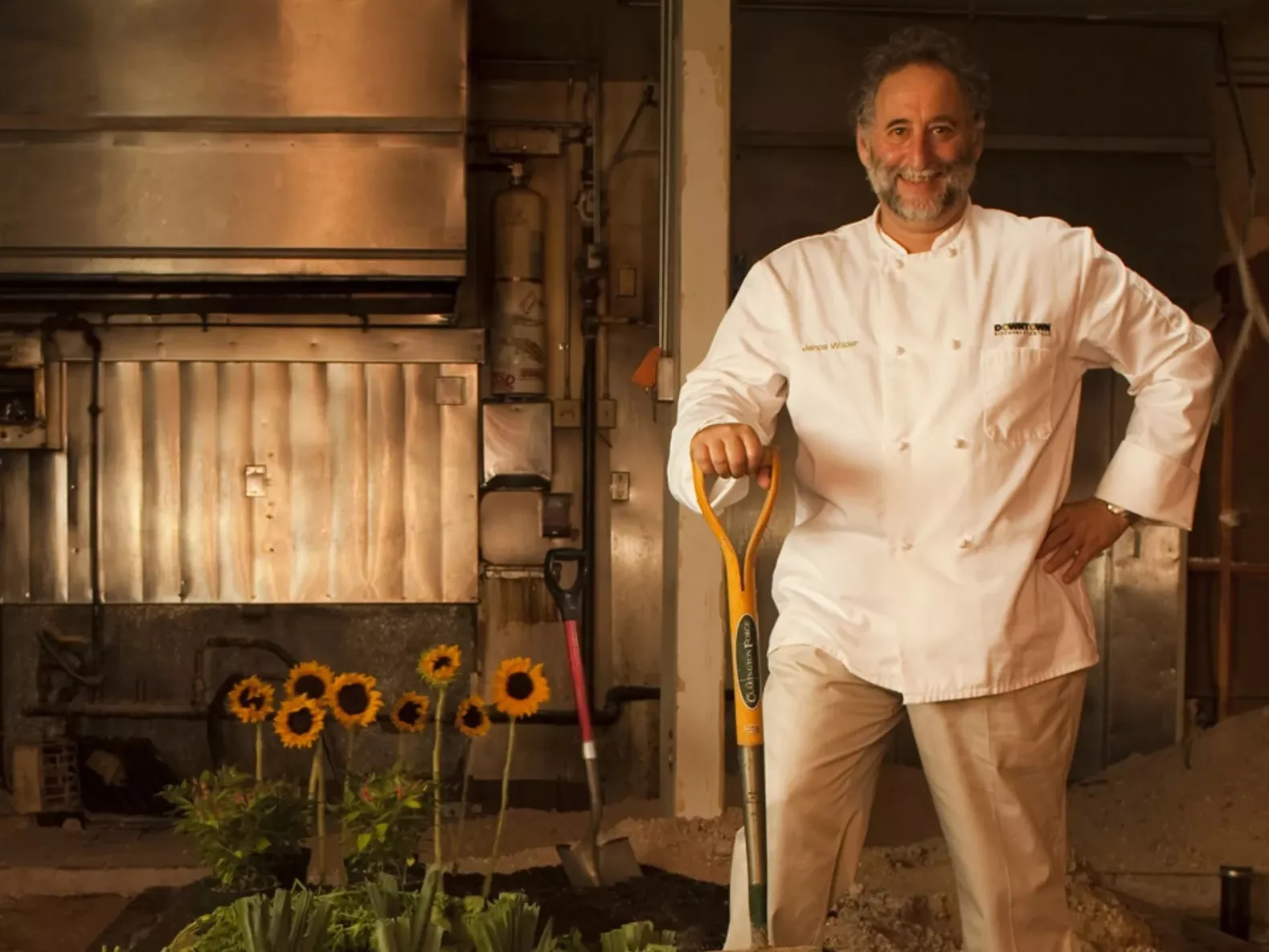
“This is unmistakably a tremendously hard time for small businesses, especially restaurants the world over,” Wilder said in a prepared statement. “For me personally it has also been an opportunity to take stock of where I am in my career and ask myself, is the day to day of running a restaurant really the best use of my time now?”
After more than 50 years of working as a professional chef, Wilder announced he will use this time to focus on his family.
In addition, Wilder's Carriage House will continue its catering and group event business. Wilder will produce and present a series of online cooking classes: "Cooking in the Time of Covid" which will feature easy to prepare meals at home.
"These last 10 years downtown have seen a rebirth of our urban core," Wilder said. "The pandemic is a setback and my heart aches for so many that are struggling to keep their doors open. Even in these challenging times, I am constantly amazed and inspired by the innovation and creativity of the next generation. Downtown Tucson will continue to thrive in the years to come. Like the desert we live in, we are a resilient community. I am so grateful for all this city has given me and my family and I am eager to continue to serve the community moving forward.”