Wednesday, October 14, 2020
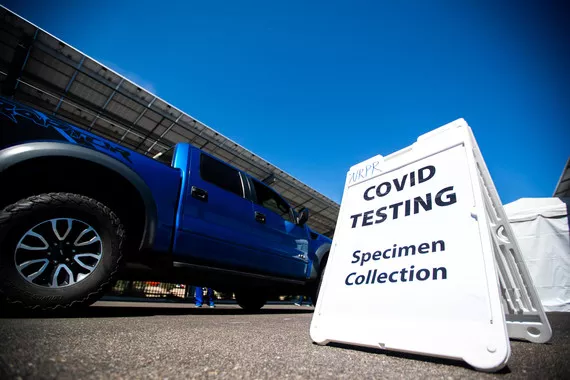
The Pima County Health Department will be opening a new COVID-19 testing site downtown this Friday, Oct. 16. The new Downtown Tucson Testing Center will be located at 88 E. Broadway Blvd., on the southwest corner of Broadway and Sixth Ave. Testing will run from 10 a.m. to 2 p.m. every Monday, Wednesday and Friday. Testing is available without an appointment, or by appointment at pima.gov/covid19testing.
With workday testing available around lunch time, the county health department hopes this new site will serve as a resource for downtown employees. As with other county testing locations, the tests will be conducted by Paradigm Laboratories, and results will be available online in 72 hours or less.
“Quick and accessible testing is a key factor in helping businesses protect their employees and patrons as the pandemic continues,” said PCHD director Dr. Theresa Cullen in a press release. “We want to do all that we can to support businesses as they get back on their feet.”
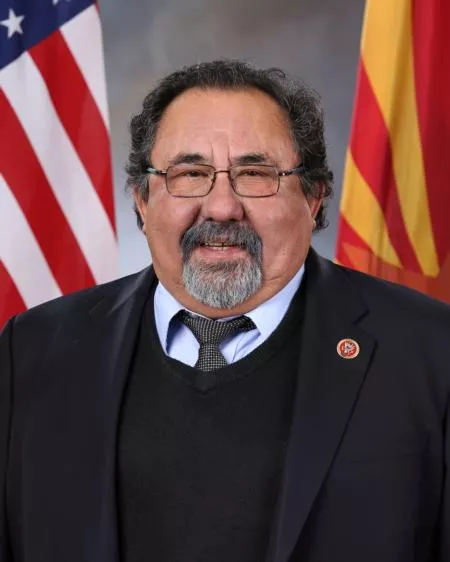
Officials from the Arizona Department of Public Safety used excessive force and tear gas against demonstrators protesting the construction of a border wall at sites considered sacred to the Tohono O’odham Nation, according to a press release from Rep. Raúl Grijalva’s office.
The release says Tohono O’odham Nation Chairman Ned Norris confirmed the use of force against protesters at Quitobaquito Springs.
“For months, the O’odham people have pleaded with DHS to protect Quitobaquito Springs and other sacred sites along the border while the Trump Administration has continued to bulldoze their ancestral lands to build his useless vanity wall,” Grijalva said in the press release. “Now, law enforcement officials are using tear gas and excessive force against Native Americans exercising their constitutional rights in an abhorrent attempt to silence their voices. Americans are keenly aware of the historical mistreatment of this nation’s indigenous peoples, and the public will be rightfully incensed by this action. This treatment will not stand.”
The U.S. Representative for Arizona's 3rd congressional district held a hearing in the house’s Subcommittee on Indigenous Peoples in early February after the Trump administration used explosives to clear the way for border fencing at Monument Hill in the Organ Pipe Cactus National Monument, a site considered sacred to the Tohono O’odham.
“The federal government’s continued destruction of our religious and cultural resources are nothing less than bulldozing of our church grounds and cemeteries,” Chairman of the Tohono O’odham Nation Ned Norris said at the hearing. “The federal government owes our government and the governments of local border communities more respect.”
According to the press release, Grijalva is demanding an investigation into the use of force against protestors.
“Those responsible for this egregious display of excessive force against peaceful protestors, who are members of the Tohono O’odham Nation and their allies, must be held responsible,” Grijalva said. “I’m demanding an investigation into this act. The border wall has already destroyed precious desert habitats, divided families, and left an ugly scar across Southern Arizona.”
This article was misattributed when first published. The reporter's name has been corrected.
LOS ANGELES — More than two years after the federal ban on sports betting was lifted, Arizona is one of 28 states that have not passed legislation to legalize gambling on sports in-person or online.
A bill that would have legalized land-based sportsbooks, Senate Bill 1525, with exclusive rights going to Native American tribes, was introduced in the Legislature in February, but it didn’t make it out of committee.
“There is a good, happy medium where we are not stepping on tribal toes,” said state Sen. Sonny Borrelli, R-Lake Havasu City, who co-sponsored the bill. “Because it could be done in such a way where everybody should be able to share and everybody could prosper.”
The main hurdle is the Arizona Tribal-State Gaming Compact, which voters narrowly passed by a 51% margin in 2002.
“You have to have all the tribes (in the gaming compact) agree and sign off on to anything additional or expansion in the compact, they all have to agree,” Borrelli said. “It comes down to the gaming compact and how flexible it is. The first step is getting the tribes to be on board with it, and then you have to go through the state side of it.”
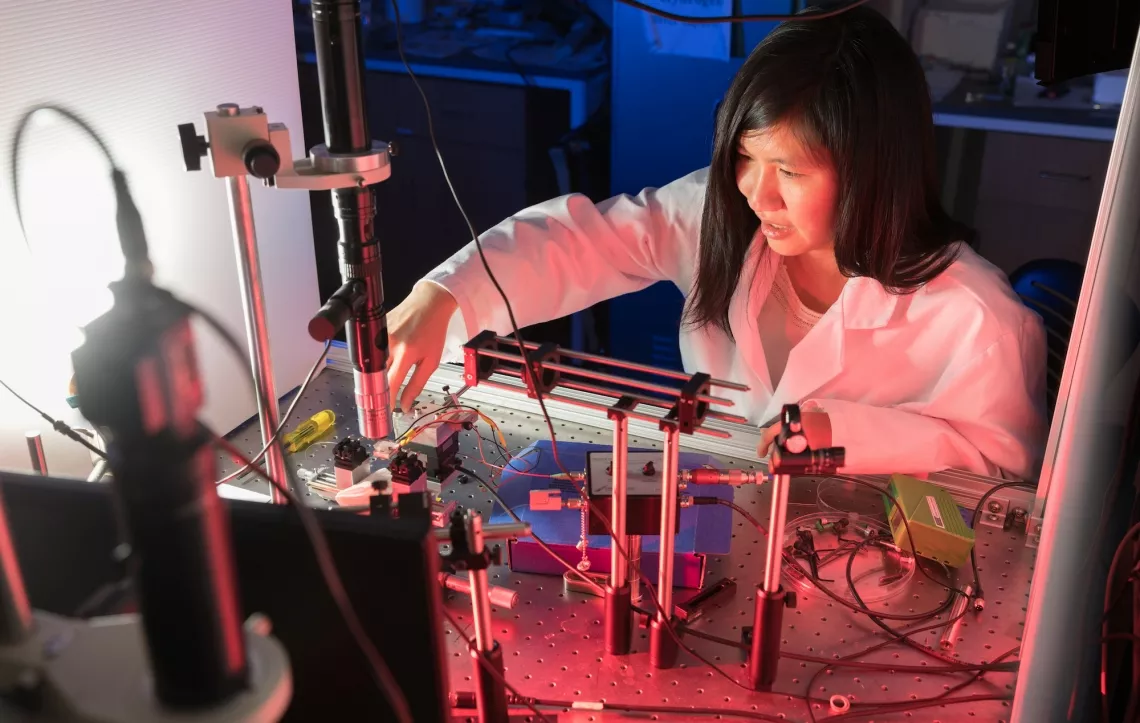
A researcher at the University of Arizona has received a $1.82 million grant from the National Institute of General Medical Sciences to advance the capabilities of a device that can detect single molecules, such as biomarkers for cancer, Alzheimer's disease and COVID-19.
Biomedical engineering professor Judith Su operates the Little Sensor Lab at UA, the core of which is a technology called the "frequency locked optical whispering evanescent resonator," or FLOWER. This device detects whispering gallery waves, a phenomenon where sound or light waves travel around a concave surface.
On a microscopic level, FLOWER examines light traveling around a small ring. Each time the light makes a loop, a small amount may interact with a close-by solution such as blood or water. If a molecule of the solution interacts with the lightwave, it slightly changes the light's refraction. As the light continues to loop around the ring, it interacts with the molecules more, increasing the chance of detection.
According to Su, normal sensors interact with a molecule once, but in this case, it interacts with the molecule hundreds of thousands of times, resulting in the detector’s sensitivity boost. Thanks to this versatile testing method, FLOWER can be used to detect a variety of molecules. And because COVID-19 can travel via airborne molecules, FLOWER may hold the key to a non-invasive breath test for COVID-19 instead of a swab or a blood test.
"Everything our lab does is centered around ultrasensitive optical sensing, for a wide variety of applications, like environmental health monitoring, food and water quality monitoring, and detecting toxic industrial chemicals," Su said. "Anything worth sensing, we sense."
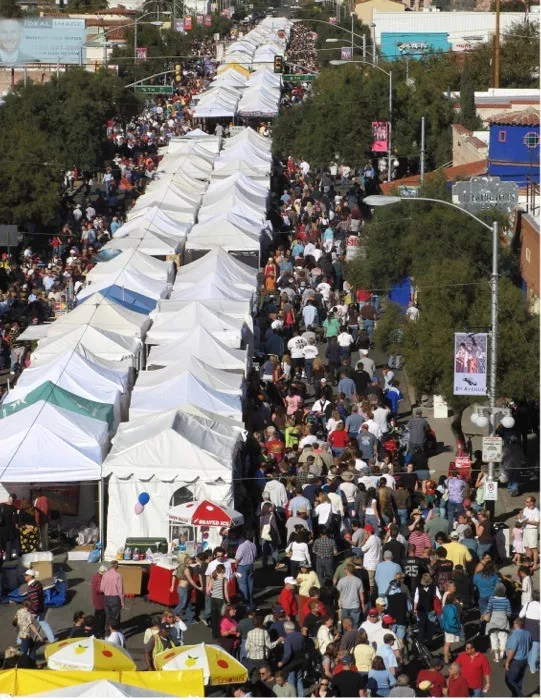
The Fourth Avenue Merchants Association is canceling their annual winter street fair due to a new special event permit application which would leave little time to properly plan the event.
New guidelines released by the City of Tucson and Pima County last week state that all special events of 50 people or more held in unincorporated Pima County will need to apply with the Pima County Health Department. The special event application turnaround time is between 14 to 21 days, according to an Oct. 9 email sent by the county.
“We can’t do anything without proper permitting,” said Monique Vallery of the Fourth Avenue Merchants Association. “We want to produce the safest COVID adherent event as possible and time just isn’t in our favor.”
Typically, the merchants association would only need to apply for a special event permit with the city, Vallery said. While she “absolutely respects” the county and city’s decision to keep Tucsonans safe during the pandemic, Vallery said she is disappointed at the timing of these new protocols because “it makes planning for an event this size impossible.”
“Because we haven’t been able to see what guideline would be or what those expectations would be earlier, it really doesn’t allow for enough time to come up with a mitigation plan to fit the needs of all parties,” Vallery said.
This is the second street fair the merchant's association has had to cancel due to coronavirus concerns. About 98 percent of the association’s revenue budget comes from the bi-annual street fair, according to Vallery. She said the association has worked hard to save over the past several years for a rainy day, but “nobody expected this rainy day to be this big or last this long.”
“This is certainly devastating but our goal is to continue to support our local merchants on the avenue, as well as all the folks we support through our community partners,” Vallery said. “We’re working hard to continue down the path get us to the Spring Street Fair.”
The Fourth Avenue Spring Street Fair is slated for March 19-21, 2021.
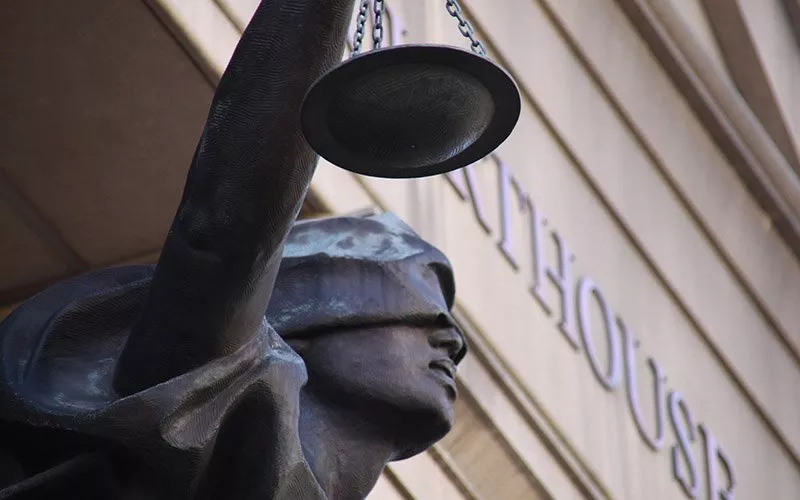
WASHINGTON – The road to the ballot box in Arizona apparently runs through the 9th U.S. Circuit Court of Appeals, which heard two cases in just the past two days concerning ballots and voter registration in the state.
Late Tuesday night, the court ruled in one of those cases, reversing a lower court order that had extended the state’s voter registration from Oct. 5 to Oct. 23.
The appeals court, balancing the burden the registration extension put on state elections officials against the harm that reversing the order outright would have on people who registered after Oct. 5, said the extended registration would end Thursday. That ruling came just a day after Monday argument’s in the case.
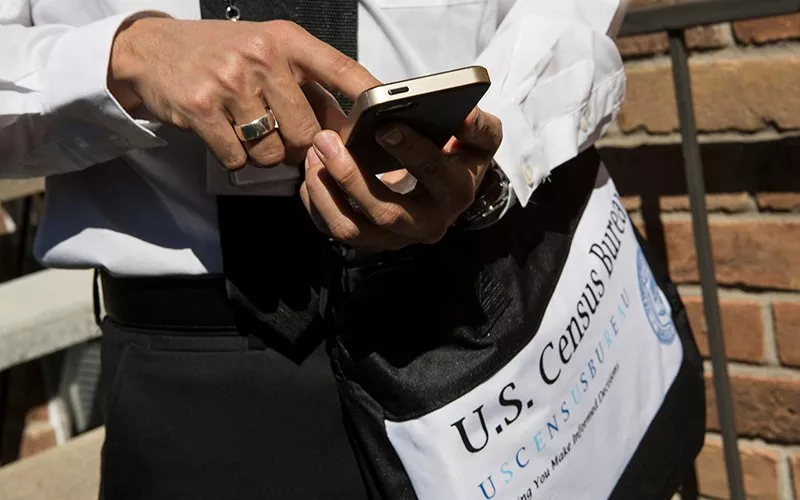
WASHINGTON – The Supreme Court Tuesday said the Census Bureau can stop its count of the population, a blow to tribal leaders and local advocates for underrepresented communities in Arizona who said they would be hit hardest by an undercount.
The court blocked lower courts that had ordered the bureau to continue counting until Oct. 31 and essentially allows the agency to stop counting with 99.9% of homes in the U.S. – and in Arizona – accounted for.
The decision was immediately criticized by plaintiffs in the suit, who said ending enumeration before everyone is counted will just mean the groups they represent will continue to be left at “the margins of the U.S. society at large.”
“Today’s decision by the U.S. Supreme Court is a bitter pill for us to swallow here on the Reservation,” said Gila River Indian Community Gov. Stephen Roe Lewis said in a statement Tuesday evening. “With no explanation or rationale, a majority simply decided that our people do not deserve to be counted.”
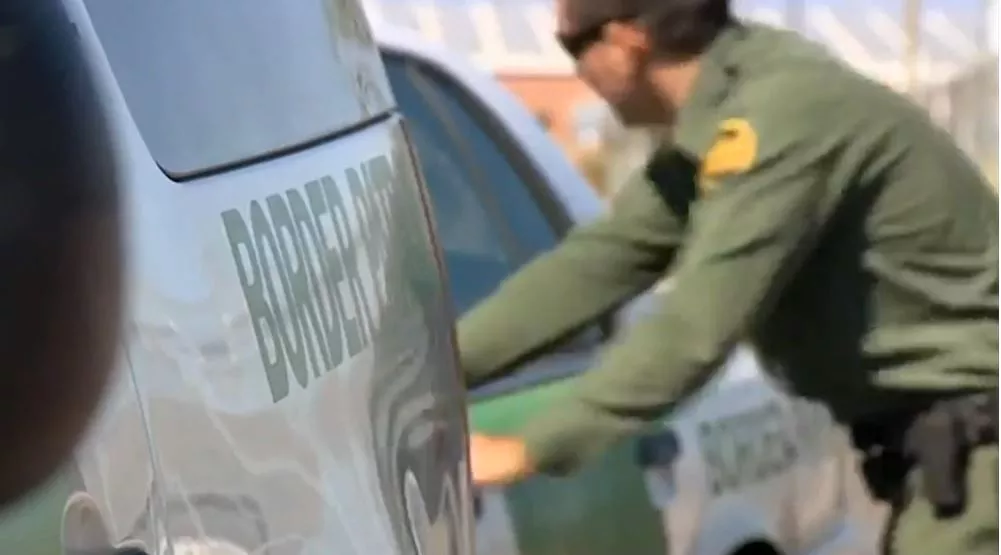
WASHINGTON – The number of migrants apprehended at the southern border fell sharply in fiscal 2020, a drop analysts attribute in large part to fears of the COVID-19 pandemic and the economic havoc left in its wake.
Final numbers are set to be released Wednesday at an event with Border Patrol officials in Tucson, but apprehensions through the first 11 months of the fiscal year are less than half the total for fiscal 2019. About 400,000 migrants had been apprehended through August, compared to 977,509 people caught the year before.
Experts said part of the slowdown is due to Trump administration policies, but much can be blamed on COVID-19 and the economic woes that followed, giving migrants “less of a reason to come here in the first place.”
“It being fairly pandemic-induced because of elevated fears and lack of economic opportunity in the places where they would have maybe sought out to go before,” said Sara Ritchie, director of communications at Kino Border Initiative.