

Thursday, October 29, 2020
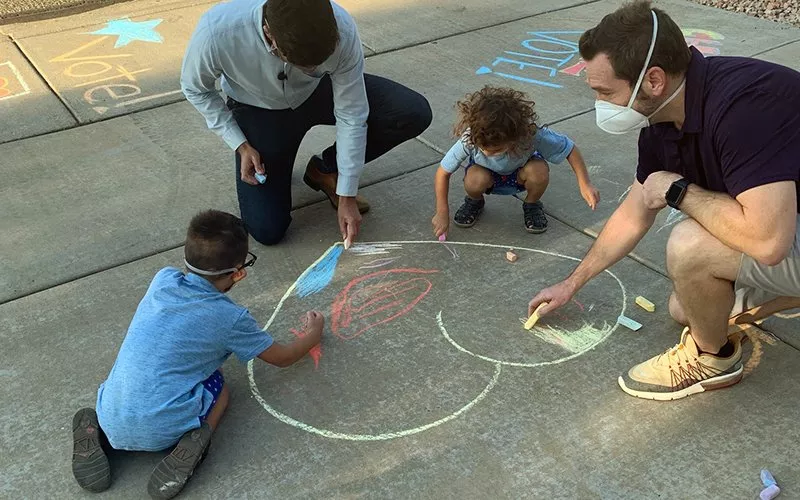
PHOENIX – Divya Yoder and her family were out on the sidewalk in front of their home one recent Sunday, writing chalk messages to encourage their neighbors to vote.
“Vote early,” one read. “United we stand,” read another.
The Yoders weren’t the only family taking chalk to concrete with similar messages in recent days. Hundreds of Arizonans were doing the same, along with thousands of families across the country as part of #ChalkTheVote, which was created by the non-profit organization ParentsTogether to urge families to vote on Nov. 3.
Yoder, the mother of two young boys, wanted them to understand the importance of voting – a right that isn’t available to everyone.
“You know, we live in a community with our loved ones, friends, neighbors, and children, and some of them don’t have the privilege and we make the decisions to vote for ourselves and for the ones around us,” said Yoder, who immigrated to the U.S. from the United Kingdom when she was 5, became a U.S. citizen six years ago and voted for the first time in 2016.
Yoder, who’s of East Indian descent, said her background has informed her views on the right to vote, and what she wants her sons to understand.
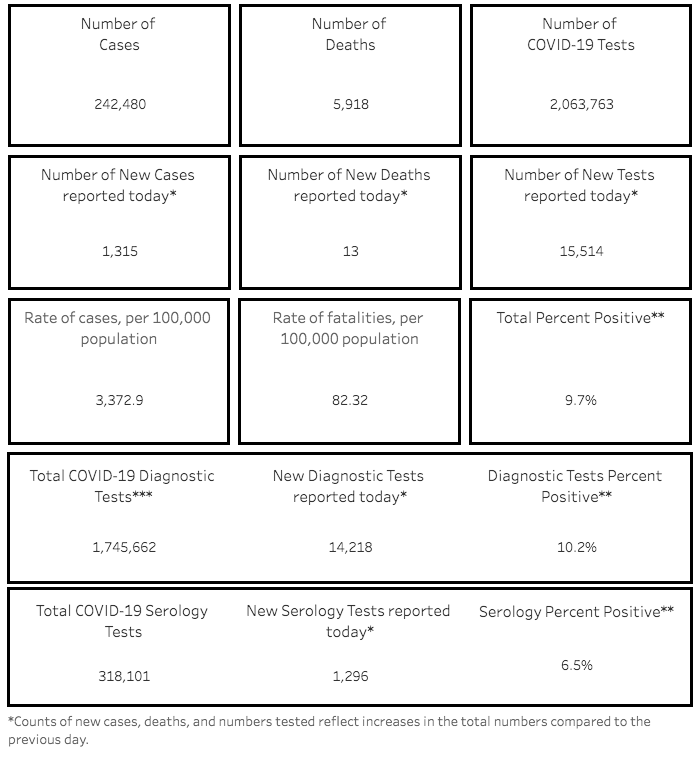
With 1,315 new cases reported today, the number of Arizona’s confirmed novel coronavirus cases topped 242,000 as of Thursday, Oct. 29, according to the Arizona Department of Health Services.

With 105 new cases reported today, Pima County had seen 28,067 of the state’s 241,116 confirmed cases.
With 14 new deaths reported yesterday, a total of 5,905 Arizonans had died after contracting COVID-19, including 638 deaths in Pima County, according to the Oct. 29 report.
The number of hospitalized COVID cases has declined from July peaks but has ticked upward in recent weeks as the virus has begun to spread more rapidly. ADHS reported that as of Oct. 28, 874 COVID patients were hospitalized in the state. That number peaked with 3,517 hospitalized COVID patients on July 13; it hit a subsequent low of 468 on Sept. 27.
A total of 857 people visited emergency rooms on Oct. 28 with COVID symptoms. That number peaked at 2,008 on July 7; it hit a subsequent low of 653 on Sept. 28.
A total of 186 COVID-19 patients were in intensive care unit beds on Oct. 27. The number of COVID patients in ICUs peaked at 970 on July 13 and hit a subsequent low of 114 on Sept. 22.
Arizona Department of Health Director Cara Christ noted on her blog last week that cases in the state were on the increase.
Christ wrote that while Arizona has not seen as big a surge as other states, “we have recently seen a shift of COVID-19 spread in the wrong direction.”
Christ noted that the statewide positivity results from tests has climbed from 3.9 percent to 5.5 percent in recent weeks.
Christ urged Arizonans to wear masks but noted the numbers across the state still indicated “moderate” spread of the coronavirus and hospitals are not reporting a surge of patients.
On a week-by-week basis in Pima County, the number of positive COVID tests peaked the week ending July 4 with 2,452 cases, according to an Oct. 21 report from the Pima County Health Department.
After a bump following the return of UA students, cases on a week-to-week basis declined but have hit a plateau. For the week ending Sept. 19, 1,221 cases were reported; for the week ending Sept. 26, 599 cases were reported; for the week ending Oct. 3, 526 cases were reported; for the week ending Oct. 10, 462 cases were reported; and for the week ending Oct. 17, 501 cases were reported.
Deaths in Pima County are down from a peak of 54 in the week ending July 4 to 10 in the week ending Sept. 5, one in the week ending Sept. 12, four in the week ending Sept. 19, four in the week ending Sept. 26 and one in the week ending Oct. 3.
Hospitalization peaked the week ending July 18 with 221 COVID patients admitted to Pima County hospitals, but it has been on the rise in recent weeks. In the week ending Sept. 12, 24 patients were admitted; in the week ending Sept. 19, 17 patients were admitted; in the week ending Sept. 26, 15 people were admitted; in the week ending Oct. 3, 20 patients were admitted; in the week ending Oct. 10, 27 people were admitted; and the week ending Oct. 17, 33 people were admitted. (Recent weeks are subject to revision.)
Get tested: Pima County offers free COVID testing, UA offering antibody testing
The Pima County Health Department has four free testing centers around town with easy-to-schedule appointments—often with same-day availability—with results in 24 to 72 hours.
You’ll have a nasal swab test at the Kino Event Center (2805 E. Ajo Way) the Udall Center (7200 E. Tanque Verde Road) and downtown (88 E. Broadway). The center at the northside Ellie Towne Flowing Wells Community Center, 1660 W. Ruthrauff Road, involves a saliva test designed by ASU.
Schedule an appointment at pima.gov/covid19testing.
The University of Arizona’s antibody testing has been opened to all Arizonans as the state attempts to get a handle on how many people have been exposed to COVID-19 but were asymptomatic or otherwise did not get a test while they were ill.
To sign up for testing, visit https://covid19antibodytesting.arizona.edu/home.
—with additional reporting from Nicole Ludden, Austin Counts, Jeff Gardner and Mike Truelsen

WASHINGTON – President Donald Trump and Democratic vice presidential nominee Kamala Harris were back stumping in Arizona Wednesday, evidence of what one report calls the high “voter power” of residents of the swing state.
The WalletHub report, “2020’s States with the Most and Least Powerful Voters,” rated Arizona the state with the fifth-most powerful voters, based largely on Arizona’s relatively newfound status as a toss-up state.
The high ranking “will come as a pleasant surprise to a lot of Arizonans,” said Jason Rose, an Arizona political consultant. “I don’t think most Arizonans really thought of themselves as all that important, because of the history of it being a red state – until now, perhaps.”
Voters may not think of themselves as important, but the presidential campaigns apparently do.
Harris had campaign stops scheduled Wednesday in Phoenix and Tucson, where she took part in “drive-in rallies” of about 100 cars at each event. She was joined in Phoenix by singer Alicia Keys.

Wednesday, October 28, 2020

Democrats agree that Trump’s caused asylum-seekers unacceptable misery. But the goal of deterring people from migrating to the U.S. — which has motivated Trump’s complex web of border policies — has seduced some Democrats, too.
In early October, hundreds of migrants in Honduras set out in a “caravan” with plans to travel through Mexico to the United States.
The timing was similar to a caravan two years ago, which swelled to thousands of people, overwhelmed Guatemalan and Mexican border authorities and became the leading issue for President Donald Trump and Republicans going into the 2018 midterm election.
The latest caravan was stopped hundreds of miles short of the U.S. border, hardly making a blip in the news cycle. Shortly after entering Guatemala, police and migration authorities set up roadblocks and rounded up the group for deportation back to Honduras.
It was so routine that Trump, ill with COVID, didn’t even bother to bang out a celebratory tweet, much less talk about deploying the military to avert an invasion as he did in 2018.
The fate of the caravan is a symbol of a larger success. Over the past year and a half, Trump and his relentlessly focused aide, Stephen Miller, have largely achieved their goal of choking off the flow of unauthorized immigrants into the United States — especially families from Central America, many of whom come with the intention of requesting asylum. They have done so with a combination of policies that Tom Jawetz, a former Democratic aide to the House Judiciary Committee, describes as a “waterproof fabric” to repel migrants.
New U.S. regulations and legal precedents make it harder for someone to be granted asylum once they arrive. But few these days even get the chance to ask. As much as possible, the Trump administration has simply expelled asylum-seekers.


A mother of two has been killed and her 14-year-old son has been charged with second-degree murder in her death.
Pima County Sheriff’s Deputies responded to a report of a disturbance Sunday, Oct. 25, at a residence in the 4900 block of West Didion Drive near Cortaro Farms where they found Tiana Keen, 45, with obvious signs of trauma.
She was pronounced dead after deputies and Northwest Fire Department responders were unable to revive her.
Keen’s son—whose name has not been released because he is a juvenile—was taken into custody after an initial investigation. Detectives with the department’s Criminal Investigations Division said Keen’s injuries were consistent with “sharp force trauma."
Keen and her two children had been visiting relatives in the Marana area.
Her family has posted a Go Fund Me page that has raised $5,210.

PHOENIX – Saturdays on the West Coast look and feel a lot different this fall.
In a time when college communities from Tucson to Seattle, and everywhere in between, are accustomed to college football Saturdays, the COVID-19 pandemic has wiped out nearly half of the typical season. And for a time, it appeared as if there would be no Pac-12 Conference football at all.
With their season in limbo, the conference’s players were forced to watch as some of the country’s other premier leagues played actual games.
“I love football, so I kind of want to watch it, but I also get pissed off when I’m watching it because I know I should be out on the field playing the same day,” Washington State running back Max Borghi said. “No one really loves watching football if you should be out there playing.”
However, the Pac-12 finally received its reprieve in September, when the conference agreed to return and play an abbreviated seven-game schedule beginning November 7. It will mark the latest return to play for any of the Power Five conferences.
“It was disappointing at times, but as a team, we never really got down,” Arizona quarterback Grant Gunnell said. “We just kept working, hoping and believing that we were going to have a season eventually, whether that be in the fall, winter or spring.”
Because the Pac-12 was much later to return than its Power Five counterparts, the conference’s players found themselves in a unique situation with their fall camps taking place while teams in other conferences were already playing games.
“It’s definitely different,” Southern California safety Talanoa Hufanga said. “Usually, you’re ready to play in September or late August. You’re itching just to be on the field and not watching other teams.”
However, while it may be difficult for players to watch rather than play, most are trying to take advantage of the unusual circumstances presented by a pandemic.
“It’s been interesting to sit back and watch college football from a viewer’s perspective after having played it for a few seasons,” Utah wide receiver Britain Covey said. “I feel like everybody’s becoming a student of the game.”
Covey added that even a shortened season “with daily COVID tests, with all these protocols and restrictions,” beats the alternative of practicing and training without getting to play the games.
“In my mind, (that) is what hell would be like – just football practice with no game to look forward to,” he said.
Covey isn’t the only player that took advantage of the extra time off to learn the game more. Two-star running backs representing the Oregon schools made the most of the weeks and months they spent waiting for the season.
“This time off, I’ve been watching a lot of film by myself, trying to learn the game of football more, learning offenses and defenses and different stuff and trying to find new things that I can see,” Oregon State running back Jermar Jefferson said.
“Watching college football on a Saturday kind of hurts me a little bit, but it helps me a lot, learning the game of football. Sitting down and seeing football at home can help your game on the field when you’re playing on Saturdays. You can learn stuff from other running backs or other offenses… It’s good, and it’s bad.”
Oregon running back CJ Verdell took an approach similar to his rival’s.
“I’ve definitely been watching other teams, trying to see the things that they do and maybe even their mistakes, and just trying to use that as a learning tool to see things we shouldn’t do when we go into a game and we start playing,” Verdell said. “I’ve definitely used this time to reflect on those things.”
Given their nearly identical strategies for handling the unexpected time away from football, the battle between those Beaver State rivals should be fascinating to watch during the abbreviated season. But then it would have been even without the pandemic.
After all, Jefferson finished third in the Pac-12 in rushing in 2018, and then Verdell topped him by ranking second in 2019. They expect to be at the top of the rankings again this year.
Verdell said one of his goals for 2020 is to rush for 1,000 yards, which would be quite a feat in a seven-game season.
Players in the Pac-12 South also took advantage of their unexpected free Saturdays. For Arizona State quarterback Jayden Daniels, the delay was an opportunity to root for other sophomore quarterbacks around the country.
“Just being able to watch football, watching those college games, I’m very interested in watching the guys that are in my class: Spencer Rattler, Bo Nix, Sam Howell,” Daniels said. “Just seeing what those guys are doing so far, I’m just happy for their success and happy to see them just keep balling out.”
Daniels will be a key figure in the Pac-12’s return. As of now, the conference’s first game is scheduled for Saturday, Nov. 7, when ASU will visit USC. Fox Sports picked up the game for it’s “Big Noon Saturday” matchup beginning at 10 a.m. Arizona time.
The season-opening matchup marks the Pac-12’s first appearance in Fox Sports’ principal college football timeslot and is expected to bring major exposure to the conference, which is accustomed to playing most of its games later in the evening after much of the viewing public has stopped watching football for the day.
Hufanga was confident about USC’s ability to be ready for the kickoff at 9 a.m. local time in Los Angeles. Turns out the pandemic has prepared the Trojans for that, too.
“We wake up at 5:15 most days just to get a COVID test in at 6 a.m., so for us to be ready at 9 a.m., I can’t tell you that we haven’t been training for this for two years, three years, since we’ve been in college,” Hufanga said. “We’re going to put the ball down anywhere on the field at any time, anywhere, anyplace, so we’re just extremely excited and grateful for this opportunity.”
Still, the Pac-12’s players have about two weeks to get through on and off the field before a game day arrives, and it could be challenging for some.
“It could be (hard) for a lot of people on the team,” said Washington defensive back Elijah Molden. “You get on the college scene, and you want to have a social life. And now that’s taken away from us, but that’s our responsibility now. We’re supposed to deal with that. For some people, it’s easy. For me, it’s pretty easy just because I go home, take care of business and then come here to work. But it’s definitely a challenge.”
Fresh from a win as Tucson's Best Musical Act in last week's Best of Tucson®, Calexico announced this morning that they are releasing a new album of holiday music coming out on Dec. 4.
"We had a blast making this holiday album sending tracks to friends and band members stretching from The States to Europe, Mexico and Africa as well," said Burns. "It truly is a celebration of diversity and coming together, something that’s been constant with Calexico on album and on tour. Since we can’t play live in concert at a venue near you we thought that we would help with this season’s shift and bring this celebration on album into your living room."
Listen to the first single above or on your favorite streaming services and preorder the album here.
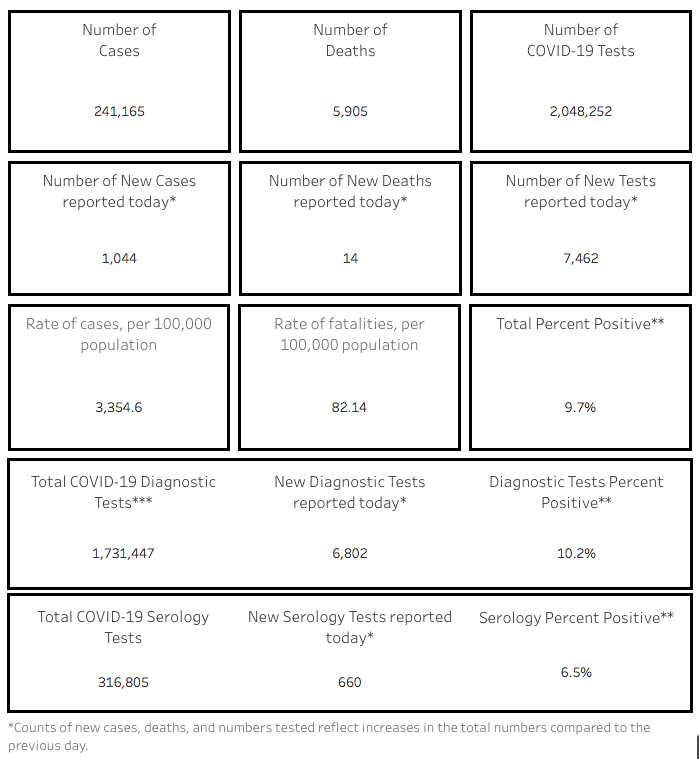
With 1,044 new cases reported today, the number of Arizona’s confirmed novel coronavirus cases topped 241,000 as of Wednesday, Oct. 28, according to the Arizona Department of Health Services.

Over the last week, the state has seen, on average, more than 1,000 new cases a day
With 259 new cases reported today, Pima County had seen 27,962 of the state’s 241,116 confirmed cases.
With 14 new deaths reported yesterday, a total of 5,905 Arizonans had died after contracting COVID-19, including 636 deaths in Pima County, according to the Oct. 28 report.
The number of hospitalized COVID cases has declined from July peaks but has ticked upward in recent weeks as the virus has begun to spread more rapidly. ADHS reported that as of Oct. 27, 871 COVID patients were hospitalized in the state. That number peaked with 3,517 hospitalized COVID patients on July 13.
A total of 857 people visited emergency rooms on Oct. 27 with COVID symptoms. That number peaked at 2,008 on July 7.
A total of 188 COVID-19 patients were in intensive care unit beds on Oct. 27. The number of COVID patients in ICUs peaked at 970 on July 13.
Arizona Department of Health Director Cara Christ noted on her blog last week that cases in the state were on the increase.
Christ wrote that while Arizona has not seen as big a surge as other states, “we have recently seen a shift of COVID-19 spread in the wrong direction.”
Christ noted that the statewide positivity results from tests has climbed from 3.9 percent to 5.5 percent in recent weeks.
Christ urged Arizonans to wear masks but noted the numbers across the state still indicated “moderate” spread of the coronavirus and hospitals are not reporting a surge of patients.

