Thursday, November 12, 2020
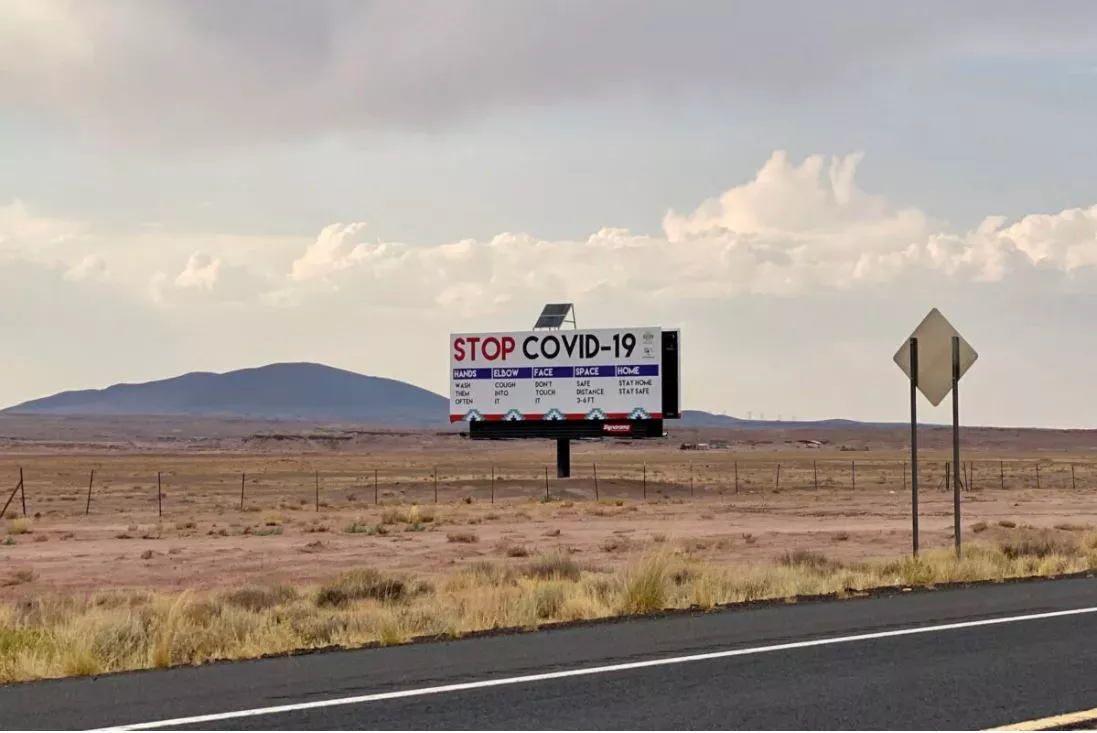
As the first coronavirus vaccine takes a major stride toward approval, state governments’ distribution plans show many are not ready to deliver the shots.
The challenge is especially steep in rural areas, many of which are contending with a surge of infections, meaning that access to the first batch of COVID-19 vaccines may be limited by geography.
Pfizer announced Monday that its vaccine demonstrated more than 90% effectiveness and no serious bad reactions in early trial results — an impressive outcome that will pave the way for the company to seek an emergency authorization once it collects more safety data for another week or two. But establishing that the vaccine is safe and effective is just the first step.
The Pfizer vaccine is unusually difficult to ship and store: It is administered in two doses given 28 days apart, has to be stored at temperatures of about minus 100 degrees Fahrenheit and will be delivered in dry ice-packed boxes holding 1,000 to 5,000 doses. These cartons can stay cold enough to keep the doses viable for up to 10 days, according to details provided by the company. The ice can be replenished up to three times. Once opened, the packages can keep the vaccine for five days but can’t be opened more than twice a day. The vaccine can also survive in a refrigerator for five days but can’t be refrozen if unused.
Health officials haven’t figured out how to get the ultracold doses to critical populations living far from cities, according to a ProPublica review of distribution plans obtained through open records laws in every state. Needing to use 1,000 doses within a few days may be fine for large hospital systems or mass vaccination centers. But it could rule out sending the vaccine to providers who don’t treat that many people, even doctors’ offices in cities. It’s especially challenging in smaller towns, rural areas and Native communities on reservations that are likely to struggle to administer that many doses quickly or to maintain them at ultracold temperatures.

Wednesday, November 11, 2020

WASHINGTON – A Navajo Nation probe of a controversial, Navajo-owned hemp operation has turned into a federal investigation into reports of marijuana production, interstate drug trafficking and violations of labor and child labor laws.
The FBI said Monday it had executed search warrants “in the area of Shiprock” in an operation that included nine federal agencies as well as state, tribal and local agencies from at least three states. It released few other details.
But the Navajo Nation Department of Justice said the search warrants targeted “suspected illegal marijuana farming” at the Navajo Gold hemp farming operation run by Dineh Benally, former president of the nation’s San Juan River Farm Board.
“Dineh Benally and his investors sought to take advantage of what they believed to be a jurisdictional gap on the Navajo Nation that would allow them to operate outside the law,” Navajo Nation President Jonathan Nez said in a statement Tuesday.
“They did not count on the diligence or effectiveness of the Navajo Nation Department of Justice to be able to enforce our own laws through our own courts,” Nez’s statement said.

As the nation’s highest court heard oral arguments in the Trump administration-led lawsuit to dismantle the Affordable Care Act (ACA), proponents of the Obama-era health care reform law are spreading awareness about what repealing the act could mean for a country overwhelmed by the coronavirus pandemic.
Protect Our Care Arizona, a healthcare advocacy organization, held a virtual press conference yesterday to discuss what it means if the Supreme Court overturns the ACA, which the group says would put 2.8 million Arizonans with pre-existing conditions at risk of losing their healthcare coverage.
The ACA currently prevents health insurance companies from refusing coverage based on pre-existing conditions. If it were repealed, many of the unknown, long-term side effects of COVID-19 could be used by private insurance providers to deny care.
The argument against the ACA, made by the Republican Attorneys General of 18 states—including Arizona’s Mark Brnovich—is that the entire act should be thrown out because its individual mandate that most U.S. citizens have health insurance is unconstitutional.
The healthcare bill has been upheld by the Supreme Court twice before, but now—a week after the presidential election—it’s facing a majority of 6-3 Republican-appointed justices.
Will Humble, the executive director for the Arizona Public Health Association, said at the Protect Our Care press conference that he’s worried about the ACA’s fate, and pointed to the Supreme Court’s minority opinion when the act went to trial in 2012 and four dissenting justices agreed it's illegal in its entirety.
“There are things that we need to think through and prepare for in advance so that if the court does end up striking down the Affordable Care Act, we're prepared as a community to have an alternative plan that handles many of the aspects, if not all the aspects that the Affordable Care Act took care of,” Humble said. “A lot of that's going to depend on the nuances of what the court actually decides in the event that that the ACA is stricken in its entirety, which, by the way, I wouldn't be surprised to see.”
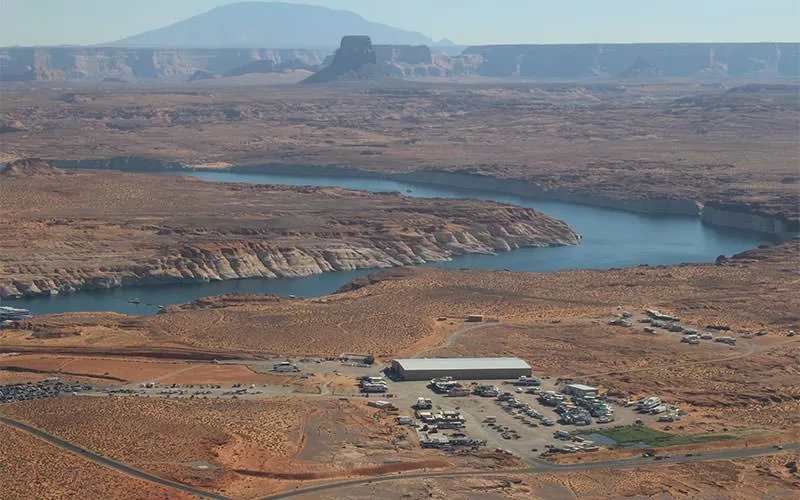
2020 has been a tough year for some of the Colorado River basin’s long-planned, most controversial water projects.
Proposals to divert water in New Mexico, Nevada and Utah have run up against significant legal, financial and political roadblocks this year. While environmental groups have cheered the setbacks, it’s still unclear whether these projects have truly hit dead ends or are simply waiting in the wings.
The watershed’s ongoing aridification, with record-breaking hot and dry conditions over the last 20 years, and lessened federal financial support for large-scale water projects is adding more pressure on projects that attempt to divert water to fast-growing communities or slow the purchase of agricultural water supplies.
In New Mexico, a “solid plan” fails to materialize
For years, environmental journalist Laura Paskus has been following the twists and turns of a proposed project in New Mexico’s southwest corner, called the Gila River Diversion.
Introduced in 2004, when Arizona settled tribal water rights with the Gila River Indian Community, the diversion was billed as a way to provide much-needed water supplies for four mostly rural New Mexican counties.
“The most recent plan was to build this diversion in the Cliff-Gila Valley,” Paskus said. “And to provide water to irrigators,” like farmers and ranchers.
What propelled the project forward was a federal subsidy to cover some of the costs associated with planning and building. Thorny questions over the project’s total cost, its eventual operation and the financial burden of those who would receive the water were present from the start, Paskus said, but the idea of leaving federal dollars unspent kept the effort alive for more than a decade.
“But there was never a really solid plan of how it would be built or how it would be paid for,” she said.
Failure to come up with a plan finally sank the proposal in June this year. The New Mexico Interstate Stream Commission, which had thrown its weight behind the project five years earlier, voted to stop spending money on environmental reviews related to the diversion. Roughly $17 million had already been spent on engineering plans and consultants over the years.
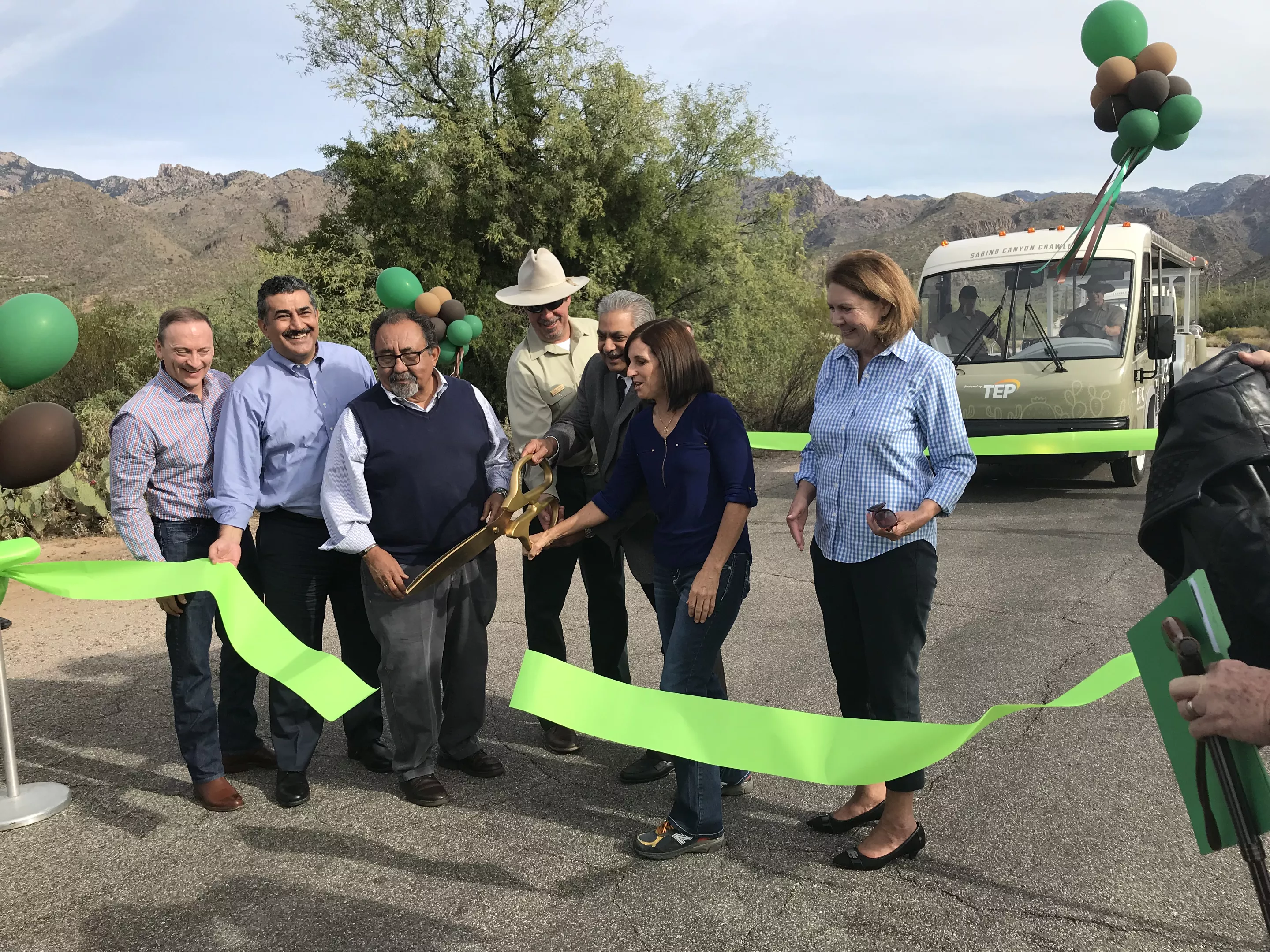
Passengers are required to wear a mask while riding on the shuttle and in the ticketing area, as well as comply with all local and state health department requirements. People who have suffered COVID-19 symptoms in the past 14 days and/or been in contact with someone who has had the virus within two weeks are asked not to ride.
Crawlers are open-air vehicles and windows on shuttles servicing the Bear Canyon/Seven Falls trailhead have been removed to promote more airflow. All vehicles are disinfected on a regular basis, according to Total Ride staff who maintain the canyon's shuttle service under contract with Regional Partnering Center.
To purchase shuttle tickets online, click here.
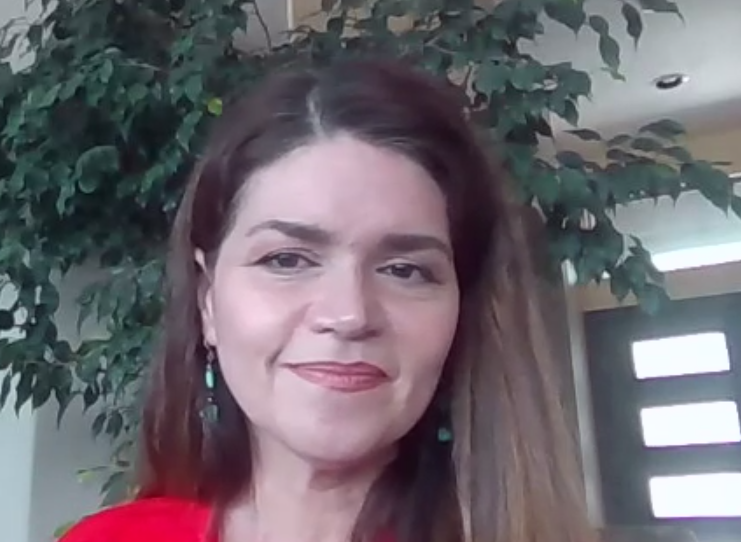
Families with children 12 years old and younger may be eligible for scholarships up to $2,275 per child, with no limit to the number of children in the family.
“For many working families, having reliable and safe childcare, particularly during the pandemic, can be the difference between going back to work or staying home,” Mayor Regina Romero said. “The scholarships will help low-income families pay for safe child care, giving them peace of mind when they leave home to provide for their loved ones.”
Applicants must live within the City of Tucson and South Tucson boundaries to receive the scholarship and priority will be given to families who haven't received state or federal COVID-19 relief funds. Funds will be paid directly to the families' child care provider.
“We're delighted that Mayor Romero and the Tucson City Council are leading the way to affordable early childhood education,” said Penelope Jacks from the Preschool Promise Coalition. “Early childhood education is vital for children's success, families' ability to work, and the city's economic growth.”
The city approved $500,000 in federal CARES Act funds to bankroll the scholarship, which will be administered by the Catholic Community Services of Southern Arizona. The program is available until Dec. 31 or when funding runs out.
Check if your family is eligible and/or apply here

With more than 2,000 new cases reported today, the number of Arizona’s confirmed novel coronavirus cases climbed past 265,000 as of Wednesday, Nov. 11, according to the Arizona Department of Health Services.

Pima County, which reported 191 new cases today, has seen 31,204 of the state’s 265,163 confirmed cases. After 36 new deaths were reported today, a total of 6,228 Arizonans had died after contracting COVID-19, including 659 deaths in Pima County, according to the Nov. 11 report.
The number of hospitalized COVID cases statewide continues to climb upward as the virus has begun to spread more rapidly. ADHS reported that as of Nov. 10, 1,360 COVID patients were hospitalized in the state, the highest that number has been since Aug. 12. That number peaked with 3,517 hospitalized COVID patients on July 13; it hit a subsequent low of 468 on Sept. 27.
A total of 1,103 people visited emergency rooms on Nov. 10 with COVID symptoms, the highest that number has been since Aug. 5. That number peaked at 2,008 on July 7; it hit a subsequent low of 653 on Sept. 28.
A total of 309 COVID-19 patients were in intensive care unit beds on Nov. 10, the highest that number has been since Aug. 24. The number of COVID patients in ICUs peaked at 970 on July 13 and hit a subsequent low of 114 on Sept. 22.
On a week-by-week basis in Pima County, the number of positive COVID tests peaked the week ending July 4 with 2,452 cases, according to an Nov. 4 report from the Pima County Health Department.
Pima County is seeing a steady rise in cases in recent weeks. For the week ending Oct. 10, 465 cases were reported; for the week ending Oct. 17, 543 cases were reported; for the week ending Oct. 24, 911 cases were reported; and for the week ending Oct. 31, 1,166 cases were reported.
Deaths in Pima County are down from a peak of 54 in the week ending July 4 to four in the week ending Oct. 3, two in the week ending Oct 10, one in week ending Oct. 17, two in the week ending Oct. 24 and one in the week ending Oct. 31.
Hospitalization peaked the week ending July 18 with 221 COVID patients admitted to Pima County hospitals, but it has been on the rise in recent weeks. In the week ending Oct. 3, 20 patients were admitted; in the week ending Oct. 10, 27 people were admitted; in the week ending Oct. 17, 37 people were admitted; in the week ending Oct. 24, 34 people were admitted; and in the week ending Oct. 31, 41 people were admitted. (Recent weeks are subject to revision.)
Get tested: Pima County offers free COVID testing, UA offering antibody testing
The Pima County Health Department has four free testing centers around town with easy-to-schedule appointments—often with same-day availability—with results in 24 to 72 hours.
You’ll have a nasal swab test at the Kino Event Center (2805 E. Ajo Way) the Udall Center (7200 E. Tanque Verde Road) and downtown (88 E. Broadway). The center at the northside Ellie Towne Flowing Wells Community Center, 1660 W. Ruthrauff Road, involves a saliva test designed by ASU.
Schedule an appointment at pima.gov/covid19testing.
The University of Arizona’s antibody testing has been opened to all Arizonans as the state attempts to get a handle on how many people have been exposed to COVID-19 but were asymptomatic or otherwise did not get a test while they were ill.
To sign up for testing, visit https://covid19antibodytesting.arizona.edu/home.

WASHINGTON – In addition to wearing the traditional red, white and blue, people watching the Veterans Day parade in Prescott are being encouraged to wear something else this year: a mask.
It’s just one of the ways that organizations across Arizona have responded to the coronavirus, trying to balance the usual parades and picnics with the need to prevent the spread of COVID-19.
Those range from scaled-down events to virtual programs to Mesa’s plan for a parade “in reverse” – with select parade participants staying in place while spectators drive past.
“Obviously, there are a lot of things there that don’t work with COVID,” said Theresa Carmichael, a volunteer with the East Valley Veterans Parade that is organizing the Mesa event. “What we’ve done is decide how we can still honor veterans and socially distance.”
While different organizers came up with different solutions, they all had the same goal: honoring and recognizing America’s veterans.
“When you’re serving in the military, it’s not always easy,” said Paula Pedene, executive director for Honoring America’s Veterans, which runs the Phoenix parade. “To come back and to be welcomed home and to get a thank you just means the world to them.”