

Monday, November 9, 2020
Saturday, November 7, 2020
Friday, November 6, 2020
Because of increased positivity rates, TUSD will delay in-person instruction until January 4th. Stay safe, mask-up!
Posted by Adelita S. Grijalva on Friday, November 6, 2020
The board had voted 3-2 to have students return to schools for in-classroom instruction late last month.
UPDATED: Here's the letter to parents from TUSD Superintendent Gabriel Trujillo:
More details to come.11/6/20
Greetings Tucson Unified Family,
As your Superintendent there is no responsibility I take more seriously and no priority more important than ensuring the health, safety, and security of our students and employees. This commitment is the core value inherent in any decision I make. Throughout this pandemic your Governing Board and I have committed to honoring the expertise of the Pima County Health Department by utilizing their data to guide our decision making regarding the re-opening of our schools, programs, and extra-curricular activities. It is in this spirit that I have made the difficult decision to not open the Tucson Unified School District for Hybrid Learning starting Thursday November 12th. In my briefings this week with the Pima County Health Department leadership team, I was informed that our county will be in a state of widespread community transmission of COVID-19 at the time of our planned opening. I encourage you to view her 11/4/20 community update message here: https://www.youtube.com/watch?
v=1aaDMT9ECWM Out of an abundance of caution, our leadership team has made a commitment to only initiate “hybrid” instruction when Pima County is in a state of moderate transmission or better. Please note that our remote instructional model will remain unchanged. Your child or children should continue to log on to their regularly scheduled remote classes at their regularly scheduled times. School bell schedules for remote instruction will remain the same.
We will continue to have On Campus Learning Spaces open for at-risks students, as well as any families that would like their children to be on campus. Our On-Campus Learning Spaces will continue to feature access to remote instruction and basic campus services for students that attend.
If you are a family that chose Hybrid Learning, your student will be prioritized when Hybrid Learning begins in the Spring.
I thank you for your continued patience, support, and trust in the Tucson Unified School District and look forward to continuing to provide you with updates as soon as information becomes available. Be safe and be healthy.
Pima County counted another 7,325 votes today.
The county now estimates that only a few hundred early ballots remain to be tallied.
In addition, roughly 18,000 provisional ballots are in the process of being verified, according to a county press release. County Recorder F. Ann Rodriguez says the first batch of provisional ballots will be sent to the Election Department for counting on Monday.
Following today's tally, here's where things stand in Pima County:
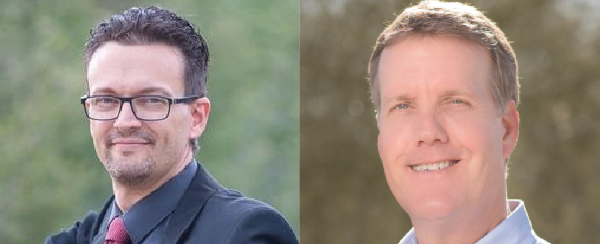
• After trailing on Election Night, Republican Treasurer Beth Ford has now widened her lead over Democrat Brian Bickel to 3,146 votes.
• In a rematch of the 2016 race, Democratic challenger Chris Nanos was still leading Republican Sheriff Mark Napier, the candidate he lost to four years ago, but Napier had narrowed Nanos' lead by 902 votes and now trailed by 5,379 votes.
• Democrat Rex Scott has a thinning lead over Republican Steve Spain in the race for the District 1 seat on the Pima County Board of Supervisors. Scott, a former school administrator, was ahead of Spain by just 1,854 votes after today's tally. He lead this morning by more than 2,400 votes this morning in the contest for the seat now held by retiring Supervisor Ally Miller.
If Scott’s lead holds up, it would be the first time a Democrat has held the District 1 seat in decades.
It would also mean four Democrats will be on the Pima County Board of Supervisors next year.
• In District 2, Democrat Matt Heinz, who defeated longtime Supervisor Ramon Valadez in the August primary, easily dispatched Republican Anthony Sizer, winning 68 percent of the vote.
• In District 3, Democrat Sharon Bronson won a seventh term on the board after she captured 58 percent of the vote against GOP challenger Gabby Saucedo Mercer.
• In District 4, incumbent GOP Supervisor Steve Christy will be the sole Republican on the Board of Supervisors after he won 54 percent of the vote against Democratic challenger Steve Diamond.
• In District 5, in the race for the open seat previously held by the late Supervisor Richard Elias, Democrat Adelita Grijalva defeated Republican Fernando Gonzales with 74 percent of the vote.
• In the race for County Recorder, Democrat Gabriella Cázares-Kelly had 60 percent of the vote against Republican Benny White.
• Democrat Suzanne Droubie had won 58 percent of the vote against Republican Jo Ann Sabbagh in the race for County Assessor.
• After winning a three-way primary race in August, Democrat Laura Conover was unopposed in the contest to replace Pima County Attorney Barbara LaWall, who is stepping down after six terms. County School Superintendent Dustin Williams was also unopposed in his bid for a second term.
PHOENIX – A slew of high-profile races and Arizona’s new status as a battleground state made Phoenix the top market in the country for television political advertising during this election season, according to a recent report.
Those factors, along with the fact that the Phoenix market dominates Arizona as few other large cities do in their states, combined to push Phoenix ahead of cities, such as Pittsburgh, Orlando and Detroit, in other battleground states.
Political campaigns spent $270.1 million on television ads in the Phoenix market, which included $101.9 million on the presidential race alone, according to data from Advertising Analytics.
“The most important part of Arizona, from an electoral perspective, Maricopa County, is all within the Phoenix DMA (Designated Market Area),” said Ben Taber, an account manager with Advertising Analytics. “So you can really put all of your money into this one market instead of diluting it across six or seven markets like some of these other big states.”
The data shows that more than $332 million was spent on all races, on all platforms, in all markets in Arizona so far this year.
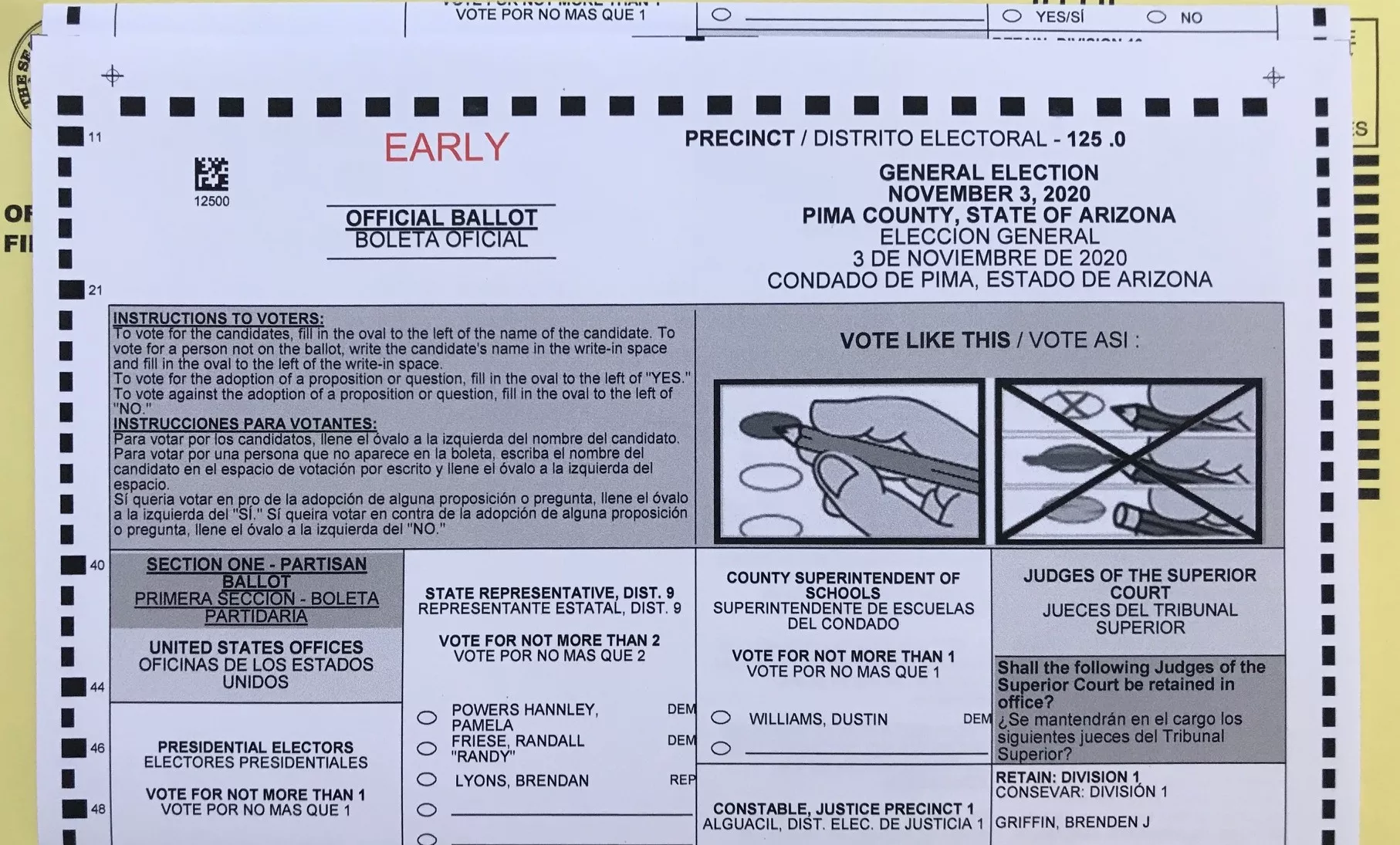
Last night, Pima County counted another 28,720 votes.
The county now estimates that that 8,000 early ballots have been verified but remain to be tallied, with an expectation that they will be counted today. In addition, roughly 700 early ballots remain to be verified and another 18,000 provisional ballots remain to be verified, according to a county press release.
Following last night's tally, where things stand in Pima County:
• After trailing on Election Night, Republican Treasurer Beth Ford pulled ahead of Democrat Brian Bickel by 2,000 votes.
• In a rematch of the 2016 race, Democratic challenger Chris Nanos was still leading Republican Sheriff Mark Napier, the candidate he lost to four years ago. Nanos had captured 51 percent of the vote and was ahead by 6,281 votes.
• Democrat Rex Scott was still leading the District 1 seat on the Pima County Board of Supervisors. Scott, a former school administrator, was holding a lead of nearly 2 percentage points (or more than 2,400 votes) over Republican Steve Spain for the seat now held by retiring Supervisor Ally Miller.
If Scott’s lead holds up, it would be the first time a Democrat has held the District 1 seat in decades.
It would also mean four Democrats will be on the Pima County Board of Supervisors next year.
• In District 2, Democrat Matt Heinz, who defeated longtime Supervisor Ramon Valadez in the August primary, easily dispatched Republican Anthony Sizer, winning 68 percent of the vote.
• In District 3, Democrat Sharon Bronson won a seventh term on the board after she captured 58 percent of the vote against GOP challenger Gabby Saucedo Mercer.
• In District 4, incumbent GOP Supervisor Steve Christy will be the sole Republican on the Board of Supervisors after he won 54 percent of the vote against Democratic challenger Steve Diamond.
• In District 5, in the race for the open seat previously held by the late Supervisor Richard Elias, Democrat Adelita Grijalva defeated Republican Fernando Gonzales with 74 percent of the vote.
• In the race for County Recorder, Democrat Gabriella Cázares-Kelly had 60 percent of the vote against Republican Benny White.
• Democrat Suzanne Droubie had won 58 percent of the vote against Republican Jo Ann Sabbagh in the race for County Assessor.
• After winning a three-way primary race in August, Democrat Laura Conover was unopposed in the contest to replace Pima County Attorney Barbara LaWall, who is stepping down after six terms. County School Superintendent Dustin Williams was also unopposed in his bid for a second term.
A typo has been corrected in this article's headline.

It’s Ballet Tucson’s 35th anniversary and the company is hitting the town to celebrate with social distancing performances at several local hotspots.
The 2020 Pop Up Performances kick-off Saturday at the Tucson Botanical Gardens with a Día de los Muertos-themed recital taking place alongside the garden’s La Calavera Catrina exhibit featuring 9-foot-tall skeletal depictions of figures of Mexican culture.
"I am so happy to be performing in these pop ups . . . art is so vital to our community, and during these times particularly so,” said Ballet Tucson company dancer Casey Myrick in a recent email. “Ballet has always famously brought magic to life for children and adults alike. The setting of the first pop up this weekend in the Tucson Botanical Gardens lends itself exquisitely to this show and couldn't be a more fitting venue."
However, before you attend be aware you need to purchase time-specific tickets at tucsonbotanical.org. The Botanical Gardens is limiting guest capacity and requiring face masks to mitigate the spread of COVID-19.
Upcoming performances:
- Nov. 7 – 6:30 p.m. & 8 p.m. at the Tucson Botanical Gardens
- Nov. 15 – 11:30 a.m. & 12:30 p.m. the Tucson Museum of Art
- Dec. 5 – 6:30 p.m. & 8 p.m. Holiday theme at Reid Park Zoo
- Dec. 12 – 6:30 p.m. & 8 p.m. Holiday theme at the Tucson Botanical Gardens
- Dec. 20 – 11:30 a.m. & noon Holiday theme at St. Philip’s Plaza, free performance
Elegant dance moves on the stage are only part of the story, because the pandemic has shuttered the company’s ability to collect ticket sales. However, Ballet Tucson had a successful fundraising campaign during the summer and sees the Pop Up Performances as a means to assist local attractions during the pandemic.
The performances are included in the cost of admission to the venue and it’s a way to support these local institutions.
“We just wanted to make sure that we were partnering with organizations that have deep roots within the community,” Mullin said.
Uplifting others is a common refrain from Tucson Ballet this fall with Mullin expressing her gratitude to Tucson Weekly readers for naming the troupe the Best Dance Company in Best of Tucson 2020.
“It makes it so much easier knowing that the community has confidence in us and values us, because we know that no matter what steps we have to take going forward, they will be there to support us,” she said.
For those unable to attend in person, the company has online offerings including its bi-weekly series “Ballet Tucson 101” on YouTube and previews on Facebook at @ballettucson.
Tickets are only accepted at your preregistered time in order to comply with social distancing and COVID-19 precaution measures, restrictions vary by location. For more information visit www.ballettucson.org/performances-and-tickets
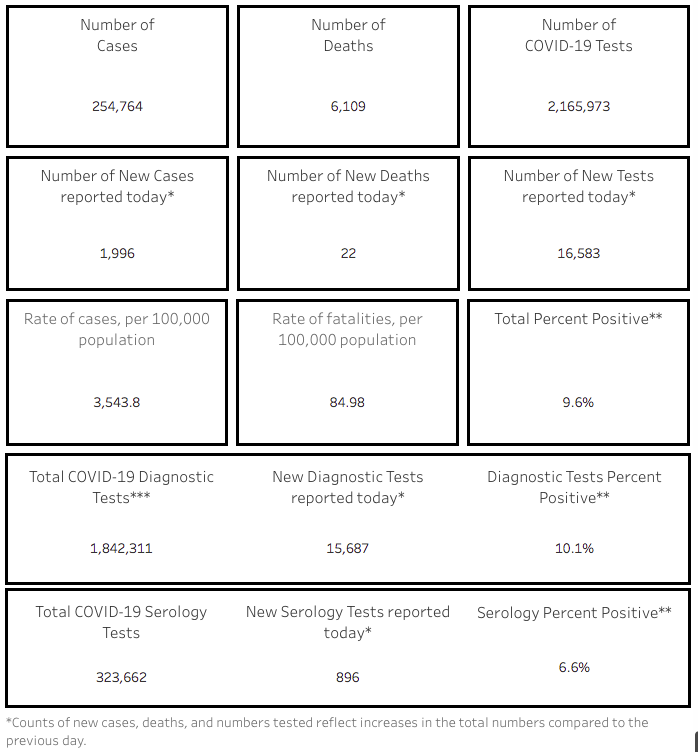
With 1,996 new cases reported today, the number of Arizona’s confirmed novel coronavirus cases topped 254,000 as of Friday, Nov. 6, according to the Arizona Department of Health Services.

Pima County, which saw its number of cases jump by 308 yesterday, had seen 29,764 of the state’s 254,764 confirmed cases.
With 22 new deaths reported yesterday, a total of 6,109 Arizonans had died after contracting COVID-19, including 650 deaths in Pima County, according to the Nov. 6 report.
Although the current rise in COVID-19 cases is alarming, Gov. Doug Ducey warned last week there’s even worse to come.
“We know that there is a storm ahead of us, yet it’s not here,” Ducey said. “But those simple guidelines of wearing a mask, washing our hands, being socially distanced and using common sense have served us very well to date.”
However, the governor doesn’t plan on imposing new safety restrictions to prevent further spread of COVID-19.
“The mitigation that we’ve put out, the plan we put into effect remains in effect. I am proud that Arizona is open, that our economy is open, that our educational institutions are open and our tourist destinations are open,” Ducey said. “While at the same time, we do have mitigation steps in place that have allowed us to protect lives while protecting livelihoods, and we’re gonna continue to do that.”
But public health officials are warning that unless trends reverse, the state could face a “staggering” death toll, according to Cronkite News.
The number of hospitalized COVID cases statewide has declined from July peaks but has ticked upward in recent weeks as the virus has begun to spread more rapidly. ADHS reported that as of Nov. 5, 1,082 COVID patients were hospitalized in the state. That number peaked with 3,517 hospitalized COVID patients on July 13; it hit a subsequent low of 468 on Sept. 27.
A total of 1,077 people visited emergency rooms on Nov. 5 with COVID symptoms, the highest that number has been since Aug. 8. That number peaked at 2,008 on July 7; it hit a subsequent low of 653 on Sept. 28.
Thursday, November 5, 2020
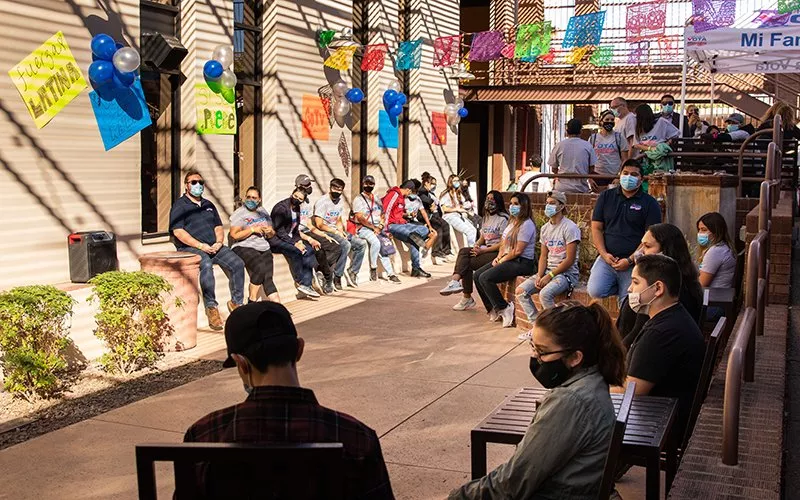
PHOENIX – Latino voters fueled by the Trump administration’s failures to curb COVID-19 and the lingering impact of the anti-immigration law known as SB 1070 helped turn Arizona blue after decades of entrenched Republican rule, according to organizers who have spent years working toward this moment.
“This feels like a victory lap,” said Eduardo Sainz, director of Mi Familia Vota in Arizona. He spoke hours before Wednesday’s early returns indicated that Democrat Joe Biden had likely won Arizona. Democrats celebrated a second Senate seat, and they should hold a majority of the state’s congressional seats, according to unofficial early returns.
Attention in the 2020 election cycle was riveted on Latino voters, who now make up the largest minority ethnic voting bloc in the country. In Arizona, nearly 1 out of 4 eligible voters are Latino, according to the Pew Research Center.
The Biden campaign hoped to capture 70% of those voters in its bid to flip a state that hasn’t voted for a Democratic presidential candidate since Bill Clinton in 1996. According to an early poll by American Election Eve, Biden reached that number.
Sainz, 27, said the victory in Arizona is a long time coming.
“This feels like looking at all of the hard work we’ve been able to do over the past 15 years, looking at real change, looking at real power, looking at our communities holding the keys to the White House,” he said.
Still, activists and other experts caution against the mistaken assumption that Latinos are a huge, unified group that leans to the left politically.
“What we have seen time and again is that our communities are treated as a monolith. And there’s so many cultural nuances, racial differences, ethnic differences,” said Alejandra Gomez, co-executive director of the advocacy group LUCHA.
Martha Figueroa, 46, exemplifies those nuances.
When she voted Tuesday in Laveen, a neighborhood in the southwest corner of Phoenix, she recalled a trope that President Donald Trump famously wields – and then voted for him in spite of it.
“Latinos, we are not rapists and we are not criminals,” said Figueroa, who this year changed her voting registration from Democrat to Republican.
“We need to make a better America and Biden is not the one to lead us. Whoever is here from another country, let’s get them papers, and whoever wants to come needs to come legally. We need to know who is here.”
In Florida, about 55% of the Cuban Latino voting bloc voted to reelect Trump, according to NBC News’ exit polls.
Trump and Biden came to Arizona, a state that shares a border with Mexico, intent on courting Latino voters, but it was Biden who triumphed.
In Nevada, where Latino voters make up 20% of the electorate, the presidential race remains too close to call, but their role is crucial. In 2016, Hillary Clinton won Nevada by just 2 percentage points.
Hector Sanchez Barba, chief executive of Mi Familia Vota, called it irresponsible to assume that Latinos vote as one bloc that shows up at the polls.
“This is the first question the media asks me: ‘When is the sleeping giant going to wake up?’” Sanchez Barba said. “Which is extremely denigrating and lacks the basic understanding of how to work in our democracy – that a democracy that is extremely imperfect – and doesn’t really understand how hard it is for a community to participate in the process.”
In Arizona and other parts of the country, some observers said, COVID-19 – which has disproportionately affected people of color – bent the Latino vote toward Biden.
Polling from American Election Eve and phone banking by Mi Familia Vota suggest the ongoing pandemic was the most important election issue for Latinos. The Centers for Disease Control and Prevention said Latino communities in Arizona were some of the hardest-hit by COVID-19.
But the foundation for the 2020 election flip was likely SB 1070, a decade-old Arizona law that upended immigration policies and drew international attention as one of the toughest anti-immigration laws in the country.
As a teenager, Sainz was galvanized by SB 1070, known as the “Show me your papers” law, which gave law enforcement the legal right to stop people they suspected of being in the country illegally and, as the ACLU and others charged, led to rampant racial profiling. Though the law is still on the books, it has been stripped of some of its controversial parts.
During that time, activists also launched a campaign to oust Maricopa County Sheriff Joe Arpaio, who, in 24 years in office, targeted undocumented immigrants and created what he called his own “concentration camp” to house them.
“I literally was able to see how people were so terrorized, that they packed everything that they own into vehicles and travel back to Mexico or to other states, et cetera,” Sainz said. “And looking at their fear … was something that I knew, I didn’t want communities and other individuals to go through.”
Gomez of LUCHA also was involved in the protests against Arpaio. She said she found herself at a vigil at the Arizona Capitol with just seven people in 2010. But it eventually drew thousands and lasted 103 days.
Yara Marin, 24, is the political director for Mi Familia Vota. Before she was able to vote, she was canvassing and phone banking during the fight against SB 1070. She continues that tradition of activism in Mi Familia Vota’s office.
This time around, the presidential election was just as crucial.
“Everything was on the ballot,” Marin said. “The people you vote for are going to decide whether or not you have access to high quality, affordable health care, whether or not our teachers and our students get good textbooks and good education, small classes. There is so much on the ballot that’s really going to define rights for everyone.”
To make that happen, advocates said they had to fight attempts at voter suppression and intimidation. Mi Familia Vota and advocates nationwide noted a series of robocalls targeting Latinos nationwide, with messages in both English and Spanish claiming that the polls would be open the day after the election, or declaring that a candidate had already won.
That is where groups like LUCHA and Mi Familia Vota step in, Gomez said.
“Communities at the margins are left with the challenges of voter suppression, the challenges of misinformation, and also accessibility for our communities while juggling the pandemic, job loss, childcare, homeschooling,” she said. “Our communities are trying to figure out how to survive, let alone how to find their polling location.”
The final push to get out the vote came Tuesday, Election Day. Many of the people working the get-out-the-vote phone bank were teenagers. Kevin Rosas, 16, said he got involved because he had a lot of family members working with Mi Familia Vota. Felix Cordova, also 16, said he took the job for pay but quickly realized the value of the impact he could make.
According to Marin, Mi Familia Vota registered nearly 15,000 new voters this cycle, and then an additional 35,000 after a lawsuit to extend Arizona’s voter registration deadline. The group made more than 27,000 phone calls. LUCHA said its volunteers knocked on 54,000 doors and made more than 8 million phone calls.
That level of investment, Sanchez Barba said, is what the political parties increasingly targeting Latino voters have been missing. Mi Familia Vota operates in six states, but the chief executive chose to spend the final hours of Election Day in Arizona.
“Looking at political power, and not the transactional one that historically we have seen in the Latino community, politicians come in and out to us last minute to do the work, just for turnout for that particular election,” he said. “But Arizona is showing that we can do it better.”
Still, advocates said, there’s more work to do. Sainz and Marin pointed out health care and education as key issues they’re pushing to reform.
“We continue to organize,” Sainz said. “We’re never going to stop.”
Cronkite News reporter Anthony J. Wallace contributed to this article.

