

Monday, December 21, 2020
As COVID-19 continues to spread substantially throughout the state, Arizona is breaking records for its weekly case count, hospitals are having to cancel elective surgeries to care for an exceeding number of coronavirus patients and the first COVID-19 vaccine may already face shortages among healthcare workers.
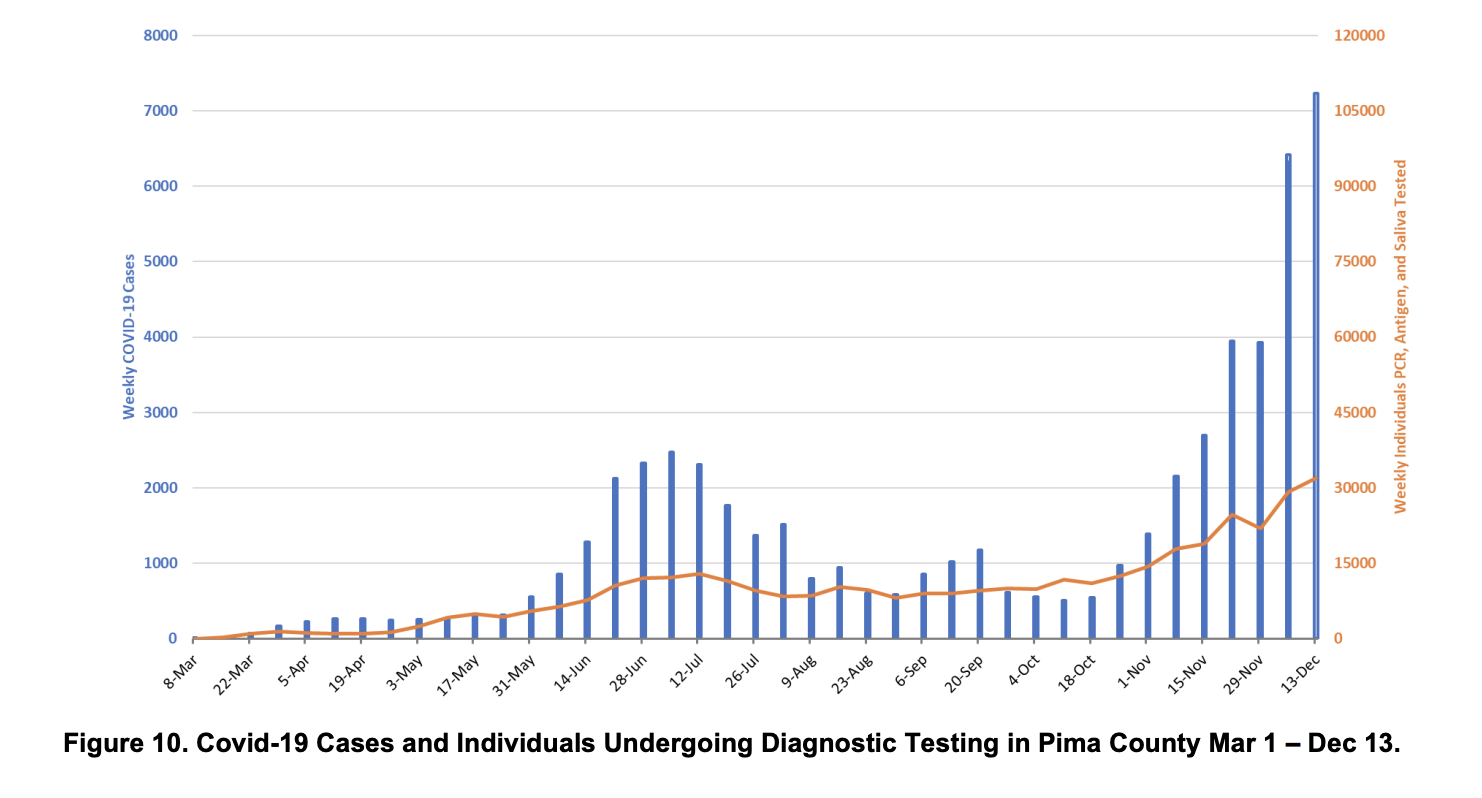
The week ending Dec. 13 saw at least 44,390 new COVID-19 cases in Arizona, a 10% increase from the week prior. This sets a record for weekly case counts in the state, according to Dr. Joe Gerald, a professor at the University of Arizona who creates weekly coronavirus epidemiology reports based on ADHS data.
However, Gerald says this number could be even higher than reported due to a significant lag time in processing COVID-19 tests, as nearly 10,000 patients were told their test could not be completed due to a laboratory backlog.
Coronavirus test positivity also set a record in the state at 26.3% last week, according to Gerald’s report.
Though the state has yet to surpass its deadliest week that ended July 19 with 617 COVID-19 deaths, Gerald estimates by Christmas, Arizona will see more than 500 deaths a week.
Pima County also set a record for cases in a single week with 7,237 coronavirus cases the week ending Dec. 13, a 14% increase from the week prior, Gerald’s report says.
Hospitals dangerously near capacity, cancel elective surgeries
As of Dec. 18, the UA professor’s report says 47% of the state’s general ward beds and 53% of its ICU beds were occupied by COVID-19 patients.
“We are now undergoing the great ‘displacement’ such that hospital services are now being rationed so that patients with severe Covid-19 illness are displacing others who have slightly less severe non-Covid medical conditions. As Covid-19 illness continues to increase, delaying others’ care will become ever more difficult,” Gerald’s said in the report. “Make no mistake, the Covid-19 crisis is now placing a greater share of Arizonans at-risk, not just those unfortunate enough to contract Covid-19.”
PHOENIX – Justice Ruth Bader Ginsburg was a towering figure in the fight against discrimination based on gender, and her death Sept. 18 was a blow to many women who reverently refer to her as the Notorious RBG. On the three-month anniversary of Ginsburg’s death, women across the state continue to remember her legacy.
Cronkite News asked six Arizona women to reflect on how their lives have been affected by Ginsburg, 87, who served 27 years on the Supreme Court and was a founding counsel for the American Civil Liberties Union’s Women’s Rights Project, which resulted in the high court’s 1971 decision that the Equal Protection Clause of the 14th Amendment applies to women.
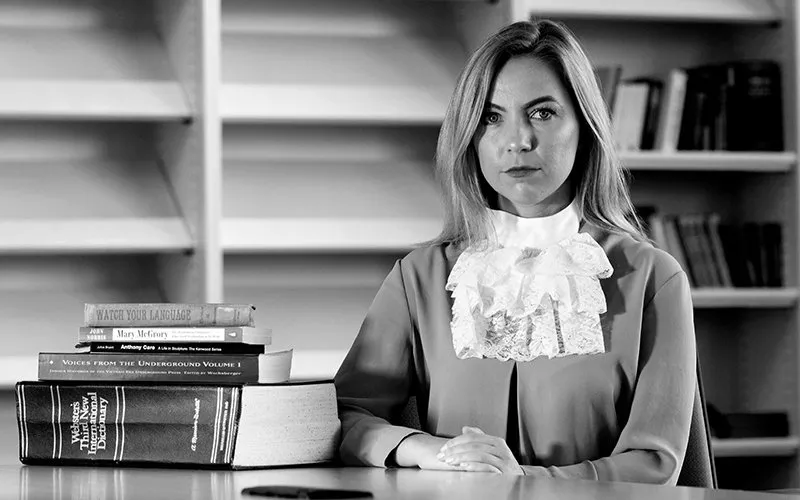
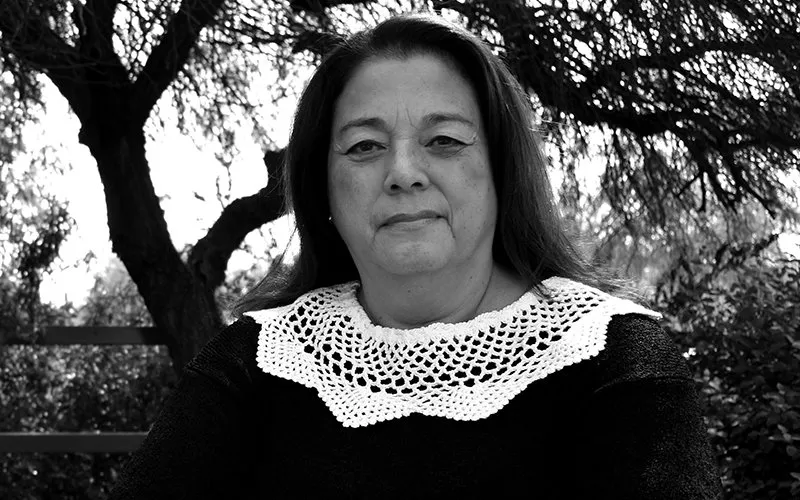
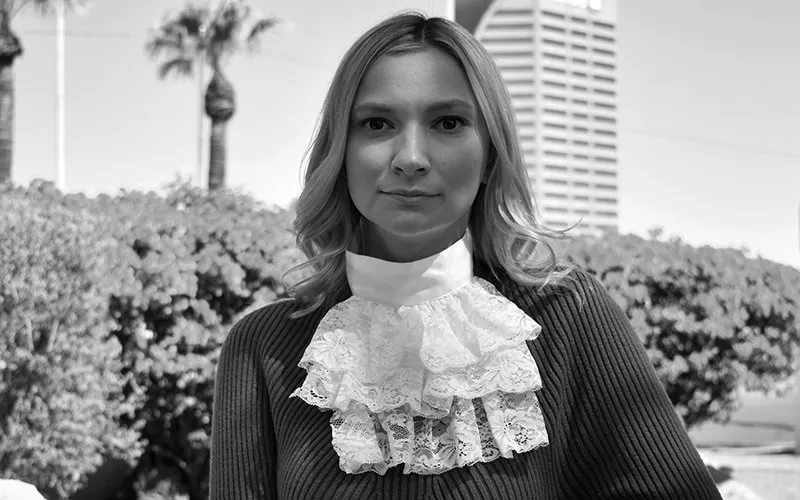
Each of the women posed for a portrait wearing a jabot, which was popularized by Ginsburg. Text, photos and audio by Hope O’Brien:
Emily Parker
Emily Parker, 29, a law student at Arizona State University with a masters in women’s history, said Ginsburg’s achievements for equality loom large in American history and are especially meaningful for anyone who has worked in women’s rights.
During my time in graduate school, I was aware of who she was because her decisions have been very significant in terms of the trajectory of women’s rights and liberties in the United States.
The ability to complicate her as a person and understand her; not just as a litigator and this women’s rights advocate in her work as a justice, but just the fact that she, in her approach to law, is very complex. She is known in her later years as being a sort of activist justice, which is a phrase that tends to evoke the idea that someone is going out of their way to make changes. Her approach to her decisions was not, “OK, I’m on the Supreme Court, how would I like to remake the law?” Her approach to being on the Supreme Court was to take a precise and exacting approach to the case at bar.
She is unique in the sense that she appealed to people that were really drawn in by her record as a litigator on women’s rights and gender equality issues. But she also was very limited and exacting in the way that she made decisions, which is something kind of often associated with more conservative justices. So I think it’s the fact that she has always made a point in her role as a judge to not say, “OK, we’re going beyond the scope of the question at issue.”
What was your initial reaction to news of her death?
I started crying because this was so horrible and so tragic on so many levels, and after you get through the initial period of being sad about the fact that someone you idolize and looked up to has passed away, obviously concerns about the implications for that in terms of the composition of the court going forward set in. But it is one of those things that you just never forget.

Madison Alonzo
Having grown up in a culture where she says women feel less important than men Madison Alonzo, 20, a first-generation Mexican-American and Arizona State University student, said Ginsburg became an example of how women can work past discrimination.Coming from a culture that is heavily submissive of women, it was astonishing to see such a strong woman persevere through a male-dominated career. It was comforting to know that there was someone in an influential position in the world that was fighting for me and my rights as a woman.
I knew a lot, but quite frankly not enough. She was not heavily mentioned in the public education system, and most of the information I know is because I went out of my way to learn about her. Much like any public figure, after she passed I was brought to light on certain aspects of her life and career that I never knew about prior to her passing.
I loved learning about the endurance and strength she had as a wife, mother and diplomat. She never stopped working and caring for others’ well-being. She exemplifies what it means to be a good person.
I was with a group of friends trying to relieve some of our COVID-19 anxiety and depression when the news hit. When we read the news, we were all scared and heartbroken. I knew what her death would mean for the Supreme Court and for (the Trump) administration and I was scared thinking about what will happen to fundamental rights for minority groups, if a conservative nomination goes through.
Susan B. Castner
Because she was involved in a case against sex discrimination in pay, business owner Susan B. Castner, 66, had a different perspective on the true impact of the work done by Ginsburg, whom she had looked up to for much of her youth.
The first time I heard about her, and you will laugh about this, was a case in 1976 when I had just graduated from college. And the case that drew my interest was somewhere in Oklahoma and it was about beer. It was a law that said that women could buy beer when they were 18, but men had to wait until they were 21, and as a college graduate that was really important to me at the time. And I didn’t even know at the time that Ruth Bader Ginsburg was going to grow into such an icon.
The first house that I ever bought was in 1978 and I bought it with my now-husband, but we bought the house as equal partners. And I didn’t know it at the time, but I couldn’t have gotten credit or bought a house if his name wasn’t on the mortgage documents. It is things like that that have changed everything that women take for granted now, and it was because of her.
I was being paid 30% less than my male predecessor, and because he was violating my civil rights in not paying me equally, in my mind I believed that I deserved an attorney. That is what I eventually made law on was the appointment of counsel as a plaintiff in a Title XII case. So now if you find yourself a victim of sex discrimination, you can site Castner v. Cablevision, and if you meet the full requirements you will have an attorney appointed to you. And I made law on that in the same courtroom that RBG did for the first time and we were both fighting sex discrimination.
I think the fact that if you were a female in the military you didn’t get an equal housing allowance was nuts, and if you look at a lot of laws that she worked on you scratch your head and go “What?”
And it’s that same thing, she looked at them through the lens of how it affected both sexes, and I think that is why she was such a brilliant attorney and justice. I think she knew in her heart of hearts that she wouldn’t make law if she knew it was bad for women, she had to show how it was bad for everybody.
I was sitting working on something on a deadline and my husband came in and said, “Ruth Bader Ginsburg just died.” And I put my hands in front of my face and just started screaming, I started howling, and he thought I had a stroke. He said I sounded like a wounded animal. And it wasn’t because of the Supreme Court, not because of this experience that we’re going through right now (the nomination and eventual confirmation of Amy Coney Barrett to the high court), but because she was so amazing.
Mary Zatezalo
Ginsburg played a key role in the life of Mary Zatezalo, 26, an instructor of communications at Gilbert Community College, a small business owner and real estate agent. She said Ginsburg influenced more than just who Zatezalo became, but also her ability as a woman to get to where she is now.
When I was growing up, I was fortunate enough to be raised by strong independent females, so it wasn’t uncommon to have conversations on things going on politically or just things going on in the news. She was a name in my household and I feel very fortunate for that.
To me, (author and activist) Mona Eltahawy talks about how one of the seven necessary sins for women is ambition, and I think that is what RBG demonstrated. She committed her whole life to something that not only was work, but was something that she loved. Being able to exist in the spaces that she did, and especially in regards to femininity in how you can still have a family, have an extremely successful marriage and still be successful in your career. And I think it was one of the first times that we saw a female take that lead role, especially in her family unit, and I think that was really special in what she did.
I think about it in terms of independence. Females were kept dependent in order to control, and as soon as just a little bit of wiggle room was given, look at the amazing things that women have achieved in the past hundred years because of women who were able to fight in a public space like her. And there are so many parts of my identity, my career and my existence that I really owe to her.
I think she will be one of those people where you remember where you were when she died. At first, my reaction was shock because I knew what was going to follow (the fight to replace Ginsburg on the court). So part of me was just distant from it, I didn’t want to talk about it, I didn’t want to explain anything or fight with anyone, and so I took a weekend to just sit with it because I knew what was to follow.
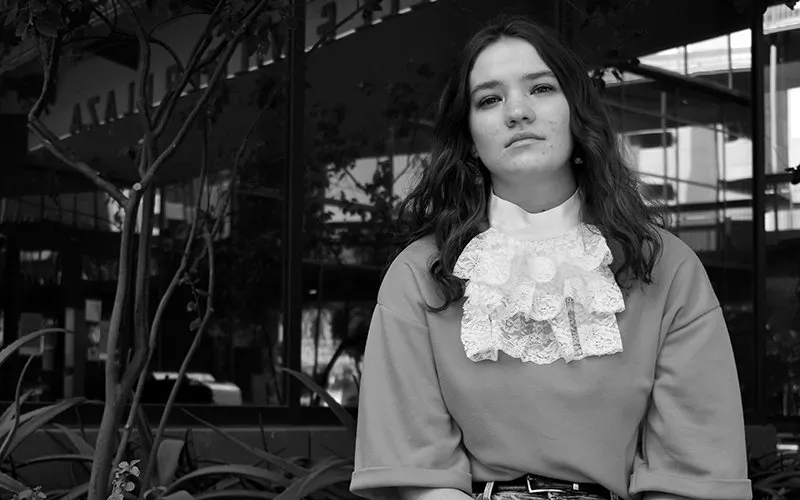
Nora Thompson
With an interest in politics from a young age, Nora Thompson, 21, saw Ruth Bader Ginsburg as a role model in her high school years. She’s now at Arizona State University seeking a career in public service and public policy.
I grew up in a very politically minded family. So, throughout my whole life, I always knew, “Oh yeah, there’s the Supreme Court,” but I think really it was high school. It was specifically this economics class that I took over the summer and I didn’t really learn anything but we talked about the Supreme Court. So, I wrote a paper on the Obergefeld v. Hodges case that legalized gay marriage, and I remember just looking into her more, and I loved her, she was my idol at that point in my life.
Seeing Ruth Bader Ginsburg as a lawyer was insane, and it was crazy what the men on the Supreme Court said to her about things that women should and shouldn’t be allowed to do. And she was arguing for women’s rights and for us to be able to do things like take out a mortgage without a husband signing off on it.
And she stood there and held her ground and said, “Actually, it’s ridiculous that we’re not allowed to and women shouldn’t be treated this way and should be treated equally to men.”
I always thought of her positions in the Supreme Court as a really comforting voice and just as a voice of reason. And though it wasn’t all the time, because I can’t sit here and say to myself that everything she has ever done has been amazing, I think that she was still this guiding light and voice of reason in a very chaotic time and very chaotic society right now.
It was always nice to be like, “Ruth Bader Ginsburg said this very eloquently and very reasonably.” And I think her ability to still be civil with the other people on the Supreme Court will be missed.
I hope that we can remember her as the strong woman that fought for equal rights and fought for equal protection. Right now, I think that her death is being overshadowed by whether a new Supreme Court justice should be allowed to be appointed and just everything that is happening in the political world right now.
And I would also want people to remember her as a Jewish woman because there are a lot of things going around about her being up in heaven as an angel, and while it’s all very sweet, it isn’t necessarily the idea of a Jewish afterlife. And so I would want us to remember that she was this big, strong, amazing woman who was also Jewish.
I was driving home and so I had stopped to check my phone at a particularly long red light and my mother had texted me “Did you hear about RBG?” And I knew that it couldn’t be good, and when I got the news alert I felt this sadness and emptiness that I feel when a family member passes away. I was left extremely nervous as to what would happen next with the state of the world.
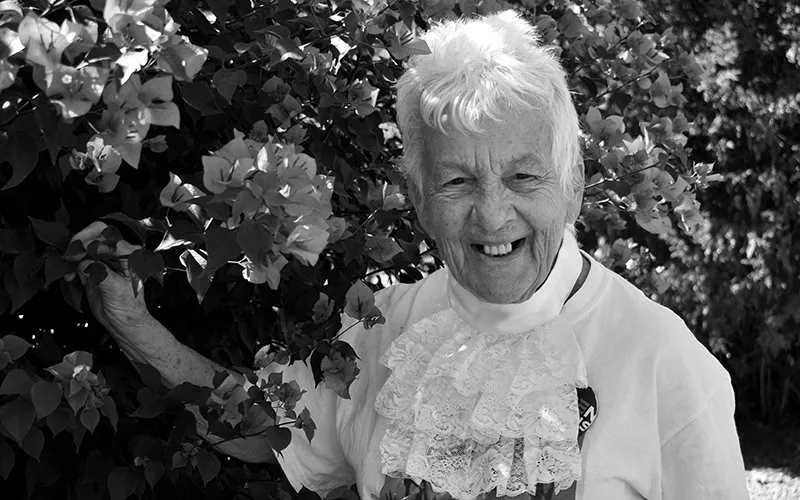
Nan Inskeep
Former registered nurse and women’s health educator Nan Inskeep, 89, watched when Ruth Bader Ginsburg was confirmed and described her confirmation as one that provided relief knowing that women would have a louder voice in the government.
When was the first time you heard the name Ruth Bader Ginsburg?
I am a very political person, and when I was a little girl, my grandfather was Republican and our family was Democrat and so I would always bet him 10 cents on who would win the elections. And so I followed politics, which included the Supreme Court, so I watched all of those votes. Then when our wonderful Ruth Bader came, I knew I could rest easy. I cannot really pinpoint when I first heard of her, but being a woman and watching what she did in the Supreme Court, I knew she was vital to it.
What do you think made her so different?
She was so fair. And interesting about her life is that her best friend on the court was (Justice Antonin) Scalia and he was an arch-conservative. They had the opposite swing on every position they held and yet they maintained a friendship through it all, and I think that says something about her, too.
She was so smart and then she used that to further justice, rights, and she was the kind of Supreme Court Justice that every justice should be.
It’s going to be hard. And they are going to grow up without Ruth Bader Ginsburg, they certainly should know about her because she will carry that reputation with her forever and ever. But it’s a matter of what is fair, and as I said she was so fair, they need to look at what is right for everybody and not what is simply right for you.
I want them to remember that she never gave up. And to feel the way you do and to believe in what you are feeling and to stand up for it no matter what. It’s a gift, and not everybody can do it, and hopefully with somebody like her as a mentor, because even though she won’t be here, her teachings, writings and reputation will always be a part of the Supreme Court.
Just horror. I remember someone calling to tell me and thinking, “She finally can’t do it anymore.” We watched her go through every single one of those cancers and she could always do it. We watched her go through Harvard for her husband. Oh, my goodness, that woman was exemplary! And yet fair. It was a terrible day for us. But we always know we had a champion.

With more than 7,600 new cases reported today, the number of Arizona’s confirmed novel coronavirus cases jumped by nearly 19,000 over the weekend and now stands higher than 461,000 as of Monday, Dec. 21, according to the Arizona Department of Health Services.
Pima County, which reported 1,244 new cases today, has seen 60,360 of the state’s 461,345 confirmed cases.
A total of 7,972 Arizonans have died after contracting COVID-19, including 905 deaths in Pima County, according to the Dec. 21 report.
The number of hospitalized COVID cases statewide continues to soar as the virus has begun to spread more rapidly, putting stress on Arizona’s hospitals and surpassing July peaks. ADHS reported that as of Dec. 20, 3,925 COVID patients were hospitalized in the state, slightly lower than the new record of 4,014 set on Dec. 18. The previous peak of 3,517 hospitalized COVID patients was set on July 13; that number hit a subsequent low of 468 on Sept. 27.
A total of 1,795 people visited emergency rooms on Dec. 20 with COVID symptoms. That number, which hit a new record of 2,166 earlier this month, had previously peaked at 2,008 on July 7; it hit a subsequent low of 653 on Sept. 28.
A total of 904 COVID-19 patients were in intensive care unit beds on Dec. 20. The number of COVID patients in ICUs peaked at 970 on July 13 and hit a subsequent low of 114 on Sept. 22.
TMC cancels elective surgeries
Tucson Medical Center has canceled elective surgeries through Jan. 4.
A letter from TMC COO Mimi Coomler and CMO Dr. Amy Beiter states that TMC is too crowded with COVID patients to move forward with elective surgeries.
“We have reached the point in the pandemic where the number of COVID patients needing care is exceeding available resources on a daily basis,” they wrote.
WASHINGTON – Background checks for gun purchases in Arizona hit their highest level ever in 2020, driven by an unprecedented convergence of a pandemic, a summer of national unrest and a presidential election, experts said.
With a month left to go in the year, 610,911 background checks had been performed in the state through November, well over the 372,912 done in all of 2019, according to FBI data.
The Arizona spike is part of a nationwide increase, said Kelly Drane, research director at Giffords Law Center, a gun-control advocacy group. She estimated that there was a nearly 90% increase in gun sales nationally from March to October this year compared to last year, with early data indicating “a substantial number of these purchases were made by new gun owners.”
Veerachart Murphy said that is what he has seen at Ammo AZ, the Phoenix gun store he owns, where there has been a “huge uptick in first-time buyers.”
“Between the election and COVID and shutdowns and riots – it was enough to get them off the couch and come in and actually make their first purchase,” Murphy said of “people that were kind of maybe on the fence” about buying a gun.
He said his biggest spike in sales came early this year as COVID-19 began dominating the news, with a 400% increase in sales from January to February. He attributes it to anxiety about a possible pandemic-related lockdown.
Sales remained relatively high, he said, until another spike in the summer, when clashes between police and protesters were in the headlines.
That experience tracks the FBI’s data, which shows that Arizona had the highest number of background checks in March, with nearly 83,000, followed by June and July, which had 74,000 and 60,000 background checks, respectively.
Murphy said he has seen similar spikes since he got into the gun business in 2013, usually after active-shooter incidents or mass shootings – and before the 2016 presidential election when sales jumped in anticipation of a win by Democrat Hillary Clinton. Sales tailed off then after gun-friendly President Donald Trump took office.
Sunday, December 20, 2020
Friday, December 18, 2020

The FBI’s Phoenix field office is warning buyers of common scams during the holiday shopping season.
In 2019, 7,795 Arizona consumers claimed a total loss of more than $47 million, according to a press release from the FBI.
The three main scams the FBI warns shoppers of include online shopping, gift card and charity scams.
Some online stores offer reduced brand-name merchandise that is compromised or doesn’t exist. Scammers often use phishing tactics in emails and advertisements, which involve fraudulent links or attachments that if clicked on, can reveal personal information.
The same thing can happen when clicking on fake social media posts that appear to be vouchers or gift cards but rather reveal personal information, according to the release.
Shoppers should also be wary of buying gift cards from outside sources requesting their purchase.
“In these scams, the victims receive either a spoofed email, a spoofed phone call, or a spoofed text from a person in authority requesting the victim purchase multiple gift cards for either personal or business reasons,” the FBI release said. “The gift cards are then used to facilitate the purchase of goods and services which may or may not be legitimate.”
They also caution against websites that only take payment through gift cards or wire transfers, which can give scammers access to “receive illicit funds.”
Banner Health’s Chief Clinical Officer Dr. Marjorie Bessel shared alarming news of the spread of COVID-19 throughout the state at a press conference today despite the hopeful news of the vaccine’s arrival in Arizona.
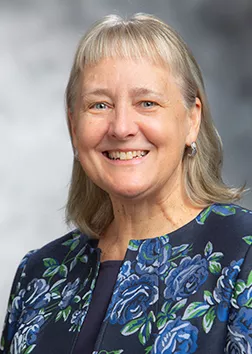
Bessel remains concerned as the state continues to experience an “exponential growth” of coronavirus with case counts, positivity rates and hospitalizations all increasing.
As the top clinical leader of Arizona’s largest hospital system that’s providing care for almost half of the state’s hospitalized COVID-19 patients, Bessel worries about the continuing surge of the virus, especially during the holiday season.
Within the first two weeks of December, COVID-19 hospitalizations in the state have increased by 93%. This is the same rate experienced throughout the entire month of November, Bessel shared.
According to the chief clinical officer, coronavirus patients comprise 49% of all Banner’s hospitalized patients and 55% of ICU beds. That represents 150% of the hospitals’ peak in a pandemic-free winter season.
Bessel said Banner is also seeing increased deaths from COVID-19, causing the morgues at some hospitals to become so overwhelmed that bodies are being placed in refrigerated trucks.
Closely following guidance from the White House coronavirus task force, Bessel highlighted that Arizona is experiencing a “full resurgence” as it did in its summer surge in cases, but it lacks the mitigation necessary to suppress it.
Bessel expressed support for allowing local authorities to implement mitigation protocols like Tucson and Pima County have done through mandatory curfews and mask mandates.
“We've seen recent actions, as an example, by the mayor of Tucson, Pima County, the mayor of Phoenix and the Phoenix City Council, giving local mayors authority to take mitigation steps and help the state of Arizona's health care system reduce COVID-19 cases in our hospital, which in turn helps all of us by ensuring that the health care we or our families may require will be there in our time of need,” she said.
In a press conference Wednesday, Gov. Doug Ducey made clear he isn’t implementing any further statewide mitigation guidelines as the virus rages through Arizona.
Though African Americans are being hospitalized for COVID-19 at more than triple the rate of white Americans, wariness of the new vaccine is higher in the Black population than in most communities. The U.S. Centers for Disease Control and Prevention highlighted communities of color as a “critical population” to vaccinate. But ProPublica found little in the way of concrete action to make sure that happens.
It will be up to states to make sure residents get the vaccine, but ProPublica reviewed the distribution plans of the nine states with the most Black residents and found that many have barely invested in overcoming historic mistrust of the medical establishment and high levels of vaccine hesitancy in the Black community. Few states could articulate specific measures they are taking to address the vaccine skepticism.
And it could be hard to track which populations are getting the vaccine. While the CDC has asked states to report the race and ethnicity of every recipient, along with other demographic information like age and sex, the agency doesn’t appear ready to apply any downward pressure to ensure that such information will be collected.
In state vaccination registries, race and ethnicity fields are simply considered “nice to have,” explained Mitchel Rothholz, chief of governance and state affiliates for the American Pharmacists Association. While other fields are mandatory, such as the patient’s contact information and date of birth, leaving race and ethnicity blank “won’t keep a provider from submitting the data if they don’t have it.”
In the initial stages, vaccines will go to people who are easy to find, like health care workers and nursing home residents. But barriers will increase when distribution moves to the next tier — which includes essential workers, a far larger and more amorphous group. Instead of bringing the vaccine to them, it’s more likely that workers will have to seek out the vaccine, so hesitancy and lack of access will become important factors in who gets the shots and who misses out.
“There are individuals who are required to be on the front line to serve in their jobs but perhaps don’t have equitable access to health care services or have insurance but it’s a challenge to access care,” said Dr. Grace Lee, a professor of pediatrics at Stanford University School of Medicine and member of the CDC’s Advisory Committee on Immunization Practices, which is tasked with issuing guidance on the prioritization of COVID-19 vaccine distribution. “We can build equity into our recommendations, but implementation is where the rubber meets the road.”
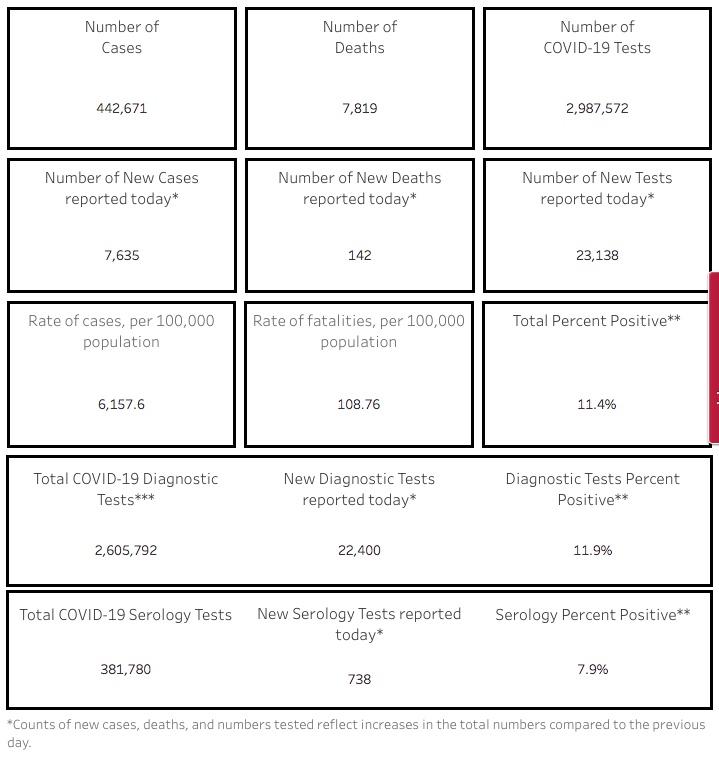
With more than 7,600 new cases reported today, the number of Arizona’s confirmed novel coronavirus cases topped 442,000 as of Friday, Dec. 18, according to the Arizona Department of Health Services.

Pima County, which reported 1,449 new cases today, has seen 57,250 of the state’s 442,671 confirmed cases.
With 142 new deaths reported today, a total of 7,819 Arizonans had died after contracting COVID-19, including 875 deaths in Pima County, according to the Dec. 18 report.
The number of hospitalized COVID cases statewide continues to soar as the virus has begun to spread more rapidly, putting stress on Arizona’s hospitals and surpassing July peaks. ADHS reported that as of Dec. 17, 3,931 COVID patients were hospitalized in the state, setting a new record. The previous peak of 3,517 hospitalized COVID patients was set on July 13; that number hit a subsequent low of 468 on Sept. 27.
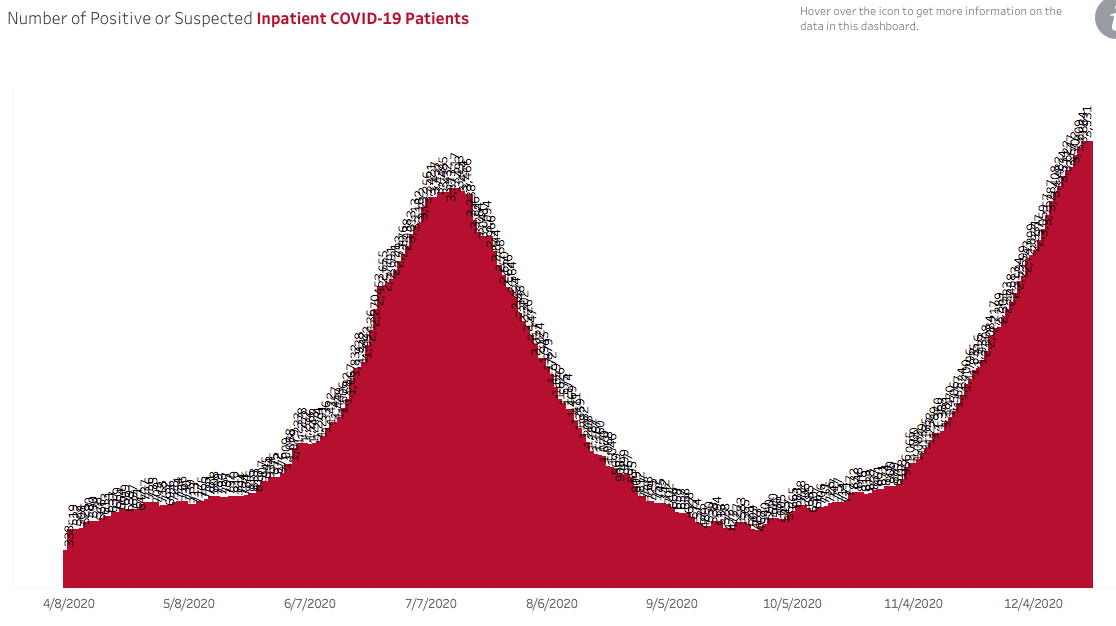
A total of 2,027 people visited emergency rooms on Dec. 17 with COVID symptoms. That number, which hit a new record of 2,166 last week, had previously peaked at 2,008 on July 7; it hit a subsequent low of 653 on Sept. 28.
A total of 915 COVID-19 patients were in intensive care unit beds on Dec. 17. The number of COVID patients in ICUs peaked at 970 on July 13 and hit a subsequent low of 114 on Sept. 22.
Pima County under curfew
Pima County's voluntary curfew has now become mandatory.
The Pima County Board of Supervisors voted 3-2 Tuesday to instate a mandatory 10 p.m. to 5 a.m. curfew throughout the county in an attempt to combat Southern Arizona's rising number of coronavirus cases.
Supervisor Steve Christy and outgoing Supervisor Ally Miller, who attended her last board meeting this week, voted against the proposal.
Penalties for a nonessential business found violating curfew range from having their business permit suspended or revoked.
The mandatory curfew will stay in place until coronavirus infection rates drop below 100 per 100,000 people, according to county officials.
The transmission rate in Pima County was 357 people per 100,000 people in the two-week period ending Nov. 29, but Pima County Health Department Director Dr. Theresa Cullen expects that number to be significantly higher for the period ending Dec. 13.
The mandatory curfew comes as through the first two weeks of December, COVID-19 cases in the county reached 13,589—2,554 more cases than reported in all of November. Last week saw 70 coronavirus deaths, according to a memorandum from County Administrator Chuck Huckelberry.

