Tuesday, January 26, 2021
While the spread of COVID-19 is still considered substantial across the state, it appears numbers have slightly decreased within the last few weeks.
According to the latest report by Dr. Joe Gerald, a University of Arizona professor who creates weekly coronavirus epidemiology reports based on Arizona Department of Health Services data, the week ending Jan. 17 shows a 21% decrease in coronavirus cases from the week prior.
Both hospitalizations and ICU bed occupancy decreased 8% across the state.
In Pima County, the COVID-19 case count for the same week dropped 19% from the week before, the report says.
However, the welcome changes must be looked at relative to the concerning status the state continues to hold in terms of record-setting COVID-19 statistics.
“This week saw a large, unexpected decline in COVID-19 cases. This decline is unlikely to be an artifact of testing as test positivity continues to decline along with hospital and ICU occupancy,” Gerald wrote in the report. “While this reprieve is a welcomed change, the [coronavirus] continues to rampage through Arizona and remains at an appallingly high level.”
Arizona remains the state with the highest transmission rate for the virus in the nation with 96 average daily cases per 100,000 of the population, according to CDC data.
As of today, Arizona has reported 732,643 coronavirus cases and 12,448 deaths, while Pima County has reported 98,034 cases and 1,649 deaths.
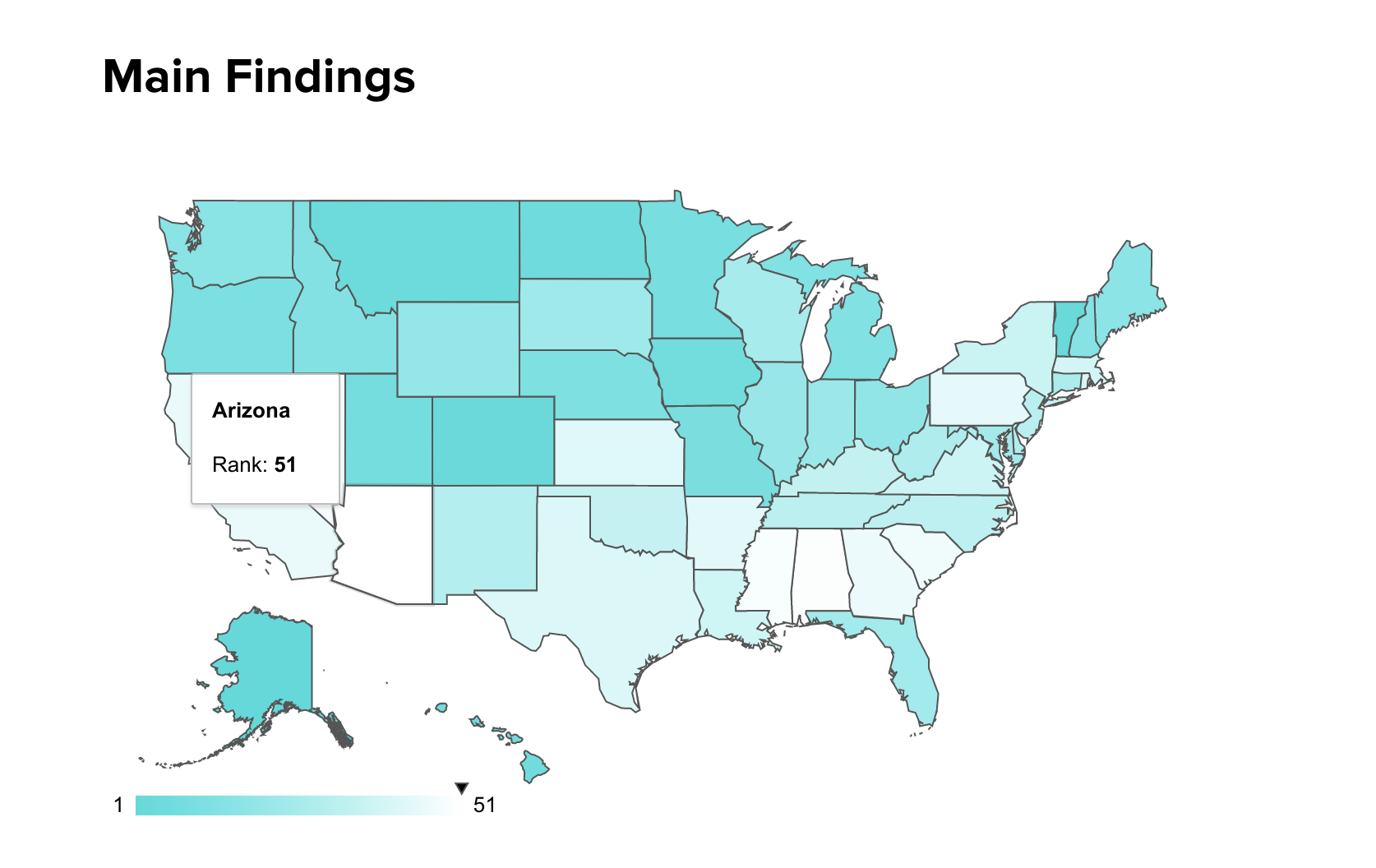
Furthermore, in a Jan. 21 report from WalletHub that compares all 50 states and the District of Columbia using five key metrics tracking the effects of COVID-19, Arizona ranked as the least safe state throughout the pandemic thus far.
Arizona earned the grim rankings of:
51st for hospitalization rate
51st for positive testing rate
50th for death rate
49th for transmission rate
42nd for vaccination rate
PHOENIX – The Cactus League has asked Major League Baseball (MLB) to delay the start of spring training in Arizona due to high COVID-19 infection rates in Maricopa County. The request came in a letter addressed to MLB commissioner Rob Manfred.
“In view of the current state of the pandemic in Maricopa County – with one of the nation’s highest infection rates – we believe it is wise to delay the start of spring training to allow for the COVID-19 situation to improve here,” the letter sent on Friday said.
BREAKING Arizona’s Cactus League tells @MLB it wants to delay start of spring training because of Maricopa County’s high COVID infection rate. #12News pic.twitter.com/H61DbDurVY
— Brahm Resnik (@brahmresnik) January 25, 2021
The board’s decision is “based off data from the University of Washington’s Institute for Health Metrics and Evaluation, which projects a sharp decline in infections in Arizona by mid-March (an estimated 9,712 daily infections on February 15 and 3,072 daily infections on March 15),” the letter stated.
According to the Arizona Department of Health Services, the state of Arizona has over 727,000 reported cases of COVID-19, with 5,321 new cases reported Monday.
Maricopa County has over 452,000 cases of COVID-19 and there were 3,763 new reported cases.
The letter is signed by Bridget Binsbacher, the executive director of the Cactus League; Martin Harvier, the Salt River Pima-Maricopa Indian Community President; the city managers of Phoenix and Tempe; and the mayors of Mesa, Surprise, Peoria, Scottsdale, Goodyear and Glendale.
“We just wanted to let MLB know that if there was any opportunity to postpone the season that we collectively, as the host cities, the host municipalities, and the tribal community, would support that,” Binsbacher said. “What really inspired that letter was it allows for additional time for the situation to improve and certainly we’re seeing, even since the thought of that letter, the situation has improved and we’re trending in the right direction.”
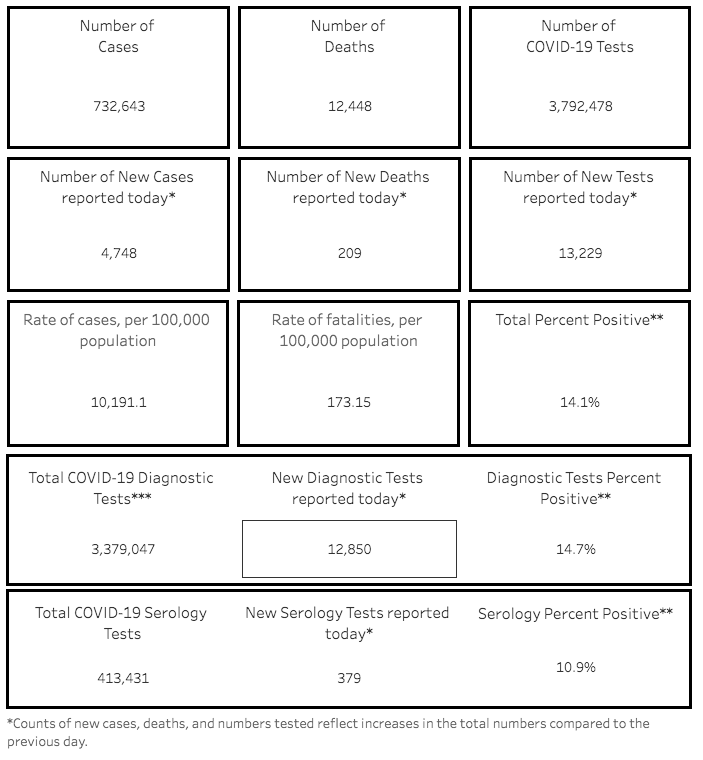
With 4,748 new cases reported today, the total number of Arizona’s confirmed novel coronavirus cases surpassed 732,000 as of Tuesday, Jan 26, according to the Arizona Department of Health Services.

Pima County, which reported 560 new cases today, has seen 98,034 of the state’s 732,643 confirmed cases.
A total of 12,448 Arizonans have died after contracting COVID-19, including 1,649 deaths in Pima County, according to the Jan. 26 report.
The number of hospitalized COVID cases statewide has declined in recent weeks after peaking at 5,082 on Jan. 11 but remains above the peak levels of the summer’s first wave. ADHS reported that as of Jan. 25, 4,221 COVID patients were hospitalized in the state. The summer peak of 3,517 hospitalized COVID patients was set on July 13; that number hit a subsequent low of 468 on Sept. 27.
A total of 1,734 people visited emergency rooms on Jan. 25 with COVID symptoms, down from the record high of 2,341 set on Tuesday, Dec. 29, 2020. That number had peaked during the summer wave at 2,008 on July 7; it hit a subsequent low of 653 on Sept. 28.
A total of 1,028 COVID-19 patients were in intensive care unit beds on Jan. 25, down from a peak of 1,183 set on Jan. 11. The summer’s record number of patients in ICU beds was 970, set on July 13. The subsequent low was 114 on Sept. 22.
Pima County needs more vaccine
As Pima County continues to ramp up COVID-19 vaccinations at five different distribution sites, it needs a lot more vaccine to adequately immunize the population.
The county usually receives about 12,500 doses per week but has been expecting larger allocations from the state to keep up with demand.
At a press conference Friday, Pima County Chief Medical Officer Dr. Francisco Garcia said the county is expecting 29,000 COVID-19 vaccine doses this week. Garcia contends the county’s current infrastructure can “easily handle” 100,000 vaccines a week.
As of Sunday, the county received 107,000 doses and was allocated 136,100 from the state.
Pima County administered 71,890 total doses as of Sunday, for a vaccination rate of 6,882 per 100,000 of the population.
A total of 58,629 individuals received their first dose of either the Pfizer or Moderna vaccine, while 13,051 had received the two doses needed to be considered fully immunized.
WASHINGTON – COVID-19 is on the verge of becoming the leading cause of death in Arizona, surpassing cancer and closing in on heart disease, according to the latest data from the Arizona Department of Health Services.
The COVID-19 death toll through Sunday was 12,239, according to numbers reported by the state Monday, a year after the first case in Arizona was confirmed on Jan. 26, 2020.
That was more than the 12,097 Arizonans killed by cancer in 2018, the most recent year for which mortality statistics are available from the department, and just shy of the 12,410 killed by heart disease that year.
Arizona is not the only state that has seen COVID-19 surge to become the leading cause of death, said Amesh Adalja, an infectious disease physician at Johns Hopkins University. And it “shouldn’t be a surprise,” he said, given the severity of the pandemic.
“There have been weeks where COVID-19 has been the leading cause of death in the country,” Adalja said. “It underscores that this isn’t something normal, it’s not just another respiratory disease.”
Monday, January 25, 2021
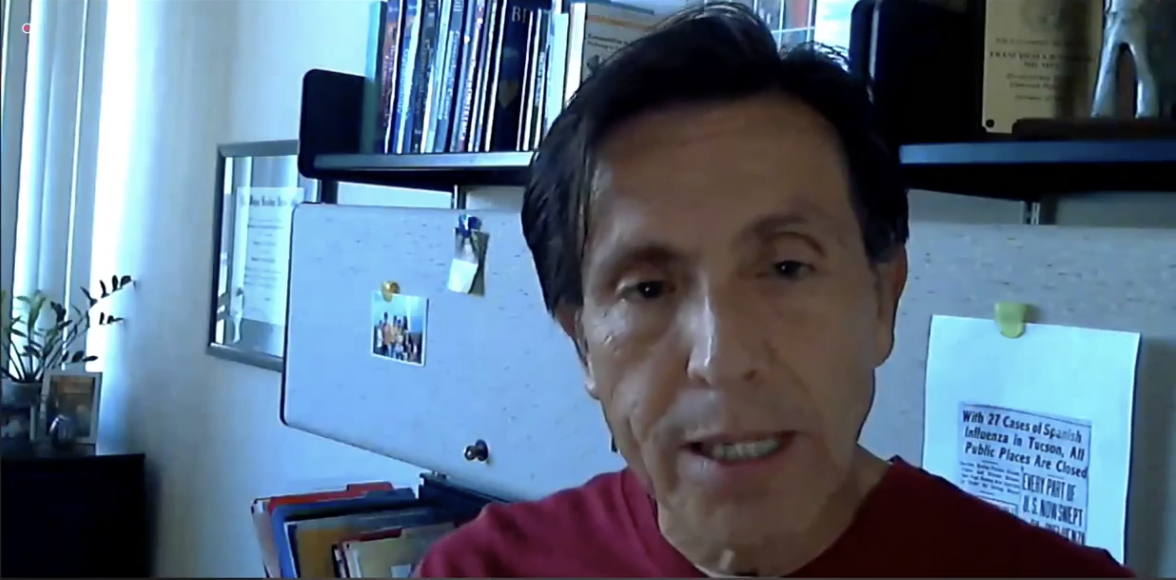
The University of Arizona is Pima County’s vaccine distribution point for educators, and according to the university's President Dr. Robert C. Robbins, it delivered 1,296 doses through Friday, Jan. 22.
On Friday, 150 individuals were vaccinated at the university’s drive-thru location, and 198 at its walk-up location, according to Robbins.
On Monday, Robbins said university officials project delivering 800 vaccines—400 at its drive-thru site and 400 at its walk-up location. They expect to deliver the same amount Tuesday.
Robbins said less than one-third of the vaccine the university receives will be allocated to its own staff.
However, the UA president noted there’s a huge difference between vaccine supply and the demand for it.
This week, Pima County is expecting 29,000 COVID-19 vaccine doses, a far cry from the state allocation it needs to vaccinate those eligible in its current phase 1B priority of vaccine rollout. The eligible group is estimated to include 150,000 educators, protective service workers and individuals over 75.
“Per population, we're getting about 28,000 doses a week. Based on the demand we have here, we could deliver between (50,000) to 75,000 visits a week,” Robbins said. “So everyone, please be patient with us. We're trying our best, the county is absolutely doing the best they can.”
Even with some receiving the coronavirus vaccine, he said “We can't vaccinate our way out” of the COVID-19 pandemic.
As Pima County continues to ramp up COVID-19 vaccinations at five different distribution sites, it needs a lot more vaccine to adequately immunize the population.
The county usually receives about 12,500 doses per week but has been expecting larger allocations from the state to keep up with demand.
At a press conference Friday, Pima County Chief Medical Officer Dr. Francisco Garcia said the county is expecting 29,000 COVID-19 vaccine doses this week. Garcia contends the county’s current infrastructure can “easily handle” 100,000 vaccines a week.
As of Sunday, the county received107,000 doses and was allocated 136,100 from the state.
Pima County administered 71,890 total doses as of Sunday, for a vaccination rate of 6,882 per 100,000 of the population.
A total of 58,629 individuals received their first dose of either the Pfizer or Moderna vaccine, while 13,051 had received the two doses needed to be considered fully immunized.
While the Pima County Health Department maintains it has the necessary infrastructure to administer more than 775,000 doses by the end of March, according to its accelerated immunization plan, they don’t have enough vaccines.
Maricopa County has administered 210,732 doses of vaccine as of Sunday and plans to have two 24-hour vaccination sites, State Farm Stadium in Glendale, which opened on Jan. 11, and Phoenix Municipal Stadium, set to open Feb. 1.
Other Arizona counties, including Pima, are struggling with the demand for vaccines outstripping the depleted supply, and the allocation process, which is being created without transparency from the state.
“We are grateful, but I have to tell you that this is far insufficient for what we need. This is not nearly enough vaccination for us to be able to meet the needs of this county,” Garica said. “We continue to advocate every single day to the state health department, to the governor's office, to our congressional delegation, that the sole rate-limiting step in the equation at this time is vaccine supply, and that it is imperative that Pima County get its fair share. From my perspective, that should be about 15% of the state allocation, and we are short of that.”
If the county keeps receiving a depleted vaccine supply, Garcia warns resources may need to be taken from other areas, such as COVID-19 testing.
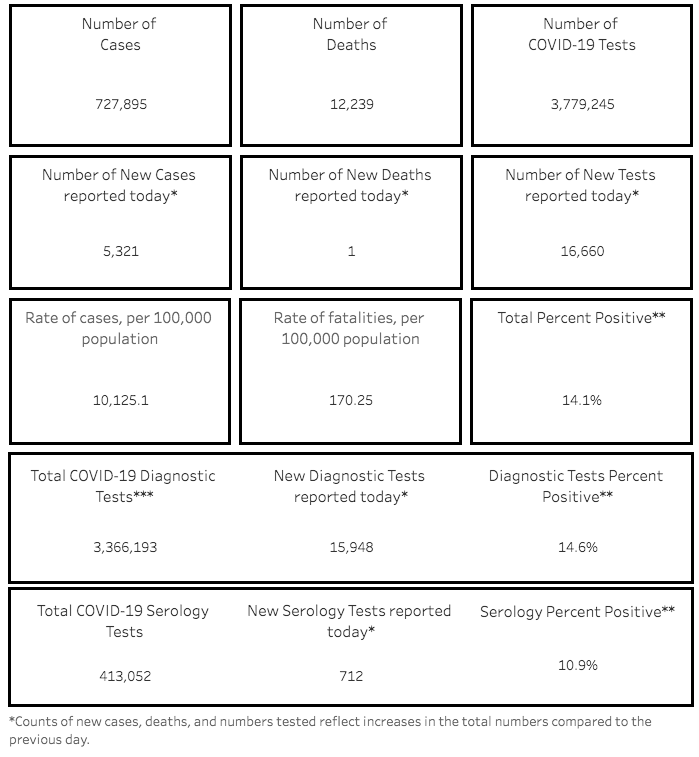
With nearly 20,000 new cases reported since Friday, the total number of Arizona’s confirmed novel coronavirus cases closed in on 728,000 as of Monday, Jan 25, according to the Arizona Department of Health Services.

Pima County, which reported 736 new cases today, has seen 97,474 of the state’s 727,895 confirmed cases.
A total of 12,239 Arizonans have died after contracting COVID-19, including 1,611 deaths in Pima County, according to the Jan. 25 report.
The number of hospitalized COVID cases statewide has declined in recent weeks after peaking at 5,082 on Jan. 11 but remains above the peak levels of the summer’s first wave. ADHS reported that as of Jan. 24, 4,229 COVID patients were hospitalized in the state. The summer peak of 3,517 hospitalized COVID patients was set on July 13; that number hit a subsequent low of 468 on Sept. 27, or about one-tenth of the current count.
A total of 1,834 people visited emergency rooms on Jan. 24 with COVID symptoms, down from the record high of 2,341 set on Tuesday, Dec. 29, 2020. That number had peaked during the summer wave at 2,008 on July 7; it hit a subsequent low of 653 on Sept. 28.
A total of 1,027 COVID-19 patients were in intensive care unit beds on Jan. 24, down from a peak of 1,183 set on Jan. 11. The summer’s record number of patients in ICU beds was 970, set on July 13. The subsequent low was 114 on Sept. 22.
COVID hospitalization on slight decline but pressure remains high
Banner’s top clinical leader began a press conference Friday with a message Arizonans haven’t heard in a long time.
“Positive COVID-19 cases are on the decline nationally and locally here in Arizona,” said Dr. Marjorie Bessel, the chief clinical officer of the state’s largest hospital system. “The positivity rate in Arizona, though still very high, has declined slightly from its peak the last week of December and COVID hospitalizations have been going down since Jan. 11.”
However, she said it's not time to let up on coronavirus mitigation efforts.
Arizona holds the country’s highest transmission rate at 96 cases per 100,000 population, according to CDC data. She also said COVID-19 patients account for 62% of the state’s hospitalizations.
“While we are pleased to see these numbers trending down, we are still experiencing uncontrolled spread of COVID-19 in Arizona,” she said. “The state continues to lead the U.S. with the highest rate of COVID-19 infection in the country.”
On Friday, Arizona passed the grim milestone of 12,000 COVID-19 deaths.
“Knowing that we have lost 12,000 Arizonans to COVID-19 weighs on our hearts and minds each and every day,” Bessel said. “My thoughts are with all those who have lost loved ones to COVID. We are going to battle this virus every day in our hospitals and we are committed to saving as many lives as we can.”
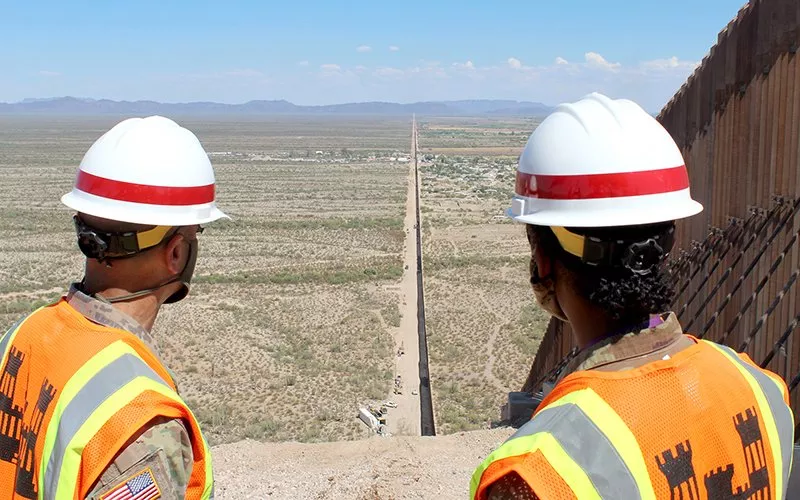
WASHINGTON – President Joe Biden made good on a campaign promise within hours of his swearing-in this week, ordering a pause in construction of the border wall and a plan for how to redirect wall funding.
Opponents of the wall called the executive order “a huge win.” But they also said it is not the end of the fight, noting that Biden’s order allows a week for construction to actually come to a halt and directs agencies to evaluate contractual and legal obligations for the wall.
“For the short-term, foreseeable amount of time, we’re just going to be in a status quo,” said Brett Hartl, government affairs director for the Center for Biological Diversity. “They won’t build anymore, they won’t necessarily take any down, and they’ll look at the problem seriously.”
Tricia Cortez, founding member of the #NoBorderWall coalition, called Biden’s move “a significant first step, but we also know that there is more work to be done.”