

Wednesday, February 3, 2021
Tucson Mayor Regina Romero has proposed replacing Council Member Paul Durham with former Ward 3 Councilmember Karin Uhlich, who served three terms on the council between 2005 and 2017, when she decided against seeking reelection.
Durham announced earlier this week that he would resign on March 1 rather than complete the final year of his term. Durham took a leave of absence from the council in September to care for his husband, who is suffering from terminal cancer.

Romero has called a special meeting of the council on March 1 to appoint someone to finish out the remainder of Durham's term.
“Karin has previously been elected by the residents of Ward 3, knows the neighborhoods, understands city government, and can step into the role without a learning curve, which is particularly valuable during these unprecedented times,” said Romero in a prepared statement. “Council Member Durham and I believe Karin is the best choice, and we wanted to propose this early ahead of the March 1 special meeting to help ensure a smooth transition and avoid uncertainty. I also believe that we should not appoint someone who is running for the Ward 3 seat to avoid the perception of tipping the scale for any one candidate.”
Durham said he was on board with the plan.
"I support the nomination of Karin Uhlich to serve the remainder of my term,” Durham said. “Karin knows the issues facing Ward 3, and will be able to step in and work with my staff to ensure the continuity of services. It has been an honor to serve the residents of Ward 3, and I know they will be in good hands with Karin.”
Uhlich moved out of Ward 3 during her final term in office, but she told The Weekly on Wednesday that she has since moved back into the ward.
Uhlich said she would not seek election to the Ward 3 seat later this year.
Juan Padres, who ran against Pima County Supervisor in 2020, has said he is interested in running for the seat later this year.
With 2,296 new cases reported today, the total number of Arizona’s confirmed novel coronavirus cases surpassed 767,000 as of Wednesday, Feb. 3, according to the Arizona Department of Health Services.
Pima County, which reported 392 new cases today, has seen 102,712 of the state’s 767,379 confirmed cases.
A total number of 13,576 Arizonans have died after contracting COVID-19, including 1,831 deaths in Pima County, according to the Feb. 3 report.
The number of hospitalized COVID cases statewide has declined in recent weeks, with 3,456 in the hospital as of Feb. 2. That number peaked at 5,082 on Jan. 11. The summer peak was 3,517, which was set on July 13, 2020. The subsequent lowest number of hospitalized COVID patients was 468, set on Sept. 27, 2020.
A total of 1,639 people visited emergency rooms on Feb. 2 with COVID symptoms, down from the record high of 2,341 set on Tuesday, Dec. 29, 2020. That number had peaked during the summer wave at 2,008 on July 7, 2020; it hit a subsequent low of 653 on Sept. 28, 2020.
A total of 955 COVID-19 patients were in intensive care unit beds on Feb. 2, down from a peak of 1,183 set on Jan. 11. The summer’s record number of patients in ICU beds was 970, set on July 13, 2020. The subsequent low was 114 on Sept. 22, 2020.
How to get a vaccine
Currently, Pima County is providing vaccination shots to people 75 and older as well as educators, first responders and healthcare workers. Those who currently qualify in Pima County’s 1B priority group of eligible vaccine recipients can register for a vaccine at www.pima.gov/covid19vaccineregistration or by calling 520-222-0119.
State preparing to set up a 24-hour vaccination site in Pima County
After some communication troubles between Pima County and the state, Arizona Department of Health Services Director Cara Christ said plans are in the works to set up a 24-hour vaccination site in the county.
Although County Administrator Chuck Huckelberry has requested the state’s help in setting up a 24-hour point of distribution site at Rillito Park, it’s not clear where the state-run site would be set up.
Christ wrote in a letter to Huckelberry on Jan. 29 that “ADHS will work with the Arizona Department of Emergency and Military Affairs (DEMA) to select the vaccination site and discuss logistics.”
If the state sets up the POD, the vaccines supplying it would be taken out of Pima County’s total state allocation.
As of Tuesday, the state’s allocated Pima County 165,950 doses, and the county has administered 119,585 vaccines.
“Any remaining doses of vaccine will be passed on to the county for further allocation. We will notify the Pima County Health Department once details are finalized,” Christ wrote in the letter.
Huckelberry responded to the letter on Monday requesting the state follow Pima County’s accelerated vaccination plan to ensure those most vulnerable to COVID-19 receive vaccines first and that “disadvantaged populations” have equal access to vaccinations. More details here.
Vaccinations continue in Pima County
Pima County has administered 114,165 COVID-19 vaccines as of Feb. 1 but has only completed 18,691 series of the two doses needed to be fully immunized.
This week, the county’s vaccine allocation from the state rose to 165,950, up from 140,425 doses last week, according to Arizona Department of Health Services data.
While Pima County struggles to vaccinate nearly 150,000 currently eligible—the 75+ population, educators, childcare providers and protective service workers—Maricopa County’s two 24-hour state-run PODS are receiving nearly 35,000 doses more than the entirety of Pima County, according to data from ADHS.
The two PODs—one at the State Farm Stadium in Glendale that opened on Jan. 11 and a second at the Phoenix Municipal Stadium on that opened Monday—have been allocated 200,850 vaccine doses.
Maricopa County has been allocated 461,375 vaccines on top of its state-run PODs and has administered 297,469 doses as of Monday.
Pima County Administrator Chuck Huckelberry made the case for allocating more vaccines to Pima County in a Jan. 29 memo.
“While population is one measure, another measure would be the percent of the population that is more vulnerable to COVID-19 than other population components within the County,” he wrote.
The county administrator compared racial groups, individuals over 65, those living below the federal poverty level and those in the state’s Medicaid program in Pima and Maricopa counties. These populations are expected to be most impacted by the pandemic.
Of Pima County’s population, 38% are Hispanic, 20% are above age 65, 14% live below the poverty level and 31% are enrolled in Arizona’s Medicaid program, according to the memo.
In Maricopa County, 31% are Hispanic, 16% are above 65, 12% live below the poverty level and 28% are enrolled in state Medicaid.
Despite struggling for the county’s fair share of vaccines, Huckelberry also announced the next group to be eligible for the vaccine, those over 65, could be able to register for vaccines by “early February.”
After working out the many kinks of the county’s registration site, Huckelberry now believes the website will be able to handle the surge of new registrants. More details here.
Vaccine available now in Marana and Oro Valley area
MHC Healthcare is currently scheduling COVID-19 vaccine appointments for those above 75 in the Marana and Oro Valley areas.
On Mondays, Tuesdays and Wednesdays, appointments will take place at MHC Healthcare Marana Main Health Center at 13395 N. Marana Main St.
Beginning this week, vaccinations will take place every Thursday at the James D. Kriegh Park at 23 W Calle Concordia in Oro Valley.
Appointments will run from 9 a.m. to 1 p.m., and residents of Oro Valley, Marana, Dove Mountain, Catalina, Avra Valley, Picture Rocks and Summer Haven can register at mhchealthcare.org.
Vaccinations at both locations will be administered in a drive-thru setting using the Moderna vaccine.
As of Monday, MHC had received 2,300 vaccines from the Pima County Health Department and administered 1,714.
Get tested: Pima County has free COVID testing
Pima County offers a number of testing centers around town.
You’ll have a nasal swab test at the Kino Event Center (2805 E. Ajo Way) the Udall Center (7200 E. Tanque Verde Road) and downtown (88 E. Broadway).
The center at the northside Ellie Towne Flowing Wells Community Center, 1660 W. Ruthrauff Road, involves a saliva test designed by ASU.
In addition, the Pima County Health Department, Pima Community College and Arizona State University have partnered to create new drive-thru COVID-19 testing sites at three Pima Community College locations. At the drive-thru sites, COVID-19 testing will be offered through spit samples instead of nasal canal swabs. Each site will conduct testing from 9 a.m. to noon, and registration is required in advance. Only patients 5 years or older can be tested.
Schedule an appointment at these or other pop-up sites at pima.gov/covid19testing.
The University of Arizona’s antibody testing has been opened to all Arizonans as the state attempts to get a handle on how many people have been exposed to COVID-19 but were asymptomatic or otherwise did not get a test while they were ill. To sign up for testing, visit https://covid19antibodytesting.arizona.edu/home.
—with additional reporting from Austin Counts, Jeff Gardner, Nicole Ludden and Mike Truelsen
WASHINGTON – Arizona Secretary of State Katie Hobbs said the 2020 elections “challenged our democracy in ways we’ve never seen before” but that officials still managed to deliver a safe, secure election with record-breaking turnout in the midst of a pandemic.
Hobbs, speaking as part of a panel of election officials Tuesday, also blasted what she called “election extremists” in Arizona and other states who she said “are working overtime to make voting more difficult.”
“Some of these lawmakers are trying to rehash the debunked theories about the 2020 election as an excuse to limit access to voting and it’s shameful,” Hobbs said during a conference hosted by the Voter Protection Project.
Hobbs had particular disdain for a bill in the Arizona House that would allow the Legislature to reverse the secretary of state’s certification of presidential election results, a move she said would make “a vote for president meaningless.”

Tuesday, February 2, 2021
MHC Healthcare is currently scheduling COVID-19 vaccine appointments for those above 75 in the Marana and Oro Valley areas.
On Mondays, Tuesdays and Wednesdays, appointments will take place at MHC Healthcare Marana Main Health Center at 13395 N. Marana Main St.
Beginning this week, vaccinations will take place every Thursday at the James D. Kriegh Park at 23 W Calle Concordia in Oro Valley.
Appointments will run from 9 a.m. to 1 p.m., and residents of Oro Valley, Marana, Dove Mountain, Catalina, Avra Valley, Picture Rocks and Summer Haven can register at mhchealthcare.org.
Vaccinations at both locations will be administered in a drive-thru setting using the Moderna vaccine.
As of Monday, MHC had received 2,300 vaccines from the Pima County Health Department and administered 1,714.
After some communication troubles between Pima County and the state, Arizona Department of Health Services Director Cara Christ said plans are the works to set up a 24-hour vaccination site in the county.
Although County Administrator Chuck Huckelberry has requested the state’s help in setting up a 24-hour point of distribution site at Rillito Park, it’s not clear where the state-run site would be set up.
Christ wrote in a letter to Huckelberry on Jan. 29 that “ADHS will work with the Arizona Department of Emergency and Military Affairs (DEMA) to select the vaccination site and discuss logistics.”
If the state sets up the POD, the vaccines supplying it would be taken out of Pima County’s total state allocation.
As of Tuesday, the state’s allocated Pima County 165,950 doses, and the county has administered 119,585 vaccines.
“Any remaining doses of vaccine will be passed on to the county for further allocation. We will notify the Pima County Health Department once details are finalized,” Christ wrote in the letter.
Huckelberry responded to the letter on Monday requesting the state follow Pima County’s accelerated vaccination plan to ensure those most vulnerable to COVID-19 receive vaccines first and that “disadvantaged populations” have equal access to vaccinations.
In her letter to the county administrator, Christ said vaccine providers that had over 40% of their doses remaining as of Jan. 25 were not eligible for additional vaccine allocations, per Gov. Doug Ducey’s Jan. 26 executive order.
The order states: “Counties that have 40 percent or more of the total doses allocated to their jurisdiction remaining will not receive additional doses of COVID-19 vaccine until 80 percent of their current inventory is utilized.”
However, Huckelberry said the county health department wasn’t informed on the state’s methodology in calculating vaccine utilization and was unable to gauge what percentage of allocated doses each vaccine facility used.
While Pima County has used 71% of their current vaccine supply, the county administrator said one county POD previously received a notification from the state that they had used less than 40% of their supply without information on how the rate was calculated.
Huckelberry said the notice was retracted by the state but asked Christ for more clarification going forward.
“To help assist our PODs, we would ask to understand the calculation methodology, have a preview of the messaging to our partners who receive allocations as well as be invited to any meetings that involve these partners,” he wrote. “We understand these are all startup irregularities. You can be assured that we are using our vaccine when supplied efficiently and effectively.”
Pima County needs more vaccine supply
As Pima County struggles to vaccinate nearly the 150,000 residents currently eligible—the 75+ population, educators, childcare providers and protective service workers—it’s unclear if a state-run site would help or hinder the county by taking vaccine allocation away from it.
Maricopa County currently has two 24-hour state-run PODs, one at the State Farm Stadium in Glendale that opened on Jan. 11 and a second at the Phoenix Municipal Stadium on that opened Monday.
The state has allocated the two PODs 200,850 vaccines on top of the 461,375 doses allocated to Maricopa County itself.
As of today, the 24-hour PODs have administered 123,242 vaccines while Maricopa has administered 304,264.
The two PODs alone have received nearly 35,000 doses more than the entirety of Pima County.

The Tucson City of Gastronomy is a nonprofit organization that manages the UNESCO designation for metro Tucson and southern Arizona, and recently selected its 2021 “Certified Restaurants.” Out of more than 50 applicants, 25 local restaurants and 15 local food and beverage artisans were selected.
"Each of these restaurants and artisans represent our City of Gastronomy with their own unique identities and perspectives of what it means to live, work, and cook here. Taken as a whole, they create a tapestry which showcases the flavors of our home while providing models of leadership in responsible stewardship of our land and culture,” said TCoG president and local chef Janos Wilder.
The recipients are located throughout metro Tucson and southern Arizona, and were selected because they exemplify quality food service, both in their ingredients and their working culture. The recipients “support the local food economy by sourcing ingredients from local producers, and most mentor and partner with other food businesses.” This was also the first year certifications were awarded in the Food Artisans and Beverage Artisans category.
"We want these certifications to bring more customers to these uniquely local businesses that sustain our internationally recognized food culture, to help them survive the current extinction event happening nationally for independent restaurants and other non-chain food businesses," said TCoG executive director Jonathan Mabry in a press release.
Tucson City of Gastronomy 2021 Certifications:
Restaurants:
5 Points Market & Restaurant
Aqui Con El Nene
Aravaipa Farms Orchard & Inn
Barrio Brewing Co.
Barrio Charro
Blue Willow
Boca Tacos
The Carriage House
Charro Steak & Del Rey
Charro Vida
Cup Café
El Charro Café
El Guero Canelo
The Grill at Hacienda Del Sol
Little Poca Cosa
Mama Louisa’s
The Parish
PY Steakhouse
Rollies Mexican Patio
Seis Kitchen
Taco Fish
Tacos Apson
Taqueria Pico de Gallo
Tito and Pep
Tucson Tamale Co.
Food Artisans:
Arizona Baking Co.
Barrio Bread
Carlotta’s Kitchen
Cheri’s Desert Harvest
Chilttepica Salsa
Estrella Bakery
Maiz Tucson
Monsoon Chocolate
The Parish
Tucson Tamale Co.
Beverage Artisans:
Borderlands Brewing Co.
Callaghan Vineyards
Hamilton Distillers
Ten55 Brewing Co.
Town Under Black Distillery
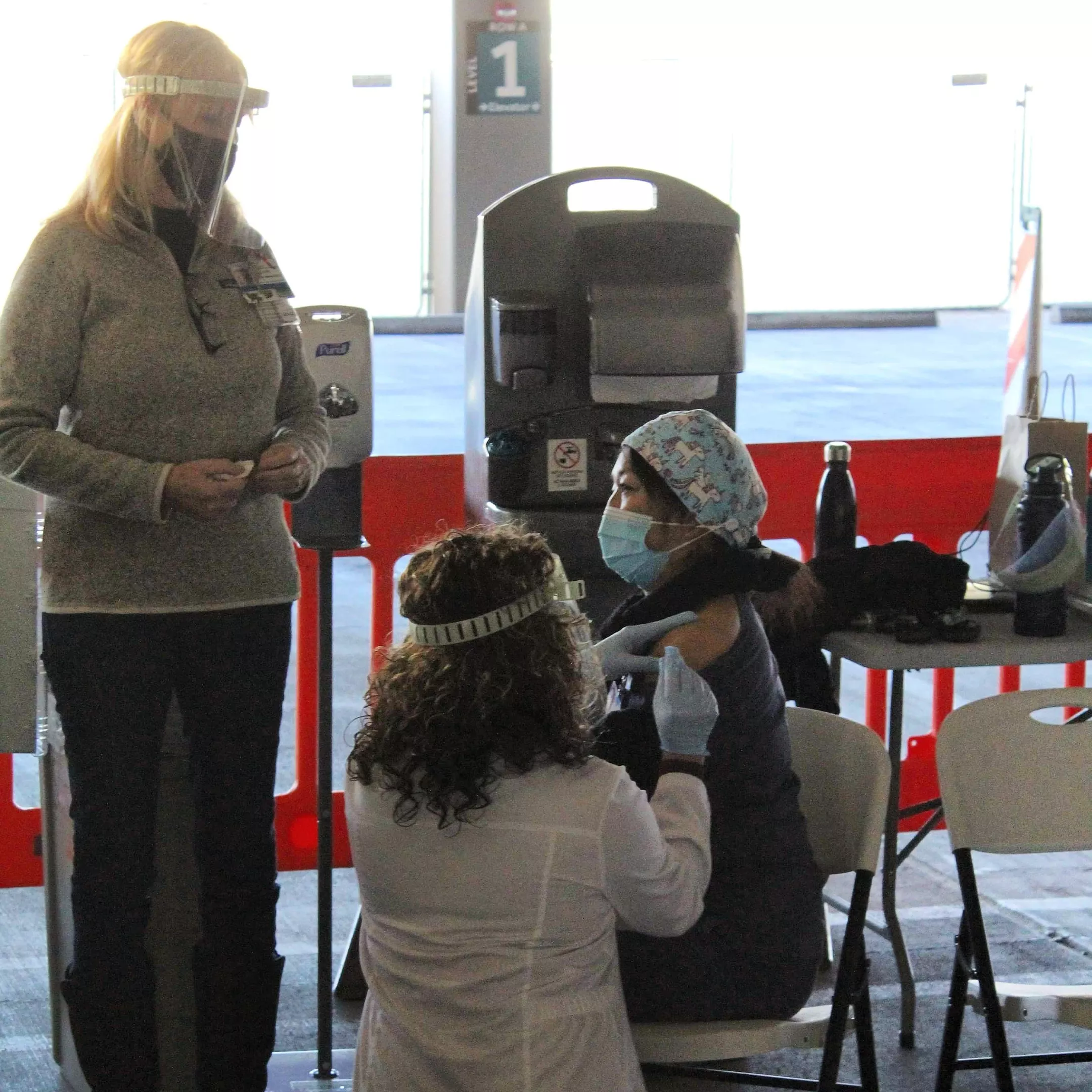
Pima County has administered 114,165 COVID-19 vaccines as of Feb. 1 but has only completed 18,691 series of the two doses needed to be fully immunized.
This week, the county’s vaccine allocation from the state rose to 165,950, up from 140,425 doses last week, according to Arizona Department of Health Services data.
While Pima County struggles to vaccinate nearly 150,000 currently eligible—the 75+ population, educators, childcare providers and protective service workers—Maricopa County’s two 24-hour state-run PODS are receiving nearly 35,000 doses more than the entirety of Pima County, according to data from ADHS.
The two PODs—one at the State Farm Stadium in Glendale that opened on Jan. 11 and a second at the Phoenix Municipal Stadium on that opened Monday—have been allocated 200,850 vaccine doses.
Maricopa County has been allocated 461,375 vaccines on top of its state-run PODs and has administered 297,469 doses as of Monday.
Pima County Administrator Chuck Huckelberry made the case for allocating more vaccines to Pima County in a Jan. 29 memo.
“While population is one measure, another measure would be the percent of the population that is more vulnerable to COVID-19 than other population components within the County,” he wrote.
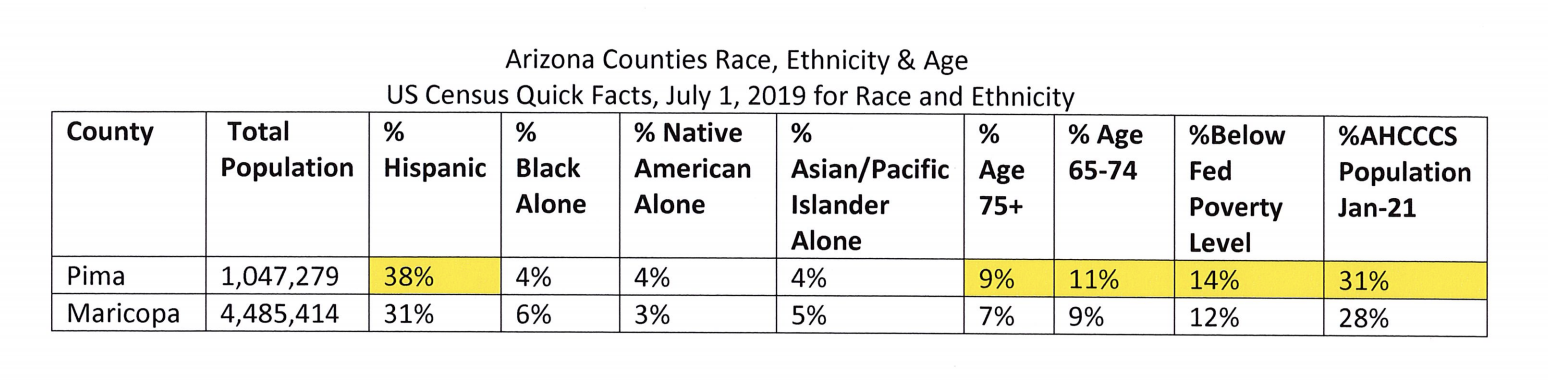
The county administrator compared racial groups, individuals over 65, those living below the federal poverty level and those in the state’s Medicaid program in Pima and Maricopa counties. These populations are expected to be most impacted by the pandemic.
Of Pima County’s population, 38% are Hispanic, 20% are above age 65, 14% live below the poverty level and 31% are enrolled in Arizona’s Medicaid program, according to the memo.
In Maricopa County, 31% are Hispanic, 16% are above 65, 12% live below the poverty level and 28% are enrolled in state Medicaid.
Despite struggling for the county’s fair share of vaccines, Huckelberry also announced the next group to be eligible for the vaccine, those over 65, could be able to register for vaccines by “early February.”
After working out the many kinks of the county’s registration site, Huckelberry now believes the website will be able to handle the surge of new registrants.
He said earlier complications were due to some filling out the forms wrong—such as putting a phone number in the field for email.
The county has put in error-checking and data-cleansing routines that were previously automated, according to Huckelberry’s memo.
The county asks those in the 75+ age group to receive their vaccinations at Banner North, Kino Stadium or Tucson Medical Center. Teachers should go through the University of Arizona and protective service workers should register at the Tucson Convention Center.
Progress at county PODs
The county has five regional PODs, or points of distribution, with the capacity to vaccinate hundreds of residents every day. According to Huckelberry’s memo, they could administer even more shots if given an increased vaccine supply.
As of Jan. 29, Tucson Medical Center has delivered 39,868 doses since opening for healthcare workers in mid-December, according to the memo. The center has vaccinated an average of 1,000 people every day it’s been open for vaccinations.

Twice a year, the Pima County Public Library selects a local writer in residence to teach writing workshops and hold office hours for the community. For the upcoming spring semester, PCPL has selected Gregory McNamee, a local writer, photographer and journalist who has released multiple books on the culture and history of Arizona.
McNamee’s selection marks the 11th writer in residence since PCPL started the program in 2016. The residence is open to authors of any genre, and previous writers in residence include Alice Hatcher, J.M. Hayes, Janni Lee Simner, Susan Cummins Miller and Tucson Weekly's Margaret Regan.
Due to COVID, the writer in residence office hours will be conducted over Zoom in 30-minute blocks. McNamee will offer these one-on-one consultations every Tuesday from 9 to 11 a.m. and Thursday from 1 to 3 p.m. But there will be no sessions offered on Thursday, Feb. 11.
During his tenure, McNamee will also host three virtual workshops:
- The Sonoran Desert in Literature: Saturday, February 6, 2021, from 11 a.m. to 12:30 p.m.
- The Nature of Fact: Saturday, March 13, from 11 a.m. to 12:30 p.m.
- Writing Nonfiction: Saturday, April 10, from 11 a.m. to 12:30 p.m.
"I'm fond of the program because it embodies so much of the library's mission," said Holly Schaffer, PCPL community relations manager. "It allows the community to learn about writing in different styles and genres. It really demystifies the process of writing."
The Writer in Residence Program is funded by the Arizona State Library, Archives, and Public Records, a division of the Secretary of State, with federal funds from the Institute of Museum and Library Services.
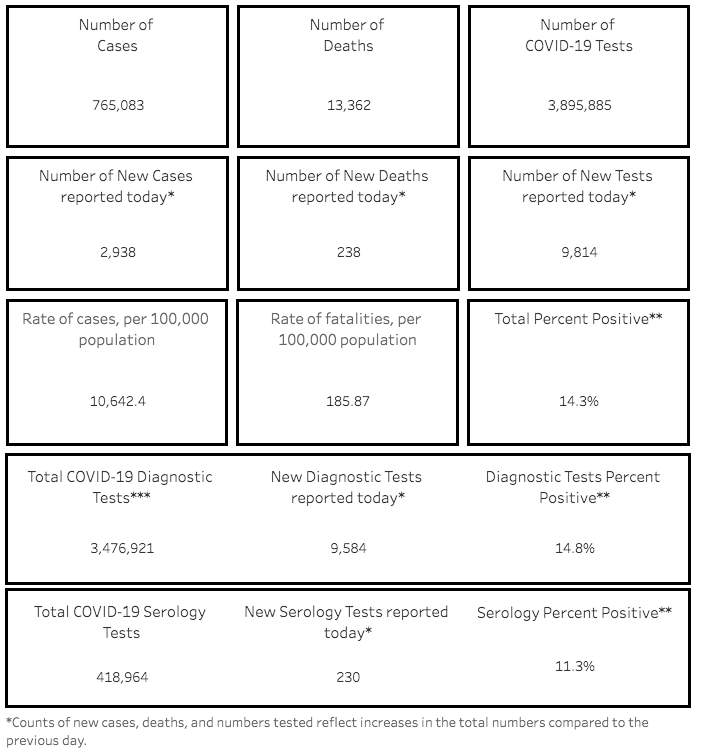
With fewer than 3,000 new cases reported today, the total number of Arizona’s confirmed novel coronavirus cases surpassed 765,000 as of Tuesday, Feb. 2, according to the Arizona Department of Health Services.

Pima County, which reported 504 new cases today, has seen 102,320 of the state’s 765,083 confirmed cases.
The death toll jumped by 238 today, bringing the total number of Arizonans who have died after contracting COVID-19 to 13,362. Pima County reported 55 new deaths today, bringing the local total to 1,795 deaths, according to the Feb. 1 report.
The number of hospitalized COVID cases statewide has declined in recent weeks after peaking at 5,082 on Jan. 11 and yesterday dropped below the summer peak of 3,517, which was set on July 13, 2020. A total of 3,513 COVID patients were hospitalized in the state as of Feb. 1. The lowest number of hospitalized COVID patients was 468, set on Sept. 27, 2020.
A total of 1,486 people visited emergency rooms on Feb. 1 with COVID symptoms, down from the record high of 2,341 set on Tuesday, Dec. 29, 2020. That number had peaked during the summer wave at 2,008 on July 7, 2020; it hit a subsequent low of 653 on Sept. 28, 2020.
A total of 944 COVID-19 patients were in intensive care unit beds on Feb. 1, down from a peak of 1,183 set on Jan. 11. The summer’s record number of patients in ICU beds was 970, set on July 13, 2020. The subsequent low was 114 on Sept. 22, 2020.
How to get a vaccine shot
Those who currently qualify in Pima County’s 1B priority group of eligible vaccine recipients can register for a vaccine at www.pima.gov/covid19vaccineregistration or by calling 520-222-0119.
Cases on decline but AZ remains nation’s hottest spot
COVID-19 cases have decreased in Arizona for the second week in a row, but the state remains the nation’s highest for transmission of the virus.
CDC data shows Arizona’s average transmission rate is at 75 daily cases per 100,000 population. The state has held the first or second spot through most of January.
The week ending Jan. 24 showed an 18% decrease in coronavirus cases from the previous week prior, according to the latest report by Dr. Joe Gerald, a University of Arizona professor who creates weekly coronavirus epidemiology reports based on Arizona Department of Health Services data.
“This week saw another meaningful decline in COVID-19 cases which now clearly represents a sustained, real decrease in viral transmission,” Gerald wrote in this week’s report. “This decline is accompanied by reductions in hospital and ICU occupancy. Reductions in mortality should quickly follow. While this reprieve is welcomed, the absolute level of [coronavirus] transmission remains exceptionally high.”
The week ending Jan. 10 remains the state’s deadliest with 889 COVID-19 deaths recorded so far. Gerald predicts deaths will remain “exceptionally high” for the next four to six weeks.

