Tuesday, February 2, 2021

LOS ANGELES — Clayton Foster was living out of his car when he contracted COVID-19. The 67-year-old knew he faced higher risks of death or severe outcomes during the pandemic because of his chronic heart and bladder conditions, but for Foster and thousands of other homeless people across the Southwest, it’s been hard to protect against the virus.
“I try to keep my stuff clean and neat, but it is very hard to do,” Foster said.
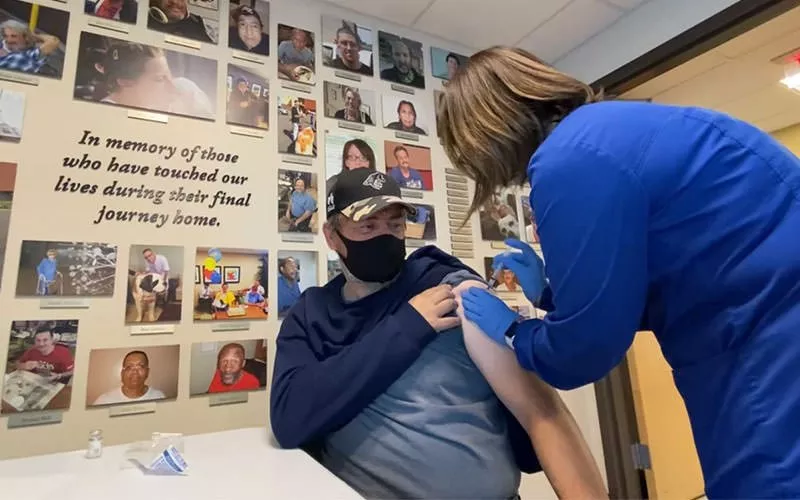
Foster survived the illness with the aid of health services provided by Phoenix-based nonprofit Circle the City and became the first patient in the organization’s care to receive the COVID-19 vaccine back on Jan. 21.
Foster is part of a small segment of the homeless population in the Southwest who have begun getting the vaccine, but organizations serving the homeless elsewhere are facing challenges in inoculating the at-risk populations they serve.
In Los Angeles, providers are eagerly awaiting news of when vaccines will be available – and they face a steep challenge.
Recent data suggests there are more than 66,000 homeless people in Los Angeles County, and there were more than 7,400 homeless people in Maricopa County in a count from last January. Many of these individuals are at high risk of catching COVID-19 because of unsanitary living conditions.
With that many individuals to account for, it poses a major logistical question as to how to most effectively and efficiently vaccinate such a large, high-risk population.
In the past two weeks, Circle the City has received 400 doses of the Moderna vaccine to distribute among its four locations in Maricopa County, according to community liaison Marty Hames.
Monday, February 1, 2021
The University of Arizona has delivered 5,810 COVID-19 vaccines after opening as one of Pima County’s five points of distribution, according to the university's President Dr. Robert C. Robbins.
The POD is targeted toward educators and childcare providers, and Robbins estimates it can deliver 800 shots per day this week while it’s open Monday through Saturday.
The university has two vaccination sites: a drive-through location at the University of Arizona Mall and a walk-through clinic at the Ina E. Gittings building.
As cases could transmit even faster with the arrival of more contagious coronavirus variants from the UK, South Africa and Brazil in the U.S., Robbins said becoming vaccinated is even more crucial.
The UK variant has been identified in Arizona after at least three test samples came back positive for it, the Arizona Department of Health Services announced Friday.
“We're seeing problematic variants circulate, and the longer the pandemic continues, the more we will have new variants with clinically significant mutations,” he said. “The vaccine will help us reach herd immunity more quickly and have less illness and certainly less mortality in our population.”
While serving as a vaccination POD, the university will continue in stage one of its reentry plan with in-person instruction for essential courses only at least through the week of Feb. 8, Robbins said. Stage two of the reentry plan involves up to 50 students attending classes in person.
The return to more in-person instruction is based on data tracking the spread of COVID-19 across the state.
While COVID-19 cases in Arizona have decreased for the second week in a row, Robbins emphasized the state still remains number one for transmissibility in the nation.
While the seven-day rolling average for COVID-19 cases is at 45 per 100,000 of the population nationwide, Arizona is experiencing 75 cases per 100,000 people, while Pima County is at 66 cases per 100,000, Robbins shared.

Tucson City Councilman Paul Durham, who was first elected in 2017, is resigning from the job.

Durham's last day in office will be March 1.
Durham had previously taken a leave of absence from the council job in September to focus on caring for his husband, Philippe, who has been suffering from cancer, but he had returned to the job.
Mayor Regina Romero thanked Durham for his service on the council.
"Paul has been a dedicated advocate for the residents of Ward 3 and has truly exemplified what it means to be a public servant," Romero said in a prepared statement. "I am grateful for his leadership on issues ranging from climate action to affordable housing and will miss his voice on the council. I know this must have been an incredibly difficult decision to make, and I ask our community to join me in thanking him for his service to Tucsonans and respecting his privacy at this time."
The City Council will appoint someone to fill Durham's seat through the remainder of the year.
A primary election for the Ward 3 seat was already set for August 2021, with the general election to follow in November.
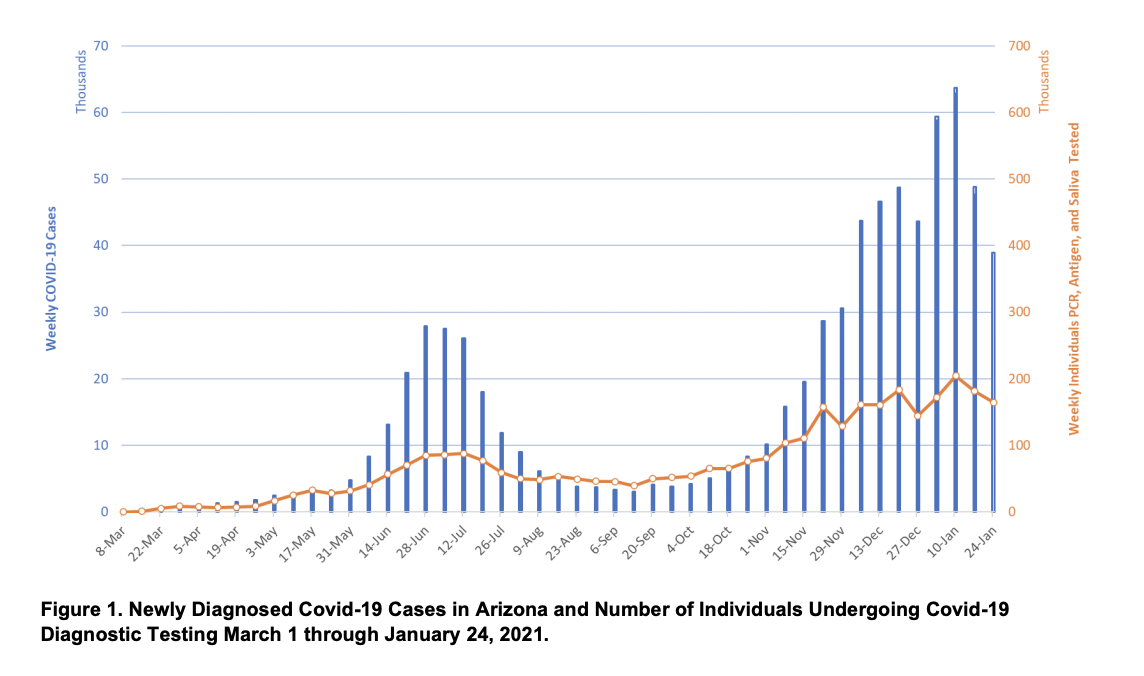
COVID-19 cases have decreased in Arizona for the second week in a row, but the state remains the nation’s highest for transmission of the virus.
CDC data shows Arizona’s average transmission rate is at 75 daily cases per 100,000 population. The state has held the first or second spot through most of January.
The week ending Jan. 24 showed an 18% decrease in coronavirus cases from the previous week prior, according to the latest report by Dr. Joe Gerald, a University of Arizona professor who creates weekly coronavirus epidemiology reports based on Arizona Department of Health Services data.
“This week saw another meaningful decline in COVID-19 cases which now clearly represents a sustained, real decrease in viral transmission,” Gerald wrote in this week’s report. “This decline is accompanied by reductions in hospital and ICU occupancy. Reductions in mortality should quickly follow. While this reprieve is welcomed, the absolute level of [coronavirus] transmission remains exceptionally high.”
The week ending Jan. 10 remains the state’s deadliest with 889 COVID-19 deaths recorded so far. Gerald predicts deaths will remain “exceptionally high” for the next four to six weeks.
Pima County’s outlook
In Pima County, positive cases from the week ending Jan. 17 decreased by 26% since the previous week, Gerald’s report says.
The first week of January saw Pima County’s highest weekly number of COVID-19 cases at 8,814, while the following week dropped to 6,971 and the third week to 4,986, according to the latest Pima County Health Department report. Data from the last 4-7 days are still trickling in, however.
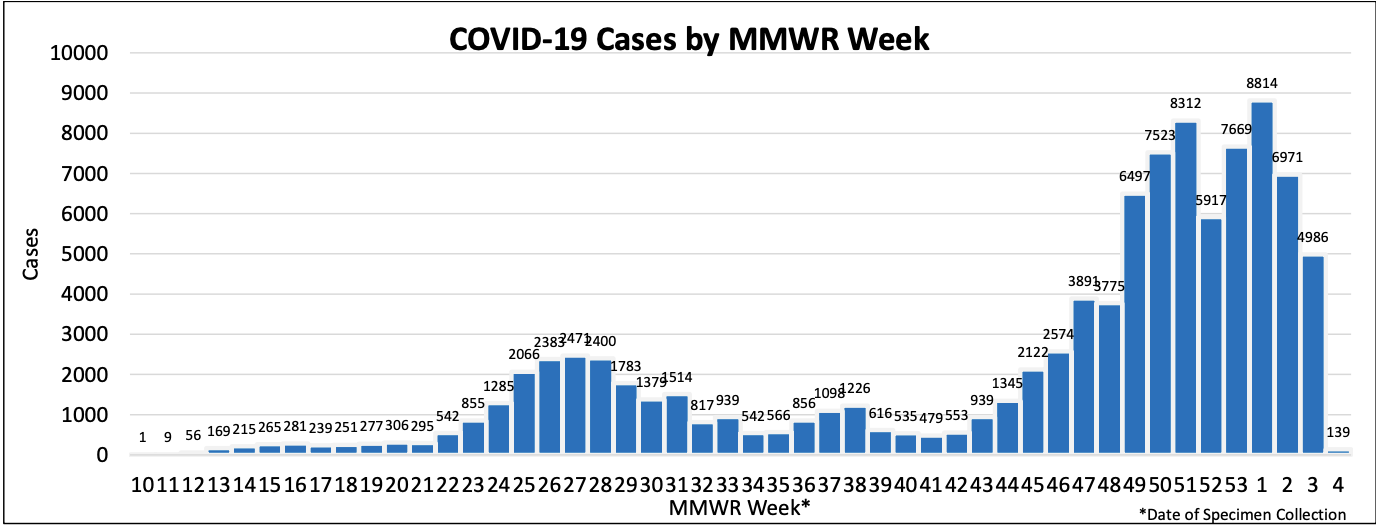
the week ending Jan. 24 shows an 18% decrease in coronavirus cases from the week prior.
Coronavirus deaths in January’s first week tallied 126, the second week 116 and the third week 55, the county reports.
According to Pima County’s Chief Medical Officer Dr. Francisco Garcia, three key indicators tracking the spread of COVID-19 are decreasing throughout the county: cases per 100,000 individuals, percent positivity and hospital visits for COVID-like illness.
This leads him to believe the downward trend in coronavirus cases will sustain.
“All of those are moving in the right direction. If it was going to be short-lived I would expect some of those to not be trending in the same direction,” Garcia said.
However, the trend won’t continue without widespread adherence to virus mitigation practices like mask-wearing, social distancing and frequent sanitization.
“I think we could sustain it if we don't get sloppy again,” Garcia said. “If we continue to do the common sense kinds of mitigation measures that we have tried to reinforce as much as possible, I think we will mitigate against it.”

With nearly 14,000 new cases reported since Friday, the total number of Arizona’s confirmed novel coronavirus cases surpassed 762,000 as of Monday, Feb. 1, according to the Arizona Department of Health Services.

Pima County, which reported 504 new cases today, has seen 101,961 of the state’s 762,145 confirmed cases.
A total of 13,124 Arizonans have died after contracting COVID-19, including 1,740 deaths in Pima County, according to the Feb. 1 report.
The number of hospitalized COVID cases statewide has declined in recent weeks after peaking at 5,082 on Jan. 11 but remains above the peak levels of the summer’s first wave. ADHS reported that as of Jan. 31, 3,654 COVID patients were hospitalized in the state. The summer peak of 3,517 hospitalized COVID patients was set on July 13; that number hit a subsequent low of 468 on Sept. 27.
A total of 1,481 people visited emergency rooms on Jan. 31 with COVID symptoms, down from the record high of 2,341 set on Tuesday, Dec. 29, 2020. That number had peaked during the summer wave at 2,008 on July 7, 2020; it hit a subsequent low of 653 on Sept. 28, 2020.
A total of 984 COVID-19 patients were in intensive care unit beds on Jan. 31, down from a peak of 1,183 set on Jan. 11. The summer’s record number of patients in ICU beds was 970, set on July 13, 2020. The subsequent low was 114 on Sept. 22, 2020.
Pima County passes 100K vaccination threshold
Pima County has passed the paradoxical intersection of administering more than 100,000 COVID-19 vaccines after surpassing 100,000 coronavirus cases Friday.
As of Sunday, Jan. 31, the county administered 112,692 vaccine doses and reported 101,961 coronavirus cases Monday, according to Arizona Department of Health Services data.
“Our vaccination plan was really designed to increase early impact through accelerated immunization,” said Dr. Theresa Cullen, the county’s public health director. “The good news is I think we are starting to see that acceleration, and hopefully, we will soon start to see the impact of that on our community in terms of morbidity and mortality.”
The population currently eligible to receive vaccines are those over 75, educators, childcare providers and protective service workers—a group Cullen estimates to be around 150,000 individuals.
According to the public health director, the county is administering about 35,000 doses a week, which puts them on track to administer 140,000 vaccines by the second week of February.
However, with second doses of either the Pfizer of Moderna vaccine needed for one to be considered fully immunized, Cullen said this doesn’t mean the current 1B priority group in Pima County’s vaccine rollout will be done so soon.
“One would think in four weeks we'd be done, right? Because not everybody's going to get the vaccine. Remember, people are getting two vaccines. So once we throw that second vaccine in there, the numbers become a little extended in terms of how long it takes,” she said.
The next eligible group will be the 65+ population, which Cullen estimates is a group of more than 200,000 residents. Although the current priority group still needs to receive second doses, the 65 and over crowd could be eligible sooner than expected.
“The question everybody wants is when are we going to flip the switch? I would reassure you that we're in the process of doing some calculations, and some of it is related to that second shot,” Cullen said. “But it'll definitely be sometime in February, maybe the end of February. We thought maybe the middle of March—I think it will be earlier if our vaccine distribution holds.”
WASHINGTON – President Joe Biden’s order that the Justice Department stop contracting with private prisons could eventually affect thousands of inmates – but not the roughly 3,000 immigrants being held in private facilities in Arizona.
Biden said Tuesday that his executive order is part of an effort to promote racial equity and is needed to “stop corporations from profiteering off of incarcerating” people in facilities that he said are less humane and less safe.
But the order only applies to the Justice Department, which contracts with private firms to operate 12 prisons housing about 14,000 inmates nationwide. It does not affect Immigration and Customs Enforcement contracts with companies that hold immigrants awaiting hearings or deportation.
ICE’s Phoenix field office has contracts to hold immigrants at four facilities in Arizona: the Central Arizona and Eloy detention centers and the Florence and La Palma correctional centers, all run by CoreCivic Inc. The average daily detainee population for those units combined was 3,070 at the end of fiscal 2020, according to ICE data.