

Friday, February 19, 2021

PHOENIX – Public education advocates and leaders of the Arizona School Boards Association’s Black Alliance and Hispanic-Native American Indian Caucus gathered at the Arizona State Capitol on Thursday to protest a proposed voucher expansion initiative that they say would further defund public schools.
Senate Bill 1452, proposed by Sen. Paul Boyer, R-Glendale, would allow all children attending schools with a high percentage of low-income families or who qualify for free or reduced-price lunches to be eligible for the state’s empowerment scholarship account program. The proposed legislation was approved in a party-line vote 16-14 by on Monday, with Republicans voting in favor.
The current program, which serves 9,700 students, allows eligible parents to use state funding to pay for religious or other private education and education costs. Boyer’s bill would expand the program to serve a much larger group. More than 600,000 students receive free or reduced-price lunches in Arizona, the Governor’s Office has said.
Among those opposing the legislation were school board members, parents, superintendents, and other community members. Rather than routing money out of public schools, they argue the money should be used to help classrooms and neighborhoods where students live.
“A serious conversation about helping students begins from the premise that children be provided the tools they need in their own neighborhoods, easily accessible, without additional charges, or mandates to sign away one’s rights to antidiscrimination policies,” said Ann O’Brien, president of the Arizona School Boards Association’s executive board of directors. That, she continued, “is exactly what is required when a parent takes an ESA,” referring to empowerment scholarship accounts.
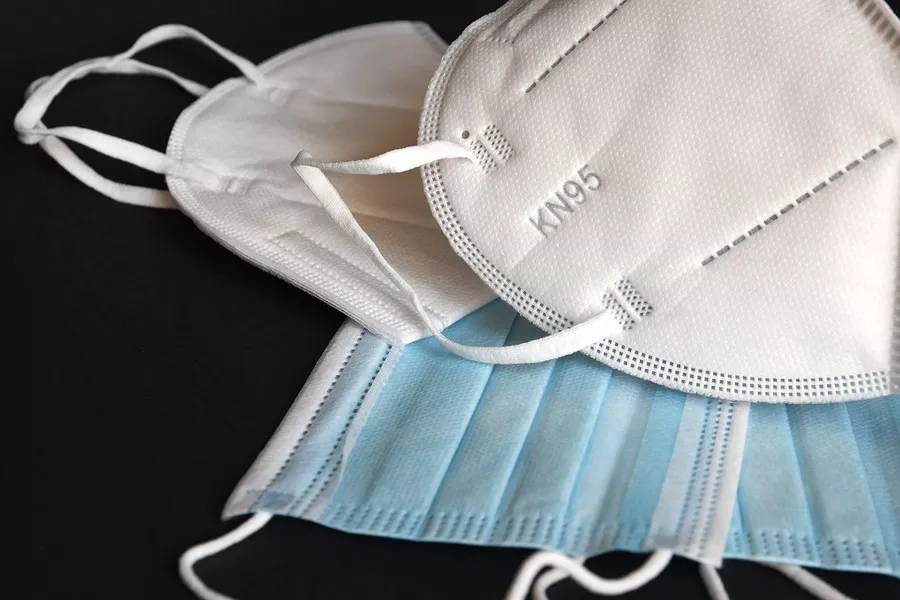
PHOENIX – A House committee has passed a Republican-sponsored bill that would allow Arizona business owners to decide whether to enforce mask mandates for employees and customers, a move supporters say promotes freedom and critics call a threat to health and safety.
“It’s a simple bill – it restores the freedom and the liberties back to the individual, and the individuals that own a business, to make their own decisions,” said newly elected Rep. Joseph Chaplik of Scottsdale, a sponsor of House Bill 2770.
The House Commerce Committee on Tuesday voted 6-4 along party lines in favor of the bill, which runs counter to many city and county government requirements to wear a mask to combat the coronavirus that causes COVID-19. Gov. Doug Ducey has not issued a statewide mask requirement but last year allowed local governments to establish such rules.
Chaplik, who spoke while wearing a face shield, referred to emails of support he has received.
With 1,918 new cases reported today, the total number of Arizona’s confirmed novel coronavirus cases topped 804,116 as of Friday, Feb. 19, according to the Arizona Department of Health Services.
Pima County, which reported 211 new cases today, has seen 107,793 of the state’s 802,198 confirmed cases.
With 145 new deaths reported today, a total of 15,421 Arizonans have died after contracting COVID-19, including 2,144 deaths in Pima County, according to the Feb. 19 report.
The number of hospitalized COVID cases statewide has declined in recent weeks, with 1,738 coronavirus patients in the hospital as of Feb. 18. That’s fewer than half the number hospitalized at the peak of the winter surge, which reached 5,082 on Jan. 11. The summer peak was 3,517, which was set on July 13, 2020. The subsequent lowest number of hospitalized COVID patients was 468, set on Sept. 27, 2020.
WASHINGTON – The Arizona Department of Education wants to make sure parents understand their kids will be getting letter grades this year – and to drive home the point, the department sent the message in capital letters.
Actions taken by the governor and Legislature earlier this week apply to schools but “NOT individual student grade (ex. ‘A in Chemistry’ or ‘C+ in English’) – those are under the purview of local control,” the department said in a statement Wednesday.
The statement followed Gov. Doug Ducey’s signing of a bill Monday that said state schools will not get grades reflecting their students’ performance on the AzMerit standardized tests this year, because of the ongoing pandemic. An accompanying executive order and statement from Gov. Doug Ducey said the law allowed “some flexibility around the state’s A-F letter grade system.”
Some parents apparently read that to mean the change applied to the letter grades their kids receive – not their kids’ schools.
Phoenix resident Lori Worachek, who has two daughters in the school system, said her initial reaction was that the executive order was unfair to kids.
“It wasn’t the right way to approach it because it’s not fair to the kids that have been working hard,” she said.
Thursday, February 18, 2021
With an already strained vaccine supply, Pima County is seeing delayed COVID-19 vaccine appointments as shipments of doses are slowed due to harsh winter weather conditions across the U.S.
The county says the appointments at risk of being delayed include some second dose vaccine appointments at Tucson Medical Center beginning Feb. 18, as well as appointments at Tucson Convention Center and Banner South beginning Feb. 19.
Two mobile vaccination events set for Feb. 20 have been postponed. The mobile vaccination efforts are targeted to vulnerable populations and will now be held sometime in March, the county announced in a press release.
Further complicating vaccine administration, next week, the county will only receive 12,500 doses for all county-run vaccination sites.
This represents the lowest total of weekly doses allocated to Pima County in 10 weeks, according to the press release.
Last week, Pima County's vaccine supply was decreased to 17,850—a 40% reduction from the previous week. This week, the doses were cut down to 16,300 doses of Moderna, while the new University of Arizona POD was given 1,000 doses.
The state is now taking control of all Pfizer allocations, but the county has no insight into what the Pfizer allotment is.

The University of Arizona began operations Thursday as a state-run POD, or point of distribution, after it served as a county-wide vaccination center since mid-January.
The state plans to eventually transition the site to operate 24/7 and distribute up to 6,000 vaccines a day.
The UA is the third state-run site in Arizona after the State Farm Stadium in Glendale opened on Jan. 11 and the Phoenix Municipal Stadium opened on Feb. 1. It’s the first site to include a walk-up vaccination option in addition to a drive-through site.
The drive-through location is on the University of Arizona Mall and the walk-up site is at the Ina E. Gittings Building.
Adults 65 and over, education and childcare workers and protective service workers are currently eligible to receive the vaccine at the POD through appointments only.
Nearly 12,000 appointments through February have been booked, however.
Currently, the UA POD is administering Pfizer vaccines, as it has the proper cold-chain storage the brand requires.

Folk musician David Huckfelt has gathered several notable names from the Tucson music scene to celebrate the release of his new album “Room Enough, Time Enough.” On Saturday, Feb. 20, at 6 p.m., Huckfelt will be joined for a “songwriter circle” by XIXA frontman Gabriel Sullivan, blues singer Billy Sedlmayr and Giant Sand founder Howe Gelb — all of whom perform on Huckfelt’s new album.
“I think about records geographically, and what a special jewel Tucson is artistically speaking,” Huckfelt said of his new album. “There’s so many people I wanted to include. We kept building the table a little bit longer and the tent a little bit wider with each step of this record. It did snowball a little bit, but there was always this idea to have an outlandish posse of people on this record.”
The socially distanced outdoor show has a limited capacity with masks required, and tickets are selling fast. However, you can also view the show from home with a free Youtube live stream.
Purchase tickets here, and tune in for the live-stream here.
In addition, Huckfelt will perform with folk singer Charlie Parr at Monterey Court next Wednesday, Feb. 24, at 7 p.m.

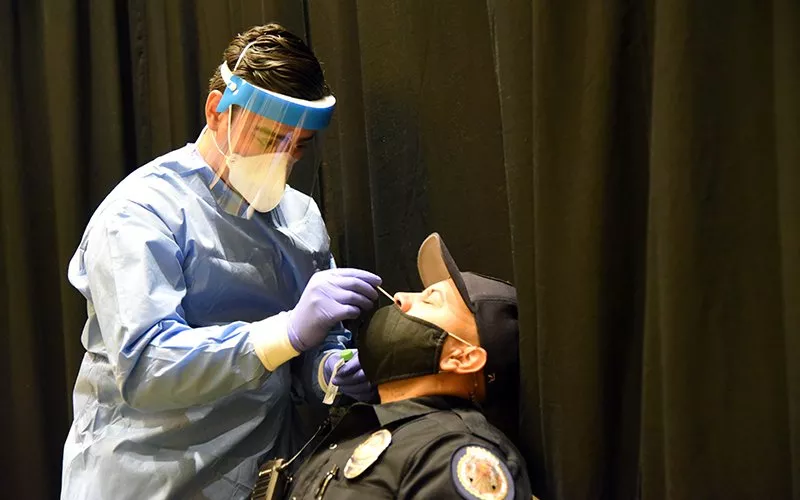
County Administrator Chuck Huckelberry is asking the Pima County Board of Supervisors to suspend county-sponsored COVID-19 testing after notification that the state will not reimburse the county for most of its testing costs.
At a special board meeting Friday, Huckelberry said he'll ask the board to halt free coronavirus testing as of Feb. 22 to avoid incurring further deficit costs.
In a memo to the board, Huckelberry said the county reported to the state that $47.75 million was spent on PCR COVID-19 testing since April, with more than $10.68 million coming from county funds.
State officials said they could reimburse Pima County for only $1 million, according to an email from Eugene Livar, the chief of the epidemiology and disease control bureau at the Arizona Department of Health Services.
When the state submits its budget for federal approval in mid-March, Livar said ADHS can “reassess the funding available to support Pima County's testing needs,” but they likely won’t be able to “support the entirety of the $40,274,448 need but will likely be able to provide some level of support.”
While initially running the county’s testing operations under the assumption they would be partially covered by the $416 million provided to Arizona for testing through the 2021 Consolidated Appropriations Act, Huckelberry wrote in the memo that the federal funds are “being used by the State for other purposes,” adding, “It appears the uses for which the State will be using these funds is for everything but COVID-19 testing.”
Pima County currently has several sites offering free COVID-19 testing through partnerships with Arizona State University, the City of Tucson, Accu Reference Labs and Paradigm Labs.
If the Board of Supervisors approves the motion Friday, the free testing will cease across the county.
“This is unfortunate as it was abundantly clear to Pima County that the State allocation was for COVID-19 testing,” Huckelberry wrote in the memo. “At least that was the impression we were left with in reviewing the Federal 2021 Consolidated Appropriations Act.”

