Monday, February 15, 2021
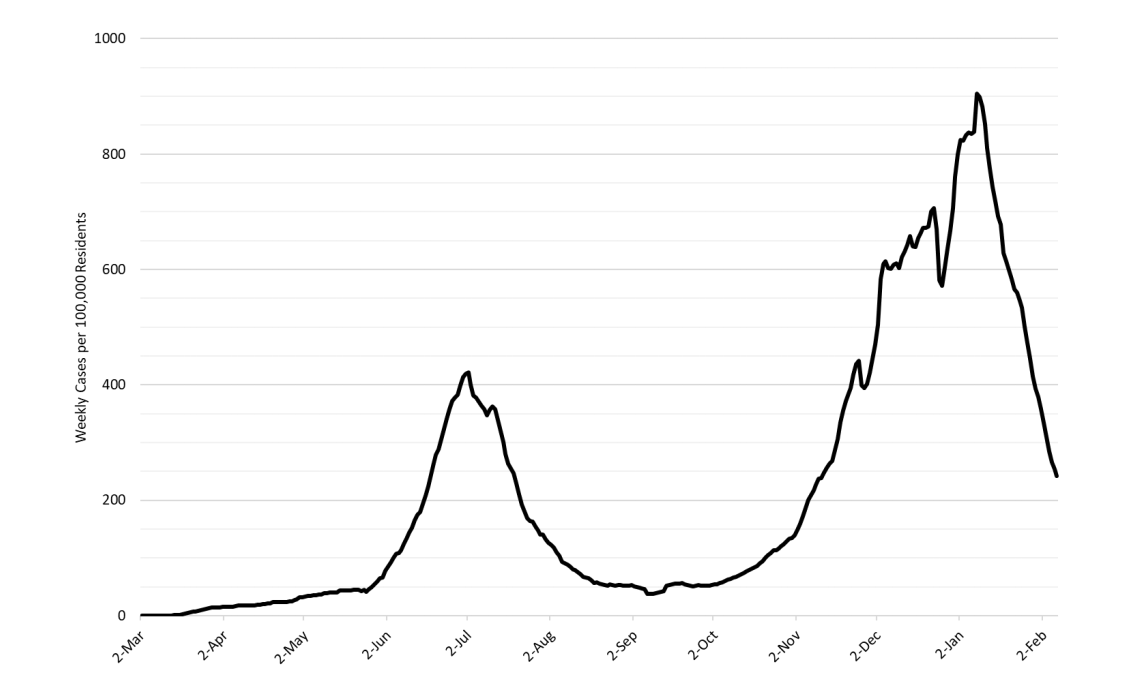
With the fourth week in a row of declining COVID-19 cases in Pima County, Arizona has evolved from a state of “crisis” to one of “elevated risk,” according to Dr. Joe Gerald, a University of Arizona professor who creates weekly coronavirus epidemiology reports based on Arizona Department of Health Services data.
According to Gerald’s latest report, the week ending Feb. 7 saw a 35% decrease in coronavirus cases from the week prior.
The amount of COVID-19 patients in the state’s general ward beds decreased by 25% the week of Feb. 12 from the week before, while ICU bed usage dropped 17%, according to Gerald.
“With continued improvements being forecast over the next 4 weeks, hospital capacity is adequate to meet Arizona’s most critical needs,” the professor wrote in the report. “Nevertheless, it will be many months before the backlog of non-COVID care can be fully addressed.”
In Pima County, the week ending Feb. 7 saw a 33% drop from the previous week, Gerald reports.
Furthermore, for the first time in 2021, two of the indicators on Pima County’s COVID-19 progress report, which tracks key epidemiological factors to make recommendations to business schools, have improved.
Adequate hospital capacity and timely case investigation metrics have moved from the “not met” to “progress” category.
Timely case investigation tracks how long it takes for the county’s case investigators to reach an individual who’s tested positive COVID-19 after they’re diagnosed.
Cases over two consecutive weeks, percent positivity for the virus and the predominance of COVID-19 like illness remain in the “criteria not met” category.
Although hospitals are seeing a slight reprieve, they remain under pressure, according to Pima County Health Department Director Dr. Theresa Cullen.
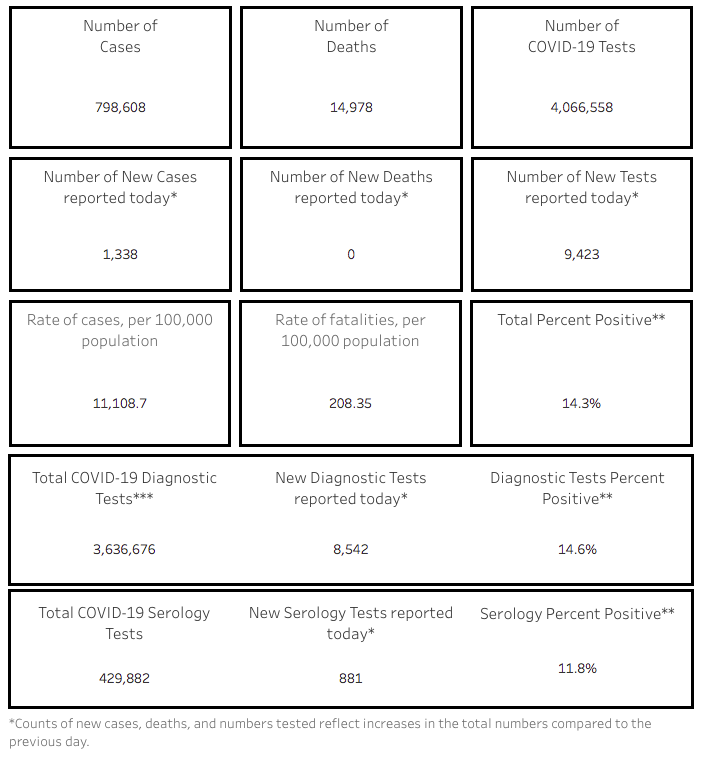
With 1,338 new cases reported today, the total number of Arizona’s confirmed novel coronavirus cases closed in on 800,000 as of Monday, Feb. 15, according to the Arizona Department of Health Services.

Pima County, which reported 246 new cases today, has seen 107,058 of the state’s 798,608 confirmed cases.
A total of 14,978 Arizonans have died after contracting COVID-19, including 2,075 deaths in Pima County, according to the Feb. 15 report.
The number of hospitalized COVID cases statewide has declined in recent weeks, with 2,119 coronavirus patients in the hospital as of Feb. 14. That’s fewer than half the number who were hospitalized at the peak of the winter surge, which reached 5,082 on Jan. 11. The summer peak was 3,517, which was set on July 13, 2020. The subsequent lowest number of hospitalized COVID patients was 468, set on Sept. 27, 2020.
A total of 1,208 people visited emergency rooms on Feb. 14 with COVID symptoms, down from the record high of 2,341 set on Tuesday, Dec. 29, 2020. That number had peaked during the summer wave at 2,008 on July 7, 2020; it hit a subsequent low of 653 on Sept. 28, 2020.
A total of 644 COVID-19 patients were in intensive care unit beds on Feb. 14, down from a peak of 1,183 set on Jan. 11. The summer’s record number of patients in ICU beds was 970, set on July 13, 2020. The subsequent low was 114 on Sept. 22, 2020.
How to get a vaccine
Currently, Pima County is providing vaccination shots to people 70 and older as well as educators, first responders and healthcare workers. Those who currently qualify in Pima County’s 1B priority group of eligible vaccine recipients can register for a vaccine at www.pima.gov/covid19vaccineregistration or by calling 520-222-0119.
A state-run vaccination site opening at the University of Arizona will begin appointments on Feb. 18. The new site will follow the state’s current vaccine eligibility, which includes those 65 and older, educators, childcare workers and protective service workers, according to Arizona Department of Health Services Director Dr. Cara Christ.
As the state-run POD, or point of distribution, registrations will go through ADHS’s website. Appointments will begin on Feb. 18, and registration will open at 9 a.m. on Feb 16. Online registration will be available atpodvaccine.azdhs.gov, and those who need assistance can call 1-844-542-8201.
Limited supply forces reduction in vaccine appointments
Despite a widening population of eligible vaccine recipients and the addition of a state-run POD at the University of Arizona set to open on Thursday, Pima County’s vaccine allocation from the state has been cut yet again.
Two weeks ago, the county's vaccine supply was decreased to 17,850—a 40% deduction from the previous week. Last week, the doses were cut down by 9% for a total allotment of 16,300.
According to a memo from County Administrator Chuck Huckelberry, the truncated allocation has limited the county’s ability to give first-time doses—many for those 70 and older who became eligible last week—and delayed plans for vaccinations in vulnerable congregate settings.
Tempe police responded to a 911 call on Jan. 15, 2019, about a suspected burglary in an alley. Officer Joseph Jaen arrived to find Antonio Arce, sitting in a truck with a handgun.
Jaen called to Arce, 14, who turned and ran. “Let me see your hands!” Jaen yelled, but Arce continued running, and Jaen shot and killed him.
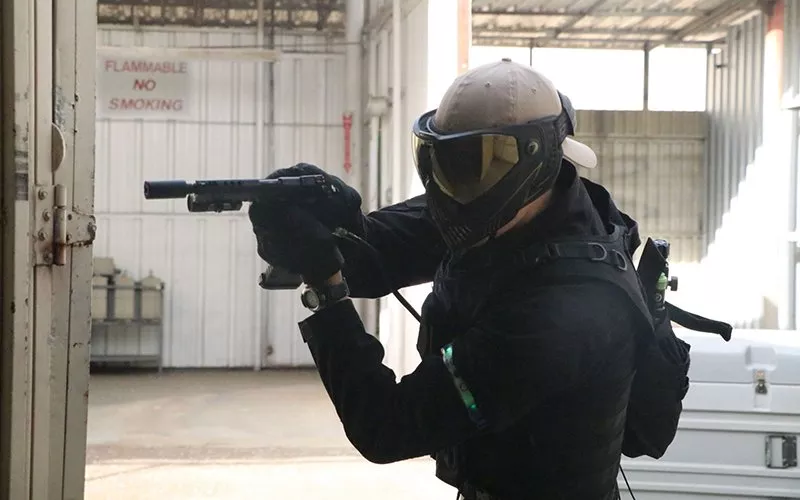
In body camera footage taken minutes after the shots, Jaen can be heard saying “It’s a (expletive deleted) toy gun.” It was, indeed, an airsoft replica of a Colt 1911 pistol, with its orange tip still intact.
“That’s supposed to alert the public, as well as the police, to the fact that this is not a real gun,” said Daniel Ortega Jr., a lawyer for Arce’s family. Airsoft guns use springs or compressed air to fire nonlethal plastic projectiles.
The family sued Tempe, later settling for $2 million. Jaen was granted accidental disability retirement in January. He did not face charges from the Maricopa County Attorney’s Office.
Friday, February 12, 2021
Despite a widening population of eligible vaccine recipients and the addition of a state-run POD at the University of Arizona set to open on Thursday, Pima County’s vaccine allocation from the state has been cut yet again.
Last week, the county's vaccine supply was decreased to 17,850—a 40% deduction from the previous week. This week, the doses were cut down by 9% for a total allotment of 16,300.
According to a memo from County Administrator Chuck Huckelberry, the truncated allocation has limited the county’s ability to give first-time doses—many for those 70 and older who became eligible last week—and delayed plans for vaccinations in vulnerable congregate settings.
The county’s accelerated immunization plan calls for 300,000 vaccines by the end of March, a goal the health department was previously ahead of. Now, county health Director Dr. Theresa Cullen said the plan will come to a “near halt” within weeks if the county doesn’t receive more doses.
According to Cullen, more than 100,000 residents need a second dose to be considered fully immunized over the next three to four weeks.
“We believe we can protect second-dose appointments with the current allotment, but if supplies remain this tight, it will be difficult for the public to schedule new first-dose appointments in the coming weeks,” Cullen said. “We need to follow through on our promise to them, so that means first dose appointments will be limited for a while, which really slows down our Accelerated Plan, unfortunately.”Dr. Francisco Garcia, the county’s chief medical officer, said the limited vaccine supply will likely result in reduced hours at the county’s current vaccination sites, but the health department is working with its vaccination partners to avoid canceling existing vaccine appointments.
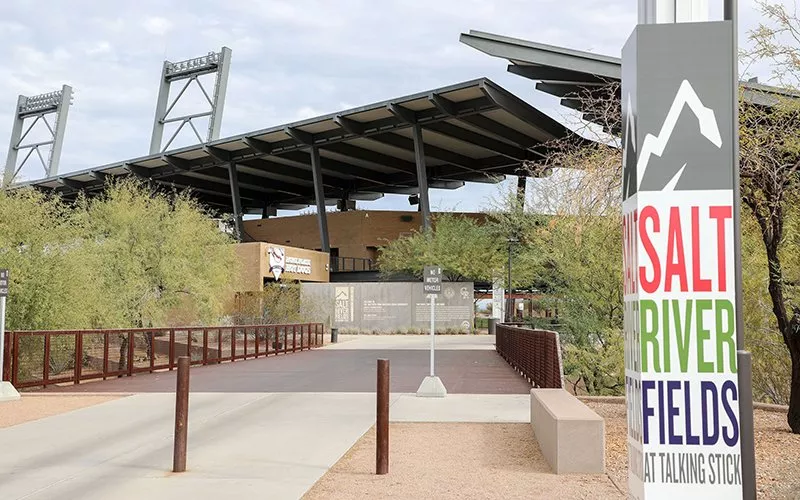
PHOENIX – Batter up. Mask up.
Despite an offseason that suggested a delay to the start of spring training, Major League Baseball pitchers and catchers are scheduled to report Tuesday, with games kicking off on Feb. 27.
Arizona is home to 10 stadiums where 15 Cactus League teams prepare for the regular season each year. MLB’s Players Association recently rejected a proposal by the league to postpone the start of spring ball because of COVID-19 concerns.
What will it look like?
Major League Baseball has not announced a blanket policy because many of the decisions will be determined by individual municipalities. Cactus League Executive Director Bridget Binsbacher said in a statement that cities “are working with stakeholders to finalize preparations for opening spring training camps. We expect to announce details soon.”
Although few teams have released specific details of attendance plans, most are expected to follow guidelines similar to the ones the City of Tempe announced recently. Tempe Diablo Stadium, spring home of the Los Angeles Angels, will open at 25% capacity. This would allow 1,800 to 2,000 guests to attend the games.
These rules are also included:
A Tucson brother and sister have been arrested after evidence surfaced of the duo participating in the Jan. 6 storming of the U.S. Capitol.
Felicia and Cory Konold were listed on a criminal complaint filed by the FBI for their participation in the riot that resulted in five deaths as insurrectionists invaded the Capitol in attempts to stop the certification of the 2020 presidential election results.
Rioters broke into the Capitol at about 2 p.m., tearing down protective barriers, breaking windows and assaulting Capitol police.
In a Snapchat video, Felicia Konold of Tucson was seen brandishing a two-sided coin associated with the Proud Boys, a far-right extremist group known for supporting white nationalism, according to a complaint filed in the U.S. District Court on Feb. 10.
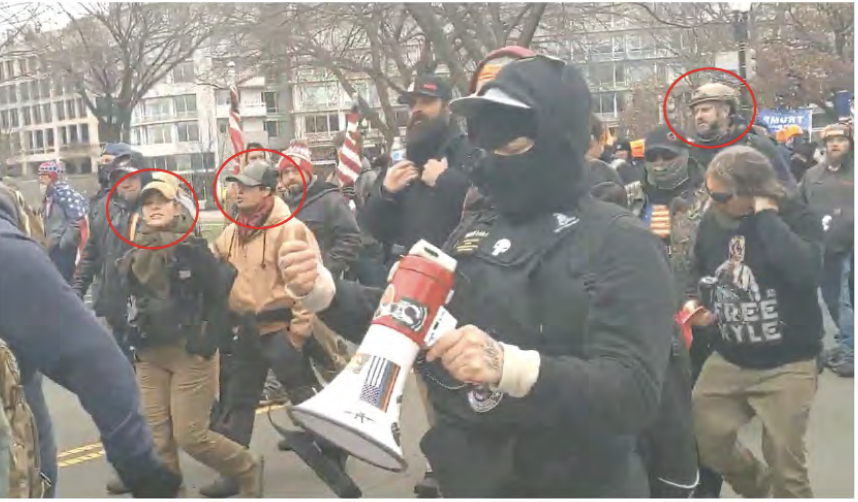
The video showed Felicia saying she had been "recruited into a f****** chapter from Kansas City” and that she’s "with them now."
The complaint said the Tucson woman was also seen in publicly available video marching with a group of known Proud Boy affiliates along Constitution Avenue chanting "F*** Antifa!" and "Whose streets? Our streets!"
At the Capitol, Felicia and her brother Cory were observed at the front of a crowd that advanced toward the pedestrian entrance shortly before 1 p.m., confronting police and eventually toppling metal barriers and moving toward the building.
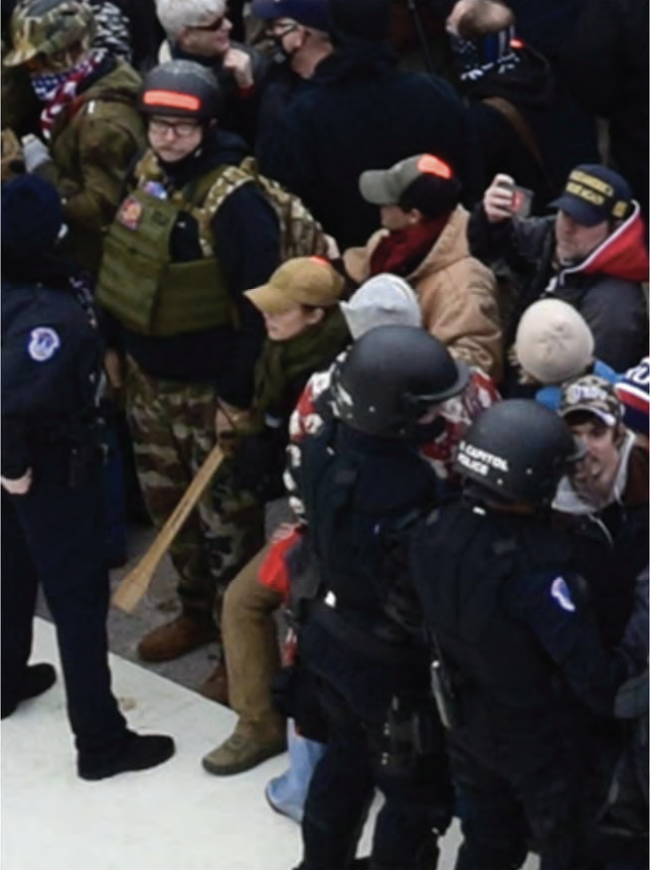
After the insurrectionists overwhelmed the police line guarding the front plaza of Capitol, the brother and sister were at the front of the crowd where Felicia was seen putting a black helmet previously worn by another defendant on Cory’s head, the complaint describes.
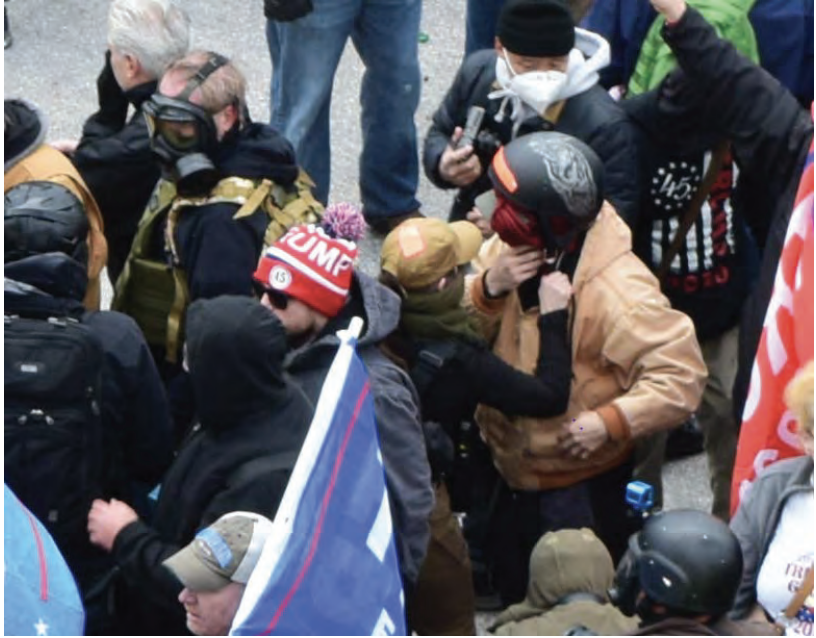
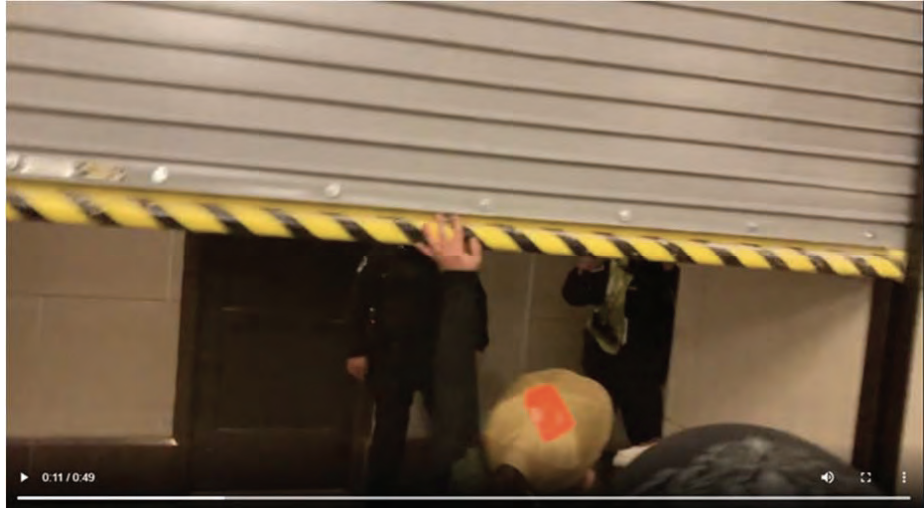
Footage from inside the Capitol revealed Felicia attempting to hold up a metal barrier that was lowering to block off the entrance to tunnels underneath the building with her brother standing behind her.
In addition to video proof, the duo was identified at the Capitol riots through cell-site records, including a call made to Cory tracked from Felicia’s phone on Jan. 6.
In the Snapchat account affiliated with Felicia, the complaint says she recorded a “selfie-style” video saying “I never could have imagined having that much of an influence on the events that unfolded today…Dude, people were willing to follow.”
In the criminal complaint, the Konolds are included in a group of five that stormed the Capitol building and face federal charges of conspiracy, civil disorder, obstruction of an official proceeding, knowingly entering or remaining in any restricted building or grounds without lawful authority and disorderly conduct on Capitol grounds.
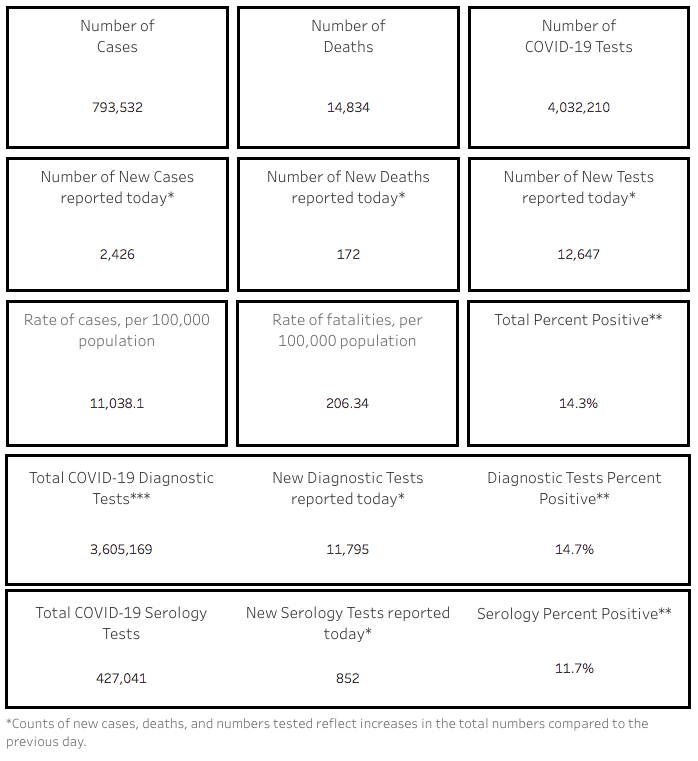
With 2,426 new cases reported today, the total number of Arizona’s confirmed novel coronavirus cases topped 793,000 as of Friday, Feb. 12, according to the Arizona Department of Health Services.

Pima County, which reported 685 new cases today, has seen 106,253 of the state’s 793,532 confirmed cases.
With 172 new deaths reported today, a total number of 14,834 Arizonans have died after contracting COVID-19, including 2,053 deaths in Pima County, according to the Feb. 12 report.
The number of hospitalized COVID cases statewide has declined in recent weeks, with 2,396 coronavirus patients in the hospital as of Feb. 11. That’s fewer than half the number who were hospitalized at the peak of the winter surge, which reached 5,082 on Jan. 11. The summer peak was 3,517, which was set on July 13, 2020. The subsequent lowest number of hospitalized COVID patients was 468, set on Sept. 27, 2020.
A total of 1,554 people visited emergency rooms on Feb. 11 with COVID symptoms, down from the record high of 2,341 set on Tuesday, Dec. 29, 2020. That number had peaked during the summer wave at 2,008 on July 7, 2020; it hit a subsequent low of 653 on Sept. 28, 2020.
A total of 705 COVID-19 patients were in intensive care unit beds on Feb. 11, down from a peak of 1,183 set on Jan. 11. The summer’s record number of patients in ICU beds was 970, set on July 13, 2020. The subsequent low was 114 on Sept. 22, 2020.
How to get a vaccine
Currently, Pima County is providing vaccination shots to people 70 and older as well as educators, first responders and healthcare workers. Those who currently qualify in Pima County’s 1B priority group of eligible vaccine recipients can register for a vaccine at www.pima.gov/covid19vaccineregistration or by calling 520-222-0119.
A state-run vaccination site opening at the University of Arizona will begin appointments on Feb. 18. The new site will follow the state’s current vaccine eligibility, which includes those 65 and older, educators, childcare workers and protective service workers, according to Arizona Department of Health Services Director Dr. Cara Christ.
As the state-run POD, or point of distribution, registrations will go through ADHS’s website. Appointments will begin on Feb. 18, and registration will open at 9 a.m. on Feb 16. Online registration will be available atpodvaccine.azdhs.gov, and those who need assistance can call 1-844-542-8201.
MHC Healthcare is currently scheduling COVID-19 vaccine appointments for those older than 75 in the Marana and Oro Valley areas.
On Mondays, Tuesdays and Wednesdays, appointments will take place at MHC Healthcare Marana Main Health Center at 13395 N. Marana Main St.
Vaccinations will take place every Thursday at the James D. Kriegh Park at 23 W Calle Concordia in Oro Valley.
Appointments will run from 9 a.m. to 1 p.m., and residents of Oro Valley, Marana, Dove Mountain, Catalina, Avra Valley, Picture Rocks and Summer Haven can register at mhchealthcare.org.
Vaccinations at both locations will be administered in a drive-thru setting using the Moderna vaccine.
Numbers improving in Pima County
Pima County hospitals are seeing a decrease in COVID patients.
For the first time this year, Pima County’s tracking metric for adequate hospital bed space has moved from the “not met” category to the “progress” category.
As a result of the drop in cases, Pima County’s timely case investigation category has also moved from the “not met” column to the “progress” column, according to a press release from the county.
County officials caution that the total number of cases and percent of COVID tests that come back positive still remain high.
Get tested: Pima County has free COVID testing
Pima County offers a number of testing centers around town.
You’ll have a nasal swab test at the Kino Event Center (2805 E. Ajo Way) the Udall Center (7200 E. Tanque Verde Road) and downtown (88 E. Broadway).
The center at the northside Ellie Towne Flowing Wells Community Center, 1660 W. Ruthrauff Road, involves a saliva test designed by ASU.
In addition, the Pima County Health Department, Pima Community College and Arizona State University have partnered to create new drive-thru COVID-19 testing sites at three Pima Community College locations. At the drive-thru sites, COVID-19 testing will be offered through spit samples instead of nasal canal swabs. Each site will conduct testing from 9 a.m. to noon, and registration is required in advance. Only patients 5 years or older can be tested.
Schedule an appointment at these or other pop-up sites at pima.gov/covid19testing.
The University of Arizona’s antibody testing has been opened to all Arizonans as the state attempts to get a handle on how many people have been exposed to COVID-19 but were asymptomatic or otherwise did not get a test while they were ill. To sign up for testing, visit https://covid19antibodytesting.arizona.edu/home.
—with additional reporting from Austin Counts, Jeff Gardner, Nicole Ludden and Mike Truelsen
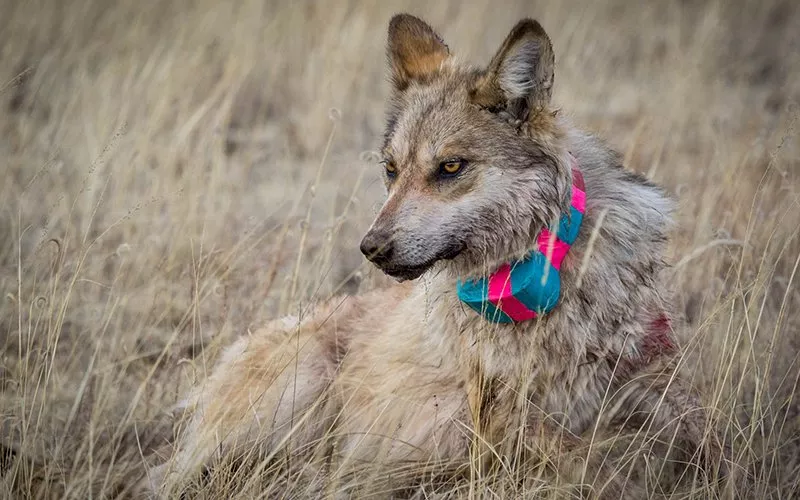
PHOENIX – A U.S.-Mexico partnership could aid the long-term recovery of the endangered Mexican wolf, a subspecies of the North American gray wolf, and its eventual removal from the U.S. endangered species list, according to a new study.
In a peer-reviewed study published Jan. 21, researchers from several universities in Mexico, the University of Arizona and wildlife officials found that a suitable habitat exists in the southwestern U.S. and the Occidental and Oriental ranges of the Sierra Madre in northern Mexico where Mexican wolves can be restored to their “historical ecological role” in the wild.
The Mexican wolf population – formerly known as the Mexican gray wolf and found in parts of Arizona, New Mexico and northern Mexico – was nearly exterminated from the wild in the early 1970s, and Arizona wildlife officials agree that recovery of this “keystone species” requires coordination.
In 1998, the first four Mexican wolves were reintroduced into the Arizona wild through a cooperative effort with the U.S. Fish and Wildlife Service, the New Mexico Game and Fish Department and the U.S. Forest Service. Today, Arizona has nearly 20 times that number of wolves living in the wild, and dozens more roam across the state line in New Mexico.
“Let’s look at the overall program, not just the U.S. program, not just the Arizona program,” said Jim deVos, assistant director for wildlife management at the Arizona Game & Fish Department. “Let’s look at the true recovery of the Mexican wolf and reestablish it as a component of biodiversity.”
To determine suitable habitat, the study combined data from multiple algorithms to calculate potential risk-factors, prey populations and environmental variables, which the scientists and wildlife officials called an improvement on simpler earlier attempts.