Thursday, February 11, 2021
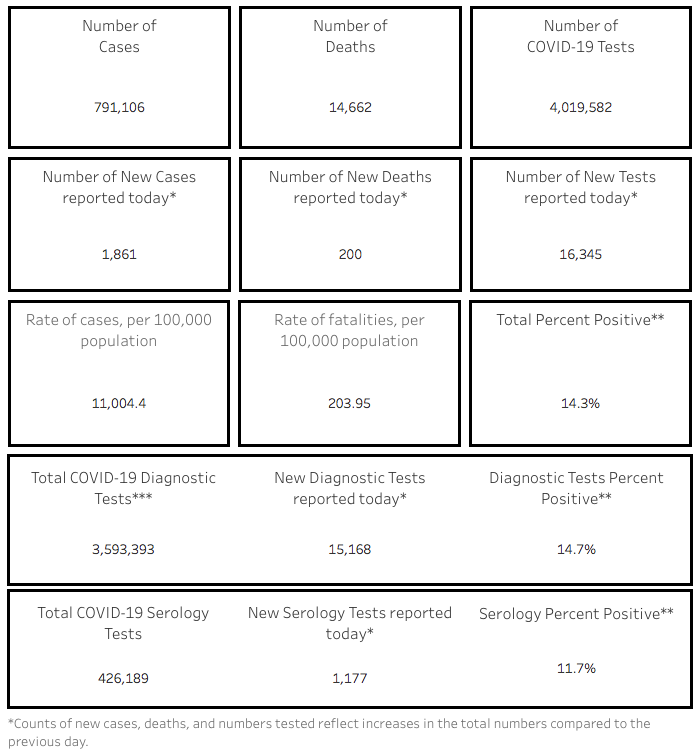
With 1,861 new cases reported today, the total number of Arizona’s confirmed novel coronavirus cases topped 791,000 as of Thursday, Feb. 11, according to the Arizona Department of Health Services.

Pima County, which reported 685 new cases today, has seen 105,909 of the state’s 791,106 confirmed cases.
With 200 new deaths reported today, a total number of 14,662 Arizonans have died after contracting COVID-19. In Pima County, the death toll topped 2,000 with 42 newly reported deaths bringing Pima County’s total number of deaths to 2,023, according to the Feb. 10 report.
The number of hospitalized COVID cases statewide has declined in recent weeks, with 2,507 coronavirus patients in the hospital as of Feb. 10. Thats fewer than half the number who were hospitalized at the peak of the winter wave, which reached 5,082 on Jan. 11. The summer peak was 3,517, which was set on July 13, 2020. The subsequent lowest number of hospitalized COVID patients was 468, set on Sept. 27, 2020.
A total of 1,535 people visited emergency rooms on Feb. 10 with COVID symptoms, down from the record high of 2,341 set on Tuesday, Dec. 29, 2020. That number had peaked during the summer wave at 2,008 on July 7, 2020; it hit a subsequent low of 653 on Sept. 28, 2020.
A total of 719 COVID-19 patients were in intensive care unit beds on Feb. 10, down from a peak of 1,183 set on Jan. 11. The summer’s record number of patients in ICU beds was 970, set on July 13, 2020. The subsequent low was 114 on Sept. 22, 2020.
How to get a vaccine
Currently, Pima County is providing vaccination shots to people 70 and older as well as educators, first responders and healthcare workers. Those who currently qualify in Pima County’s 1B priority group of eligible vaccine recipients can register for a vaccine at www.pima.gov/covid19vaccineregistration or by calling 520-222-0119.
State planning to open vaccine distribution site in Pima County but no word on whether more doses will be coming here
Pima County is getting a state-run vaccination site at the University of Arizona that will begin appointments on Feb. 18.
The new site will follow the state’s current vaccine eligibility, which includes those 65 and older, educators, childcare workers and protective service workers, according to Arizona Department of Health Services Director Dr. Cara Christ.
As the state-run POD, or point of distribution, registrations will go through ADHS’s website.
Appointments will begin on Feb. 18, and registration will open at 9 a.m. on Feb 16. Online registration will be available at podvaccine.azdhs.gov, and those who need assistance can call 1-844-542-8201.
The university says it’s delivered more than 12,000 COVID-19 vaccines at a rate of 1,000 shots per day to the educators it currently serves. According to the governor’s office, the site could reach 6,000 people a day when operated at full capacity.
The site has a drive-through location on the University of Arizona Mall and a walk-up site at the Ina E. Gittings Building.
The university will expand its current hours of operation as a POD that currently serves educators and childcare workers. It will transition to a state site and eventually operate 24/7 as Arizona receives more vaccine doses.
UA President Robert Robbins said the site will eventually move from its current six hours a day of operation to two eight-hour shifts.
According to Christ, the university will start with a “soft launch” with expanded hours at first and will become a fully operational state-run POD by Feb. 22.
However, Christ said the vaccines supplying the state-run site will be taken out of the county’s already limited allocation. This week, Pima County’s vaccine allocation was decreased by 39%.
The state submitted a federal resource request for 300,000 doses followed by an additional 300,000 vaccines a week in January, but the request was denied. Christ said the state was asked over the weekend to re-submit the request and is awaiting an answer.
“We continue to monitor our weekly allocations and we give that out on a pro-rata basis of the population of the phase that each county has. We believe that we are going to stay relatively consistent over the next couple of weeks with the amount of vaccine that we get,” Christ said. “But we always think that it's better to have the resources established. So make sure that they've got staffing, funding, that management systems are put into place so that when we do get an increase in vaccine, those sites are ready to go to full capacity.”
Robbins said the university has asked the state for an incremental increase in vaccine supply, and he anticipates up to a 25% increase in the county’s allocation as production from Moderna and Pfizer ramps up.
“We don't have a demand or throughput problem, we've got a supply problem. We're targeting between 6,000 to 8,000 doses a day. If we ran it seven days a week, we're talking 50,000 doses a week, just at our POD,” Robbins said. “So the state has got to dramatically increase if we're going to build this out and take advantage of running a 24/7 operation. They've got to be able to supply us the vaccine.”
But taking vaccine doses away from the county to support the POD may hinder efforts at other county-run vaccination sites.
“We need more capacity to distribute vaccines, but we need more vaccines. For them to take out of the allocation for Pima County potentially means that some of our other PODs would have shorter hours, less accessibility, might have to temporarily close until we get more vaccines,” said Pima County Supervisor Adelita Grijalva. “While we appreciate the state opening up a state POD, we actually need more vaccines. That is the biggest problem that we have.”


WASHINGTON – As the Senate began debate Tuesday on a historic second impeachment of former President Donald Trump, a recent poll shows that more than half of Arizona Republicans believe Trump was the rightful winner of the November election
The poll, taken by OH Predictive Insights shortly before President Joe Biden’s Jan. 20 inauguration, found that 60% of all Arizona voters are confident Biden won, but 20% of independents and 54% of registered Republicans believe Trump is “the rightful winner” of the election.
“Honestly, I was quite surprised, like eyes-fell-out-of-my-head, to see it in Arizona, where I think we have a pretty advanced election system compared to most other states,” said Mike Noble, chief of research and a managing partner at OH Predictive Insights.
But 26% of registered Arizona voters believe Trump should still be president and another 14% were not sure who won, according to the OH Predictive Insights poll. The online survey of 1,022 registered Arizona voters was taken from Jan. 11-18 and has a margin of error of plus or minus 3%.
The results were sharply defined by party affiliation. While 93% of Democrats believe Biden won, the number dropped to 63% among independents and fell to just 27% for Republicans, with the rest either unsure or certain that Trump won. A full 54% of GOP voters declared Trump the rightful winner.
Wednesday, February 10, 2021
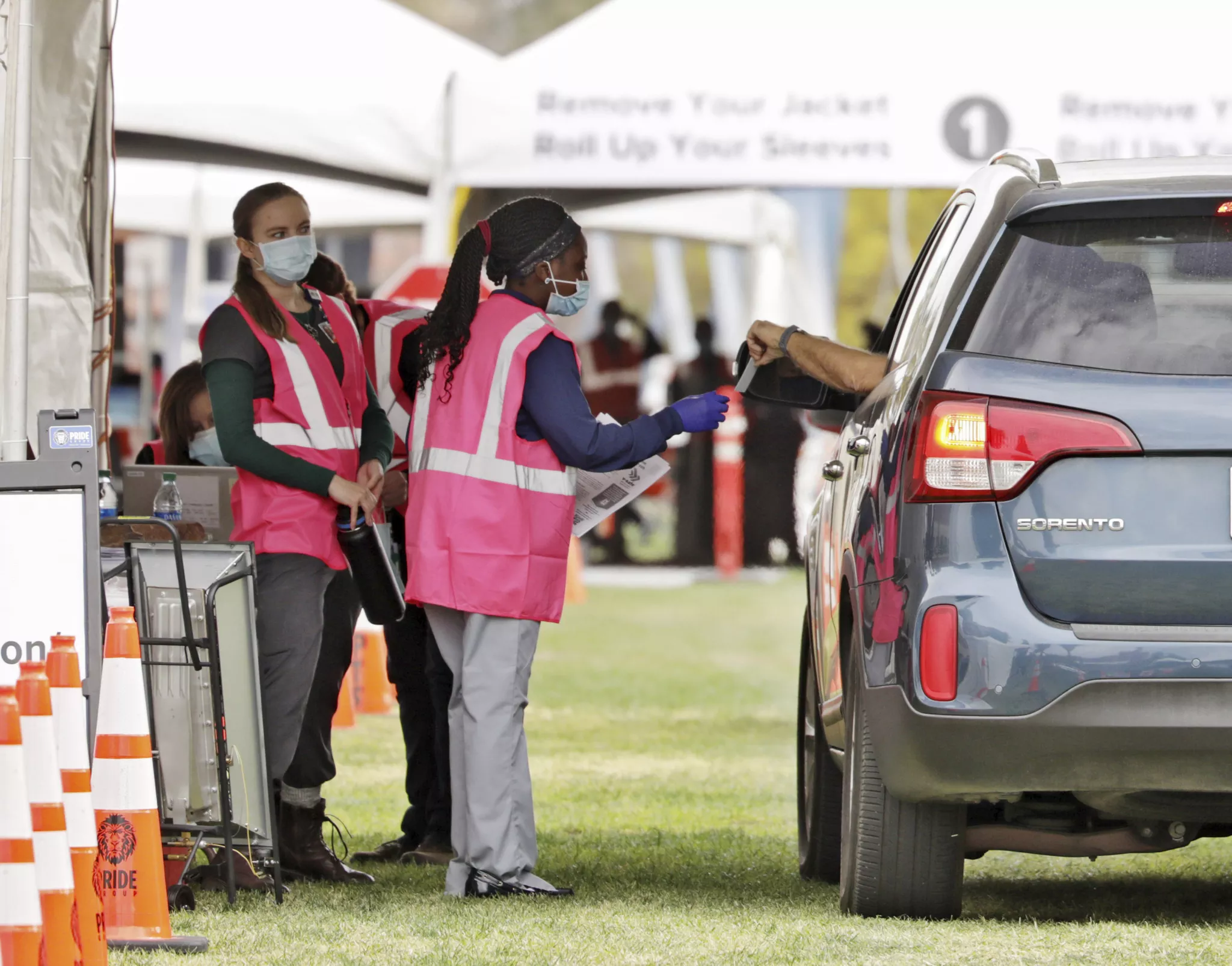
Pima County is getting a state-run vaccination site at the University of Arizona that will begin appointments on Feb. 18.
The new site will follow the state’s current vaccine eligibility, which includes those 65 and older, educators, childcare workers and protective service workers, according to Arizona Department of Health Services Director Dr. Cara Christ.
As the state-run POD, or point of distribution, registrations will go through ADHS’s website.
Appointments will begin on Feb. 18, and registration will open at 9 a.m. on Feb 16. Online registration will be available at podvaccine.azdhs.gov, and those who need assistance can call 1-844-542-8201.
The university says it’s delivered more than 12,000 COVID-19 vaccines at a rate of 1,000 shots per day to the educators it currently serves. According to the governor’s office, the site could reach 6,000 people a day when operated at full capacity.
The site has a drive-through location on the University of Arizona Mall and a walk-up site at the Ina E. Gittings Building.
The university will expand its current hours of operation as a POD that currently serves educators and childcare workers. It will transition to a state site and eventually operate 24/7 as Arizona receives more vaccine doses.
UA President Robert Robbins said the site will eventually move from its current six hours a day of operation to two eight-hour shifts.
According to Christ, the university will start with a “soft launch” with expanded hours at first and will become a fully operational state-run POD by Feb. 22.
State-run site will be supplied through Pima County’s existing allocation
However, Christ said the vaccines supplying the state-run site will be taken out of the county’s already limited allocation. This week, Pima County’s vaccine allocation was decreased by 39%.
The state submitted a federal resource request for 300,000 doses followed by an additional 300,000 vaccines a week in January, but the request was denied. Christ said the state was asked over the weekend to re-submit the request and is awaiting an answer.
“We continue to monitor our weekly allocations and we give that out on a pro-rata basis of the population of the phase that each county has. We believe that we are going to stay relatively consistent over the next couple of weeks with the amount of vaccine that we get,” Christ said. “But we always think that it's better to have the resources established. So make sure that they've got staffing, funding, that management systems are put into place so that when we do get an increase in vaccine, those sites are ready to go to full capacity.”
Robbins said the university has asked the state for an incremental increase in vaccine supply, and he anticipates up to a 25% increase in the county’s allocation as production from Moderna and Pfizer ramps up.
“We don't have a demand or throughput problem, we've got a supply problem. We're targeting between 6,000 to 8,000 doses a day. If we ran it seven days a week, we're talking 50,000 doses a week, just at our POD,” Robbins said. “So the state has got to dramatically increase if we're going to build this out and take advantage of running a 24/7 operation. They've got to be able to supply us the vaccine.”
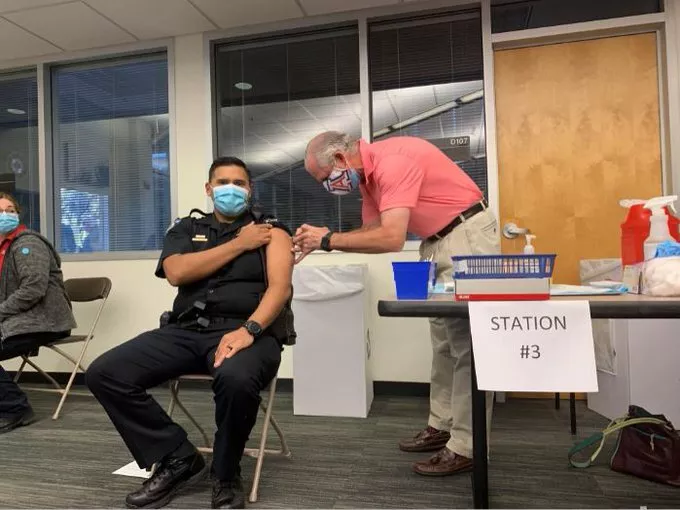
But taking vaccine doses away from the county to support the POD may hinder efforts at other county-run vaccination sites.
“We need more capacity to distribute vaccines, but we need more vaccines. For them to take out of the allocation for Pima County potentially means that some of our other PODs would have shorter hours, less accessibility, might have to temporarily close until we get more vaccines,” said Pima County Supervisor Adelita Grijalva. “While we appreciate the state opening up a state POD, we actually need more vaccines. That is the biggest problem that we have.”
Equity issues at state-run PODs
The existing state-run locations in Maricopa county—one at the State Farm Stadium in Glendale that opened on Jan. 11 and a second at the Phoenix Municipal Stadium that opened Feb. 1—have distributed 204,061 vaccine doses as of Wednesday.
Data released by ADHS shows 62% percent of vaccines were given to white residents, while 4% were given to Hispanic or Latino residents. Maricopa County’s population is 31% Hispanic, while Pima County’s is 38% Hispanic, according to the latest census data. However, 29% of vaccine recipients’ ethnicities were marked as “unknown” at the state-run PODs.

It's a sad fact of life: Many scammers prey on lonely people, so the FBI's Phoenix division has issued a bulletin warning about "romance scams" ahead of this Valentine's Day on Sunday, Feb. 14.
Also called "confidence fraud," these scams involve a criminal adopting a fake identity to gain someone's trust, then using their phony relationship to steal from the victim. According to the FBI’s Internet Crime Complaint Center, 560 Arizonans reported collected losses of more than $12 million in connection with confidence fraud/romance scams in 2020.
These scam artists are present on almost every dating and social media site, and often begin interactions attempting to earn trust, but often never actually meet in person. According to the FBI, these scam artists often say they are in the building or construction industry and are engaged in projects outside the U.S. That makes it easier to avoid meeting in person—and more plausible when they ask for money for a medical emergency or unexpected legal fee.
The following tips may be helpful to consider if you develop a romantic relationship with someone you meet online:
- • Research the person’s photo and profile using online searches to see if the material has been used elsewhere.
- • Never provide your financial information, loan money, nor allow your bank accounts to be used for transfers of funds.
- • Never send money to anyone you don’t personally know.
- • If you are traveling to a foreign country to meet someone, check the State Department’s Travel Advisories beforehand (travel.state.gov), provide your itinerary to family and friends, and do not travel alone if possible.
- • Beware if the individual seems too perfect or quickly asks you to leave a dating service or Facebook to go “offline.”
- • Beware if the individual attempts to isolate you from friends and family or requests inappropriate photos or financial information that could later be used to extort you.
- • Beware if the individual promises to meet in person but then always comes up with an excuse why they can’t.
- • If you haven’t met the person after a few months - for any reason - it's wise to be suspicious.
- • If you plan to meet someone in person you have met online, meet in a public place and let someone know where you will be and what time you should return home.
For more information on romance scams, visit here.

Tucson Unified School District Superintendent Gabriel Trujillo told the TUSD Governing Board Tuesday night that he hoped to return to some form of in-class instruction on March 24.
Under Trujillo’s plan, preschool and elementary parents can choose between full-time remote or on-campus learning.
High school and middle school families can opt for either remote learning or a hybrid model with four half days of in-person learning with remote days on Wednesdays.
Parents will be able to select their choice through ParentVue, the school’s online parent portal.
Under a previous board vote, Trujillo was given the authority to decide when TUSD would return to in-class instruction. The district has previously set opening dates only to delay them and has been in remote-only instruction since March of last year.
Trujillo told board members he would flesh out his plan for instruction and COVID mitigation once parents select their educational preferences, which would provide a better sense of how many students would be back in the traditional classroom and how many would prefer to continue with remote learning.
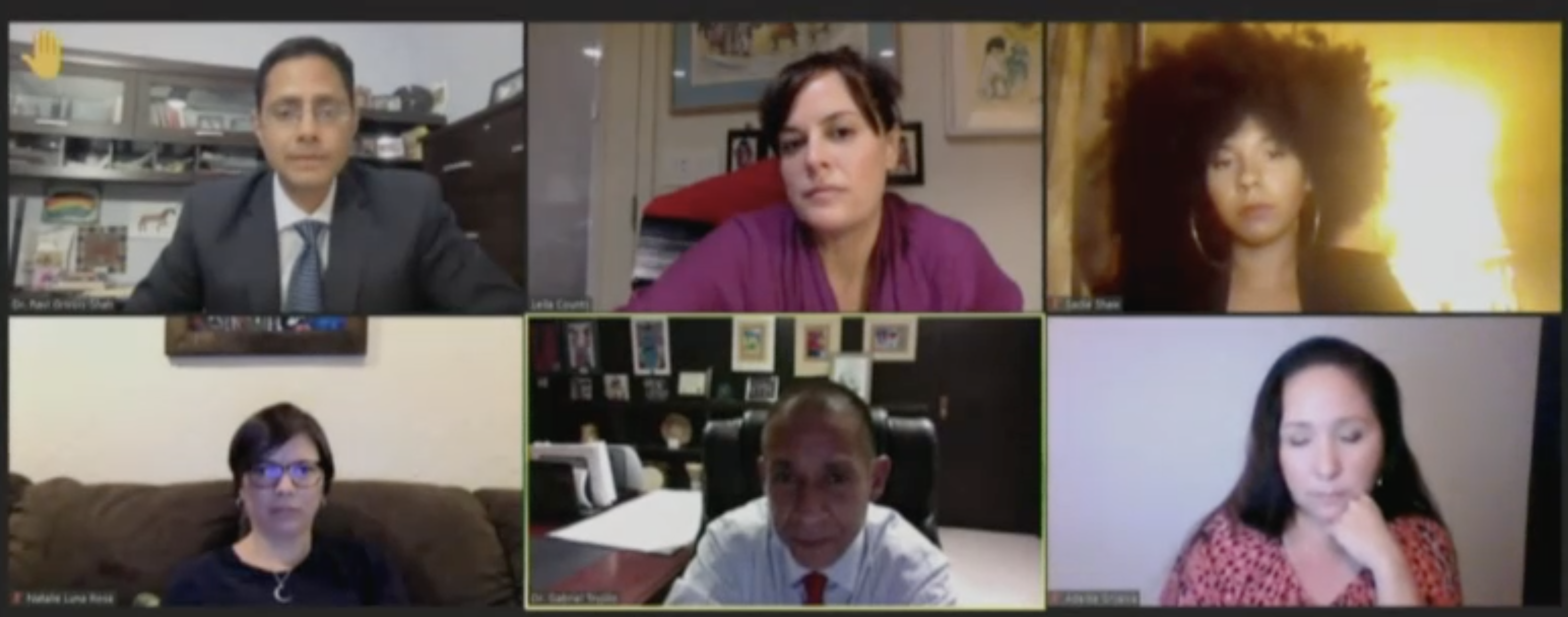
Board Member Dr. Ravi Grivois-Shah is supportive of a return to in-person school sooner rather than later and even suggested an earlier start date of March 1 while staggering grade levels returning with the youngest grades going first.
“Every single conversation I have with parents, they tell me that their kid is struggling, and especially the youngest kids. You know, 100% of the parents I speak to tell me about their struggles with remote learning,” Grivois-Shah said.
Board Member Natalie Luna Rose also supported a staggered return to the classroom.
“It's going to be a year that we haven't had children in the classroom, and I'm just afraid the longer we go on, the harder it will be to perhaps maybe bring back some of the families that we have lost,” she said. “Having that option of being remote, I know that's asking a lot of our teachers, but maybe that would also help mitigate our fears.”
Expressing concerns that not enough of the TUSD staff has received a COVID-19 vaccine yet, Board Member Adelita Grijalva was more hesitant about a March 24 return date.
“Our children can still get COVID, they can still give it to each other and our kids won't be vaccinated,” Grijalva said. “So I want to make sure that we're also cognizant of the fact that we have some parents that are not going to want their children to return for a number of reasons.”
Board President Leila Counts supported the plan proposed by Trujillo as is.
“We need our schools open, and we need to do it in the safest way possible, and I think the proposal that administration has given us tonight allows us to do that with those target dates,” she said. “Everybody has the opportunity to get a vaccine, and we need to open up our schools again. I appreciate the work that's gone into this plan. I think it's doable, it's safe, and it's what's best for our kids. So I support it.”
Board Member Sadie Shaw expressed hesitation with a return to school and said vaccinating TUSD’s staff is not enough to mitigate against the spread of COVID-19.
“Even if we're able to vaccinate all staff, the students won't be vaccinated, some other parents won't be vaccinated and a large portion of our Tucson community will not be vaccinated,” Shaw said. “As the largest school district, I think we really have to take the most care and how we approach the return.”TUSD parent survey results
TUSD sent a survey to parents of students in preschool through third grade and grades nine through 12 on Jan. 26.
Parents were asked to rank their preference on a return to school model out of a menu of choices, including all remote learning, all in-person learning and some days with hybrid learning.
The University of Arizona will serve as the state’s third 24/7 vaccination site beginning Feb. 18, Gov. Doug Ducey and the Arizona Department of Health Services announced Wednesday.
The university will expand its current hours of operation as a POD, or point of distribution, that currently serves educators and childcare workers. It will transition to a state site that will eventually operate 24/7 as Arizona receives more vaccine doses, according to a press release from the governor’s office.
Appointments will begin on Feb. 18, and registration will open at 9 a.m. on Feb 16. Online registration will be available at podvaccine.azdhs.gov, and those who need assistance can call 1-844-542-8201.
The governor’s office said the site can administer up to 6,000 vaccines a day when it runs at full capacity.
However, ADHS Director Cara Christ said in a letter to County Administrator Chuck Huckelberry on Jan. 29 that the vaccines supplying the state-run site would be taken out of the county’s existing allocation.
“Our commitment is to accelerate immunization. If we can get a 24/7, or even 18 hours by seven (days) POD, that is a high-efficiency, high-effective POD, everyone in the county, and probably first and foremost the public health department, would be incredibly supportive of that,” Pima County Health Director Dr. Theresa Cullen said last week. “However, if the only way that is done is to take vaccine from the existing PODs, we have a hesitation.”
The state currently has two 24-hour sites in Maricopa County, one at the State Farm Stadium in Glendale that opened on Jan. 11 and a second at the Phoenix Municipal Stadium that opened Feb. 1. As of Wednesday, the two sites have administered 204,061 vaccine doses.
However, it’s not clear if Arizona will have enough vaccine doses to continue supplying the sites. Ducey submitted a federal resource request for 300,000 doses followed by an additional 300,000 vaccines a week, but the request was denied.
Furthermore, Pima County’s vaccine allocation was decreased by 39% this week.
“The demand for vaccine doses is high, and Arizonans have made it clear they want it. We are working hard to secure more doses from the federal government and partner with private and public organizations to get the vaccine out and protect Arizonans. My thanks to President Bobby Robbins and everyone involved for their work to partner on this vaccination site,” Ducey said in the press release.
As of Monday, the university POD delivered 9,866 COVID-19 vaccines at a rate of 800 shots per day to the educators it currently serves.
“Our POD has the capacity to deliver more vaccinations, and we look forward to working together to further meet the needs of Pima County and Arizonans,” UA President Robert C. Robbins said in the release. “I am incredibly proud of our entire team of professionals and volunteers who have partnered closely with Pima County, established the university POD, and operated it so well.”
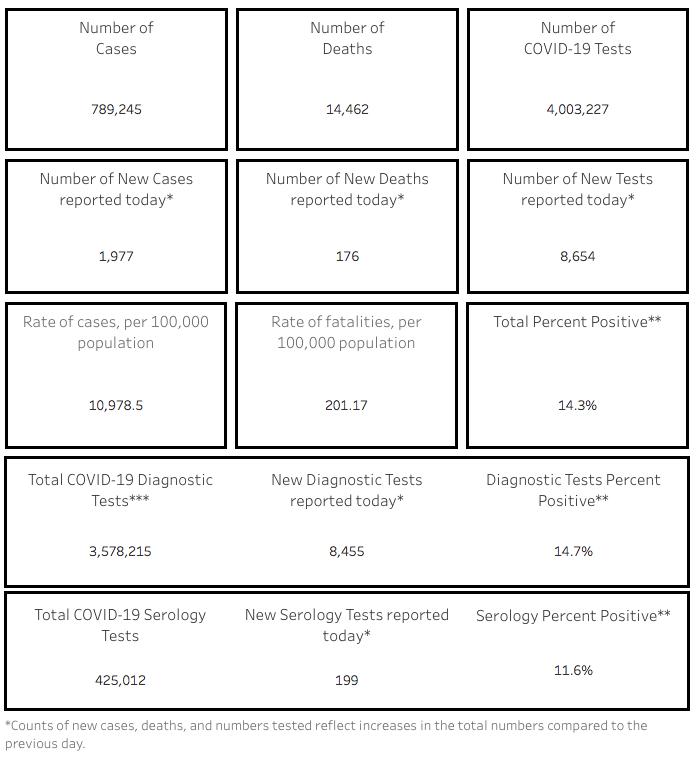
With 1,977 new cases reported today, the total number of Arizona’s confirmed novel coronavirus cases topped 789,000 as of Wednesday, Feb. 10, according to the Arizona Department of Health Services.

Pima County, which reported 685 new cases today, has seen 105,829 of the state’s 789,245 confirmed cases.
With 176 new deaths reported today, a total number of 14,462 Arizonans have died after contracting COVID-19, including 1,981 deaths in Pima County, according to the Feb. 10 report.
The number of hospitalized COVID cases statewide has declined in recent weeks, with 2,589 coronavirus patients in the hospital as of Feb. 9. That number peaked at 5,082 on Jan. 11. The summer peak was 3,517, which was set on July 13, 2020. The subsequent lowest number of hospitalized COVID patients was 468, set on Sept. 27, 2020.
A total of 1,489 people visited emergency rooms on Feb. 9 with COVID symptoms, down from the record high of 2,341 set on Tuesday, Dec. 29, 2020. That number had peaked during the summer wave at 2,008 on July 7, 2020; it hit a subsequent low of 653 on Sept. 28, 2020.
A total of 763 COVID-19 patients were in intensive care unit beds on Feb. 9, down from a peak of 1,183 set on Jan. 11. The summer’s record number of patients in ICU beds was 970, set on July 13, 2020. The subsequent low was 114 on Sept. 22, 2020.
How to get a vaccine
Currently, Pima County is providing vaccination shots to people 70 and older as well as educators, first responders and healthcare workers. Those who currently qualify in Pima County’s 1B priority group of eligible vaccine recipients can register for a vaccine at www.pima.gov/covid19vaccineregistration or by calling 520-222-0119.
TUSD sets March 22 as return to campus
Tucson Unified School District Superintendent Gabriel Trujillo told the TUSD Governing Board tonight that he hoped to return to some form of in-class instruction on March 22.
Under a previous board vote, Trujillo was given the authority to decide when TUSD would return to in-class instruction. The district has previously set opening dates only to delay them and has been in remote-only instruction since March of last year.
Trujillo told board members he would be able to flesh out his plan for instruction and COVID mitigation once parents at different schools filled out their educational preferences and he had a better sense of how many students would be back in the traditional classroom and how many would prefer to continue with remote learning for the remainder of the school year.

WASHINGTON – Tobacco use is the leading cause of preventable death in the U.S. but two recent reports say Arizona needs to do more to help people break free from using tobacco products.
“We certainly need a lot more resources here in Arizona to help people quit smoking,” said JoAnna Strother, senior director of advocacy for the American Lung Association, one of two organizations, along with Campaign for Tobacco-Free Kids, to grade the state’s actions.
The American Lung Association’s annual “State of Tobacco Control” report for 2021 gave Arizona a failing grade in three of five policies it looks at – the state’s tobacco taxes, its limits on flavored tobacco products and its funding for tobacco prevention and cessation programs.
The state got a D for access to tobacco cessation programs and an A for its restrictions on smoking in public spaces.
Arizona was not alone in its troubling grades. A third or more of states got an F for their tobacco taxes, access to prevention programs and limits on flavored tobacco products, while Arizona was one of 23 states with an A for public-smoking restrictions.
The state did relatively well in the Campaign for Tobacco-Free Kids report, which ranked Arizona 15th overall for the amount of money it is spending from the 1998 tobacco settlement on anti-tobacco programs.