
Tuesday, March 30, 2021

LOS ANGELES – Face masks, plastic bottles and bags – and feces, both dog and human – are some of the unsightly waste you could encounter these days while hiking in the red rocks of Sedona. Discarded masks also litter the beaches of Southern California, which already were battling a growing scourge of plastic and microplastics in the ocean.
Environmentalists fear the situation will get worse as the nation emerges from a year of pandemic restrictions.
With Americans unable to pursue many of the activities they enjoyed before COVID-19 emerged last year, scenic spots across the Southwest have offered a respite and a safer form of entertainment courtesy of the great outdoors. Many natural spots in Arizona were considered essential services during the state’s stay-at-home order, leading to packed hiking trails and facilities. In California, many beaches were closed during the peak summer tourism season but have since reopened, leading to crowds.
The downside of that influx of visitors is increased litter on beaches from San Diego to Malibu, and in favorite Arizona spots like Sedona and Oak Creek Canyon.
Keep Sedona Beautiful Inc., which started in 1972 to protect and sustain the area’s unique environment, has done its best to curb litter with a combination of education, advocacy and litter lifts.
Carla Williams, the nonprofit’s executive vice president, has noticed an uptick in people traveling to Sedona and has seen a major increase in day-trippers and overall travel to red rock country during the pandemic.

With 586 new cases reported today, the total number of Arizona’s confirmed novel coronavirus cases topped 841,000 as of Tuesday, March 30, according to the Arizona Department of Health Services.

Pima County, which reported 85 new cases today, has seen 112,562 of the state’s 841,078 confirmed cases.
With 23 new deaths reported this morning, a total of 16,941 Arizonans have died after contracting COVID-19, including 2,348 deaths in Pima County, according to the March 30 report.
A total of 549 coronavirus patients were in the hospital as of March 29. That’s roughly 11% of the number hospitalized at the peak of the winter surge, which reached 5,082 on Jan. 11. The summer peak was 3,517, which was set on July 13, 2020. The subsequent lowest number of hospitalized COVID patients was 468, set on Sept. 27, 2020.
A total of XXX people visited emergency rooms with COVID-like symptoms on March 29. That number represents XX% of the record high of 2,341 set on Tuesday, Dec. 29, 2020. That number had peaked during the summer wave at 2,008 on July 7, 2020; it hit a subsequent low of 653 on Sept. 28, 2020.
A total of 864 COVID-19 patients were in intensive care unit beds on March 29, which roughly 73% of the record 1,183 ICU patients set on Jan. 11. The summer’s record number of patients in ICU beds was 970, set on July 13, 2020. The subsequent low was 114 on Sept. 22, 2020.
UA moving to larger classes
The University of Arizona will offer larger in-person classes, but with “COVID exhaustion” and multiple variants of COVID-19 on campus, President Robert C. Robbins urged continued compliance with mitigation strategies.
University coronavirus policies will not change despite Gov. Doug Ducey’s lifting of COVID-19 related restrictions last week.
“We are in the fourth quarter of this term, and we need to keep doing what we've been doing that's been so successful and gotten us to this point,” said Robbins in the press briefing Monday morning. “The recent executive order from Gov. Ducey regarding COVID-19 restrictions does not affect university policies, nor does it bar enforcement of these policies.”
He said university face-covering and all other mitigation strategies will remain in place.
Dr. Michael Worobey, head of the university's Department of Ecology and Evolutionary Biology, found a total of 12 cases of the UK variant (B.1.1.7) and two cases of the California variant (B.1.429) on campus within the past two weeks as part of the research using COVID-19 genomic sequencing to track COVID-19 variants.
These variants, which are highly transmissible and have higher mortality rates, may be contagious for a longer period of time, said Worobey.
“When we look at the literature, we can see that the time when people are likely infectious is probably carried over a little bit later with this variant,” said Worobey. “So you've just got more virus that you're putting out into the world, but it's also a combination of that high viral load over a longer period of time, and that really indicates that a slightly longer isolation or quarantine time is really a smart move. We're dealing with a different beast here and we need to act accordingly.”
In response to these new variants on campus. Robbins announced the university would extend the quarantine period from 10 days to 14 days.
“This is really a wake-up call that we're not done yet,” said Worobey. “We still need to, not just maintain, but to some degree redouble our efforts in terms of mitigation measures, wearing those masks, keeping social distance, and everyone getting, as soon as they can, vaccines through our tremendous POD that we have here on campus.” More details here.
Conditions continue to improve but health officials urge caution
Arizona has now seen 10 straight weeks of declining COVID cases and is moving from a period of substantial risk to a period of moderate risk, according to Dr. Joe Gerald, an epidemiologist and professor in the UA Zuckerman College of Public Health.
Gerald noted that for the week ending March 21, 3,993 people tested positive for COVID, a drop of 12% over the previous week’s tally of 4,445.
For Pima County, 426 people tested positive for COVID in the week ending March 21, a drop of 16% over the previous week’s 548 cases. New cases are being diagnosed at a rate of 44 per 100K residents a week, which is lower than the 46% per 100K that Pima County hit during the lowest week during the fall relief between the summer and winter waves.
But Gerald warned that “it is becoming more likely that improvements will stall or reverse owing to more transmissible variants and/or further normalization of business and social activities.”
Gerald said it was reasonable to resume low-risk activities but encouraged residents and businesses to continue to follow public health recommendations to wear masks, physically distance when possible, wash hands and, if medically compromised, stay home as much as possible.
16+ now eligible at state vaccine centers; Pima County expands eligibility to anyone with a chronic medical condition
All adults older than 16 are now eligible for appointments at state vaccination PODs.
Previously, vaccines were limited to people 55 and older as well as frontline workers, educators, first responders and healthcare workers.
New appointments for the UA POD will open up at 11 a.m. on Fridays, with the Arizona Department of Health Services announcing the number of appointments opening up on Fridays via a Wednesday Twitter post. As of last week, Pima County expanded COVID-19 vaccine eligibility to anyone 55 and older and anyone older than 16 with at-risk circumstances.
Anyone living with a high-risk medical condition or disability, experiencing homelessness or living in a group setting, or receiving in-home or long-term care can get the vaccine. Some of the high-risk medical conditions include cancer, chronic kidney disease, heart conditions or compromised immunity.
Those in high-risk jobs will also be eligible.
Although the state has expanded eligibility to anyone over 16, Pima County's guidelines had to be limited, said Dr. Theresa Cullen, Health Department director.
“Our decisions are based on the current vaccination rates for 55 and up (which is at 42%), as well as our commitment to ensure ongoing access to vulnerable populations,” Cullen said last week. “We anticipate appointments will be filled quickly and as we move these groups, we look forward to being able to align with the state's recommendations within the next six weeks.”
You can register for your vaccine appointments at a state POD by visiting pod vaccine.azdhs.gov, and those who need assistance can call 1-844-542-8201.
Those who qualify in Pima County’s priority group of eligible vaccine recipients can register for a vaccine at www.pima.gov/covid19vaccineregistration or by calling 520-222-0119.
Many local pharmacies are now receiving vaccine doses. To find one near you, visit the ADHS website.
ADHS will now announce on Wednesdays via Twitter, @AZDHS, and Facebook the approximate number of first-dose appointments available. The Arizona Department of Health Services (ADHS) will release those new COVID-19 vaccination appointments every Friday.
Get tested: Pima County has free COVID testing
Pima County is continuing to offer a number of testing centers around town.
You’ll have a nasal swab test at the Kino Event Center (2805 E. Ajo Way) and the Udall Center (7200 E. Tanque Verde Road).
The center at the northside Ellie Towne Flowing Wells Community Center, 1660 W. Ruthrauff Road, involves a saliva test designed by ASU.
Schedule an appointment at these or other drive-thru or pop-up sites at pima.gov/covid19testing.
The University of Arizona’s antibody testing can determine if you have had COVID and now have antibodies. To sign up for testing, visit https://covid19antibodytesting.arizona.edu/home.
—with additional reporting from Austin Counts, Christina Duran, Jeff Gardner and Mike Truelsen
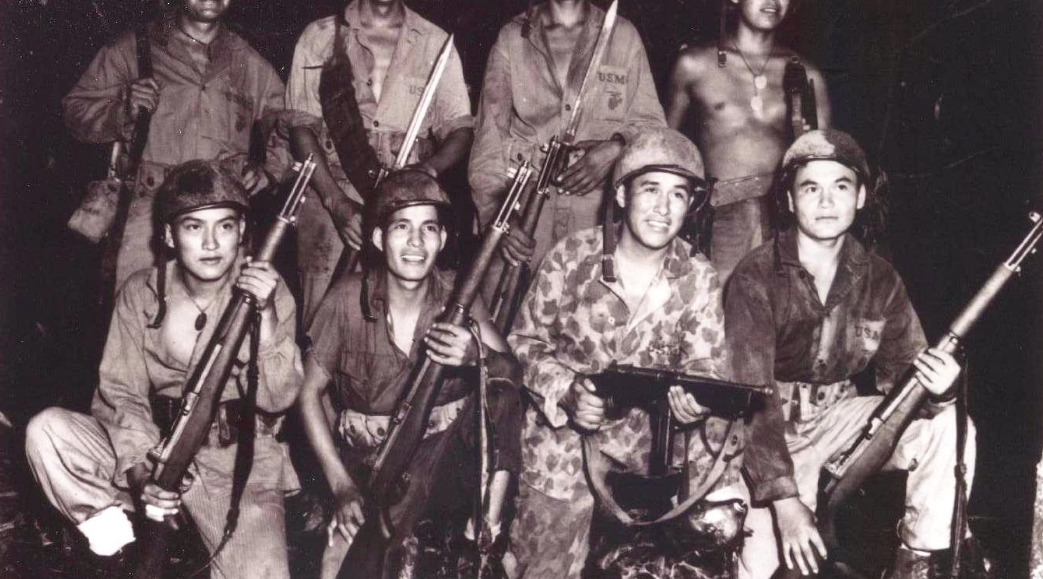
Aug. 14 is now National Navajo Code Talkers Day in Arizona after Gov. Doug Ducey signed legislation on Monday creating the holiday. The holiday honors the courage and critical role Native American Code Talkers played during WWII.
“The Navajo Code Talkers are American heroes,” Ducey said. “They assisted on every major operation involving the U.S. Marines in the Pacific theatre, using their native language to come up with an unbreakable code. More than 400 Code Talkers answered the call to serve our nation, and Arizona is grateful for their dedication to protecting our nation.”
Under Senate Bill 1802, if National Navajo Code Talkers Day falls on a day other than Sunday, the Sunday after Aug. 14 is to be observed as the holiday.
The Navajo code is famously known as the only oral military code that has never been broken. Throughout WWII, the US government recruited and enlisted more than 400 Navajo men to serve in standard communications units. The Navajo Code Talkers were particularly critical in the war's Pacific Theater with one Marine Major stating: "Were it not for the Navajos, the Marines would never have taken Iwo Jima."
Monday, March 29, 2021
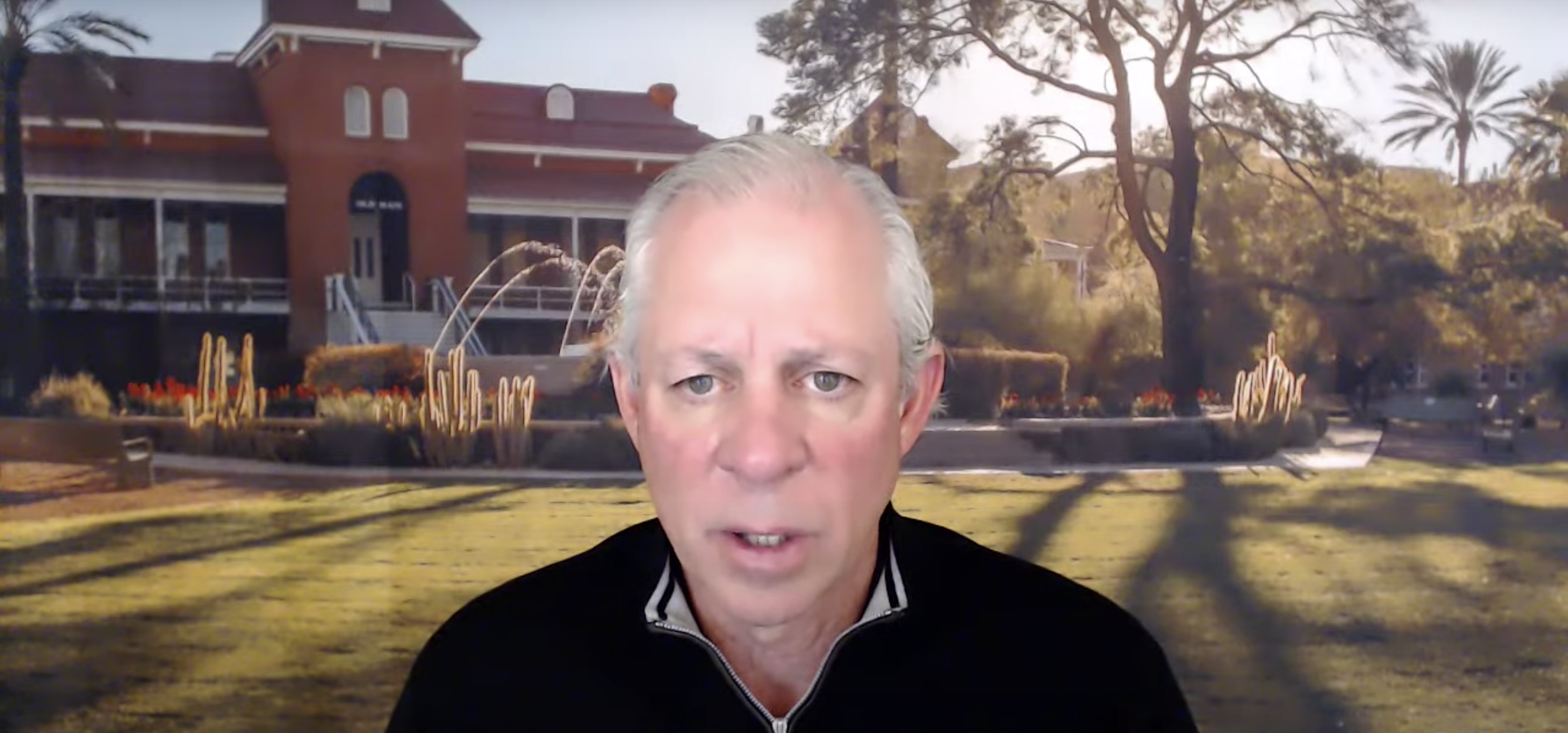
The University of Arizona will offer larger in-person classes on Monday, but with “COVID exhaustion” and multiple variants of COVID-19 on campus, President Robert C. Robbins urged continued compliance to mitigation strategies.
University coronavirus policies will not change despite Gov. Doug Ducey’s lifting of COVID-19 related restrictions last week.
“We are in the fourth quarter of this term, and we need to keep doing what we've been doing that's been so successful and gotten us to this point,” said Robbins in the press briefing Monday morning. “The recent executive order from Governor Ducey, regarding COVID-19 restrictions, does not affect university policies, nor does it bar enforcement of these policies.”
He said university face-covering and all other mitigation strategies will remain in place.
The university moves to Stage 3 on Monday, where in-person and flex in-person courses of up to 100 students may offer in-person instruction.
Dr. Michael Worobey, head of the university's Department of Ecology and Evolutionary Biology, found 12 cases of the UK variant (B.1.1.7) and two cases of the California variant (B.1.429) on campus within the past two weeks as part of the research using COVID-19 genomic sequencing to track COVID-19 variants.
These variants, which are highly transmissible and have higher mortality rates, may be contagious for a longer period of time, said Worobey.
“When we look at the literature, we can see that the time when people are likely infectious is probably carried over a little bit later with this variant,” said Worobey. “So you've just got more virus that you're putting out into the world, but it's also a combination of that high viral load over a longer period of time, and that really indicates that a slightly longer isolation or quarantine time is really a smart move. We're dealing with a different beast here and we need to act accordingly.”

FILM REVIEW: NOBODY
Now Playing at Roadhouse Cinemas and Harkins Tucson Spectrum 18
Bob Odenkirk has been one of my comic idols for the past 30 years. His impersonation of Charles Manson on The Ben Stiller Show had me hooked, and his run on Mr. Show with partner-in-crime David Cross solidified him as one of my heroes.
It was a great pleasure to see him pop up on Breaking Bad in a pure dramatic acting role as sleazy lawyer Saul Goodman, and later on the spinoff Better Call Saul as Jimmy McGill (Saul’s real name). The guy should have a shelf full of Emmys for his work on that show.
Nobody, an ultra-violent thriller from writer Derek Kolstad (creator of John Wick) and director Ilya Naishuller, takes Odenkirk in a direction nobody could’ve seen coming. In it, he plays Hutch Mansell, a mild-mannered husband and father who has his house invaded by a couple of nervous crooks. This event ignites an old, buried aspect of Mansell’s personality, an aspect that results in deserving people losing their teeth and getting their tracheas crushed.
Hutch has an assassin’s past and, like a deprived vampire smelling blood or a heroin addict near a pile of drugs, he can’t resist the chance to dive back in. This results in a lot of John Wick-like badassery in which Odenkirk shows he more than has the chops to throw down convincingly on screen. He trained hard for this movie, and it shows with every stunt he partakes in (it’s seemingly always him on screen). Kudos to the fight choreographers for this film, and kudos to Odenkirk who rises to the challenge in majestically bloody fashion.
The plot involves the Russian mob and gold bars, much like Wick, but this film has a very different, more grounded tone. Connie Nielsen is on hand as Hutch’s mysterious wife (she’s pretty darned good at patching up his wounds), and Christopher Lloyd has some of his most on-screen fun in years as Hutch’s also very mysterious dad.
Seeing Odenkirk breaking arms and performing emergency tracheotomies is just about the most bizarre theater-going experience I’ve had in the last decade. It’s also a total blast. I doubt this is the start of an action hero phase for Odenkirk, but who knows? Maybe he has himself a franchise now. I would certainly line up for Nobody: Chapter 2.
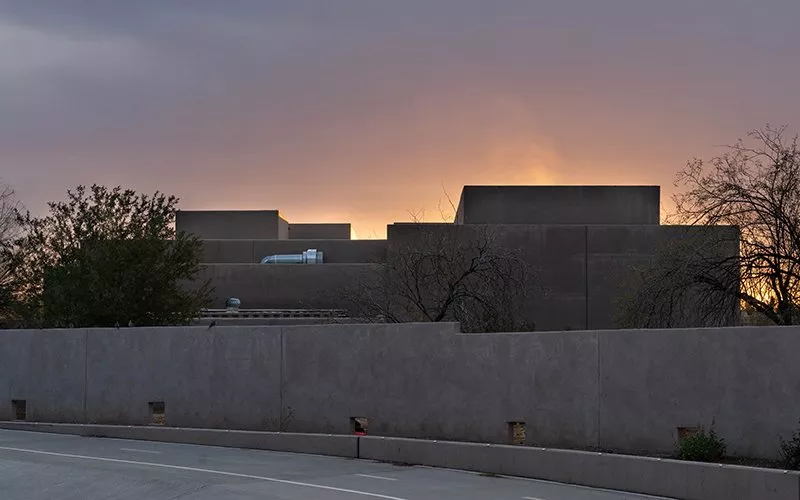
PHOENIX – Rows of cardboard boxes containing corpses line the walls of refrigerated storage containers, waiting for charred human remains to be cleared from the incineration chamber to make room for the next body.
The cremations continue through the night in a scene that has unfolded across America as COVID-19 deaths have risen to more than 540,000 over the past year.
In Arizona, where almost 17,000 have died in the pandemic, the smoke and the hum of crematoriums working overtime have left some neighbors desperate for relief from the odor and pollution.
Arizonans opt for cremation more frequently than the national average, with 67% choosing that option in 2020, according to a July 2020 report from the National Funeral Directors Association.
The national cremation rate reached 56% last year, an increase from 47.9% in 2015, the last reported year. The rise was fueled by the COVID-19 death toll and pandemic restrictions, the low cost of cremation services and the flexible timing for funeral arrangements with cremated ashes.
Some condo owners in east Scottsdale have taken notice of unexpected wafts of smoke and a lingering odor coming from the nearby Paradise Memorial Crematory near 93rd Street and Shea Boulevard.