

Friday, March 19, 2021
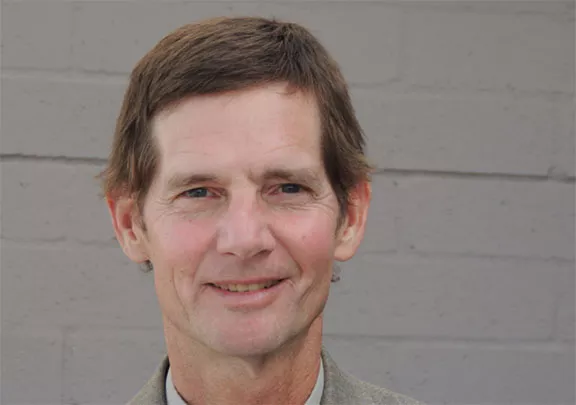
He said it would be better to give money to a local nonprofit or business.
"People are working hard to get
back on their feet as we hopefully see an off-ramp to COVID-19," Kozachik said. "If you have
extra cash to invest in a cause, please consider supporting our local
businesses, or find a non-profit that is aligned with your beliefs. People want
money out of politics. That's what my campaign will model once again."
Kozachik said he filed more than 750 signatures today to secure his spot on the ballot.
Two Democrats have launched campaigns to knock Kozachik out of the Ward 6 seat he's held since 2009, when he was first elected on the Republican ticket. After a number of political skirmishes with Republican state lawmakers, Kozachik switched to the Democratic Party before running for a second term.
Democrat Miranda Schubert, a UA academic advisor and radio host at community radio station KXCI, has said she will focus her campaign on housing affordability and police reform.
Democrat Andrés Portela, who formerly worked as a policy and community development director for Kozachik's colleague, Ward 1 Councilmember Lane Santa Cruz, has said he is running "as a progressive Democrat with an emphasis on H.O.M.E. Housing, Opportunity, Mobility Justice and Environmental Justice."
Signatures for a spot on the Aug. 3 primary ballot are due by April 5.
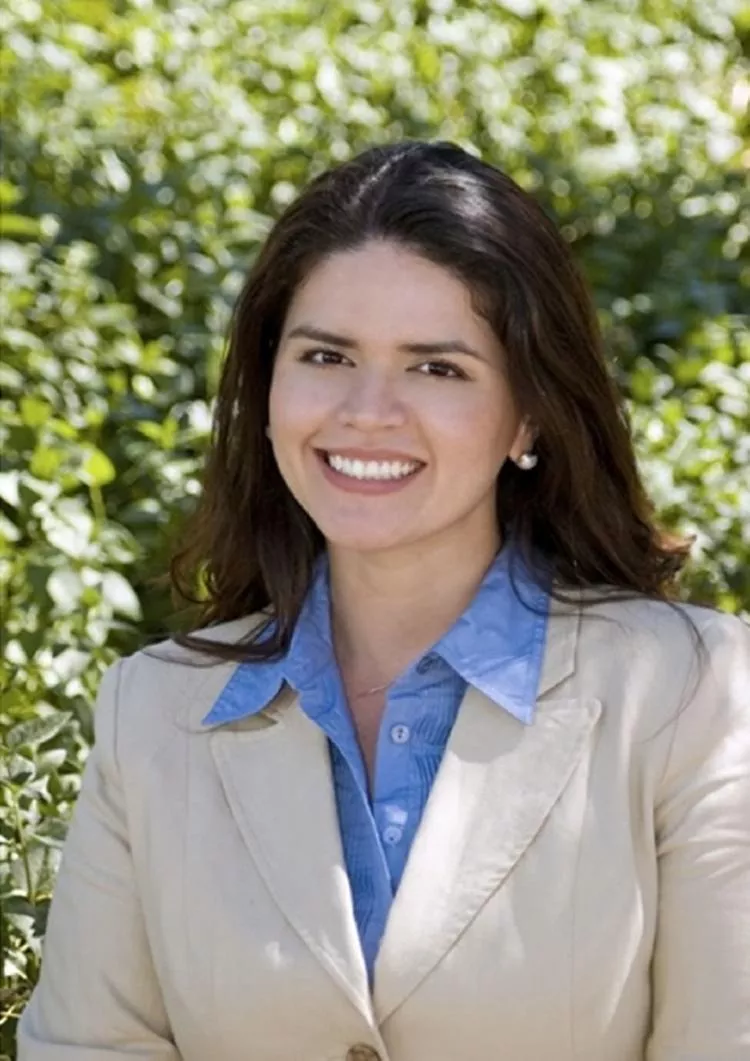
“Although it would be an honor to even be considered for such an important post, my heart is here in Tucson, and I love the job Tucsonans elected me to serving as Mayor of our beautiful city," Romero said in a prepared statement. "I have communicated with the Biden-Harris Administration my intent to remain in my current position as Mayor, as well as my eagerness to work in partnership with their administration on issues important to Tucsonans."
Romero added that she saw "an amazing opportunity to make progress on issues of local and national importance with a presidential administration that understands the importance of climate action, infrastructure investment, and job creation.”
Last week, Congressman Raul Grijalva lent legs to the rumor that Romero was being considered for the HUD position during an appearance on local broadcaster Bill Buckmaster's public-affairs program, saying she was under serious consideration for the gig.

As millions of Americans nationwide sat on their computers and telephones for days unable to score one precious .5 ml dose of COVID-19 vaccine, in Pima County, frustration grew and soared.
Then, near the end of February, Tucson’s local El Rio Health organization worked out a community plan with the Arizona Department of Health Services, which allotted them a supply of the Moderna vaccine. El Rio started offering vaccinations to their patients, and the supply chain started to move.
El Rio Health is deeply rooted in the Tucson community. It is a human organization, and its humanity is reflected in all it does. El Rio Health started in 1970 as a community health partnership between Tucson’s westside neighborhood groups and the University of Arizona College of Medicine. It has grown over the past 50 years into a well-equipped, well-staffed, well-integrated network of healthcare centers that serves more than 113,000 patients in Pima County. El Rio already had built a working appointment registration system that they’d been using to match patients with appointment times for years.
El Rio Health used empathy to make it easy for patients to get their vaccine. A brilliant strategy.

PHOENIX – A beautiful sunrise on an early Saturday morning greeted the trail runners as they meandered through Mesquite Canyon. The scenic view from the White Tank Mountain Recreational Park in Waddell was just one of the perks for the athletes who competed in the race.
Whether they were casual runners participating in the 8K or experienced ultra long-distance gurus, the desert’s dramatic table of wildflowers and imposing boulders made for the perfect setting on this March morning. It sure beat the monotony of training on a treadmill, alone, while staring out a window as COVID-19 kept most everyone inside.
Though the pandemic forced most races to go virtual this past year, in-person races are finally coming back, but things look a little different. The races start in waves to promote social distancing, and participants must wear masks or facial coverings. Even with these changes, demand for in-person racing remains high. Runners often like to be surrounded by their community, instead of running alone.
“Training on your own is hard,” said runner Kaesha Guillaume, 14, of Casa Grande. “It’s nice to be with other people.”
Trail running is connecting people in an otherwise disconnected world during the pandemic.
Aravaipa Running, a Valley outdoor training group that organizes local events, started its in-person trail runs last August, and the popularity of these events continues to increase. The pandemic has limited a lot of outlets for physical activities with gyms being closed for a substantial amount of time, while other sporting events were also canceled because of safety concerns. Outdoor trail runs allow participants to compete safely.

Arizona ranks No. 3 in vaccination coverage for high-vulnerability counties as determined by the Social Vulnerability Index (SVI) in a report released earlier this week by The Center for Disease Control and Prevention (CDC).
The index is a nationally accepted framework, using 15 indicators, including metrics for socioeconomic status, age and disability status, and minority status and language, to assess the social vulnerability of counties in the U.S.
The CDC report found most states had higher vaccination in low-vulnerability counties, but Arizona and Montana showed higher vaccination in high-vulnerability counties.
Since Feb. 20, Pima County has partnered with community organizations, like St. Johns Church and Rising Star Baptist Church, to vaccinate people through mobile clinics.
Mobile clinics have administered 4,329 vaccinations to vulnerable communities as of March 7, according to a March 12 report by County Administrator Chuck Huckleberry.
Expanded Vaccine Eligibility to At-Home Long Term Care Adults
On Monday, the Pima County Health Department expanded vaccination eligibility for those living with disabilities and high-risk medical conditions who are receiving at-home long-term care services. The decision came after the Arizona Development Disability Network suggested the change in February.
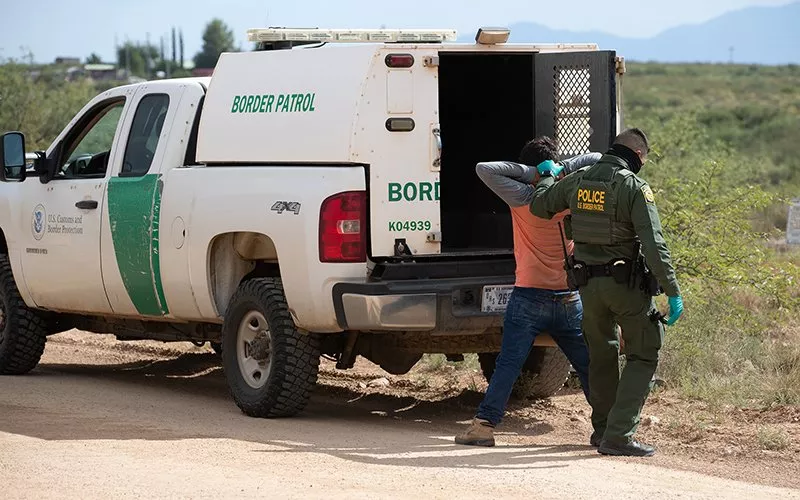
WASHINGTON – Homeland Security Secretary Alejandro Mayorkas defended the Biden administration’s immigration policies Wednesday, but conceded the department faces “historic and unprecedented challenges” coping with a surge in migrants, particularly unaccompanied minors, in recent months.
Mayorkas’ comments came in his first appearance as secretary before a congressional committee, where Republican lawmakers continued to blame the surge on Biden policies that they said amount to an incentive to migrants to come to the U.S.
“We are seeing an unprecedented crisis unfold during the pandemic,” said Rep. John Katko, R-N.Y. “The situation at the border continues to get worse every day with inadequate action or even proper acknowledgment of the severity of the situation.”
But Mayorkas pushed back against calls for a return to the harsh methods of the Trump administration, many of which President Joe Biden reversed soon after taking office. He said Trump’s “zero-tolerance” policies that led to the separation of families and forced return of asylum seekers were the true border crisis.
“A crisis is when a nation is willing to rip a 9-year-old child out of the hands of his or her parent and separate that family to deter future migration,” Mayorkas told lawmakers on the House Homeland Security Committee.
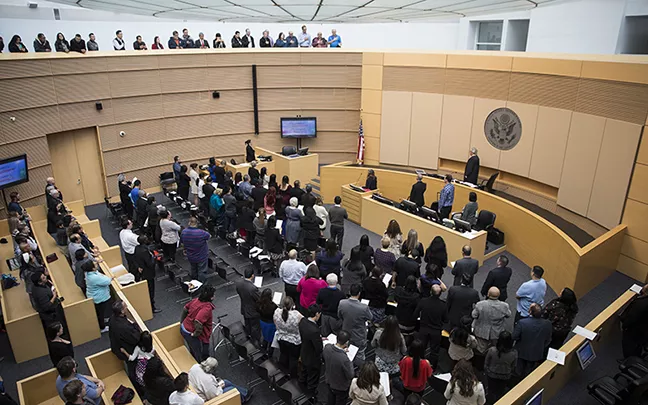
WASHINGTON – The House passed a pair of bills Thursday that would provide a path to citizenship for Dreamers and legal status to undocumented farmworkers, potentially affecting millions in the U.S. and tens of thousands in Arizona.
Republican critics derided the measures as little more than amnesty for people who came to this country illegally, and said they will create more problems than they solve. But supporters hailed the votes as a “huge step in the right direction” for law-abiding, productive residents who just happen to be undocumented.
The Dream and Promise Act of 2021 would give permanent legal residency and a path to citizenship for Dreamers – undocumented immigrants who were brought here as children. It passed 228-197, with all Democrats and nine Republicans voting for it.
The Farm Workforce Modernization Act would let any undocumented farmworker apply for a renewable, temporary legal status as a “certified agricultural worker.” Those who have spent several years working in the country would be able to apply for a green card – or permanent legal residency status.
The farm workforce bill, which had the backing of farm and business groups because it streamlines the visa process for farmworkers, passed by a comfortable 247-174, with support from 30 Republicans.
With 423 new cases reported today, the total number of Arizona’s confirmed novel coronavirus cases topped 835,000 as of Friday, March 19, according to the Arizona Department of Health Services.

Pima County, which reported 75 new cases today, has seen 111,582 of the state’s 834,607 confirmed cases.
With 46 new deaths reported this morning, a total of 16,691 Arizonans have died after contracting COVID-19, including 2,322 deaths in Pima County, according to the March 19 report.
A total of 686 coronavirus patients were in the hospital as of March 18. That’s roughly 13% of the number hospitalized at the peak of the winter surge, which reached 5,082 on Jan. 11. The summer peak was 3,517, which was set on July 13, 2020. The subsequent lowest number of hospitalized COVID patients was 468, set on Sept. 27, 2020.
A total of 958 people visited emergency rooms with COVID-like symptoms on March 18. That number represents 40% of the record high of 2,341 set on Tuesday, Dec. 29, 2020. That number had peaked during the summer wave at 2,008 on July 7, 2020; it hit a subsequent low of 653 on Sept. 28, 2020.
A total of 184 COVID-19 patients were in intensive care unit beds on March 18, which is just under 16% of the record 1,183 ICU patients set on Jan. 11. The summer’s record number of patients in ICU beds was 970, set on July 13, 2020. The subsequent low was 114 on Sept. 22, 2020.

Photos were shot in and around the Tucson Mountains, especially in Tucson Mountain Park and Saguaro National Park West. All photos were shot with an iPhone 6, except for a few recent ones on an iPhone 12. There is no photo manipulation except the color filters in-camera. These are all straight shots.

WASHINGTON – An attorney for Arizona native Jacob Chansley, the face-painted “Q-Anon Shaman” charged in the Jan. 6 Capitol insurrection, dismissed new government video showing his client as part of the mob that broke into the building and confronted police.
The attorney, Albert Watkins, said two videos released this week are “one-dimensional snippets” that lack context over Chansley’s participation in the riot that sent lawmakers scrambling for cover and temporarily halted the certification of President Joe Biden’s election.
But the judge in the case said the video shows that Chansley’s “perception of his actions on January 6th as peaceful, benign and well-intentioned shows a detachment from reality.” U.S. District Judge Royce Lamberth ordered the videos made public this week as part of his order denying Chansley’s request to be released from jail while awaiting trial.
Chansley, who also goes by the name Jake Angeli, is one of at least four Arizona residents who are among the 254 charged so far by federal prosecutors in the Jan. 6 riot, when a crowd of former President Donald Trump’s supporters stormed the Capitol to halt what they believed was a stolen election.
U.S. Capitol Police were overwhelmed by the crowds, who shouted profanities at officers, sprayed them with chemical irritants, shoved and beat them with flagpoles, sticks and – in some cases – the officers’ own shields. The crowd forced its way into the Capitol, breaking windows and doors and eventually taking over the Senate chamber.

