Monday, April 19, 2021

PHOENIX – A documentary recently aired in France titled, “I’m not a slut, I’m a journalist.”
The title might be shocking, but the experiences shared by female sports journalists featured in the documentary don’t come as a surprise to women in sports media.
The documentary featured women speaking candidly about the derogatory comments, lascivious advances and sexual harassment they have faced while working in the sports media industry. It is not uncommon.
Three months ago news broke that Jared Porter, then the general manager of the New York Mets, had sent sexually explicit photos to a female reporter while he was working for the Chicago Cubs.
Similar accusations emerged against Mickey Callaway, a pitching coach for the Los Angeles Angels.
At about the same time, former Golf Channel host Lisa Cornwell accused her male bosses of treating her unfairly in her job, an accusation she took to the Equal Employment Opportunity Commission.
Clearly, gender equality in the sports media industry is a prevalent issue.
“Look at sports television, women are all still expected to look like Barbie dolls,” said Sarah Kezele, update anchor and third voice on “Burns & Gambo,” the afternoon drive-time sports talk show on Phoenix’s ESPN affiliate, Arizona Sports 98.7 FM.
“So I do know that I have missed out on some opportunities because my ‘look’ is not what the hiring manager was looking for.”
Sunday, April 18, 2021

Saturday, April 17, 2021

WASHINGTON – Indian Country infrastructure needs, for everything from water to housing to broadband, are a high priority of the Biden administration’s $2.2 trillion American Jobs Plan, Transportation Secretary Pete Buttigieg said this week.
Buttigieg, in a call with reporters Monday to discuss the plan, said the need to improve 20th-century infrastructure on the lands of the 574 federally recognized tribes has been ignored by the federal government for years.
“A lot of parts of Indian country have been on the short end of … infrastructure investment maintenance, over the years,” Buttigieg said.
The American Jobs Plan is President Joe Biden’s $2.2 trillion plan to transform the nation’s infrastructure. Along with the American Rescue Plan, which aimed to help Native Americans recover from the COVID-19 pandemic, the administration intends for the American Jobs Plan to help solve the tribes’ growing infrastructural needs.
“When we talk about equity, we’re thinking a lot about racial and economic justice,”
Buttigieg said of the plan. “But we’re also thinking about stretches of this country that have too often been left out of the promises of this kind of great infrastructure.”
For Native American communities, those needs include critical water infrastructure, internet broadband, housing, transportation, tribal colleges and universities and roads, Buttigieg said.
Broadband was among the top priorities for tribes with the American Rescue Plan, which funding to come from the Department of Housing and Urban Development. Many families did not have access to the internet throughout the pandemic, making it difficult for their students to attend distance learning classes.
Biden’s infrastructure plan aims to provide 100% broadband coverage across rural and tribal communities.
Friday, April 16, 2021

Guns are ingrained in the Arizona psyche, from the legendary Shootout at the OK Corral that morphed into tourist-dependent Tombstone to the CNN broadcast of Donald Trump supporters casually carrying long guns during a protest in downtown Phoenix.
Arizona has some of the least restrictive gun laws in the nation, built on a pioneer, conservative ethos of Second Amendment rights. That has meant most Arizona adults can openly carry weapons into many public and private spaces.
Arizona also is the hub of a national gun-reform group, the Giffords Law Center to Prevent Gun Violence, named after U.S. Rep. Gabby Giffords, who was gravely injured in a mass shooting outside a Tucson grocery store in 2011.
At least five gun bills introduced in the Legislature show the tension between the poles of conservative and progressive viewpoints. The Legislature, which was dominated for decades by Republicans, historically has considered limits on firearms as an infringement of Arizonans’ rights. This year, however, against a backdrop of increasing firearms violence nationwide, the GOP holds only slim margins in both chambers.
“We have a long, long way to go in terms of fully realizing the freedom to have the right to keep and bear arms,” said Charles Heller, a co-founder of the Arizona Citizens Defense League, dedicated to protecting Second Amendment rights.
Adam Winkler, a professor at the UCLA School of Law and a specialist in American constitutional law, says gun reform laws implemented at the state level only lead to inconsistencies.
“If you really want to affect gun regulation, national regulation is most likely to be effective,” he said. “It would be more effective rather than having state-by-state regulations undermined because every state has a different set of rules.”
President Joe Biden on April 7 introduced executive orders that address gun violence as a public health epidemic, but national reforms have, historically, been unsuccessful.
Arizona state lawmakers this year have introduced at least five firearms bills, including a measure from Republicans that would declare a business that sells guns, ammunition and related products as essential in an emergency, and several by Democrats on gun safety protocols and tighter background checks.
The Democrats’ bills have languished, while the GOP bill declaring essential operations has passed the Senate.
Here’s a look at each proposal.
Senate Bill 1382
What it would do
The COVID-19 pandemic may have fueled SB 1382, Heller and Winkler agreed.
“I think that this bill is largely a symbolic response to the COVID restrictions that were adopted,” Winkler said.
In the first days of the pandemic, Gov. Doug Ducey declared certain businesses as essential, such as hospitals and medical clinics, grocery stores and firearms suppliers. SB 1382 would add gun stores to the list, providing they legally could continue normal business operations.
“A store that sells firearms or ammunition, or firearms or ammunition components, is an essential business, and there may not be any restrictions imposed on the store’s normal operations,” the bill reads.
The amendment would not prevent the governor or other government officials from ordering the relocation of ammunition supplies out of potentially dangerous areas.
Sponsor
Sen. Wendy Rogers, R-Flagstaff
Supporters say
“In any kind of emergency where the threat to public safety is greater,” said Heller of the defense league, “people may have a greater need for a firearm to protect themselves, or some ammunition or some other thing that you would find in a place in a business like that.”
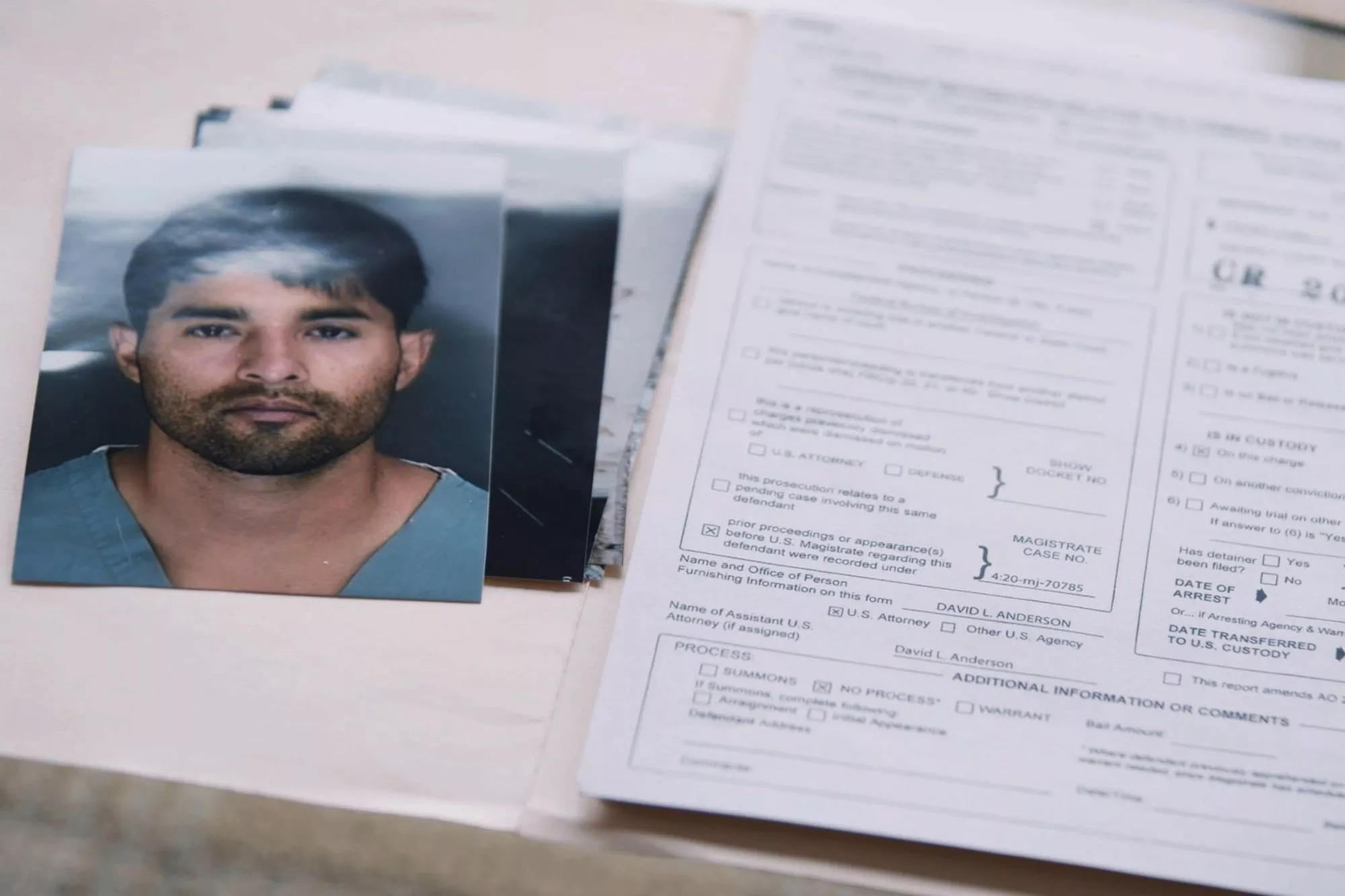
Steven Carrillo’s path to the Boogaloo Bois shows the hate group is far more organized and dangerous than previously known.
This story is part of a collaboration between ProPublica, Berkeley Journalism’s Investigative Reporting Program and FRONTLINE that includes the documentary American Insurrection. Watch the documentary.
It was 2:20 p.m. on June 6, 2020, and Steven Carrillo, a 32-year-old Air Force sergeant who belonged to the anti-government Boogaloo Bois movement, was on the run in the tiny mountain town of Ben Lomond, California.
With deputy sheriffs closing in, Carrillo texted his brother, Evan, asking him to tell his children he loved them and instructing him to give $50,000 to his fiancée. “I love you bro,” Carrillo signed off. Thinking the text message was a suicide note from a brother with a history of mental health troubles, Evan Carrillo quickly texted back: “Think about the ones you love.”
In fact, Steven Carrillo had a different objective, a goal he had written about on Facebook, discussed with other Boogaloo Bois and even scrawled out in his own blood as he hid from police that day. He wanted to incite a second Civil War in the United States by killing police officers he viewed as enforcers of a corrupt and tyrannical political order — officers he described as “domestic enemies” of the Constitution he professed to revere.
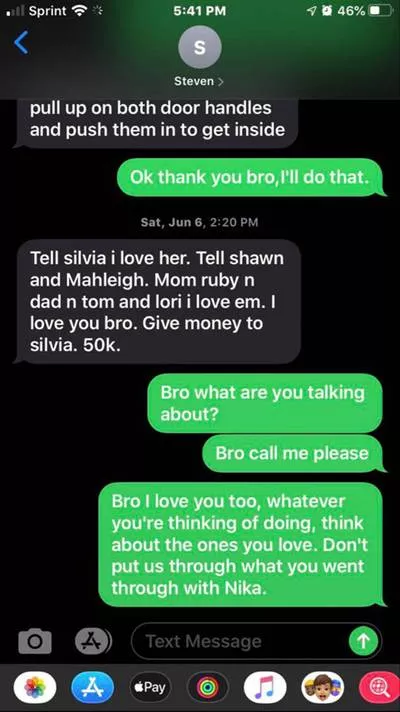
Now, as he texted with his brother and watched deputies assemble so close to him that he could hear their conversations, Carrillo sent an urgent appeal to his fellow Boogaloo Bois. “Kit up and get here,” he wrote in a WhatsApp message that prosecutors say he sent to members of a heavily armed Boogaloo militia faction he had recently joined. The police, he texted, were after him.
“Take them out when theyre coming in,” the text read, according to court documents.
Minutes later, prosecutors allege, Carrillo ambushed three deputy sheriffs, opening fire with a silenced automatic rifle and hurling a homemade pipe bomb from a concealed position on a steep embankment some 40 feet from the deputies. One deputy was shot dead, and a second was badly wounded by bomb shrapnel to his face and neck. When two California Highway Patrol officers arrived, Carrillo opened fire on them, too, police say, wounding one.
“The police are the guard dogs, ready to attack whenever the owner says, ‘Hey, sic ’em boy,’” Carrillo said in an interview, the first time he has spoken publicly since he was charged with murdering both the deputy sheriff in Ben Lomond and, a week earlier, a federal protective security officer at the Ronald V. Dellums Federal Building and U.S. Courthouse in Oakland.

Experts say we should investigate “breakthrough infections” to look out for variants and understand who’s vulnerable. In many cases, that’s not happening. Crucial pieces of the puzzle are being tossed in the trash.
Dr. Carey Washington was eager to be vaccinated. The psychologist, who was still working at 80 years old, got his first coronavirus shot on Jan. 12 and followed up with the second Pfizer dose on Feb. 4. With both shots done, he let his guard down at the office he shared with another doctor, sometimes leaving his mask off.
Then he woke up on March 7 with aches and fatigue, feeling as though he might have a cold. When he started experiencing chest pain and finding it hard to breathe, he booked an appointment with his primary care physician, who sent him on to his cardiologist. Both thought that his symptoms must be related to his past heart issues. But Washington’s symptoms got worse. He was so tired he could barely get out of bed. His cardiologist reassured him that the fatigue was likely due to the irregular heartbeat he was experiencing, and that the medications prescribed for that would take a while to kick in. But on March 12, Washington’s son took him to the emergency room anyway. A test revealed Washington was positive for COVID-19.
A week later, he was transferred to the intensive care unit. On March 25, he died.
Washington’s daughter, Tanya Washington, says that after her father was admitted to the Prisma Health Richland Hospital, she was determined to understand why. Why had Washington gotten sick despite being fully vaccinated? “Doctors said that because he was vaccinated, we think this may be a variant,” a strain of the coronavirus that could be more contagious or dangerous, Tanya recalls. She said they originally thought it might be a variant found in South Africa.
WASHINGTON – Backed by a field of flowers that represent the thousands killed by gun violence each year, former Arizona Rep. Gabrielle Giffords said Wednesday that Congress can act on gun reform or “can let the shooting continue.”
Giffords, who was severely wounded by a gunman in a 2011 mass shooting, joined congressional Democrats to call for Senate action on the Bipartisan Background Checks Act, a House bill that would stiffen checks on gun buyers.
The bill has yet to get a hearing in the Senate since it passed the House in March – a period during which 80 people were killed in mass shootings in the U.S., according to the Gun Violence Archive.
“We are at a crossroads,” Giffords said. “We can let the shooting continue, or we can act.”
The news conference came almost a week after President Joe Biden unveiled a series of steps aimed at curbing gun violence, by making it easier for states to adopt “red flag” laws, which keep guns out of the hands of those who are a danger to themselves or others, and by stiffening restrictions on “ghost guns” – those assembled from kits which are almost impossible to trace.
Biden also proposed new restrictions on gun modifications that allow a pistol to fire like a semi-automatic gun – a modification that was used by the shooter in the March 22 attack that killed 10 at a King Soopers grocery in Boulder, Colorado.
“We want to treat pistols modified with stabilizing braces with the seriousness they deserve,” Biden said. “Essentially, it makes that pistol a hell of a lot more accurate and a mini-rifle.”
But whatever changes the federal government makes could hit a wall in Arizona, where Gov. Doug Ducey last week signed the 2nd Amendment Firearm Freedom Act into law. It preempts federal law by making it illegal to use state funds or personnel to “enforce, administer or cooperate with any act” that is more restrictive than current state laws.
The bill, sponsored by Rep. Leo Biasiucci, R-Lake Havasu, passed both chambers of the Legislature on largely party-line votes. In a series of tweets after Ducey signed it into law, Biasiucci, called the law an “extra layer of protection” that makes Arizona a “2nd Amendment Sanctuary.”
The vote on HR 8, the federal background check bill, also fell mostly along party lines, with just eight Republicans supporting it and only one Democrat voting against it. Critics, like Rep. Debbie Lesko, R-Peoria, call the bill an “assault on our Second Amendment right to keep and bear arms.”
“The bill turns law-abiding citizens into criminals by subjecting them to criminal penalties for simply lending a friend or a neighbor a gun on a temporary basis,” Lesko said on the House floor before the March 10 vote.
Since that vote, there have been a series of unrelated mass shootings across the country that have grabbed headlines.
Before the King Soopers shooting there was the March 16 shootings at several Atlanta-area spas that killed eight people, including six Asian-American women, and an apparent family dispute the same day in Phoenix that left four dead. On April 8, a former NFL player killed five people in Rock Hill, South Carolina, before killing himself.
The shooter in Atlanta bought his gun the day of the attack, as Georgia – like Colorado and Arizona – does not have a waiting period between a gun purchase and delivery.
Speakers at the Giffords event included House Speaker Nancy Pelosi, who noted the toll of gun violence by pointing to the 40,000 flowers on the National Mall behind her, about the number of firearm deaths in a year, according to the Centers for Disease Control and Prevention.
“It takes your breath away to see the beauty of this art installation, but gun violence takes away the breath of so many people,” Pelosi said.
The Bipartisan Background Checks Act of 2021 would close a loophole that lets someone buy a firearm at a gun show or online without undergoing a background check.
It also targets the “Charleston loophole” that let an individual flagged for investigation by the FBI still get a gun, because the background check on him had not been finished within three days of his purchase. Dylann Roof used that gun to kill nine worshipers in 2015 after a Bible study at the Emanuel African Methodist Episcopal Church, a historic Black church in Charleston.
Rep. James Clyburn, D-S.C., said that extending the waiting period beyond three days could have saved the lives of those victims.
“I don’t know why the system did not catch the perpetrator,” Clyburn said Wednesday. “It may have been an error unintentional, or it may have been an error intentional.”
Giffords survived a Jan. 8, 2011, assassination attempt at a constituent event outside a Tucson supermarket that killed six people and left 13 injured, including Giffords. She has since worked for gun reform, starting Giffords.org to work toward tighter gun laws. And she said Wednesday she plans to keep fighting.
“I’ve known the darkest of days, days of pain and uncertain recovery, but confronted by despair I’ve summoned hope,” Giffords said. “I put one foot in front of the other, I found one word and then I found another.”