

Friday, April 16, 2021
With 845 new cases reported today, the total number of Arizona’s confirmed novel coronavirus cases rose past 852,000 as of Friday, April 16, according to the Arizona Department of Health Services.

Pima County, which reduced the total number of cases by 31 today, has seen 113,998 of the state’s 852,570 confirmed cases.
With 30 new deaths reported this morning, a total of 17,153 Arizonans have died after contracting COVID-19, including 2,378 deaths in Pima County, according to the April 16 report.
A total of 569 coronavirus patients were in the hospital as of April 15. That’s roughly 11% of the number hospitalized at the peak of the winter surge, which reached 5,082 on Jan. 12. The summer peak was 3,517, which was set on July 13, 2020. The subsequent lowest number of hospitalized COVID patients was 468, set on Sept. 27, 2020.
A total of 893 people visited emergency rooms with COVID-like symptoms on April 15. That number represents 38% of the record high of 2,341 set on Tuesday, Dec. 29, 2020. That number had peaked during the summer wave at 2,008 on July 7, 2020; it hit a subsequent low of 653 on Sept. 28, 2020.
A total of 154 COVID-19 patients were in intensive care unit beds on April 15, which roughly 13% of the record 1,183 ICU patients set on Jan. 11. The summer’s record number of patients in ICU beds was 970, set on July 13, 2020. The subsequent low was 114 on Sept. 22, 2020.
Pima County resumes jury trials
Pima County courts resumed jury trials this week after nearly a year-long hiatus, county officials announced Thursday.
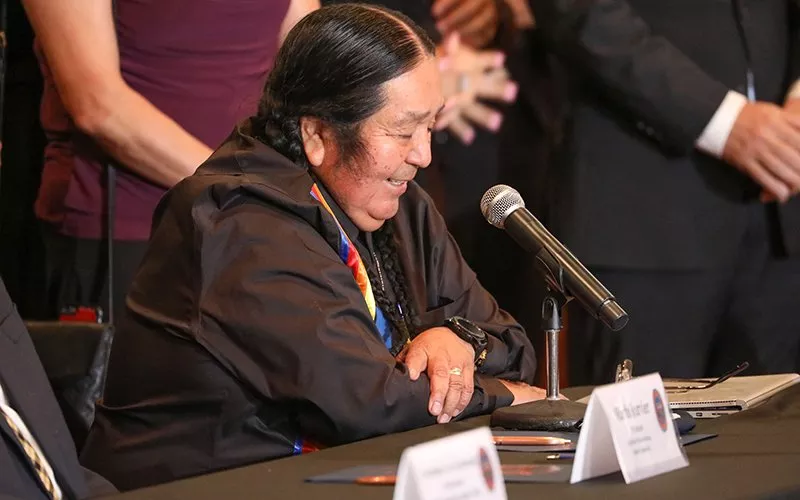
PHOENIX – After years of resistance from tribes around the state, Gov. Doug Ducey signed House Bill 2772 on Thursday, legalizing daily sports fantasy and sports betting in Arizona. The development comes on the heels of ratification of a revised Tribal-State Gaming Compact.
“Today’s signing is the culmination of years of discussion and engagement among many diverse stakeholders, tribal communities, both rural and urban, gaming industry partners and more,” Ducey said at a news conference to finalize the legislation.
“We did it by bringing everyone to the table, pushing individual agendas aside and putting Arizona first. The legislation associated with this compact amendment is a historic bipartisan achievement.”
Senate Bill 1797, a mirror bill to HB 2772, was ratified by a bipartisan majority earlier this week by the state Senate. These amendments to the existing compact grant specific organizations and groups sports betting permits to create sportsbooks in their particular venue. Ten licenses will be granted to sports organizations to open these books in or near their sporting facilities. An additional 10 licenses will be given to tribal nations to open sportsbooks at their respective casinos.

Thursday, April 15, 2021

Pima County courts resumed jury trials this week after nearly a year-long hiatus, announced county officials Thursday.
“We’re excited to end the moratorium on jury trials in Pima County,” said Presiding Judge Kyle A. Bryson, citing a decrease in COVID-19 cases and an increased availability of the vaccine.
With new COVID-19 protocols, the courts are ready to welcome back jurors. Jurors will be seated throughout the courtroom with a wide use of plexiglass, and given a trial package with a notepad, mask and hand sanitizer.
“We remain devoted to the principle of maintaining a safe environment for court users and staff while providing access to justice for the citizens of Pima County,” said Bryson. “Like litigants, attorneys, victims, and defendants, we have keenly awaited the time that trials can proceed while still protecting the health and safety of all who enter our court buildings.”
Potential jurors will receive questionnaires in advance that may be submitted online or through the mail. They will also have the opportunity to complete a separate form to address any COVID-19 related concerns.
The courts are not requiring vaccination or asking about a community member’s vaccination status, but those visiting the courthouses will be asked to wear a mask, have their temperatures checked, and follow social distancing guidelines.
For information about jury service in Pima County visit https://www.sc.pima.gov/jurors/ or call 520.724.4222.
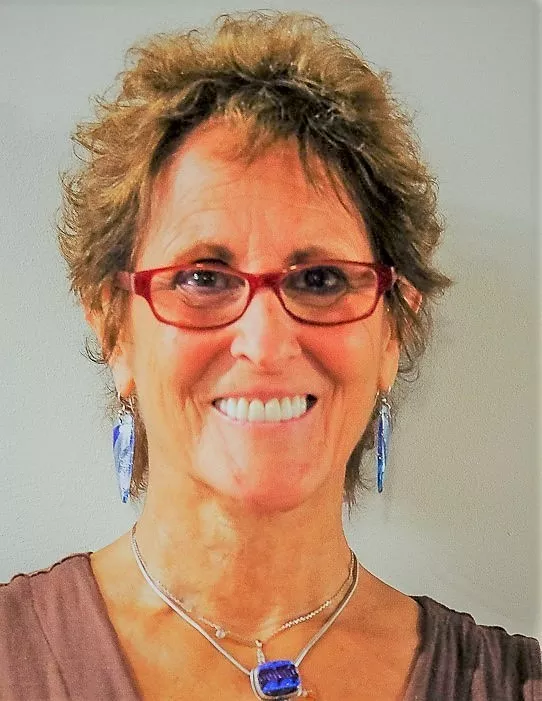
Copia Infusions announced Noonan's passing after a four-year battle with leukemia.
“Peggy was a pioneer in life, as in with business, and was one of the early trailblazers in the Arizona medical marijuana industry," said a Copia press release. "For nearly the past 10 years, Peggy put her extraordinary energies and talents into building business enterprises that have bloomed into Copia, an industry leader in infused products with the first scratch made cannabis kitchen in Arizona and with leading products, like OGeez!”
Noonan's son, Bran Noonan, will take over her work at Copia.
“For those who knew my mother, it goes without saying that she loved this company and the Arizona community, and bringing the passion she put into the company to others,” Bran Noonan said. “My mother possessed an unmatched entrepreneurial spirt, and as the company moves through 2021 and beyond, we will do so in her honor and by continuing to build upon her legacy.”
Noonan started her career in cannabis right out of college, “at a time that was all about bringing peace and love to the world, while striving for a higher consciousness in making a difference,” according to Noonan's bio on the Copia website.
In 2013, her passion for cannabis infusion was re-ignited with the launch of the Arizona Medical Marijuana program. In late 2017, Noonan was diagnosed with Acute Myloid Leukemia and fought the disease with several of her own products, particularly Copia’s homeopathic cannabis tincture oil.
During her fight, she continued researching ways to make products even healthier while maintaining mainstream taste. After a journey through traditional and cannabis medical treatments, Noonan announced in 2018 that she was cancer-free. She was again diagnosed with Leukemia in late 2019 and succumbed to the disease early this month.
After being involved in the industry for 40 years, she was a believer in the need for education, standardized testing and proper dosing. She held regular training sessions with staff members at dispensaries and cannabis education schools, teaching aspiring professionals about proper dosing and how medical marijuana can better serve patients.
Noonan was also on the Labeling and Packaging Committee with the Arizona State Department of Health Services for best practices in dosage and safety labeling and packaging.
A native New Yorker, Noonan graduated from Arizona State University and Parsons School of Design. She spent time as an interior designer, developer and general contractor in New York before moving to Arizona. Noonan also owned Reliance Commercial Construction Inc., which specializes in MMJ dispensaries, cannabis production facilities, and cultivation sites, with a specialty in food services and restaurants.
Information for this report was taken from Peggy Noonan's bio on azcopia.com.

Area highs school seniors can earn $3,500 scholarships to help pay for higher education, thanks to Cox.
The 10 Cox Diversity Scholarships, totaled at $35,000, are available to "future Arizona leaders with rich cultural backgrounds," according to a news release. Applications can be found here. The deadline is May 1.
“Helping students achieve their educational goals helps make our communities stronger. Cox knows that paying for college can be stressful for students and their family. We’re proud to connect families to opportunities like this one, and many others,” said Lisa Lovallo, Market Vice President for Cox, Southern Arizona.
Applicants must be on track to graduate with a minimum 2.5 grade point average and provide demonstrated leadership and community service.

For 2021, the tax deadline for individuals was extended to May 17. This list highlights the most common tax forms and which ones you might need, depending on your circumstances.
Over the years, the IRS has created a vast network of forms. To file your taxes, you’ve got to navigate a lot of paperwork. Get a regular salary? There’s a form for that. Unemployment benefits? There’s a form for that, too. Social Security? You get the idea.
Why Is It Important to Understand Tax Forms?
Nowadays, most people file their taxes using websites or other products that do the work of figuring out which forms you need to file and filling them out. But it’s not always cheap. Many of those services and software — like TuroTax or H&R Block — charge users depending on which forms they need to use.
For 2020 tax filings (the ones due on May 17, 2021), anyone who made less than $72,000 a year is able to file for free as part of the IRS Free File program. Companies including Intuit, which makes TurboTax, H&R Block and others spent millions lobbying to bar the IRS from making its own free filing option while promising to create their own free products. But then, as ProPublica reported, they systematically undermined the truly free options by hiding search results and calling their products “free” even though for many, they’re anything but.
If you haven’t filed yet, we recommend checking out our guide to filing your state and federal taxes completely for free, looking to see if you qualify for the Earned Income Tax Credit (EITC) or learning how to track your refund. Though the IRS offers the option of paper filing, with the current COVID-19 state of affairs — and a massive backlog of paper returns and documents — the agency is encouraging taxpayers to file electronically to ensure prompt payment of refunds and avoid filing errors. Most paid and free tax prep services will tell you which forms you need to file, but if you’re still confused, see below for a list of the most commonly used tax forms.
Where Can I Get Tax Forms?
The IRS keeps all of its forms in a database online that offers each form in several languages, and it has a page that specifically highlights the most common forms filers use during tax season. These pages include the forms themselves and documents that instruct users on how to use them.
Which Tax Forms Do I Need?
Everybody’s tax situation is unique and might require different forms. The list below will explain what the most common forms are for and whom they might serve best.

With 460 new cases reported today, the total number of Arizona’s confirmed novel coronavirus neared 852,000 as of Thursday, April 15, according to the Arizona Department of Health Services.

Pima County, which reported 126 new cases today, has seen 114,029 of the state’s 851,725 confirmed cases.
With 14 new deaths reported this morning, a total of 17,123 Arizonans have died after contracting COVID-19, including 2,376 deaths in Pima County, according to the April 15 report.
A total of 584 coronavirus patients were in the hospital as of April 14. That’s roughly 11.5% of the number hospitalized at the peak of the winter surge, which reached 5,082 on Jan. 12. The summer peak was 3,517, which was set on July 13, 2020. The subsequent lowest number of hospitalized COVID patients was 468, set on Sept. 27, 2020.
A total of 968 people visited emergency rooms with COVID-like symptoms on April 14. That number represents 41% of the record high of 2,341 set on Tuesday, Dec. 29, 2020. That number had peaked during the summer wave at 2,008 on July 7, 2020; it hit a subsequent low of 653 on Sept. 28, 2020.
A total of 162 COVID-19 patients were in intensive care unit beds on April 14, which roughly 13.5% of the record 1,183 ICU patients set on Jan. 11. The summer’s record number of patients in ICU beds was 970, set on July 13, 2020. The subsequent low was 114 on Sept. 22, 2020.

PHOENIX – Nicole Minnick had been a firefighter for seven years when she gave birth in 2008 to her first child, a girl named Kyndal. A few months later, when she returned to work, one thought was foremost in her mind: Would it be safe to breastfeed?
“My second or third shift back to work, we had a fire – and my baby’s 3 months old. I was like, ‘Well I probably shouldn’t nurse her. How long do I need to pump and dump?’” Minnick recalled. “I called the fire department, and they had no idea.”
Turns out extensive research to determine how long carcinogens remain in the breast milk of female firefighters had never been conducted, prompting Minnick to take part in a University of Arizona study.
“This was my baby,” she said. “I wanted to know.”
Now a new UA study aims to build on that body of work and further understand the occupational risks unique to women in the fire service.
The three-year study, funded by a $1.5 million grant from the Federal Emergency Management Agency, will explore stress, cancer risks and the effect of toxins on reproductive health. Researchers hope to enlist 200 women – 100 incumbent firefighters and 100 new recruits – from departments across the U.S., including some from the Tucson Fire Department.
Comparing new recruits with those who’ve served for some years will help identify potential differences in stress and markers in blood associated with increased cancer risk.
“The women and men of the fire service are keeping those of us in the public safe, and therefore it’s really important that we help them by providing information that they can use to keep themselves safe,” said Dr. Jeff Burgess, associate dean for research at the University of Arizona’s College of Public Health.
The project includes a “virtual kitchen table” to provide mentorship for female firefighters with a goal of building resilience and reducing stress. The idea, researcher Sara Jahnke said, is to form an official research question around “What do you need to be supported?”

