Tuesday, May 18, 2021
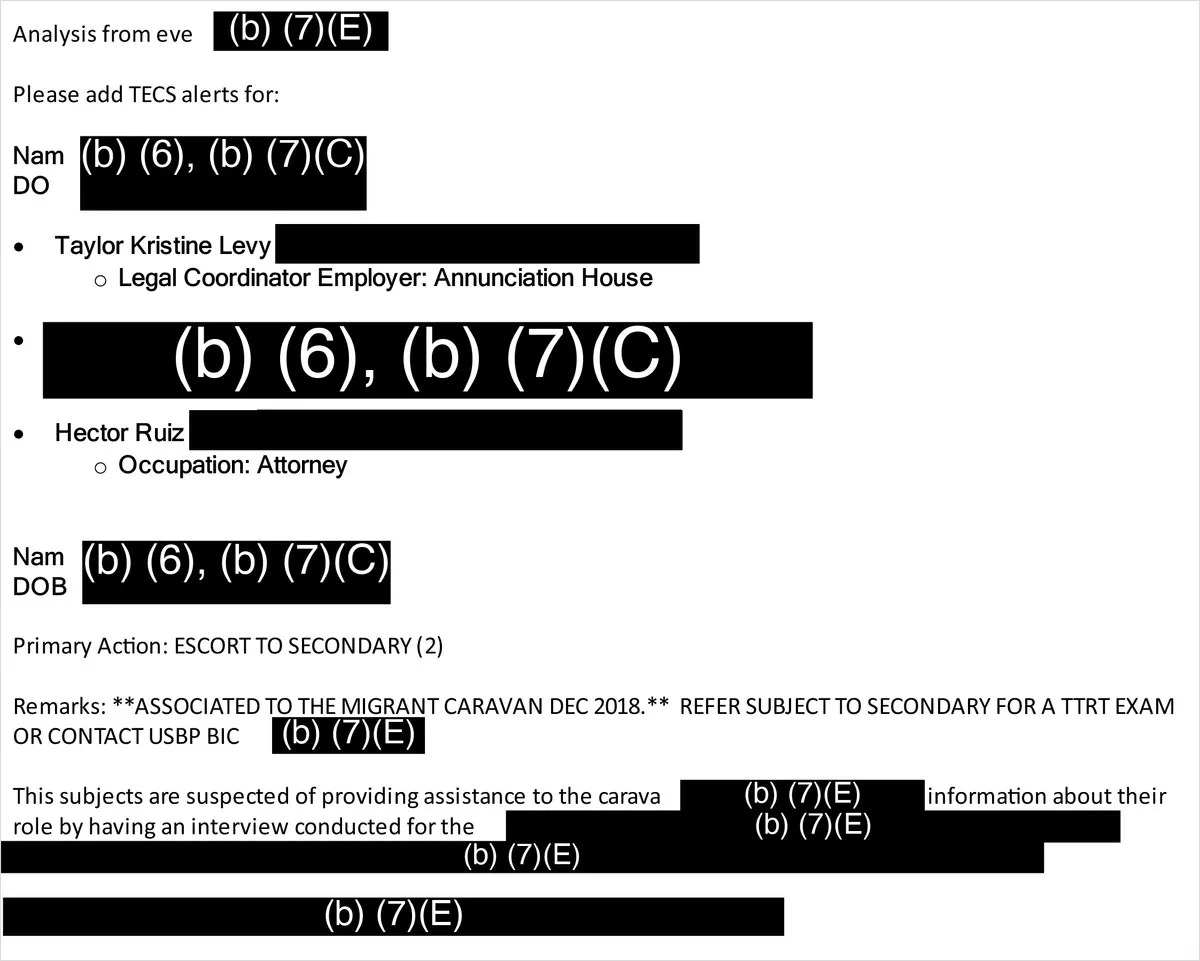
In newly disclosed records, Trump officials cited conspiracies about Antifa to justify interrogating immigration lawyers with a special terrorism unit. The documents also show that more lawyers were targeted than previously known.
Taylor Levy couldn’t understand why she’d been held for hours by Customs and Border Protection officials when crossing back into El Paso, Texas, after getting dinner with friends in Ciudad Juarez, Mexico, in January 2019. And she didn’t know why she was being questioned by an agent who’d introduced himself as a counterterrorism specialist.
Levy was part of the legal team representing the father of a girl who’d died the previous month in the custody of the Border Patrol, which is part of CBP. “There was so much hate for immigration lawyers at that time,” she recalled. “I thought that somebody had put in an anonymous tip that I was a terrorist.”
The truth was more troubling. Newly released records show that Levy was swept up as part of a broader than previously known push by the administration of President Donald Trump to use the federal government’s expansive powers at the border to stop and question journalists, lawyers and activists.
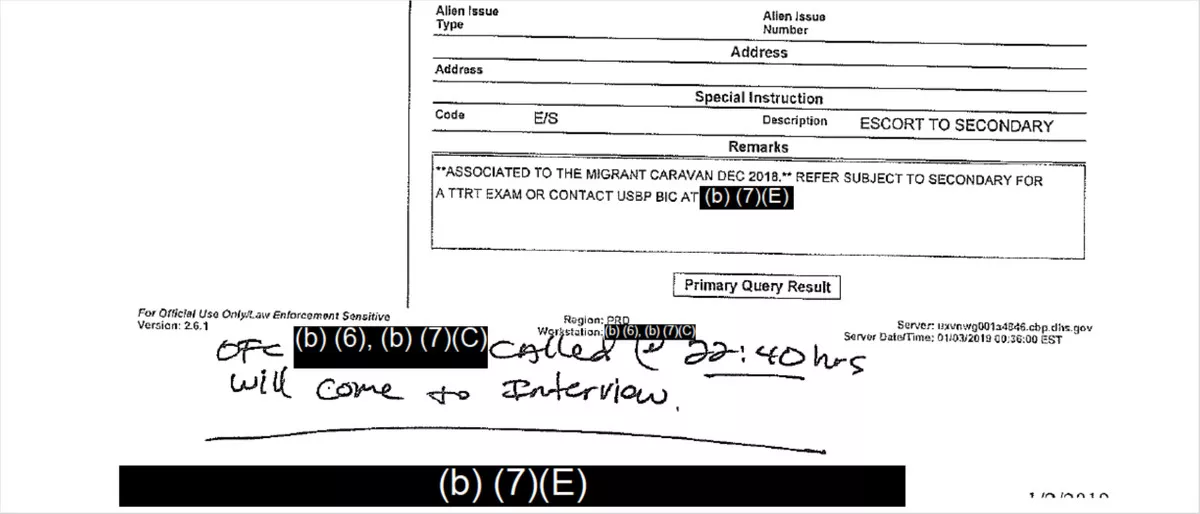
The records reveal that Levy and attorney Héctor Ruiz were interrogated by members of CBP’s secretive Tactical Terrorism Response Team. The lawyers were suspected of “providing assistance” to the migrant caravan that was then the focus of significant attention by the administration and right-wing media. Officials speculated in later reports that immigration lawyers were seeking to profit by moving migrants through Mexico, and that “Antifa” may have been involved.
The records were provided to ProPublica by the Santa Fe Dreamers Project, a public interest law firm and advocacy group that received them after filing a Freedom of Information Act lawsuit about the stops of Levy and Ruiz at the border in El Paso.
WASHINGTON — They don't have the high profiles or long tenure of other members of Congress, but Arizona lawmakers in the last Congress ranked relatively high on a recent scorecard of congressional effectiveness.
The Center for Effective Lawmaking study, by researchers at the University of Virginia and Vanderbilt University, ranked members on the amount of substantive legislation they introduced and how far it moved toward passage in the 116th Congress.
A compilation of those scores showed Arizona had the 10th-most effective House delegation and 14th-most effective senators. The report’s authors said an unusual number of freshmen and minority party members scored well, showing that “even in these politically challenging times, bipartisanship is still working and … viable.”
“Compared to previous congresses, we have a notably larger number of freshman legislators who are essentially punching above their weight class, they score above expectation,” said Alan Wiseman, a Vanderbilt professor and co-author of the study.
But in Arizona, seniority did appear to come into play: The highest-ranking House member was Rep. Raul Grijalva, D-Tucson, who is both the longest-tenured member of the delegation and who is now in his second term as chairman of the House Natural Resources Committee. He finished 14th among House Democrats and 16th overall in the chamber.
He was one of three Arizona Democrats to finish in the top 10% of House members, along with Reps. Tom O’Halleran of Sedona, who ranked 31st, and Ruben Gallego of Phoenix, who came in at 33rd.
Republicans, as a group, had a lower combined score than Democrats and Arizona was no different. Rep. Debbie Lesko, R-Peoria, was the state’s highest-ranking Republican, in 147th place overall and 26th among GOP members.
Still, Lesko, who just started her second full term in Congress, said she was surprised to be ranked so high, especially given the pace of Washington compared with her experience as a state legislator.
Monday, May 17, 2021

PHOENIX – Carla Walker was tired of sitting inside during the coronavirus pandemic. She missed going to the gym, shopping and spending time with friends and family. Her retail job in Central Phoenix had laid her off and she had time on her hands. She wasn’t sure how to fill it.
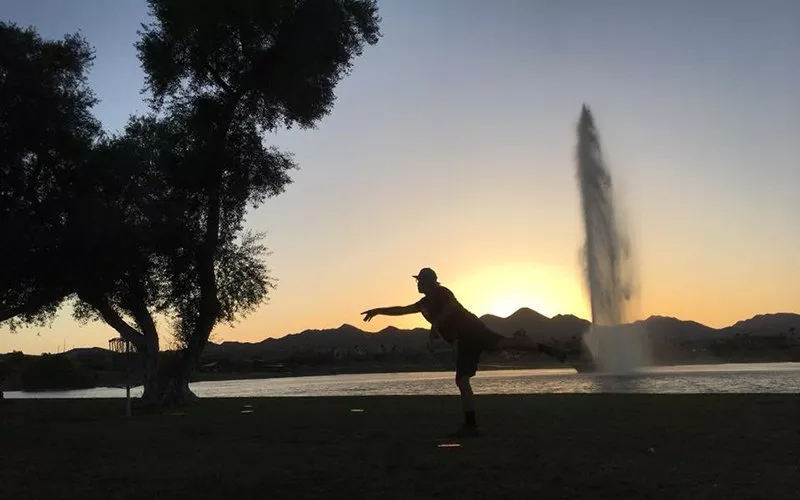
One day while returning from buying groceries, she took a different route to avoid traffic and drove past something she had never seen before: a disc golf course.
“I remember seeing two guys throwing a Frisbee, but not to each other or to a dog,” Walker said.
She dropped off her groceries at her apartment and returned to Conocido Park in North Phoenix to walk around and watch a little longer.
“They were throwing the Frisbees at these metal basket things on poles,” Walker said. “It looked sort of weird but I could see a bunch of other baskets around the park and figured that’s how you play the game.”
Walker did research on her phone and learned they were playing disc golf. She watched a few videos and quickly learned the rules. She even found a beginner’s set of discs online and bought them while she was still at the park.
When the coronavirus pandemic put a halt to most recreational sporting events and activities, people began looking elsewhere for exercise and competition. While many indoor sports are slowly returning, outdoor activities have seen major growth and involvement in the last year. Disc golf is one of them.
The sport is similar to traditional golf. Participants begin at a tee box or launchpad and throw their disc toward a “hole,” which is an elevated, metal basket. Each hole has a set number for par, and scoring is the same as traditional golf, where each throw equals one stroke. A round of disc golf is typically 18 holes but some courses also offer nine and 27 or more holes. Depending on how busy the course is and how quickly one plays, a round of disc golf can take anywhere from one to three hours.
Phoenix police don’t follow Fe’La iniko on social media, but he knows they’re watching.
“They’re pretty hip to Instagram,” the racial justice activist said. “Sometimes they’ll pop up in my story views.”
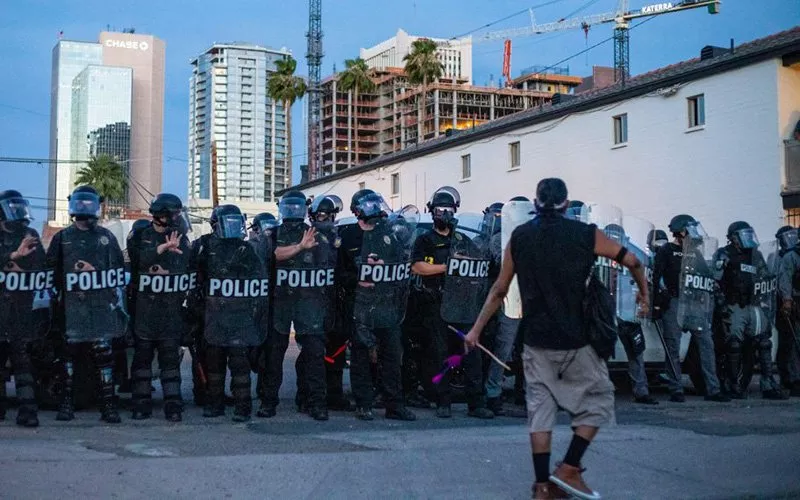
Iniko, whose given name is Milton Hasley, often uses social media to share fliers on upcoming protests or speak out against police violence. So when officers surrounded his car last summer while he was leaving a demonstration against the killings of George Floyd and Dion Johnson, iniko worried he might have been targeted in advance for his views. As a handful of cop cars trained their spotlights on him, he was careful to keep his hands visible as he placed them on the steering wheel, a video he posted on Instagram shows.
“Try not to look threatening,” he remembered thinking.
Hours later, iniko was booked into jail and charged with two felonies and two misdemeanors, all of which were later dropped. He was one of hundreds of Phoenix protesters arrested during last year’s demonstrations against systemic racism and police brutality, which were met with an aggressive police presence and a number of controversial charges from prosecutors.
Police reports and court records would later reveal that police surveilled some of the protesters on their social media accounts during the summer and fall.
It was a year that would see Black Lives Matter demonstrations and civil unrest followed by anti-lockdown rallies, election protests and the fatal Jan. 6 storming of the U.S. Capitol. In the Capitol insurrection, law enforcement officials scoured social media platforms, sweeping up photos, videos and comments that have helped to identify, arrest and charge hundreds of people.
This form of online policing has gained traction as a means of addressing the looming threat of domestic terrorism. But many agencies — including the Phoenix Police Department — work under barebones guidelines when monitoring online activity.
Sunday, May 16, 2021
Saturday, May 15, 2021