

Tuesday, May 11, 2021
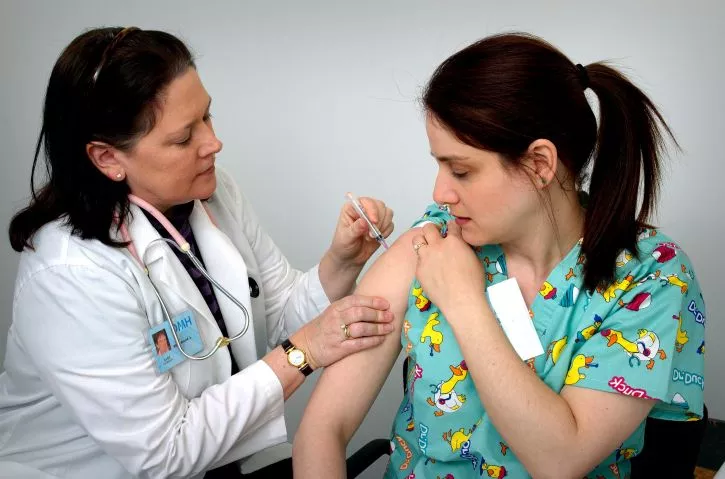
After the Food and Drug Administration’s emergency use authorization of Pfizer for children 12 to 15 on Monday, the Advisory Committee on Immunization Practices and CDC are expected to approve and recommend the use of Pfizer to vaccinate those 12 and older on Wednesday.
The Pfizer vaccine is currently available for those ages 16 and older. The Moderna and Johnson & Johnson vaccines are authorized for those 18 and older.
“The COVID-19 vaccines are safe, effective and free ‒ and they’re our best shot to end this pandemic and return to the things we’ve missed. We’re moving quickly to empower parents and guardians to get this protection for their children,” said Gov. Doug Ducey. “Millions of Arizonans have already received the COVID-19 vaccine. Soon, kids ages 12 to 15 years old will now be eligible to get vaccinated and state vaccine sites are ready to serve them.”
Arizona has nearly 400,000 youths ages 12 to 15, about 5 percent of Arizona's population. As of Tuesday, 5,383,508 vaccines have been administered in Arizona, with 35% of Arizonans fully vaccinated.
“We’re delighted to be able to welcome these young people to state-run mass-vaccination sites starting Thursday,” said ADHS Director Dr. Cara Christ. “These safe, highly effective, and free vaccines are our best shot at returning to normal, and having more vaccinated individuals gives COVID-19 less of a chance of spreading.”
The University of Arizona POD, as a state site, will vaccinate children 12 to 15 and although it will close on June 25, they had factored the drop in vaccination age into their decommission plan, said Vice President of Communications Holly Jensen.
“We will continue to monitor the numbers, and are ready to adjust if necessary,” said Jensen.

COVID cases remain on a plateau across Arizona.

For the week ending May 2, cases dropped for the first time since the week ending March 21, with 4,946 people testing positive, according to Dr. Joe Gerald, an epidemiologist and professor in the UA Zuckerman College of Public Health who has been tracking the virus for more than a year.
That means an estimated 68 Arizonans per 100,000 residents are testing positive. The state hit a low of 38 cases per 100,000 people on Sept. 8, 2020, between the summer and winter waves, and a low of 54 cases per 100,000 people on March 23 following the winter wave, with cases rising since then.
“Case rates will likely remain ‘stuck’ above the threshold differentiating substantial and moderate risk, 50 cases per 100K residents per week, for the next four to six week owning to more transmissible variants and continued normalization of behaviors,” Gerald wrote in a May 7 report summarizing the latest status of the virus.
Gerald noted that Arizona’s seniors now have the lowest rate of infections, at 26 per 100,000 among residents 65 and older, while the highest rate is among people 15 to 24 years old at 111 per 100,000.
He added that officials estimated 73 people died after contracting COVID in the week ending March 28, making it the first week with fewer than 100 deaths since October. The week ending Oct. 4 saw the fewest number of deaths related to COVID between with summer and winter surges, with 51 deaths.
Mobile vax units at Wheeler Taft Library, Greyhound Park today
Meanwhile, Pima County and the Federal Emergency Management Agency (FEMA) have launched mobile vaccination units to reach vulnerable communities with high risks of COVID-19 exposure and infection.
PHOENIX – The status of transgender members of the armed forces has shifted dramatically in the past decade as President Joe Biden and his two predecessors issued conflicting orders defining and redefining the eligibility of transgender Americans to serve their country.
Five days after taking office in January, Biden signed an order to reinstate transgender servicemembers, reversing Donald Trump’s 2019 order, which effectively banned transgender individuals from service. It was just one of a number of Biden reversals of Trump-era rules, the most recent coming Monday when the Department of Health and Human Services said it would again include gender identity as protected by anti-discrimination laws when it comes to delivery of health care.
The Trump administration’s order on military service was a reversal that would have blocked enlistment and expelled service members who have been diagnosed with gender dysphoria and any transgender medical procedures, such as hormones.
According to Palm Center, an independent research institute, Trump’s ban was similar to the “Don’t ask, don’t tell” policy President Bill Clinton put into place in 1994 to address gays and lesbians in the armed forces. The Obama administration repealed “Don’t ask, don’t tell” in 2011, allowing “gay and lesbian” individuals to serve openly.
Although Trump enforced a ban that was not as explicit as “Don’t ask, don’t tell,” it was set up in a way to weed out those in the military who don’t identify with their gender assigned at birth.
According to the Williams Institute at the UCLA School of Law, about 15,500 people in the U.S. military, reserves or National Guard openly identify as transgender, and about 134,000 veterans identify as transgender.
Cronkite News spoke to five transgender veterans in Arizona to gain perspective on what it meant to serve in the military and witness the shifts in how their identities are viewed by the commander in chief. Some reported loss of status and military benefits because of their sexuality, and others reported traumatic experiences while in service, including sexual assault.
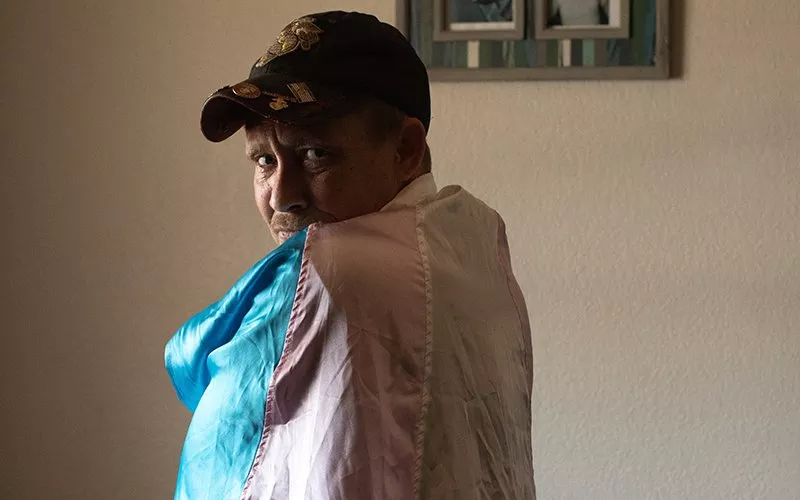
Blue Montana of Phoenix
“I woke up and looked at my Facebook. And I said, ‘Oh, good. You know, I don’t matter anymore.’”
When news broke that the Trump administration would ban transgender Americans from the military, Blue Montana’s immediate concern was for his transgender friends who were still in the military.
“Some of them were officers, they’ve (had a) 10-, 15-, 20-year career. Are they going to get kicked out? Are they going to get court-martialed? Like, what’s going to happen?”
As a transgender man, Montana still is denied benefits and medical access that veterans rely on for treatment of injuries and mental health issues. Before he transitioned, he served in the Marine Corps for more than a decade until he was outed.
It happened during Montana’s second tour in Iraq when he was severely injured in an explosion, causing traumatic brain injury, broken bones and other wounds. Montana was a lesbian at the time and had kept it secret, telling his superiors that his partner was his sister. After she called the hospital to ask about his injuries, Montana’s sergeant spoke to his mother, who told them Montana had no sister and the caller was his lover, and Montana’s secret was out.
Montana thought to deny the truth at first, he said, but felt lying “would have been violating the honor of the Marine Corps.”
After being threatened with a court-martial, Montana was given an “other than honorable discharge” in 2005 under the “Don’t ask, don’t tell” policy.
“Even sometimes now, I’m still not proud to say I’m a veteran. Because of the way I got discharged, because then people start asking questions.”
When he started his transition in 2005, Montana flew home to Chicago to take care of his mother as she fought cancer. His family was not understanding about his transition, so he had to stop taking hormones. He said he struggled to cope with mental health issues and post-traumatic stress disorder, which led him to abuse alcohol until he was hospitalized for alcohol poisoning.
“I woke up in the hospital one day in the emergency room like, ‘How did I get here?’ and they were like, ‘You blacked out from drinking.’”
Montana said his PTSD stemmed from violence he witnessed in Iraq, including a friend who was killed by an improvised explosive device. His emotional health was also harmed during a special assignment to accompany the bodies of soldiers to the U.S., traveling back and forth to Dover Port Mortuary at Dover Air Force Base. He also helped notify families of their loved one’s deaths.
“Some of the stuff I saw really kind of haunts me,” Montana said as tears filled his eyes.
Since his service, Montana has worked as a transgender program manager at The Center, a nonprofit in Las Vegas, and has been a trans activist since 2009.
Montana still questions if he should try to get his discharge reversed.
“Everybody tells me I should and I know that I should, (at) this point I just honestly don’t even know if I really care more. I know who I am, I know what I did. I mean, I kind of don’t want to be part of a system that didn’t want me.”
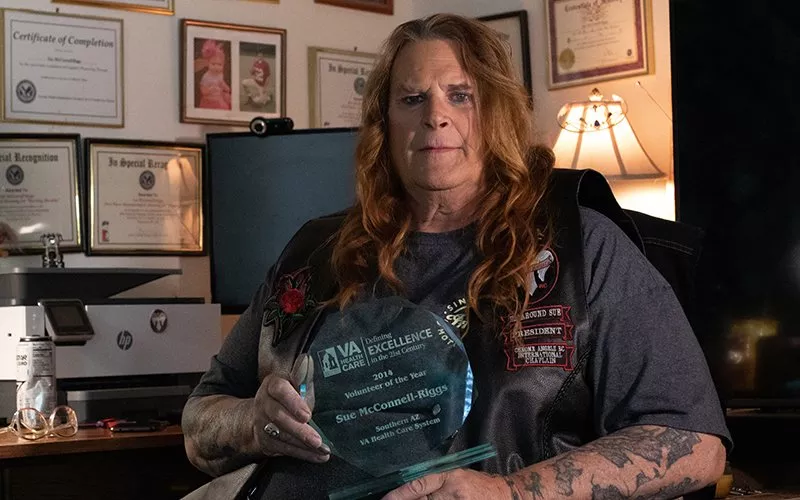
Sue McConnell of Tucson
Before her gender transition, Sue McConnell served with her brother on the same ship to stay close to him.
“My brother’s always been my hero. And he was in the Navy, so I joined the Navy.”
She was 18 when she enlisted in 1971. She did a nine-month tour during the Vietnam War as a boiler technician on the USS Mount Hood.
“But in retrospect, you know, my brother was achieved,” she recalled, “and I was, you know, at the bottom.”
The night before McConnell was honorably discharged from the Navy in 1972, she said she was “raped, sodomized, left for dead” by six men. According to a previous Cronkite News article, she didn’t report it but later filed for service-connected disability. She said the process took nearly 20 years to finally be granted disability for military sexual trauma.
McConnell, 68, now volunteers for the Southern Arizona Veterans Affairs Health Care System and is president of an all-women’s motorcycle group, Chrome Angelz RC Desert Roses. In 2014, she became the first trans woman to win the volunteer of the year award in the women’s category at the Southern Arizona VA.
McConnell is happy the transgender ban was reversed but knows many taxpayers are unhappy with the decision. According to Military OneSource, once an individual signs up for the military they have access to TRICARE, which is the military’s health care program.
“It is cheaper in the long run for someone to have reassignment surgery than for years and years of medications. If your ass is in a sling, and you’re pinned down, you’re screwed and you have help coming. Do you care if they’re gay, or if they’re transgender?”
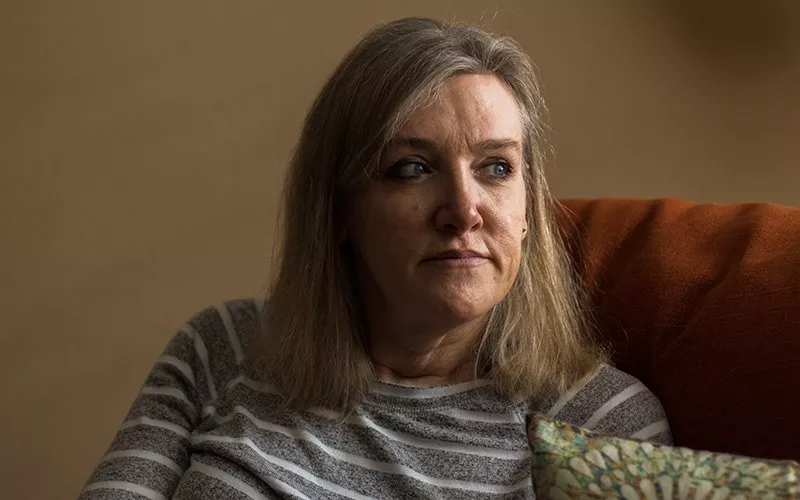
Danielle Lynch of Scottsdale
“Why not use the military as a place for trans people to get an education or work and do a job that’s necessary for the functioning of our nation?”
Danielle Lynch was 23 when she joined the Navy in hopes of supporting her spouse and first child. At the time, she identified as a man. She excelled in coursework and distinguished herself at the Naval Station Great Lakes in North Chicago.
“And so my classmates started coming to me every time we would finish a test. After I would finish I would go downstairs and they’re finished. What’d you get for number 18, what’d you get for number 15?”
Depending on the answer Lynch calculated, her classmates would know whether they got the question right or wrong.
After her Navy schooling, Lynch spent four of her six years in the military on the USS Hué City. She says she is most proud of the time she spent as combat systems officer of the watch, responsible for the maintenance of the ship’s weaponry. Her rank was a petty officer second class, but she says the other officers received greater pay than she did.
“This kind of environment for me it just wasn’t good at the time … my transness maybe at the time may have lent itself to me being unhappy … especially being aboard a ship with nothing but men,” Lynch said. “I really wanted to be able to have the option to experiment with my own self, and be able to potentially have the life that I want to live. And I knew that in the military, there’s absolutely no way that I could do that.”
Lynch left the military in 1997 to pursue a job with Intel, where she is now a quality reliability research and development engineer.
Twelve years after joining Intel, Lynch, then 40, decided she wanted to transition. When she was younger, she had thoughts of wanting to be a female, but it was an idea that had not yet become reality. In part, she struggled to find representation or guidance in the way trans people were depicted.
“There were so many TV shows, like Jerry Springer and those kinds of (shows), you know, like, that really sensationalized trans people,” Lynch said. “I always looked at those and thought, you know, maybe that’s not what I am, then I think when I was younger … that’s a possibility, like, that’s what I could be. But then after I saw these shows that kind of depicted them as these crazy people … and characters or stereotypes. I’m like, well, that’s not me.”
When the Trump administration officials enacted the ban, Lynch said, they were projecting their own feelings of transgender individuals rather than using data.
“They’re trying to use feelings and religion to discount the experiences of trans people or prevent them from being home, basically, some people want to serve in the military. And some people, you know, maybe who have already come out or came out at an earlier age, might need the military to get that kind of a background in education like I did.”
Lynch is grateful for the reversal of the ban, but she hopes that future administrations continue to be pro-transgender.
“I worry that you know, in three-and-a-half years or what have you, that we’re going to elect somebody that isn’t as pro-trans as what we have now and they’re going to flip-flop back the other way and ban it again.”
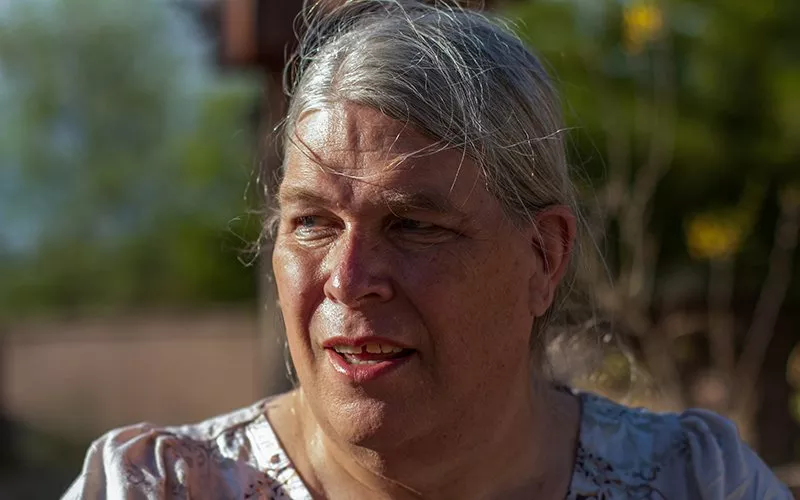
Erin Russ of Tucson
White high-heeled boots, a white cashmere dress with a matching sweater and a blonde wig. That’s what Erin Russ was wearing when she got caught cross-dressing by a police officer, which resulted in her discharge from the Army in 1990.
At the time, Russ was a company commander and infantry officer. Her brigade commander managed to talk the commanding general out of court-martialing Russ, so she was able to resign. That resignation later turned into a discharge from the Reserves when Russ declined an offer to serve in the infantry again because she didn’t want to explain why her security clearance had been pulled.
Russ first received orders to report for active duty in 1981 and ended up in Fort Hood the next year. Before she served in the Army, she was commissioned in the ROTC program at Syracuse University. She also spent three-and-a-half years working with the National Guard.
Russ was still in the Army, living in Anchorage, Alaska, when she began seeing a therapist for her gender dysphoria. One day her therapist presented two options she would never forget: to “learn to live with this,” or to fight it, adding that he would be there for her if she transitioned.
Shortly after, she was relieved of her command and chose to continue “letting Erin out of the bag.”
Russ moved to Tucson in 2000, where she later got to work at the Southern Arizona Gender Alliance and received the Godat Award, awarded by southern Arizona’s LGBTQ community, in 2020.
But leaving the military continued to wear on Russ, who struggled with depression and felt like she let down her brothers-in-arms.
“One of the aspects of being transgender and having been kicked out of the service that people don’t realize is that a lot of us who were trans and left the service either on our own or otherwise, sometimes we look back and wonder whether or not we failed our fellow servicemen.”
Before Biden’s repeal of the ban, she said, transgender Americans nationwide had worked hard to reverse the Trump ban, but weren’t able to change the administration’s mind.
“I think that there are a number of transgender women and transgender men who can do the job. If they’re allowed to, especially if they start their transition when they go … if I’d been allowed to stay in a service, I would have been.”
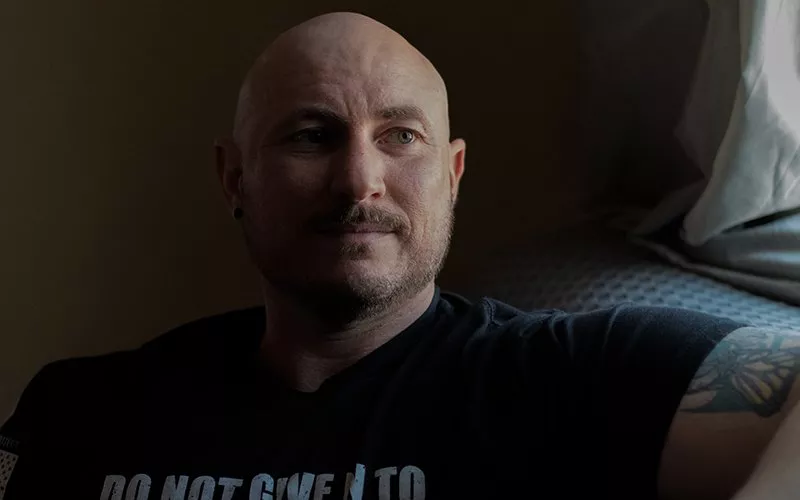
Trey Sheidler of Phoenix
Trey Sheidler joined the Air Force in 2006 and was stationed at Luke Air Force Base, west of Glendale.
His dad and sister had been in the Army, and enlisting would give him access to a college education, which was a big motivator for him to sign up.
Early in his Air Force career, he realized he’s transgender.
“When my time was up, I was like, I can’t not live my life anymore. So that’s why I actually ended up getting out, so I could transition.”
When he left the Air Force in July 2010, he visited a therapist to talk about the transitioning process, and in November 2010, he started taking testosterone and got top surgery the next month. At the same time, Sheidler enrolled in Glendale Community College to earn an associate's degree in strength, nutrition and personal training. In 2011, he became a certified personal trainer.
Sheidler not only underwent a fitness transformation, he went through another transformation, from female to male, at age 27.
“It’s kind of why I got into personal training, just because I wanted to kind of build a body that matched what I saw myself as in my mind.”
About 50% of his clients are transgender he said.
When the ban was reversed in April of last year, Sheidler, 38, was at a loss for words.
“It doesn’t even seem real. That could have completely changed my life and my options at the time.”
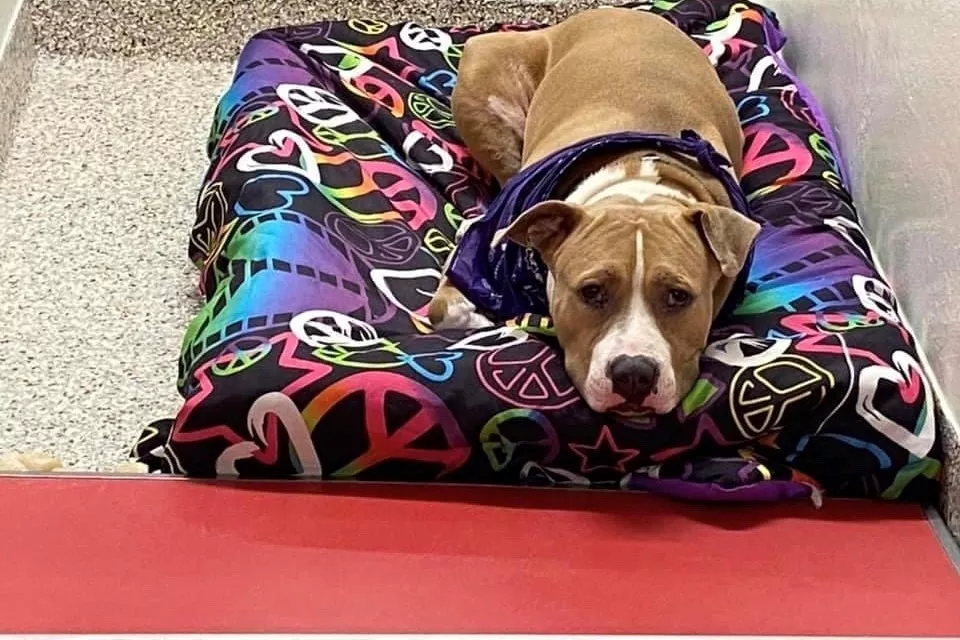
Adoption fees for adult pets at Pima Animal Care Center have been waived for the month of May as PACC has taken in nearly 700 animals in the past week.
“As soon as we get one animal out, three more come in its place,” said Monica Dangler, Interim Director of Animal Services. “We just need to clear out some kennels in order to keep up with what’s happening right now.”
Adopted dogs have a $20 license fee. Kittens and puppies still cost $50 each. The shelter is also waiving reclaim fees for owners whose pets get lost and wind up in PACC’s care.
If you can’t adopt, PACC also needs foster help. You can house a pet for a couple of weeks, and the shelter will help provide what you need for that pet. To get started, just head to pima.gov/foster.

Monday, May 10, 2021

Arizona nonprofits that focus on education, diversity and environment/sustainability are eligible for grants worth up to $10,000 from Cox Charities.
Programs that focus on K-12 and STEAM; water conservation, waste or carbon reduction; or serve 80 percent or more of a target population or serve an inclusion, diversity and equity initiative are eligible.
Applications are being accepted at the Arizona Community Foundation website. More information on guidelines can be found at CoxCharitiesAz.org. The deadline is May 28.
“Cox has a history of supporting nonprofits in the communities where our 3,100 employees in Southern Arizona and Phoenix live and work. It is more important this year, than ever before, for us to support local nonprofits that provide vital services upon which so many Arizonans depend. We’re proud to extend a helping hand,” said Lisa Lovallo, market vice president, Cox Southern Arizona.

Pima County is teaming up with the Northwest YMCA, 7770 N. Shannon Road, to offer a vaccination clinic from 4 to 8 p.m. today, Monday, May 10.
Meanwhile, Pima County and the Federal Emergency Management Agency (FEMA) have launched mobile vaccination units to reach vulnerable communities with high risks of COVID-19 exposure and infection.
The operation includes two mobile vaccination units that are able to administer 250 vaccines per day each, according to a county press release.
The units will run through June 26, operating at two concurrent locations for three days, with one day to tear down and move to the next location. The locations were selected based on census tract data and the Social Vulnerability Index of the area to identify highly vulnerable communities.
The sites will offer walk-up vaccinations of both the Moderna and Johnson & Johnson vaccine for those 18 and older on a first-come, first-served basis. Vaccinators will return to the same mobile site 28 days after their first visit to receive their second dose, following CDC guidance. Help will be available to all who need assistance with mobility, language or other accommodations.
Here are the planned mobile clinics:
Monday, May 10
- 2900 N. Columbus Blvd, Tucson, 9 a.m. – noon
Northwest YMCA, 7770 N. Shannon Road, Tucson, 4 – 8 p.m.
Tuesday, May 11 - Thursday, May 13
- Greyhound Park, 2601 S. 3rd Ave., 10 a.m. – 8 p.m.
- Wheeler Taft Library, 7800 N. Schisler Drive, 10 a.m. – 8 p.m.,
Rillito Race Track, 4502 N. 1st Ave., 10 a.m. – 8 p.m.
Wednesday, May 12
- Ott Family YMCA, 401 S. Prudence Road, 8 a.m. – noon
- Sun City Oro Valley, 1565 E. Rancho Vistoso Blvd., 1 p.m. - 4 p.m.
At other vaccination sites, Pima County officials are shifting to indoor vaccination sites to avoid making staff and volunteers endure long days in triple-degree temperatures.
Tucson Medical Center has transferred its operations to the Udall Center, 7200 E. Tanque Verde Road. The site is open 8 a.m. to 5 p.m. Monday, Thursday and Friday and 8 a.m. to 7 p.m. Tuesday and Wednesday. Register at https://vaccine.tmcaz.com/MyChart/OpenScheduling.
Pima County has opened a new indoor vaccine site at the Kino Event Center, where the county had earlier been doing COVID testing. That site is open 9 a.m. to 7 p.m., Monday through Saturday. Register at azdhs.gov.
The county has also opened an indoor vaccination POD at El Pueblo Center, 101 W. Irvington Road, which is open Monday, Wednesday and Friday from 9:30 a.m. to 1:30 p.m. No appointment is necessary.
The drive-through POD at Banner-South Kino Stadium, 2500 E. Ajo Way, is now offering appointments between 7:30 a.m. and 12:30 p.m. but will close permanently on May 14.
Visit pima.gov/covid19vaccine for more details.
The UA vaccination point of distribution is now accepting anyone over the age of 16 who comes in for a shot.
The POD, which is scheduled to close at the end of June, offers a sit-down clinic in the Ina E. Gittings Building (1737 E. University Blvd.) from 10 a.m. to 10 p.m. daily.
If you’d rather schedule an appointment, the state is expected to open new first-dose appointments daily at podvaccine.azdhs.gov. Call 602-542-1000 or 844-542-8201 for help in English or Spanish.
If you need help, call the COVID Ambassador Team hotline at 520-848-4045 between 7 a.m. and 7 p.m. daily or email [email protected].
CVS pharmacies are now accepting same-day COVID-19 vaccination appointments, and at some locations no appointment is necessary.
About 190 locations in Arizona are taking walk-ins, but appointments are also available within an hour of scheduling.
Walgreens announced it would offer same-day appointments at locations across the country as of this week. Patients can schedule appointments up to 30 minutes before the desired appointment time.
While Walgreens continues to encourage appointments, a Walgreens corporate spokesperson said, walk-ins have and continue to be accepted “if a time slot is available,” across all 8,800 Walgreens stores offering vaccinations.
As of Sunday, May 9, 414,850 people in Pima County had received at least one shot of the virus, accounting for 39.7% of the population. A total of 349,067 people were fully vaccinated.
Get tested: Pima County has free COVID testing
Pima County is continuing to offer a number of testing centers and pop-up testing sites around town, including the northside Ellie Towne Flowing Wells Community Center, 1660 W. Ruthrauff Road. Schedule an appointment at pima.gov/covid19testing.
The University of Arizona’s antibody testing can determine if you have had COVID and now have antibodies. To sign up for testing, visit https://covid19antibodytesting.arizona.edu/home.
Today’s numbers
With 642 new cases reported today, the total number of Arizona’s confirmed novel coronavirus continues to climb to 870,000 as of Monday, May 10, according to the Arizona Department of Health Services.
Pima County, which reported 61 new cases today, has seen 115,805 of the state’s 869,472 confirmed cases.
With no new deaths reported this morning, a total of 17,409Arizonans have died after contracting COVID-19, including 2,403 deaths in Pima County, according to the May 10 report.
A total of 565 coronavirus patients were in the hospital as of May 9. That’s roughly 16% of the number hospitalized at the peak of the winter surge, which reached 5,082 on Jan. 12. The summer peak was 3,517, which was set on July 13, 2020. The subsequent lowest number of hospitalized COVID patients was 468, set on Sept. 27, 2020.
A total of 828 people visited emergency rooms with COVID-like symptoms on May 9. That number represents 35% of the record high of 2,341 set on Tuesday, Dec. 29, 2020. That number had peaked during the summer wave at 2,008 on July 7, 2020; it hit a subsequent low of 653 on Sept. 28, 2020.
A total of 182 COVID-19 patients were in intensive care unit beds on May 9, which roughly 15% of the record 1,183 ICU patients set on Jan. 11. The summer’s record number of patients in ICU beds was 970, set on July 13, 2020. The subsequent low was 114 on Sept. 22, 2020.
—with additional reporting from Christina Duran, Jeff Gardner and Mike Truelsen

