

Monday, June 28, 2021
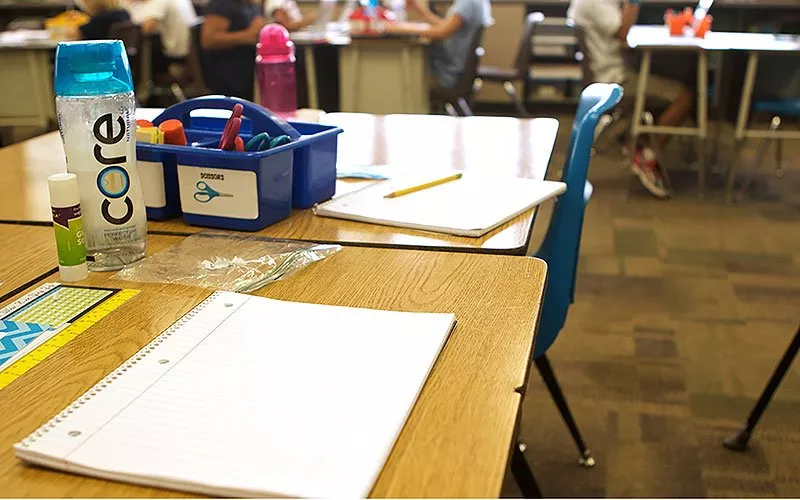
WASHINGTON – Despite gains in some areas, Arizona continued to rank among the worst states in the nation for education, according to the latest version of a national report that measures children’s well-being across several areas.
The 2021 Kids Count report said Arizona was 47th overall in education, down one spot from 46th a year earlier, evidence that “we’re not doing a very good job in Arizona,” experts said.
David Lujan, president and CEO of Children’s Action Alliance, said the low ranking “stems from the lack of investments we’ve seen in education, not only K-12 education but early childhood education, going back for more than 20 years now.”
“We’re seeing the ramifications of that in things like large class sizes, the lack of full-day kindergarten in every school district, and teacher shortages,” Lujan said. “Those things matter when it comes to being able to provide a quality education for students.”
The Kids Count report, prepared annually by the Annie E. Casey Foundation, measures children’s welfare in each state through dozens of data points split between four broad categories: education, economic well-being, health, and family and community.
Overall, Arizona improved slightly, going from 42nd place in last year’s report to 40th in the latest report. But the state did not crack the top half of states in any category. Arizona did best in health, where it finished 28th among states, followed by 35th for economic well-being and 46th in family and community.
And those numbers are likely to get worse in next year’s report, which will include data from the pandemic year of 2020, which did not make it into this report, experts said.
“Providing access to quality health care, child care, education and mental health services must be the focus as we come out of the coronavirus pandemic,” Lujan said.
Sunday, June 27, 2021
Saturday, June 26, 2021
Friday, June 25, 2021

WASHINGTON – The Navajo Nation has yet to record a single case of the Delta variant of COVID-19, but now is not the time for tribe members to let down their guard, Navajo President Jonathan Nez said Wednesday.
Nez spent much of the time during a Washington Post program on public health talking about the Navajos’ success in fighting the pandemic, falling from a national COVID-19 hotspot at one point last year to negligible case numbers today.
But while the tribe has “been very cautious … I think we need to continue to be cautious,” Nez said, in part because of the arrival of the highly contagious Delta variant.
“We have heard updates that the city of Tucson has identified a Delta variant … so we are concerned,” Nez said.
An Arizona Department of Health official said Wednesday that the Delta variant has been found in northern, central and southern Arizona.
“The Alpha variant currently is the predominant strain in Arizona, but we anticipate that there will be an increase in the Delta variant since it appears to be more transmissible than the Alpha variant,” said Steve Elliott, a health department spokesperson.
Arizona Public Health Association Executive Director Will Humble said experts “expect that the Delta variant will be dominant by mid-to-late summer in Arizona.”
“It’s going to take over,” he said. “It’s just outcompeting the other strains. The question is how long it’s going to take.”
But Humble said that despite the high transmission rates health experts have seen for the Delta variant, it will likely not spread as fast as previous variants because of the availability now of COVID-19 vaccines.
OMAHA, Neb. – Jay Johnson is determined to not let one game define the University of Arizona baseball program.
“Twenty-four hours or 36 hours of disappointment here is not going to change the accomplishments of our team,” the Wildcats coach said. “I’m proud of them and I really believed we could be here. I believed we could be a championship team.”
Monday night just wasn’t the night for the Wildcats.
Arizona fell to Stanford to suffer its second loss of the 2021 NCAA College World Series.
“It’s one thing to think you have that. Talk about doing it. Say you’re going to do it and actually go out and do it,” Johnson said. “In terms of the Pac-12, the two most physical teams made it here.”
Arizona was the first team eliminated from the tournament, giving up 14 runs to Stanford.
Despite the game not going their way, Johnson was still proud of his team’s historical season. Arizona was the outright Pac-12 champion for the first time since 1992.
The Wildcats had a memorable run with 45 wins and only two conference series losses. They were also the only team in the West Region that had three members included in the All-Region First Team. Two of those, freshman catcher Daniel Susac and freshman designated hitter Jacob Berry, were also First Team Freshman All-Americans.
“Great baseball team made up of great competitors and great character,” Johnson said. “They’re collectively pretty special.”
Only two members of the 2020 Arizona baseball team decided to not come back and play in 2021 after the season was canceled last year due to the pandemic. Johnson said that he is proud of the way his players handled adversity and that “itss a tough group to say goodbye to.”
Arizona will say goodbye to seniors Vince Vannelle and Preston Price. Also, 22 players on the Arizona roster are draft eligible.
With this year’s MLB draft lasting only 20 rounds, Arizona believes it will keep a good amount of players for next year’s team although highly coveted junior outfielder Donta Williams probably won’t be one of them. Johnson said that Williams represents everything it means to be a Wildcats player.
“They don’t make them like that very often. The only thing he’s better at than playing baseball is that he’s a first-class and quality human being,” Johnson said. “If there’s a recruit, a young player at home that wants to play baseball at Arizona, look at number 23.”
Although he has a bright future ahead of him, Williams said that his focus and the team’s focus has always been on being in the moment.
“When it was time to play, we just competed. That’s why we came out here,” Williams said. “It was everything I dreamed it would be. I’m just happy I got to be here with this group of guys.”
With the possibility of the team continuing without Williams next year, he feels the team still has strong leadership that will take them back to the College World Series.
“There’s 30 other guys in that locker room that are bleeding right now,” Williams said. “Every one of them are leaders in my eyes. There are going to be a ton of guys that will step up to the plate to carry the team.”
Although early elimination was not what the Arizona baseball coaches, players and fans expected, they can still reflect on a standout season and the memories made.
“I love every one of these guys,” Johnson said. “They’ve poured everything they have into our program.”
Arizona will enter the offseason and be back again to compete for another NCAA national championship next spring. The MLB draft is scheduled for July 11-13.
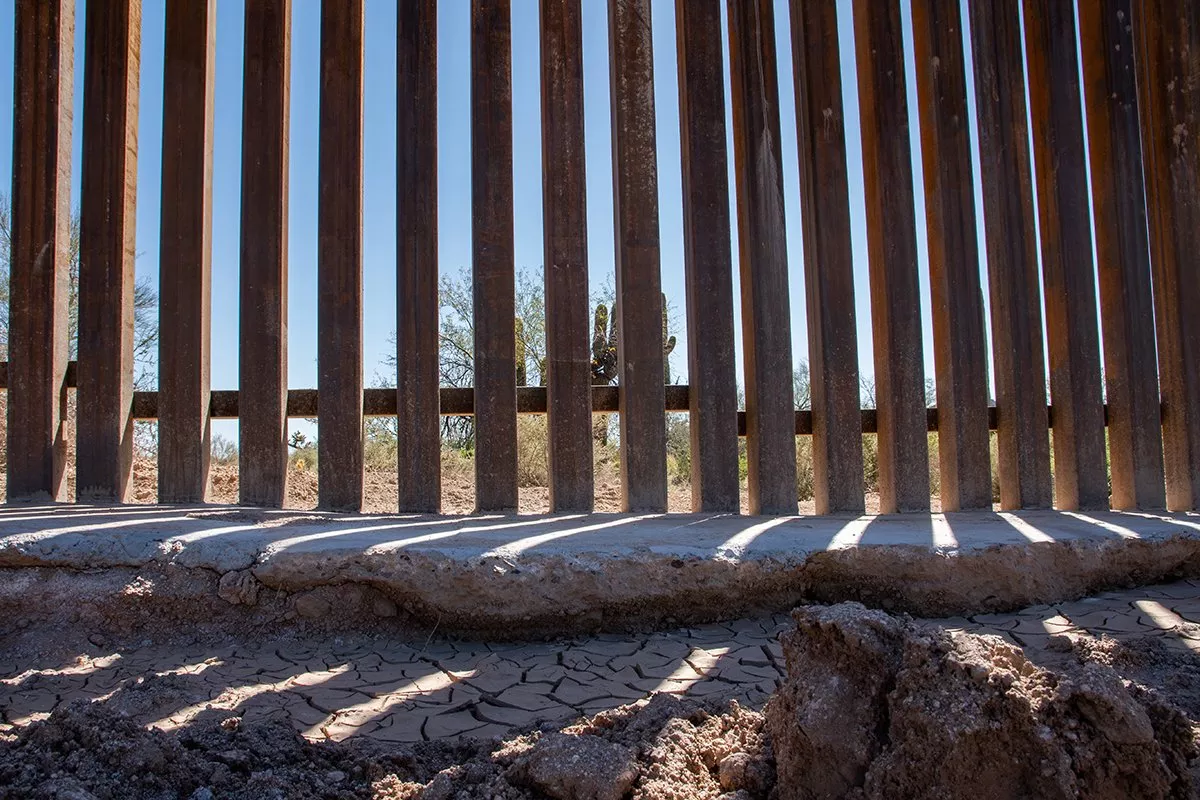
WASHINGTON – Border officials said they were “devastated” this week to find that the federal government has extended a COVID-19 ban on nonessential border crossings for another month, potentially crippling businesses there.
“The ban is a terrible and now-exaggerated response to the pandemic,” said Andy Carey, executive director of the U.S.-Mexico Border Philanthropy Project. “It’s reinstated every month for another month, and it’s been going on for nearly a year-and-a-half now, it’s time for the ban to end.”
The ban was first imposed in March 2020 on nonessential travel – essentially tourists or family visitors – between the U.S., Mexico and Canada in response to the first wave of COVID-19. It was regularly extended but was set to expire Monday.
Customs and Border Protection said that the situation has improved in both Canada and Mexico, as vaccinations have risen and infections have dropped. But it announced Wednesday that things were still too uncertain, particularly given the rise of new variants, to lift the restriction, which was extended to 11:59 p.m. July 21.
CBP did not immediately respond to a request for comment Wednesday. But border community leaders, who had been looking for the ban to end this week, were not happy.
Nogales Mayor Arturo Garino said his city has lost billions of dollars in business from the ban that “should have been lifted months ago.”


