Wednesday, July 28, 2021
Pima County is seeing an increase in school outbreaks as students return to the classroom, with health officials warning the spread of COVID in schools could have a significant impact on the community at large.
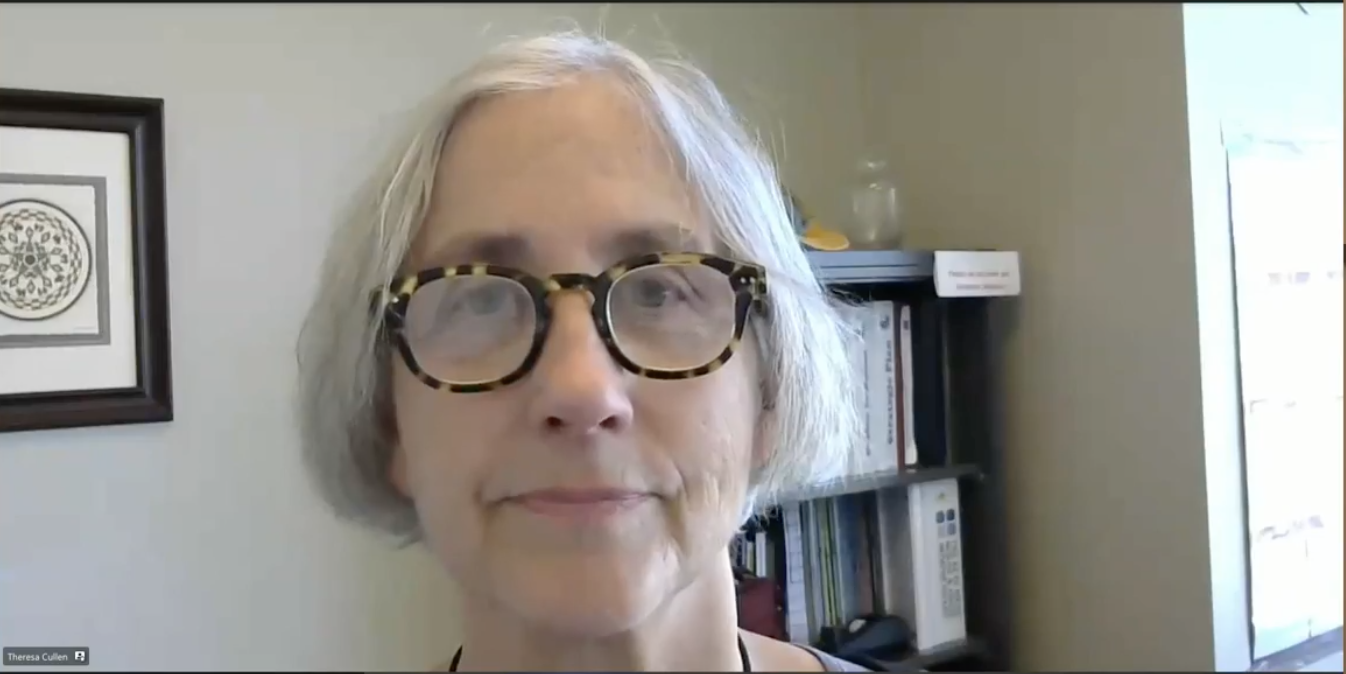
Pima County Health Department Director Dr. Theresa Cullen told the press this morning that as of today, there have been eight outbreaks in schools and 56 school cases reported in the last seven days since July 19, but there were no outbreaks in the summer. She said they have closed one school classroom in the last five days and expects another 10 cases will be reported today.
The cases are primarily from a school district that is already back in session and some of the outbreaks are in schools and others are from school-related activities, like football, cheerleading or freshman orientations, Cullen said.
“We are now seeing this increase as students go back to school,” said Cullen. “We anticipate that approximately 5% to 10% of the cases we are seeing right now will be due to school as opposed to a maximum of 4% last year.”
Although several studies conducted early during the COVID-19 pandemic suggested children have lower incidence rates than adults, this may be partly due to children having fewer opportunities for exposure and a lower probability of being tested, CDC officials warned in an updated July 9 brief. They noted that studies that systematically tested children and adolescents, irrespective of symptoms, for COVID-19 infection or prior infection found “their rates of infection can be comparable, and in some settings higher, than in adults.”
The official Twitter account of the so-called audit and a semi-official account dubbed the “Audit War Room” were permanently suspended by the social media giant Tuesday, as were multiple other accounts related to election reviews in other states. Some organizations that were raising money to fund the efforts also were removed from Twitter.
Twitter said the accounts were suspended for violating rules on platform manipulation and spam, according to a statement the company sent to BuzzFeed News.
The Audit War Room is still on Instagram and has posted about the suspensions there, imploring followers to move to the encrypted messaging app Telegram or the right-wing social media site GETTR.
That account, which has been combative toward journalists and critics — this month, it mocked a constituent whose dog had recently died — was the subject of intense scrutiny by many on Twitter and in the political sphere.
SUPPORT NEWS YOU TRUST.
It is unknown who was behind the account or the five other “War Room” accounts tied to proposed ballot reviews in other states that were suspended by Twitter.
Social media accounts related to fundraising efforts for the audit also were permanently suspended by Twitter for platform manipulation and spam.
The Twitter account for Voices and Votes, a 501(c)(4) created by the host of a Pro-Trump cable news network that has repeatedly spread false claims about the election in Arizona and across the country, was also permanently suspended.
One America News Network’s Christina Bobb launched Voices & Votes which has raised at least $150,000 for the “audit.” Bobb routinely tweets about the fundraising effort and mentions her non-profit on her show, urging supporters to donate.
Bobb has been given exclusive access to the ballot review site that other local and national news organizations have not been granted.
Another group raising money for the “audit” that claims to have raised over $2 million has also been suspended, though it is unclear if the account was suspended for the same reason. Twitter did not respond to Arizona Mirror’s requests for comment. Fund The Audit had a goal of raising $2.8 million. The organization was created by The America Project, a Florida-based 501(c)(4) non-profit started by former Overstock.com CEO and ardent Trump ally Patrick Byrne.
Byrne’s Telegram channel is full of conspiracy theories about the election, and he often shares information from other prominent pro-Trump figures that includes baseless allegations about election fraud. Some of those people, like Jovan Pulitzer, are also a part of Arizona’s audit.
Byrne has been a leading voice in 2020 election fraud claims and has railed against the so-called “deep state”. Some of his claims came after it was revealed he had an affair with accused Russian spy Maria Butina, which he claimed the FBI encouraged him to do.
Byrne was also present at an hour-long meeting at the White House during the final days of Donald Trump’s presidency in which he, Sidney Powell and disgraced retired Gen. Michael Flynn urged the president to overturn the election.
GET THE MORNING HEADLINES DELIVERED TO YOUR INBOX
The official Twitter account for the Senate’s ballot review promoted the Fund The Audit effort in the past.
According to reporting by the Washington Post, former Arizona Secretary of State Ken Bennett was told to promote the fund by Cyber Ninjas CEO Doug Logan.
Logan’s now-deleted Twitter account retweeted accounts that claimed Donald Trump actually won the 2020 election and lost because of widespread fraud that favored Joe Biden. There is no evidence that happened, and such claims have been refuted by recounts and post-election tests and audits, and courts have consistently rejected them.
Logan also appeared in a film about a book written by Byrne that claimed the election was stolen from Trump via fraud. The film was directed by a man who believes aliens were behind 9/11 and attendees of the film’s premiere encouraged vigilante justice against elected officials.
Arizona Mirror is part of States Newsroom, a network of news bureaus supported by grants and a coalition of donors as a 501c(3) public charity. Arizona Mirror maintains editorial independence. Contact Editor Jim Small for questions: [email protected]. Follow Arizona Mirror on Facebook and Twitter.

PHOENIX – Full-time minimum wage workers can’t afford a two-bedroom apartment in any state, according to a recent report from affordable housing advocates, and with housing costs skyrocketing in Arizona, many workers are struggling.
According to the National Low Income Housing Coalition’s annual Out of Reach report, those workers in 93% of U.S. counties can’t afford a one-bedroom, either. In Arizona, workers would need to put in 73 hours a week to afford a two-bedroom rental. Excluding weekends, that’s 14.6 hours per day. Still, that’s better than the national average of 97 hours per week, the report said.
The report defines affordability as the hourly wage a full-time worker must earn to spend no more than 30% of their income on rent. Workers would need to earn $24.90 per hour for a two-bedroom rental and $20.40 per hour for a one-bedroom. The average hourly worker earns $18.78 per hour, and the federal minimum wage is $7.25 per hour, unchanged since 2009.
In 2019, 13.5% of Arizonans were living below the federal poverty level of $25,750 (for a family of four), compared with 10.5% nationally. This year the federal poverty level is $26,500.
Even under the best of circumstances, rent is unaffordable for most low-wage workers, the report said, and addressing the long-term housing affordability crisis in this country requires increasing rental assistance to all who need it. In Phoenix, the average monthly rent for a two-bedroom apartment is $1,449 – a 12% increase over last July – according to Zumper, which analyzes active apartment listings.

Tuesday, July 27, 2021
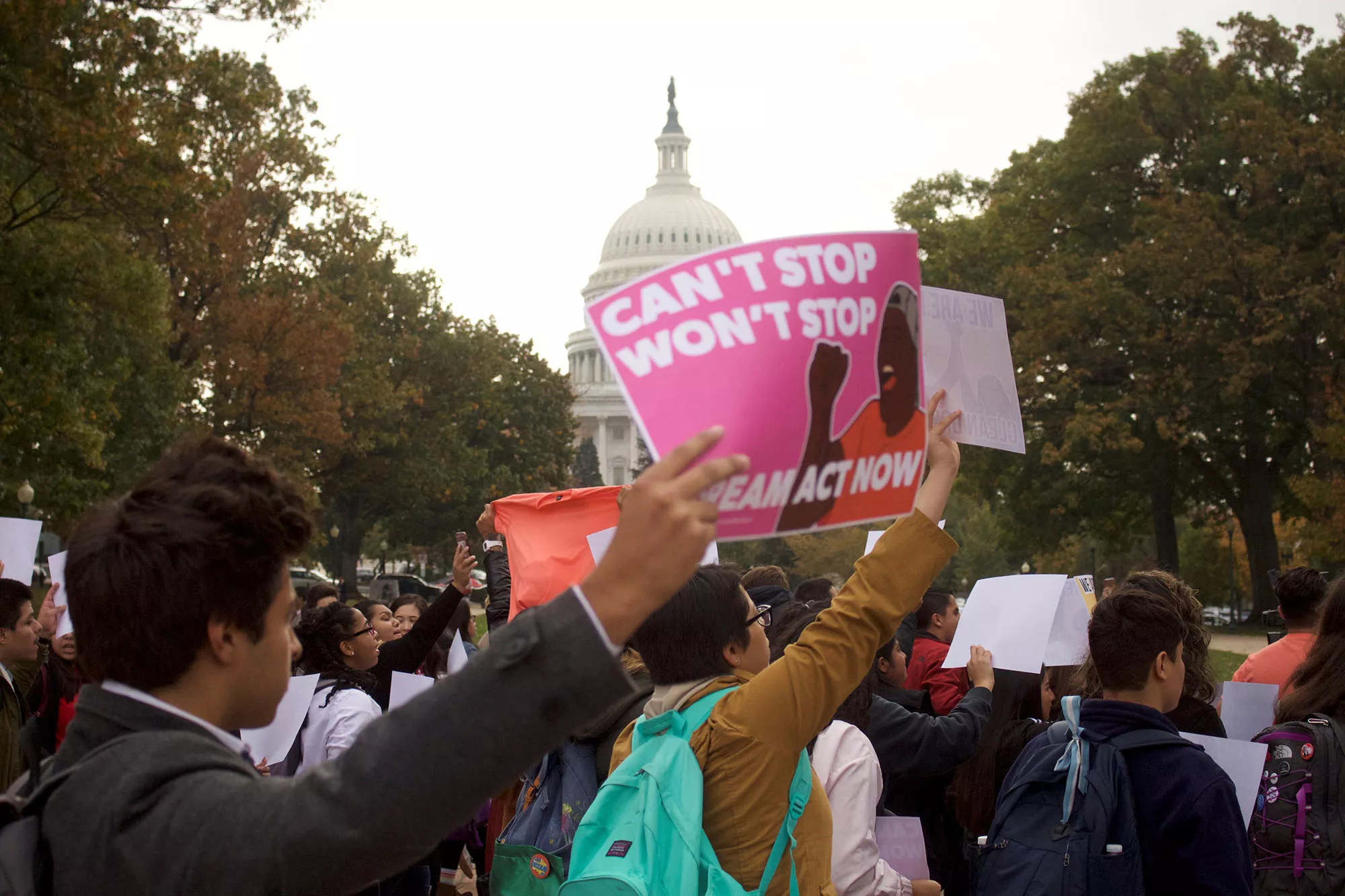
WASHINGTON – A federal judge’s ruling that the Deferred Action for Childhood Arrivals program is unlawful should have no practical impact on more than 600,000 covered immigrants for now – but it is sure to have an emotional impact, advocates say.
“I think it’s the mental toll,” said José Patiño, a DACA recipient and director of education and external affairs at Aliento. “It makes it really difficult to continue moving forward.”
The July 16 ruling by U.S. District Judge Andrew Hanen in Texas was just the latest in a string of reversals and renewals that have been with DACA since it started in 2012 and have reached as high as the U.S. Supreme Court.
Hanen agreed with Texas and eight other states that the Department of Homeland Security did not have the authority to create the DACA program, which defers deportation of immigrants who were brought to this country illegally as children.
Hanen said DHS could still receive applications for first-time DACA protection, but could not approve them. Acknowledging the “hundreds of thousands of DACA recipients and others who have relied on this program for almost a decade,” however, he said that current recipients could continue to apply for and receive renewals of their DACA protection.
U.S. Citizenship and Immigration Services said on its website that “DHS will continue to accept the filing of both initial and renewal DACA requests,” but that “DHS is prohibited from granting initial DACA requests.”


Monday, July 26, 2021
ProPublica is a Pulitzer Prize-winning investigative newsroom. Sign up for The Big Story newsletter to receive stories like this one in your inbox.
They are two sisters in two states. Both are dedicated health care professionals who watched in horror as COVID-19 swept through the nation’s nursing homes, killing a staggering number of residents and staff alike.
One sister is now vaccinated. The other is not.
“Dude. Get vaccinated!” Heidi Lucas texted her sister Ashley in May from her home in Jefferson City, Missouri.
“Nope lol,” Ashley Lucas texted back from Orbisonia, Pennsylvania.
“Don’t you work with old people?”
“Yeah”
“What if you killed one of them? Get vaccinated,” Heidi wrote.
Neither sister is budging as the Delta variant brings a new spike in coronavirus numbers across the nation.
Their divide mirrors America’s larger one, where the vaccine to combat COVID-19 is eagerly embraced by some, yet eyed with suspicion and rejected by others.
It is the refusal group, including a significant percentage who work in the nation’s nursing homes, that has confounded and alarmed health care officials who are at a loss as to how to sway them.
Nursing homes faced a shocking mortality rate during the pandemic. In the U.S., COVID-19 killed more than 133,000 residents and nearly 2,000 staff members between May 31, 2020, and this July 4, according to Centers for Medicare & Medicaid Services reports. The true toll is thought to be even higher as data gathering lagged in the early months of the crisis, health experts say.
Working in a nursing home became one of the “most dangerous jobs” in America in 2020, according to an analysis of work-related deaths by Scientific American.
Yet seven months after the first vaccines became available to medical professionals, only 59% of staff at the nation’s nursing homes and other long-term care facilities are fully or partially vaccinated — with eight states reporting an average rate of less than half, according to CMS data updated last week.
Twenty-three individual facilities had vaccination rates of under 1%, the data showed.
Staff vaccinations have lagged even as the overall rate for residents climbed to 83%, according to the CMS data.
The strong vaccination percentage among nursing home residents is credited, in part, to an early campaign to bring the vaccine directly to facilities. That suggests availability is not necessarily the issue behind staff going without.
So, what is?
The question defies easy answers. Vaccine refusal is regional and often aligns not only with individuals’ political alignment but also with their preferred news sources and which social media they follow.
Last week, President Joe Biden took aim at Facebook and other social media giants for failing to police vaccine misinformation that amplifies conspiracy theories and discourages people from getting vaccinated. “They’re killing people,” he said, directly blaming the platforms. On Monday, he recast the accusation to say it was specific individuals posting dangerous information who are culpable.
On Tuesday, U.S. Sen. Mitch McConnell, R-Ky., pleaded to “anyone out there willing to listen: Get vaccinated.” While not mentioning skeptics specifically — including those in his own party — the Republican leader urged the unvaccinated to ignore “demonstrably bad advice.”
COVID-19 cases are now surging in every state, with new hospitalizations and deaths almost entirely occurring among the unvaccinated. “This is becoming a pandemic of the unvaccinated,” Centers for Disease Control and Prevention Director Rochelle Walensky warned last week during a White House briefing.
In May, CMS began requiring weekly reports on vaccinations of residents and staff at nursing homes and other long-term care facilities. The emerging data confirms many health care experts’ worst fears, especially for Southern states.
Louisiana has the lowest statewide average: Just 44.5% of the staff at its long-term care facilities have been at least partially vaccinated, according to CMS data released last week.
Florida, the second lowest-vaccinated state, had a rate of just under 46% among its nursing home and long-term care staff, with Missouri, Oklahoma, Tennessee, Georgia, Mississippi and Wyoming all showing rates of less than 50 percent, according to the data.
Vaccination rates in assisted living facilities are not included in the data.
A separate American Association of Retired Persons analysis, released last week, showed that only one in five of the nation’s more than 15,000 nursing homes were able to hit a goal, set by two industry trade groups, of vaccinating 75% of their staff by the end of June.
While cases in nursing homes have recently slowed, and most of the new COVID-19 infections are among younger people, some experts still worry of a return to darker days.
The CDC recently launched an investigation into deaths of residents at several western Colorado senior facilities possibly linked to unvaccinated staff, the Associated Press reported Wednesday.
“We need to sound the alarm,” said Susan Reinhard, senior vice president of AARP and director of its Public Policy Institute. “Nursing homes were devastated by COVID-19, and many residents remain highly vulnerable to the virus.”
Nationally, more than 89% of people 65 or older have received at least partial vaccination, the CDC reported this week. Still, public health experts have warned that even if fully vaccinated, the elderly may be vulnerable to “breakthrough” coronavirus infection because of compromised immune systems and other underlying health problems.
In Missouri’s southern region, the overall rate of full vaccination in some rural counties is less than 20%, according to state health department and CDC tracking. The latest surge of the delta variant has turned the area into a “tinderbox,” Steven Edwards, CEO of the CoxHealth hospital system in Springfield, recently told reporters.
On Thursday, 160 patients were being treated for COVID-19 at CoxHealth, a spokesperson told ProPublica. On May 14, there were 18.
Heidi Lucas directs the Missouri Nurses Association. She is pro-vaccine and has been pushing hard for nurses to get vaccinated, especially those on the front lines of patient care.
Lucas said it is impossible to separate the lack of vaccination among staff from the lack of vaccinations in individual communities. “Nurses are people too,” she said. “They are on social media and are inundated with false information. How do you fight it?”
Her sister, Ashley Lucas, lives 900 miles away in Orbisonia, a small town of around 500 people about an hour south of State College. She’s a traveling certified nursing assistant at area nursing homes and chose to skip the vaccine.
Her fiance and her children, ages 12 and 13, are also unvaccinated. “I don’t consider myself an anti-vaxxer,” she told ProPublica, bristling that some might see her as reckless or ill-informed.
Instead, she said her decision was carefully considered. It never made sense to her, she said, that the virus seemed to strike randomly, with some residents getting sick while others did not. She said she is not convinced the vaccine would change the odds.
She’s also concerned after hearing that the vaccine could interfere with fertility — a contention that has been deemed false by the Centers for Disease Control and Prevention and the World Health Organization. It all leads her to believe more research is needed into the vaccines’ long-term effects.
“This is just a personal choice and I feel it should be a free choice,” she said. “I think it’s been forced on us way too much.”
———————
Certified nursing assistants make up the largest group of employees working in nursing homes and other long-term care facilities, providing roughly 90 percent of direct patient care. They are typically overworked and underpaid, most earning about $13 per hour and receiving no paid sick leave or other benefits, said Lori Porter, co-founder and CEO of the National Association of Health Care Assistants.
Porter said she is not completely surprised by the low vaccination rate. It comes down to trust, she said, both of the vaccines and of facility administrators who now say staff must get vaccinated. Refusal may feel like empowerment. “It’s the first time ever they have had the ball in their court,” Porter said.
On March 31, Houston Methodist Hospital mandated that all of its 26,000 employees be vaccinated by June 7 or lose their jobs. Jennifer Bridges, a nurse, sued along with 116 other employees, claiming the health care system had overstepped its rights and that she and the others refused to be “human guinea pigs,” evoking the Nuremberg Code, a set of ethical standards established in response to Nazi medical experimentation in concentration camps.
On June 12, U.S. District Judge Lynn N. Hughes dismissed the closely watched case, taking offense to likening the vaccine to the Holocaust, which he called “reprehensible.” Ten days later, 153 Houston Methodist employees either were fired or quit after refusing the vaccine. The judge’s ruling has been appealed.
A handful of long-term care chains have similarly sought to mandate worker vaccines, but such action is far from widespread in the industry. One sticking point has been whether vaccination can legally be required, since all three available vaccines have only emergency use authorization, not full approval from the U.S. Food and Drug Administration.
The thornier issue, though, is whether the facilities can risk losing staff when they’re already short-handed. Many workers have vowed to quit rather than be forced into vaccinations.
Aegis Living, a long-term senior care provider in three Western states, made vaccines mandatory for its roughly 2,600 employees on July 1. Dwayne Clark, founder and CEO, said initially 400 employees refused but when the deadline arrived, only about 100 left rather than be vaccinated.
“We lost some staff that we didn’t want to lose,” Clark told ProPublica, “but it felt like the right moral protocol to impose.”
Recently the U.S. Equal Employment Opportunity Commission issued guidelines stating that employers can require workers to be vaccinated as long as medical or religious exemptions are permitted.
“Nursing home workers certainly have the right to make decisions about their own health and welfare, but they don’t have the right to place vulnerable residents at risk,” said Lawrence Gostin, a health law professor at Georgetown University. “Nursing homes don’t just have the power to require vaccinations, they have the duty.”
Still, the issue is far from resolved.
“America is a highly litigious country,” Gostin said, “I expect the courts to consistently uphold nursing home mandates, because they are entirely lawful and justified. But there will likely be lawsuits at least until it is quite clear they are futile.”
———————
Diane Peters is a registered nurse in the Chicago suburbs who last year worked at a nursing home and is now working at a senior rehabilitation center. She does not trust the science behind the vaccine and is unvaccinated. So is her fiance.
Everything about the rollout felt like propaganda, she said. Development was too rushed. Clinical trials typically take years, she said, not months. “I don’t think it’s safe right now, it needs more time,” she said she tells patients if they ask.
Most don’t, she said. Neither do her co-workers. She has only been asked once by her employer if she was vaccinated, she said, declining to name the company.
Peters guesses about 40 percent of her colleagues are also unvaccinated, but said no one likes to talk about it because the divide surrounding the vaccine is “surreal.” Staff members are tested regularly and are required to wear masks, she said.
She is doubtful mandates would stick. “They can threaten,” she said, “but a lot of nurses would walk.”
She trusts her instincts and her own research for now. When asked what would change her mind, she had one word: “Nothing.”