

Thursday, July 15, 2021

Wednesday, July 14, 2021

Tucson Unified School District will be offering a remote-only learning option for the coming school year.
On August 5, students who would prefer to learn online will be able to attend Tucson Unified Virtual Academy K-12. Students would follow a regular class schedule, like in-person instruction, and the district would provide the technology devices and software. If students feel they are not fit for online learning, they do still have the option to return to in-person learning. For the coming school year, students can switch back to in-person learning and return to the school they were enrolled in at the 1st quarter Progress report date (September 1-3, 2021), or at the end of each quarter.
While students would be attending class remotely during the week, they can still participate in after-school programs in-person, such as sports or other activities.
In a letter to parents and the TUSD community on Wednesday, Superintendent Dr. Gabriel Trujillo recognized that families would be concerned about returning to in-person learning since the district would no longer be able to require masks in schools after Gov. Doug Ducey signed the Arizona Budget Bill on July 30.
He said the governing board would discuss safety recommendations for school re-entry at the upcoming meeting on July 20. While the district can longer mandate masks, he wrote they still “highly recommend a mask be worn by anyone who is not vaccinated.”
To learn more about the Tucson Unified Virtual Academy email [email protected] or call 520-225-6330.

Several local roads are closed because of flooding, according to the Pima County Transportation Department. Recent storms have produced flash-flood warnings from the National Weather Service.
Roads closed as of Wednesday morning:
- Manville Road West of Sandario Road - all directions
- Manville Road West of Avra Road
- Sandario Road South of Desert Oasis Trail
- Avra Valley Road West of El Paso Gas Road
- Avra Valley Road East of Trico
- Jamie Avenue North of Bopp Road
- Overton Road from La Cholla to Verch Way
- Wilds Road East of Lago del Oro Parkway at the CDO Wash
- Lago del Oro from Rail N Road to Golder Ranch Road
- Silverbell Road from Sweetwater Drive to El Camino Del Cerro
- Hawser Street from Twin Lakes to Coronado Forest Drive

PHOENIX – Is bringing humankind to Mars necessary or realistic in our lifetimes?
Tesla CEO Elon Musk is adamant about it, and he and two fellow billionaires are pushing the boundaries of how far private companies have gone into the stratosphere and beyond.
But some experts are raising concerns about the high-priced and publicity grabbing aeronautics.
“Space is not forgiving. It’s conspiring to kill you every minute,” said Madhu Thangavelu, a lecturer at the University of Southern California and expert in the design of complex space projects, including space stations and exploratory missions. “And we have this innate desire to go out and be among the stars … but we are not capable biologically to do that.”
Despite such daunting obstacles, Thangavelu, who has discussed space travel with Musk, finds the early efforts promising.
In May, SpaceX successfully launched and landed a Starship rocket for the first time without exploding. Starship SN15’s completion of the high-altitude flight test marked a huge milestone in Musk’s ambitions to send humans to Mars.
SpaceX estimates it would take six months to get to Mars. Thangavelu said he has asked Musk many times about the logistics of passengers living in a rocketship for that long. Musk told him that he’ll set people up with where they want to go but it’s their business what they do during the time it takes to get there.

Tuesday, July 13, 2021
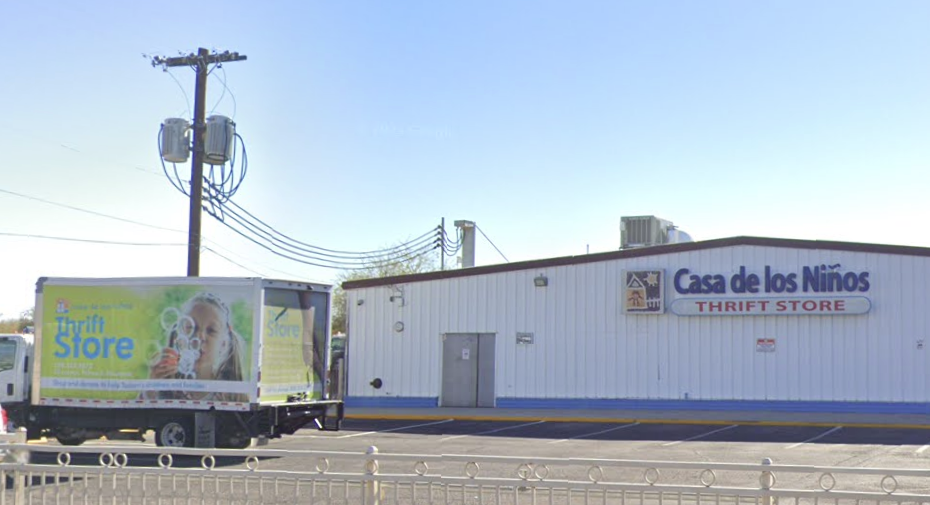
"There is increasingly more competition for both customers and employees, and our model is no longer sustainable," the announcement read. "We are so grateful to our donors, customers, and staff for all of the years of support."
The thrift is still open for regular business hours. They will hold a final sale July 20-24, and then officially close to the public.
The large thrift store contains a variety of clothing, furniture and media, the sales of which supported Casa de los Niños’ goal to support local children and families in need.
The Casa de los Niños Thrift Store is located at 1302 E. Prince Road and open from 10 a.m. to 6 p.m., closed Mondays and Sundays. For more information, visit casadelosninos.org


WASHINGTON – Federal officials have awarded $45.3 million in COVID-19 relief funds to 68 Arizona concert venues, a vast improvement over the single grant awarded a month ago but still far short of the need, advocates say.
The Arizona funding was part of the $3.2 billion awarded as of Tuesday by the Small Business Administration under the $16 billion Shuttered Venue Operators Grant.
The disastrous June rollout of the program – more than six months after funding was approved – led to a staff overhaul at SBA. While some venue owners and operators in Arizona said this week they were finally feeling some relief, others said they are still “anxiously waiting” months after applying for assistance.
Jenny Thomas, director of communications for the Association of Performing Arts Professionals, said she is “extremely appreciative of this essential support that has the potential to save the live performing arts industry.” But the grants need to be processed much faster, she said.
“According to the SBA’s latest report, only 28% of applications have resulted in an award, and only about 18% of awards, or just over $2 billion, have been disbursed, more than six months after the law was enacted,” Thomas said.
For organizations like Arizona Arts Live in Tucson, every day of delay hurts.
“We’re hoping the SVOG money comes through soon,” said Chad Herzog, executive director of the group that used to be known as UA Presents. While they wait for word on funding, he said, all their efforts to maintain business during the pandemic have come at “a tremendous loss.”
Of the total that had been awarded as of Tuesday, according to the most recent report from the SBA, just $2 billion has actually reached businesses. The remaining $1.2 billion that had been awarded was still pending disbursement.
It is not clear how many Arizona businesses are still waiting or have been denied: The SBA does not release those numbers by state. But nationally, the agency said it has received 14,884 applications and has awarded grants to 4,222 of the businesses, an approval rate of 28%. Just 364 have had their applications declined so far.

