

Monday, April 18, 2022
WASHINGTON – Arizona’s unemployment rate fell to 3.3% in March, the lowest rate in almost a half-century, according to numbers released Friday by the Bureau of Labor Statistics.
The White House said Arizona was one of 17 states whose jobless rates hit “historic lows” in March, as the U.S. economy claws its way back from the pandemic. Arizona beat the national unemployment rate of 3.6% for the month.
BLS data that was available Friday for states only went back to 1976, but March’s unemployment in Arizona was the lowest for those 46 years. National data going back to 1948, however, shows several months in the 1950s when U.S. unemployment fell below 3%.
Economists said the new numbers still show the strength of the recovery both nationally and in Arizona, where the unemployment rate hit 13.9% just two years ago at the height of the pandemic.
“It’s a really encouraging sign about the strength of the economic recovery that we’re having in Arizona and nationally,” said Andrew Sugrue, the assistant director of policy and advocacy at the Arizona Center for Economic Progress.
But Sugrue and others said the lower unemployment rate might also reflect a pandemic-driven drop in the labor force that has left some businesses hard-pressed to fill the job openings they have. That, in turn, can feed inflation, as employers are forced to raise wages to compete for fewer workers.
Jim Rounds, president of Rounds Consulting Group Inc., said he sees “both positive things and negative things” in the latest BLS report.
“On the positive side, this is reflecting the fact that Arizona is still one of the stronger states in terms of economic growth compared to everybody else across the country,” he said, calling employment data “one of the best economic indicators.”
“Now on the negative side, one of the reasons that the unemployment rate is so low is that we’ve been experiencing labor shortages in a lot of different areas,” Rounds said. “When you have labor shortages, it tends to push wages up which adds to inflation, but it’s not the good kind of upward pressure on wages.”
BLS numbers show that the labor force – the share of the working-age population that is employed or actively looking for work – was smaller in March than it was before the pandemic, both nationally and in Arizona. Labor force participation in the U.S. fell from 62.7% in March 2020 to 62.4% last month, while in Arizona the numbers fell from 61.8% to 60.7% in the same period.
But the numbers were still hailed by President Joe Biden, who noted that more than 20 states posted jobless rates below 3% last month.
“Over the last year, the unemployment rate dropped in every state and many states have reached historic lows,” Biden said. “These aren’t just numbers on a page: These are millions of Americans back at work and able to support themselves and their families with good-paying jobs and enjoy the dignity a job provides.”
Nebraska and Utah experienced the lowest jobless rates at 2.0% in March, while New Mexico’s 5.3% was highest among states. The worst rates were in the District of Columbia and Puerto Rico at 6% and 6.5%, respectively.
Even the worst states were significantly better than they were at the height of the COVID-19 pandemic, when unemployment nationally peaked at 14.7% in April 2020.
But low unemployment has left many industries struggling to find workers. That is particularly true in Arizona for the tourism and construction industries, experts said.
“Some industries are still growing because they’re recovering the jobs that had been lost,” said Doug Walls, the labor market information director for the Arizona Office of Economic Opportunity. “While others maybe have fully recovered all of the jobs that were lost and now are seeing new growth above the jobs lost.”
Rounds said the competition for workers will only “add to inflation,” which hit a 40-year high in March, rising 8.5% over the preceding 12 months. The inflation rate has been even higher in the Valley in recent months, according to BLS.
Biden conceded Friday that more needs to be done to bring costs down for consumers, but he urged Americans to not “lose sight of how far, and how quickly, we’ve come.”
Rounds said Americans need to accept both the good and the bad.
“In general, it’s still positive,” he said. “It’s just not enough to throw a party over.”
For more stories from Cronkite News, visit cronkitenews.azpbs.org.

The race for Arizona governor appears to be solidifying around three candidates who are each raising a lot of money, but also burning through it at a fast rate.
Karrin Taylor Robson, the developer and former university regent, once again showed she is willing to spend whatever it takes to replace Doug Ducey at the ballot, giving her campaign $2 million during the first three months of 2022. Since entering the race last year, she has kicked in close to $4 million to be the next governor. She raised about $700,000 from other people, bringing her quarterly total to $2.7 million.
But Robson spent her campaign cash just as quickly as she raised it, mostly on TV ads. According to some recent polling, it seems to be working: Robson has closed the gap between her and frontrunner Kari Lake, the former local television news anchor. Robson spent 94% of what she’s brought in since she started fundraising and is left with roughly $300,000 in her war chest heading into the second quarter.
While that would generally be a warning sign about a campaign’s ability to remain competitive, it isn’t for Robson because she is widely expected to spend whatever she needs of her own money to win the election.
Lake, on the other hand, is continuing to raise a lot of small dollar contributions. She raised close to $1 million from individuals — far more than any other candidate in the field — and spent $640,000 this quarter. Lake still is getting a lot of support from small donors to the tune of $90 on average. The bulk of Lake’s spending has been on campaign consultants, with little on advertising.
She has also continued to spend regularly on eating meals at restaurants, her reports show. Lake reported 89 campaign-funded meals in the 90-day quarter that cost a total of more than $5,000. She spent close to $10,000 on meals in 2021, which was exponentially more than her opponents.
Lake has about $700,000 left on hand.
Democratic candidate Katie Hobbs raised more in this quarter than her two primary opponents combined. Hobbs, the secretary of state, brought in roughly $750,000 with an average contribution of $128. She also spent half a million dollars this quarter, but has $1.6 million in her war chest in a primary she is expected to handily win.
Her Democratic opponents Marco Lopez, former Mayor of Nogales, and Aaron Lieberman, a former state representative, raised $455,000 and $275,000, respectively.(Lopez’s numbers were boosted by a $150,000 loan he made to his campaign.) Lopez has burned through 70% of his cash, the most of the Democrats. Lieberman is spending modestly, but is viewed as third in that race even with scandals from both Hobbs and Lopez.
Matt Salmon, a former congressman and the 2002 Republican nominee for governor, and Steve Gaynor, a businessman and the 2018 GOP candidate for secretary of state, rounded out the Republican field. Salmon raised $470,000 and has slightly more on hand than Lake at $703,000, but has struggled to find traction among voters. The only noticeable ad to help his campaign came from a PAC formed to back his campaign, Arizona’s Best, attacking Lake for her former support of Barack Obama.
Gaynor gave his campaign $5 million in 2021, but did little with it in the first quarter of this year. He only raised $35,000 from individuals and didn’t put in any more of his own money. He still has $4 million in his war chest, but is barely showing up in recent polling, despite being outspent only by Robson.
Secretary of state
In the race to replace Hobbs as secretary of state, fundraising efforts for the first quarter showed clearly who are the haves and the have nots.
Mark Finchem, the Donald Trump-endorsed election denier and state lawmaker, led the way, raising $277,000 (putting him close to $1 million overall) with $587,000 left on hand.
That’s good for second in the race behind political newcomer Beau Lane, a retired ad executive who has yet to spend money on advertisements to boost his name identification. Lane raised $144,000 for the quarter and has more than $600,000 on hand in a race that still appears to be wide open. Lane shares political consultants with Robson — many are veterans of Ducey’s campaign — which could bode well for the first-time candidate. Recent polling found Finchem leading in the contest, but with just 13% of the Republican vote; more than 70% of likely voters surveyed were undecided.
Meanwhile, the two other GOP candidates raised paltry amounts. Shawnna Bolick, a state legislator who last year tried to change the law to allow legislators to overturn voters’ choice for president, raised just $55,000.
And state Sen. Michelle Ugenti-Rita raised a mere $11,000 in three months.
On the Democratic side, Reginald Bolding raised $160,000, edging out the $139,000 that former Maricopa County Recorder Adrian Fontes raised. Bolding has $181,000 remaining after the quarter, while Fontes has $81,000. (Fontes in the first quarter repaid a $45,000 loan he made to his campaign in 2021.)
Friday, April 15, 2022
NOGALES,
Sonora, Mexico – Rosario, 24, married as a teen, had two children and raised
them while her husband worked. It took him eight years to earn enough money to
furnish their home in the southern Mexican state of Michoacán. But it was a
nice home. They fulfilled their dream.
Then warring cartels forced them to flee.
“We left everything overnight, we couldn’t
bring anything with us,” said Rosario, who only uses her first name for fear of
being identified. “I cried a lot and wondered, ‘Why did this happen to us?’”
Now the family has been waiting almost a year
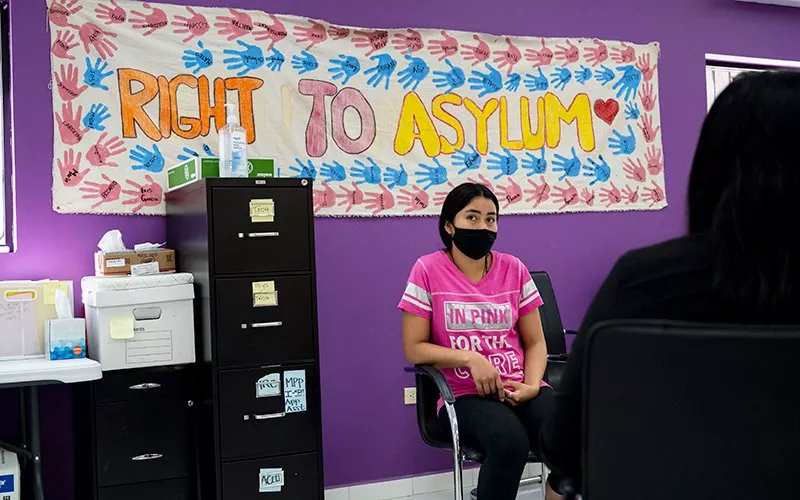
in Nogales, Sonora, on the Arizona border, to apply for asylum, a process shut
down almost completely in March 2020 because of the COVID-19 pandemic.
While they wait, they can’t find work and
their children can’t go to school. They suffer discrimination from local
residents when looking for housing or a way to get by.
“I had a home in Michoacán, a good life,”
Rosario said. “My husband and I got married and we built a beautiful life
together, but we had to leave. We dropped everything in order to just feel
secure again.”
Such are the stories of thousands of
immigrants waiting along the U.S.-Mexico border for the lifting of Title 42, a
policy enacted by the Trump administration that closed the border to migrants
and asylum seekers as a public health and safety measure during the pandemic.
Since then, more than 1.7 million migrants seeking asylum have been turned
away.
On April 1, President Joe Biden ordered Title
42 lifted on May 23. But he has been blocked from all sides, including members
of his own party, who say Homeland Security and U.S. Customs and Border
Protection are not prepared for the onslaught of people expected when the U.S.
allows asylum applications again after two years.
Rosario’s family came to the Kino Border
Initiative for breakfast on Wednesday, and stayed a bit afterwards to collect
the Easter toys that were being handed out to the children. Families sat in the
dining hall of the facility and shelter that sits directly across from a border
crossing and ate, while children ran around and played with the volunteers.
On the second floor, there’s a closet full of
blankets, pillows and sheets, and another filled with clothes neatly folded and
organized by age and size. Next to that are the dorms — multiple bunk beds
placed together, looking out on the common area.
Outside the shelter, milling with other asylum
seekers, single mother Luz watched her three kids play with the new stuffed
bunnies they got in their Easter baskets from Kino. She too only wanted to use
her first name.
Luz fled the southern state of Guerrero after
being threatened by a drug gang. She and her children are waiting to seek
asylum in the U.S. because it’s the only place where they’ll be safe from
cartel violence.
“We’re waiting in fear,” Luz said. “We’re just
waiting on President Biden’s decision. We can’t wait for too long here because
we can still be targeted while we’re over here.”
Families like Rosario’s and Luz’s are living
with the consequences of a political fight in Washington that can’t agree on a
solution.
“Title 42 is not stopping migrants from
getting into the U.S.,” Rosario said. “There are still people dying in the
desert. We just want President Biden to listen to us and for people to walk in
our shoes for a day.”
No one knows what’s going to happen next.
Arizona Attorney General Mark Brnovich filed suit against the Biden
administration April 3 for its decision to lift Title 42.
Brnovich, along with the attorneys general of
Louisiana and Missouri, filed the suit in the U.S. Western District Court of
Louisiana, arguing that Biden violated federal procedures by finalizing
legislation without publishing notices in the Federal Register beforehand.
Meanwhile, a bipartisan group of U.S.
senators, including Arizona Democratic Sens. Mark Kelly and Kyrsten Sinema,
have introduced the Public Health and Border Security Act, which would require
Title 42 to stay in place at least until 60 days after the Surgeon General
notifies Congress that the public health emergency declared for COVID-19 can be
lifted. After that, the Department of Homeland Security would have 30 days to
submit a plan to Congress to address a surge of migrants at the border.
A similar bipartisan bill in the House
includes Arizona Democratic Reps. Tom O’Halleran of Sedona and Greg Stanton of
Phoenix as co-sponsors.
“Many expelled migrants have been waiting in
limbo for months or years in dangerous locations, making them vulnerable to
exploitation,” the two Arizona senators wrote in a letter to Biden. “At the same
time, chaos at the border in a post-Title 42 scenario also negatively affects
migrants’ safety and could further strain an already overwhelmed health care
system at the border.”
There’s no exact number of how many people are
waiting in Nogales. It’s a fluid population, said Gia Del Pino, director of
communications at the Kino Border Initiative. Some leave and try other ports of
entry, but none of them can go back home, she said.
“This is not a sustainable place to live for
people,” Del Pino said. “The government likes to believe, ‘Well, you fled,
you’re here at the border, stay at the border. You don’t need asylum.’ And
that’s not the case.”
The numbers always change at Kino, as well as
the countries and places the migrants are fleeing. Last summer, the shelter
served on average 1,000 meals every day as a surge of asylum-seekers came from
Michoacán and Guerrero, Del Pino said, two states hit particularly hard by
cartel violence and home states for Rosario and Luz. Residents of these Mexican
states are becoming victims of displacement due to criminal groups battling for
control over territory. According to a recent article in the Washington Post, as many
as 20,000 people have fled Michoacán in the last year.
Courtney Smith, a 22-year-old volunteer at
Kino, said she was excited and looking forward to Joe Biden being elected
president, thinking he would fix the problem at the border, but she hasn’t seen
much change.
Originally from Connecticut, she has been a
volunteer at Kino since September and said it opened her eyes to a complicated
situation that leaves people trapped.
“I’ve been really disappointed with the lack
of care and lack of focus on the humanitarian crisis here,” Smith said. “I
thought that things were going to get better, but they’ve either stayed the
same or have gotten worse, and that’s been really hard.”
Victor is another migrant who fled cartel
violence. Also using only a first name, he said his son was threatened and was
the victim of a shooting in his hometown in Guerrero.
While he has managed to find work, he doesn’t
earn enough to provide for his family. He said he’s not safe in Nogales because
the cartel from his hometown is still able to track him down.
“We aren’t here because we want to or because
we like to be here,” Victor said. “We’re here because we have to be in order to
survive.”
For more stories from Cronkite News, visit cronkitenews.azpbs.org.
WASHINGTON –
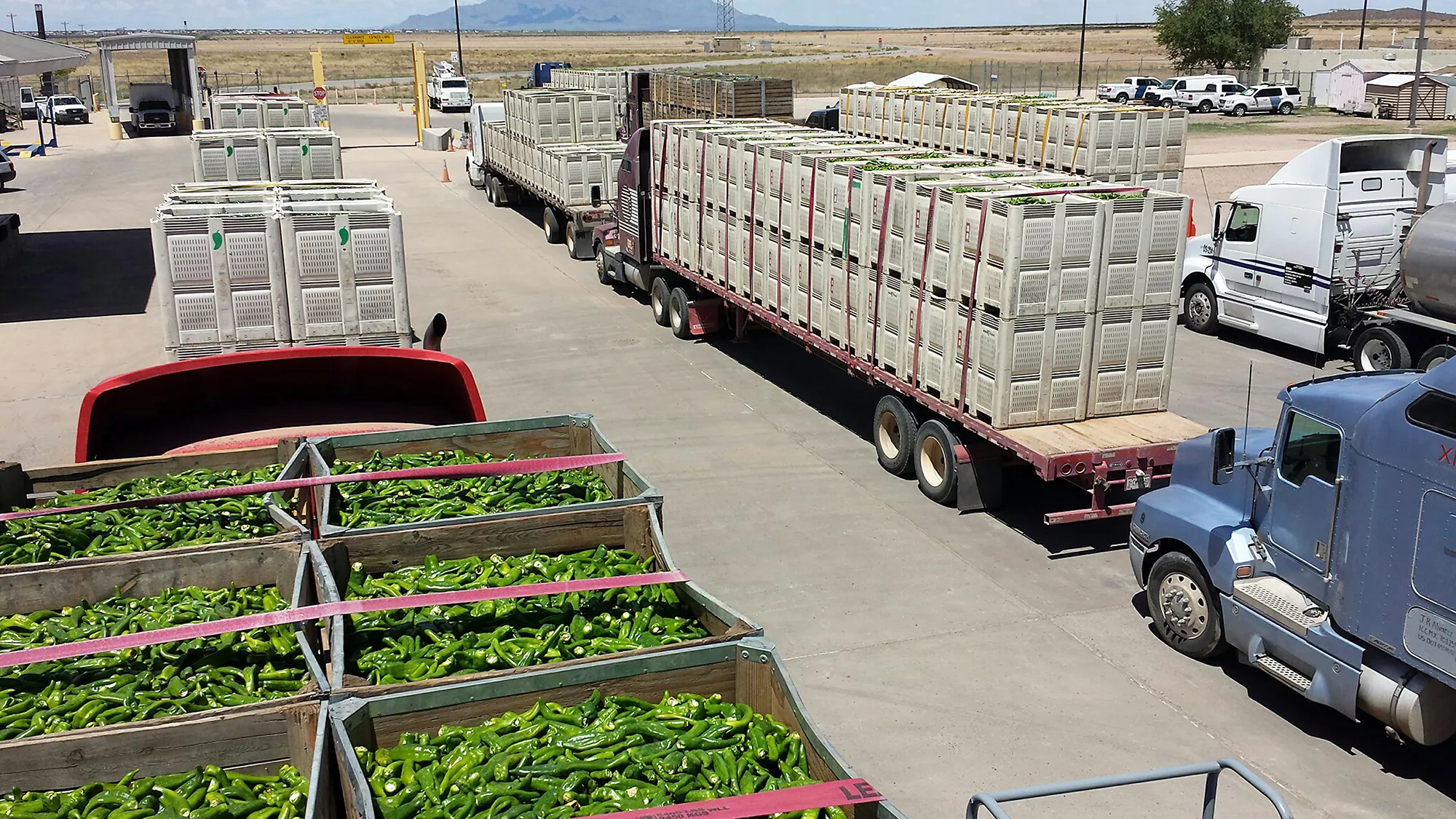
Commercial truckers were coping with longer-than-normal delays at the Nogales
border crossing Thursday, as trucks trying to escape a logjam at the Texas
border headed west to Arizona instead.
And border and industry officials worried that
the problem might get worse unless Texas Gov. Greg Abbott backs off a recently
imposed truck inspection program, an “inspection regime” that one expert said
has slowed trade almost to a halt at some ports. In response to Abbott’s order,
some Mexican truckers have blocked Texas ports of entry as a protest.
In the meantime, “Millions and millions of
dollars are being lost every day, over $100 million in fresh produce already,”
because of delays in Texas, said Lance Jungmeyer, president of the Fresh
Produce Association of the Americas.
“We’re seeing kind of an increase in crossings
in field activity in Nogales,” Jungmeyer said. “Because since last Friday,
that’s been the only major port of entry to get fresh produce across.”
At 11 a.m. on a typical Thursday, commercial
truckers can expect a 39-minute delay to get through the Mariposa Port of Entry
in Nogales. But trucks were waiting as long as 75 minutes at 11 a.m. this
Thursday, according to data from
U.S. Customs and Border Protection.
The backups began April 6 when Abbott ordered the
Texas Department of Public Safety to conduct “enhanced safety inspections” of
all vehicles after they come through the state’s international ports. He said
the inspections are needed to protect Texans from “unsafe vehicles and their
unsafe drivers” coming from Mexico.
Even though it was laced with references to
cartels, trafficking and the planned end of Title 42 – the health regulation
that has allowed border officials to turn away asylum seekers since March 2020
– Abbott’s order officially targets only the roadworthiness of the trucks
themselves.
The order was derided Wednesday by
White House spokeswoman Jen Psaki as “another political stunt” that is
“impacting people’s jobs and the livelihoods of hardworking families in Texas
and across the country.” She said in a statement that the
“redundant” inspections have caused “significant disruptions to the food and
automobile supply chains, delaying manufacturing, impacting jobs, and raising
prices.”
That criticism was echoed by industry
officials, the CBP and even members of Abbott’s own party in Texas. In a
statement Tuesday, CBP officials called
the order “unnecessary” and a costly measure that will impact consumers and
businesses nationwide.
Trade slowed tremendously at Texas ports as a
result, while it was stopped entirely at the Hidalgo/Pharr border entry by
protesting Mexican truckers who blocked the port.
To avoid the extensive delays, and the Texas
DPS inspection of trucks, some truckers are willing to drive as much as 20
hours to reach the border at Nogales. They started showing up Thursday, said
Arizona Department of Agriculture spokesperson Robert Smook, who added that
Mariposa is expecting more in the coming days.
The Mariposa Port of Entry is the main port of
entry for fresh produce from Mexico and is also the primary produce distribution point
on the southern border, according to the General Services Administration.
Jungmeyer said the port’s ability to quickly
process imports is vital to Arizona’s economy, but that there is such a thing
as too much traffic for the port. An unexpected increase in commercial traffic
through Mariposa could “strain the resources” in Arizona, eventually slowing
the supply chain and raising prices for consumers.
Officials said they hope that recent
agreements between Abbott and the governors of two of the four Mexican states
bordering Texas – Nuevo León and Chihuahua – will start to ease the backlog.
Texas ended secondary inspections at the
Laredo–Colombia Solidarity International Bridge on Wednesday after Nuevo León officials
agreed to conduct “enhanced border security enforcement measures” on their side
of the border. A similar deal Thursday with the government of Chihuahua ended
Texas inspections at the Del Río-Ciudad Acuña border crossing.
Under the agreement, Texas officials will
return to conducting random searches rather than screening every truck crossing
at those ports.
But those are just two of more than a dozen
commercial land ports of entry in Texas. Officials with the Texas Department of
Agriculture – whose commissioner this week called Abbott’s order “a clog in the drain” of
commerce for the state – said Abbott needs to do more to fix the problem they
say he created.
“This didn’t wind up all at once,” said Reb
Wayne, communications director for the department. “It’s not going to unwind
just immediately, it’s going to take some time.”
For more stories from Cronkite News, visit cronkitenews.azpbs.org.

Thursday, April 14, 2022

Democrats have launched a digital ad campaign in Arizona to remind voters in advance of Tax Day of a GOP plan that would raise taxes on half of Americans and an estimated 34% of Arizonans.
The campaign, which launched Wednesday, will direct Google users searching for tax services to a website the Democratic National Committee created called GOPtaxhike.com, which simplifies who would pay more in taxes under a plan touted by Florida Republican Sen. Rick Scott, who heads the National Republican Senatorial Committee. Tax Day is April 18.
Scott’s “11-Point Plan to Rescue America” calls on imposing income taxes on all Americans, including the roughly half who don’t make enough under current law to pay any taxes. It also advocates for sunsetting all legislation after five years, including Social Security and Medicare.
The New York Times in March reported on how Scott’s plan had divided Republicans, with Senate Minority Leader Mitch McConnell and others panning it, even as Scott has doubled down his support for it.
It has divided his party, put Mr. Scott’s own candidates in awkward positions, and is already featured prominently in Democratic advertising. But after Thursday, it is clear the Republicans have not figured out how to address their Rick Scott problem.
“Washington’s full of a bunch of do-nothing people who believe that no conservative idea can ever happen, nothing will change for the better as long as they’re in charge, and that’s why we’re going to get rid of them,” the senator said, ambiguous about who exactly “they” were. “So Republicans are going to complain about the plan. They’ll do it with anonymous quotes, some not so anonymous. They’ll argue that Democrats will use it against us in the election. I hope they do.”
…
Last year, 57 percent of U.S. households paid no income tax, but that was by design. Successive Republican tax cuts, including President Donald J. Trump’s tax cut of 2017, which greatly expanded the standard deduction, took tens of millions of workers off the income tax rolls, though virtually all of them pay Social Security, Medicare and sales taxes.
And for all of Mr. Scott’s evasions, the criticism is not coming just from the “militant left” that he denounced. The nonpartisan Tax Policy Center estimated that ensuring all households pay at least $100 in income taxes would leave families making about $54,000 or less with more than 80 percent of the tax increase. Those making less than about $100,000 would shoulder 97 percent of the cost.
Democrats say they want voters to understand that working Arizonans — including child care workers, farm workers and even first responders — could see a tax hike under Scott’s proposal, as could the elderly. The middle class also faces higher taxes, the DNC said in a press release Wednesday: More than 70% of couples making less than $90,000 a year who file jointly would be affected.
“Arizonans deserve to know what the Republican tax plan would mean for them – and for more than a third of Arizonans, it could mean higher taxes,” said DNC spokeswoman Sara Guerrero. “While Democrats are working to lower costs and make your hard-earned money go further, there’s a good chance you could be paying higher taxes if Republicans get their way.”
 Copyright: fototocam

We promise that's the only egg pun ... Diane Douglas makes her triumphant return ... And the Carl Hayden statue is probably gone forever.

|
The timing of this was not intentional, but ahead of Easter Weekend, we’re going long on egg content today. There’s some big news in the Arizona egg world, facilitated by a wonky process that takes some words to explain, and a lot of people were involved. We’ve said it all along: the weirder a story, the more we’re interested. So today’s top story is longer than usual, and the rest of our daily rundown is shorter to compensate. You won’t see our morning emails in your inboxes on Monday because we’re taking Easter Sunday off, but we have a big story for you tomorrow.
At the behest of a politically connected egg farm, an obscure but powerful Arizona government agency last week neutered a ballot measure designed to protect animals by adopting a new but legally questionable regulation.
By 2025, all eggs produced and sold in Arizona must be cage-free.
The Governor’s Regulatory Review Council decides what state agency and board rules and regulations go into practice. (As the name suggests, all members are appointed by Gov. Doug Ducey.) GRRC basically installs the guts of government. If the Legislature passes laws, agencies, using GRRC, then figure out how to implement them.
The regulation, which egg farmers and the Humane Society of the United States hailed as a grand compromise, was strange for a number of reasons, chief among them: It’s not clear GRRC has the authority to pass such a rule.
WASHINGTON – Federal officials threw a lifeline this week to as many as 500,000 Arizonans, just days before they were in danger of losing the Medicaid coverage they got under a COVID-19 public health emergency.
That emergency declaration, which was set to expire Saturday, was extended Tuesday for another 90 days by Health and Human Services Secretary Xavier Becerra.
Advocates welcomed the extension, but said it only delays the inevitable: When the emergency authorization eventually ends, the Arizona Health Care Cost Containment System will have to start weeding out some recipients.
“COVID has already shown us the vulnerabilities and the shortcomings of our system, which have been particularly painful for those who are the most underserved and vulnerable,” said Dr. Shad Fani Marvasti, director of Public Health, Prevention, and Health Promotion at the University of Arizona. “Disenrolling Medicaid is going to impact those folks in a really dire way.”
The decision to extend the public health emergency was unsurprising for many, since HHS had not given states the 60 days notice it has promised before lifting the authorization.
The HHS announcement came one day before the Centers for Disease Control and Prevention ordered a 15-day extension of its requirement that people be masked when traveling, which was set to expire Monday. The CDC said the move was needed so it could have time to study the impact of the latest COVID-19 variant, which has led to a slight uptick in cases this month.
The COVID-19 public health emergency was first declared in January 2020 and has been renewed nine times since, with the latest extension set to run through mid-July. As long as it is in effect, the state cannot remove people from the Medicaid rolls.
Under the Families First Coronavirus Response Act, signed into law March 2020, states get an additional 6.2% in federal funds to help pay for coverage of those enrollees while the public health emergency remains in place.
“AHCCCS has not disenrolled anyone from the program since March 2020,” said Heidi Capriotti, an AHCCCS spokesperson. Medicaid enrollment in Arizona increased by 26.7% since the start of the pandemic, covering 2.38 million residents as of this month.
But once the public health emergency ends, the state will be required to begin removing Medicaid recipients who no longer meet eligibility criteria. Capriotti said the state is preparing for that day, sending out letters to recipients to determine their eligibility, a task that is normally done monthly but has been suspended for the past two years.
AHCCCS estimates that about 500,000 recipients might need to confirm their eligibility to keep their coverage, which could lapse if the recipient got coverage from their work, aged into Medicare or makes too much money to qualify. Capriotti said recipients should make sure the state has the correct contact information to keep them from being dropped from the rolls because the state could not reach them.
“If we have their correct contact information and we can get a hold of them quickly, we can get ahead of the end date of this public health emergency,” Capriotti said. “But we don’t know when that’s going to happen.”
But health care advocates worry that the end of the public health emergency will not mean the end of the need for public health.
“There’s already too few resources available within the county system and too many people who need resources,” Marvasti said.
Zaida Dedolph, the director of health policy for the Children’s Action Alliance, said that lifting the emergency “does not necessarily mean that COVID is no longer a threat. But it means that things have sort of abated to the point where we no longer need access to these flexibilities.”
Others worry that people will be dropped from coverage accidentally by AHCCCS employees faced with “compressing 24 months worth of (Medicaid eligibility) redetermination into just several weeks,” said Will Humble, executive director for the Arizona Public Health Association.
Capriotti said the state does not currently plan to hire additional staff to handle the increased workload of sorting through all the eligibility redeterminations once the emergency ends.
Those dropped from the rolls will be able to apply for coverage during a special enrollment period. But advocates said that might not be an affordable option for all those who are disqualified, especially those whose income pushes them just above the threshold.
“We’ve seen the poverty level adjusted each year for cost of living, but we don’t necessarily see income eligibility adjusted for cost of living,” Dedolph said.
The potential loss of coverage for hundreds of thousands of Arizonans could also overwhelm emergency rooms, which will be the only option for those who will have “the lack of insurance and access to good primary care,” Marvasti said.
“Not only should we not be stopping the coverage, disenrolling people, I think we should actually be expanding Medicaid to make it universal for anyone and everyone who can’t afford private insurance,” he said.
For more stories from Cronkite News, visit cronkitenews.azpbs.org.
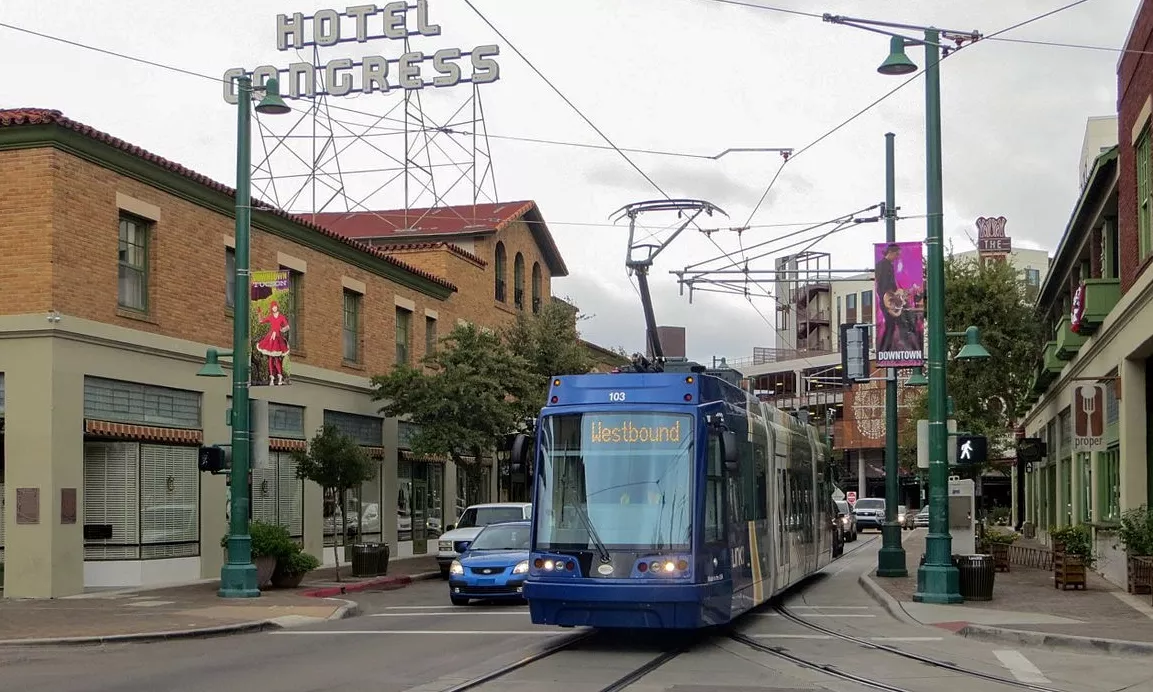
An audit of Pima County’s Regional Transportation Authority Plan found it falls short by $149 million, putting 11 projects at risk.
The plan was enacted in 2006, after voters passed a one half cent sales tax dedicated to a spate of projects to improve roads and public transit. Initially, costs were estimated to be around $2.4 billion, but those have grown to $2.9 billion and remaining sales tax revenues — which end in 2026 — and other regional funds fail to completely cover the gap.
The examination of the RTA’s progress by the Arizona Auditor General’s Office notes that costs were increased beyond initial estimates by inflation, project revisions and unexpected conflicts. One project in Marana added lanes, wildlife underpasses and protective fencing. Another in Tucson dealt with extra costs and time due to relocating utilities that were not previously accounted for.
Construction costs have also contributed to greater expenses. Construction estimation consultancy group Rider Levett Bucknall reported that the national construction cost index ballooned 26% from 2016 to 2021 alone.
A letter of response from the RTA also pointed out that the Great Recession resulted in lower than anticipated sales tax revenues.
Projects that exceed the original planned amounts are the responsibility of local jurisdictions to resolve. The RTA is currently in talks with these jurisdictions to determine what the next steps should be. Options include a future sales tax extension, reducing the scope of future projects or delaying them for a later date — a strategy which the RTA has stated it’s averse to.
Despite the looming complications, the RTA has successfully completed or started 45 of the 51 planned projects of June 2021, when the audit was performed. The majority of those remaining are scheduled to be started within the timeframe established by voters. Projects include everything from widening roads, building under- and overpasses, expanding transit service routes, and adding a modern streetcar.
Pandemic disruptions make it tough to determine successes
The funding was largely approved by voters interested in mitigating growing congestion in Pima County as the region experienced a spike in population. The audit found performance on this front had mixed results. Miles traveled per capita in the county decreased from 22.5 in 2016 to 20.2 in 2019. Similarly, hours spent in traffic delays fell from 50 per commuter in 2019 to just 21 in 2020, though it’s possible the latter may be the result of reduced driving during the pandemic.
In contrast with positive effects on driving time, the total minutes of travel time to work increased from 24.4 minutes in 2016 to just over 25 minutes in 2019. This increase was greater than five counties in other states used for comparison, but the rate at which it increased was lower than most of them.
Funding allocated to local public transit was also intended to help relieve congestion and increase citizen mobility options. While it performed reliably, with SunTran buses arriving on time 92% of the time, public transit in Pima County was also impacted by COVID-19, negating its effect on overall congestion.
Ridership plummeted by 34% from 2017 to 2021, and SunTran responded by implementing a fare-free policy, which contributed to increased operating costs. But those operating costs are still lower than those of six other public transit programs in the country SunTran was compared to, at $4.07 per boarding compared to the average of $7.03.
The plan seeks to improve roadways with the goal of increasing safety for all residents, both drivers and pedestrians. Data on the success of this goal also presented a mixed picture. Across Pima County, crashes decreased by 24% between 2016 and 2020, but the rate of roadway deaths increased by 53% per one million vehicle miles over the same period.
Much of this has to do with driver impairment, speeding and insufficient visibility measures taken by bicyclists during night time hours. While these aren’t behaviors the RTA can control, the authority is working to increase roadway condition safety through education campaigns, shortened crosswalks, and separated bike lanes, among other things.
Sjoberg Evashenk Consulting, which was hired by the auditor general to compile the report, recommended that the RTA increase its data reporting practices to better analyze the gap in funding, and continue to work with local jurisdictions to close the gap. The RTA responded that it would follow all recommendations, and that it expected its current track record of successful project implementations to help in any future petitions to the voters for funding increases.
“With the RTA’s record of keeping our promises, it is anticipated that the voters will once again embrace future investments in our regional mobility and accessibility to enhance the performance of the region’s transportation infrastructure,” RTA wrote in its response letter.
Thursday, April 7, 2022
Brnovich is in his flop era … Everyone wants to win Arizona … And little bit of prosciutto.
Editor's note: The Arizona Agenda is a Substack newsletter about Arizona government and politics run by Rachel Leingang and Hank Stephenson. You can find their archives and subscribe at arizonaagenda.com.
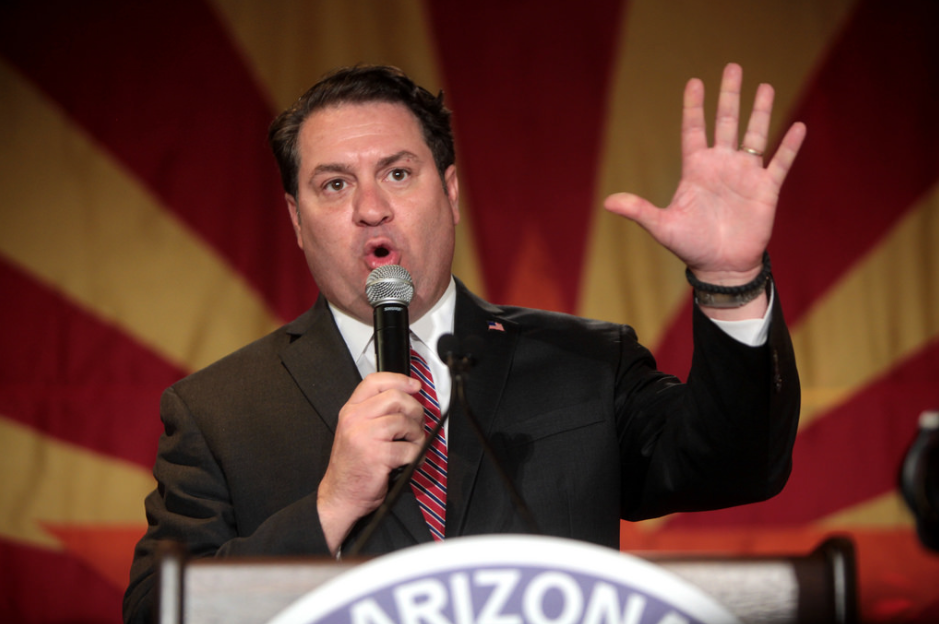
Attorney General and U.S. Senate candidate Mark Brnovich tweeted out a 12-page “interim report” on his investigation into the Cyber Ninjas’ claims yesterday that went hard at the top, saying he has “uncovered instances of election fraud” and discovered “serious vulnerabilities” in our elections system that “raise questions about the 2020 election in Arizona.”
But the 11 remaining pages quickly fizzle into what liberals and MAGAs both mocked as a press release seeking to bolster his slipping position in the U.S. Senate GOP primary.

