

Tuesday, July 14, 2020

The Tucson mayor and council will host a free mask distribution event this Saturday, July 18 in six locations across the city. They have about 56,000 washable ear-loop cloth masks to give out.
Wearing a face covering is one of the best ways to prevent the spread of COVID-19, along with physical distancing and frequent handwashing. The city’s #MaskUpTucson event aims to provide a face covering to any community member in need.
There will be a mask distribution drive-through location in each of the city’s six wards, which will have 8,000 masks available on a first come, first serve basis. Individuals and families can drive up to the site and pick up as many masks as they need, while supplies last.
According to a press release, bike-up and walk-up requests are also welcome. The city staff working these events will use appropriate personal protective equipment and physical distancing while they distribute masks.
This event is strictly for distributing masks and is not a COVID-19 testing site. Individuals and families can go to any of the following locations between 7 and 10 a.m. this Saturday to pick up masks.
Ward 1: Mission Manor Park, Main Parking Lot, 5900 S. 12th Ave.
Ward 2: Udall Recreation Center, Main Parking Lot, 7200 E. Tanque Verde Road
Ward 3: Donna Liggins Recreation Center, Main Parking Lot, 2160 N. 6th Ave.
Ward 4: Lincoln Park, Main Parking Lot, 4325 S. Pantano Road
Ward 5: El Pueblo Recreation Center, Main Parking Lot, 101 W. Irvington Road
Ward 6: Ward 6 Council Office, 3202 E. 1st Street
Tags: COVID19 , Coronavirus , Mask , Face Mask , Distribution , City of Tucson , Image
Monday, July 13, 2020

- The total number of confirmed coronavirus cases in Arizona climbed past 123,000 as of Monday, July 13, after the state reported 1,357 new cases this morning, according to the Arizona Department of Health Services.
- On the morning of Monday, July 13, the Southwest Area Incident Management Team formally transferred command over the Bighorn Fire back to the Coronado National Forest. This came after fire crews announced the fire was 92 percent contained after burning through roughly 119,000 acres.
- Following the lead of the Big Ten and others, the Pac-12 Conference announced its football teams will play only conference games in 2020.
- “I am not going to lose another company,” Cardiff told his lawyer in an April 5 email, just before detailing a fantasy list of people he wanted to place on the board of his new venture, VPL Medical Inc.
- So, how does one write about Palm Springs in a spoiler free way? For starters, you probably don’t ask that question, because now I’ve revealed the movie has the sort of twists and turns that would make it very easy to spoil in a review.
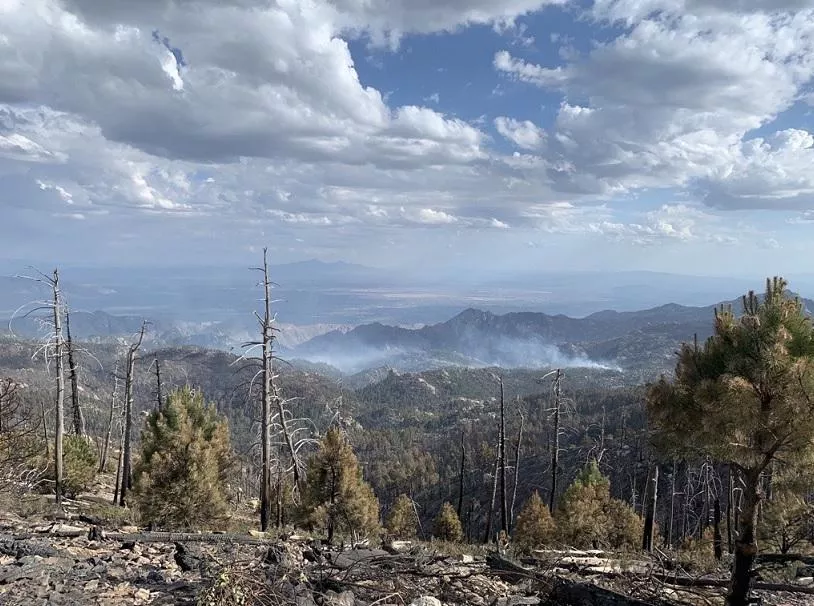
The fire burned across the Santa Catalina Mountains for more than a month, after being ignited by a lightning strike on June 5. High temperatures and strong gusts hampered containment procedures for multiple weeks. However, fire crews gradually got a hold of the blaze as the monsoon neared. On Saturday, July 11, the southern slopes of the fire received approximately .25 inches of rain, which helped further contain the diminishing blaze.
As of Monday, July 13, 239 fire personnel still remained on the task, down from nearly 1,000 personnel three weeks prior. Much of the work now involves repairing and maintaining fire lines as clean-up begins. According to the Southwest Area Incident Management Team, fire crews recently completed chipping operations at the Mount Lemmon SkyCenter and Mount Bigelow, and felled hazard trees in Spencer Campground.
Their next objective is to identify and assess hazard trees that may require removal due to the high winds received over the fire area. Chipping, backhaul, and suppression rehabilitation will continue in the Summerhaven area, as well as other portions of the fire.
Speaking of Summerhaven, fire crews report that no structures have been lost in Summerhaven. The Catalina Highway up Mount Lemmon is slowly reopening, with only business owners and residents of the mountain communities allowed to return as Monday, July 13.
The fire continues to smolder in the bottom of Willow Canyon below Catalina Highway. Over the coming week, isolated showers and thunderstorms are possible, which may help put the finishing touches on the Bighorn Fire.
Friday, July 10, 2020
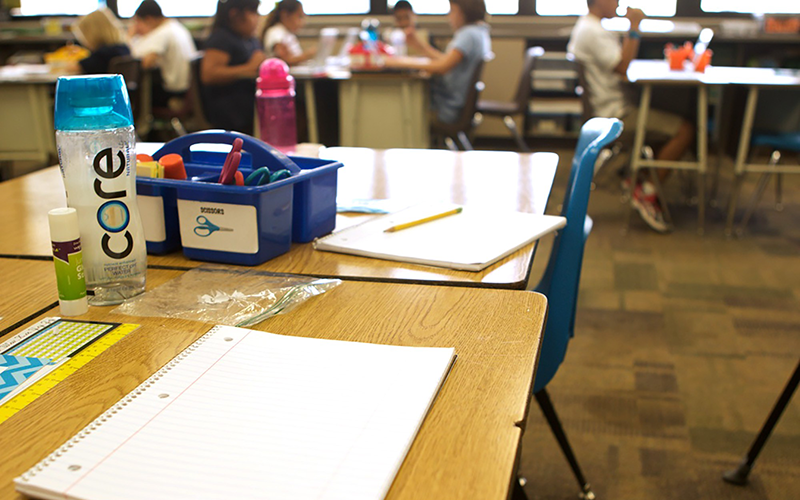
The governor’s announcement came on the heels of his office’s release of millions of dollars to help schools reopen this fall. The fact that the order came from the governor, and not a vote by the Legislature, has raised questions for some state lawmakers.
In an email to Cronkite News, the conservative Republican from Snowflake said Arizona should not be governed through executive orders, noting that “the legislative branch makes policy and budget allocations, not the executive branch.”
“It is time to stop, call a special session, and get back to the constitutional operations of our state,” Allen said.
Rep. Michelle Udall, R-Mesa, chairwoman of the House Education Committee, doubts that a special legislative session is feasible, and she worries how many legislators would actually show up because of COVID-19 concerns and obligations to family members who may be sick or at risk.
“Calling a special session would end up with a bunch of people running in different directions, which is not going to help,” Udall said. “I don’t think we have enough consensus to get anything done.”
Despite such reservations, Udall said, she “would love” to hold a special session to address education issues in the state – under different circumstances.
However, she and Allen both support giving schools the authority to delay the start of in-person classes. Allen said she recently worked on her own legislation that would have provided, among other items, “local control and flexibility for schools opening and determination of health protocols.”
The governor’s delay of the school year was part of his June 29 executive order that also shut down the state’s bars, gyms, water parks, movie theaters and river tubing for 30 days.

As a 38-year-old with hypertension and asthma, he had been pushing for weeks to get information about COVID-19. As people around Wilson began contracting the deadly disease, he sought masks and testing, fearing for his health and possibly his life.
Then smoke from the Bush Fire northeast of Mesa rolled into Holbrook in mid-June, worsening Wilson’s respiratory concerns. When he called his brother on June 20, the air quality was poor.
“You could look out the small window and see it was really hazy outside,” Wilson recalled in an interview with Cronkite News. “And we knew the smoke was inside.”
The fire, which has since been contained, prompted the evacuation of hundreds of people, but Wilson couldn’t leave. He’s in lockup at the Navajo County Jail, where COVID-19 was first detected about the time the smoke hit town. Wilson has been held for almost a year on a parole violation for a marijuana conviction nearly 17 years ago.
Now he passes time in increments, one court date at a time. The days until his Aug. 3 release hearing will be spent waiting for phone calls, to learn whether prosecutors will succeed in their appeal to the state Supreme Court to stop it.
Wednesday, July 8, 2020

But while the panel pushed for schools reopening “quickly and beautifully in the fall,” as President Donald Trump put it, some teachers and parents in Arizona said they worry that schools here will not be able to find safe ways to do it.
“As a mom and as a teacher, I want my kids to be with their friends. I know that in-person is better for them,” said Dawn Penich-Thacker, communications director for Save Our Schools Arizona.
“But they (Arizona schools) can’t afford to keep my kids safe,” said Penich-Thacker, who worries that Arizona schools do not have the tools to make a safe return. “I see it from the inside that there are not enough resources.”
Gov. Doug Ducey last week ordered the start of in-person classes in Arizona pushed back to Aug. 17, one of several steps he took in the face of spiraling increases in the state’s COVID-19 cases. While the delay gives schools more time to prepare for schooling in the face of the coronavirus, it also means that schoolkids will have spent more than five months away from a classroom.
That’s five months of teachers and students adjusting to online education, five months of school systems scrambling for resources and five months of harried parents juggling jobs, housework and their kids’ educations.
Tuesday, July 7, 2020

- The total number of confirmed coronavirus cases in Arizona climbed reached 105,000 as of Tuesday, July 7, after the state reported 3,653 new cases this morning, according to the Arizona Department of Health Services.
- Hamilton is the gem it was rumored to be.
- Although the downtown theatre hasn’t hosted a live performance in months, the Fox Board of Directors has officially decided to suspend programming through December 2020 due to the continued impacts of COVID-19.
- Today Pima County government announced they contracted Maximus Health & Services, Inc. to boost contact tracing efforts in the region.
- Phoenix police released partial video Monday of the fatal shooting by officers this weekend of a man in Maryvale, but that did little to satisfy activists who are pressing for more footage to be released to the public.
- As the number of Arizonans who have contracted COVID-19 has raced past 100,000, testing for the novel coronavirus that causes the respiratory disease has become a priority.
- In late June, after three months of near silence on the topic, the Centers for Disease Control and Prevention finally weighed in on a question of critical importance to millions of American women and families: How dangerous is the coronavirus for pregnant women and new mothers?
- After a prolonged government shutdown cut into their revenues in 2019, business owners around the Grand Canyon National Park said 2020 appeared to be on track to being a bounceback year for them.
- With COVID-19 cases spreading wildly in the community, the Amphitheater School District is joining TUSD and Sunnyside School District in launching online-only classes to start the school year.
- Businesses tied to President Donald Trump’s family and associates stand to receive as much as $21 million in government loans designed to shore up payroll expenses for companies struggling amid the coronavirus pandemic, according to federal data released Monday.
- The news that gyms would be shut down as part of Gov. Doug Ducey’s latest executive order to slow the spread of COVID-19 has blindsided those who work in the fitness industry.
- A new study led by University of Arizona researchers examines a variety of “nontraditional mask materials” and their ability to protect wearers.
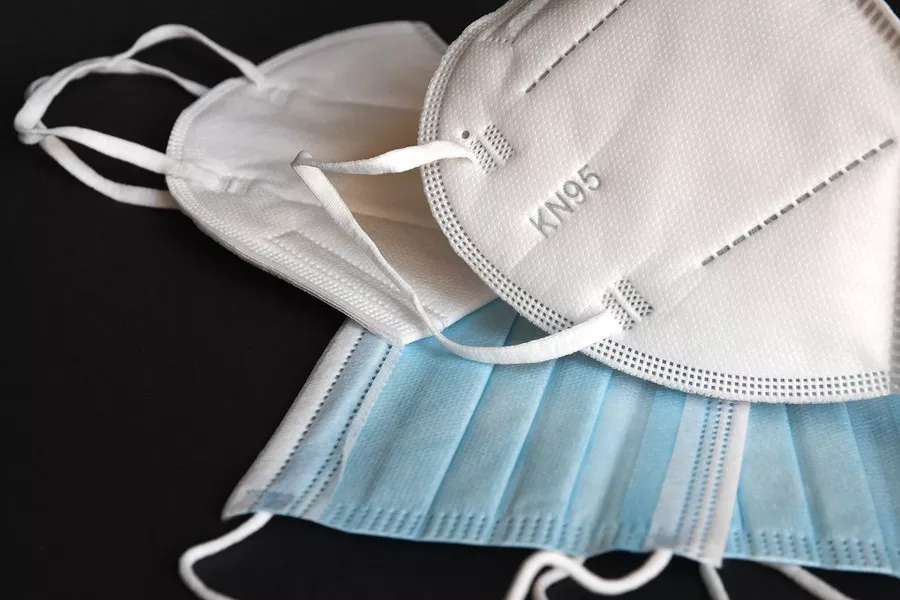
A new study led by University of Arizona researchers examines a variety of “nontraditional mask materials” and their ability to protect wearers. The study, published in the Journal of Hospital Infection, compares the risk reduction of materials like scarves, pillowcases, and t-shirt fabric, as well as more common professional masks.
"N99 masks, which are even more efficient at filtering airborne particles than N95 masks, are obviously one of the best options for blocking the virus, as they can reduce average risk by 94 to 99 percent for 20-minute and 30-second exposures, but they can be hard to come by, and there are ethical considerations such as leaving those available for medical professionals," said lead author of the study Amanda Wilson, who works as an environmental health sciences doctoral candidate in the UA’s Department of Community, Environment and Policy.

“We had just been getting things going,” said Maddi Briguglio, a personal trainer at Jab Fitness in Tempe. “Clients had just been getting into their routines, trying to adjust to the new changes of the maximum people and wearing masks and those types of things. Then you find out five hours ahead of time that you can’t do all the things you just changed to adjust to be able to do.”
Ducey’s announcement Monday closing gyms, bars, water parks and movie theaters came at 3 p.m. – and was to take effect at 8.
It was Ducey’s second shutdown order since March.
Mountainside Fitness responded with founder and CEO Tom Hatten filing a lawsuit against the governor and opting to keep doors open at all locations. As a result, the gym was cited Tuesday and the Scottsdale location’s chief operating officer was cited with a class one misdemeanor, reports NBC 12 News.
“This could be any business, anytime, anywhere,” Hatten said in a press conference. “I challenge anybody at this point to walk over to Home Depot, go to a casino, go to a liquor store or to a restaurant to have dinner. Let’s all wait for that decision.”
Larger gyms such as Mountainside Fitness have the funding and resources necessary to fight to keep their doors open. The company ranked No. 31 on Club Industry’s Top 100 Health Clubs of 2019 list with $45 million in reported 2018 revenue.
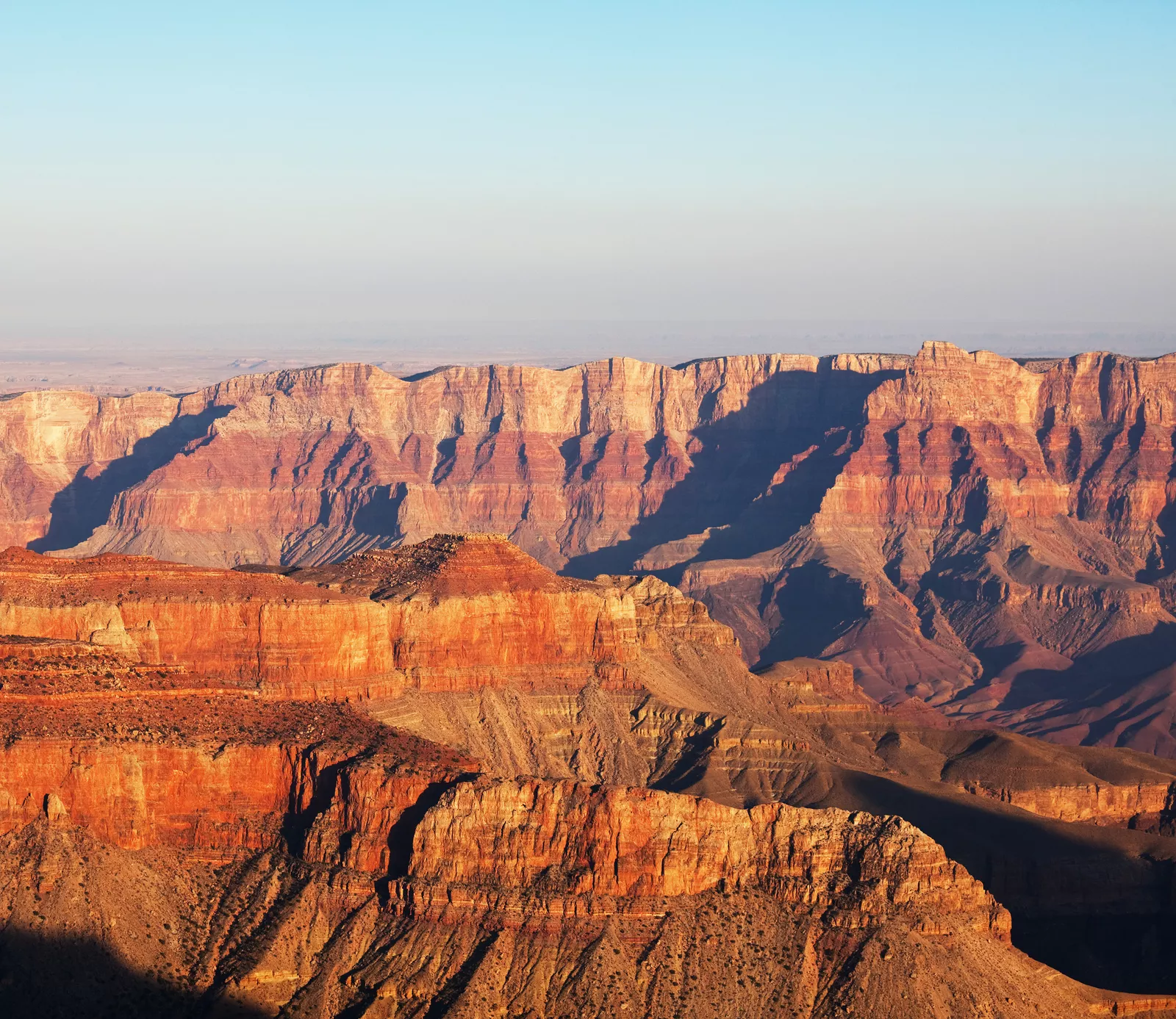
Then COVID-19 hit.
The park was closed from April 1 to May 15, when it began to reopen on a limited basis. Tourists are returning, along with their wallets, but business officials say times are still tough.
“I don’t know if they’re going to be able to hang on,” said Laura Chastain, general manager for the Grand Canyon Chamber of Commerce and Visitors Bureau, of some of the smaller businesses in the region. “Being rural, for our community, it really hit people hard.”
The park generates more than $1 billion in economic activity a year for the region, part of the $41.7 billion generated by parks across the country, the National Park Service says. But for the Grand Canyon, revenues fell from $1.2 billion in 2018 to $1.1 billion in 2019, according to the National Park Service’s 2019 Visitor Spending Effects Report.
Business owners were hopeful at the beginning of this year, when the park service’s Monthly Public Use Report showed 19% more visitors at the Grand Canyon in February 2020 than in February 2019. Then, COVID-19 hit and monthly visits in March fell 39% compared to March 2019.
“We were expecting a 20% increase in business over the 2019 season,” said Korey Seyler, general manager for Grand Canyon Adventures. “Unfortunately, things change.”
Chastain said many of the businesses that rely on the park – tour operators like Seyler as well as hotels, restaurants, retail and more – are currently operating only at 30% capacity.

