

Monday, June 22, 2020
As the school year draws near, many questions are still in the air about the University of Arizona’s campus re-entry plans. Logistics have already changed multiple times, but the UA remains firm in their intent to reopen the campus to in-person activity in just a few weeks. The Weekly’s intrepid team of summer interns have reached out to their fellow students to find out how UA’s latest class feels about returning to campus during a pandemic.

Lam Nguyen came to the U.S. during high school as an international student from Vietnam. In pursuit of studying optical sciences and engineering, he decided to attend the University of Arizona. This upcoming fall semester will be his junior year, and despite concerns of the campus reopening, Nguyen remains hopeful.
“It would be risky but definitely doable,” he said. “I think the school will take a lot of safety measures, of course, to put the students first.”
Nguyen noted the challenges students face when the school transitioned courses online in March.
“Our health was affected a lot,” Nguyen said. “You went walking miles and miles every day at school to sitting at home in front of a computer.”
For him, the biggest challenge was the cancellation of lab classes.
“It’s definitely better for engineers and science students to be able to go into the lab. To have an in-person experience instead of trying to look online,” Nguyen said.
At the moment, he's living in Tucson for the summer away from his parents.
“My parents are currently in Vietnam and the country is doing really well with the whole COVID situation,” Nguyen said. “I am not as worried for them than I am worried about the situation in this country right now.”
However, Nguyen says he is still managing social distancing and only going out for essential travel. He also says that he is looking forward to the new school year.
Adela Granados is a first-generation college student majoring in creative writing. Since she lost her job at a campus grocery store thanks to the pandemic, Granados has tried to keep herself busy with keeping in shape and volunteering in a Korean language study camp, which is also her minor. She is worried about returning back to campus in the fall for her junior year.
“I find it very stupid to be reopening in the fall when this whole pandemic hasn’t blown over yet,” Granados said. “I feel like we are a little too lax in what we should be doing to prevent it. The minute that we are allowing small businesses to reopen again, everyone sees this as a green light to pursue their lives like normal, which is very not conducive to what we are trying to do.”
Granados is OK with shops and restaurants reopening in order to stay in business, she thinks it's still important to be careful. She suggests the university to have a trial period before fully reopening the campus and provide resources for the students.
“A test run wouldn’t hurt,” Granados said. “I find that we can never be too careful… The UA should provide preventive measures like gloves or masks ready on hand for those who don’t have them.”
Granados is keeping an open mind as the university reveals more of its plans, but she's ready to get back to the classroom.
“I am very, very cooped up,” Granados said. “I am very much an introvert, but it’s getting to me too.”
Interviews conducted by Mekayla Phan. More student perspectives to come as the school year draws closer.

The restaurant announced its closure and thanked their customers for all the "amazing memories" and the "overwhelming accolades from customers & food critics over the years" on a Facebook post last Sunday afternoon.
However, the post alluded that Chef and Owner Andreas Delfakis might have a new project in the works stating, "Stay tuned for the next adventure because that's how we roll!"
While the Greek-born chef perfected and served some of the best traditional Greek fare this side of Thermopylae, Delfakis' skills shine brightest upon tasting his flavorful Greek seafood dishes like the Santorini platter—fresh prawns and seafood acquired that day, then sauteed with olive oil, garlic, fresh herbs and white wine. Delfakis opened Athens on 4th Avenue in 1993.
We're hoping another venture is in the works! To keep up with what Delfakis and company are up to next, follow their Facebook page here.
“Please stay connected with relatives and neighbors by phone or video chat and remind them that they have support,” Navajo Nation Vice President Myron Lizer said recently, imploring Navajos to take care of their mental well-being as well as their physical health.
“If you are feeling stress or anxious, take the time to take a deep breath, stretch, or pray,” he said. “Exercise by working out or by doing household chores and avoid unhealthy foods and drinks. We must protect ourselves and others.”
More than 320 COVID-19 deaths have been reported on the vast Navajo Reservation, which lies mostly in Arizona but also covers parts of western New Mexico and southern Utah.
The tribe has the highest per capita rate of cases in the country: 6,747, as of Wednesday, among the 173,000 people who live on the reservation. That rate tops hard-hit New York and New Jersey, according to data collected by the Johns Hopkins University Center for Systems Science and Engineering.

The Bighorn Fire continued its spread northeast across the Catalina Mountains over the weekend, reducing its containment levels by more than half. The wildfire, which started from a lightning storm on June 5, had burned more than 58,000 acres as of Monday, June 22.
This weekend also saw the fire spread down the southern Catalinas toward foothills' neighborhoods, resulting in a large amount of smoke. Evacuation orders remain in place for areas like Mount Lemmon and Summerhaven, as well as the southern areas of Oracle. In addition, areas of Catalina, Oracle, and the Catalina Foothills have a “set” order and should be prepared to evacuate if ordered.
On Friday, June 19, the Bighorn Fire was at 40 percent containment. However, the fire has rapidly spread through the Oracle Ridge and Peppersauce areas. The largest change occurred on June 17, when strong winds fanned the flames across the mountain ridges, burning more than 12,000 acres. Before June 17, the most destructive day burned less than 3,700 acres. Since June 17, every day has seen more than 5,500 acres burned.
The gusty weather not only accelerated the fire’s progression but impeded aerial support for the fire crews. Luckily, so far no structures have been burned in Summerhaven.
Friday, June 19, 2020

- The number of confirmed coronavirus cases in Arizona jumped over 46,000 as of Friday, June 19, after the state reported 3,246 new cases this morning, according to the Arizona Department of Health Services.
- Fire crews enjoyed calmer winds yesterday, which allowed for more air support and time to bolster fire lines around threatened communities.
- Since May, the Trump administration has paid a fledgling Texas company $7.3 million for test tubes needed in tracking the spread of the coronavirus nationwide. But, instead of the standard vials, Fillakit LLC has supplied plastic tubes made for bottling soda, which state health officials say are unusable.
- Experts can cite any number of historical and logistical reasons why Native Americans have relatively low response rates to the Census, but Arbin Mitchell points to a very new, and very specific challenge this year – COVID-19.
- People are passionate about their fur-babies. Big or small, furry or slimy, silent or loud, people love animals and see them as part of their families. Unfortunately, not all creatures get to share in the love and get left behind, forgotten about, or worse.
- Democratic senators have called for the Trump administration to investigate anti-LGBT and anti-Muslim statements made by recent appointees to the U.S. Agency for International Development, urging the organization to do more as its leaders grapple with internal strife over their approach to issues of racism and inclusion.
- Tucson Mayor Regina Romero celebrated Juneteenth today by hanging a massive Black Lives Matter banner from the top of City Hall.
- The musical magic in Oro Valley isn’t calling it quits anytime soon, so pack your camping chairs and head on over to The Gaslight Music Hall for a night of live tunes, laughter and delicious pizza.
- President Donald Trump vowed this morning to pursue his effort to strip legal protections to remain in the United States from undocumented youth who were brought to the country by their parents. He somehow sees this as taking care of them.

The music hall’s drive-in concert series continues through the summer, and the venue recently announced two weeks of shows.
"We have been hearing from so many of our guests how lucky they feel that they can keep enjoying live music in a safe environment,” said Music Hall General Manager Heather Stricker. “Many reach out with requests, which we have been trying to accommodate. That is how we found one of our new favorite bands, Backroads Country. Look for them again in a few weeks.”
Kicking things off this Tuesday, June 23 is The Best of Creedence Clearwater Revival. Hear all your favorite hits, including “Born in the Bayou,” “Fortunate Son,” “Proud Mary,” “Who’ll Stop the Rain,” “Green River” and plenty more. This rockstar group stars longtime Gaslight actor (and crowd favorite) Mike Yarema.
The following night, The Desert Divas take the stage. This fabulous force pays tribute to rock, soul and rhythm and blues greats from the ’60s to the ’80s, including The Rolling Stones, Patti LaBelle, the Temptations, Carole King, Joan Jett, Prince and more.
“Some groups, such as The Desert Divas, weren't ready to perform indoors yet, and are thrilled to join us in this outdoor concert series to entertain their many fans in this area,” Stricker said.
Wrapping things up next week on Thursday, June 25 is The Mr. Skynyrd Band.
“Mr. Skynyrd is, without question, the hottest Lynyrd Skynyrd tribute band out there today,” Stricker said. “With a collection of uncompromising, experienced musicians, their two-hour show is dedicated to delivering spot-on renditions of those classic Lynyrd Skynyrd hits.”
The fun doesn’t stop next week; the Gaslight has already booked shows through June and into July.
Closing out the month on Tuesday, June 30 is classic rock night with Five Way Street, a group composed of “seasoned musicians all with a love for classic rock.” According to Stricker, the band offers a high-energy, fun-filled visit back to those formative days “when Baby Boomers were discovering how good rock and roll could really be.”
Instead of bringing in an outside band for the July 2 and 3 shows, the Music Hall is calling in local legend (and gaslight regular) Armen Dirtadian and the internationally-touring Manhattan Dolls for a patriotic celebration concert.
Backed up by a world-class band, attendees will be inspired by rousing renditions of flag-waving favorites such as “God Bless America,” “America the Beautiful,” “You’re a Grand Old Flag” and many more.
“This musical salute to freedom and liberty will be dedicated to those who've defended it,” Stricker said. “You won't want to miss an evening that's sure to make you proud to be an American.”
All shows begin at 7 p.m.
With safety in mind, the music hall sections off over 100 spaces of the parking lot, brings in a portable stage and uses an FM radio transmitter to broadcast the show to attendees. The music hall is also rolling out a limited pizza menu with no-touch delivery off a tray. Diners will place an order ahead of time so the kitchen knows what to make. Attendees can sit in truck beds or in chairs they bring, or in their vehicle and listen to the radio transmitter.
“We have come together with Scotty Plumber, who sets up our stage, Marshall Jones, who is hooking us up with outdoor sound, and Mike Quatraro, who runs the professional video on our large projection screen,” Stricker said. “Customers love getting pizza and popcorn to enjoy the show. Seeing our regulars smiling in their comfy lawn chairs or in the bed of their trucks with their dogs, singing along to great music, makes all of the hard work absolutely worth it. If you haven't been to one of these shows yet, you are seriously missing out.”
There will be one public restroom available in the music hall for emergencies only which will be cleaned between customer uses.
Tickets to the Gaslight Music Hall’s drive-in concert shows cost $30 per vehicle. A pizza service is available for an additional fee. Season passes and gift cards will not be accepted. All sales are final.
If the event is rained out, ticket holders will be notified of a rescheduled time.
For more information and to buy tickets, go online to gaslightmusichall.com. The music hall is located at 13005 N. Oracle Road, #165, in Oro Valley.
Tucson Local Media is a sponsor of the Gaslight Music Hall drive-in concert series.

“People need to understand we were just out in the field for three days, from March 15 to March 18, and we only managed to drop off just a little over 3,000 questionnaires in those three days,” before field operations on the Navajo Nation were shut down by the virus, Mitchell said.
Mitchell, whose title is tribal partnership specialist and area Census office manager, said field operations started up again last week. But enumerators have their work cut out for them: While the national response rate was 61.5% as of Thursday and the response rate for Arizona was 58.1%, just 1.5% of Navajo Nation residents had returned their forms, according to the Census Bureau.
And the Navajo are not alone. Most tribes in Arizona are well below the state average, with the highest response coming from the Ak-Chin Indian Community, which had a 52% response rate. The Navajo rate was just the third-lowest, with just 1% of Hopi returning forms and no census response from the Havasupai Tribe.
Even the Ak-Chin have felt the effects of COVID-19 on their census efforts.
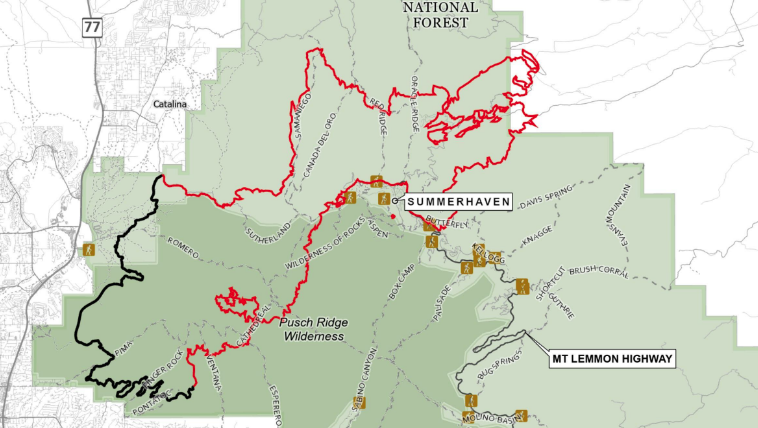
Fire crews enjoyed calmer winds yesterday, which allowed for more air support and time to bolster fire lines around threatened communities. Despite this, the Bighorn Fire grew a few more thousand acres, mainly to the north and east of Mt. Lemmon.
"The big story for yesterday was the stark difference weather-wise from the day before, and how it cooperated with us," said fire operations section chief Travis Mayberry. "Without those winds, the ground crews were able to get a lot of good work done."
The Bighorn fire is still 40 percent contained, and more than 900 personnel are working on it. According to Mayberry, crews today will be working on creating fire buffers around Summerhaven and other Mt. Lemmon structures. However, residents should expect to continue to see fire and smoke moving south down the mountains toward Tucson. Fire crews are expecting this. Oracle residents should expect to see a lot of smoke this evening.
The areas of Mt. Lemmon, Summhaven, Soldier Camp, Willow Canyon, and Peppersauce Canyon to Highjinks Road in the Oracle are still under an evacuation order.
“We’re making sure we’re ready on the north end, making sure no fire moves into the communities there,” Mayberry said.
The Catalina Foothills and areas of Oro Valley east of Oracle Road and north of Magee have been downgraded from "set" to "ready" to evacuate under the state's Ready, Set, Go system.
Tags: bighorn , fire , wildfire , summerhaven , mountain , lemmon , canyon , Image
Thursday, June 18, 2020

- The number of confirmed coronavirus cases in Arizona jumped over 43,000 as of Thursday, June 18, after the state reported a record number of 2,519 new cases this morning, according to the Arizona Department of Health Services.
- Three months ago, Gov. Doug Ducey signed Executive Order 2020-14 which intended to halt residential evictions due to hardships related to COVID-19.
- The Small Business Administration and the Department of the Treasury are making it easier for business owners to apply for Paycheck Protection Program's loan forgiveness by culling down the application process.
- Today the United States Supreme Court handed down a 5-4 decision that blocked the Trump administration from ending the Deferred Action for Childhood Arrival program.
- Mayor Regina Romero issued a proclamation during Thursday’s press conference requiring COVID-19 masks to be worn in public settings by all Tucsonans age two and up when physical distancing is difficult or they could potentially face a civil infraction.
- The Bighorn Fire made a large run Wednesday night, burning more than 10,000 additional acres throughout the western flanks of Mount Lemmon and the Catalina Mountains.
- As the Bighorn Fire continues to burn across the Santa Catalina Mountains, residents in two new areas have been warned to evacuate.
- What does it feel like to have the fires approach you? Find out in this timelapse video from Mt. Lemmon.
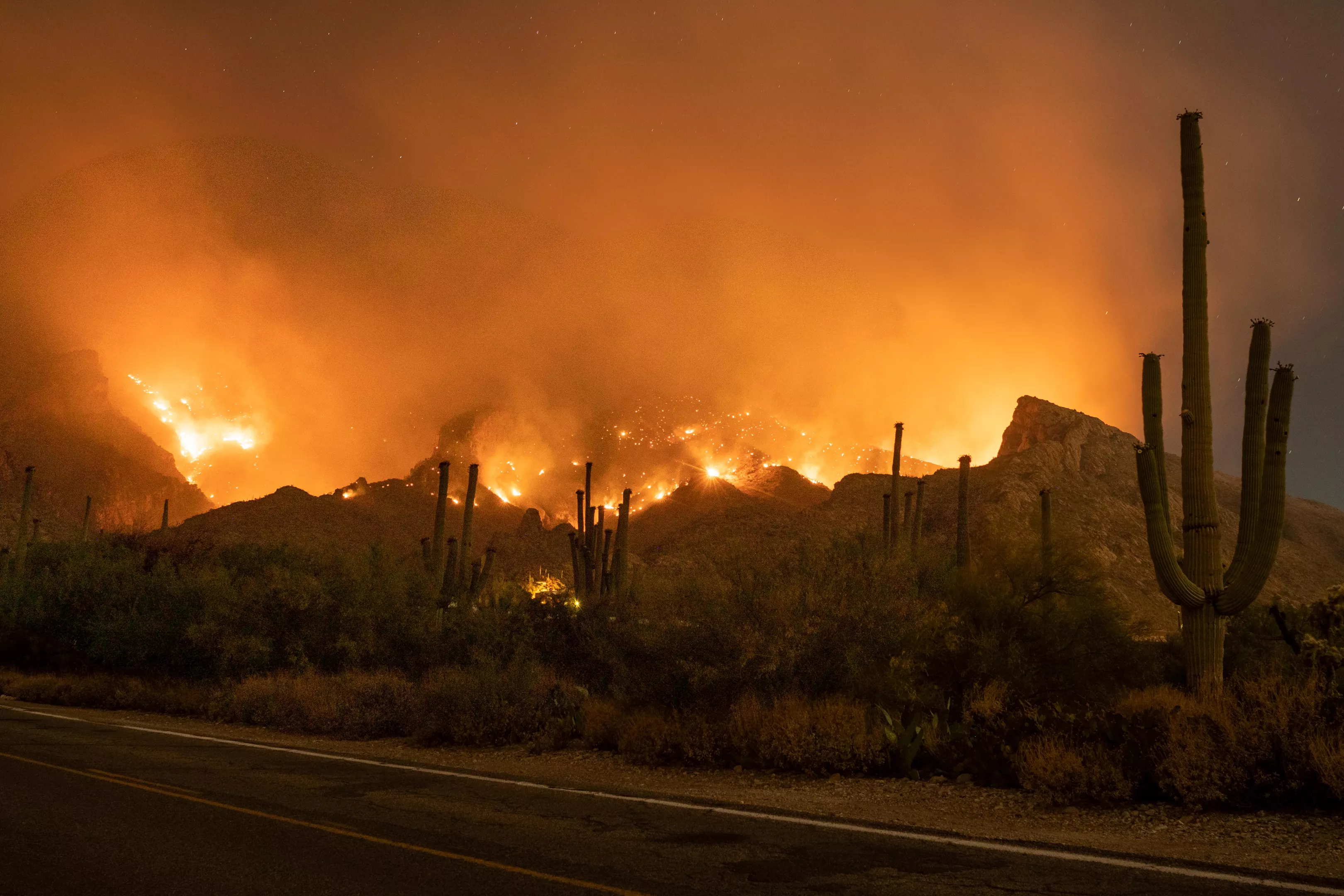
The Bighorn Fire made a large run Wednesday night, burning more than 10,000 additional acres throughout the western flanks of Mount Lemmon and the Catalina Mountains. The fire had burned an estimated 31,000 acres and is 40 percent contained, according to a morning press briefing.
The fire burned an estimated 13,616 acres yesterday, which was easily the most devastating day yet. The second most destructive day so far was Friday, June 12, at 3,762 acres.
Fire crews were successful in pushing the fire around and away from Summerhaven. The town and surrounding structures, including the Mount Lemmon Sky Center and the Mount Lemmon Fire Department headquarters, remained unharmed. However, the fire remains active to the south and west of the Mount Lemmon community. Fire operations section chief Travis Mayberry says fire crews are "very concerned" about the fire moving back toward the community.
"It all played out to be a very challenging day for the folks up on the hill," Mayberry said. "The fire was extremely active, it got established in Romero Canyon just to the west of the observatory and made a pretty significant push to the northeast, wrapping around the community of Summerhaven.”
Last night was intensified by strong winds, which not only fanned the flames, but grounded some air support. However, Mayberry says that although there is some wind today, air support should be fine.

More than 800 personnel are working on the Bighorn Fire, and 400 firefighters worked on the ground to protect Summerhaven last night.
The fire crews plan to work today within the old Aspen Fire line if the Bighorn makes a push toward Oracle. The community of SaddleBrooke should expect to see smoke off the western edges of the Catalinas. The fire is still present in Ventana Canyon.
The areas of Summerhaven and Mount Lemmon remain under an evacuation order. The Catalina Foothills and the community of Catalina remain on the "Be Ready" to evacuate order.

