

Friday, May 8, 2020
Are you an FC Tucson fan? Do you want to give blood and potentially save a life? Do you like signed memorabilia? Well, you’re in luck: FC Tucson is partnering with the American Red Cross next Wednesday, May 13, to host a blood drive.
From 8 a.m. to 1 p.m., Tucsonans are invited to the Food City parking lot located at 2950 S. Sixth Ave. to donate. To sign up, go to this website and use the code FC Tucson. Donors must register to participate.
The Red Cross will only collect blood from individuals “who are healthy and feeling well at the time of donation.” At the drive, Red Cross employees will follow thorough safety procedures, including checking temperatures, wearing gloves and PPE, wiping down donor areas after every collection, and using sterile collection materials for each donor.
FC Tucson staff and players will be on hand signing posters and bandanas as a thank you.

From 8 a.m. to 1 p.m., Tucsonans are invited to the Food City parking lot located at 2950 S. Sixth Ave. to donate. To sign up, go to this website and use the code FC Tucson. Donors must register to participate.
The Red Cross will only collect blood from individuals “who are healthy and feeling well at the time of donation.” At the drive, Red Cross employees will follow thorough safety procedures, including checking temperatures, wearing gloves and PPE, wiping down donor areas after every collection, and using sterile collection materials for each donor.
FC Tucson staff and players will be on hand signing posters and bandanas as a thank you.

Courtesy photo
The Southern Arizona Arts and Cultural Alliance worked with community partners to prepare art care packages for individuals living in care homes, assisted living facilities or in hospitals.
Not only would friends and family no longer be able to visit, but SAACA could no longer supply its programming. The nonprofit provides regular art therapy, and the Music and Memory program puts mp3 technology in the hands of retirees who could use a blast from the past.
Now, that support comes in the form of care packages compiled with help (and donations) from the creative community.
SAACA Executive Director Kate Marquez said the new program is the result of brainstorming with her staff.
“Most of us have the capacity to go outside into our backyards or front yards, take a walk and enjoy our surroundings and get a little bit of respite, but that’s genuinely not the case for so many people here in Southern Arizona, and they happen to be the most at-risk,” Marquez said.
May is Mental Health Awareness Month. While there are plenty of resources online in times of need, sometimes it helps to hear a professional explain what to do.
This month one of the things you can attend is The Resilience Summit, which is free and online for anyone who might like to hear from the experts. This summit's theme is "Mental Health + Yoga Skills to Thrive in Uncertainty" which definitely describes the times in which we're living presently.
This is not something to replace a hotline/helpline during an actual crisis, but you can learn some tips to deal with triggers, reduce anxiety, and overall increase the betterment your mental health.

This month one of the things you can attend is The Resilience Summit, which is free and online for anyone who might like to hear from the experts. This summit's theme is "Mental Health + Yoga Skills to Thrive in Uncertainty" which definitely describes the times in which we're living presently.
This is not something to replace a hotline/helpline during an actual crisis, but you can learn some tips to deal with triggers, reduce anxiety, and overall increase the betterment your mental health.
Thursday, May 7, 2020
And that's another Thursday in the books! Here's a look at what we covered today.

- The number of confirmed coronavirus cases in Arizona closed in on the 10,000 mark as of Thursday, May 7, according to the morning report from the Arizona Department of Health Services.
- May is National Mental Health Awareness Month, and also the month that Arizonans are beginning to dip our toes into the new normal of everyday life as Stay-At-Home orders are lifted.
- Tucson’s downtown restaurant community teaming up to feed unemployed service industry workers, along with those in need, six-nights-a-week during the pandemic.
- There's one other tried and true way to spend your time that some people have been using with or without a pandemic, and that's video games. It's fun, it's interactive, and at times the storyline or interactions with friends can be really fulfilling. Unfortunately, it's also becoming really expensive.
- A three-year-old child died on Tuesday from an apparent accidental and self-inflicted gunshot wound, according to Tucson police.
- Trico Electric Cooperative customers facing financial hardship during the COVID-19 pandemic can now look to the power company for assistance in paying their bill after the creation of the COVID-19 Assistance Program.
- The Arizona Department of Health says it's back in business with the ASU-UA modeling team that was developing projections of the spread of COVID-19 in Arizona.
- Technology currently being designed in Tucson may soon help the US send astronauts to the moon for the first time in 50 years.
- Counties throughout Arizona aren’t receiving enough COVID-19 tests to keep up with Gov. Doug Ducey’s recently announced “testing blitz,” according to a memo from Pima County Administrator Chuck Huckelberry.
- The Pima Animal Care Center and Friends of PACC have $15,000 in the bank to help cover veterinary expenses for those who qualify for aid after a donation from the Banfield and South Fork foundations.
- When was the last time you attended a concert? Unless you live near a musician gracious enough to share their talent with the neighborhood, it’s been a while.
- Oro Valley’s premier arts event is on hiatus this year after the Southern Arizona Arts and Cultural Alliance canceled the Spring Festival of the Arts, which was scheduled for May 16 and 17 at the Oro Valley Marketplace.
- The COVID-19 pandemic has changed everything from how most Americans work and shop to how they socialize – even if they can be in the same room.

by Pathumporn Thongking, U.N. Women/Creative Commons
Across the U.S., as many as 29,000 Deferred Action for Childhood Arrivals recipients may be working in health care jobs that are on the front lines of the fight against COVID-19, according to one recent report. Thousands more work in teaching and food industries, the report claims.
For Maria Leon Peña, it could change her chances of staying in this country.
The Phoenix nursing assistant is one of an estimated 29,000 health care workers in the U.S. who are undocumented, according to a recent report, but have remained in this country under the Deferred Action for Childhood Arrivals, or DACA, program. A program that the Trump administration is trying to abolish.
Those health care workers, along with the thousands of other DACA recipients working in essential services, were cited last month in an unusual “after arguments” brief to the Supreme Court, which heard the DACA case in November – before anyone had heard of COVID-19.
“It (COVID-19) throws into sharp relief DACA recipients’ important contributions to the country and the significant adverse consequences of eliminating their ability to live and work without fear of imminent deportation,” said the brief from the National Immigration Law Center.
The court is expected to rule by this summer on whether the Trump administration acted properly when it announced in 2017 that it was ending DACA, an Obama-era program that deferred deportation as many as 800,000 immigrants who had brought to this country illegally as children. Almost 650,000 remained at the end of last year.
People like Leon Peña.
“It’s been a roller coaster because we don’t know what’s going to happen,” she said.
Oro Valley’s premier arts event is on hiatus this year after the Southern Arizona Arts and Cultural Alliance canceled the Spring Festival of the Arts, which was scheduled for May 16 and 17 at the Oro Valley Marketplace.
According to the nonprofit, the decision was made based on information from the Pima County Health Department, the Arizona Department of Health Services, and the Centers for Disease Control.
“Considering recent developments in Arizona and the Governor’s proclamation of extending the Stay at Home Order until May 15, and with the extension lasting indefinitely through the end of May for large gatherings of 10 or more in outdoor venues, it is with deep regret that SAACA must cancel the event,” the company wrote in its May 5 announcement.

According to the nonprofit, the decision was made based on information from the Pima County Health Department, the Arizona Department of Health Services, and the Centers for Disease Control.
“Considering recent developments in Arizona and the Governor’s proclamation of extending the Stay at Home Order until May 15, and with the extension lasting indefinitely through the end of May for large gatherings of 10 or more in outdoor venues, it is with deep regret that SAACA must cancel the event,” the company wrote in its May 5 announcement.
When was the last time you attended a concert? Unless you live near a musician gracious enough to share their talent with the neighborhood, it’s been a while.
But that could change next Wednesday, May 13 when The Gaslight Music Hall hosts its first-ever drive-in concert, featuring The Tributaries.
The financial strain of the COVID-19 pandemic and business closures has hit the entertainment industry particularly hard, and Gaslight Founder and President Tony Terry was looking for a way to bring in some business (and provide a bit of entertainment).
“I wanted to reward and remind the Town of Oro Valley that we’re here, that we’re going to be here,” said Gaslight founder and President Tony Terry. “Come have some fun and enjoy some live music. It’s been two months since anyone could.”

But that could change next Wednesday, May 13 when The Gaslight Music Hall hosts its first-ever drive-in concert, featuring The Tributaries.
The financial strain of the COVID-19 pandemic and business closures has hit the entertainment industry particularly hard, and Gaslight Founder and President Tony Terry was looking for a way to bring in some business (and provide a bit of entertainment).
“I wanted to reward and remind the Town of Oro Valley that we’re here, that we’re going to be here,” said Gaslight founder and President Tony Terry. “Come have some fun and enjoy some live music. It’s been two months since anyone could.”
The Pima Animal Care Center and Friends of PACC have $15,000 in the bank to help cover veterinary expenses for those who qualify for aid after a donation from the Banfield and South Fork foundations.
Pets living in a home facing financial hardship will benefit from the funding through the shelters assistance program.
“PACC now has an opportunity to help people and pets impacted by COVID,” said director Kristen Hassen. “We are here to help pets owned by people who have gotten sick or faced financial distress in this unprecedented event.”
Funding will provide aid for those facing hardship due to illness, job loss, financial insecurity or any other challenge related to COVID-19. Referrals for aid are made through the shelter’s partner groups, and PACC hopes to expand its pilot program as more funding becomes available.
During the pandemic, PACC is only allowing residents to enter the shelter by appointment. For more information, visit pima.gov/animalcare.
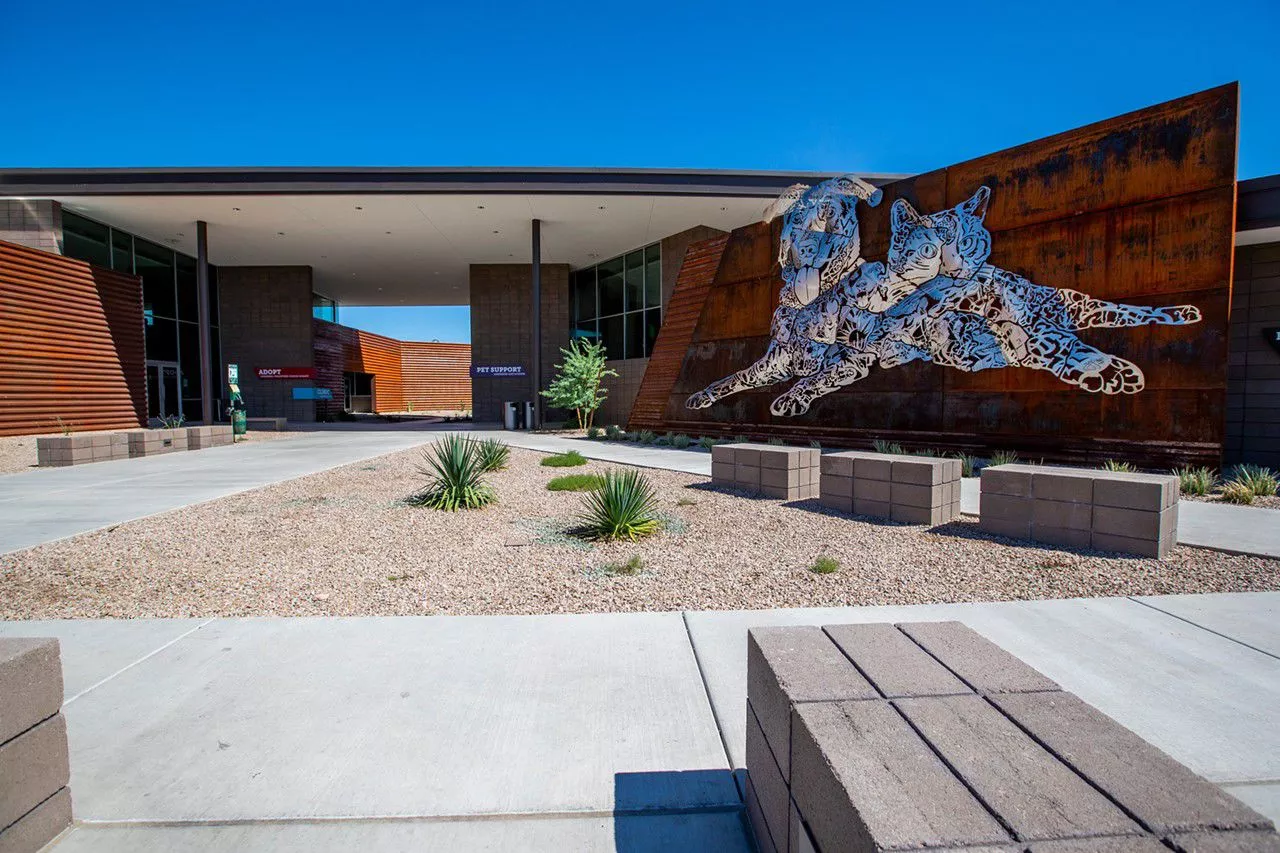
Pets living in a home facing financial hardship will benefit from the funding through the shelters assistance program.
“PACC now has an opportunity to help people and pets impacted by COVID,” said director Kristen Hassen. “We are here to help pets owned by people who have gotten sick or faced financial distress in this unprecedented event.”
Funding will provide aid for those facing hardship due to illness, job loss, financial insecurity or any other challenge related to COVID-19. Referrals for aid are made through the shelter’s partner groups, and PACC hopes to expand its pilot program as more funding becomes available.
During the pandemic, PACC is only allowing residents to enter the shelter by appointment. For more information, visit pima.gov/animalcare.
Trico Electric Cooperative customers facing financial hardship during the COVID-19 pandemic can now look to the power company for assistance in paying their bill after the creation of the COVID-19 Assistance Program.
“As a non-profit, member-owned utility, putting our members first is a guiding principle that has never been more important than it is now,” said Trico CEO and General Manager Vincent Nitido. “We will continue to support our membership and the communities we serve throughout this crisis.”
Individuals and small businesses can apply for bill assistance online at this website.
Trico has already assisted several local nonprofits and charitable organizations in the region, including United Way of Tucson, Southern Arizona’s COVID-19 Fund, Interfaith Community Services, the Community Food Bank of Southern Arizona and Marana Health Care.
According to the company, Trico has also pledged $200,000 to Wildfire, an Arizona nonprofit working through local agencies to provide aid to low-income individuals. For more information you can also call 744-2944.

“As a non-profit, member-owned utility, putting our members first is a guiding principle that has never been more important than it is now,” said Trico CEO and General Manager Vincent Nitido. “We will continue to support our membership and the communities we serve throughout this crisis.”
Individuals and small businesses can apply for bill assistance online at this website.
Trico has already assisted several local nonprofits and charitable organizations in the region, including United Way of Tucson, Southern Arizona’s COVID-19 Fund, Interfaith Community Services, the Community Food Bank of Southern Arizona and Marana Health Care.
According to the company, Trico has also pledged $200,000 to Wildfire, an Arizona nonprofit working through local agencies to provide aid to low-income individuals. For more information you can also call 744-2944.
Tucson’s downtown restaurant community is teaming up to feed unemployed service industry workers, along with those in need, six-nights-a-week during the pandemic.
Feeding Those Who Feed Us is a non-profit program offering free meals, pre-packaged for pick up for service industry workers - and the community at large - currently struggling to make ends meet. Restaurants like La Cocina, Geronimos Revenge & Forbes Meat Company, Pop’s Hot Chicken, and 4th Avenue Deli are all onboard making sure the downtown community is fed.
“We’re trying to make a lot of comfort food and meals that are easy to eat and could last a day or two in the refrigerator,” said La Cocina Owner Jo Schneider. “We’re serving decent-sized meals”.
Schneider started the program after receiving donations from the community once Mayor Regina Romero’s shutdown order went into effect on March 17. Her two sons, Ben and Eli, also shuttered their popular restaurants - TallBoys and Bentley’s Tea House - instead of offering to-go service (TallBoys has since reopened for to-go service). The Schneider family didn’t want to compete against other restaurants pivoting to carryout/delivery service. But with all the newfound downtime came time to think of how to put those recently received donations to good use.
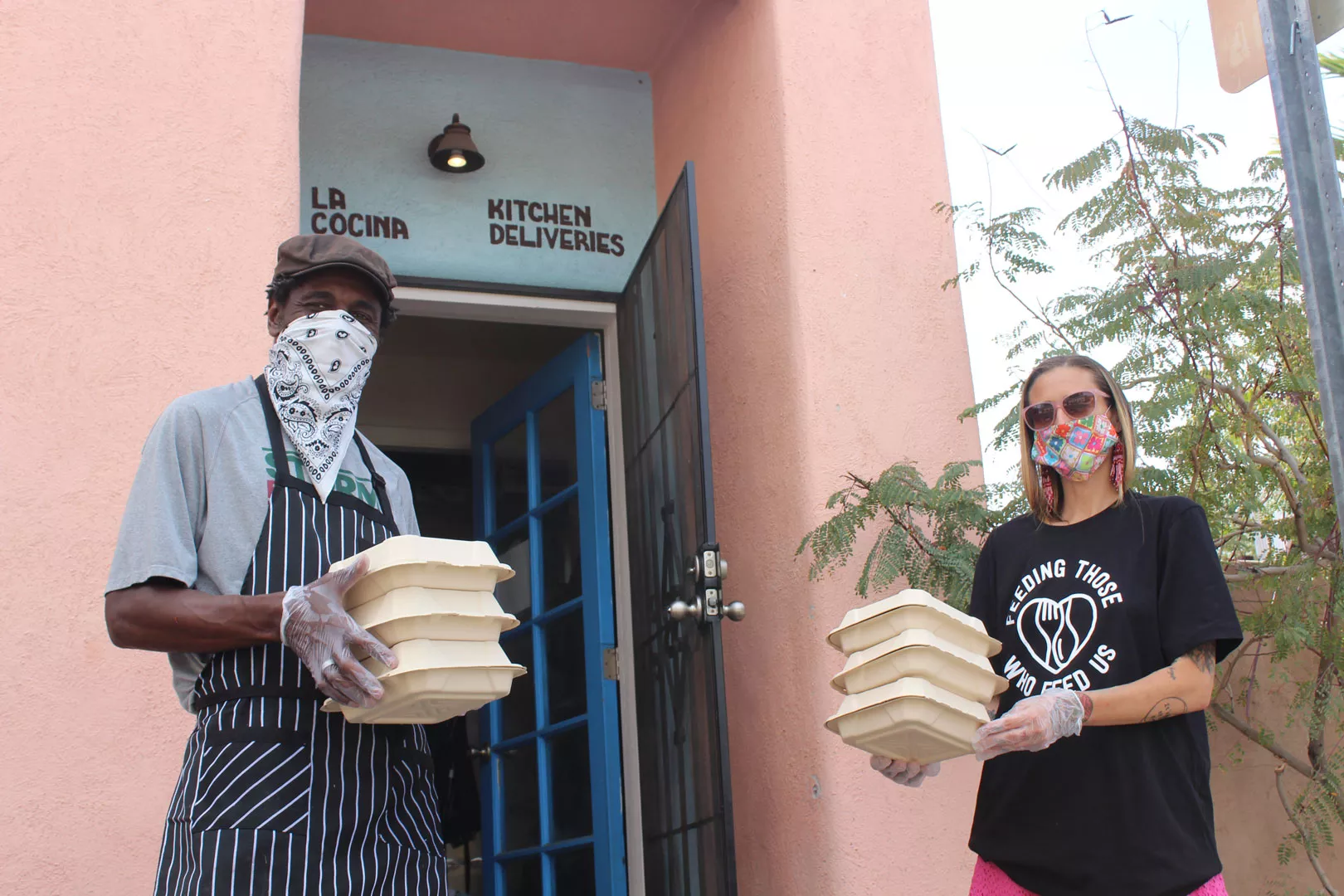
Feeding Those Who Feed Us is a non-profit program offering free meals, pre-packaged for pick up for service industry workers - and the community at large - currently struggling to make ends meet. Restaurants like La Cocina, Geronimos Revenge & Forbes Meat Company, Pop’s Hot Chicken, and 4th Avenue Deli are all onboard making sure the downtown community is fed.
“We’re trying to make a lot of comfort food and meals that are easy to eat and could last a day or two in the refrigerator,” said La Cocina Owner Jo Schneider. “We’re serving decent-sized meals”.
Schneider started the program after receiving donations from the community once Mayor Regina Romero’s shutdown order went into effect on March 17. Her two sons, Ben and Eli, also shuttered their popular restaurants - TallBoys and Bentley’s Tea House - instead of offering to-go service (TallBoys has since reopened for to-go service). The Schneider family didn’t want to compete against other restaurants pivoting to carryout/delivery service. But with all the newfound downtime came time to think of how to put those recently received donations to good use.
Tags: good deeds , in need , food , restaurants , feeding those who feed us , volunteer , service , pandemic , Image

