

Tuesday, April 28, 2020

Cullen will replace interim health director Dr. Bob England, who came out of retirement to fill the role until the county replaced Marcy Flanagan, PhD. Flanagan left Pima County to take the director’s spot at the Maricopa County Health Department in 2019.
England will stay on as a part-time physician to assist the county through the COVID-19 pandemic and recovery. Cullen will begin working part-time May 4 as vice-chair of the county’s Back to Business Task Force.
“This is huge for Pima County. I am thrilled to have Dr. Cullen join our team,” said Pima County Chief Medical Officer and Deputy County Administrator Dr. Francisco Garcia, in the announcement. “Dr. Cullen is a respected and eminent public health physician who also is an exceptional administrator. She knows Pima County and Southern Arizona well and will build upon the strategies and programs we’ve established over the past decade to improve the health and wellbeing of everyone in Pima County.”
Cullen is a graduate of the University of Arizona College of Medicine, where she is also a clinical professor.
In her new role with Pima County, she will be responsible for leading the response to COVID-19. Cullen previously worked during the 2014/15 Ebola crisis as a volunteer physician with Partners in Health in Sierra Leone.
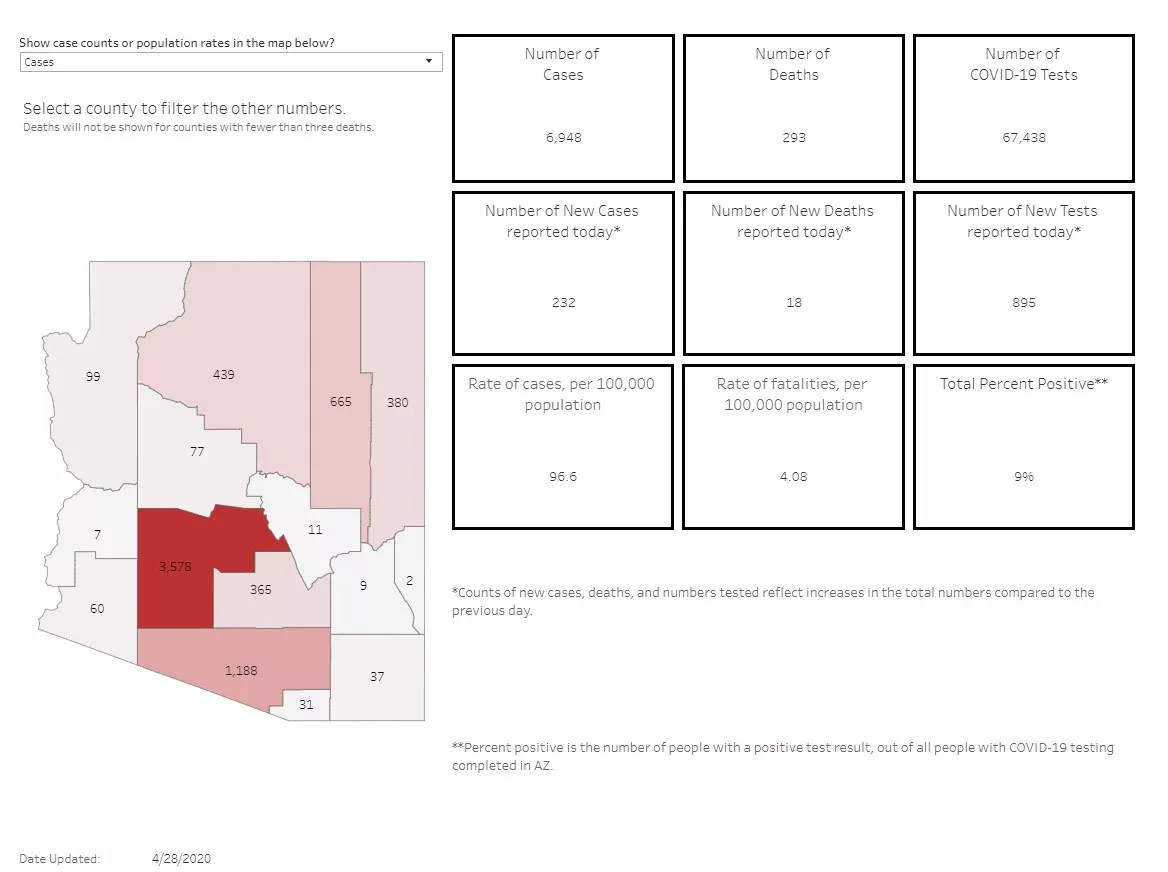
Pima County had 1,188 confirmed cases.

The coronavirus had killed 293 people statewide, including 76 in Pima County, according to the report.
In Maricopa County, the number of confirmed COVID-19 cases had risen to 3,578.
Because testing remains limited in Arizona and COVID-19 symptoms can take as long as two weeks to appear after exposure to the virus (while some people can remain entirely asymptomatic), health officials continue to urge the public to avoid unnecessary trips and gatherings of more than 10 people and have advised people to cover their faces with masks in public.
This week, Gov. Doug Ducey’s stay-home-home order, which drew a two-day protest earlier this month at the state Capitol, expires on Thursday, April 30.
The order has closed a wide variety of “non-essential” businesses, including bars, barbershops, salons, theaters, gyms, swap meets and many retail stores. Restaurants may remain open but only for takeout and delivery service. Public parks remain open but amenities such as playgrounds and restrooms are closed.
Ducey spokesman Patrick Ptak said that administration officials were still tracking data to determine the best course of action regarding whether the stay-at-home order would be extended into May. Ptak said there were three options under consideration.
“We can let the order expire. We can extend it as is. Or we can extend it with changes and modifications that reflect Arizona’s improving situation on the ground,” Ptak said. “The decision will be based on the data over the next week as well as the guidance and recommendations of public health officials.”
Monday, April 27, 2020

The delay will affect programs at the Catalina, Ellie Towne Flowing Wells, Littletown, Robles Ranch, Arivaca, Drexel Heights, and Picture Rocks community centers.
The delay is in order to wait for updated guidance from the state regarding operations during the COVID-19 pandemic.
According to Pima County Natural Resources, Parks and Recreation Program manager Kelly Cheeseman, staff will need time to reevaluate their programs to meet upcoming phases for re-opening.
“We need to figure out how we’re going to manage programs based on limitations of the current state of the world,” Cheeseman said.
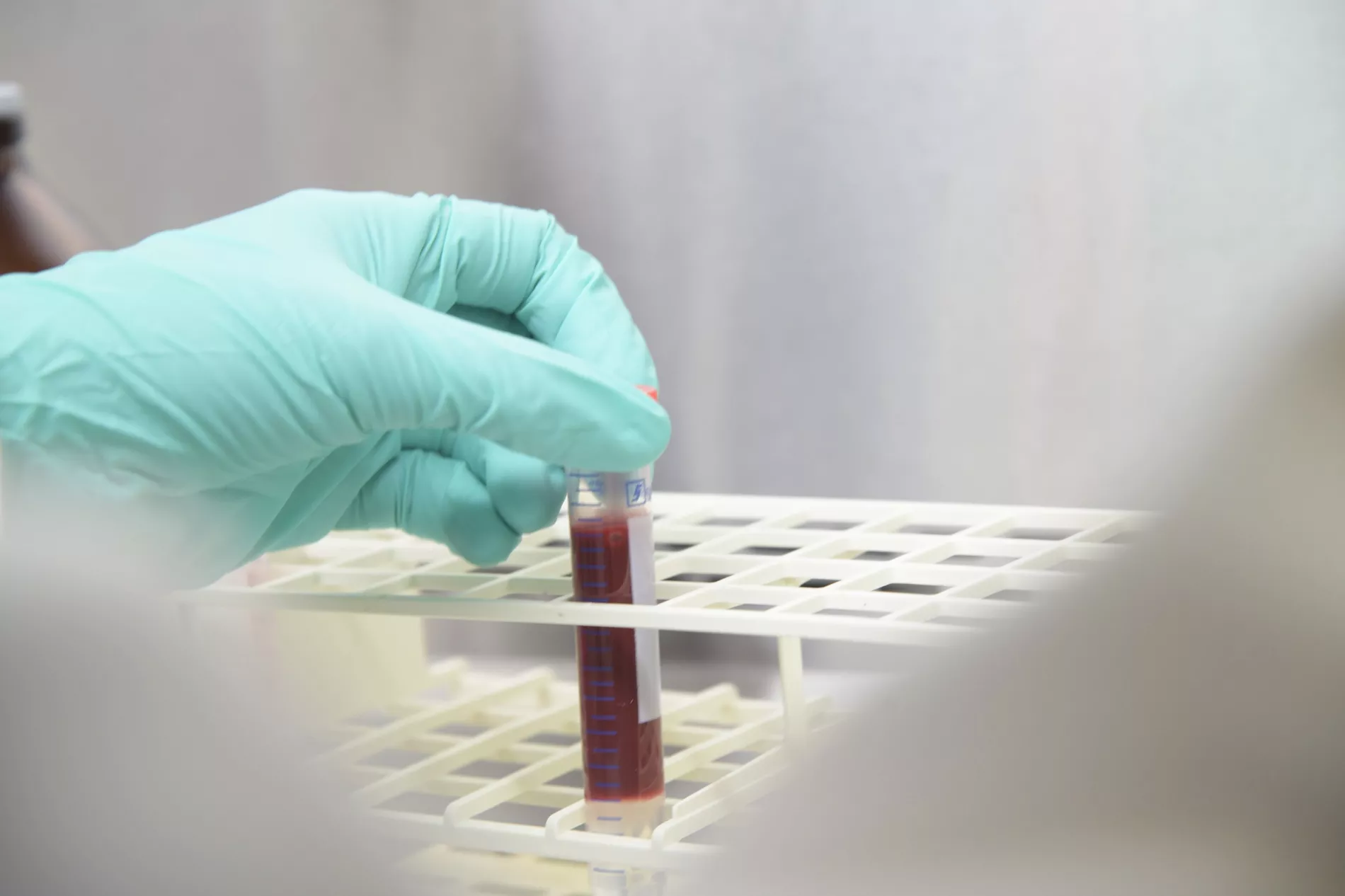
As previously reported by Tucson Local Media, the university was awarded the funding for 250,000 tests. The first phase of testing will begin in Pima County this Thursday, April 30, according to UA, and will include 3,000 samples.
Testing for the rest of the state’s front line workers will take place through May 7. With separate funds, the university will also test 1,500 members of the Pima County community. UA President Robert Robbins also recently announced plans to test the majority of the university’s 45,000 students and 15,000 employees.
The antibody tests are built upon the work of UA immunobiology professor Janko Nikolich-Žugich and associate professor Deepta Bhattacharya. The test will help determine how many people have been exposed to COVID-19 and how many have built an immunity against it.
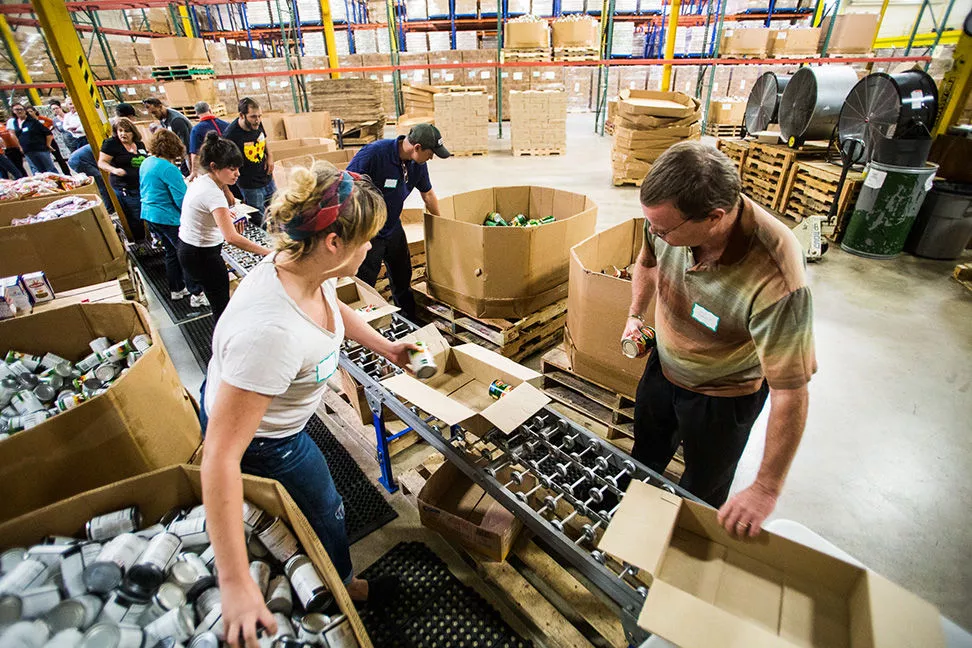
Pima County Supervisor Sharon Bronson and Santa Cruz County Supervisor Bruce Bracker have teamed up to address the needs of not only their respective counties but Yuma County and Cochise County as well.
Last week the Pima County Board of Supervisors unanimously voted to amend the City of Tucson and Pima County Consortium 2014-2019 HUD Consolidated Plan and the Pima County Annual Action Plan to free up $630,000 split between various agencies addressing the public’s needs during the pandemic. Bronson was instrumental in making sure the county took action quickly.
It took the county about a week to diagnose who needed funding and where the county could get the funding, said Bronson.
“When you have to do something, you have to do it—you don’t wait,” Bronson said. “We needed to rethink what we’re doing with our COVID-19 response. If we don’t respond quickly, we’re negligent.”
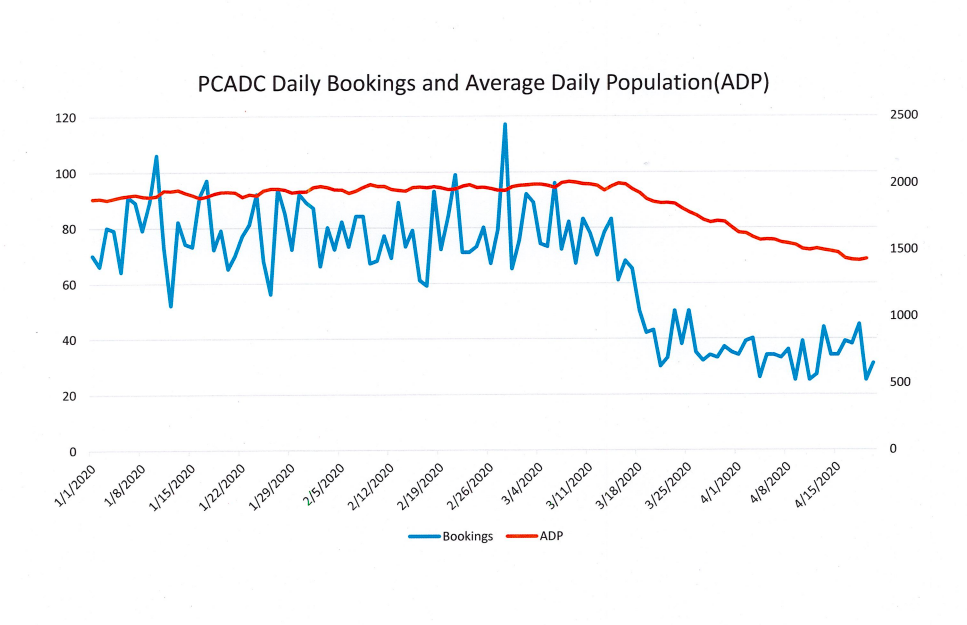
The COVID-19 pandemic has accelerated the county's ongoing efforts to reduce the Pima County jail population.
The average daily population was 1,428 as of last week. Before the pandemic, the jail had an ADP of around 1,900, according to April 25 memo from Pima County Administrator Chuck Huckelberry to the Board of Supervisors.
Huckelberry said there has been a "rapid decline" in daily bookings since around March 11, and he hopes that future bookings will be only for those who are an "actual danger to our community." A coalition of criminal justice agencies in the county have worked to reduce the number people in jail for nonviolent, low level drug offenses for years, with slower progress.
The decline in new bookings, coupled with recent efforts from the Pima County Public Defender's Office to secure the releases of people who were accused of nonviolent crimes and simply couldn't pay their bail, have resulted in a lower jail population, which is crucial in preventing the spread of COVID-19.
"It is ironic that all of our previous actions and activities associated with attempting to reduce our detention populations have been difficult," Huckelberry wrote in his memo. "However, the COVID-19 pandemic has succeeded in what previously has been difficult to accomplish."
The group is called Tips for Tucson, hosted by a Facebook page and a google docs spreadsheet. Tips for Tucson even made a video, shot and produced by Tyler Lidwell Videography, and features many bartenders from around Tucson’s nightlife scene helping get the word out.
The idea came to local bartender Kyle Blessinger over a morning whiskey with his friend Eric Smith, a bartender at the temporarily shuttered Kingfisher. Earlier, Smith had forwarded Blessinger a post about what bartenders in Indianapolis were doing to raise cash during the pandemic—a virtual tip jar.
“I was having a morning whiskey because it’s quarantine and there are no rules. Eric had forwarded me this idea,” Blessinger said. “We got to talking and I said, “Dude, we have to do something and this is easy.'”
Bartenders and servers depend on tips to supplement their income since they are paid a lower minimum wage rate—currently $8 per hour in Arizona. While applying for unemployment benefits may seem like the best option, Blessinger notes there can be a lot of down-time between applying and actually being approved for assistance. It took more than five weeks for Blessinger to receive benefits, he said.
Tags: tips for tucson , bartenders , servers , covid19 , Image , Video
Friday, April 24, 2020

While some districts have had a relatively smooth transition, others have found themselves forced to provide everything from wireless access to laptops for families – and sometimes teachers – who might not otherwise be able to participate.
“Many of our districts were able to shift pretty quickly to online learning, many of our districts already had laptops that they were able to loan out to students,” Superintendent of Public Instruction Kathy Hoffman said in a web conference Wednesday organized by the Arizona Capitol Times.
On the other hand, Hoffman said, “far too many districts” did not have the resources to make the switch, specifically the Navajo Nation.
“This digital divide is crippling to Arizona and it’s not going to be a short-term problem, it’s going to be a long-term issue that we need to address,” Hoffman said, highlighting issues such as a lack of technology devices and internet access.
The Baboquivari Unified School District on the Tohono O’odham Nation is a case in point.
Because of spotty internet access, the district had to bring in wireless hotspots, said Superintendent Edna Morris, then followed that by distributing Chromebooks to families that did not have a computer, so students could do their schoolwork at home.

“The Small Business Administration will resume accepting PPP loan applications on Monday, April 27 at 10:30 AM EDT from approved lenders on behalf of any eligible borrower," according to the statement. "This will ensure that SBA has properly coded the system to account for changes made by the legislation."
The SBA recently set new guidelines to help ensure small businesses will receive this round of funding, and not publically traded companies. Under the new guidelines, companies will have to certify that they do not have other sources of funding (like the ability to sell company stock) and are unable to secure a loan from a financial institution to be eligible.
In addition, the SBA is also urging large corporations to give back the money received during the last of $350 billion disbursements of PPP loans - which ran dry in two weeks - or face scrutiny over whether they made the required certification in good faith. Corporations with other means of securing funding and accepted a PPP loan will have until May 7, 2020, to repay their loan in full without further SBA investigation.
“We encourage all approved lenders to process loan applications previously submitted by eligible borrowers and disburse funds expeditiously. All eligible borrowers who need these funds should work with an approved lender to apply," according to the statement. "Borrowers should carefully review PPP regulations and guidance and the certifications required to obtain a loan."
For more information on the Paycheck Protection Program, click here.
Tags: sba , ppp , money , fund , loan , relief , covid19 , pandemic , small business , Image

Such was the case for Madaras Gallery, owned and operated by local artist Diana Madaras, when President Donald Trump delivered his speech at the March 17 Coronavirus Task Force press briefing.
The same night the president asked businesses to allow employees to work from home and limit social gatherings to no more than 10 people, Madaras sent an email to her staff to remind everyone how vital it was to keep the gallery clean. She voluntarily closed down a few days later.
Madaras said she was uncomfortable and worried for the safety of her staff and customers. She was hearing too much “scary information” about COVID-19.
That decision came with a price, however.
“We’re still doing some online business, and we’ve tried to get creative to generate revenue,” Madaras said. “It’s been a real challenge.”
Rising to the challenge, the gallery team shifted its focus to several new ventures. Madaras and her sister produce one-minute videos for YouTube, the company website now hosts free coloring pages for kids. In addition to artwork, customers can also purchase birthday gift baskets, and there’s now curb-side pickup. Customers can also take advantage of free no-contact delivery for larger canvases.
One of the most popular new programs is the virtual home visit, Madaras said. Customers can send a photo of their wall and provide a list of paintings they live or ask for suggestions based on decor. The Madaras team then edits artwork into the photos so customers can plan out their rooms.
Aside from helping customers decorate their homes during quarantine, Madaras and her team repainted the gallery and hung new art so everything is fresh and new for re-opening. They’re still waiting for guidelines from the government regarding customer safety, and Madaras said she doesn’t anticipate hosting any large events for a while.
Outside of the gallery, Madaras recently donated 600 coloring books and boxes of crayons to Tucson Unified School District for distribution in the school lunch program.
“Here are these kids that are quarantined...and they might not have coloring books and crayons at home,” Madaras said. “These are the kids that would come to school for the school lunch program. So when they came for their lunch, they got a little surprise.”
For more information, visit madarasgallery.com online or call (520) 615-3001 between 10 a.m. and 4 p.m., Monday through Friday.

