

Tuesday, July 23, 2019

PHOENIX – Some of the landscaping at Phoenix Sky Harbor International Airport has changed from front-lawn green to desert tan. The airport recently finished replacing nearly 11 acres of turf with native flora as part of a water conservation project that’s expected to save nearly half a million dollars a year.
The landscaping approach is known as xeriscaping, which uses native, drought-resistant flora arranged in ways that promote efficient water usage. The airport project incorporated 435 water-sipping trees, 75 saguaros, 275 other large cactuses and about 2,900 plants and shrubs for groundcover, according to a release from Sky Harbor.
The xeriscaping project is expected to save the city $400,000 annually, in addition to reducing water usage by more than 5 million gallons per year.
“You see in people’s houses, you see it in other natural landscaping because it fits here,” Sky Harbor public information officer Greg Roybal said. “I think the water services director said it best when she said we honor our environment when we plant things that belong here.”
The redesign, completed in June, is part of the airport’s 2015 Sustainability Management Plan, which aims to reduce water consumption by 10% by 2020. Sky Harbor currently uses an average of 30 million gallons of water per month.
Phoenix’s chief sustainability officer, Mark Hartman, said the converted areas were not near pedestrian spaces.
“You want to be very strategic about where you use your water,” he said. “Like, there’s not that many people who walk to the airport and walk along beside the freeway, so having grass there might not be a good spot for grass.”
The xeriscape project is one of seven initiatives in the airport’s sustainability plan, which also focuses on air quality, energy use and waste management.
Because less maintenance is needed on those 11 acres, the project also falls in line with Phoenix’s pledge to reduce greenhouse gases by 30% by 2025.
“It fits in perfectly with not only our overall goals but with the city’s goals and the community’s goals,” Hartman said. “I think it’s going to be looked at as a prime project to model after.”
This story is part of Elemental: Covering Sustainability, a new multimedia collaboration between Cronkite News, Arizona PBS, KJZZ, KPCC, Rocky Mountain PBS and PBS SoCal.
Tags: cronkite news , Sky Harbor , airport , sustainability , xeriscaping , landscape , redesign , Image
Monday, July 22, 2019
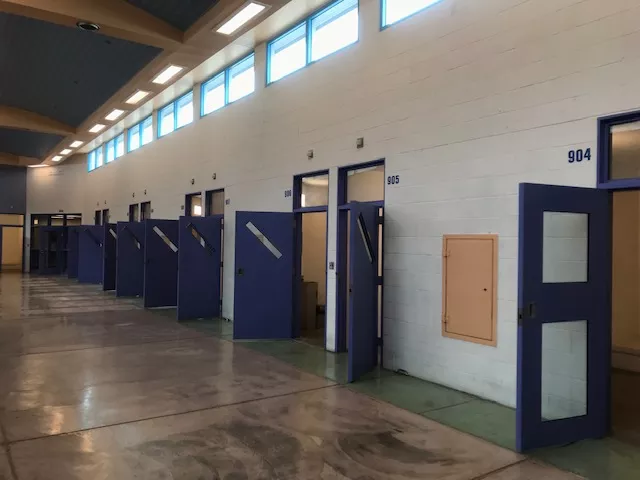
A local Catholic organization sees a detention facility as a “blank canvas” they can transform into a welcoming humanitarian shelter, but some community members believe it is impossible to repurpose a building that actively incarcerates people.
The Pima County Board of Supervisors held a special meeting Monday, July 22 where they voted to approve an agreement with Catholic Community Services to occupy three vacant wings of the county’s Juvenile Justice Complex for no charge.
Supervisors Richard Elías, Sharon Bronson and Ramón Valadez voted in favor, while Supervisors Steve Christy and Ally Miller opposed the move.
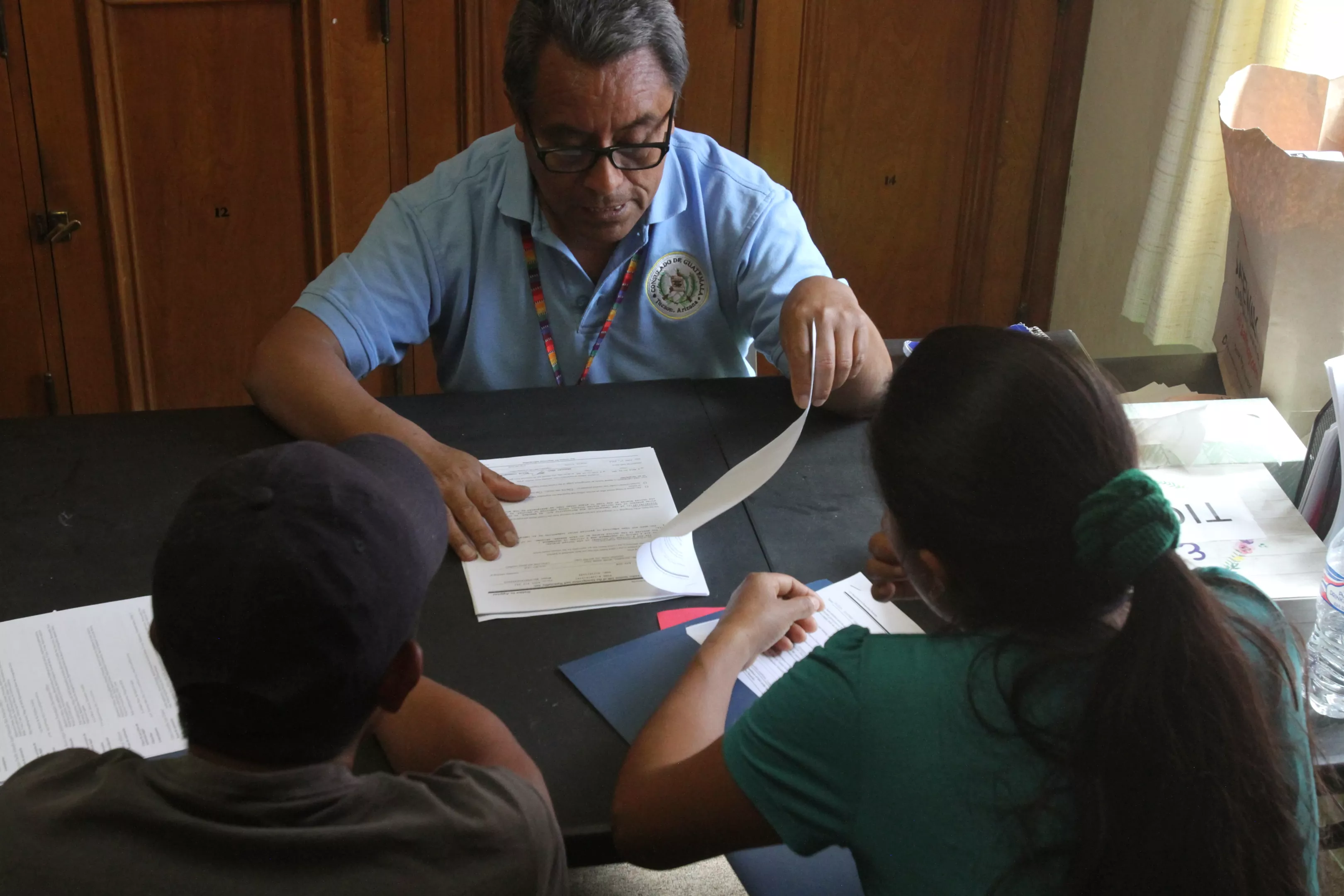
As CCS prepares to cease operations at the Benedictine Monastery, the staff and volunteers have been eager to secure a new space to serve the hundreds of asylum seekers released into the Tucson area by Customs and Border Patrol on a regular basis.
The organization has housed and cared for asylum seekers, who mostly come from Central American countries, in two small shelters since 2014. In January, they set up a larger shelter operation inside the monastery, located at 800 N. Country Club Road, to accommodate for the increase in asylum seekers released from CBP custody into the community while their asylum cases are processed, as well as create a central intake center that is available around the clock.
Every day, CCS and other faith organizations throughout the Tucson area receive information from federal officials about the number of asylum seekers being released from custody. They will determine the room availability within the shelters and then greet asylum seekers when they arrive and explain that they are not part of the immigration system.
The faith-based staff and volunteers provide their guests with food and information about their next steps, administer medical screenings and conduct intake interviews. Asylum seekers are assigned a place to stay and are given a tour of the facility, and then provided with clothes.
The guests receive help calling their sponsors to confirm their travel plans. Volunteers then coordinate transportation to a bus station or airport and arrange for food and travel supplies. They help the asylum seekers understand their travel plans.
Teresa Cavendish, director of operations at CCS, said they used to see around 20 to 50 guests daily, but in recent months have seen at least 200, if not more. The staff is often notified of new arrivals just hours before CBP drops them off.
In response to the sharp increase in asylum seekers, Benedictine Monastery owner Ross Rulney allowed CCS to operate a temporary shelter there before the historic building closes its doors for redevelopment. Rulney plans to build more than 200 market-rate apartment units around the monastery, with potential retail and office space inside.
The closure is coming up on Tuesday, Aug. 6. CCS representatives have determined the three empty wings within Pima County’s Juvenile Justice Complex would be their best option for relocation. The detention center is mostly closed down, with about 30 to 60 juveniles currently incarcerated there.
The monastery has experienced significant wear and tear in the seven months that it has served as a shelter, since it wasn’t built to accommodate heavy use from a large number of guests.
Cavendish said that after spending nearly $20,000 on repairs, they gave up on the weak plumbing about a month and a half ago. Instead, they have resorted to portable showers and restrooms that are located just outside the building. Inside, there are open holes in the ceilings of rooms where pipes gave out.
“That’s a huge challenge for us when you have large bodies of people,” Cavendish said. “And also it’s not the level of respect and caring and dignity that we really want to offer to our guests who are with us. There’s not much dignified about using a Porta-John in 109-degree heat here in Tucson.”
With these experiences in mind, CCS looked for a new shelter facility that could handle large amounts of daily use and comfortably house between 200 to 300 people. They said they need a place that is move-in ready and is centrally located to reduce commute times for volunteers, as well as close proximity to transportation hubs such as the Tucson International Airport and the Greyhound Bus Station on the edge of downtown.
After looking at more than 25 places, CCS decided the empty wings of the juvenile detention center, located at 2225 E. Ajo Way, was the best choice because it has industrial-level facilities for laundry, food and other necessities.
“We looked at abandoned hospitals, we looked at higher education facilities, we looked at a lot of commercial spaces, we did hire commercial real estate agents to assist us in this process,” Cavendish said.
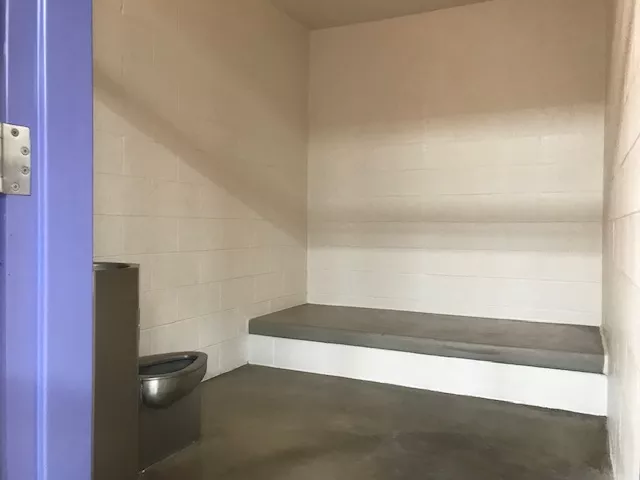
The county plans to perform minor renovations in an effort to transform the facility into a comfortable space. They have already disabled all the locks and security cameras within that portion of the facility. Cavendish said the staff, volunteers and guests will never interact with the other parts of the detention center which currently incarcerates juveniles, and asylum seekers will be allowed to move freely throughout the shelter area.
CCS plans to include murals, carpets, couches, curtains, comfortable beds, recreational items and many more things they believe will make the space a welcoming and calm environment.
Community members have expressed alarm at the news of moving asylum seekers into this facility, since they are coming directly from Immigration and Customs Enforcement custody which has a documented history of abusing migrants in detention.
An online petition that encourages county officials and CCS find a different shelter location had nearly 1,000 signatures as of Monday morning. The signers believe no amount of renovations can change the fact that the facility is an active detention center.
That movement has been met with pushback from CCS staff, who say they have run out of time to find a better option than the county facility.
“This binary of people will be on the streets or they move into the jail is false, and we need to call that out,” said Tiera Rainey, a community advocate who started the petition.
There was even a strong push last weekend to abandon the ongoing preparations for the Juvenile Justice Complex and instead utilize portions of two vacant Tucson Unified School District schools. CCS looked into that option and independently decided it was not a suitable place for their guests.
Rainey and other community members believe county officials and CCS owe it to the public to be more transparent in regards to why the other facilities were insufficient.
Since the move to the county facility was announced just earlier this month, Rainey believes there hasn’t been enough time or information provided for community members to identify a better alternative.
“The onus is being put on critics of this to say, ‘What’s your solution?’” Rainey said. “We were given a week to come up with a solution, given none of the data or information about all of the other sites that they had, these have all been closed-door conversations. They haven’t actually given us a chance to engage in a substantive way.”
Cavendish told Tucson Local Media that CCS has served over 19,000 asylum seekers since the monastery doors opened in January. She did not respond to multiple requests for the organization’s monthly intake numbers.
CCS CEO Peg Harmon told the county supervisors that the organization will never force a person to remain in a place where they felt uncomfortable and they are committed to finding a new housing space for any asylum seeker who doesn’t want to stay in the county facility. Opponents of the move expect many to decline the detention center.
“They’re saying people can go free, but they’re in the middle of nowhere,” Rainey said. “Where are they going to go to if they wanted to leave? And there’s law enforcement all over that complex because it’s an active detention center and a courthouse.”
At the supervisors meeting, several representatives from other faith congregations told the board that CCS is not the only religious organization that cares for migrants, and if they vote against the detention center, there are other options available to asylum seekers that would prevent them from ending up on the streets as a result.
Many residents present at the meeting were also concerned with the high costs of using the juvenile detention facility.
The county is seeking reimbursement from the Operation Stonegarden federal grant program to cover costs for providing humanitarian aid. Minor renovations, utilities, medical supplies, transportation, and upholding existing contracts within the complex for food, janitorial services and more will cost the county around $530,000 for five months.
“All of this is a hypothetical reimbursement that they may or may not get,” Rainey said.
Rainey argues that if the county is willing to invest the annual $1.5 million into the detention facility, that money could be used to enhance one of the other numerous facilities that CCS deemed insufficient.
“I think the county did a poor job of rolling it out to the community,” Elías told Tucson Local Media. “And had they had more facets of the community involved in the whole thing, then perhaps people wouldn’t have been so unsure about what we were doing and so negative about it, or worried so much about the ugly optics that surround it.”
At the meeting, Elías, who briefly opposed using the county facility, apologized for the lack of community involvement in this decision. While acknowledging that this option does not look great for the long term, he joined the other two Democrats on the board in voting to approve it.
“It’s going to be difficult for us to find that next place that works,” Elías said. “We will find a place, or maybe multiple places that will work for us, together.”
Miller questioned why CCS was the only the faith organization involved in the decision to use the county facility, as well as the timing of the move.
“The fact this has come forth as an emergency, when it appears people have known for months that the monastery is going to be remodeled and discussions have been going on for months, why are we rushing into this to make this decision?” Miller said.
Christy said he refused to support the decision because taxpayers should not be responsible for providing food, shelter and medical care to asylum seekers.
“Non-governmental organizations should be taking the lead and shouldering the responsibility of this humanitarian crisis,” Christy said.
Valadez said the reason Pima County is dealing with this issue is because of a lack of decision from the federal government. While briefly acknowledging the lack of public involvement, he said the move to approve the use of the detention facility was necessary.
“That’s in the rear-view mirror,” Valadez told the audience. “Going forward this doesn’t have to be the only option, but right now we need this option.”
Tags: asylum seekers , Pima County Board of Supervisors , Catholic Community Services , migrants , Pima , Juvenile Justice Complex , Image

The work will consist of installing survey monuments and loop detectors, utility adjustments, thermo striping and raised pavement markers. Work is expected to be completed early August 2019.
Motorists can expect lane restrictions and reduced speed. Please approach the area with caution and obey all traffic control devices. Minor delays may occur during this work.
In the event of mechanical failure or inclement weather, the construction schedule is subject to change.
Tags: roadwork , paving , Sabino Canyon , construction , Image
Friday, July 19, 2019

“We have had to add kennels to our cat adoptions area, place multiple cats in each kennel, turn our spacious catios into additional kennel rooms, move cats into our meet and greet rooms and add additional kennels into our Welcome Center. We are running out of places to put them! If you’re interested in adding a cat to your home now is the time! We have every personality, color, and age. They are just waiting for you,” said Morgan Treiber, HSSA’s Adoption Supervisor.
As part of HSSA’s 75th Anniversary Celebration all cat adoptions for cats over 6 months of age are 75% off through Thursday, August 1. If you’re interested in a kitten, don’t worry there are plenty! Kittens will be eligible for the 75% OFF adoption fee discount through Sunday, July 21.
For more information on cats that are waiting for their forever families visit HSSA Main Campus at 635 W. Roger Rd. or PAWSH Park Place at 5870 E. Broadway Blvd. You can also give an adoptions counselor a call at 520-327-6088, ext. 173.
Tags: Humane Society , cats , adoptions , sales , animals , pets , forever homes , Image
Friday, July 12, 2019
1. Make sure your pet has plenty of water, always.
2. Never leave your dog in the car. Even when it's 70 degrees outside, the car interior can get up to 20 degrees hotter. That means that when the temperature is 100 degrees, the car can get upwards of 120. Open or cracked windows don't effectively cool down the car.
3. Don't leave pets unsupervised around a pool. Not all of them are good swimmers.
4. Trimming your pet's hair is okay, but shaving them may remove layers of protective fur that will keep them from sunburn or overheating.

Tags: Pets , dogs , cats , summer , heat , protection , ASPCA , Image
Friday, June 28, 2019

The Garden Kitchen offers cooking classes, and this Saturday, June 29, they're teaching a class called "Healthy and Delicious: With a Latin Twist Hands-On Cooking Class."
Learn to cook gazpacho, crispy vegetable cakes with lemon cilantro crema, and cauliflower ceviche.
You'll understand how to make a cold soup, how to make a sauce, and how to create full-flavor vegetarian entrees.
Can't catch this class? The Garden Kitchen offers classes throughout the month. And they're not just cooking classes, but fitness ones too.
Saturday, June 29 from 10 a.m. to 1 p.m. $55
Proceeds go towards The Garden Kitchen's free programming. 2205 S. 4th Ave.
Tags: The Garden Kitchen , food security , cooking , cuisine , food activism , cooking classes , community , Image
Friday, June 7, 2019

You don't want to miss this one!
- 9:30 a.m.–4:30 p.m.
One-on-One Coaching
Register for your 20-minute consultation in the library on the day of the event. Consultations will be offered in English and Spanish.
- 9:30–10:30 a.m.
Discover Digital Resources to Empower Your Community
- 11:30 a.m.–12:30 p.m.
Get Your Business Online
- 1:30–2:30 p.m.
Using Data to Drive Business Growth
- 3:30–4:30 p.m.
Power Your Job Search with Google Tools
Tags: Grow with Google , Joel D. Valdez Main Library , education , career growth , library programs , June 10 , Image
Thursday, June 6, 2019

The university was ranked No. 2 among employers headquartered in Arizona, No.1 in the education category and No. 11 out of 72 employers across the state.
"I am thrilled that the University of Arizona has earned this recognition as one of the state's best workplaces," said UA President Robert C. Robbins, in a statement. "With more than 16,000 people in our workforce, we take immense pride in providing an outstanding professional environment where employees can expand their own potential while helping our students pursue success."
According to Forbes and Statista, a German online statistics engine, “America’s Best-in-State Employers” are selected based on an “independent survey from a sample of more than 80,000 U.S. employees working for companies employing at least 500 people in their U.S. operations.” The surveys were conducted via online, anonymous panels between October 2018 and February.
Employees were asked to rate their willingness to recommend their own employers to friends and family. Participants were also prompted to evaluate other employers in their respective industries that stood out either positively or negatively.
Last month, the UA was ranked No. 62 in Forbes' fourth annual “Best Value Colleges list,” including a 46-spot jump from the university's 2018 ranking. The UA's overall score placed it at No. 34 among public universities and No. 41 among research institutions.
Tags: UA , University of Arizona , Forbes , best place to work , jobs , careers , university , education , survey , report , Image
Wednesday, June 5, 2019

In anticipation of the Pima County Board of Supervisors' final budget adoption next Tuesday, June 18, the county's Department of Transportation has released a list of roads it intends to repair in the next fiscal year.
The department has $26 million to work with: $15 million from the county's share of Arizona's Highway User Revenue Funds, $6 million from remaining road bonds and $5 million from the general fund.
The Pima County Transportation Advisory Committee, which recommends transportation improvements to the supervisors, would like to see the $15 million "prioritize the local, arterial and collector road repairs," according to a county press release. The $6 million would go toward major roads and collector streets and the $5 million is for regional recreational roads that impact tourism, such as Kinney Road which leads to the Arizona-Sonora Desert Museum.
In a memo to the supervisors, County Administrator Chuck Huckelberry said this amount of road funding was a result of growth in HURF and Vehicle License Taxes, a reduction in debt service and cost savings in the transportation department's operations.
At yesterday's Board of Supervisors meeting, District 1 Supervisor Ally Miller said she was pleased with the $26 million.
"Is it enough? It never will be. This is going to be an ongoing problem and we'll be facing it every year," she told her fellow board members. "As we all know it's going to be an ongoing challenge, and this board will need to collaborate to find this money, even more money, to fix the roads as we move forward."
The Transportation Advisory Committee specifically recommended that the $15 million be allocated in equal amounts to each of the county's five districts. The supervisors could decide to go against that and put more money into certain districts than others.
Supervisor Steve Christy asked Miller at the meeting if she agreed with the committee's recommendation, to which she said "I'd like it all in District 1 ... If people feel very strongly that it should be evenly split and that's the way the board decides, I can live with that. As I said I'd rather not have that, but we have to make sure we accommodate everyone and treat everyone fairly."
Check out the list to see if any of your nearby streets could get fixed next year!
Tags: board of supervisors , roads , road repair , ally miller , steve christy , chuck huckelberry , HURF , pima county , Image

Investigators are attempting to determine what caused the death of the young owls, which appear to have died at the same time. The animals were found Tuesday, May 28 in the 1500 block of East Prospect Lane, near North Campbell Avenue and West River Road.
Those with information about the case are asked to contact the Arizona Game and Fish Department’s Operation Game Thief Hotline at 800-352-0700. Callers may report anonymously if need be, and should reference OGT #19-001424 when calling. Area homeowners have pledged an additional $500 reward for information leading to an arrest.
Tags: great horned owls , reward , Arizona Game and Fish , Image

