Tuesday, January 1, 2019
An Arizona nonprofit recently launched two new websites that can be used to help migrants currently travelling to the U.S.-Mexico border.
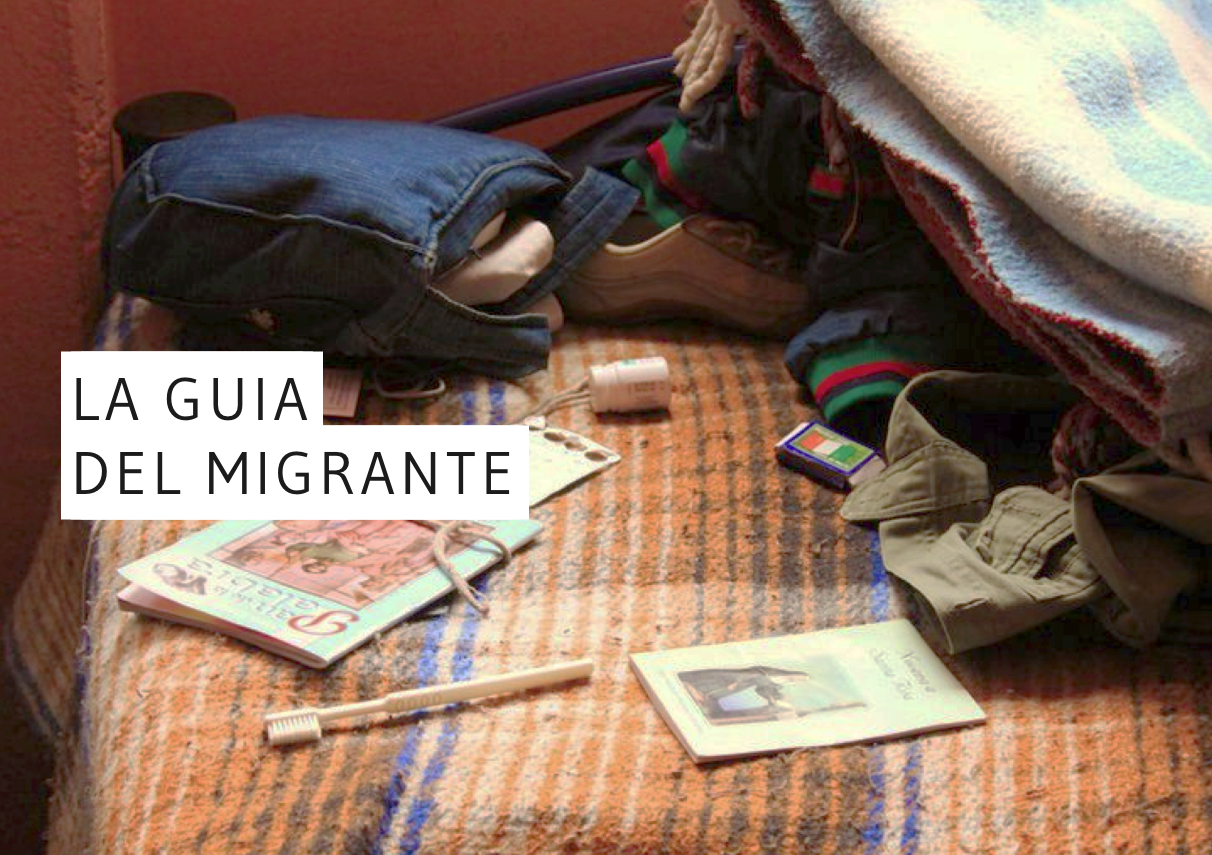
Robin Hoover, president of Migrant Status, Inc. worked with the help of Mexico City-based journalist Laura Garciandia to get valuable information about traveling through Mexico to Central American migrants via a downloadable PDF guide available at guiamigrantes.com.
The guide, written in Spanish, includes information on transit methods and routes, criminal organizations and their known locations to avoid, tips for crossing through the desert safely, emergency resources, first aid advice and more.
Hoover had been working with the idea of compiling and publishing information for migrants to use while travelling to the border for quite a while. In his experience, information is what could help them most.
“Up came the idea of the [online] migrant guide and then some people in Mexico approached me saying they had very similar ideas,” Hoover said. “People need to understand more about the route and what public resources are available. We started sandwiching these things together and a lot more is going to go on the website.”
Creating an online guide that was accessible to migrants came with its own set of obstacles. Hoover said his team had to figure out how to get the information to those with limited internet access. That’s where the second website comes in.
Robinhoover.com is being repurposed into a tool for shelters in Mexico. They can download a PowerPoint version of the guide and have it displayed in shelters 24/7 so migrants without their own cell phone or internet access can view it. The website is also used for outreach to promote long-term relationships between nonprofit groups who want to help and the shelters that need it. Hoover said such a partnership could help get resources directly to migrants at a higher efficiency rate.
“There's not a U.S. or Mexican authority that's putting resources directly into the service providers hands,” he said. “There are religious groups, friends, but not the government. Folks in the U.S. who want to help, we can take them down there to do face-to-face introduction.”
Hoover has been involved in advocacy for 33 years. He founded Humane Borders in 2000, which is a local faith nonprofit that maintains a system of water stations for migrants travelling through the desert to use. He left his position in the organization in 2010, and retired from ministry two years later.
Despite the change, Hoover said he is still very active in advocacy for migrants and the issues they’re facing today. He’s been working “quietly” on specific projects, experimenting with satellite locator beacons for migrants and issuing flashlights for rescue operations. He published a book in 2016 called “Creating Humane Borders.” In it he gives an ethical analysis of border policies, an overview of the help faith communities provide and his recommendations for policy reform. He lectures and goes on speaking tours as well.
“There's a lot of people who want to do the right thing and [learn] how they can help,” Hoover said. “The resistance is just this hate-filled Trump administration and all the anti-immigrant sentiments. It means that any kind of substantial reform is still a long ways away.”
Migrant Status, Inc. is actively seeking contributions to continue dispersing valuable information to migrants. Contributions can be mailed to 2250 W. Painted Circle, Tucson, AZ 85745.
“Five dollar contributions make all the difference,” he said. “When I ran Humane Borders we raised a quarter of a million dollars and it was a Mississippi of five dollar bills, so what people contribute really does matter.”
Tags: Migrant , Border , Mexico , United States , Immigration , Nonprofit , Advocacy , Humanitarian , Aide , Robin Hoover , Humane Borders , Migrant Status Inc. , Image
Monday, December 31, 2018

Before Mort Rosenblum reported on international wars, joined the Associated Press, or received eight Pulitzer Prize nominations, he attended the University of Arizona as a young Tucsonan. Now, after more than half-a-century of journalism, Rosenblum is taking to teaching local citizens
about news literacy, and how to find out what’s going on in these complex times.
Part of the UA’s Community Classroom series, Rosenblum’s class, “Keeping Tabs on a Mad World: A Correspondent’s Guide to Global News That Matters” is a series of five weekly lectures to “equip townsfolk who give a damn about how to follow news that matters in the world.”
How did a professor of journalism get involved in teaching to the public? Are you tired of college students?
No, no, it’s the other way around. I started out at the University of Arizona back in 1831 or whenever, and I started working for the Star, then I joined the Associated Press in 1965. Then a couple years later I found myself in the Congo… I was covering a mercenary war in the middle of Africa. But at one point, when I was running the International Herald Tribune in Paris, I got asked do come back and do short courses teaching during summer vacation, and I really liked that. But then in 2004 when I finally left the Associated Press, I was asked to come back and do a short course in international reporting, and that to me is the most important thing I do. Because if we old crocs don’t pass along what we’ve learned the hard way to new generation of reporters that have better tools and often much better skills than we did, things are gonna get lost.
How much freedom did you have in crafting this course, and what are you going to do to ensure it’s not just a seminar or a lecture?
For one thing, I fall asleep in seminars and lectures, so I’d probably fall asleep while doing one. So what I’m going to do is engage an audience, I’ve got some incredible footage and interviews I’ve already done… There will be some lecture and explanation but there will also be lively back-and-forth discussion, there will be video clips, Skyped and taped interviews with people who do the news. So it’s not just me sitting and talking.
What is news literacy?
News literacy is a term someone came up with, and I wouldn’t use... But to be news literate, you need good solid sources to start with: a daily, The Times, The Post, The Guardian. You need to have television sources which take you to a story in certain ways – you get to see the faces and hear the words… So once you have an understanding of what the real-world problems are, the real crises in the world, and once you have an idea of how they fit together, essentially once you open a world map and look at it, then it doesn’t actually take much time to follow the major changes.
Do you think there’s a difference between when you started college and the college students of today, or any seekers of knowledge today?
There’s a huge difference. Today, we have this “Tower of Babble,” words are everywhere. And so the good stuff is better than ever, if you know how to find it. But it’s like looking for nuggets in a garbage can… So the trick is to find those basic, solid sources you trust, individuals more than organizations these days. Give yourself a basic framework, and then go from there. Otherwise you’ll just get drowned out.
Can a person nowadays truly know what’s going on in the world?
A person can know what a person doesn’t know. Truly know? No. But know more than people who just make it up or just listen to what some clown politician tells them? Yeah. And so my purpose for this course is to help people inform themselves with solid reliable sources, about what’s happening now and what’s likely to happen. When you study journalism, the old questions are who, what, where. But the important ones are why, and what next?
Rosenblum teaches “Keeping Tabs on a Mad World” at The Loft Cinema from Jan. 9 to Feb. 6. Wednesdays, 5 to 6:30 p.m. To register for the classes, visit uafoundation.org/NetCommunity/events/madworld
Tags: Mort Rosenblum , UA , teacher , professor , journalist , AP , news literacy , college , public , lectures , The Loft , education , Image
Friday, December 28, 2018
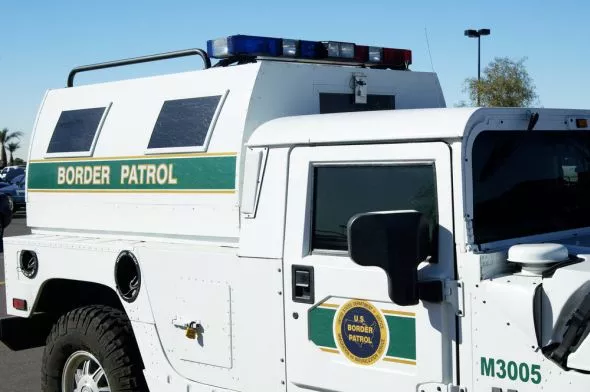
In the past, migrants have been dropped off curbside at bus stops with no information for how to find shelter or food while they wait for their asylum cases to be processed. This time, local faith communities mobilized within hours to coordinate with ICE for the migrants to be dropped off at their shelters instead of being left out in the elements.
“No one with a child who speaks a different language and has not a dime to their name should ever be dropped at a bus station to try to figure out how to get to Atlanta or wherever they’re going for their sponsors,” Rev. Delle McCormick said this morning.
McCormick is a pastor at a midtown church who works with a network of faith communities that have both permanent and temporary resources to shelter migrants released from ICE custody. These migrants already have sponsors (either relatives or friends) located throughout the country who have agreed to provide residence for them. The church staff and volunteers help them contact their sponsors, arrange for transportation to their sponsor’s home, and make sure they are clothed, fed and sheltered during the transition.
In the church’s multi-use room, a dozen or so migrants sat in foldable chairs and talked quietly amongst themselves in Spanish. About five or six in the group were children, they seemed happy as they played with a couple of toy trucks that were available. The right side of the room was lined with tables where orange juice, milk and cereal were left over from breakfast. A church staffer sat at an adjacent table and made phone calls to ensure the church has enough supplies and beds for their guests to be comfortable tonight.
While there are two churches that have a permanent shelter system set up, McCormick’s church and several others do this on a temporary per-need basis. She said this began in mid-October and went on until the end of November. During that six week period her church saw 514 migrants come in and out; half of those were children.
“ICE would send me an email saying who was coming and what time they were coming in,” McCormick said. “The people that deliver our guests to us are not your stereotypical non-caring person. They’re real people and they love to bring people to the church because they know that they’re going to get extra special care.”
Tags: Border Patrol , ICE , Migrants , Central America , Honduras , Guatemala , Church , Shelter , Immigration , Border , Mexico , Image
Wednesday, December 26, 2018

But what are you supposed to do with that hunk of dried out pine needles cluttering up your house once the holidays are over?
For the 22nd year, the City of Tucson is running its TreeCycle Program starting the day after Christmas through Jan. 14.
There are convenient locations throughout Tucson and Oro Valley to take your tree:
1. Oro Valley Naranja Park, 810 W. Naranja Dr. (Only open through Jan. 7)
2. Tank's Speedway Landfill & Recycling, 7301 E Speedway (Open Monday to Friday, 7 a.m. to 4 p.m. Saturday, 7 a.m. to 2 p.m. Do not leave trees outside property.)
3. Golf Links Sports Park, 2400 S. Craycroft Rd. (7 a.m. - 5 p.m.)
4. Tucson Rodeo Grounds, on 3rd Ave. (East of Rodeo Grounds, on 3rd Ave. north of Irvington Rd.)
5. Los Reales Landfill, 5300 E. Los Reales Rd. (Entrance is at intersection of Craycroft Rd. & Los Reales Rd., follow signs) 6 a.m. to 5 p.m. Closed Sundays.
6. Silverbell Site, (Northeast corner of Silverbell Road and Goret Rd (follow signs).
7. Purple Heart Park, 10050 E. Rita Rd.
8. Randolph Golf Course, 600 S. Alvernon Way, (Southeast corner of parking lot)
9. Tank's Green Stuff, 5300 West Ina Road, Open Monday to Friday, 7 a.m. to 3:30 p.m. Sat 7 a.m. to 2 p.m.
So, what are they going to do with all those trees? Make mulch! From Jan. 2 to 14 pick up free Merry Mulch for your garden at Los Reales Landfill. Bring your own container and take home mulch to help soil retain moisture.
Find more information here.
Tags: Christmas trees , recycling , tree disposal , mulch , holidays , decorations , Image
Thursday, December 20, 2018

Mobile Meals of Southern Arizona announced that its clients will receive a special meal delivery this Christmas, thanks to a partnership with Tucson Medical Center.
According to a press release issued by Mobile Meals, TMC offered to prepare holiday meals for Mobile Meals’ clients after learning the Salvation Army was not doing so this year. Mobile Meals’ volunteers will deliver meals to clients across Tucson on Christmas day.
“We are very grateful to TMC for their generosity not just this Christmas, but really throughout the year,” said Mobile Meals’ Executive Director Tamara McKinney. “They have been a tremendous partner for Mobile Meals since the program began in 1970, and truly go above and beyond to help the community.”
Mobile Meals’ volunteers deliver nearly 100,000 meals each year to homebound adults throughout Pima County. Learn more at MobileMealsSoAZ.org.
Tags: Mobile meals , volunteers , holiday meals , delivery , TMC , Image
Wednesday, December 19, 2018
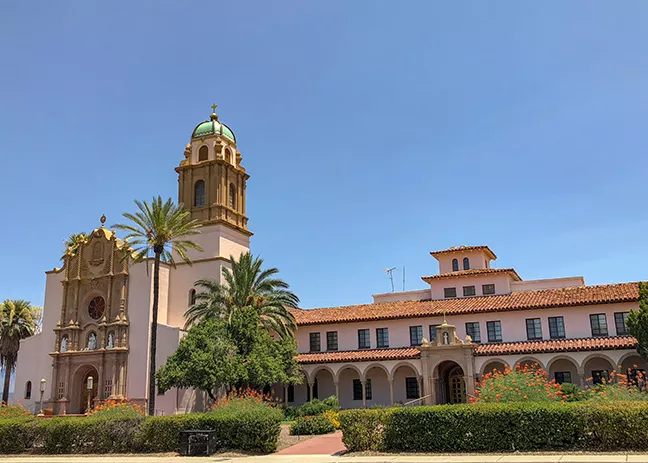
An amendment to the neighborhood plans of Miramonte and Broadway-Alvernon was granted by Tucson City Council yesterday to allow for an “adaptive re-use” of the Benedictine Monastery. This latest development will bring the developer, Tucson Monastery, LLC, the city and the residents one step closer to finalizing development plans on the historic site.
The mayor and council unanimously passed a motion to amend the plans to allow for public use of the monastery and to incorporate a joint letter of agreement between the Tucson Monastery, LLC and the residents as conditions of the rezoning. It is still undecided what the monastery will be used for in the future, so the letter of agreement ensures that the public will have a say in the outcome.
The letter also ensures that no student housing will be established on the site surrounding the monastery, but rather 250 units of high-end apartments. It states any building cannot surpass 55 feet in height (which council member Steve Kozachik said is about 30 feet less than where this conversation began) and a row of oleanders on the southern and eastern sides of the property will remain intact.
The 7.5 acre site has split zoning between O-3 (professional and semiprofessional office, high density residential developments, and limited research and development uses) and R-3 (high density residential, primarily for apartments or single-family development).
Kozachik, of Ward 6 where the monastery resides, gave a ten-minute speech explaining the long and difficult process that preceded this agreement and amendment. He said the original zoning of the site allows for 660 student housing beds and complete demolition of the monastery. In May the council initiated the process of providing the Benedictine Monastery with a historic landmark designation, which protects it from demolition.
There have been dozens of meetings, hundreds of people included in public outreach by the developer and the architect, three planning commission hearings and significant neighborhood communication, according to Kozachik.
He said in the beginning of this process, the developer had an underlying entitlement because of the existing zoning and made some initial proposals. Over a hundred people came to each of the two public meetings held to discuss the proposals last summer.
“At the first one, where the initial concept of a project was presented, it was seven stories tall, it was approximately 86 feet tall, and there was an audible gasp in the room when the rendering of that was shown on the screen,” Kozachik said. “Remembering, of course, that the underlying zoning still existed and that was the opening gambit for what was going to be proposed.”
After that bad reaction, the developer worked with the Miramonte and Sam Hughes neighborhood associations to make some consensus about what would be done with the property. With this agreement and amendment passed, a rezoning process can move forward.
“I sit here tonight wanting to just simply make the point that we are preserving the monastery, there will not be student housing, we have significantly reduced the mass over what was originally proposed, there will be a public use of the monastery, and there will be a public process going forward,” Kozachik said. “It’s been a difficult process, everyone knew it was going to be because this is a sensitive site.”
Tags: Benedictine Monastery , Tucson City Council , Steve Kozachik , Rezoning , Neighborhood , Historic , Preservation , Image
Orders are made through the Fry's Food Stores mobile app, and groceries are available for delivery seven days a week.

The new vehicles, known as the Nuro R1, travel on public roads without drivers or passengers, delivering groceries from Kroger stores (such as Fry's and Ralph's). Nuro has been developing the R1 since 2016.
With this initial announcement, this service is only available at a single Fry's food store in Scottsdale, but more locations across Arizona are expected.
Tags: Fry's , groceries , delivery , automated , robots , driverless cars , Nuro R1 , Kroger , Image
Friday, December 7, 2018
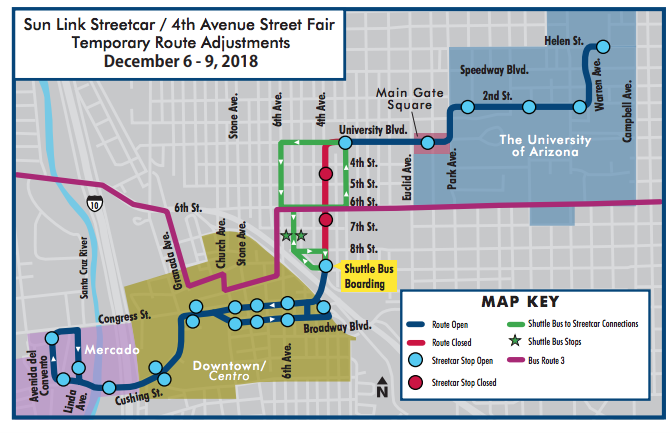
Here's how to get around this weekend according to Park Tucson:
This weekend there are free shuttles to the 4th Ave. Street Fair from both Pennington St. and Tyndall Garages.
Also, this weekend only, Park Tucson will not be enforcing residential permits in the neighborhoods surrounding the Street Fair, so extra street parking will be available.
The Sun Link Street Car has been diverted because of the tents covering its tracks, so riders can board Sun Tran buses from temporary end point stops at 4th Ave. and 9th St. and University Boulevard and 3rd Ave. to reach the street car's usual destinations.
So, don't worry UA students, you can sill get to your finals today!
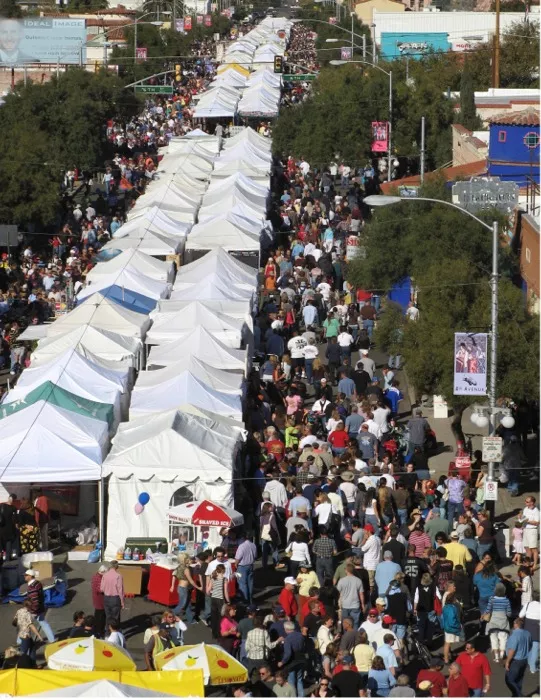
For the entirety of the Street Fair (now through Sunday, Dec. 9) 4th Ave. will be closed to all traffic from University to 8th St. with the exception of 6th St. which will remain open. With over 300,000 people estimated to attend, the whole area is best avoided by car if possible. Walk, bike or ride to the fair and save yourself the parking headache.
Tags: 4th ave , street fair , winter art festival , fourth avenue , things to do , art , local artisans , Image
Thursday, December 6, 2018

Stuff the Bus at Walmart

The Salvation Army is partnering with iHeart Media, SunTran and Walmart to stuff five SunTran busses full of toys on Friday, Dec. 14.
“This is our biggest event of the holiday season. It is vital we receive toy donations, so we can continue to serve the children of Tucson. Last year we were able to collect 3,684 toys and provided assistance to 1,500 families. The goal this year is to collect 6,000 toys and fill 5 SunTran buses with new toys so we can help more families in need this Christmas,” said Captain David Oh, The Salvation Army Tucson Area Coordinator.
Meet radio stars from 93.7 KRQ, Hot 98.3, My 92.9, 97.1 The Bull and KNST AM 790 when you bring new, unwrapped toys to the Walmart on Speedway and Kolb and make a local kid's holidays a little brighter.
More information about Stuff The Bus.
Holiday House at Emerge! Center Against Domestic Abuse

Donate toys, clothes, accessories and household goods this holiday season to Emerge! Center Against Domestic Abuse. Survivors can choose gifts for their families with no cost at the Holiday House and start to build happy holiday memories.
New, unwrapped donations can be dropped off at 2545 E. Adams Street through Dec. 10.
Boys & Girls Clubs Holiday Gift Drive at Walgreens
If you are stopping by Walgreens for your prescription or some last minute holiday cards, look for their decorated boxes for donations. Local Walgreens locations have partnered with Boys & Girls Clubs of Tucson to collect toys for children from age 7 to 17 and other items such as pajamas, candy, gift cards, makeup and items you can conveniently pick up while in the store. Gifts are being collected through Dec. 11.
Fill the Streetcar
This year, the annual Miracle on 31st Street expects over 15,000 children to attend, so they need a lot of toys.
In 1970 Ramon Gonzales donated $125 of his own money to host a holiday party and cook hotdogs in his yard for children in his neighborhood that didn't have anything for the holidays.
Now, Miracle on 31st Street has grown into a huge event, hosted at Casino Del Sol's AVA Amphitheater, that provides toys, food and a holiday party for thousands of local kids.
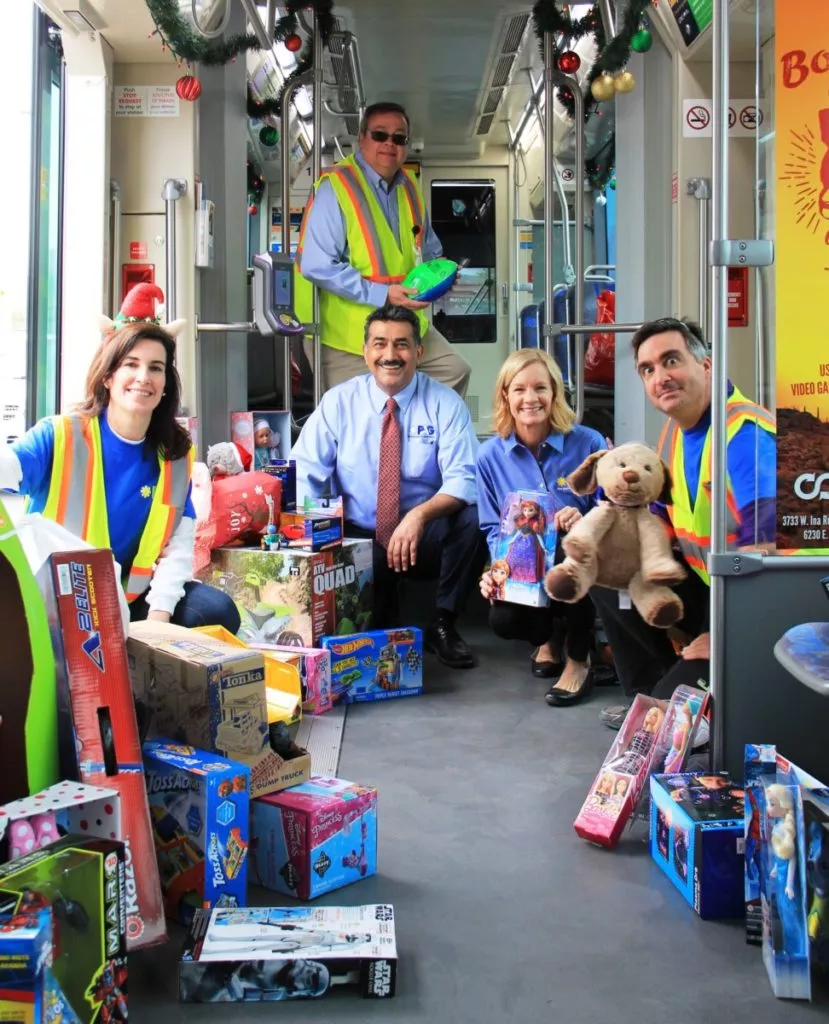
The Regional Transportation Authority is helping collect toys for the event by filling a streetcar this holiday season. The Sun Link Streetcar will be parked on 8th Street, just west of 4th Avenue on Friday, Dec. 14 from 9 a.m. to 6 p.m. Between 4 and 6 p.m. listen to songs from Salpointe and Canyon del Oro High School choirs and CDO Pep Band. And if you're lucky you might even see Santa! Find out more about the event here.
Operation Holiday Open House
Military families can head over to the Arizona Air National Guard 162nd Wing this Saturday, Dec. 8 to "go shopping" for the holidays for free! Throughout November and December the Military Assistance Mission has been collecting toys and other gifts for military children.
“This program, Operation Holiday Open House, is to thank those in uniform including the families, during this this very special time of year,’ said Margy Bons, Founder and CEO of Military Assistance Mission.
6620 S. Air Guard Way, building 5 just south of Valencia Rd. connected to Tucson International Airport.
So, happy holidays and merry giving! Help brighten a child's holiday this year.
Tags: toy drives , holidays , presents , gifts , children , kids , families , toys for children , holiday cheer , Image
Wednesday, December 5, 2018

Mister Car Wash on Speedway and Rosemont is celebrating its reopening after being remodeled with free Platinum Express Car Washes!
Also, drivers who sign up for the Unlimited Wash Club at this location over the weekend will get their first 30 days free.
Free car washes will be running all weekend, starting Friday, Dec. 7 trough Sunday Dec. 9. Scrub a dub dub!
Tags: car wash , wash your car , dirty car , Mister Car Wash , free stuff , Image