

Wednesday, June 20, 2018
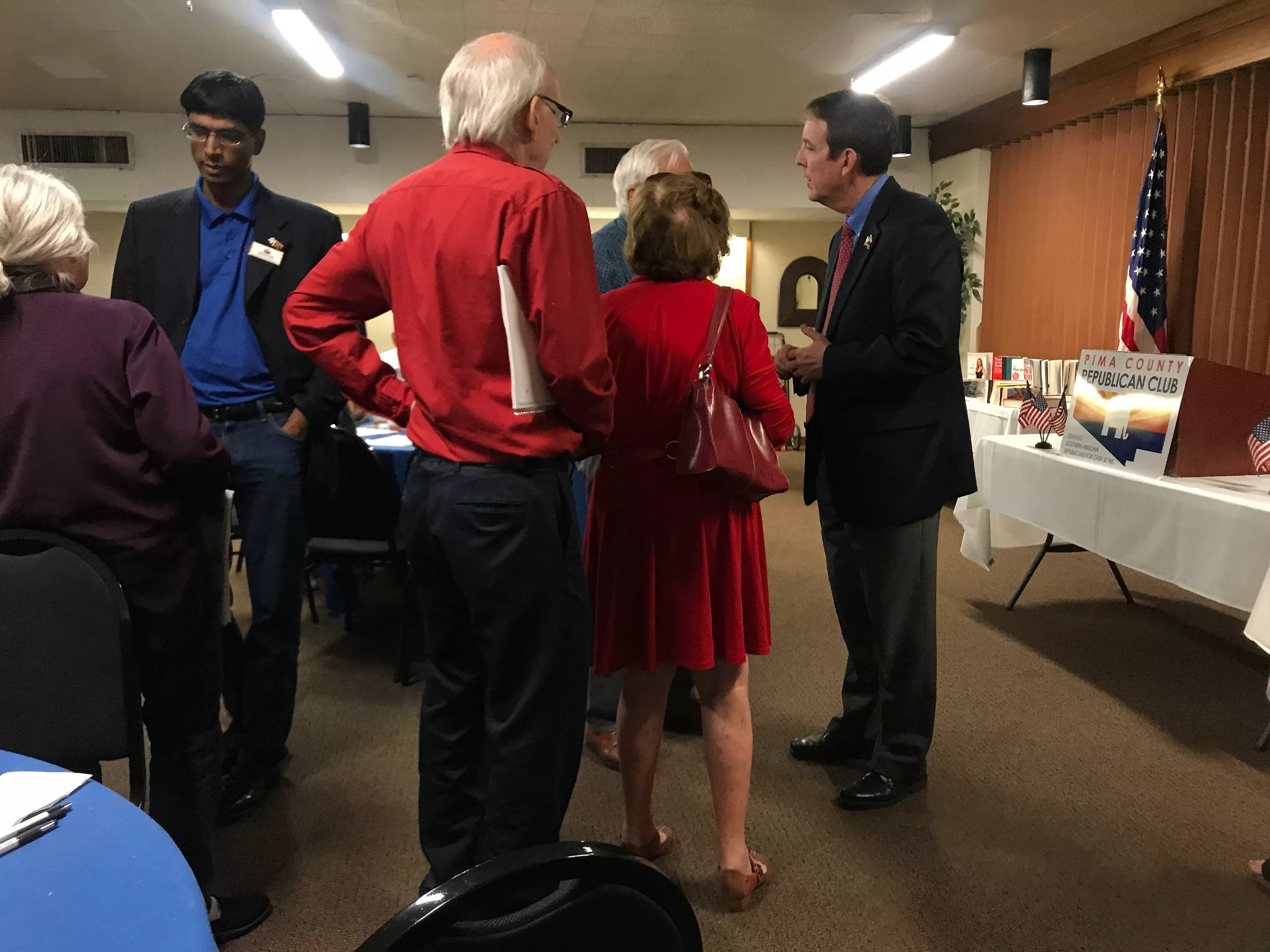
At yesterday’s Pima County Republican Club gathering, Ken Bennett told the crowd that when he saw Gov. Doug Ducey “cave” to the mounting pressure from K-12 educators and announce the “20x2020” plan, he knew he had to run for governor.
That was on April 12, so his team collected the 6,223 signatures required plus almost another 2,000 in a little over five weeks to qualify him for the Aug. 28 Republican primary.
Bennett, a fifth generation Arizonan from Prescott, served as Arizona’s Secretary of State from 2009 to 2015. Before that, he was a state senator from 1999 to 2007, including a four-year stint as Senate president. In 2014, he got 12 percent of the vote in the crowded GOP primary for governor that Ducey won.
Bennett claims the #RedforEd movement is a politically oriented undertaking aimed at turning Arizona into a blue state. He is skeptical that educators will be satisfied with the raises Ducey has promised.
“Every time you give a mouse a cookie, they’ll ask for a glass of milk,” Bennett said.
Tags: Ken Bennett , Pima County Republican Club , gun control , education , red for ed , McCain , Obamacare , ACA , campaign , primary election , Image
Tuesday, June 19, 2018
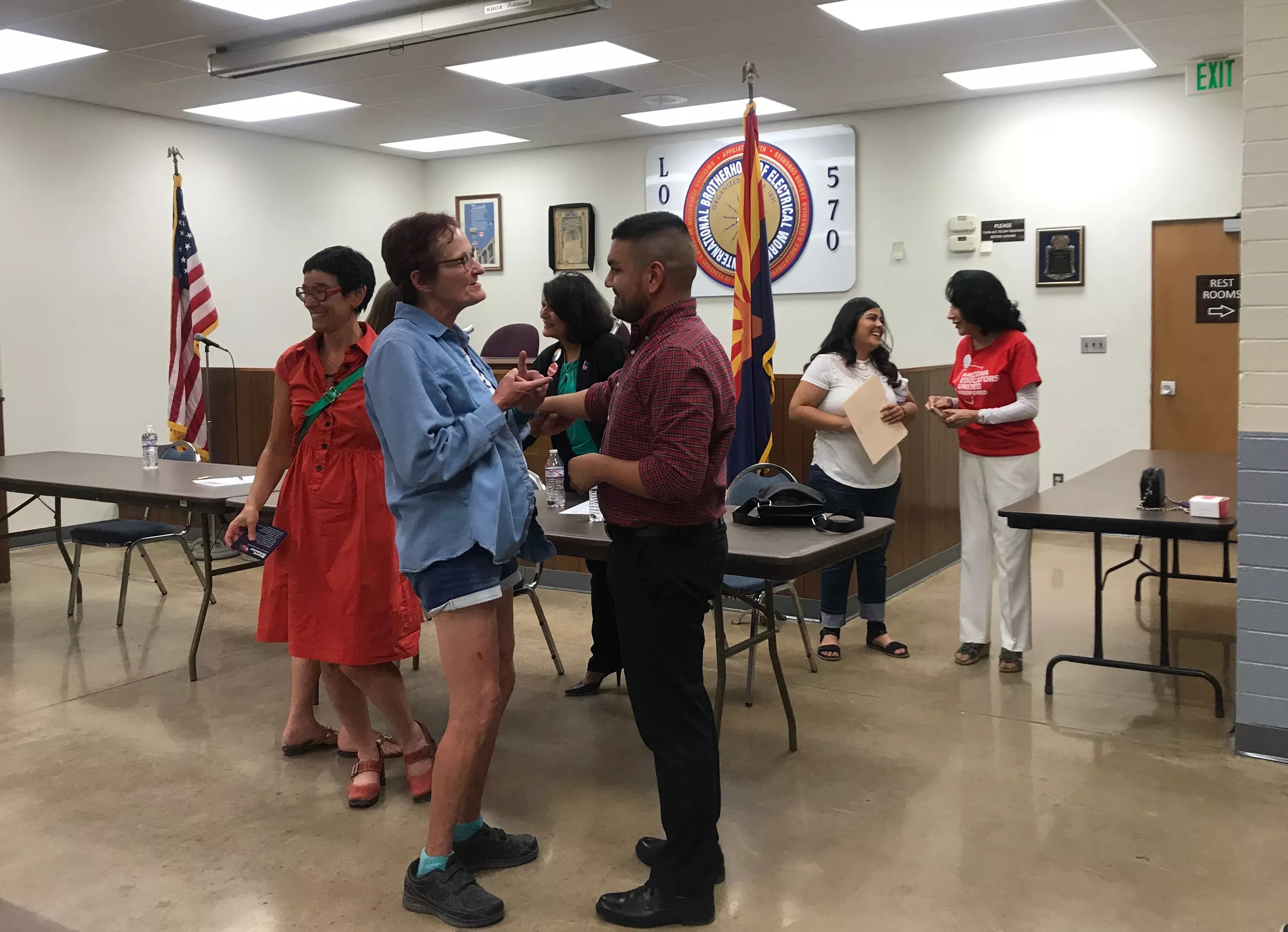
Andrés Cano was seven years old when environmental activists fought for his grandmother. She was poisoned by beryllium inhalation from a manufacturing plant in South Tucson during the early 1990s.
Betty Villegas was just out of high school when she and her friends drove people without transportation to the local polling place to cast their votes.
Sen. Olivia Cajero Bedford was settled into her third career in the tourism industry when she was exposed to the legislative issues of the time, which inspired her to change her career once again.
These events were the seeds that rooted a passion for public service in the three of the Democratic candidates for Arizona’s 3rd Legislative District, who spoke at a community forum hosted by UNITE HERE Local 11, CASE Action, Living United for Change in Arizona (LUCHA), Progress Now Arizona, Our Voice Our Vote (OVOV), Mi Familia Vota and Arizona Wins.
Tags: politics , elections , voting , LD 3 , education , housing , representation , democrat , candidates , LUCHA , Mi Familia Vota , Image
Monday, June 18, 2018
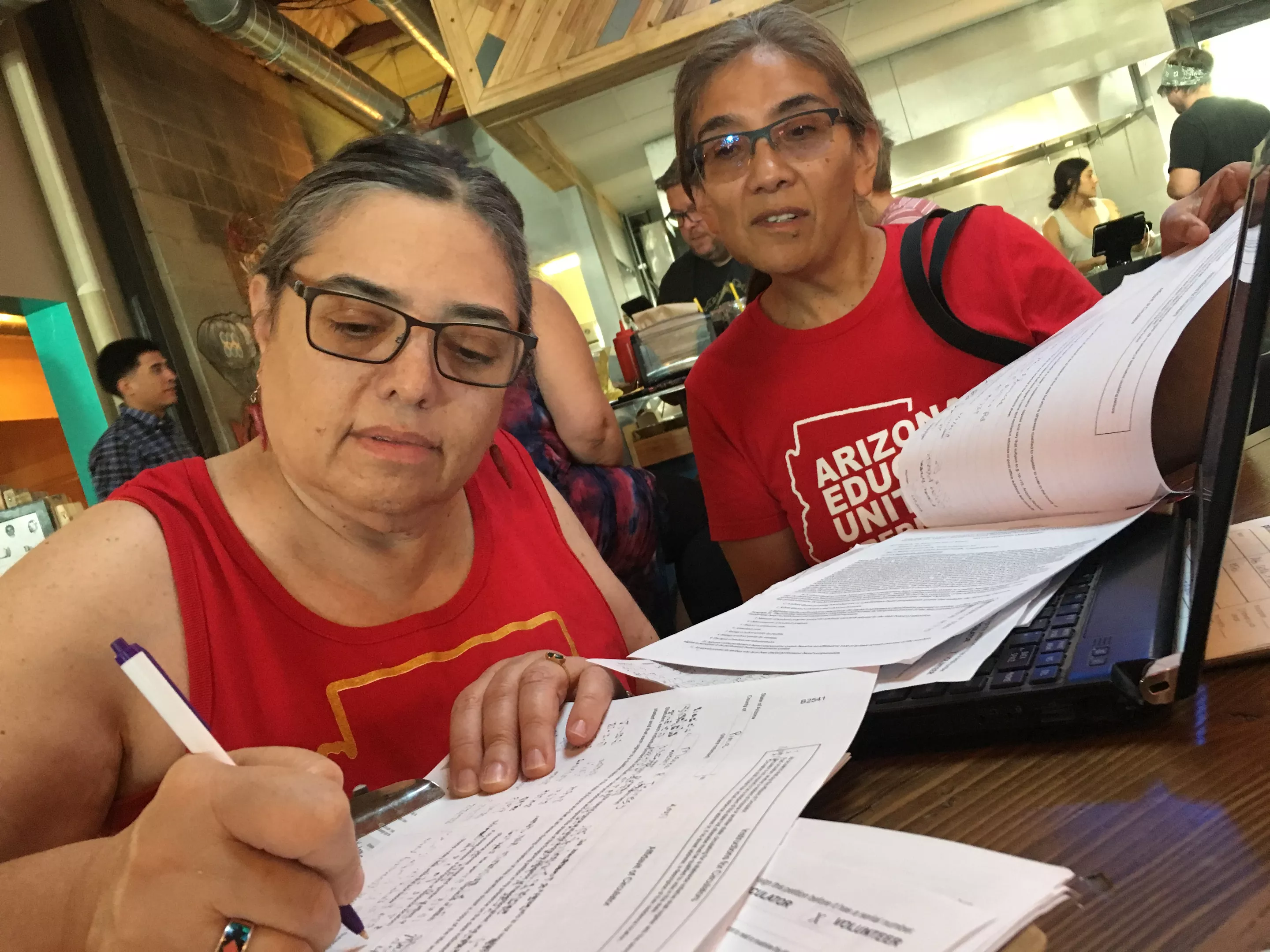
Marea Jenness, a Tucson High School biology teacher, keeps a megaphone in the trunk of her Mercury Mariner. With the Red for Ed movement becoming a staple these days, she stays ready in the event of more protests.
Jenness is one of thousands of Southern Arizonans who support a citizen-led ballot initiative that increases tax rates on high-income earners to address underfunding in public schools.
Proponents estimate the increase would raise $690 million annually. The proposal would increase taxes on individuals who earn more than $250,000 a year and couples who earn more than $500,000.
The coalition needs 150,642 valid signatures by July 5 to place the Invest in Education Act on the November ballot, but they’re shooting for at least 200,000. David Lujan, director of The Arizona Center for Economic Progress, said the group is on track to getting the signatures they need by the deadline.
Invest in Education organizers hadn’t released a statewide count, as of this week, of how many signatures they had gathered so far. But if they can get enough signatures to put it before voters in November, they stand a decent chance of winning at the ballot box, according to a recent poll discussed at a June 6 INVESTinED news conference in Phoenix with the Children’s Action Alliance and other education advocates.
Tags: education , red for ed , legislature , community , schools , teachers , Arizona , Image

You sit down at a table, order beverages, and each beverage gets its own plastic straw. Then you order food, maybe something messy like wings or pizza, and the server hands you a tall stack of disposable paper napkins.
You eat until you’re full, then you take a couple of plastic or styrofoam to-go boxes with your meal preserved inside. When you eat those leftovers the next day, the boxes go into the trash and off to the landfill.
Multiply this routine by millions of American restaurant patrons each day, and there’s a major environmental problem laid out in front of you.
Amy Smith, the owner of Tucson’s Exo Roast Co., is fed up with the harmful effects of plastic and decided that her business won’t be a part of it any longer. So, she replaced all the plastic straws in her shop with paper ones.
Tags: Exo Roast Co. , coffee , environment , paper , plastic , ocean , pollution , planet , Earth , local , Image
Thursday, June 14, 2018

Revolutionary Grounds Coffee and Books, the small storefront on Fourth Avenue near the corner of Fifth Street, is closing its doors for good on Sunday, June 17. But a revival may be on the horizon.
Usually invisible to the average tourist, the store’s red brick walls housed a vibrant local community for the past decade. The place has a collection of leftist and progressive books that are sourced and sold by the owners, Joy Soler and her husband, attorney Paul Gattone.
You can find paperbacks about Marxism, sustainable food sourcing, feminist memoirs, the Civil Rights Movement and much more stacked on the shelves, adjacent to a comfy seating arrangement with faces of famous activists accenting the wooden tables.
Soler received a letter earlier this month from her landlord, Andy Fried, announcing that their rent has been increased, again. The monthly bill has risen to a point where her family can no longer afford it.
“Our landlord sent a letter saying that he had increased [the rent] back in January and we hadn’t been paying it, but he never told us he increased it back in January.” Soler said.
The letter Fried also said he will be increasing the rent again this month, and he expects back rent to be paid from January through May on top of this increased price.
“He wants us out, so he told us if we leave by the 30th he’ll forgive one month’s rent,” she said.
Soler and Gattone have spent the last decade building up their business at 606 N. Fourth Ave. She told me they have been paying on a month-to-month basis, and although Fried has been slowly raising the rent in the last couple of years, it has never been this drastic until now.
Fried, who also owns the connected buildings where Tallboys and Myztic Rootz are located, told the Weekly he increased the rent because Pima County increased the value of the property, and therefore his property tax.
Records from the Pima County Treasurer’s Office showed the property tax was $8,636 in 2017, compared to $7,856 in 2013.
Soler’s regular customers are understandably upset about this news, which she announced through the store’s Facebook page a few weeks ago. Revolutionary Grounds hosts a lot of niche community events and outreach activities that can’t be found elsewhere.
“A lot of people feel like [Revolutionary Grounds] is a safe space on the Avenue for folks who don’t have many safe spaces to go to,” she said.
Tags: Fourth Avenue , Revolutionary Grounds , The Rent Is Too Damn High , Tucson , Downtown , Image
Wednesday, May 23, 2018
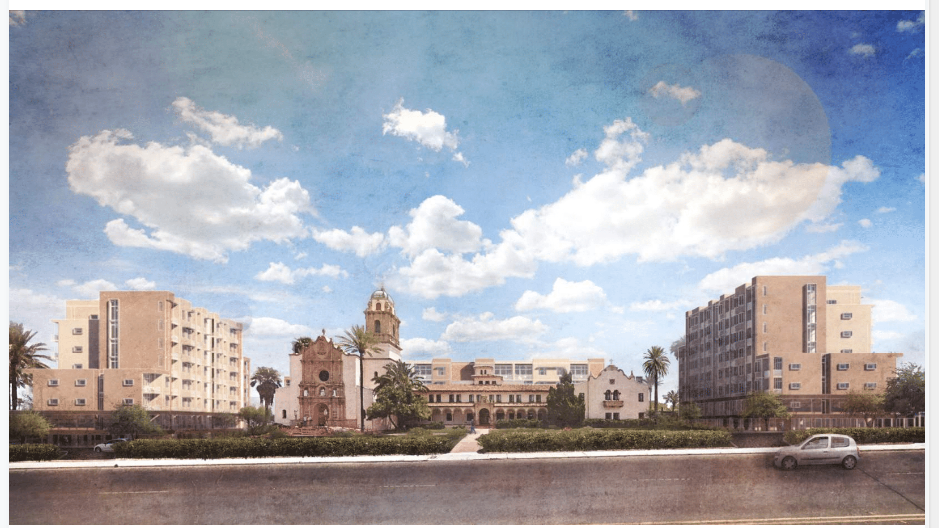
Tucson City Councilmember Steve Kozachik is taking a new tack in the battle over the future of the midtown Benedictine Monastery.
Kozachik initiated a process that could give the monastery a Historic Landmark designation, which the City Council unanimously approved during a May 22 study session. The Historic Landmark designation would protect it from being torn down and create added guidlines about what types of developments can surround it.
“The building remains one of the last expressions of this architectural style in the Tucson area,” Kozachik wrote in his proposal for the Council. “It has been a cultural, architectural and spiritual landmark in Tucson since 1940.”
Local architect Roy Place developed the monastery for the Benedictine Sisters of Perpetual Adoration 80 years ago, in his signature Spanish Revival style. The sisters sold the monastery to local developer Ross Rulney in September 2016 for $5.9 million.
Before the sisters sold the monastery, they put it on the National Registry of Historic Places, thinking that would protect it from demolition. The certification is framed, hanging on the wall of the monastery. But the national registry doesn’t protect the historic structure—it’s purely honorific.
The current zoning in that area is for offices and high-density residential—aka student housing. There’s also a maximum 222 living units and a 40-foot height, or about four stories. There’s no restrictions against tearing down historic structures and no requirement for neighborhood participation or design review.
Architects for the project, Poster Frost Mirto, Inc., said at a March community meeting that they were helping Rulney develop the site and making sure the monastery is protected. It would be the seventh Roy Place creation Poster Frost Mirto, Inc. has worked to preserve.
Together, the architects and developer proposed the Historic Landmark designation, but in exchange, the city would have to allow Rulney to build higher than 40 feet around the monastery and expand the number of allowed apartments or condos. As part of the deal, Rulney would agree to prohibit renting by the bedroom—the typical student-rental arrangement—and to hold several reviews for public input.
Tags: Benedictine Monastery , Tucson City Council , Steve Kozachik , Tucson development , Ross Rulney , Image
Thursday, May 3, 2018

Elections matter.
It’s a lesson we’ve all learned in recent times—and we know you can’t wait for the chance to let your voice be heard.
We’re speaking, of course, of Best of Tucson—our annual competition to determine Tucson’s best bands, museums, galleries, restaurants, brewpubs, dive bars, coffee houses, annual spectacles, playgrounds and all the rest.
You the reader can nominate anyone in any category through June 17. We’ll then tally those primary results to get the top five nominees in each category. Those top finalists will compete for your votes through the end of July. And on Oct. 25, we’ll announce the winners in our special Best of Tucson collector’s edition!
Vote now!
Tags: best of tucson , places to eat in tucson , Image
Monday, April 30, 2018

Five children straggled into the cafeteria at Thornydale Elementary to get some breakfast at 7 a.m. on Monday morning. They were greeted by two cafeteria workers and a mom with the school’s Parent-Teacher Organization. Outside, a maintenance worker ran a leaf blower. Other than that, the school was silent.
Three days into the teacher walkouts, students from low-income families who receive breakfast and lunch at their schools still needed to eat. About 20 kids came in the previous Thursday and Friday each, according to the two women serving in the Thornydale cafeteria.
The children, three little ones who go to Thornydale and their two older brothers who go to nearby schools, open their juice boxes, milk and breakfast bars.
As the Red for Ed movement goes into its second week of teacher walkouts, things become increasingly complicated for the school districts and families. As schools continue to announce closures day by day, parents are starting to wonder if the school year will be prolonged into the summer break.
Thornydale cafeteria worker Cathette Vartell says while she is still working, she has two grade-school kids at home whom she’s worried about.
Her oldest daughter is set to graduate in May, and while most local school districts have said they’ll host graduation ceremonies as planned, students will have to make up instructional hours for days missed because of the walkouts. How many days varies by district and even school and won’t be decided until the walkouts end.
Vartell’s daughter plans to leave for a two-month out-of-town trip with her church the Monday after graduation. Everything is paid for, and for a mother of two who makes minimum wage, paying more to change plans may not be an option.
“Of course I support our teachers,” Vartell says. “I also feel like our kids are the ones paying a price to make a statement.”
Christina Harris, Thornydale’s PTO vice president, is a stay-at-home mother of three who’s been volunteering at the school for 11 years.
She said the closures have been hardest because her son, a second grader who receives Title 1 services, needs to keep up on his reading skills or he’ll fall behind. Nonetheless, Harris has been an active supporter of the Red for Ed movement, and was out on Ina Road on Saturday morning lining the road red with many other teachers, parents, students and supporters.
Vartell and Harris are not alone in dealing with the complications and hardships of the shutdowns. But Arizona teachers are among the lowest-paid educators in the country, and education funding is among the lowest in the nation as well.
School funding in Arizona was cut following the 2008 recession and, while there have been increases in recent years, it has yet to return to where it was a decade ago. Educators are demanding a 20 percent raise for teachers, raises for all support staff and school funding restored to 2008 levels, which would cost the state an additional $1.1 billion annually.
Between crumbing school facilities, outdated supplies and their own struggles to make ends meet, many teachers felt they had no choice but to walk out.
Rachel Tankersley, a math and science teacher in the Vail School District, was out on downtown’s Congress Street on Monday morning, wearing red with a few hundred other educators and allies. She started at 7 a.m. and by by 8, the sun was already beginning to beat down on the crowd while they cheer and wave at the many passing cars that honk in support.
“Teachers are having to spend their own money on their classrooms all the time,” she said. “This is my job right now, to let people know this is not OK.”
Mid-April, as the Red for Ed movement was gaining support and talking about a walkout if their demands were not met, Gov. Doug Ducey announced he had a plan for the teacher raises and to restore recession-era cuts to education funding. Only, by his math, that would mean an additional $371 million, about a third what educators are asking for.
Ducey’s plan didn’t mention raises for support staff and critics accused him of using fuzzy math to come up with the revenue needed to pay for it. On Ducey’s website, it says the state will achieve the money for the pay hikes through a growing economy and reduction in state government operating budgets, “all without raising taxes while maintaining Arizona’s balanced budget.”
Tags: #RedForEd , #AZWhatisThePlan , Arizona Education Association , Arizona Educators United , Red for Ed , Image
Wednesday, March 28, 2018
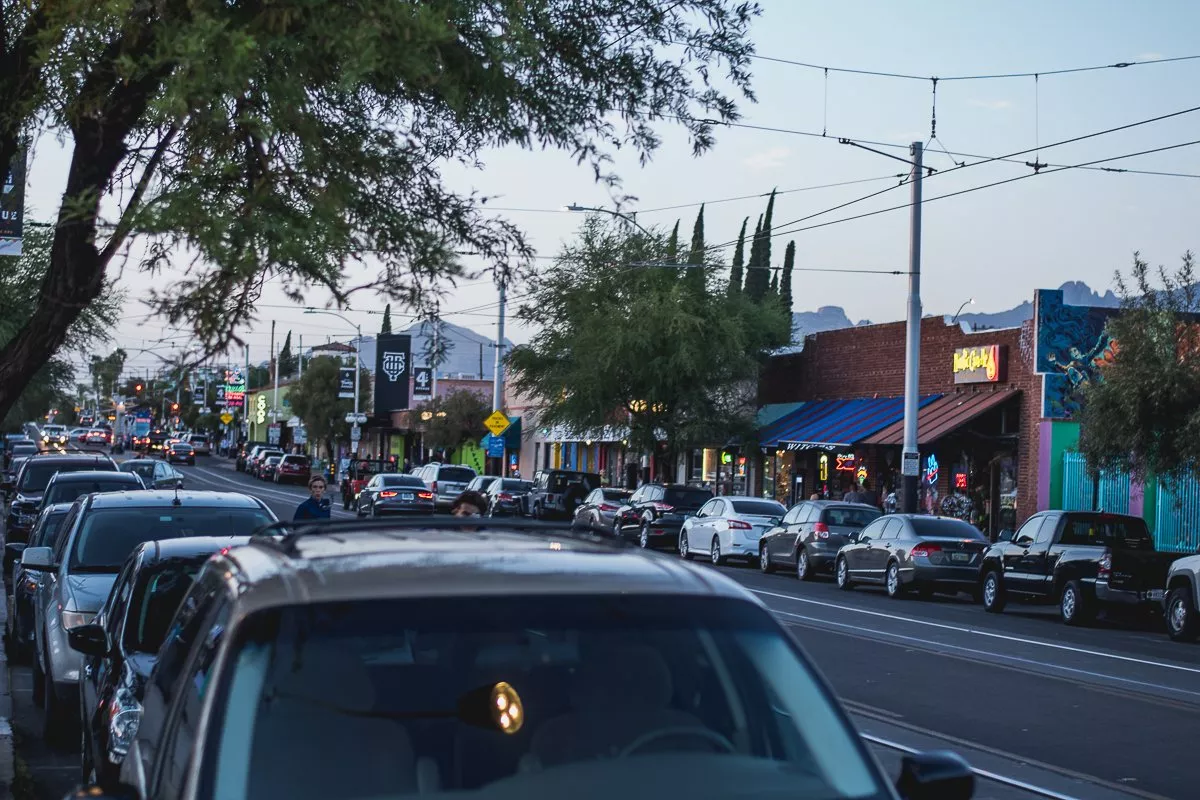
Local First Arizona is working with the Fourth Avenue Merchants Association on a forum planned for March 30 to discuss potential legislative and policy solutions to promote localist ownership opportunities for Historic Fourth Avenue and the Tucson community.
This community forum is in response to the planned Union on 6th project, which is a seven-story apartment building with ground floor retail space under contract with Education Realty Trust Inc. (EdR), a student-housing development company based in Memphis. The development will be where the local Flycatcher nightclub currently exists. The area that EDR has under contract stretches west from the corner of Fourth Avenue and Sixth Street to Fifth Avenue. Their proposed new development is planned in the Infill Incentive District (IID), which was created to encourage more urban planning projects using development incentives and heightened flexibility.
Local First Arizona is most concerned that this project will be the tipping point for a larger trend of apartments where locally owned businesses once stood, and the new norm of chain stores in new developments populating an area that has been the hub of local businesses in Tucson. The multi-layered negative effect here could be the loss of the distinctive identity of Fourth Avenue, which would lead to a decline in customers for the locally owned businesses that reside on the avenue and make it a top destination in the city. As the City of Tempe, our neighbors to the north, invited more chains to their thriving downtown decades ago, the sales tax revenue dropped steadily for 27 months. The distinct issue to address with this development is how to best preserve locally owned independent businesses which retain up to four times more money in our communities than their national chain counterparts.
The following is a list of priorities that Local First Arizona and the Fourth Avenue Merchants Association are advocating for the Union on 6th developers and City of Tucson to commit to:
• Reserve the first-floor space for smaller-than-average storefronts (600-1,000 square feet) for locally owned businesses rather than large chains as a condition of permitting, as Austin, New York, and other cities have done through a Community Benefits Agreement (CBA) with the developer that stipulates how much of the project’s retail space must be set aside for local businesses.
Thursday, March 15, 2018
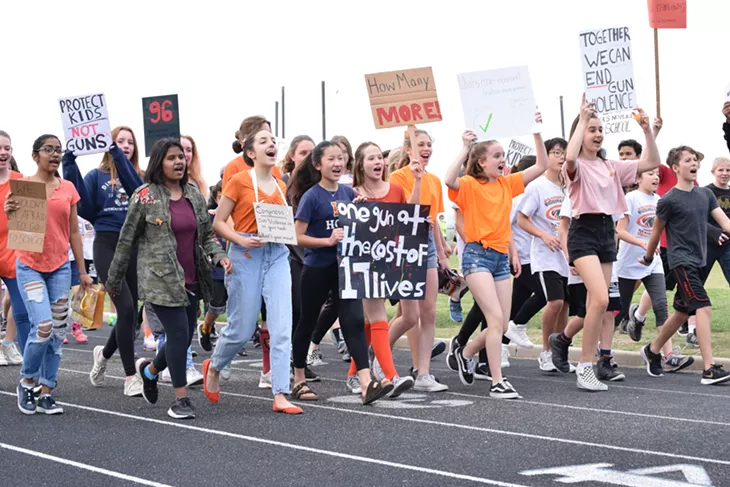


If the wave of pro gun-regulation youngsters is any indication of what the U.S. electorate will look like in one to five years, the NRA is in trouble.
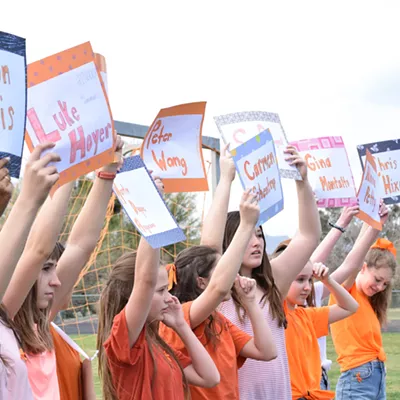
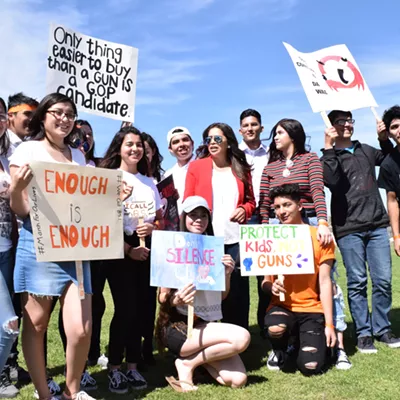
Across the nation, students protested gun violence on National School Walkout Day—the one month anniversary of the Marjory Stoneman Douglas school shooting in Parkland, Florida. And in Pima County, many student bodies held “walk-ins” and assemblies where they boldly and unequivocally called for Congress to act on their behalf.
Leadership across six public school districts in Pima County counted 22 high schools and 23 middle schools with a student-led event to call for change and remember the 17 lives lost in Parkland. That’s not counting charter and private schools or the Tanque Verde, Vail and Sahuarita districts, who couldn’t be reached for a count.
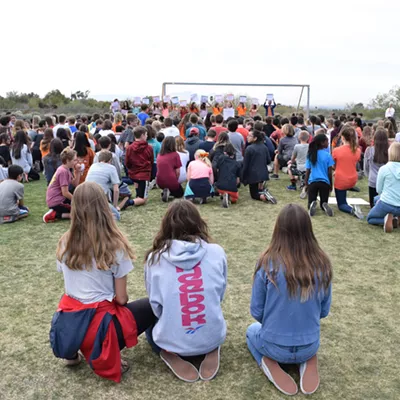
Students at the Canyon Del Oro High School held a walk-in to their football fields at 10 a.m.—the time that students held 17 minutes of silence nationwide, for the 17 lives lost at the Florida school shooting.
The walk-out was organized by student leaders who were clear that the walkout was not about gun control, but a call to Congress and local leaders to act on behalf of students to stop mass shootings in schools.
One of the student organizers, junior Rebecca Shanks, said it doesn’t matter what a student’s opinion is on how to fix the problem, what matters is that you speak up.
“It’s really important that students are getting a voice and being heard by adults,” Shanks said. “We are fed up by gun violence, and we want something done about it.”
Students at BASIS North held a 17-minute vigil, at 10 a.m., for the people killed in Parkland, Florida. At the beginning of each minute, someone spoke about each victims. Public officials spoke about the importance of common-sense gun reform, like Victoria Steele, former state lawmaker and current candidate for Arizona State Senate.
Steele has played a part in a number of regulatory firearm bills in the State House, which she says never even get a hearing. She says the youth today are sending a message to Republican leadership in Arizona that if they don’t start listening, they’ll be replaced.
“They are the power. They are our hope right now—these kids,” Steele said in an interview about the wave of student activists. “I don’t want them to think for a minute that because they’re young and they don’t vote that they don’t have the power.”
Junior Corazón Núñez is turning 18 this year and will vote for the first time in the mid-term elections. She says common-sense gun regulation is one of the issues she’ll base her votes on.
“This is a priority for myself and many of us,” she says. “I will definitely be looking at NRA endorsements…. I want to know that Representatives care about their constituents and not the NRA.”
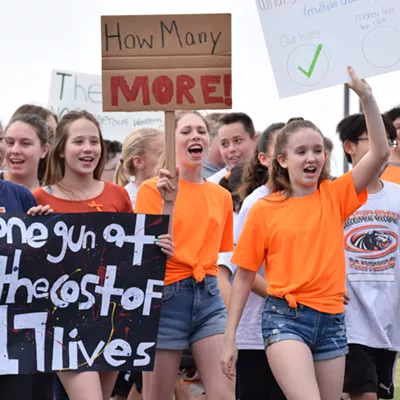
At Orange Grove Middle School more than 500 students marched around their football field,chanting and holding signs calling for gun regulation and an end to gun violence. The march was organized by a group of five 14- and 13-year-old girls. All wearing orange—a color adopted to represent resistance to gun violence—they literally finish each others’ sentences.
They were in awe by the numbers of students who showed up to take part in the march.
“I couldn’t even say anything because of how amazing it was,” said student leader, 14-year-old Simone Gelety.
Organizer and Student Council Member 13-year-old Naomi Holtzman said it’s amazing how their protest “was nothing and suddenly it became everything.”
About a dozen kids on the march chanted “Guns save lives” and held anti-regulation signs that, among other things, compared regulating guns to banning cars (of course, cars are regulated and studied extensively on how to make safer). The girls organizing the march say some of their best friends are against gun regulation, and they’re fine with others having differing opinions.
Tags: NationalSchoolWalkout , NationalWalkoutDay , NeverAgainMovement , MSDstrong , Slideshow , Image

