

Wednesday, April 15, 2020
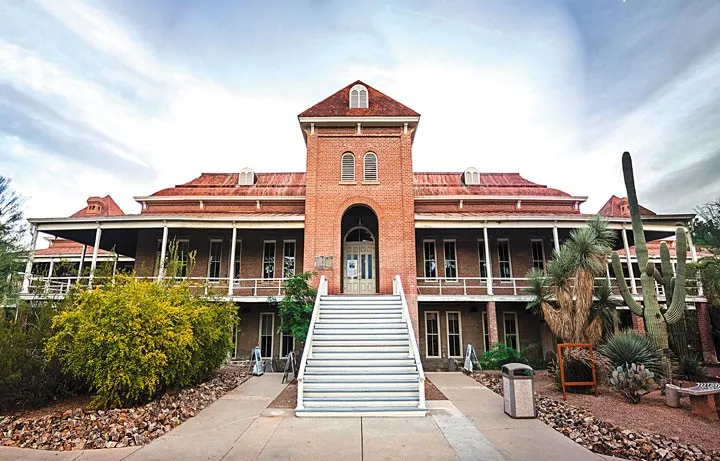
In the age of COVID-19, college students all over the world are adapting to a new normal of online classes, shortened semesters and canceled graduations. As a college student myself, it has been difficult to come to terms with losing that typical college experience of being away from home and actively working towards a career. However, with this new obstacle, I’ve acquired a few new skills; learning to adapt to online classes and manage my time as well as stay focused long enough to complete my schoolwork is toughest.
Graduate student Eloy Ramirez, who was on track to graduate this semester with a master’s degree in musicology, is having a similar problem.
“As a musician there is a level of discomfort with playing my instrument to the fullest volume because I don't want to disturb the people I live with,” Ramirez said. “As a teaching assistant for a music class it’s also a challenge to play good quality music examples and administer listening exams online.”
Ramirez says he's grateful for his online classes.
“As a graduate student completing the last semester of my master's degree, cancelling classes would provide a bit more time to complete my thesis work,” Ramirez said, “But I really love what I am studying and I love teaching. Even if it is online, I am happy I am still able to attend my seminars and I am grateful to have the opportunity to attend school.”
At first, it seemed like we were just going to have an extended vacation. I got to stay home and watch movies and learn how to play guitar, but after a while, all the changes began to sink in. The University of Arizona’s reaction to the pandemic is a bittersweet one; I thought it was the right call to continue classes online since it would make me feel useful during this uncertain time, but as the days went by, it became harder to keep track of time—and therefore assignments—because I am easily distracted at home. And I'm not alone.
“It’s hard for me because I can’t withdraw from classes because it would ruin my FAFSA,” said Luis Espinoza, a junior at UA. “But I also can’t seem to get the hang of online classes which will inevitably ruin my GPA. It feels like a lose/lose situation.”
Life as we know it has also changed. Not only has our academic career changed, but I began to realize that there would be no more concerts, lectures or large school events.
Paulina Lopez, a UA senior set to graduate this May, was disappointed by the graduation cancellation.
“I was actually really sad to find out that there wasn’t going to be a ceremony this May,” said Lopez. “I obviously understand why there can’t be one and it’s in everyone’s best interest and for their safety, but it’s still upsetting because commencement is such a huge part of the college experience. In a way it’s kind of like the last four years are going unnoticed.”
On April 3, the UA stated their commencement team is "evaluating what a postponed main ceremony could look like in the future and preparing for the streaming graduation experience on May 15."
Ana Espinoza is a University of Arizona journalism student and Tucson Local Media intern.

Facing large projected losses in revenue due to COVID-19, the University of Arizona is taking steps to trim their budget.
"Over the next 15 months we anticipate a significant loss of revenue and expect to see increased expenses related to the effects of COVID-19," UA President Dr. Robert Robbins and other leaders said in an email to faculty and staff. "This is going to have profound impacts on how we successfully achieve our mission."
While the university is ramping up efforts to create thousands of COVID-19 testing kits, they are also expecting a drop in tuition revenue. If community spread of the virus is still significant in the beginning of the fall semester, international and out-of-state students likely will not return to campus.
In a conference call last Wednesday, Robbins told Tucson Weekly that 40 percent of the university's students are from outside Arizona, and about 15 percent are international students. He said they’re currently modeling what that hit in revenue could look like, but they are expecting "significant shortfalls."
UA leaders are urging faculty and staff to share their insights with the new Financial Sustainability Emergency Response Taskforce, which was created to determine the financial impact coming up and make recommendations for immediate and future cost-saving measures.
These changes are categorized into six areas where future changes could be made: Capital Projects, Debt & Investments; Intercollegiate Athletics; New Opportunities; Operational Efficiencies; Strategic Plan Investments; Students and Workforce.
New information from university leaders is expected in the coming weeks.
Tags: University of Arizona , Staff , Faculty , Revenue Loss , President Robert Robbins , Lisa Rulney , Employer , Image


“We know there’s an iceberg ahead, but won’t know how large until probably mid-June,” said Ward 6 Councilmember Steve Kozachik before the study session. “We need to budget assuming the Titanic and hope to be surprised.”
City Manager Michael Ortega confirmed sales tax from March 2020 through August 2020 will be impacted by the current shut-down. Ortega asked the council to delay the April 21 Manager’s Budget report until May 5 in an attempt to present more accurate information.
“Our sales tax delay is about two months. The March downturn we’re expecting, we won’t see that until May. The current April sales tax receipts, we won’t see that until June,” Ortega said. “We know it’s coming. It’s just going to be a function of what that magnitude looks like.”
However, Ortega said he is planing for city revenue streams to stabilize by fall 2020. He expects the recovery to begin in January 2021 with a 2 percent increase each month until the end of the fiscal year in July. Ortega also plans on decreasing the city’s expenses through fiscal 2021 in an attempt to “structurally balance” the budget.
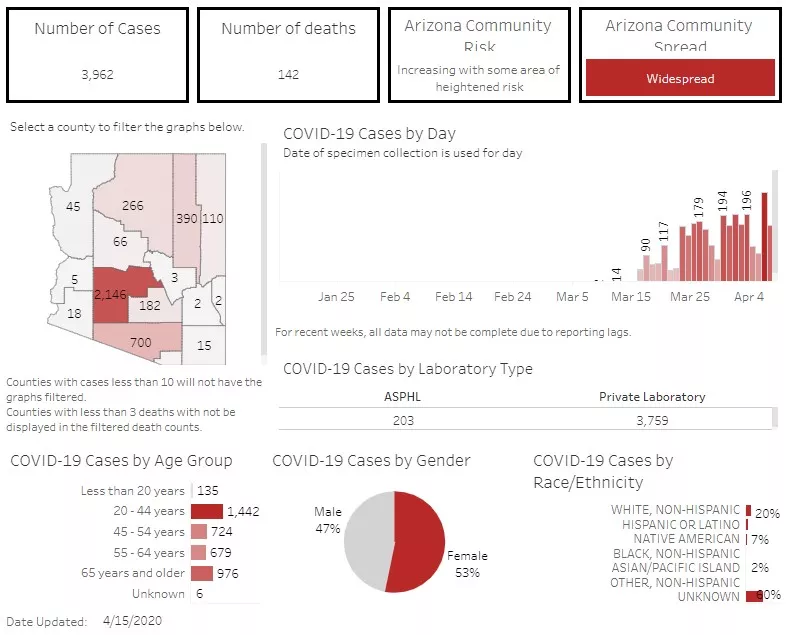

Pima County had seen 700 of the state’s confirmed cases.
The coronavirus had killed 142 people statewide, including 34 in Pima County, according to the state and county health department.
In Maricopa County, the number of confirmed COVID-19 cases had risen to 2,146.
Because testing still lags in Arizona, health officials say those numbers undercount the number of people infected with the virus. The state is not yet releasing information about how many people who have tested positive have now recovered.
Ducey yesterday announced a partnership with the University of Arizona to produce 250,000 tests for COVID-19 antibodies. Such tests could tell people if they have already been exposed to COVID-19, which is deadly to some patients while others remain asymptomatic. Testing for antibodies could identify people who are no longer at risk for catching COVID-19, although there have been reports of people coming down with the disease after beating it once.
Ducey said the tests would go to healthcare workers and first responders.
“Antibody testing is not a cure-all, but learning more about it is an important step to identifying community exposure, helping us make decisions about how we protect our citizens, and getting us to the other side of this pandemic more quickly,” Ducey said in a prepared statement. “Our health care workers and first responders are on the front lines, and my top priority is to identify ways to protect them and I am eager to get this underway.”
The state remains under Ducey’s stay-at-home order that has closed a wide number of “non-essential” businesses, including many retail stores, barbershops, salons and swap meets. Public parks remain open but amenities such as playgrounds and restrooms are closed.
Tuesday, April 14, 2020

- The number of confirmed coronavirus cases in Arizona had reached 3,806 as of Tuesday, April 14, according to the morning report from the Arizona Department of Health Services.
- The Loft Cinema’s latest service during their COVID-19 closure is Loft Streaming Selects, which invites you to fill out an online application to receive a curated list of films that best fit your taste.
- Arizona processed a record 82,771 background checks on would-be gun buyers in March, as fears of the coronavirus drove people to gun shops in what one shop owner called “panic time.”
- Evictions have been touch and go after Ducey's order leads to confusion on postponements.
- Tax Day would normally be tomorrow, but that's been changed this year. Learn all about the extension here.

At the end of March, Arizona Governor Doug Ducey delivered an executive order that temporarily stopped residential evictions under specific circumstances related to the COVID-19 outbreak.
After hearing news of this executive order, the Pima County Consolidated Justice Court postponed all their eviction hearings. According to a news release, they've been instructed not to do mass postponements, but rather evaluate each case individually.
This has resulted in a resuming of evictions during the COVID-19 emergency. More than 373 evictions have been scheduled to take place this week, according to the release.
Gov. Ducey's order delivered on March 24 specifies that a tenant should not be evicted if:
• They are required to self-quarantine based on a COVID-19 diagnosis;
• They are ordered by a medical professional to self-quarantine based on identified symptoms;
• They live with someone who is diagnosed with COVID-19;
• They have a health condition that makes them more at-risk for COVID-19 than the average person, as defined by the Center for Disease Control and Prevention;
• They suffered a substantial loss of income due to COVID-19 including job loss, reduction in pay, closure of their place of employment, they had to stay home with their child or other "pertinent circumstances"
The order still allows for an eviction to be carried out if a court determines that "enforcement is necessary in the interest of justice."
Tags: COVID19 , Coronavirus , Eviction , Pima County Justice Court , Image

It was twice as high as any March in the state since FBI background checks began in 1998 and almost one-quarter of the total sales in Arizona for all of 2019, according to NICS Firearm Checks data, which showed a doubling of background checks from February.
Gun shop owners said the only thing that has slowed down sales is a lack of inventory after March’s surge.
“People have just started panic buying at an insane rate,” said Wayne Semenko, owner of SnG Tactical in Tucson. “It’s been quite a roller coaster. People that have never bought before are in here buying.”
The surge in Arizona gun sales was reflected nationally, with background checks in March exceeding 3.7 million, the most ever for one month and more than 1 million more than the 2.6 million checks in March 2019.
Tags: guns , panic buying , surge , march , arizona , national , tucson , sng tactical , nra , Image
Monday, April 13, 2020
Kendra Boroff believes she contracted the coronavirus on her 71st birthday, Feb. 20, when her family went out for a celebratory dinner, perhaps from their waiter, who was coughing into his elbow. Four days later, she developed a fever and a raging sore throat.
“You feel like you’re suffocating,” recalled Boroff, a real estate agent in Maineville, Ohio. “You cough and breathe with the top fourth or maybe less of your chest, because everything else is in a vise.”
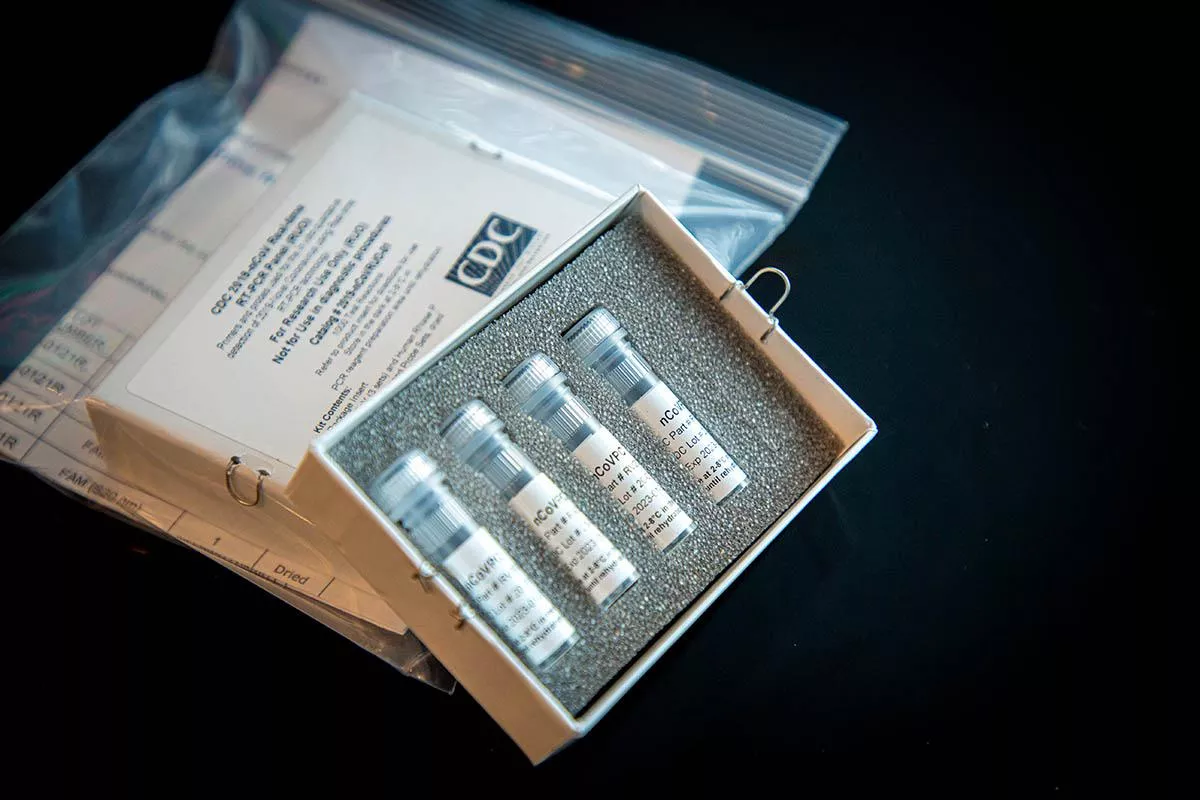
Over the course of the next three weeks, as Boroff started getting chills and nausea, a series of doctors would suggest that it could be the common cold, bronchitis or pneumonia. She tested negative for the flu, and her chest X-rays showed signs of lung damage, including white patches called “ground-glass opacities” that are common in COVID-19 cases. By March 7, she was pretty sure it was COVID-19, but she couldn’t get a test until she arrived at the emergency room at the University of Cincinnati Health Center on March 19. She had a 103 degree fever and her oxygen levels were plummeting, so the doctors admitted her immediately.
Nearly a week later, as Boroff’s condition was stabilizing, the test results came back: negative.
Boroff was flummoxed, but her physician was clear that she had the virus, no matter what her test said.
“‘This is my diagnosis,’” she recalled him saying. “‘There is no other explanation.’”
Tags: testing , inaccurate , fda , cdc , covid19 , coronavirus , Image

Advocates say overwhelming demand and confusion have delayed disbursement of the $349 billion in loans made available last Friday under the program aimed to help businesses suffering as a result of coronavirus lockdowns.
Small Business Administration officials have acknowledged that complicated policies, a surge of applications and the “newness” of the program made for a bumpy roll out. One SBA official In Arizona said while she doesn’t “have a crystal ball,” she expects the system to stabilize in the coming days.
But business owners say they are running out of time.
“I’ve talked to restaurant owners that really can't continue to pay employees for no more than two weeks,” said Chad Heinrich, the Arizona state director of the National Federation of Independent Business.
Tags: business , small business , loan , finance , closure , pending , Image

