

Friday, March 27, 2020
Most dispensaries have adopted social-distancing policies to keep patients a safe distance from each other and sanitation methods such as N-95 masks, latex gloves and liberal use of hand-sanitizer and disinfectant.
Alex Lane, owner of Cave Creek Dispensary, said he has been on the frontlines at the dispensary every day, ensuring proper protocols for the safety of patients, employees and their families.

Lane said he took precautions to ensure his employees can weather the quarantine, providing a $400 bonus for food and supplies, temporarily increasing wages by $3 per hour and allowing employees to take time off as they feel they need it.
Most dispensaries saw a major increase in demand for cannabis during the third week of March, with some reaching record sales over previous years. Fewer than five have closed since Gov. Doug Ducey’s executive order limiting certain types of businesses.
Some dispensaries have discontinued daily deals and several patients have expressed concerns over price gouging. However, some dispensary owners have expressed concerns over the state’s supply of flower.
Tags: cannabis , tucson , weed , dispensaries , safety , covid-19 , coronavirus , tucson news , arizona news , Image

This article is co-published with The Texas Tribune, as part of an investigative partnership.
As the coronavirus pandemic spreads, so have confrontations between detainees and guards at Immigration and Customs Enforcement detention facilities across the country, the latest in Louisiana and Texas.
The battles come as four people — two correctional officers and two detainees — tested positive for COVID-19 at New Jersey detention facilities.
On Monday, migrants clashed with guards over a lack of safe conditions and demanded to be released from the South Texas Processing Center in Pearsall, attorneys and family members said. The melee led to a standoff and the guards shot pepper spray at the detainees, which ended with nine of the migrants now held for disciplinary charges. The migrants had raised concerns about the lack of screening measures for new arrivals to the complex, operated by the Florida-based GEO Group under a contract with ICE.
Tags: ice , covid19 , detention , coronavirus , spread , clash , Image

Recently the grocery store changed their hours to open for seniors at 6 A.M. Monday through Thursday, and then to the general public at 7 A.M. On Fridays, however, the store opens to everyone at 7 A.M. Young and old line up about a shopping cart's distance to wait the hour before the doors open to see which items have been restocked.
70-year-old Don Reister said this is his second time coming the grocery store this week. He came to Fry's early yesterday morning and waited, but they were out of what he needed once. He hopes today they'll have cheese, yogurt and blueberries in stock.
"I'm a little annoyed because I think people are getting out of hand with this," Reister said while waiting in the bitterly crisp morning air. "I just went yesterday and they didn't have anything."
At the front of the line is an employee of the store named Kevin (declined to give his last name). He is here on his day off to buy groceries for the week - and find out if he can pick up a few more shifts. Kevin has a hunch that out of stock items like toilet paper, bleach and paper towels were restocked the night before and will be on the shelves this morning.
"On these days, I'm just like any other customer," Kevin said waiting for his fellow employees to unlock the doors. "I like to start on (the toilet paper) aisle and work my way across. I hope a shipment came because I don't have much toilet paper at home."
Even though Kevin works at the store, he said he still has trouble getting his necessities like frozen dinners, cat litter, toothpaste and basic groceries. He believes the shortages are directly related to people hoarding during the coronavirus pandemic.
"People are hoarding and over-buying stuff," Kevin said. "You don't know how long this is going to last before the virus is curtailed. People are just being crazy."
Tags: grocery , line , waiting , food , hoarding , store , covid19 , panic buying , shortage , Image
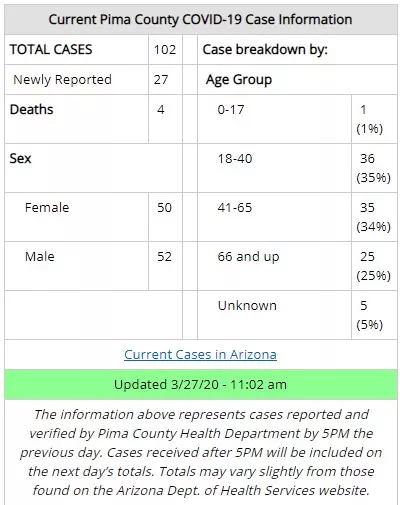
That's a jump of 157 from yesterday's 508.
There are now 102 confirmed cases in Pima County.
The virus has killed 13 people in Arizona, including four in Pima County— two being a woman in her 50s and a man in his 70s who both had underlying health conditions.
In Maricopa County, the number of confirmed COVID-19 cases has risen to 399, with 100 more cases being reported than yesterday.
Health and government officials have urged the public to avoid unnecessary trips and gatherings of more than 10 people. They warn that the extremely contagious virus is rapidly spreading in the community. Symptoms can take up to 14 days to appear, so people can pass COVID-19 without realizing they have been infected with it. Some people remain entirely asymptotic but are carriers.
Arizona's schools remain closed at least through April 10. Schools are transitioning to online learning and districts across the region are delivering lunch and breakfast meals to kids via school buses or setting up central locations.
Tags: covid19 , update , stats , numbers , coronavirus , Image

These plans all focus on preventing an eventual hospital overload with more patients than beds, as has happened in other countries where the pandemic has quickly spread.
Dr. Cara Christ, ADHS director, said in a press briefing yesterday that Arizona’s COVID-19 outbreak could peak in April, with the greatest pressure on hospitals in May. But given the lack of data (the state lab has only run a few hundred tests; private labs have run more, but the number is unknown) means it’s impossible to say how many Arizonans are already infected with the virus.
COVID Act Now, a team of data scientists, engineers, and epidemiologists working to estimate the growth of infections across the country, projected that a potential overload could happen in Arizona as soon as late April if the state took little action to limit the spread of the virus. By contrast, three months of social distancing could still lead to an overload in mid-May.
Tags: covid19 , coronavirus , hospital , strategies , local , health , Image

In January 1976, flu broke out among Army recruits training at Fort Dix, New Jersey. Most of the flu, tests revealed, was of a common strain, A-Victoria, but four cases (one of them fatal) proved to be swine flu, similar to the strain that caused the 1918 pandemic that killed half a million people in this country and 50 million worldwide. Swine flu had, in 1976, not been seen in humans for more than a half century, so immunity was almost nonexistent. Further testing at Fort Dix turned up some alarming results — an additional nine cases with as many as 500 recruits who had been exposed to the virus but were asymptomatic. While a vaccine had been developed for A-Victoria and many other flu strains, none existed for swine flu. Public health authorities, led by the Centers for Disease Control, quickly became alarmed.
The CDC recommended in March that a swine flu vaccine be developed on a crash basis and that every American be vaccinated by fall. President Gerald Ford concurred, and implementation of the plan moved into high gear, with Congress appropriating money for the vaccine and later effectively indemnifying vaccine manufacturers.
The swine flu epidemic never materialized, which was fortunate because the vaccination rollout was slower than planned and riddled with problems. About one quarter of all adults were vaccinated before the program ended in December 1976. Compounding the rollout problems, about 450 people developed Guillain-Barre syndrome, a serious muscle disorder, as a side effect of the vaccine. The federal involvement in the entire episode was widely labeled a fiasco.

Tags: covid19 , coronavirus , curve , economy , Image

On Feb. 13, the U.S. Centers for Disease Control and Prevention sent out an email with what the author described as an “URGENT” call for help.
The agency was struggling with one of its most important duties: keeping track of Americans suspected of having the novel coronavirus. It had “an ongoing issue” with organizing — and sometimes flat-out losing — forms sent by local agencies about people thought to be infected. The email listed job postings for people who could track or retrieve this paperwork.
“Help needed urgently,” the CDC wrote.
Thursday, March 26, 2020

• Confirmed cases of COVID-19 grew to 508 today, according to the Arizona Department of Health Services. A second person, a man in his 70s with underlying health conditions, has died in Pima County. The first victim was a woman in her mid-50s with underlying health conditions.
• Pima County is desperately short of personal protective gear for healthcare workers as COVID-19 hits "widespread transmission" status in Arizona.
• The Pima County Board of Supervisors has extended closures of bars, restaurants and gyms until April 10. Restaurants remain open for delivery and takeout only.
• Silver Sea jewelry shop on Fourth Avenue is now operating as a pet-food pantry for those who may need help feeding their dogs and cats.
• The UA is offering rebates on dorm and meal plans.
• The United Way for Southern Arizona has launched a COVID-19 fund.
• The Pima County Public Libraries have some cures for the cabin-fever blues.
Tags: covid 19 , coronavirus , cases in arizona , arizona news , tucson news , news summary , biz closures , deaths in pima county , Image
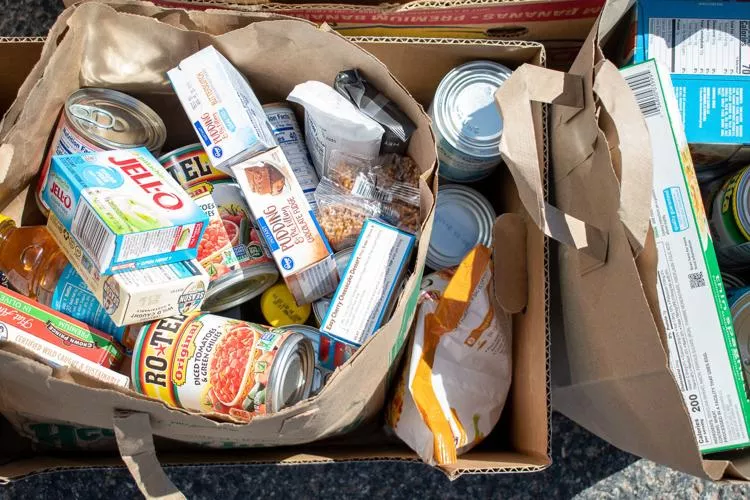
The effort will help fund the distribution of goods to children, families, and seniors through partnerships with local nonprofits and partner agencies.
According to the United Way of Tucson and Southern Arizona President and CEO Tony Penn, there has never been a greater need for “the most vulnerable people in our community.”
“The children, families, and older people who are laid-off, unemployed, low-income, homeless, underinsured, and struggling to make ends meet, are now facing even more hardship,” Penn said, in a statement. “More than 150,000 families and individuals in Southern Arizona are challenged by work and school closures, wage disruptions and restricted access to basic needs, and today we strengthen our resolve to assist them.”
Tags: covid19 , coronavirus , united way , fund , southern arizona , Image

The first was a woman in her 50s who also had underlying health conditions.
“It is an upsetting reality that we will continue to see the number of cases and, sadly deaths, continue as we confront this outbreak,” said Paula Mandel, Deputy Director of the Health Department, in a statement. “Please remember, we all have a role to play in protecting people who are at high risk for severe outcomes, protecting our healthcare system from being overrun, and protecting ourselves to keep those around us safe.”

