

Monday, May 24, 2021

Editor’s Note: Cronkite News photographer Alberto Mariani spent several months documenting the work at Peace Chapel Funeral Home. This story contains images that some may find graphic.
PHOENIX – At 10 p.m. no words are spoken, but a loud buzz reverberates throughout Peace Chapel Funeral Home. It’s the rhythmic beat of an embalming machine pumping a mix of chemicals into a woman in her 50s.
Standing next to the body – working late again – is funeral director Ron Thornson.
Since March 2020, Thornson and his staff have routinely worked 14 to 16 hours a day, without much pause to reflect on the historic events swirling around them during the COVID-19 pandemic.
Like so many other people and businesses across the globe, these workers and this industry were hit hard by the pandemic in myriad ways.
An already trying job grew more stressful, with funeral home directors – often known as the “last responders” – left explaining to grieving customers why they couldn’t mourn in person or have big gatherings to say goodbye. Caseloads also surged as the COVID-19 death toll rose. To date, more than 580,000 people have perished in the U.S. alone.
The assumption, said Claude Robinson, Peace Chapel’s funeral coordinator, is that “death is inevitable with this profession” and that those who work in the industry are somehow immune to the effects of mass casualty events such as a pandemic.
Not so.
The nature of the job demands that workers keep their emotions masked, Robinson said.
“You are almost taught not to break when you are to serve a family,” he said, explaining that revealing too much could transfer more pain onto those already suffering.
“A lot of people don’t understand that as a funeral service worker, you have a big task,” he added. “You are not just picking the body up, cleaning it, putting makeup on and placing it in a casket. You’re expected) to coach the family, to be a financial adviser and to be a psychologist” during one of the toughest moments in life.
And in a year when death became an excruciating daily experience for most Americans, even these men and women have been touched by it.
“It has affected us all, to a certain degree,” said Thornson. “But we’ve stood strong and supported one another.”
According to the National Funeral Directors Association, the average mortuary receives 113 calls a year, with larger funeral homes getting more. But the number of cases seen by funeral workers in 2020 far outpaced those in previous years.
The U.S. death rate increased 16% from 2019 to 2020, according to the federal Centers for Disease Control and Prevention, and the number of U.S. deaths exceeded 3 million for the first time in history.
Thursday, May 20, 2021

Pima County is expanding vaccine opportunities, offering daily walk-in vaccinations at Foothills Mall.
On Sunday, the vaccination site, located in the former Old Navy store, began offering vaccinations for all ages from noon to 8 p.m. every day.
“The large operations made an incredible impact and allowed us to vaccinate hundreds of thousands of people in a matter of just months,” said Dr. Theresa Cullen, director of the Pima County Health Department. “Over the course of the last few months, we have also been tremendously successful in building up and perfecting our mobile and smaller-scale operations as well. It is easier than ever to get a COVID-19 vaccine in Pima County.”
Since the state began vaccinating children ages 12 to 15 after a green light from the FDA on May 13, the county has expanded its locations offering Pfizer.
The county continues to offer vaccinations at several mobile sites every week, along with the FEMA pop-up sites.
Thursday, May 20
- Richey Resource Center, 2209 N. 15th Ave., 9 a.m. - 3 p.m.
- Cornerstone Fellowship Church, 2902 N. Geronimo Ave., 1:30 - 3 p.m.
- New Jerusalem Missionary Baptist Church, 1341 S. Tyndall Ave., 3 - 7 p.m.
- Antigone Books, 411 N. 4th Ave., 6 - 9 p.m.
Thursday, May 20 - Friday, May 21
- Northwest Service Center, 1010 W. Miracle Mile, 10 a.m. – 8 p.m.
- Pima Community College East, 8181 E. Irvington Road, 10 a.m. – 8 p.m.
Friday, May 21
- Amphi High School, 125 W. Yavapai Road, 10:30 a.m. - 2 p.m.
- Grace Temple, 1020 E. 31st St., 4 - 7 p.m.
- Pueblo High School, 3500 S. 12th Ave., 5 - 9 p.m.
Saturday, May 22
- Friendship Missionary Baptist Church, 850 N. 11th Ave., 8 a.m. - 1 p.m.
- St. Joseph Catholic Parish, 215 S. Craycroft Road, 9 a.m. - 1 p.m.
- St. Pius X Catholic Church, 1800 N. Camino Pio Decimo, noon - 3 p.m.
Sunday, May 23
- Saguaro Christian Church, 8302 E. Broadway Ave., 2 - 6 p.m.
- Saints Peter & Paul Catholic Church, 1946 E. Lee St., 8 a.m. - 2 p.m.
- Most Holy Trinity, 1300 N. Greasewood Road, 11 a.m. - 2 p.m.
Sunday, May 23 - Tuesday, May 25
- COPE Community Services, 5401 E. 5th Street, 10 a.m. – 8 p.m.
- Park Place Mall, 5870 E. Broadway Blvd., East Parking lot (east of Park Place Drive), 10 a.m. – 8 p.m.
Ongoing
- Tucson Mall, 4500 N. Oracle Road, 11 a.m. - 3 p.m., Monday through Friday
“The number of places to get vaccinated and how easy the process has become is making it more accessible to those looking to join the over 3.1 million people in Arizona who have received at least one dose,” said Cullen. “Our goal is to be ready and nearby when someone makes the decision to get theirs.”
With its shift to smaller sites, some of the larger operations within the county will close, including the CareMore Health location at 4750 S. Landing Way, near Irvington and I-19, on May 21; and the Tucson Convention Center site will close May 28.
As of Wednesday, May 19, the state has administered more than 5.5 million vaccines, with about 37% of the Arizonans fully vaccinated. The state has remained at a substantial level of transmission for several weeks with a rate of about 65 cases per 100,000 for the week of May 2. Pima County remains below 50 cases per 100,000 for a moderate rate of transmission for the past three weeks.
Tucson Repeals Mask Mandate
After the Pima County Board of Supervisors voted to drop its mask mandate last week, the Tucson City Council followed suit and unanimously voted to repeal its mask mandate Tuesday night.
Wednesday, May 19, 2021

An online lending platform called Kabbage sent 378 pandemic loans worth $7 million to fake companies (mostly farms) with names like “Deely Nuts” and “Beefy King.”
The shoreline communities of Ocean County, New Jersey, are a summertime getaway for throngs of urbanites, lined with vacation homes and ice cream parlors. Not exactly pastoral — which is odd, considering dozens of Paycheck Protection Program loans to supposed farms that flowed into the beach towns last year.
As the first round of the federal government’s relief program for small businesses wound down last summer, “Ritter Wheat Club” and “Deely Nuts,” ostensibly a wheat farm and a tree nut farm, each got $20,833, the maximum amount available for sole proprietorships. “Tomato Cramber,” up the coast in Brielle, got $12,739, while “Seaweed Bleiman” in Manahawkin got $19,957.
None of these entities exist in New Jersey’s business records, and the owners of the homes at which they are purportedly located expressed surprise when contacted by ProPublica. One entity categorized as a cattle ranch, “Beefy King,” was registered in PPP records to the home address of Joe Mancini, the mayor of Long Beach Township.
“There’s no farming here: We’re a sandbar, for Christ’s sake,” said Mancini, reached by telephone. Mancini said that he had no cows at his home, just three dogs.
All of these loans to nonexistent businesses came through Kabbage, an online lending platform that processed nearly 300,000 PPP loans before the first round of funds ran out in August 2020, second only to Bank of America. In total, ProPublica found 378 small loans totaling $7 million to fake business entities, all of which were structured as single-person operations and received close to the largest loan for which such micro-businesses were eligible. The overwhelming majority of them are categorized as farms, even in the unlikeliest of locales, from potato fields in Palm Beach to orange groves in Minnesota.
The Kabbage pattern is only one slice of a sprawling fraud problem that has suffused the Paycheck Protection Program from its creation in March 2020 as an attempt to keep small businesses on life support while they were forced to shut down. With speed as its strongest imperative, the effort run by the federal Small Business Administration initially lacked even the most basic safeguards to prevent opportunists from submitting fabricated documentation, government watchdogs have said.
Monday, May 17, 2021
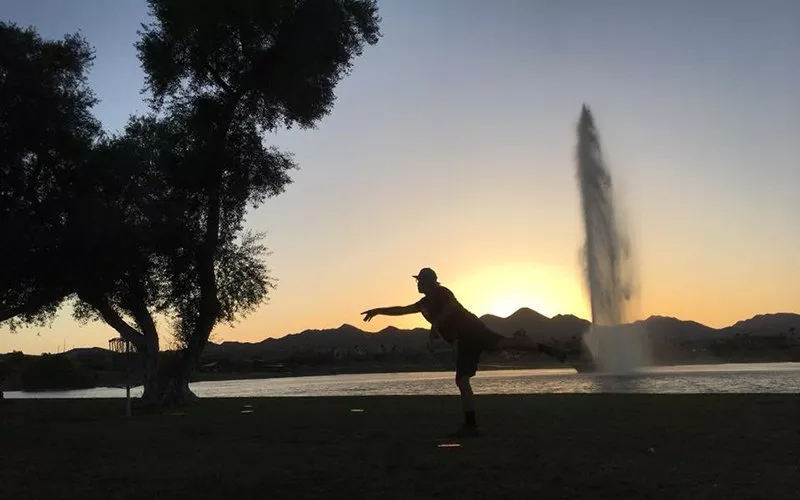
PHOENIX – Carla Walker was tired of sitting inside during the coronavirus pandemic. She missed going to the gym, shopping and spending time with friends and family. Her retail job in Central Phoenix had laid her off and she had time on her hands. She wasn’t sure how to fill it.
One day while returning from buying groceries, she took a different route to avoid traffic and drove past something she had never seen before: a disc golf course.
“I remember seeing two guys throwing a Frisbee, but not to each other or to a dog,” Walker said.
She dropped off her groceries at her apartment and returned to Conocido Park in North Phoenix to walk around and watch a little longer.
“They were throwing the Frisbees at these metal basket things on poles,” Walker said. “It looked sort of weird but I could see a bunch of other baskets around the park and figured that’s how you play the game.”
Walker did research on her phone and learned they were playing disc golf. She watched a few videos and quickly learned the rules. She even found a beginner’s set of discs online and bought them while she was still at the park.
When the coronavirus pandemic put a halt to most recreational sporting events and activities, people began looking elsewhere for exercise and competition. While many indoor sports are slowly returning, outdoor activities have seen major growth and involvement in the last year. Disc golf is one of them.
The sport is similar to traditional golf. Participants begin at a tee box or launchpad and throw their disc toward a “hole,” which is an elevated, metal basket. Each hole has a set number for par, and scoring is the same as traditional golf, where each throw equals one stroke. A round of disc golf is typically 18 holes but some courses also offer nine and 27 or more holes. Depending on how busy the course is and how quickly one plays, a round of disc golf can take anywhere from one to three hours.
Friday, May 14, 2021

The Pima County Board of Supervisors voted to 4-1 to repeal the mask mandate and continue recommending masks at the emergency meeting Friday afternoon.
In order to stay in line with the Center for Disease Control and Prevention’s updated guidance on Thursday, announcing fully-vaccinated individuals can go unmasked in indoor and outdoor settings in most cases, the board passed Resolution_2021-35. The resolution repeals Resolution 2020-96, the mask requirement, while continuing to recommend mask use for unvaccinated individuals and in some cases those vaccinated.
The county’s Chief Medical Officer Dr. Francisco Garcia acknowledged the contradictions between the board’s resolution and the CDC’s recommendation, as the resolution required face masks without differentiating between fully vaccinated and unvaccinated individuals.
County Administrator Chuck Huckelberry suggested three directions the board could take.
The first suggested the board could amend its current resolution to apply only to unvaccinated individuals and exempt fully vaccinated persons.
“This action, although symbolically meaningful, would be unenforceable,” wrote Huckelberry in his May 14 COVID-19 update.
The second option, which Huckelberry, along with Pima County Health Department Director Dr. Theresa Cullen and Garcia recommended the board select, opted for considering a new resolution to repeal the previous mask mandate and provide new recommendations.
The last option suggested the Board could simply repeal the resolution, which Supervisor Steve Christy made an unsuccessful motion to pass.
Ultimately the board chose the second option, aligning with the CDC in recommending continued use of masks and other mitigation strategies like social distancing for the unvaccinated people, while also recommending masks for all, vaccinated or not, on public transportation and in 'health care settings, schools, correctional facilities, shelters, congregate facilities and any other setting where it is required by local, state or federal law.” These recommendations are also in line with CDC’s updated guidance.
The resolution also requests establishments provide masks for employees who are not fully vaccinated and encourage the use of masks, but makes clear the resolution does not prevent establishments from setting their own standards on masks and social distancing, or refusing service for noncompliance.
After the resolution, Christy motioned to “rescind, remove and terminate” board Resolution 2020-18, which declared Pima County in a state of emergency related to the COVID 19 outbreak. The motion died for lack of a second.
Fully vaccinated individuals can resume activities without wearing a mask and physical distancing in indoor or outdoor settings, in most cases, according to the Centers for Disease Control and Prevention’s updated public health guidance released Thursday.

“Today brings more encouraging news for those fully vaccinated against COVID-19 — and another reason for everyone else to get their shot,” wrote Arizona Department of Health Services Dr. Cara Christ on Thursday's blog post. “This is a very big step toward returning to our pre-pandemic way of life.”
But the Pima County’s mask mandate remains in effect, which does not differentiate between fully and non-vaccinated individuals.
The Board of Supervisors is seeking legal guidance from the County Attorney’s Office and should be reviewing the recommendation with the Health Department to advise the board of supervisors, according to Chair Sharon Bronson.
The Board of Supervisors will meet today at 3 p.m. to discuss the updated CDC guidance.
Supervisor Adelita Grijalva said she was still reviewing the new guidelines. She said she was unsure whether changes would be made without more people getting vaccinated, with a goal to reach 75% of the population to achieve herd immunity.
In Arizona, 3,098,785 COVID-19 vaccine doses have been administered, with 43.1% of Arizonans fully vaccinated. Christ notes in her blog that the CDC’s announcement comes the same day as children across the nation ages 12 to 15 may receive the Pfizer vaccine, which could potentially add more fully vaccinated individuals.
According to CDC’s updated guidance, fully vaccinated individuals can go unmasked in an indoor high-intensity exercise class, a full-capacity worship service or a crowded, outdoor event, such as a concert or sporting event. However, they are still subject to federal, state or local jurisdictions laws and regulations, including local business and workplace guidance.
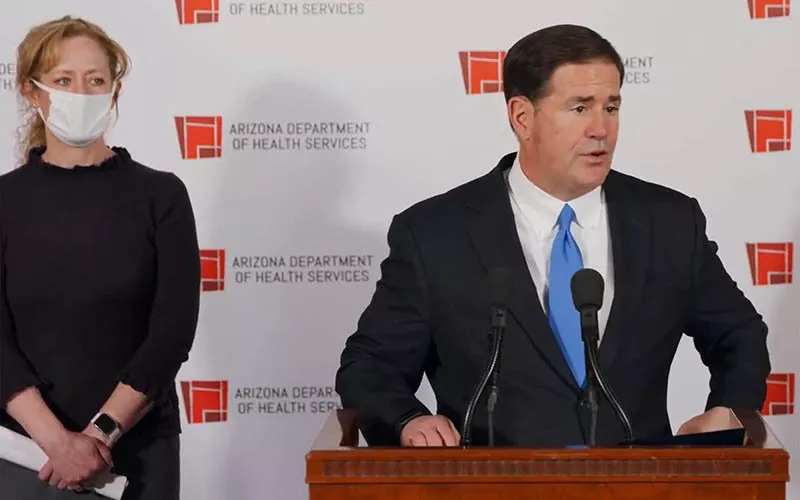
Arizona will no longer provide the weekly $300 federal supplement for unemployed workers during the pandemic, Gov. Doug Ducey said on Thursday.
With his “Arizona Back-to-Work” Plan, thousands of Arizonans on unemployment will return to receiving the maximum $240 on July 10.
Several other states announced they also would stop taking the federal pandemic unemployment benefits, including Alabama, Arkansas, Georgia, Idaho, Iowa, Mississippi, Missouri, Montana, Ohio, North Dakota, South Carolina, South Dakota, Tennessee, Utah and Wyoming.
The Pandemic Unemployment Assistance, extended in March through the American Rescue Plan, provided an additional weekly $300 to cover freelancers, part-timers and anyone who did not qualify for regular unemployment and extended the benefit for an additional 24 weeks. The program is set to end on Sept. 4.
Instead, Ducey will use $300 million in federal money to encourage Arizonans to rejoin the workforce. The plan is a one-time $2,000 bonus for full-time workers and a $1,000 bonus for those who return part-time.
People will receive the bonus after they stop filing for unemployment benefits and complete 10 weeks of work with an employer. The bonuses are on a first-come, first-serve basis.
To qualify, an individual must have already filed for unemployment benefits, meaning anyone who files after May 13 will not be eligible. Individuals must also make $25 per hour or less - about $52,000 a year - at their new job and must begin working by Sept. 6.
Thursday, May 13, 2021

Fully vaccinated individuals can resume activities without wearing a mask and physical distancing in indoor or outdoor settings, in most cases, according to the Centers for Disease Control and Prevention’s updated public health guidance released Thursday.
“Today brings more encouraging news for those fully vaccinated against COVID-19 — and another reason for everyone else to get their shot,” wrote Arizona Department of Health Services Dr. Cara Christ on Thursday's blog post. “This is a very big step toward returning to our pre-pandemic way of life.”
But the Pima County’s mask mandate remains in effect, which does not differentiate between fully and non-vaccinated individuals.
The Board of Supervisors is seeking legal guidance from County Attorney’s Office and should be reviewing the recommendation with the Health Department to advise the board of supervisors, according to Chair Sharon Bronson.
The Board of Supervisors will meet Friday at 3 p.m. to discuss the updated CDC guidance.
Supervisor Adelita Grijalva said she was still reviewing the new guidelines. She said she was unsure whether changes would be made without more people getting vaccinated, with a goal to reach 75% of the population to achieve herd immunity.
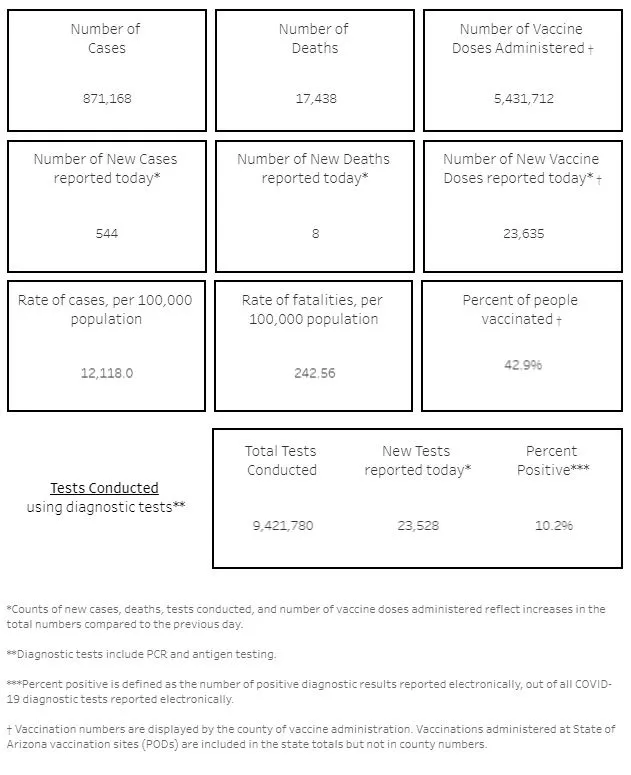
In Arizona 5,431,712 COVID-19 vaccine doses have been administered, with 35.4% of Arizonans fully vaccinated. Christ notes in her blog that the CDC’s announcement comes the same day as children across the nation ages 12 to 15 may receive the Pfizer vaccine, which could potentially add more fully vaccinated individuals.
According to CDC’s updated guidance, fully vaccinated individuals can go unmasked in an indoor high-intensity exercise class, a full-capacity worship service or a crowded, outdoor event, such as a concert or sporting event. However, they are still subject to federal, state or local jurisdictions laws and regulations, including local business and workplace guidance.
Also, fully vaccinated individuals traveling in the U.S., no longer need to get tested before or after travel, or self-quarantine after travel. Those boarding an international flight to the U.S., however, must show a negative COVID-19 test result or documentation of recovery before boarding. Self-quarantine is no longer required after arriving in the U.S. Individuals are still required to wear a mask on public transportation traveling into, within or out of the U.S. in places like planes, buses and trains, as well as airports and stations.
Additionally, the CDC advises individuals to watch for COVID-19 symptoms, especially if around someone who is sick. If displaying symptoms, people should get tested and stay home and away from others.
The CDC also notes that even fully vaccinated individuals who have a condition or are taking medications that weaken their immune system may need to continue taking all precautions to prevent contracting COVID-19 and advises they speak with their healthcare provider to discuss their activities.
Pima County and the Federal Emergency Management Agency have launched mobile vaccination units to reach vulnerable communities with high risks of COVID-19 exposure and infection.
The operation includes two mobile vaccination units that are able to administer 250 vaccines per day each, according to a county press release.
The units will run through June 26, operating at two concurrent locations for three days, with one day to tear down and move to the next location. The locations were selected based on census tract data and the Social Vulnerability Index of the area to identify highly vulnerable communities.
The sites will offer walk-up vaccinations of both the Moderna and Johnson & Johnson vaccine for those 18 and older on a first-come, first-served basis. Patients will return to the same mobile site 28 days after their first visit to receive their second dose, following CDC guidance. Help will be available to all who need assistance with mobility, language or other accommodations.
Thursday, May 13
- Greyhound Park, 2601 S. 3rd Ave., 10 a.m. – 8 p.m.
- Wheeler Taft Library, 7800 N. Schisler Drive, 10 a.m. – 8 p.m.,
- Rillito Race Track, 4502 N. 1st Ave., 10 a.m. – 8 p.m.
- CDO High School, 25 W. Calle Concordia, Oro Valley, 4 - 7 p.m.
- Antigone Books, 411 N. 4th Ave., 5 - 9 p.m.
Friday, May 14
- Fox Tucson Theater, 17 W. Congress St., 4 – 8 p.m.
Saturday, May 15
- Our Lady of Fatima Parish, 1950 Irvington Place, 11 a.m. - 3 p.m.
- Dunbar Pavilion, 325 W. 2nd St., 11 a.m. - 3 p.m.
- Robles Ranch Community Center, 16150 W. Ajo Way, Robles Junction, 5:30 - 8:30 p.m.
Saturday, May 15 - Monday, May 17
- Curtis Park, 2110 W. Curtis Road, 10 a.m. – 8 p.m.
- Rillito Race Track, 4502 N. 1st Ave., 10 a.m. – 8 p.m.
Sunday, May 16
- Sacred Heart Church, 601 E. Fort Lowell Road, 8 a.m. - 2 p.m.
Wednesday, May 12, 2021
After the Food and Drug Administration’s emergency use authorization of Pfizer for children 12 to 15 on Monday, the Advisory Committee on Immunization Practices and CDC are expected to approve and recommend the use of Pfizer to vaccinate those 12 and older on Wednesday.

The Pfizer vaccine is currently available for those ages 16 and older. The Moderna and Johnson & Johnson vaccines are authorized for those 18 and older.
“The COVID-19 vaccines are safe, effective and free ‒ and they’re our best shot to end this pandemic and return to the things we’ve missed. We’re moving quickly to empower parents and guardians to get this protection for their children,” said Gov. Doug Ducey. “Millions of Arizonans have already received the COVID-19 vaccine. Soon, kids ages 12 to 15 years old will now be eligible to get vaccinated and state vaccine sites are ready to serve them.”
Arizona has nearly 400,000 youths ages 12 to 15, about 5 percent of Arizona's population. As of Tuesday, 5,383,508 vaccines have been administered in Arizona, with 35% of Arizonans fully vaccinated.
“We’re delighted to be able to welcome these young people to state-run mass-vaccination sites starting Thursday,” said ADHS Director Dr. Cara Christ. “These safe, highly effective, and free vaccines are our best shot at returning to normal, and having more vaccinated individuals gives COVID-19 less of a chance of spreading.”
The University of Arizona POD, as a state site, will vaccinate children 12 to 15 and although it will close on June 25, they had factored the drop in vaccination age into their decommission plan, said Vice President of Communications Holly Jensen.
“We will continue to monitor the numbers, and are ready to adjust if necessary,” said Jensen.
Once CDC makes the recommendation, parents and guardians may bring those ages 12 to 15 to state vaccination sites starting Thursday. They must accompany the child and sign a consent form in person, which states that the child is at least 12 years old. No identification is required for the child and place of permanent residence is not a factor.
Parents and guardians also will be able to register those ages 12 to 15 for vaccination starting at 8 a.m. Thursday by visiting podvaccine.azdhs.gov or calling 844-542-8201 to be connected with someone who can assist in English or Spanish. However, appointments are no longer required for state-run sites.

