

Friday, March 19, 2021
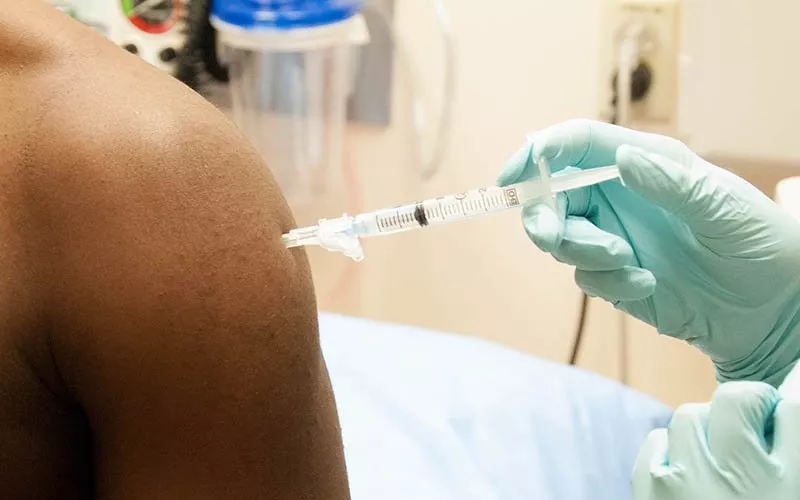
Arizona ranks No. 3 in vaccination coverage for high-vulnerability counties as determined by the Social Vulnerability Index (SVI) in a report released earlier this week by The Center for Disease Control and Prevention (CDC).
The index is a nationally accepted framework, using 15 indicators, including metrics for socioeconomic status, age and disability status, and minority status and language, to assess the social vulnerability of counties in the U.S.
The CDC report found most states had higher vaccination in low-vulnerability counties, but Arizona and Montana showed higher vaccination in high-vulnerability counties.
Since Feb. 20, Pima County has partnered with community organizations, like St. Johns Church and Rising Star Baptist Church, to vaccinate people through mobile clinics.
Mobile clinics have administered 4,329 vaccinations to vulnerable communities as of March 7, according to a March 12 report by County Administrator Chuck Huckleberry.
Expanded Vaccine Eligibility to At-Home Long Term Care Adults
On Monday, the Pima County Health Department expanded vaccination eligibility for those living with disabilities and high-risk medical conditions who are receiving at-home long-term care services. The decision came after the Arizona Development Disability Network suggested the change in February.
With 423 new cases reported today, the total number of Arizona’s confirmed novel coronavirus cases topped 835,000 as of Friday, March 19, according to the Arizona Department of Health Services.

Pima County, which reported 75 new cases today, has seen 111,582 of the state’s 834,607 confirmed cases.
With 46 new deaths reported this morning, a total of 16,691 Arizonans have died after contracting COVID-19, including 2,322 deaths in Pima County, according to the March 19 report.
A total of 686 coronavirus patients were in the hospital as of March 18. That’s roughly 13% of the number hospitalized at the peak of the winter surge, which reached 5,082 on Jan. 11. The summer peak was 3,517, which was set on July 13, 2020. The subsequent lowest number of hospitalized COVID patients was 468, set on Sept. 27, 2020.
A total of 958 people visited emergency rooms with COVID-like symptoms on March 18. That number represents 40% of the record high of 2,341 set on Tuesday, Dec. 29, 2020. That number had peaked during the summer wave at 2,008 on July 7, 2020; it hit a subsequent low of 653 on Sept. 28, 2020.
A total of 184 COVID-19 patients were in intensive care unit beds on March 18, which is just under 16% of the record 1,183 ICU patients set on Jan. 11. The summer’s record number of patients in ICU beds was 970, set on July 13, 2020. The subsequent low was 114 on Sept. 22, 2020.
Thursday, March 18, 2021
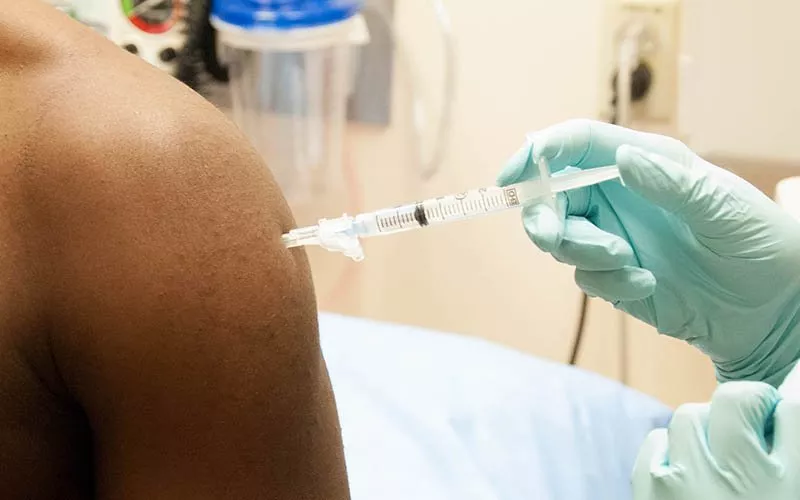
The Arizona Department of Health Services (ADHS) will release new COVID-19 vaccination appointments every Friday.
Appointments will be available at 11 a.m. every Friday for the next week. Each Wednesday, ADHS will announce on Twitter, @AZDHS and Facebook the approximate number of first-dose appointments available.
Next week, the University of Arizona POD will have about 12,000 appointments available.
Currently, those 55 and older, along with frontline essential workers, are eligible to be vaccinated. In the week from March 10-16, the UA POD administered 15,461 vaccines, with 2,200 vaccines on Tuesday.
Visit https://podvaccine.azdhs.gov/ to register for an appointment or call 602-542-1000.
With 284 new cases reported today, the total number of Arizona’s confirmed novel coronavirus cases topped 834,000 as of Thursday, March 18, according to the Arizona Department of Health Services.

Pima County, which reported 80 new cases today, has seen 111,507 of the state’s 834,607 confirmed cases.
With 59 new deaths reported this morning, a total of 16,645 Arizonans have died after contracting COVID-19, including 2,317 deaths in Pima County, according to the March 18 report.
A total of 743 coronavirus patients were in the hospital as of March 17. That’s roughly 15% of the number hospitalized at the peak of the winter surge, which reached 5,082 on Jan. 11. The summer peak was 3,517, which was set on July 13, 2020. The subsequent lowest number of hospitalized COVID patients was 468, set on Sept. 27, 2020.
A total of 1,031 people visited emergency rooms with COVID-like symptoms on March 17. That number represents 44% of the record high of 2,341 set on Tuesday, Dec. 29, 2020. That number had peaked during the summer wave at 2,008 on July 7, 2020; it hit a subsequent low of 653 on Sept. 28, 2020.
A total of 200 COVID-19 patients were in intensive care unit beds on March 17, which is roughly 17% of the record 1,183 ICU patients set on Jan. 11. The summer’s record number of patients in ICU beds was 970, set on July 13, 2020. The subsequent low was 114 on Sept. 22, 2020.
How to get a vaccine
More than 1 million Arizonans are now fully vaccinated against COVID, according to the Arizona Department of Health Services.
Nearly 1.7 million Arizonans have at least one shot of the vaccine.
A total of 235,558 Pima County residents have received at least one vaccine shot and 159,969 residents are fully vaccinated as of today, according to ADHS.
Between the state POD, the county PODs and private pharmacies, the county is now receiving between 40,000 and 50,000 doses a week, according to Pima County spokesman Mark Evans.
To find out if you are eligible for a vaccine, visit the Arizona Department of Health website.
Pima County is providing vaccination appointments to people 55 and older as well as frontline workers, educators, first responders and healthcare workers. Those who qualify in Pima County’s priority group of eligible vaccine recipients can register for a vaccine at www.pima.gov/covid19vaccineregistration or by calling 520-222-0119.
A state-run vaccination site at the University of Arizona accepts registration and appointments at pod vaccine.azdhs.gov, and those who need assistance can call 1-844-542-8201. More details here.
Many local pharmacies are now receiving vaccine doses. To find one near you, visit the ADHS website.
Get tested: Pima County has free COVID testing
Pima County is continuing to offer a number of testing centers around town.
You’ll have a nasal swab test at the Kino Event Center (2805 E. Ajo Way) and the Udall Center (7200 E. Tanque Verde Road).
The center at the northside Ellie Towne Flowing Wells Community Center, 1660 W. Ruthrauff Road, involves a saliva test designed by ASU.
Schedule an appointment at these or other drive-thru or pop-up sites at pima.gov/covid19testing.
The University of Arizona’s antibody testing can determine if you have had COVID and now have antibodies. To sign up for testing, visit https://covid19antibodytesting.arizona.edu/home.
—with additional reporting from Austin Counts, Christina Duran, Jeff Gardner and Mike Truelsen
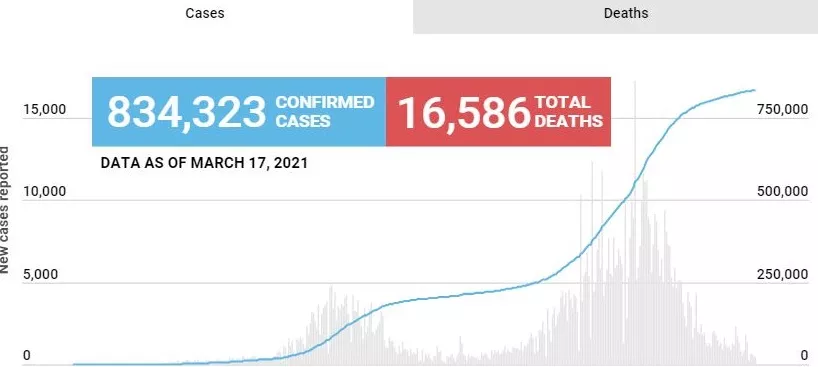
WASHINGTON – Children from 6 months up to 12 years old could soon start getting the COVID-19 vaccine in Phoenix as part of a trial of the drug’s effectiveness on young people.
Drug-maker Moderna announced this week that Phoenix will be one of the cities where it will test smaller doses of its COVID-19 vaccine, which has currently only been approved for adult use, on preteens. The company has already started trials of the vaccine on teenagers.
While children have proven to be less susceptible to the disease, health experts say it’s important to have the option of a vaccine for younger kids as schools reopen and to improve the odds of “herd immunity” for the overall population.
“The reason we want to make sure that all of these kids get vaccinated is so we can truly achieve herd immunity. We don’t want to have little pockets of people who might be infectious and not be protected,” said Dr. Georges C. Benjamin, director of the American Public Health Association.
The preteen trials were announced Tuesday by Moderna, one of three pharmaceutical companies with vaccines approved for emergency use in adults in the U.S., along with Pfizer-BioNTech and Johnson & Johnson. Moderna and Pfizer vaccines require two doses, while the newer Johnson & Johnson vaccine has a one-dose protocol.
The announcement came the same day that the Arizona Department of Health Services announced that just over 1 million Arizonans have been fully vaccinated against the coronavirus. Overall, the state has administered about 2.6 million doses to a little more than 1.6 million people.
Moderna CEO Stéphane Bancel said in a statement that more than 53 million doses of his company’s version of the vaccine have been administered in the U.S., but “this pediatric study will help us assess the potential safety and immunogenicity of our COVID-19 vaccine candidate in this important younger age population.” The statement said the new trials would take place in the U.S. and Canada.
Dr. Steven Plimpton, the lead investigator for the Phoenix trial, said Tuesday that his office has “already gotten hundreds of calls” from parents interested in getting their children into the trial. He said parents interested in the trial in Phoenix can go the KidCOVE site for more information or can call 602-368-1928 or 866-913-5454.
One University of Arizona expert said it will likely take a little while to get the trials in motion.
“I would say sometime in the next several weeks, as they get recruitment on board and they have a critical mass to start with and they have all of the aspects of the trial set up in terms of location, staffing, and everything that they need in place,” said Dr. Shad Marvasti, director of public health and prevention at the University of Arizona College of Medicine.
Moderna said that children in the first phase of the trial will receive doses of 25, 50 or 100 micrograms of the vaccine – an adult dose is 100 – depending on their age. Results from that phase will be used to determine dosages in a second phase when come subjects will get a placebo.
Ultimately, Moderna expects to include 6,750 children in the latest trials.
“The adult dose for the Moderna is 100 micrograms, but they are starting with 25 micrograms and then basically watching folks and kids to see how they react,” Marvasti said. “If that looks good and there are no major issues, then they will have a group of kids in the study with 50 micrograms and then if that looks okay they will have another group that has 100 micrograms.”
He added that Moderna’s trust that the vaccine is safe enough to begin trials on kids could have the added benefit of helping to quell vaccine hesitancy among others.
“Hopefully, depending on the results, it will help give people more confidence to get the vaccine, especially if it proves to be as safe and effective in children as it has been in adults,” Marvasti said.
The announcement of the preteen trials also comes as the state has ordered schools to begin to resume in-person schooling, after a year in which most students have attended class virtually.
Benjamin said that with schools reopening, in Arizona and across the U.S., a vaccine for youth would make a definite difference in controlling the virus, as it would prevent kids from spreading it to each other and then bringing it home with them. Vaccination would also expedite kids’ ability to return to normal
“Getting kids vaccinated, I think, will certainly improve their quality of life and their ability to effectively interact with their friends,” he said.
Wednesday, March 17, 2021
With 445 new cases reported today, the total number of Arizona’s confirmed novel coronavirus cases topped 834,000 as of Wednesday, March 17, according to the Arizona Department of Health Services.

Pima County, which reported 56 new cases today, has seen 111,427 of the state’s 834,323 confirmed cases.
With 12 new deaths reported this morning, a total of 16,586 Arizonans have died after contracting COVID-19, including 2,308 deaths in Pima County, according to the March 17 report.
A total of 773 coronavirus patients were in the hospital as of March 16. That’s roughly 15% of the number hospitalized at the peak of the winter surge, which reached 5,082 on Jan. 11. The summer peak was 3,517, which was set on July 13, 2020. The subsequent lowest number of hospitalized COVID patients was 468, set on Sept. 27, 2020.
A total of 1,095 people visited emergency rooms with COVID-like symptoms on March 16. That number represents 47% of the record high of 2,341 set on Tuesday, Dec. 29, 2020. That number had peaked during the summer wave at 2,008 on July 7, 2020; it hit a subsequent low of 653 on Sept. 28, 2020.
A total of 208 COVID-19 patients were in intensive care unit beds on March 15, which is roughly 17% of the record 1,183 ICU patients set on Jan. 11. The summer’s record number of patients in ICU beds was 970, set on July 13, 2020. The subsequent low was 114 on Sept. 22, 2020.
Tuesday, March 16, 2021
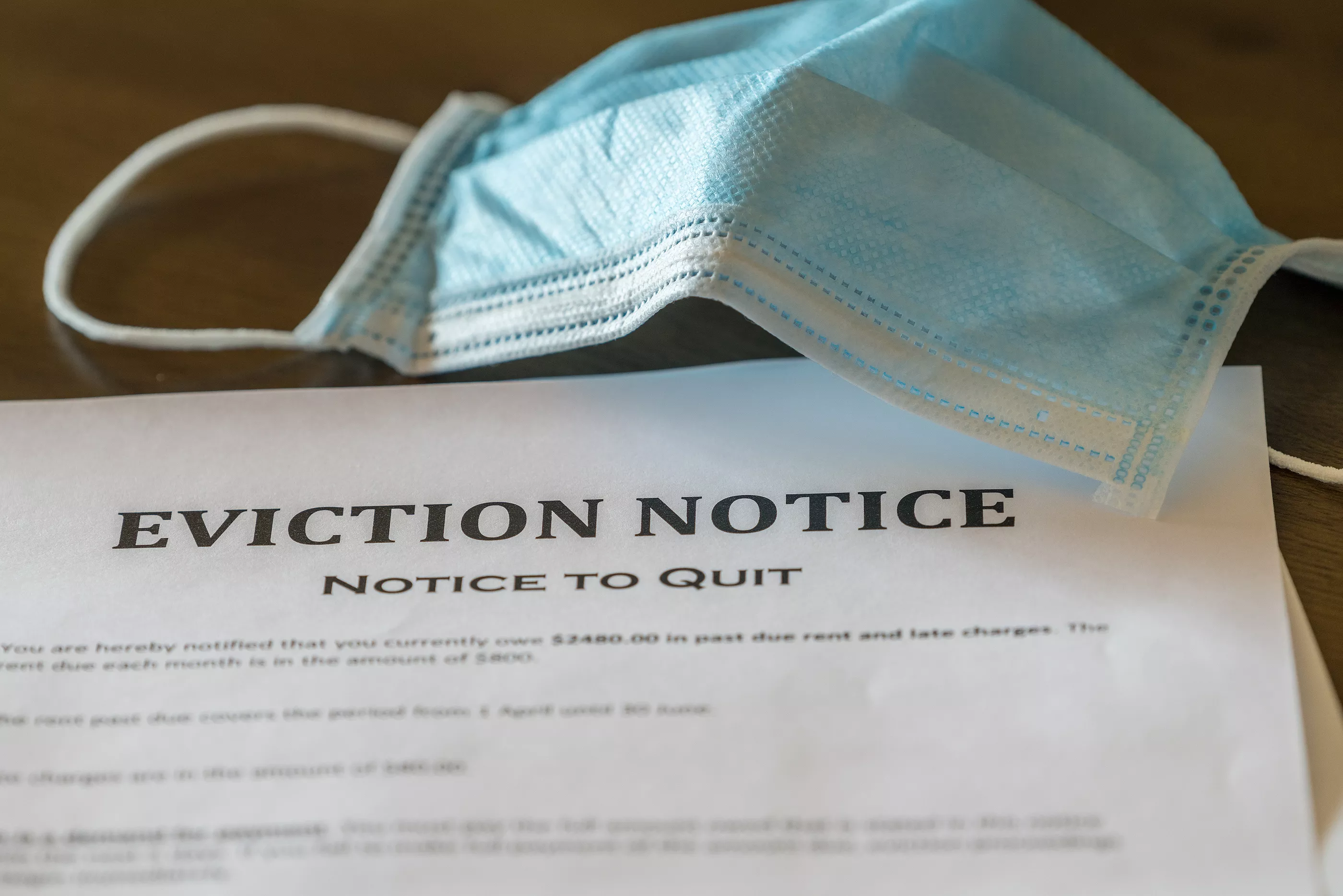
The Pima County Board of Supervisors voted 4-1 to direct $2 million in federal coronavirus relief funds, as permitted by law, to support eviction defense services to eligible residents.
This comes in response to an increase in evictions during the pandemic, as residents face financial hardships due to job loss or other factors.
“Until now, tenants have been represented by lawyers in eviction hearings less than 1 percent of the time, while landlords have had legal counsel 88 percent of the time,” said District 2 Supervisor Math Heinz, who voted yes. “Our action today will help keep roofs over the heads of thousands of Pima County families.”
District 4 Supervisor Steve Christy was the one dissenting vote.
Christy expressed concern that landlords and property owners were not considered during this process, as many of them are family-owned businesses who rely on rent as their sole income and have been “demonized and completely put aside.”
He also emphasized that the funds should instead be used to provide what he said is actually needed: rental assistance.
“Rental assistance is the only thing that 100% stops evictions for nonpayment of rent,” said Christy.
The county will be allocating $15.1 million for rental and utility assistance to both tenants and property owners through the Emergency Rental Assistance Program, said Heinz.
In order to receive support, Pima County residents would need to prove that they have suffered a loss of income or financial hardship due to the pandemic, cannot afford legal counsel and are facing or will imminently face eviction filing for either non-payment of rent or “material non-compliance” with the lease.
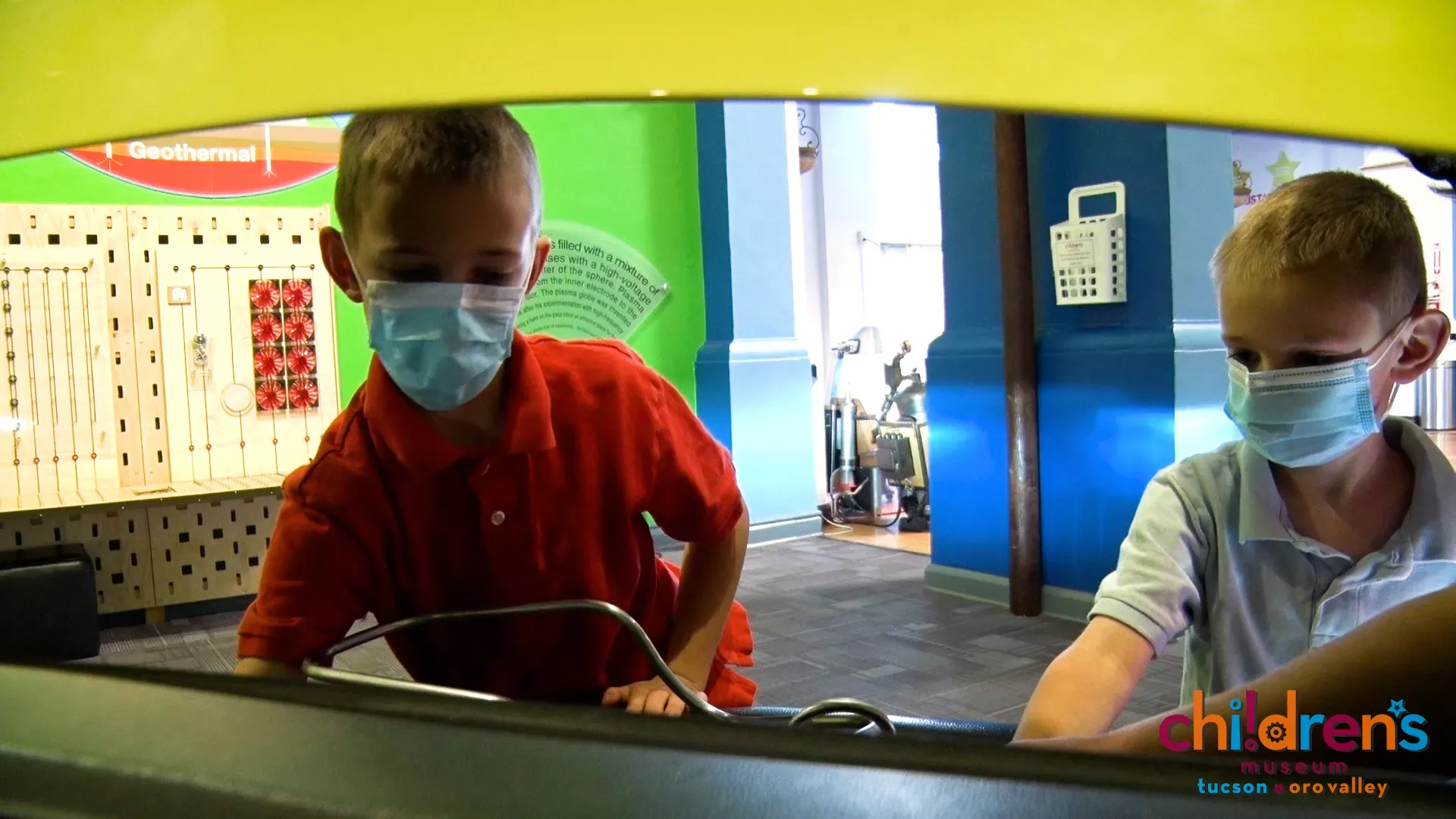
Visitors to Downtown Tucson will again hear children laughing and playing when the Children's Museum Tucson reopens on March 25.
While the Museum may have been closed because of the COVID-19 pandemic, Executive Director Hilary Van Alsburg said that the staff has been busy working on activities, exhibits and attractions.
“We have spent the past year developing new programs, expanding our exhibits and gearing up for reopening - we are so ready for families to come back to play. Our focus is on fun engagement and welcoming families back to in-person experiences safely.”The Museum, 200 S. Sixth Ave., will be limited to one-third capacity, with timed admission at 9 a.m., 10:30 a.m., noon, 1:30 p.m. and 3 p.m. Admission is $9 per person and visitors are encouraged to purchase tickets in advance at ChildrensMuseumTucson.org. Discounts are available for military and visitors on public assistance.
Anyone 5 and older will be required to wear masks inside the Museum. The extended outdoor space and visitor limit ensure there is ample room for social distancing while allowing children to explore and play.
The Museum's other location, 11015 N. Oracle Road, will reopen on April 1. They've added a new train table, updated Toddler Town and new outdoor play activities. This Early Childhood Education-focused space will be open from 9 a.m.-3 p.m. Thursday-Sunday with limited capacity. Admission is $7 per person with advance tickets available online and discounts available.
PHOENIX – When Bryce Drew was hired to replace Dan Majerle as coach at Grand Canyon last March, the Lopes were not in a great spot.
The 2019-20 season saw GCU suffer its worst season since becoming a Division I basketball school in 2013, a 13-17 overall record and 8-8 mark in the Western Athletic Conference. Majerle, who guided the program through its transition to Division I and is beloved by Phoenix Suns fans, was fired because of the poor results.
That opened the door for Drew, whose last coaching stop hadn’t gone any better than Majerle’s final season at GCU. In Drew’s final season at Vanderbilt in 2018-19, the Commodores won only nine games and were 0-18 in conference play. He was fired at season’s end.
But Drew’s first season at Grand Canyon provided important firsts, and some big surprises.
The Lopes won their first WAC Tournament title and with it, the school’s first NCAA Tournament bid. And the Lopes did it in a season in which their in-state foes Arizona State (which began the year as a Top 25 team) and Arizona (a staple in March Madness) surprisingly missed the Big Dance entirely.
“It’s been a tough year. Just a lot of things thrown at us this year,” ASU coach Bobby Hurley said.
It all seems fitting in such a strange season, not just for Arizona teams but around the college basketball world.

