

Tuesday, February 16, 2021
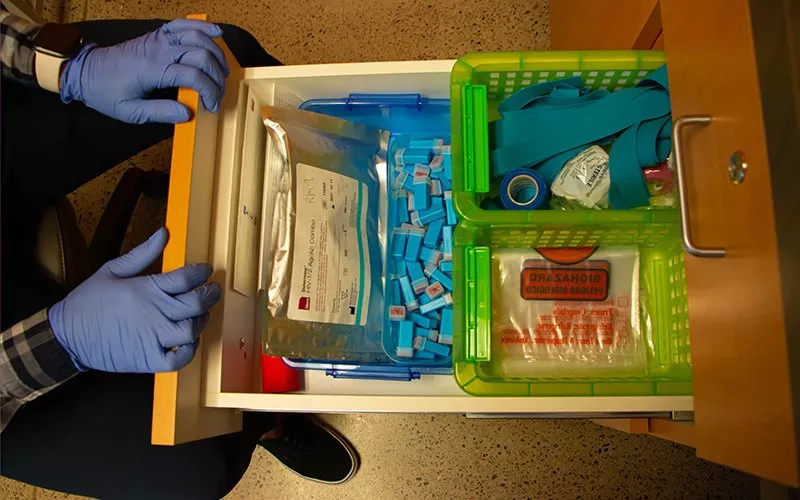
PHOENIX – In a downtown parking garage, a health care worker, dressed in protective gear, waits for cars to pull up for drive-thru HIV tests. Inside the building, volunteers assemble packages of at-home tests and condoms to be shipped across the state.
Elsewhere in metro Phoenix, a van travels to neighborhoods whose residents may face higher risk of infection to provide regular HIV testing, while doctors and case managers across the area respond to telehealth appointments by phone and Zoom.
Although face-to-face interactions have been the preferred method for testing and treating people for HIV and supporting them in vulnerable moments, the COVID-19 pandemic has forced local health care providers to get creative and adapt.
Such services as Zoom appointments, along with drive-thru, at-home and mobile testing, epitomize this new normal.
Dr. Ann Khalsa, an HIV specialist with more than 30 years of experience, has been part of the shift. She serves as medical director at Valleywise Community Health Center-McDowell, and spends most days on Zoom and phone calls with patients.
Khalsa said that amid COVID-19 – with so many people “hunkered down” and not prioritizing other medical needs – her clinic has seen a 30% decrease in people getting tested for HIV and linked to treatment.
However, some of the changes in delivery of care are helping, she added, and are likely here to stay.
Monday, February 15, 2021
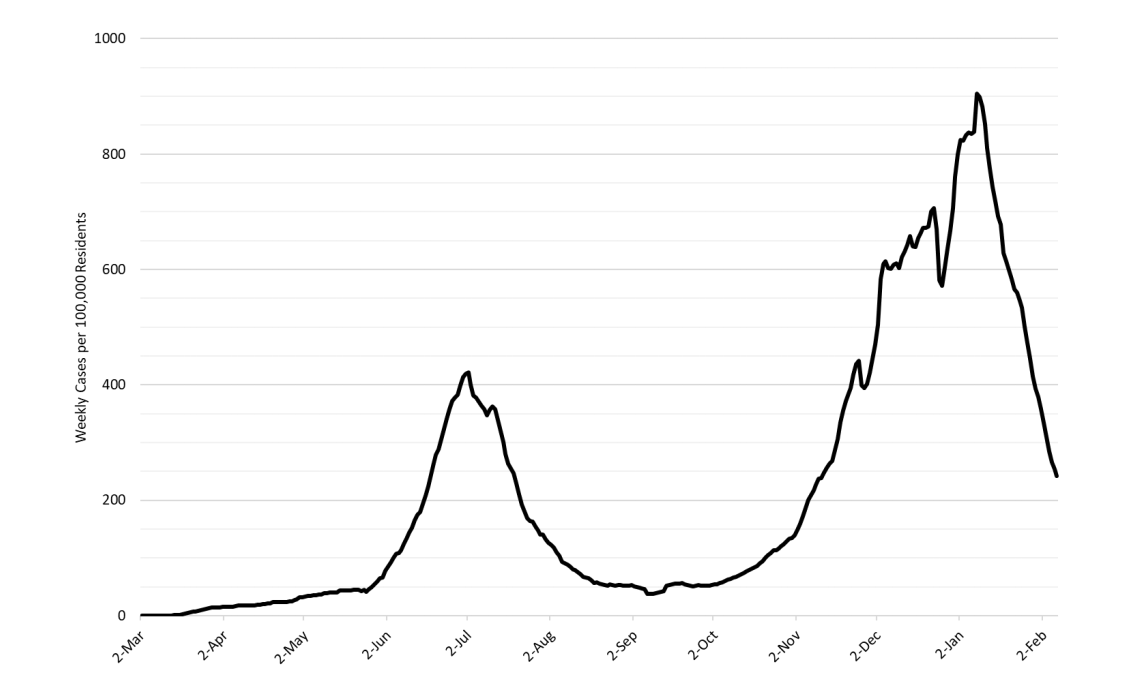
With the fourth week in a row of declining COVID-19 cases in Pima County, Arizona has evolved from a state of “crisis” to one of “elevated risk,” according to Dr. Joe Gerald, a University of Arizona professor who creates weekly coronavirus epidemiology reports based on Arizona Department of Health Services data.
According to Gerald’s latest report, the week ending Feb. 7 saw a 35% decrease in coronavirus cases from the week prior.
The amount of COVID-19 patients in the state’s general ward beds decreased by 25% the week of Feb. 12 from the week before, while ICU bed usage dropped 17%, according to Gerald.
“With continued improvements being forecast over the next 4 weeks, hospital capacity is adequate to meet Arizona’s most critical needs,” the professor wrote in the report. “Nevertheless, it will be many months before the backlog of non-COVID care can be fully addressed.”
In Pima County, the week ending Feb. 7 saw a 33% drop from the previous week, Gerald reports.
Furthermore, for the first time in 2021, two of the indicators on Pima County’s COVID-19 progress report, which tracks key epidemiological factors to make recommendations to business schools, have improved.
Adequate hospital capacity and timely case investigation metrics have moved from the “not met” to “progress” category.
Timely case investigation tracks how long it takes for the county’s case investigators to reach an individual who’s tested positive COVID-19 after they’re diagnosed.
Cases over two consecutive weeks, percent positivity for the virus and the predominance of COVID-19 like illness remain in the “criteria not met” category.
Although hospitals are seeing a slight reprieve, they remain under pressure, according to Pima County Health Department Director Dr. Theresa Cullen.
Friday, February 12, 2021
Despite a widening population of eligible vaccine recipients and the addition of a state-run POD at the University of Arizona set to open on Thursday, Pima County’s vaccine allocation from the state has been cut yet again.
Last week, the county's vaccine supply was decreased to 17,850—a 40% deduction from the previous week. This week, the doses were cut down by 9% for a total allotment of 16,300.
According to a memo from County Administrator Chuck Huckelberry, the truncated allocation has limited the county’s ability to give first-time doses—many for those 70 and older who became eligible last week—and delayed plans for vaccinations in vulnerable congregate settings.
The county’s accelerated immunization plan calls for 300,000 vaccines by the end of March, a goal the health department was previously ahead of. Now, county health Director Dr. Theresa Cullen said the plan will come to a “near halt” within weeks if the county doesn’t receive more doses.
According to Cullen, more than 100,000 residents need a second dose to be considered fully immunized over the next three to four weeks.
“We believe we can protect second-dose appointments with the current allotment, but if supplies remain this tight, it will be difficult for the public to schedule new first-dose appointments in the coming weeks,” Cullen said. “We need to follow through on our promise to them, so that means first dose appointments will be limited for a while, which really slows down our Accelerated Plan, unfortunately.”Dr. Francisco Garcia, the county’s chief medical officer, said the limited vaccine supply will likely result in reduced hours at the county’s current vaccination sites, but the health department is working with its vaccination partners to avoid canceling existing vaccine appointments.
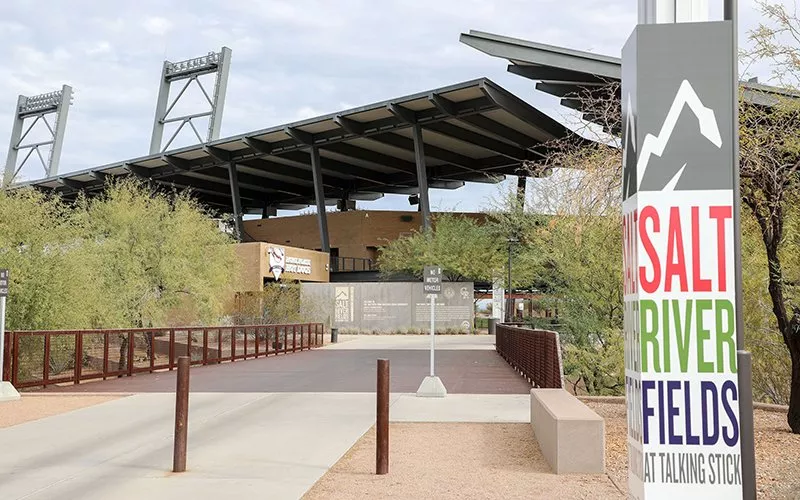
PHOENIX – Batter up. Mask up.
Despite an offseason that suggested a delay to the start of spring training, Major League Baseball pitchers and catchers are scheduled to report Tuesday, with games kicking off on Feb. 27.
Arizona is home to 10 stadiums where 15 Cactus League teams prepare for the regular season each year. MLB’s Players Association recently rejected a proposal by the league to postpone the start of spring ball because of COVID-19 concerns.
What will it look like?
Major League Baseball has not announced a blanket policy because many of the decisions will be determined by individual municipalities. Cactus League Executive Director Bridget Binsbacher said in a statement that cities “are working with stakeholders to finalize preparations for opening spring training camps. We expect to announce details soon.”
Although few teams have released specific details of attendance plans, most are expected to follow guidelines similar to the ones the City of Tempe announced recently. Tempe Diablo Stadium, spring home of the Los Angeles Angels, will open at 25% capacity. This would allow 1,800 to 2,000 guests to attend the games.
These rules are also included:
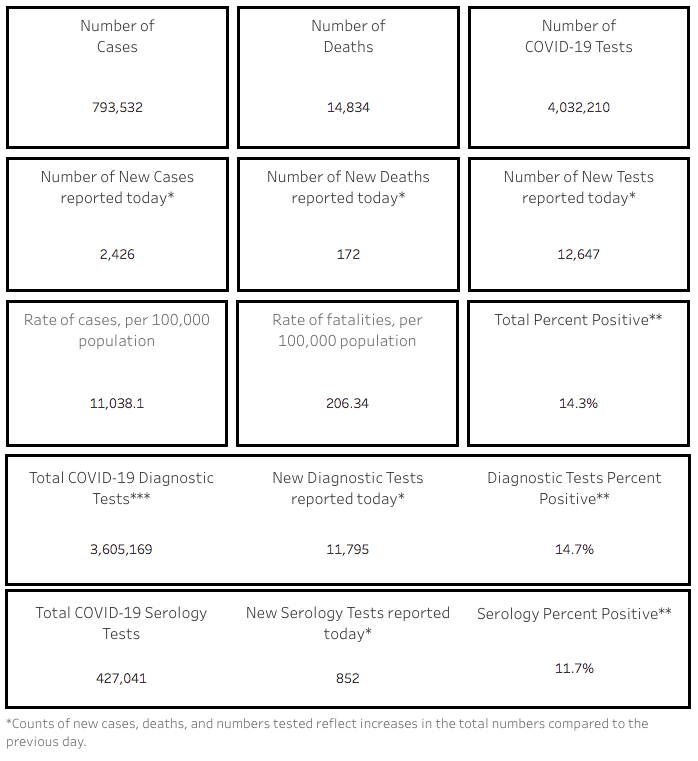
With 2,426 new cases reported today, the total number of Arizona’s confirmed novel coronavirus cases topped 793,000 as of Friday, Feb. 12, according to the Arizona Department of Health Services.

Pima County, which reported 685 new cases today, has seen 106,253 of the state’s 793,532 confirmed cases.
With 172 new deaths reported today, a total number of 14,834 Arizonans have died after contracting COVID-19, including 2,053 deaths in Pima County, according to the Feb. 12 report.
The number of hospitalized COVID cases statewide has declined in recent weeks, with 2,396 coronavirus patients in the hospital as of Feb. 11. That’s fewer than half the number who were hospitalized at the peak of the winter surge, which reached 5,082 on Jan. 11. The summer peak was 3,517, which was set on July 13, 2020. The subsequent lowest number of hospitalized COVID patients was 468, set on Sept. 27, 2020.
A total of 1,554 people visited emergency rooms on Feb. 11 with COVID symptoms, down from the record high of 2,341 set on Tuesday, Dec. 29, 2020. That number had peaked during the summer wave at 2,008 on July 7, 2020; it hit a subsequent low of 653 on Sept. 28, 2020.
A total of 705 COVID-19 patients were in intensive care unit beds on Feb. 11, down from a peak of 1,183 set on Jan. 11. The summer’s record number of patients in ICU beds was 970, set on July 13, 2020. The subsequent low was 114 on Sept. 22, 2020.
How to get a vaccine
Currently, Pima County is providing vaccination shots to people 70 and older as well as educators, first responders and healthcare workers. Those who currently qualify in Pima County’s 1B priority group of eligible vaccine recipients can register for a vaccine at www.pima.gov/covid19vaccineregistration or by calling 520-222-0119.
A state-run vaccination site opening at the University of Arizona will begin appointments on Feb. 18. The new site will follow the state’s current vaccine eligibility, which includes those 65 and older, educators, childcare workers and protective service workers, according to Arizona Department of Health Services Director Dr. Cara Christ.
As the state-run POD, or point of distribution, registrations will go through ADHS’s website. Appointments will begin on Feb. 18, and registration will open at 9 a.m. on Feb 16. Online registration will be available atpodvaccine.azdhs.gov, and those who need assistance can call 1-844-542-8201.
MHC Healthcare is currently scheduling COVID-19 vaccine appointments for those older than 75 in the Marana and Oro Valley areas.
On Mondays, Tuesdays and Wednesdays, appointments will take place at MHC Healthcare Marana Main Health Center at 13395 N. Marana Main St.
Vaccinations will take place every Thursday at the James D. Kriegh Park at 23 W Calle Concordia in Oro Valley.
Appointments will run from 9 a.m. to 1 p.m., and residents of Oro Valley, Marana, Dove Mountain, Catalina, Avra Valley, Picture Rocks and Summer Haven can register at mhchealthcare.org.
Vaccinations at both locations will be administered in a drive-thru setting using the Moderna vaccine.
Numbers improving in Pima County
Pima County hospitals are seeing a decrease in COVID patients.
For the first time this year, Pima County’s tracking metric for adequate hospital bed space has moved from the “not met” category to the “progress” category.
As a result of the drop in cases, Pima County’s timely case investigation category has also moved from the “not met” column to the “progress” column, according to a press release from the county.
County officials caution that the total number of cases and percent of COVID tests that come back positive still remain high.
Get tested: Pima County has free COVID testing
Pima County offers a number of testing centers around town.
You’ll have a nasal swab test at the Kino Event Center (2805 E. Ajo Way) the Udall Center (7200 E. Tanque Verde Road) and downtown (88 E. Broadway).
The center at the northside Ellie Towne Flowing Wells Community Center, 1660 W. Ruthrauff Road, involves a saliva test designed by ASU.
In addition, the Pima County Health Department, Pima Community College and Arizona State University have partnered to create new drive-thru COVID-19 testing sites at three Pima Community College locations. At the drive-thru sites, COVID-19 testing will be offered through spit samples instead of nasal canal swabs. Each site will conduct testing from 9 a.m. to noon, and registration is required in advance. Only patients 5 years or older can be tested.
Schedule an appointment at these or other pop-up sites at pima.gov/covid19testing.
The University of Arizona’s antibody testing has been opened to all Arizonans as the state attempts to get a handle on how many people have been exposed to COVID-19 but were asymptomatic or otherwise did not get a test while they were ill. To sign up for testing, visit https://covid19antibodytesting.arizona.edu/home.
—with additional reporting from Austin Counts, Jeff Gardner, Nicole Ludden and Mike Truelsen
Thursday, February 11, 2021
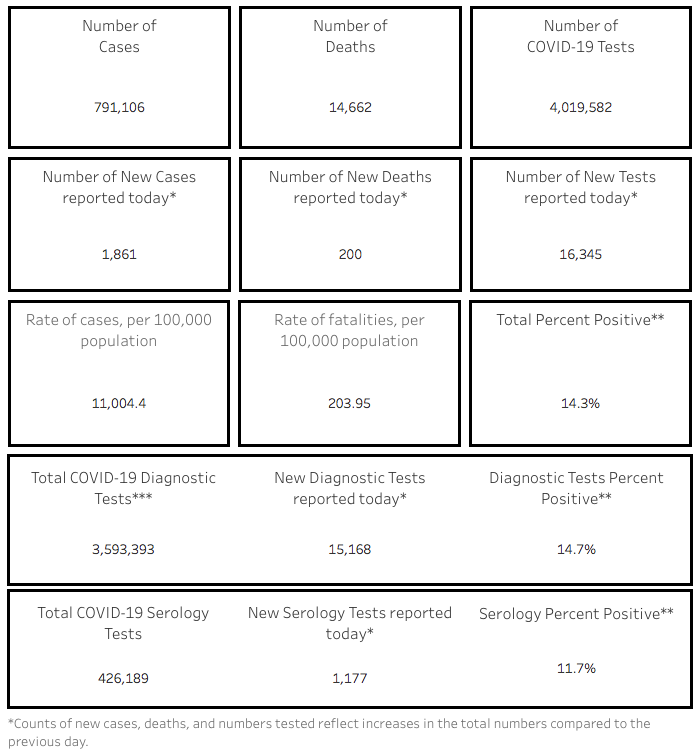
With 1,861 new cases reported today, the total number of Arizona’s confirmed novel coronavirus cases topped 791,000 as of Thursday, Feb. 11, according to the Arizona Department of Health Services.

Pima County, which reported 685 new cases today, has seen 105,909 of the state’s 791,106 confirmed cases.
With 200 new deaths reported today, a total number of 14,662 Arizonans have died after contracting COVID-19. In Pima County, the death toll topped 2,000 with 42 newly reported deaths bringing Pima County’s total number of deaths to 2,023, according to the Feb. 10 report.
The number of hospitalized COVID cases statewide has declined in recent weeks, with 2,507 coronavirus patients in the hospital as of Feb. 10. Thats fewer than half the number who were hospitalized at the peak of the winter wave, which reached 5,082 on Jan. 11. The summer peak was 3,517, which was set on July 13, 2020. The subsequent lowest number of hospitalized COVID patients was 468, set on Sept. 27, 2020.
A total of 1,535 people visited emergency rooms on Feb. 10 with COVID symptoms, down from the record high of 2,341 set on Tuesday, Dec. 29, 2020. That number had peaked during the summer wave at 2,008 on July 7, 2020; it hit a subsequent low of 653 on Sept. 28, 2020.
A total of 719 COVID-19 patients were in intensive care unit beds on Feb. 10, down from a peak of 1,183 set on Jan. 11. The summer’s record number of patients in ICU beds was 970, set on July 13, 2020. The subsequent low was 114 on Sept. 22, 2020.
How to get a vaccine
Currently, Pima County is providing vaccination shots to people 70 and older as well as educators, first responders and healthcare workers. Those who currently qualify in Pima County’s 1B priority group of eligible vaccine recipients can register for a vaccine at www.pima.gov/covid19vaccineregistration or by calling 520-222-0119.
State planning to open vaccine distribution site in Pima County but no word on whether more doses will be coming here
Pima County is getting a state-run vaccination site at the University of Arizona that will begin appointments on Feb. 18.
The new site will follow the state’s current vaccine eligibility, which includes those 65 and older, educators, childcare workers and protective service workers, according to Arizona Department of Health Services Director Dr. Cara Christ.
As the state-run POD, or point of distribution, registrations will go through ADHS’s website.
Appointments will begin on Feb. 18, and registration will open at 9 a.m. on Feb 16. Online registration will be available at podvaccine.azdhs.gov, and those who need assistance can call 1-844-542-8201.
The university says it’s delivered more than 12,000 COVID-19 vaccines at a rate of 1,000 shots per day to the educators it currently serves. According to the governor’s office, the site could reach 6,000 people a day when operated at full capacity.
The site has a drive-through location on the University of Arizona Mall and a walk-up site at the Ina E. Gittings Building.
The university will expand its current hours of operation as a POD that currently serves educators and childcare workers. It will transition to a state site and eventually operate 24/7 as Arizona receives more vaccine doses.
UA President Robert Robbins said the site will eventually move from its current six hours a day of operation to two eight-hour shifts.
According to Christ, the university will start with a “soft launch” with expanded hours at first and will become a fully operational state-run POD by Feb. 22.
However, Christ said the vaccines supplying the state-run site will be taken out of the county’s already limited allocation. This week, Pima County’s vaccine allocation was decreased by 39%.
The state submitted a federal resource request for 300,000 doses followed by an additional 300,000 vaccines a week in January, but the request was denied. Christ said the state was asked over the weekend to re-submit the request and is awaiting an answer.
“We continue to monitor our weekly allocations and we give that out on a pro-rata basis of the population of the phase that each county has. We believe that we are going to stay relatively consistent over the next couple of weeks with the amount of vaccine that we get,” Christ said. “But we always think that it's better to have the resources established. So make sure that they've got staffing, funding, that management systems are put into place so that when we do get an increase in vaccine, those sites are ready to go to full capacity.”
Robbins said the university has asked the state for an incremental increase in vaccine supply, and he anticipates up to a 25% increase in the county’s allocation as production from Moderna and Pfizer ramps up.
“We don't have a demand or throughput problem, we've got a supply problem. We're targeting between 6,000 to 8,000 doses a day. If we ran it seven days a week, we're talking 50,000 doses a week, just at our POD,” Robbins said. “So the state has got to dramatically increase if we're going to build this out and take advantage of running a 24/7 operation. They've got to be able to supply us the vaccine.”
But taking vaccine doses away from the county to support the POD may hinder efforts at other county-run vaccination sites.
“We need more capacity to distribute vaccines, but we need more vaccines. For them to take out of the allocation for Pima County potentially means that some of our other PODs would have shorter hours, less accessibility, might have to temporarily close until we get more vaccines,” said Pima County Supervisor Adelita Grijalva. “While we appreciate the state opening up a state POD, we actually need more vaccines. That is the biggest problem that we have.”
Wednesday, February 10, 2021
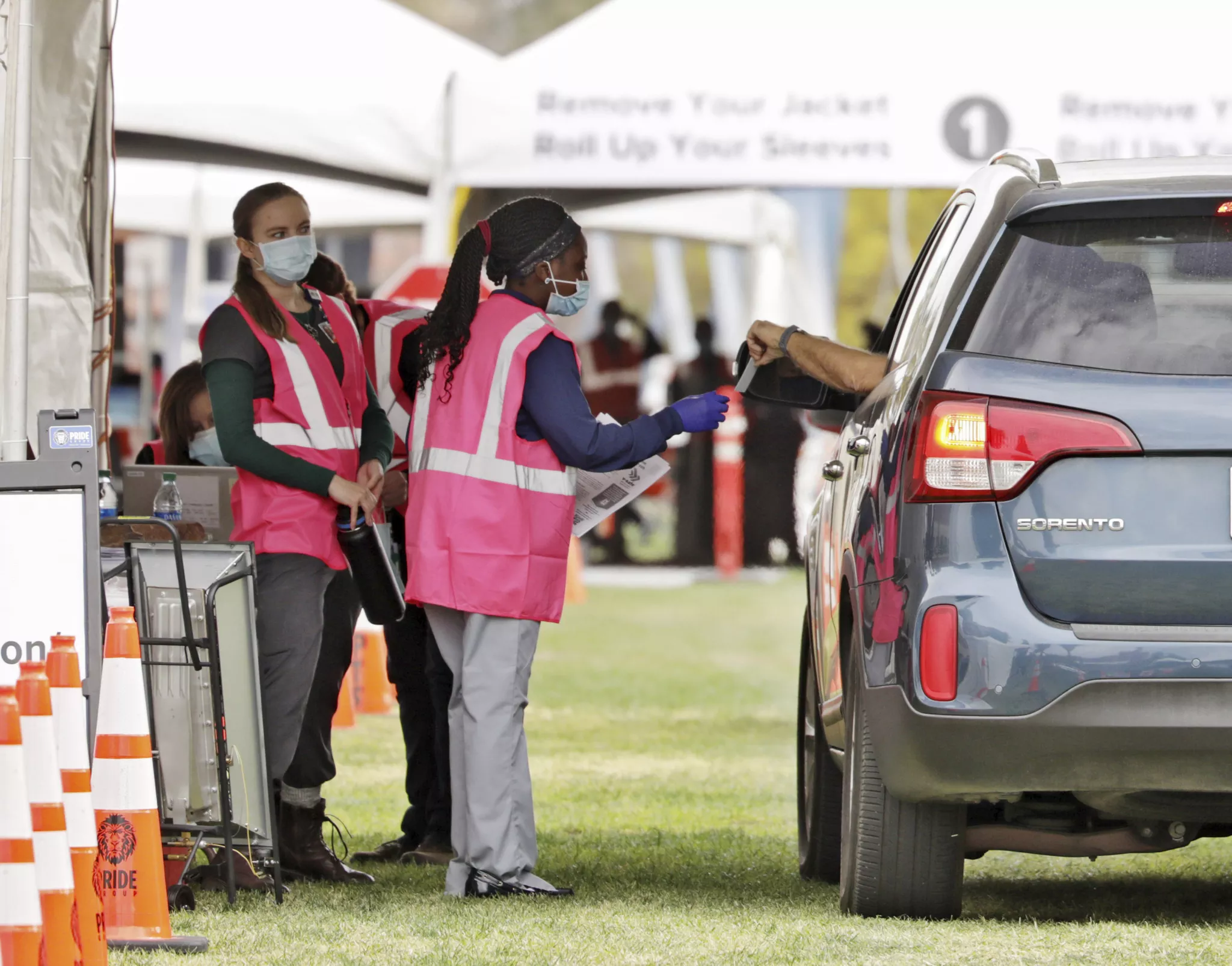
Pima County is getting a state-run vaccination site at the University of Arizona that will begin appointments on Feb. 18.
The new site will follow the state’s current vaccine eligibility, which includes those 65 and older, educators, childcare workers and protective service workers, according to Arizona Department of Health Services Director Dr. Cara Christ.
As the state-run POD, or point of distribution, registrations will go through ADHS’s website.
Appointments will begin on Feb. 18, and registration will open at 9 a.m. on Feb 16. Online registration will be available at podvaccine.azdhs.gov, and those who need assistance can call 1-844-542-8201.
The university says it’s delivered more than 12,000 COVID-19 vaccines at a rate of 1,000 shots per day to the educators it currently serves. According to the governor’s office, the site could reach 6,000 people a day when operated at full capacity.
The site has a drive-through location on the University of Arizona Mall and a walk-up site at the Ina E. Gittings Building.
The university will expand its current hours of operation as a POD that currently serves educators and childcare workers. It will transition to a state site and eventually operate 24/7 as Arizona receives more vaccine doses.
UA President Robert Robbins said the site will eventually move from its current six hours a day of operation to two eight-hour shifts.
According to Christ, the university will start with a “soft launch” with expanded hours at first and will become a fully operational state-run POD by Feb. 22.
State-run site will be supplied through Pima County’s existing allocation
However, Christ said the vaccines supplying the state-run site will be taken out of the county’s already limited allocation. This week, Pima County’s vaccine allocation was decreased by 39%.
The state submitted a federal resource request for 300,000 doses followed by an additional 300,000 vaccines a week in January, but the request was denied. Christ said the state was asked over the weekend to re-submit the request and is awaiting an answer.
“We continue to monitor our weekly allocations and we give that out on a pro-rata basis of the population of the phase that each county has. We believe that we are going to stay relatively consistent over the next couple of weeks with the amount of vaccine that we get,” Christ said. “But we always think that it's better to have the resources established. So make sure that they've got staffing, funding, that management systems are put into place so that when we do get an increase in vaccine, those sites are ready to go to full capacity.”
Robbins said the university has asked the state for an incremental increase in vaccine supply, and he anticipates up to a 25% increase in the county’s allocation as production from Moderna and Pfizer ramps up.
“We don't have a demand or throughput problem, we've got a supply problem. We're targeting between 6,000 to 8,000 doses a day. If we ran it seven days a week, we're talking 50,000 doses a week, just at our POD,” Robbins said. “So the state has got to dramatically increase if we're going to build this out and take advantage of running a 24/7 operation. They've got to be able to supply us the vaccine.”
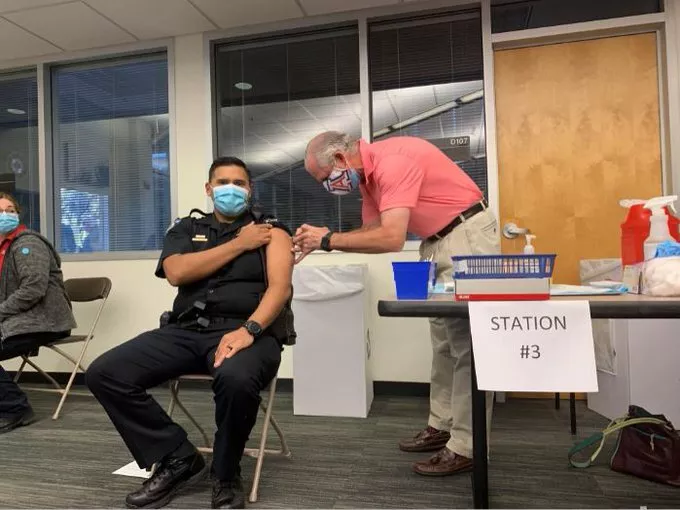
But taking vaccine doses away from the county to support the POD may hinder efforts at other county-run vaccination sites.
“We need more capacity to distribute vaccines, but we need more vaccines. For them to take out of the allocation for Pima County potentially means that some of our other PODs would have shorter hours, less accessibility, might have to temporarily close until we get more vaccines,” said Pima County Supervisor Adelita Grijalva. “While we appreciate the state opening up a state POD, we actually need more vaccines. That is the biggest problem that we have.”
Equity issues at state-run PODs
The existing state-run locations in Maricopa county—one at the State Farm Stadium in Glendale that opened on Jan. 11 and a second at the Phoenix Municipal Stadium that opened Feb. 1—have distributed 204,061 vaccine doses as of Wednesday.
Data released by ADHS shows 62% percent of vaccines were given to white residents, while 4% were given to Hispanic or Latino residents. Maricopa County’s population is 31% Hispanic, while Pima County’s is 38% Hispanic, according to the latest census data. However, 29% of vaccine recipients’ ethnicities were marked as “unknown” at the state-run PODs.

Tucson Unified School District Superintendent Gabriel Trujillo told the TUSD Governing Board Tuesday night that he hoped to return to some form of in-class instruction on March 24.
Under Trujillo’s plan, preschool and elementary parents can choose between full-time remote or on-campus learning.
High school and middle school families can opt for either remote learning or a hybrid model with four half days of in-person learning with remote days on Wednesdays.
Parents will be able to select their choice through ParentVue, the school’s online parent portal.
Under a previous board vote, Trujillo was given the authority to decide when TUSD would return to in-class instruction. The district has previously set opening dates only to delay them and has been in remote-only instruction since March of last year.
Trujillo told board members he would flesh out his plan for instruction and COVID mitigation once parents select their educational preferences, which would provide a better sense of how many students would be back in the traditional classroom and how many would prefer to continue with remote learning.
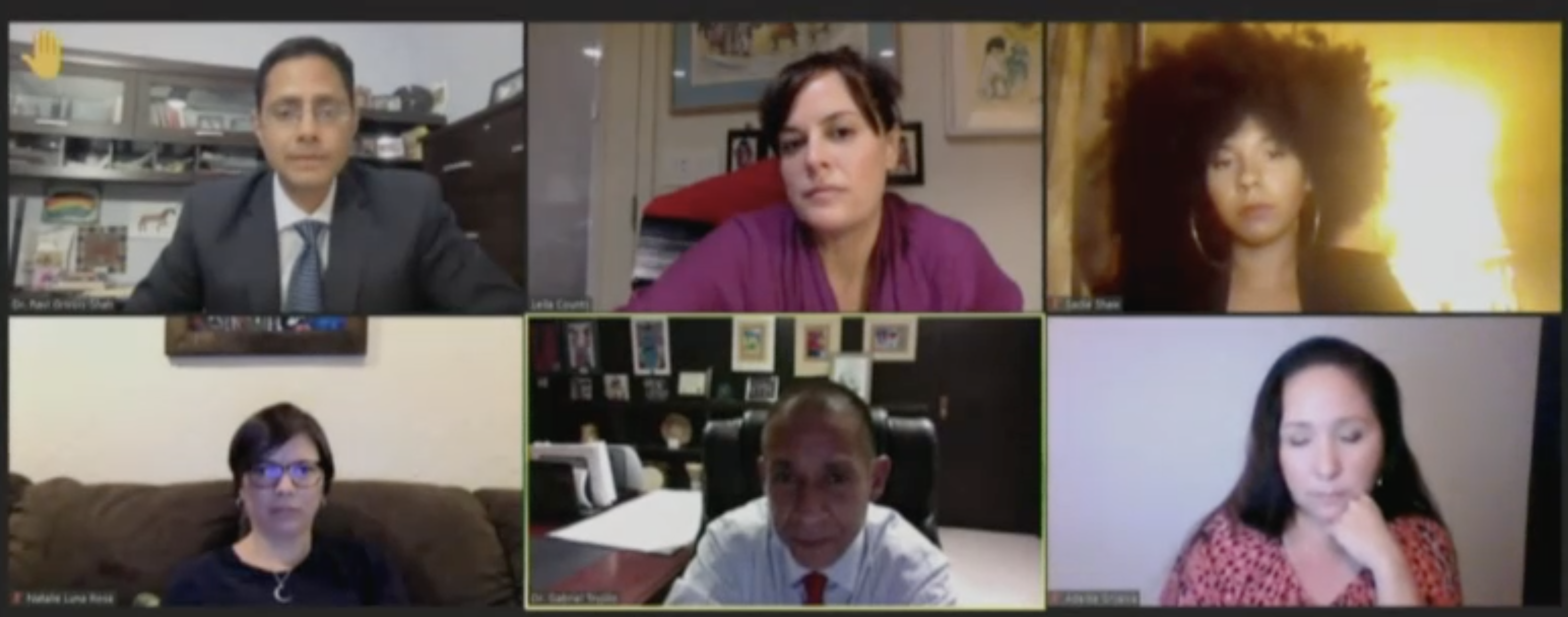
Board Member Dr. Ravi Grivois-Shah is supportive of a return to in-person school sooner rather than later and even suggested an earlier start date of March 1 while staggering grade levels returning with the youngest grades going first.
“Every single conversation I have with parents, they tell me that their kid is struggling, and especially the youngest kids. You know, 100% of the parents I speak to tell me about their struggles with remote learning,” Grivois-Shah said.
Board Member Natalie Luna Rose also supported a staggered return to the classroom.
“It's going to be a year that we haven't had children in the classroom, and I'm just afraid the longer we go on, the harder it will be to perhaps maybe bring back some of the families that we have lost,” she said. “Having that option of being remote, I know that's asking a lot of our teachers, but maybe that would also help mitigate our fears.”
Expressing concerns that not enough of the TUSD staff has received a COVID-19 vaccine yet, Board Member Adelita Grijalva was more hesitant about a March 24 return date.
“Our children can still get COVID, they can still give it to each other and our kids won't be vaccinated,” Grijalva said. “So I want to make sure that we're also cognizant of the fact that we have some parents that are not going to want their children to return for a number of reasons.”
Board President Leila Counts supported the plan proposed by Trujillo as is.
“We need our schools open, and we need to do it in the safest way possible, and I think the proposal that administration has given us tonight allows us to do that with those target dates,” she said. “Everybody has the opportunity to get a vaccine, and we need to open up our schools again. I appreciate the work that's gone into this plan. I think it's doable, it's safe, and it's what's best for our kids. So I support it.”
Board Member Sadie Shaw expressed hesitation with a return to school and said vaccinating TUSD’s staff is not enough to mitigate against the spread of COVID-19.
“Even if we're able to vaccinate all staff, the students won't be vaccinated, some other parents won't be vaccinated and a large portion of our Tucson community will not be vaccinated,” Shaw said. “As the largest school district, I think we really have to take the most care and how we approach the return.”TUSD parent survey results
TUSD sent a survey to parents of students in preschool through third grade and grades nine through 12 on Jan. 26.
Parents were asked to rank their preference on a return to school model out of a menu of choices, including all remote learning, all in-person learning and some days with hybrid learning.
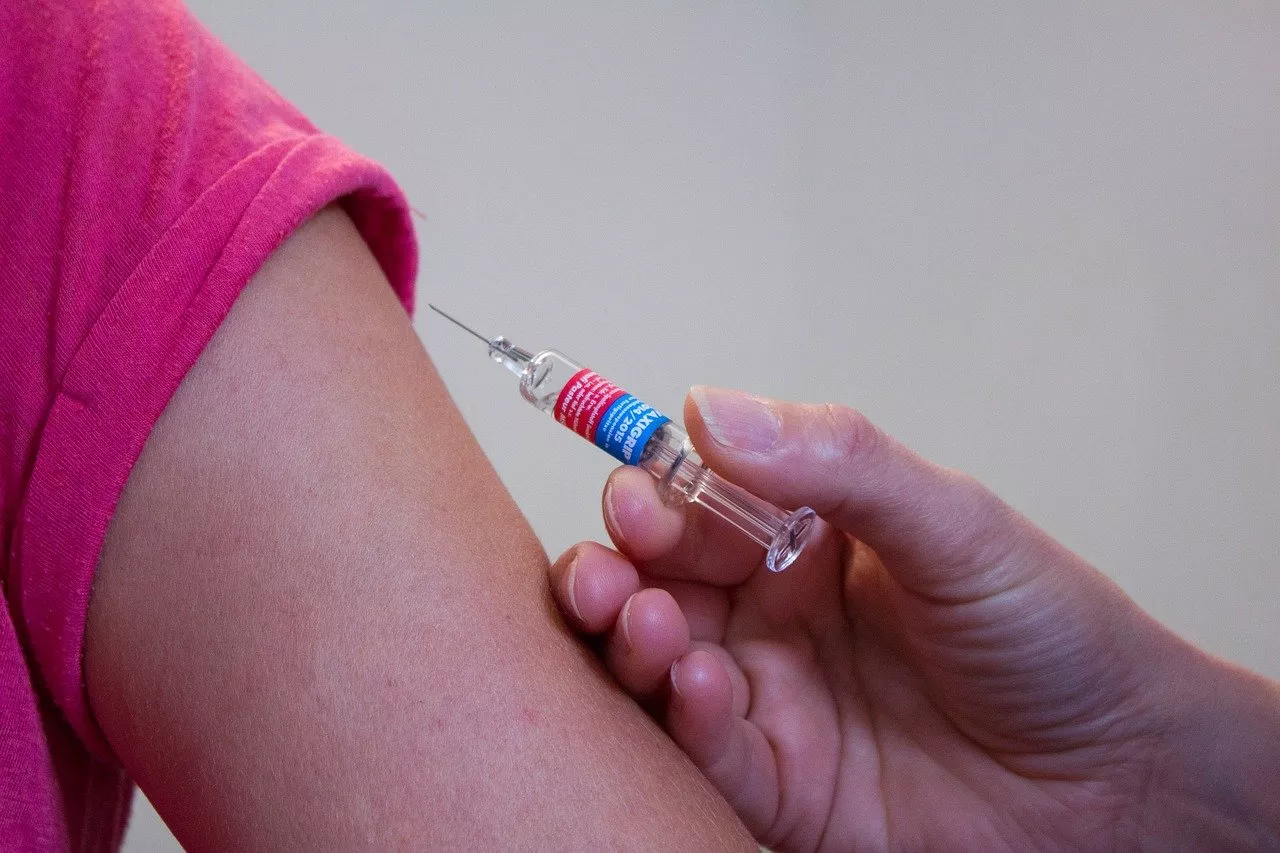
The University of Arizona will serve as the state’s third 24/7 vaccination site beginning Feb. 18, Gov. Doug Ducey and the Arizona Department of Health Services announced Wednesday.
The university will expand its current hours of operation as a POD, or point of distribution, that currently serves educators and childcare workers. It will transition to a state site that will eventually operate 24/7 as Arizona receives more vaccine doses, according to a press release from the governor’s office.
Appointments will begin on Feb. 18, and registration will open at 9 a.m. on Feb 16. Online registration will be available at podvaccine.azdhs.gov, and those who need assistance can call 1-844-542-8201.
The governor’s office said the site can administer up to 6,000 vaccines a day when it runs at full capacity.
However, ADHS Director Cara Christ said in a letter to County Administrator Chuck Huckelberry on Jan. 29 that the vaccines supplying the state-run site would be taken out of the county’s existing allocation.
“Our commitment is to accelerate immunization. If we can get a 24/7, or even 18 hours by seven (days) POD, that is a high-efficiency, high-effective POD, everyone in the county, and probably first and foremost the public health department, would be incredibly supportive of that,” Pima County Health Director Dr. Theresa Cullen said last week. “However, if the only way that is done is to take vaccine from the existing PODs, we have a hesitation.”
The state currently has two 24-hour sites in Maricopa County, one at the State Farm Stadium in Glendale that opened on Jan. 11 and a second at the Phoenix Municipal Stadium that opened Feb. 1. As of Wednesday, the two sites have administered 204,061 vaccine doses.
However, it’s not clear if Arizona will have enough vaccine doses to continue supplying the sites. Ducey submitted a federal resource request for 300,000 doses followed by an additional 300,000 vaccines a week, but the request was denied.
Furthermore, Pima County’s vaccine allocation was decreased by 39% this week.
“The demand for vaccine doses is high, and Arizonans have made it clear they want it. We are working hard to secure more doses from the federal government and partner with private and public organizations to get the vaccine out and protect Arizonans. My thanks to President Bobby Robbins and everyone involved for their work to partner on this vaccination site,” Ducey said in the press release.
As of Monday, the university POD delivered 9,866 COVID-19 vaccines at a rate of 800 shots per day to the educators it currently serves.
“Our POD has the capacity to deliver more vaccinations, and we look forward to working together to further meet the needs of Pima County and Arizonans,” UA President Robert C. Robbins said in the release. “I am incredibly proud of our entire team of professionals and volunteers who have partnered closely with Pima County, established the university POD, and operated it so well.”

