

Tuesday, February 2, 2021
After some communication troubles between Pima County and the state, Arizona Department of Health Services Director Cara Christ said plans are the works to set up a 24-hour vaccination site in the county.
Although County Administrator Chuck Huckelberry has requested the state’s help in setting up a 24-hour point of distribution site at Rillito Park, it’s not clear where the state-run site would be set up.
Christ wrote in a letter to Huckelberry on Jan. 29 that “ADHS will work with the Arizona Department of Emergency and Military Affairs (DEMA) to select the vaccination site and discuss logistics.”
If the state sets up the POD, the vaccines supplying it would be taken out of Pima County’s total state allocation.
As of Tuesday, the state’s allocated Pima County 165,950 doses, and the county has administered 119,585 vaccines.
“Any remaining doses of vaccine will be passed on to the county for further allocation. We will notify the Pima County Health Department once details are finalized,” Christ wrote in the letter.
Huckelberry responded to the letter on Monday requesting the state follow Pima County’s accelerated vaccination plan to ensure those most vulnerable to COVID-19 receive vaccines first and that “disadvantaged populations” have equal access to vaccinations.
In her letter to the county administrator, Christ said vaccine providers that had over 40% of their doses remaining as of Jan. 25 were not eligible for additional vaccine allocations, per Gov. Doug Ducey’s Jan. 26 executive order.
The order states: “Counties that have 40 percent or more of the total doses allocated to their jurisdiction remaining will not receive additional doses of COVID-19 vaccine until 80 percent of their current inventory is utilized.”
However, Huckelberry said the county health department wasn’t informed on the state’s methodology in calculating vaccine utilization and was unable to gauge what percentage of allocated doses each vaccine facility used.
While Pima County has used 71% of their current vaccine supply, the county administrator said one county POD previously received a notification from the state that they had used less than 40% of their supply without information on how the rate was calculated.
Huckelberry said the notice was retracted by the state but asked Christ for more clarification going forward.
“To help assist our PODs, we would ask to understand the calculation methodology, have a preview of the messaging to our partners who receive allocations as well as be invited to any meetings that involve these partners,” he wrote. “We understand these are all startup irregularities. You can be assured that we are using our vaccine when supplied efficiently and effectively.”
Pima County needs more vaccine supply
As Pima County struggles to vaccinate nearly the 150,000 residents currently eligible—the 75+ population, educators, childcare providers and protective service workers—it’s unclear if a state-run site would help or hinder the county by taking vaccine allocation away from it.
Maricopa County currently has two 24-hour state-run PODs, one at the State Farm Stadium in Glendale that opened on Jan. 11 and a second at the Phoenix Municipal Stadium on that opened Monday.
The state has allocated the two PODs 200,850 vaccines on top of the 461,375 doses allocated to Maricopa County itself.
As of today, the 24-hour PODs have administered 123,242 vaccines while Maricopa has administered 304,264.
The two PODs alone have received nearly 35,000 doses more than the entirety of Pima County.
Pima County has administered 114,165 COVID-19 vaccines as of Feb. 1 but has only completed 18,691 series of the two doses needed to be fully immunized.
This week, the county’s vaccine allocation from the state rose to 165,950, up from 140,425 doses last week, according to Arizona Department of Health Services data.
While Pima County struggles to vaccinate nearly 150,000 currently eligible—the 75+ population, educators, childcare providers and protective service workers—Maricopa County’s two 24-hour state-run PODS are receiving nearly 35,000 doses more than the entirety of Pima County, according to data from ADHS.
The two PODs—one at the State Farm Stadium in Glendale that opened on Jan. 11 and a second at the Phoenix Municipal Stadium on that opened Monday—have been allocated 200,850 vaccine doses.
Maricopa County has been allocated 461,375 vaccines on top of its state-run PODs and has administered 297,469 doses as of Monday.
Pima County Administrator Chuck Huckelberry made the case for allocating more vaccines to Pima County in a Jan. 29 memo.
“While population is one measure, another measure would be the percent of the population that is more vulnerable to COVID-19 than other population components within the County,” he wrote.
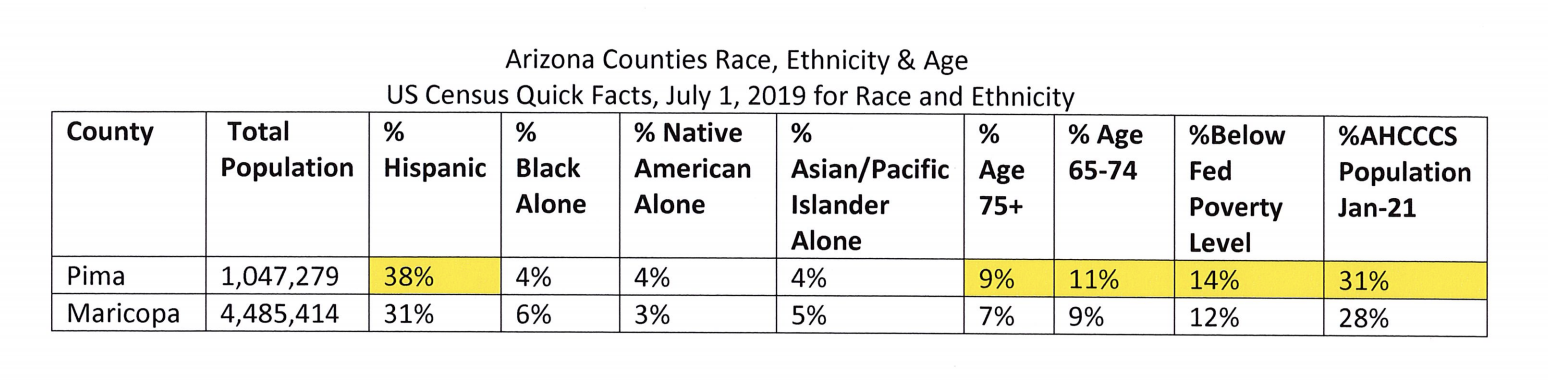
The county administrator compared racial groups, individuals over 65, those living below the federal poverty level and those in the state’s Medicaid program in Pima and Maricopa counties. These populations are expected to be most impacted by the pandemic.
Of Pima County’s population, 38% are Hispanic, 20% are above age 65, 14% live below the poverty level and 31% are enrolled in Arizona’s Medicaid program, according to the memo.
In Maricopa County, 31% are Hispanic, 16% are above 65, 12% live below the poverty level and 28% are enrolled in state Medicaid.
Despite struggling for the county’s fair share of vaccines, Huckelberry also announced the next group to be eligible for the vaccine, those over 65, could be able to register for vaccines by “early February.”
After working out the many kinks of the county’s registration site, Huckelberry now believes the website will be able to handle the surge of new registrants.
He said earlier complications were due to some filling out the forms wrong—such as putting a phone number in the field for email.
The county has put in error-checking and data-cleansing routines that were previously automated, according to Huckelberry’s memo.
The county asks those in the 75+ age group to receive their vaccinations at Banner North, Kino Stadium or Tucson Medical Center. Teachers should go through the University of Arizona and protective service workers should register at the Tucson Convention Center.
Progress at county PODs
The county has five regional PODs, or points of distribution, with the capacity to vaccinate hundreds of residents every day. According to Huckelberry’s memo, they could administer even more shots if given an increased vaccine supply.
As of Jan. 29, Tucson Medical Center has delivered 39,868 doses since opening for healthcare workers in mid-December, according to the memo. The center has vaccinated an average of 1,000 people every day it’s been open for vaccinations.
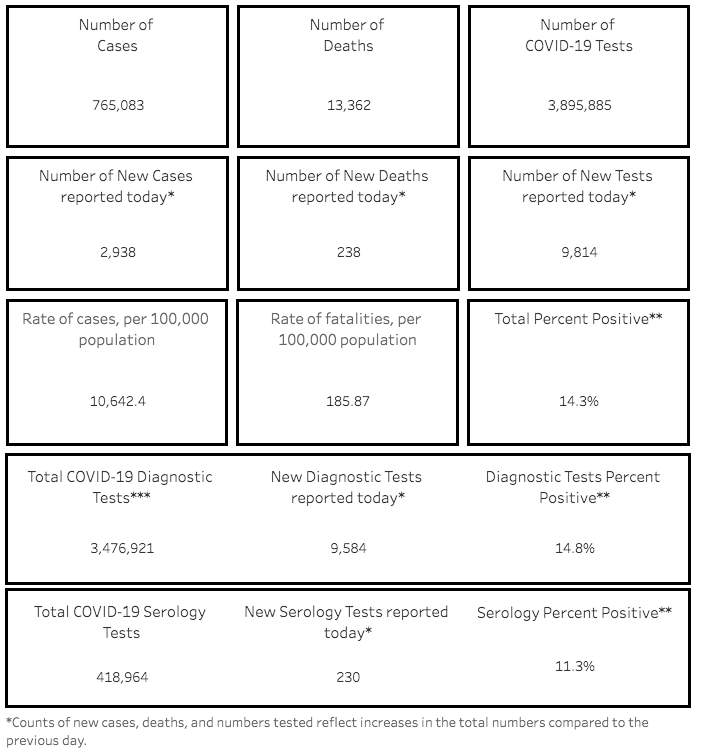
With fewer than 3,000 new cases reported today, the total number of Arizona’s confirmed novel coronavirus cases surpassed 765,000 as of Tuesday, Feb. 2, according to the Arizona Department of Health Services.

Pima County, which reported 504 new cases today, has seen 102,320 of the state’s 765,083 confirmed cases.
The death toll jumped by 238 today, bringing the total number of Arizonans who have died after contracting COVID-19 to 13,362. Pima County reported 55 new deaths today, bringing the local total to 1,795 deaths, according to the Feb. 1 report.
The number of hospitalized COVID cases statewide has declined in recent weeks after peaking at 5,082 on Jan. 11 and yesterday dropped below the summer peak of 3,517, which was set on July 13, 2020. A total of 3,513 COVID patients were hospitalized in the state as of Feb. 1. The lowest number of hospitalized COVID patients was 468, set on Sept. 27, 2020.
A total of 1,486 people visited emergency rooms on Feb. 1 with COVID symptoms, down from the record high of 2,341 set on Tuesday, Dec. 29, 2020. That number had peaked during the summer wave at 2,008 on July 7, 2020; it hit a subsequent low of 653 on Sept. 28, 2020.
A total of 944 COVID-19 patients were in intensive care unit beds on Feb. 1, down from a peak of 1,183 set on Jan. 11. The summer’s record number of patients in ICU beds was 970, set on July 13, 2020. The subsequent low was 114 on Sept. 22, 2020.
How to get a vaccine shot
Those who currently qualify in Pima County’s 1B priority group of eligible vaccine recipients can register for a vaccine at www.pima.gov/covid19vaccineregistration or by calling 520-222-0119.
Cases on decline but AZ remains nation’s hottest spot
COVID-19 cases have decreased in Arizona for the second week in a row, but the state remains the nation’s highest for transmission of the virus.
CDC data shows Arizona’s average transmission rate is at 75 daily cases per 100,000 population. The state has held the first or second spot through most of January.
The week ending Jan. 24 showed an 18% decrease in coronavirus cases from the previous week prior, according to the latest report by Dr. Joe Gerald, a University of Arizona professor who creates weekly coronavirus epidemiology reports based on Arizona Department of Health Services data.
“This week saw another meaningful decline in COVID-19 cases which now clearly represents a sustained, real decrease in viral transmission,” Gerald wrote in this week’s report. “This decline is accompanied by reductions in hospital and ICU occupancy. Reductions in mortality should quickly follow. While this reprieve is welcomed, the absolute level of [coronavirus] transmission remains exceptionally high.”
The week ending Jan. 10 remains the state’s deadliest with 889 COVID-19 deaths recorded so far. Gerald predicts deaths will remain “exceptionally high” for the next four to six weeks.
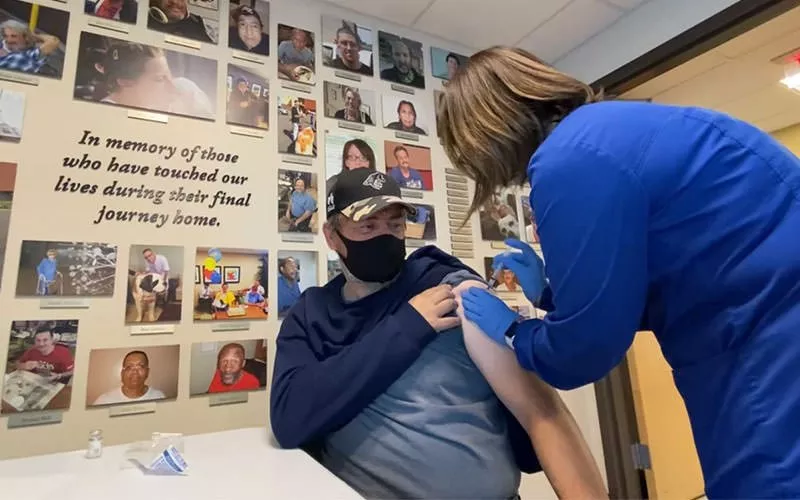
LOS ANGELES — Clayton Foster was living out of his car when he contracted COVID-19. The 67-year-old knew he faced higher risks of death or severe outcomes during the pandemic because of his chronic heart and bladder conditions, but for Foster and thousands of other homeless people across the Southwest, it’s been hard to protect against the virus.
“I try to keep my stuff clean and neat, but it is very hard to do,” Foster said.
Foster survived the illness with the aid of health services provided by Phoenix-based nonprofit Circle the City and became the first patient in the organization’s care to receive the COVID-19 vaccine back on Jan. 21.
Foster is part of a small segment of the homeless population in the Southwest who have begun getting the vaccine, but organizations serving the homeless elsewhere are facing challenges in inoculating the at-risk populations they serve.
In Los Angeles, providers are eagerly awaiting news of when vaccines will be available – and they face a steep challenge.
Recent data suggests there are more than 66,000 homeless people in Los Angeles County, and there were more than 7,400 homeless people in Maricopa County in a count from last January. Many of these individuals are at high risk of catching COVID-19 because of unsanitary living conditions.
With that many individuals to account for, it poses a major logistical question as to how to most effectively and efficiently vaccinate such a large, high-risk population.
In the past two weeks, Circle the City has received 400 doses of the Moderna vaccine to distribute among its four locations in Maricopa County, according to community liaison Marty Hames.
Monday, February 1, 2021
The University of Arizona has delivered 5,810 COVID-19 vaccines after opening as one of Pima County’s five points of distribution, according to the university's President Dr. Robert C. Robbins.
The POD is targeted toward educators and childcare providers, and Robbins estimates it can deliver 800 shots per day this week while it’s open Monday through Saturday.
The university has two vaccination sites: a drive-through location at the University of Arizona Mall and a walk-through clinic at the Ina E. Gittings building.
As cases could transmit even faster with the arrival of more contagious coronavirus variants from the UK, South Africa and Brazil in the U.S., Robbins said becoming vaccinated is even more crucial.
The UK variant has been identified in Arizona after at least three test samples came back positive for it, the Arizona Department of Health Services announced Friday.
“We're seeing problematic variants circulate, and the longer the pandemic continues, the more we will have new variants with clinically significant mutations,” he said. “The vaccine will help us reach herd immunity more quickly and have less illness and certainly less mortality in our population.”
While serving as a vaccination POD, the university will continue in stage one of its reentry plan with in-person instruction for essential courses only at least through the week of Feb. 8, Robbins said. Stage two of the reentry plan involves up to 50 students attending classes in person.
The return to more in-person instruction is based on data tracking the spread of COVID-19 across the state.
While COVID-19 cases in Arizona have decreased for the second week in a row, Robbins emphasized the state still remains number one for transmissibility in the nation.
While the seven-day rolling average for COVID-19 cases is at 45 per 100,000 of the population nationwide, Arizona is experiencing 75 cases per 100,000 people, while Pima County is at 66 cases per 100,000, Robbins shared.
Friday, January 29, 2021
PHOENIX – Anthony Gilich remembers March 16, 2020, the day when the National Junior College Athletic Association announced it was canceling the remainder of the spring sports seasons because of COVID-19.
The Central Arizona College baseball coach, now in his seventh year, had to tell his players something he never thought he would have to say – their season was over.
“It was one of the worst moments I’ve probably had as a coach to be honest with you,” Gilich said. “There is no way to sugarcoat (it).”
Yavapai baseball coach Ryan Cougill also remembers that day vividly.
“It was one of the worst things I’ve had to do,” Cougill said. “It was made worse because I didn’t get to do it in person.”
Before the pandemic cut its season short, Central Arizona looked to repeat as NJCAA Division I World Series champions from 2019, while Yavapai hoped to build on a 22-3 start.
Over 10 months have passed and with less than a week until the beginning of their spring seasons, two of the best Arizona junior college baseball programs are gearing up for a unique season under the COVID-19 umbrella.
Central Arizona and Yavapai,two talented ball clubs playing under the Arizona Community College Athletic Conference (ACCAC), both have been ranked in the Top 25 in numerous preseason polls, including Perfect Game and Collegiate Baseball.
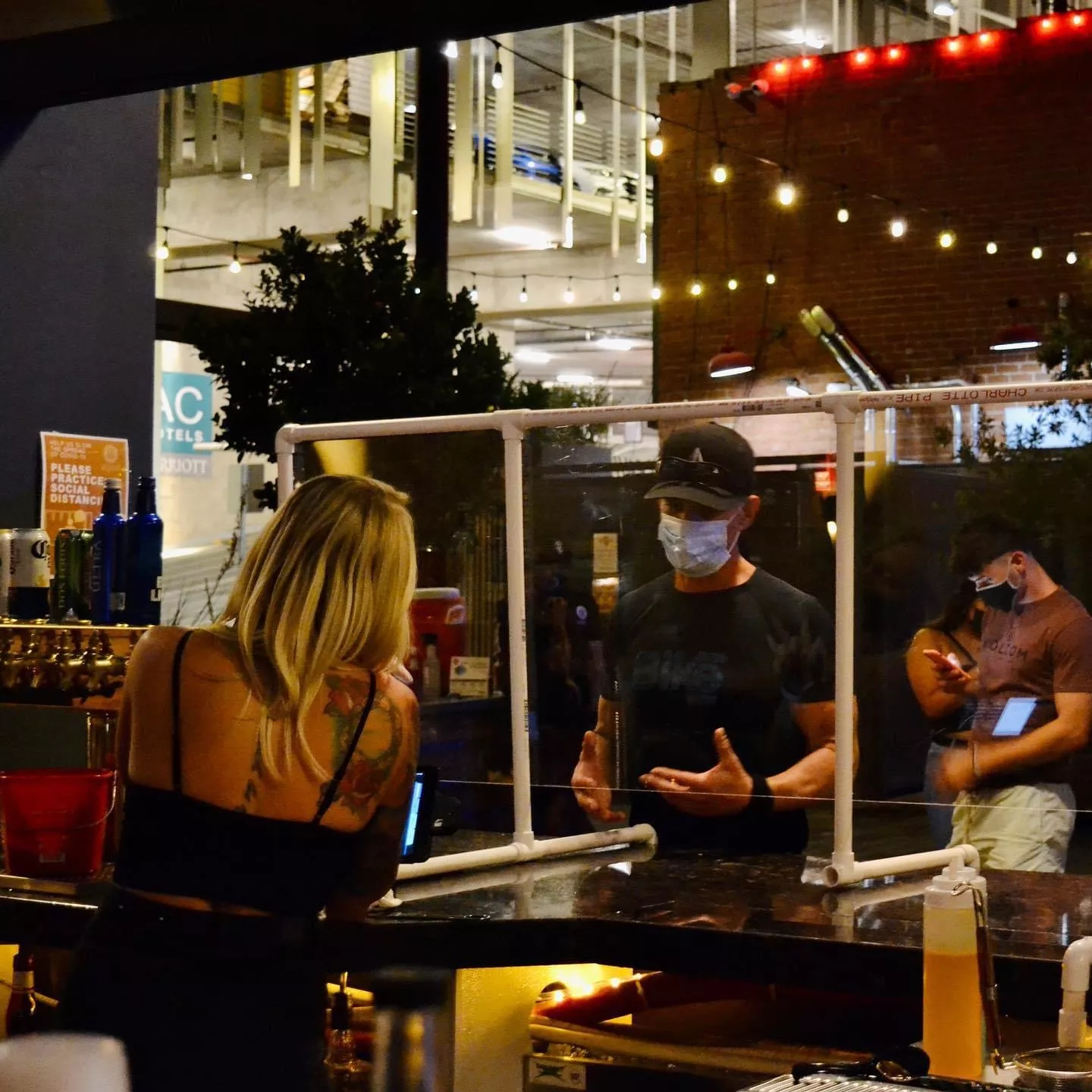
A judge has rejected Pima County's efforts to reinstate its mandatory curfew that was temporarily halted after it was challenged by local bars.
A group of Tucson bars sued the county for the harm they faced from the 10 p.m. to 5 a.m. curfew and was granted a preliminary injunction on Jan. 19 preventing the county from enforcing it.
Owners of Cobra Arcade Bar, HighWire Lounge and The Maverick filed a joint lawsuit on Jan. 5 contending the county overextended their legal authority to mandate a curfew.
The owner of The Maverick, Grant Krueger, included other Tucson restaurants he owns in the lawsuit: Union Public House, Reforma Modern Mexican and Proof Artisanal Pizza & Pasta.
On Jan. 22, the county responded with a motion that would allow them to continue the curfew, but Pima County Superior Court Judge Kellie Johnson denied it on Wednesday.“Defendant argues Plaintiffs’ harms are lessened by the ability to sell food and beverage for offsite consumption even if the curfew is enforced, and their decision not to do so when the curfew was in effect was voluntary. The County also argues its ability to respond to the emergency created by the pandemic is substantially limited if the stay is not granted,” Johnson wrote in the ruling. “The Court considered these arguments in its ruling on the preliminary injunction, and found Plaintiffs demonstrated irreparable harm, and that the balance of hardship tipped in Plaintiffs’ favor.”
The court ordered the preliminary injunction on the grounds the curfew is not “statutorily authorized,” the plaintiffs demonstrated the harm it causes them and it violates Gov. Doug Ducey’s executive order.
The governor’s May 12 executive order states: “...no county, city or town may make or issue any order, rule or regulation that conflicts with or is in addition to the policy, directives or intent of this Executive Order, including but not limited to any order restricting persons from leaving their home due to the COVID-19 public health emergency.”
The curfew was originally set to end when the county reached a rate of 100 COVID-19 cases per 100,000 people. Its current rate is 9,598 cases per 100,000, according to Arizona Department of Health Services data.
The curfew will be halted until a resolution of the case. A trial date has yet to be set.
In a matter of days, Pima County is on track to pass the paradoxical intersection of administering 100,000 COVID-19 vaccines after surpassing 100,000 coronavirus cases today.
On Thursday, the county administered 94,370 doses and reported 100,272 coronavirus cases Friday, according to Arizona Department of Health Services data.
“Our vaccination plan was really designed to increase early impact through accelerated immunization,” said Dr. Theresa Cullen, the county’s public health director. “The good news is I think we are starting to see that acceleration, and hopefully, we will soon start to see the impact of that on our community in terms of morbidity and mortality.”
Those 75 and older are eligible for vaccinations, as are educators, childcare providers and protective service workers—a group Cullen estimates to be around 150,000.
According to the public health director, the county is administering about 35,000 doses a week, which puts them on track for 140,000 vaccines by the second week of February.
With the Pfizer and Moderna vaccines needing second doses for full immunization, Cullen said the 1B priority group in Pima County’s vaccine rollout might not be done so soon.
“One would think in four weeks we'd be done, right? Because not everybody's going to get the vaccine. Remember, people are getting two vaccines. So once we throw that second vaccine in there, the numbers become a little extended in terms of how long it takes,” she said.
The next eligible group will be the 65 and older population, which Cullen estimates is a group of more than 200,000. Although the current priority group still needs to receive second doses, the 65 and over crowd could be eligible sooner than expected.
“The question everybody wants is when are we going to flip the switch? I would reassure you that we're in the process of doing some calculations, and some of it is related to that second shot,” Cullen said. “But it'll definitely be sometime in February, maybe the end of February. We thought maybe the middle of March—I think it will be earlier if our vaccine distribution holds.”

With 5,028 new cases reported today, the total number of Arizona’s confirmed novel coronavirus cases surpassed closed in on 750,000 as of Friday, Jan. 29, according to the Arizona Department of Health Services.

Pima County, which reported 698 new cases today, clearing the six-figure threshold, having seen 100,272 of the state’s 748,260 confirmed cases.
A total of 13,022 Arizonans have died after contracting COVID-19, including 1,736 deaths in Pima County, according to the Jan. 29 report.
The number of hospitalized COVID cases statewide has declined in recent weeks after peaking at 5,082 on Jan. 11 but remains above the peak levels of the summer’s first wave. ADHS reported that as of Jan. 28, 3,970 COVID patients were hospitalized in the state. The summer peak of 3,517 hospitalized COVID patients was set on July 13; that number hit a subsequent low of 468 on Sept. 27.
A total of 1,723 people visited emergency rooms on Jan. 28 with COVID symptoms, down from the record high of 2,341 set on Tuesday, Dec. 29, 2020. That number had peaked during the summer wave at 2,008 on July 7; it hit a subsequent low of 653 on Sept. 28.
A total of 1,002 COVID-19 patients were in intensive care unit beds on Jan. 28, down from a peak of 1,183 set on Jan. 11. The summer’s record number of patients in ICU beds was 970, set on July 13. The subsequent low was 114 on Sept. 22.
Despite last week's announcement that COVID-19 cases had decreased and that some elective surgeries would resume, Arizona’s largest hospital system is still caring for more patients than it did during the summer surge.
“Patient care in our hospitals has not yet returned to a state that I would define as usual and customary, and I would caution you against celebrating too early as we slowly work our way out of this difficult surge,” said Banner Health’s Chief Clinical Officer Dr. Marjorie Bessel said at a Wednesday press conference.
Banner is using thousands of out-of-state healthcare workers while upskilling others to help in its ICUs, Bessel said.
The hospital’s forecasting predicts it will take two to three more months for Arizona to fully recover from the winter surge in cases with many more weeks of high numbers of hospitalizations.
Bessel said Banner hospitals frequently monitor the University of Washington’s Institute for Health Metrics and Evaluation tool to grasp likely consequences of COVID-19 in the future.
Estimates predict Arizona will reach 18,500 deaths by May if it continues its current mitigation policies against the virus. If the state eases current mitigations, the death total could reach 22,200 by May, Bessel shared.
Thursday, January 28, 2021

As the spread of COVID-19 forced social distancing policies and widespread business closures, many have lost their jobs since the virus reached Arizona in January 2020.
December saw the smallest gain in employment since recovery began in May, with only 900 jobs added across the state, according to the latest data analyzed by George Hammond, director of UA’s Eller College of Management Economic and Business Research Center.
Weekly claims for unemployment insurance in the state peaked on April 4 at 132,428. The latest data from Jan. 23 shows 18,090 unemployment claims, according to data from the Economic and Business Research Center.
Arizona’s unemployment rate dropped from 8% in November to 7.5% in December, but Hammond says “the state rate has been exceptionally volatile this year.”
“Overall, the state rate can be safely said to have fallen from its April peak, but it is not at all clear by how much,” he wrote in the report.
Employment in Arizona dropped by 150,700 since February 2020, for a total loss of 4.4%, according to the Bureau of Labor Statistics’ household survey.
The survey showed 66,600 jobs in Arizona were lost from 2019 to 2020 for a total loss of 2.3%. In Tucson, employment dropped by 2.9% with 11,300 jobs lost.
Hammond said if Arizona can sustain the average job growth rate it's held since June at about 11,000 per month, it will be back to the February job peak by September. If job growth returns to pre-pandemic levels, however, the state might not reach that peak again until March 2022.
While trade, transportation and utility jobs grew 19.1% above their February level, jobs in leisure and hospitality declined 46,6%, accounting for over half of jobs lost since February, Hammond reports.
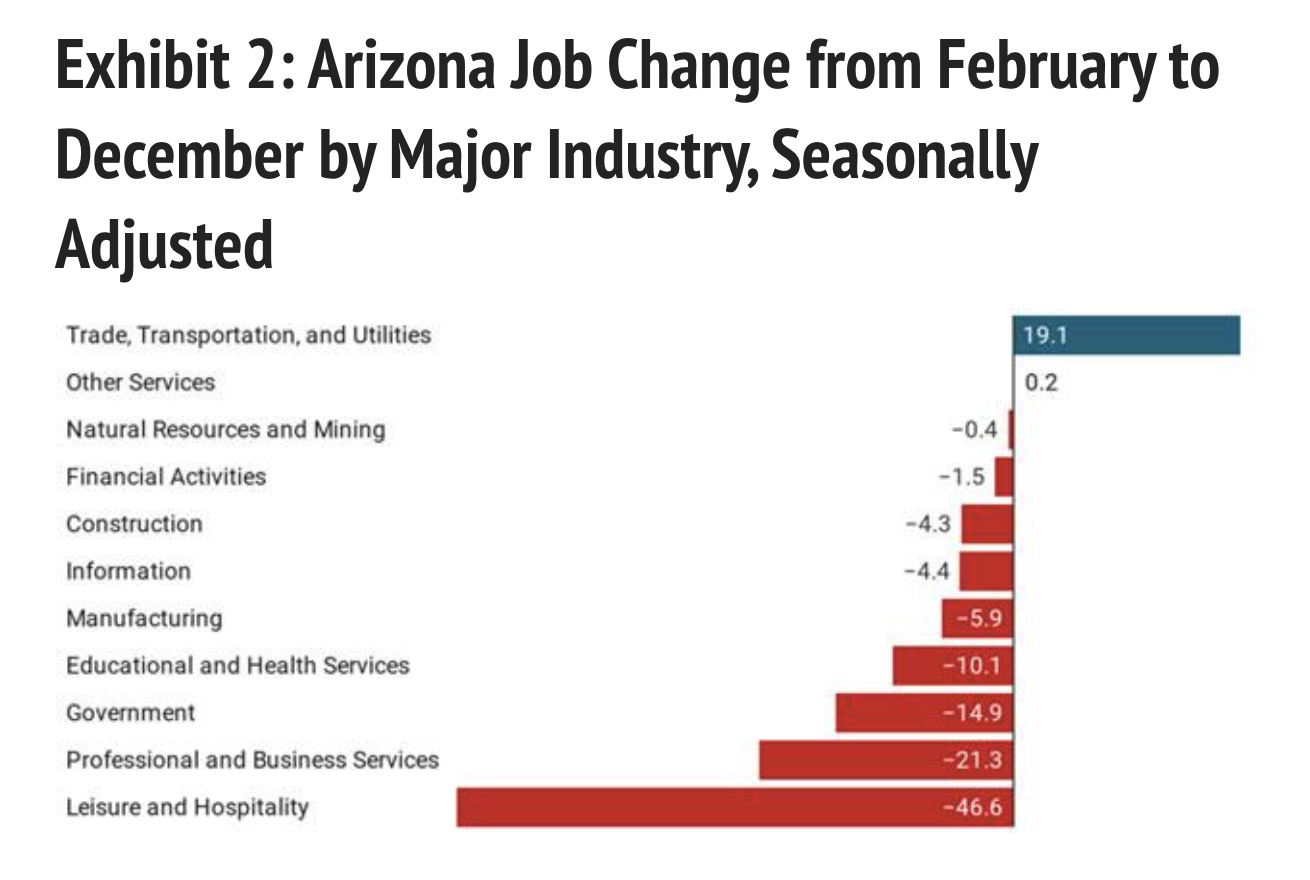
Flagstaff was the hardest hit since February followed by Yuma, Lake Havasu City-Kingman, Tucson, Phoenix and Sierra Vista-Douglas.

