

Monday, January 25, 2021
Friday, January 22, 2021
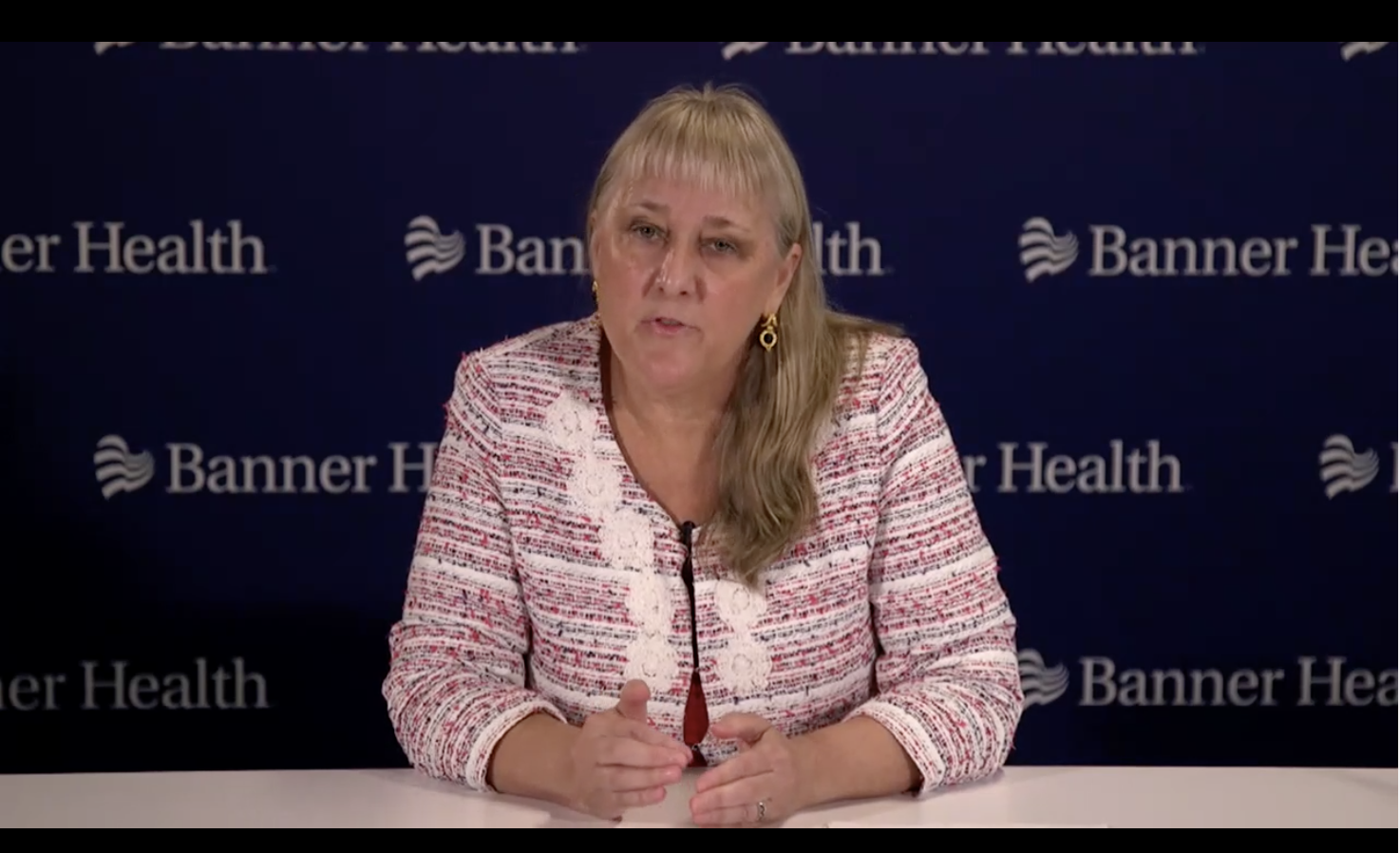
Banner’s top clinical leader began a press conference Friday with a message Arizonans haven’t heard in a long time.
“Positive COVID-19 cases are on the decline nationally and locally here in Arizona,” said Dr. Marjorie Bessel, the chief clinical officer of the state’s largest hospital system. “The positivity rate in Arizona, though still very high, has declined slightly from its peak the last week of December and COVID hospitalizations have been going down since Jan. 11.”
However, she said it's not time to let up on coronavirus mitigation efforts.
Arizona holds the country’s highest transmission rate at 96 cases per 100,000 population, according to CDC data. She also said COVID-19 patients account for 62% of the state’s hospitalizations.
“While we are pleased to see these numbers trending down, we are still experiencing uncontrolled spread of COVID-19 in Arizona,” she said. “The state continues to lead the U.S. with the highest rate of COVID-19 infection in the country.”
On Friday, Arizona passed the grim milestone of 12,000 COVID-19 deaths.
“Knowing that we have lost 12,000 Arizonans to COVID-19 weighs on our hearts and minds each and every day,” Bessel said. “My thoughts are with all those who have lost loved ones to COVID. We are going to battle this virus every day in our hospitals and we are committed to saving as many lives as we can.”
According to Bessel, bouncing back from the ongoing surge in cases will take much longer than it did during the summer surge, and she estimates the state won’t reach pre-surge hospitalization levels for another 10 or 11 weeks.
State hospitalizations are 700% higher than they were on Nov. 1, while the number of patients on ventilators has increased by 1,000%, Bessel said.
Banner hospitals will resume some elective surgeries
Due to the slight decrease in COVID-19 cases and hospitalizations, Bessel announced Banner will resume some elective surgeries on Monday.
While some surgeries will continue to be delayed based on capacity, outpatient surgeries and procedures that require no more than a one-night stay and no care in the ICU will resume.
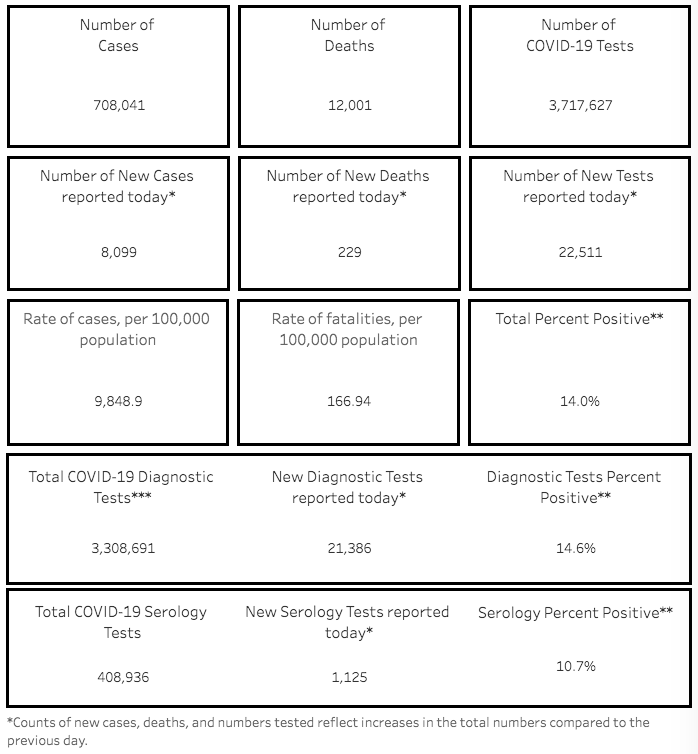
With more than 8,000 new cases reported today, the total number of Arizona’s confirmed novel coronavirus cases surpassed 708,000 as of Friday, Jan 22, according to the Arizona Department of Health Services.

Pima County, which reported 858 new cases today, has seen 94,697 of the state’s 708,041 confirmed cases.
A total of 12,001 Arizonans have died after contracting COVID-19, including 1,571 deaths in Pima County, according to the Jan. 22 report.
The number of hospitalized COVID cases statewide has declined in the last week but still remains far above the peak levels of the summer’s first wave. ADHS reported that as of Jan. 21, 4,495 COVID patients were hospitalized in the state. The summer peak of 3,517 hospitalized COVID patients was set on July 13; that number hit a subsequent low of 468 on Sept. 27, or about one-tenth of the current count.
A total of 2,007 people visited emergency rooms on Jan. 21 with COVID symptoms, down from the record high of 2,341 set on Tuesday, Dec. 29, 2020. That number had previously peaked at 2,008 on July 7; it hit a subsequent low of 653 on Sept. 28.
A total of 1,054 COVID-19 patients were in intensive care unit beds on Jan. 20. The summer’s record number of patients in ICU beds was 970, set on July 13. The subsequent low was 114 on Sept. 22.
Most school districts delaying return to the classroom; Marana will resume hybrid instruction Monday
As the spread of COVID-19 in Pima County continues to reach dangerous levels, most public school districts in the Tucson area are pushing back previously set dates to resume in-person hybrid instruction.
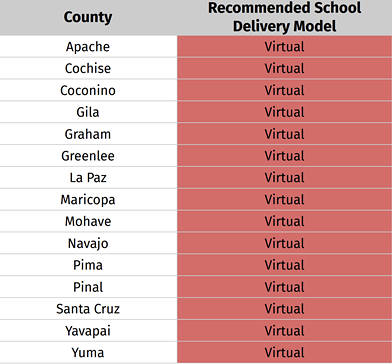
The Arizona Department of Health Services is recommending all counties commit to virtual learning for students with online classes and some onsite support services.
ADHS made its recommendation based on three key benchmarks: cases per 100,000 individuals, percent positivity and hospital visits for COVID-like illness. All benchmarks are currently in a state of substantial transmission throughout the state.
In Pima County, ADHS data shows 8,983 COVID-19 cases per 100,000 of the population and a 12.3% positivity rate of the virus as of Jan. 21. The most recent data available on the state health department’s school benchmarks website shows hospital visits for COVID-like illnesses at 14.8% as of Jan. 3.
While most districts remain in remote learning models, Catalina Foothills has remained open for in-person learning since Oct. 26. The Marana Unified School District anticipates returning to hybrid instruction on Monday, Jan. 25.
Thursday, January 21, 2021
As the spread of COVID-19 in Pima County continues to reach dangerous levels, most public school districts in the Tucson area are pushing back previously set dates to resume in-person hybrid instruction.
The Arizona Department of Health Services is recommending all counties commit to virtual learning for students with online classes and some onsite support services.
ADHS made its recommendation based on three key benchmarks: cases per 100,000 individuals, percent positivity and hospital visits for COVID-like illness. All benchmarks are currently in a state of substantial transmission throughout the state.
In Pima County, ADHS data shows 8,983 COVID-19 cases per 100,000 of the population and a 12.3% positivity rate of the virus as of Jan. 21. The most recent data available on the state health department’s school benchmarks website shows hospital visits for COVID-like illnesses at 14.8% as of Jan. 3.
While most districts remain in remote learning models, Catalina Foothills has remained open for in-person learning since Oct. 26. The Marana Unified School District anticipates returning to hybrid instruction on Monday, Jan. 25.
Amphitheater
Originally set to return to a hybrid model on Jan. 19, Amphitheater Superintendent Todd Jaeger announced in a letter to families on Jan. 4 that remote-only learning would continue until a Feb. 1.
After the county health department said it would not be able to provide guidance until it receives more data, Jaeger said he plans to announce an official return date decision Friday.
As Arizona health officials scramble to speed up rollout of the life-saving COVID-19 vaccine, the deadly virus is still spreading rapidly. Over 12,500 Arizonans have died, and we are seeing more than 9,000 new infections daily. The outbreak in Arizona is the worst in the nation, with one in every 147 residents being infected as of 1/21/2021. The clock is ticking and the time for action is now.
Even under the best circumstances, it will take a year or more for a vaccine to be fully effective. In the meantime, we can save lives with aggressive public health measures. No arena is more important than Arizona workplaces, a dangerous source of COVID hotspots which then spread to our neighborhoods and communities.
We need enforceable emergency workplace standards and worker safety committees to monitor and implement worksite COVID protection plans. Workplaces can play a significant role in turning the economy around to create a safe environment for everyone. Unfortunately, many workplaces remain unsafe, endangering frontline workers and the public they serve.
Our government offices have been impacted by this disease: A top county health official, unemployment staffers and county employees have contracted COVID-19 in their workplaces. Healthcare workers and their support staff are stretched thin and exhausted, grocery, retail and postal workers are exposed to risk of infection on a daily basis. All of us rely on these workers, who don’t have the option to stay at home, and we all need to be involved in demanding that employers and the government do more to keep them safe.
If we want to flatten the curve of new virus cases, employers must take every step possible to implement safety controls to reduce contact with the public and co-workers. Companies like Amazon, with a deplorable record of putting workers in unsafe environments, must involve workers in safety plans, instead of fighting worker efforts to have a voice in the workplace. Every job can be protected, if management develops a plan with input from workers, who know their own jobs and can come up with solutions to reduce exposure.
Innovative approaches to reducing contact between workers and the public include remote working whenever possible, barriers for cashiers, staggering service hours, and reducing the number of shoppers to allow for social distancing. In-person work requires detailed planning and implementation of COVID protection programs. These controls have been adopted in some workplaces, frequently only because workers took the initiative to protest unsafe conditions.
Gov. Ducey recently chose to protect himself from the risk of infection by delivering his state of the state address from inside his own office, instead of in front of the legislature. But instead of protecting frontline workers who can’t work in isolation, his backwards response has focused on protecting business at the expense of workers and community health. This will not preserve jobs and actually makes it more difficult to rebound to a healthy business climate.
Fourteen states and local communities around the country have enacted new protections to assist both workers and employers in implementing COVID protection programs. The Arizona Department of Occupational Safety and Health [ADOSH] has the legal authority to enforce compliance if there is a new standard. We can’t wait any longer to take positive steps to make workplaces safe for everyone. Workers have been the engine driving our efforts to control the virus and deserve to be protected. Protecting them helps protect our communities.
Mr. Valencia is chair of Tucson Jobs with Justice. Mr. Dooley, a certified industrial hygienist (CIH), is safety and health senior project coordinator for the National Council of Occupational Safety and Health (National COSH). Shannon Foley is with IATSE Local Union 415
Arizona COSH is a new worker safety advocacy organization to promote safe jobs for all workers in Arizona. Visit nationalcosh.org for more information or contact [email protected]
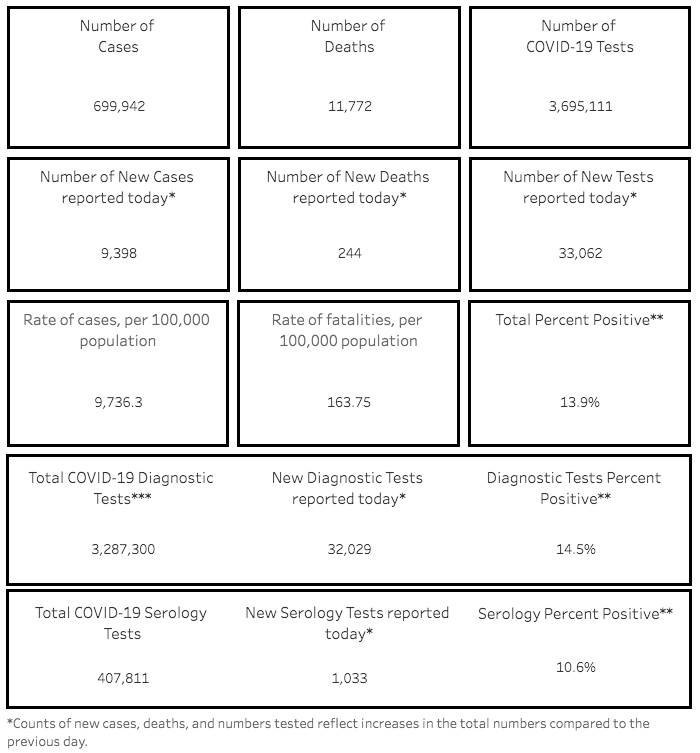
With more than 9,300 new cases reported today, the total number of Arizona’s confirmed novel coronavirus cases nearly hit 700,000 as of Thursday, Jan 21, according to the Arizona Department of Health Services.

Pima County, which reported 1,320 new cases today, has seen 93,839 of the state’s 699,942 confirmed cases.
A total of 11,772 Arizonans have died after contracting COVID-19, including 1,531 deaths in Pima County, according to the Jan. 21 report.
The number of hospitalized COVID cases statewide has dropped slightly in the last week but still remains far above the peak levels of the summer’s first wave. ADHS reported that as of Jan. 20, 4,580 COVID patients were hospitalized in the state. The summer peak of 3,517 hospitalized COVID patients was set on July 13; that number hit a subsequent low of 468 on Sept. 27, or about one-tenth of the current count.
A total of 2,046 people visited emergency rooms on Jan. 20 with COVID symptoms, down from the record high of 2,341 set on Tuesday, Dec. 29, 2020. That number had previously peaked at 2,008 on July 7; it hit a subsequent low of 653 on Sept. 28.
A total of 1,058 COVID-19 patients were in intensive care unit beds on Jan. 20. The summer’s record number of patients in ICU beds was 970, set on July 13. The subsequent low was 114 on Sept. 22.
Bars win round in court against Pima County curfew
Pima County’s mandatory 10 p.m. to 5 a.m. curfew has been temporarily halted after a group of Tucson bars were granted a preliminary injunction barring the county from enforcing the curfew.
Owners of Cobra Arcade Bar, HighWire Lounge and The Maverick filed a joint lawsuit on Jan. 5 contending the county overextended their legal authority to mandate a curfew.
Wednesday, January 20, 2021
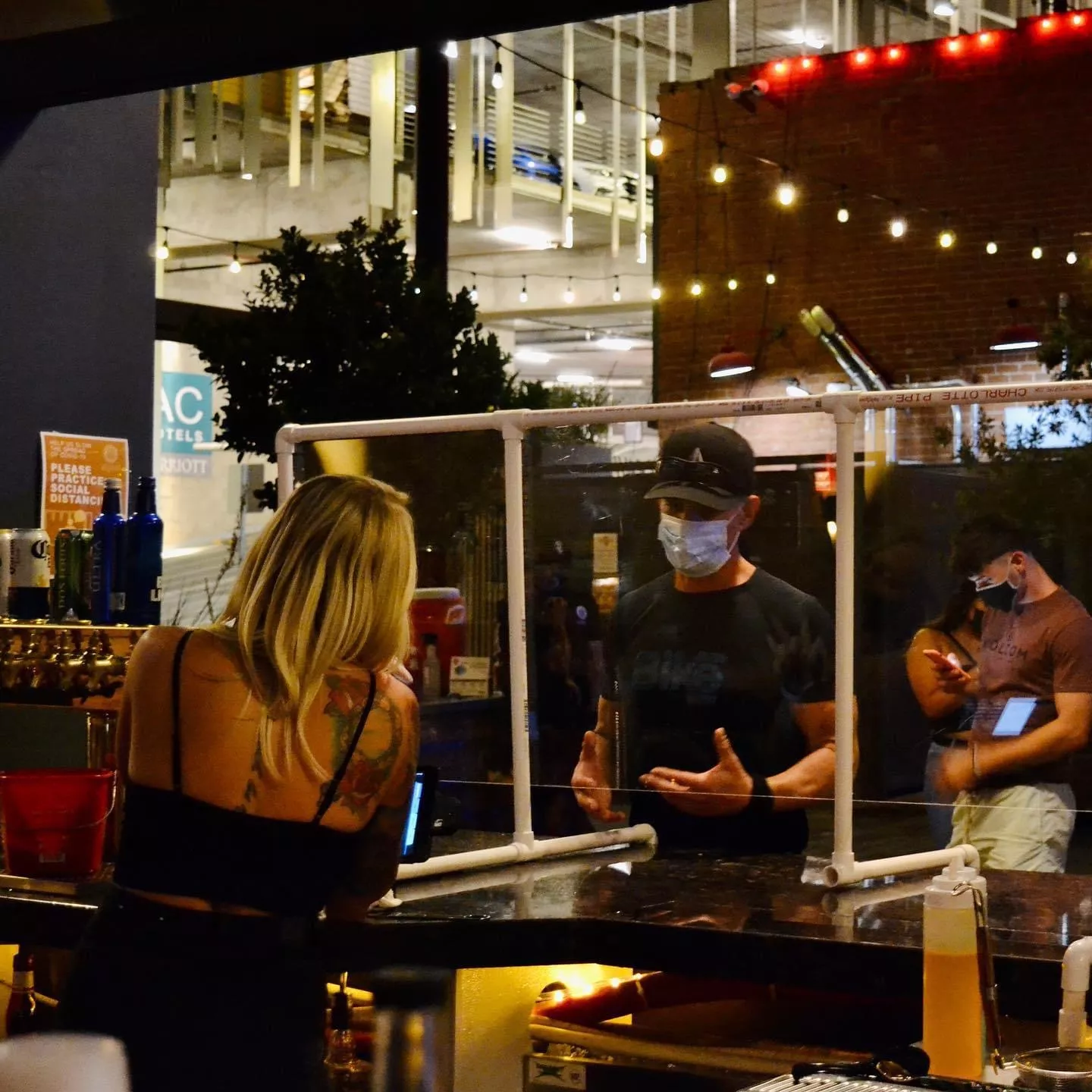
Pima County’s mandatory 10 p.m. to 5 a.m. curfew has been temporarily halted after a group of Tucson bars were granted a preliminary injunction barring the county from enforcing the curfew.
Owners of Cobra Arcade Bar, HighWire Lounge and The Maverick filed a joint lawsuit on Jan. 5 contending the county overextended their legal authority to mandate a curfew.
The owner of The Maverick, Grant Krueger, included other Tucson restaurants he owns in the lawsuit: Union Public House, Reforma Modern Mexican and Proof Artisanal Pizza & Pasta.
After considering the evidence at a Jan. 15 hearing, Pima County Superior Court Judge Kellie Johnson ordered Pima County to cease enforcing the curfew in a ruling filed Jan. 19.
“The Court finds the hardships imposed on the Plaintiffs by the curfew are severe. Additionally, the hardships are arguably unfair because the Court finds Plaintiffs can adhere to the ADHS required safety measures both before and after 10 p.m.,” Johnson wrote in the ruling, echoing the defendant’s arguments. “Moreover, the virus is spread just as easily late at night as it is during the day. Bar patrons can drink excessively during the day just as easily as they can at night.”
While the judge acknowledged the challenges Pima County has managing the COVID-19 pandemic, she held the parties’ legal arguments tipped in the restaurant owners’ favor.
“The County could not demonstrate in testimony or other evidence that more cases are contracted after 10 p.m. Nor has it demonstrated specifically that its current hardships are worsened by people and businesses engaging in conduct after 10 p.m.,” Johnson wrote of the county’s defense. “To the contrary, the burden the County faces in managing this pandemic will continue until the pandemic is under control. The County has simply failed to demonstrate how the curfew not being enforced would cause it additional hardship.”
Pima County County Chief Medical Officer Dr. Francisco Garcia said the 10 p.m. curfew was based on evidence gathered when the county sent 46 inspectors to observe nearly 400 establishments for compliance to the curfew and found 15% of them didn’t comply.
“We have to draw a line in the sand in terms of when you would ask a business like a bar or a restaurant to stop operating. That line in the sand needs to not be entirely arbitrary,” Garcia said. “We know that, based on the surveillance that our county inspection team did, that bars that were operating after 10 o'clock, that there was a substantial amount of non-compliance with the kinds of measures that we've recommended all along. So yes, 10 may seem like a rather odd and very specific time to select, but this is based on actually our observations of what people are doing in those kinds of establishments.”
Grant Krueger, a plaintiff in the case, said he plans to keep both The Maverick and Union Public House open until 2 a.m. beginning tonight.
“We feel that we've been doing it safely since before 10 p.m. and we can do it safely as well after 10 p.m.,” Krueger said. “We've made a lot of really, really good people really happy today by calling back all kinds of staff members who have had to have their hours reduced, limited or even completely eliminated.”
Chuckie Duff, a plaintiff and owner of Cobra Arcade Bar, said he plans on keeping the bar open until midnight tonight and returning to normal business hours of 4 p.m. to 2 a.m. this weekend.
“We're very happy with the ruling and we're glad that we can go back to our normal business hours and continue to follow the rules as we were before and keep everybody safe,” Duff said. “If we have more hours we can be open, it's definitely more hours for our existing employees and hopefully more employees that we'll be bringing back.”
Judge Johnson wrote she’s granting the injunction on the grounds that the curfew is not “statutorily authorized,” the plaintiffs demonstrated the harm it causes them and it violates Gov. Doug Ducey’s executive order.
The governor’s May 12 executive order states: “...no county, city or town may make or issue any order, rule or regulation that conflicts with or is in addition to the policy, directives or intent of this Executive Order, including but not limited to any order restricting persons from leaving their home due to the COVID-19 public health emergency.”

The Pima County Board of Supervisors authorized the county attorney to appeal the ruling, according to a press release.
“It is the County’s firm belief that state law empowers the Health Department to take specific actions such as the curfew to mitigate and halt the spread of infectious diseases,” the release said. “In the meantime, Pima County Chief Medical Officer Dr. Francisco Garcia urges all businesses to continue to voluntarily adhere to the curfew and limit gatherings.”
The curfew was originally set to end when the county reached a rate of 100 COVID-19 cases per 100,000 people. Its current rate is 8,856 cases per 100,000, according to state data.
The curfew will be halted until the resolution of the case. A trial date has yet to be set.
This post has been updated to include comments from bar owners and county officials.

With more than 4,800 new cases reported today, the number of Arizona’s confirmed novel coronavirus cases topped 690,000 as of Wednesday, Jan 20, according to the Arizona Department of Health Services.
Pima County, which reported 779 new cases today, has seen 92,519 of the state’s 690,544 confirmed cases.
A total of 11,528 Arizonans have died after contracting COVID-19, including 1,495 deaths in Pima County, according to the Jan. 20 report.
The number of hospitalized COVID cases statewide has dropped slightly in the last week but still remains far above the peak levels of the summer’s first wave. ADHS reported that as of Jan. 19, 4,663 COVID patients were hospitalized in the state. The summer peak of 3,517 hospitalized COVID patients was set on July 13; that number hit a subsequent low of 468 on Sept. 27, or about one-tenth of the current count.
A total of 2,006 people visited emergency rooms on Jan. 19 with COVID symptoms, down from the record high of 2,341 set on Tuesday, Dec. 29, 2020. That number had previously peaked at 2,008 on July 7; it hit a subsequent low of 653 on Sept. 28.
A total of 1,050 COVID-19 patients were in intensive care unit beds on Jan. 19. The summer’s record number of patients in ICU beds was 970, set on July 13. The subsequent low was 114 on Sept. 22.
Vaccines now available at UA for teachers
The University of Arizona—one of six designated points of COVID-19 vaccine distribution in Pima County—began administering vaccines to qualifying individuals Tuesday, according to UA President Dr. Robert Robbins.
“[Pima County] asked us to be a point of delivery to vaccinate not just our 15,000 family members that are on the faculty and staff at the UofA, but also all childcare providers, all K-12 educators and staff and all Pima Community College faculty and staff,” Robbins said. “For the whole county of Pima, we’re the education POD.”
This week, 1,000 Phase 1B.1 educators will receive vaccines at the campus, according to a press release from the university.
UA will work with the county health department this week to “continue to refine” its delivery process, Robbins said, and it expects to deliver 396 vaccines to K-12 education workers Tuesday through Thursday.
Tuesday, January 19, 2021
The University of Arizona—one of six designated points of COVID-19 vaccine distribution in Pima County—began administering vaccines to qualifying individuals Tuesday, according to UA President Dr. Robert Robbins.
“[Pima County] asked us to be a point of delivery to vaccinate not just our 15,000 family members that are on the faculty and staff at the UofA, but also all childcare providers, all K-12 educators and staff and all Pima Community College faculty and staff,” Robbins said. “For the whole county of Pima, we’re the education POD.”
This week, 1,000 Phase 1B.1 educators will receive vaccines at the campus, according to a press release from the university.
UA will work with the county health department this week to “continue to refine” its delivery process, Robbins said, and it expects to deliver 396 vaccines to K-12 education workers Tuesday through Thursday.
UA will administer 84 doses to university employees Wednesday and Thursday, Robbins said. On Friday, the university expects to be “up and running” under the county’s regular scheduling process for those who register through the county.
On Friday, 500 childcare workers and K-12 teachers will receive vaccines at UA, he said.
Pima County prioritizes who receives the vaccine, and eligible recipients must register through the county to make an appointment.
Qualified 1B educators can register online at: https://webcms.pima.gov/cms/One.aspx?portalId=169&pageId=690372#School.
Qualifying individuals can register Monday through Friday, 8 a.m. to 5 p.m., by calling: 520-222-0119.
The University of Arizona’s POD dates and times this week:
- Tuesday, 11 a.m.-3 p.m. (132 K-12 teachers)
- Wednesday, 11 a.m.-3 p.m. (132 K-12 teachers, 42 UA educators)
- Thursday, 11 a.m.-3 p.m. (132 K-12 teachers, 42 UA educators)
- Friday, 11 a.m.-4 p.m. (last scheduled appointment 2:45 p.m.) (500 Phase 1B.1 K-12 teachers and educators in Pima County)
By April 1, Robbins hopes the university will have vaccinated 60,000 childcare providers, K-12 educators, Pima County Community College employees and UA’s staff of 15,000.
“If we could get to 1,000 a day, we could get 60,000 individuals vaccinated over the next two months,” Robbins said.
UA requiring on-campus students get tested twice a week
About 3,800 UA students returned to in-person classes Wednesday during Stage 1 of the university's reentry plan.
Robbins said Stage 1 will continue through the week of Jan. 25, but it’s possible the phase of limited in-person classes could run throughout the entire semester.
“We’ve gotta see the numbers come down before we can move to Stage 2, which would be up to 50 students in a classroom.”
In attempts to control the spread of COVID-19, on-campus dorm students will take COVID-19 tests twice a week with at least 48 hours between tests.
Students will take the new PCR saline gargle test developed by Michael Worobey, the head of UA’s department of ecology and evolutionary biology.
Those receiving the test have to swish and gargle 5 milliliters of saltwater three times, and spit the solution into a tube to be tested. At a press conference in December, Worobey said the test detects present coronavirus material and amplifies it to a traceable amount.
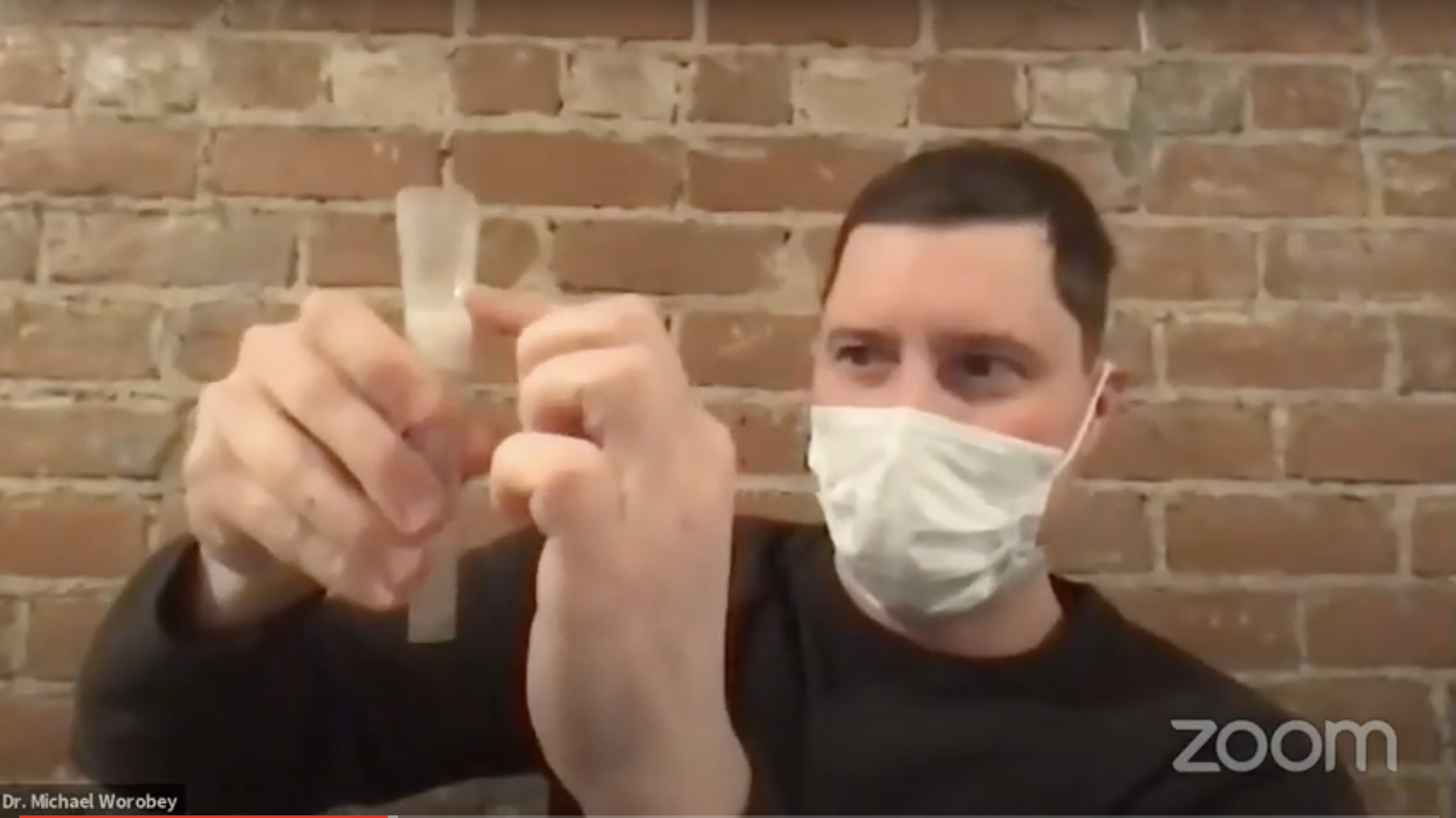
Worobey said he assessed the test's effectiveness by giving potentially infected persons both saline and nasal swab tests. He found the gargle swish test pulled coronavirus material out of about 30-35% more people than the nasal swab.
“I think this is going to become the new gold standard for how to test for this virus,” Worobey said.
Robbins said the swish gargle test will allow the university to conduct 3,000 COVID-19 tests a week. With the nasal swab, they could only conduct 1,000 tests a week.
COVID-19 on campus
From Jan. 9 through 18, UA administered 11,713 COVID-19 tests and found 194 positive cases for a positivity rating of 1.7%.
As of Jan. 15, 28 students were in isolation dorm beds with 568 beds still available, according to Robbins.
Although positive tests have dropped since last semester, Reentry Task Force Director Richard Carmona called the numbers “still unacceptably high.”
While some statewide COVID-19 statistics have appeared to improve recently, Carmona warned not to become complacent.
Carmona went over data showing the 14-day change of coronavirus cases, deaths and hospitalizations in Arizona. Cases declined 10%, deaths increased 119% and hospitalizations increased 8%.
“There’s a lot of data still coming in, and often, the data that we see on a daily basis isn’t reflective of what’s actually happening because it takes a while to get that data tabulated and put into the system,” Carmona said. “Although it looks like we’re doing a little bit better, we have more testing, we got some control, we’ve managed to get the university open relatively safely, our students are doing well—but we’re far from where we need to be. It’s still a long journey ahead of us.

The Fourth Avenue Merchants Association has canceled the 2021 Fourth Avenue Spring Street Fair citing the high number of COVID-19 cases in Pima County and abroad.
The merchant’s association made the announcement on Tuesday morning in a news release:
Without obtaining the proper permitting, we are unable to produce the 2021 Fourth Avenue Spring Street Fair. Our City officials along with our local Health Department are the guiding forces when it comes to issuing our permits. Each City is operating under Their own guidance and regulations. These regulations and standards may differ from other cities in the State. We appreciate and support the leadership and guidance of the City of Tucson and the Pima County Health Department.
The 2021 Fourth Avenue Winter Street Fair is still scheduled for Dec 10-12, according to the release.
This is the third Fourth Avenue Street Fair to be canceled due to the ongoing pandemic.

