

Monday, December 7, 2020
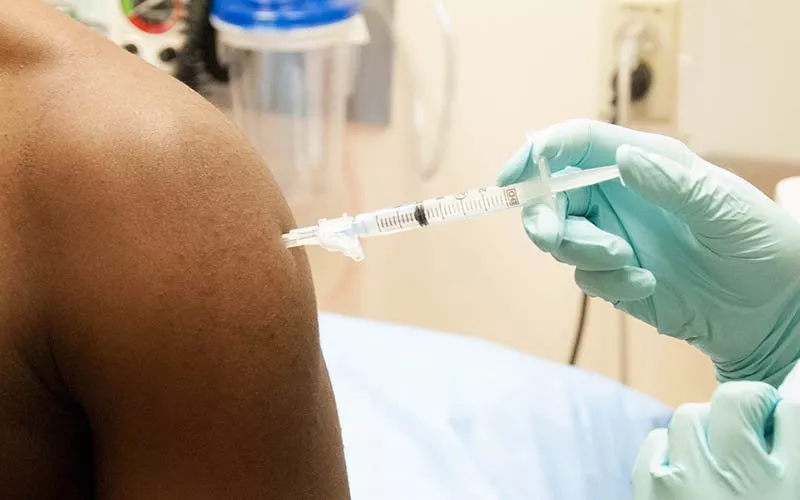
WASHINGTON – Arizona health officials said they expect to get the first of more than 380,000 doses of COVID-19 vaccine by Dec. 15 and will begin vaccinating health care workers and first responders shortly thereafter.
Arizona Department of Health Services Director Dr. Cara Christ made that announcement Friday, as the state submitted its plans for vaccine distribution to the Centers for Disease Control and Prevention for approval.
Under that plan, hundreds of approved providers could begin vaccinating Arizonans, with health care workers and long-term care residents first. Christ said priority groups should be vaccinated by the end of February, and that anyone in the state who wants the two-dose vaccination should have received it by late summer or early fall.
Christ called the vaccine a “light at the end of the tunnel” during a dark time for the state: Confirmed COVID-19 cases and deaths are surging in Arizona, with the health department reporting more than 11,000 new cases in the last two days alone. Overall cases in the state stood at 352,101 Friday, when COVID-19 related deaths reached 6,885.
It’s part of a national surge that has brought confirmed cases to just over 14 million, with 275,386 deaths as of Friday, according to the CDC.
In the face of the growing pandemic, the Trump administration in May kicked off Operation Warp Speed, with the goal of “delivering safe and effective vaccine doses to the American people beginning January 2021.”
That effort paid off late last month when two pharmaceutical companies, Pfizer and Moderna, submitted paperwork for final Food and Drug Administration approval of their versions of COVID-19 vaccines that are at least 94% effective. Pfizer’s version could be approved as soon as Dec. 10, with Moderna’s OK expected a week later.
Once approved, the drugs will go to the CDC, which will allocate it to the states for distribution every week. Under the complex distribution plan outlined Friday by Christ, the doses will go directly to the health providers who will deliver the vaccine, bypassing state and local health departments.
Arizona will be told each week how many doses to expect, and it will allot those by county, based on the percentage of county residents in a priority group. The counties will then tell the state how many doses to send, and where, and the state will relay that information to the CDC distributor.
“The CDC distributor will ship the vaccine directly to the providers that are approved to receive an allocation,” Christ said. “So, the state and local health departments will not receive that vaccine or serve as a middle man in the distribution chain.”
The CDC early on said first responders and health care workers should get priority for vaccination, followed by at-risk groups such as the elderly. Arizona’s plan mirrors those guidelines, with the first phase targeting three groups ahead of the general population.
Phase 1A includes health care personnel, frontline workers and long-term care residents and staff. Phase 1B covers essential workers such as teachers, police and emergency response staff, as well as utility, food and public transport workers, and state and local government employees.
Phase 1C is defined as people at high risk of contracting a severe case of COVID-19, including those 65 and older and adults in congregate settings, such as prisons. The general population is Phase 2.
There are currently 359 approved providers to administer the COVID-19 vaccine in Arizona, Christ said, with applications pending from more than 1,000. And providers said they are eager to get started.
“As soon as it gets approved, I believe we will have the vaccine in our hands very quickly,” said Dr. Janice Johnston, medical director and co-founder of Redirect Health, one of the approved providers.
It has several clinics in Arizona where it will store and administer the vaccine. Johnston said Redirect Health responded to the department’s call for providers, “went through their screening process, and were approved to be one of the providers once they do become available for the deep-freeze version of the vaccine.”
David Berg, chairman of the board and co-founder of Redirect Health, emphasized the need for coordination between clinics, counties and the state to make the distribution and administration of vaccines as seamless as possible.
“The state will give us guidance on who the groups are and what they would like us to do,” Berg said. “And I think it is important that everybody follows the state guidance so that we can do this is a very coordinated way.”
As more vaccine providers are approved in the state, they will be listed on the CDC’s Vaccine Finder once doses are available, according to an AZDHS spokesperson.
Christ said she expects “hundreds of millions of doses” to be available for the general public in March or April, with vaccinations complete several months thereafter.
Gov. Doug Ducey this week signed an executive order requiring insurance companies to cover the entire cost of COVID-19 vaccinations for all Arizonans.
“The vaccine should be free for anyone who needs it,” Ducey said Wednesday. “This is a global pandemic and the vaccine shouldn’t cost Arizonans a penny.”
Christ referenced that order Friday when she said the COVID-19 vaccine will be considered “in network” for all state-regulated insurance companies.
“Everyone who wants to get one, will get one,” she said.
Friday, December 4, 2020
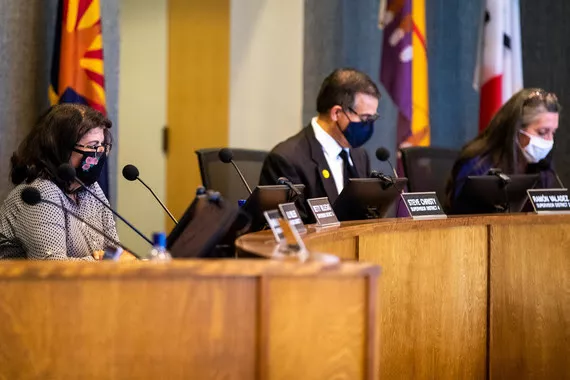
The Pima County Board of Supervisors approved six measures to combat the spread of coronavirus at an emergency special meeting today.
The board approved the following motions:
A revised mask mandate with a civil penalty for noncompliance; businesses now required to mandate masks for all customers.
Upon their second violation of noncompliance to safety protocols, businesses will be reprimanded by means of having their license revoked or operations suspended.
Event organizers planning gatherings of more than 50 persons are required to give the county a minimum $1,000 deposit per each event (with the deposit rising depending on the number of people expected in attendance). The money will be returned if there is sufficient compliance to safety protocol.
The county’s voluntary curfew will remain in place as it examines Tucson’s curfew enforcement.
A revised public health advisory with recommendations for the public to avoid contracting COVID-19.
A motion to review Pima County’s vaccination strategy draft
The decisions come as within the first three days of December, Pima County saw 2,023 COVID-19 infections, surpassing the county’s total infection count for March, April and May combined, according to a memorandum from County Administrator Chuck Huckelberry. Today, the county reported 816 cases.
Hospitals are facing record numbers of COVID-19 patients and on Dec. 3, only one ICU bed was available to the public, the memo says.
On all the motions except approving a vaccination strategy, the board voted 3-2 with GOP Supervisors Ally Miller and Steve Christy opposing. Only Miller opposed the vote to review the vaccination strategy.
Mask wearing to be enforced
The board previously adopted a mask mandate in June with no penalties for noncompliance. Now, those who refuse to wear masks in public areas will be subject to a civil penalty of $50 per infraction. These penalties will be enforced by law enforcement agencies, but it has yet to be determined the manner in which they will do so.
Businesses are also now required to mandate masks for all those who enter their premises. Before, the county’s resolution said businesses “may refuse” those not wearing masks, but now, they must.
Stricter enforcement for businesses who defy guidelines
Businesses that are reported as not following the imposed safety guidelines will face a civil infraction that carries a penalty of $500 and may lose their license or operating permits upon their second reported offense.
PHOENIX – Suns fans are certainly excited for the arrival of Chris Paul, but center Deandre Ayton might be the most excited of all.
“We got CP3 in Arizona, y’all trippin’,” Ayton said Thursday in a press conference via Zoom. “We got Chris Paul in Phoenix!”
Arizona sports fans have endured a lot of heartbreak over the years, and Suns fans are no exception. After the team went 8-0 in the NBA bubble in Orlando, yet still failed to reach the 2020 playoffs, it felt like the latest in a long line of proverbial slaps to the face.
Once the Suns’ season reached its bitter end, trade rumors again began swirling around star guard Devin Booker, and fans prepared for the worst.
Every year, it seems like the same old story. Players and fans get excited at the chance to finally break the cycle of misery, only to be let down.
This time, however, there’s a legitimate reason to believe that cycle might end.
Fresh hope arrived when the Suns made waves across the NBA on Nov. 16 by acquiring Paul, the 10-time All-Star guard, from the Oklahoma City Thunder.
“He’s an ultra-competitor, and he’s been (one) for many long years, that’s why he has the resume that he has,” Booker said Thursday. “But his leadership, even in the short time (he’s been) here … just makes you want to work that much harder.”
The Suns also signed free-agent forward Jae Crowder to a three-year contract on Nov. 28, solidifying the team’s frontcourt.
Aside from the on-court talent the two veterans bring, a lot has been made of the improvements they can make to the culture around the team.
“I feel like the culture has definitely changed, even from the bubble to now,” Booker said. “I think with the additions of the players that we added, we have a depth team with a lot of (basketball) IQ and guys that know how to play the game.”
Booker also mentioned how this is an important step in Phoenix becoming a destination city for high-level players.
“That says a lot. I think that was what was most important for this organization and this team this summer, was having guys who wanted to come here,” Booker said. “A guy like Jae wanting to come here, a guy like Chris, a Hall-of-Fame guy wanting to come to Phoenix after what we’ve been through for the past five to 10 years, so I think that’s a step forward for this organization. People really see something’s brewing over here.”
The Suns will have a new look in 2021, and not just on the roster. A newly-renovated arena, brand new practice facility and the new ‘The Valley’ City Edition uniform are all contributing to the new identity the team is trying to build.
“It’s perfect timing, we have a new arena, new practice facility that we’re in now, so it’s a great culture around here, and it’s still building,” Booker said. “We’re having fun in here, the energy’s high, the personality’s out, and the competitiveness is there.”
The Suns are in a transition period, and the NBA is taking notice. Paul might not be the only new piece of the puzzle, but he’s certainly the most exciting.
“Just knowing the type of tradition, and the type of dude, and the type of career (Paul’s) had, and the foundation he’s laid in this league, it’s tremendous,” Ayton said. “And knowing that I’m going to be a part of his legacy? I can’t stop moving, I mean we’ve been working hard, I want to lift more weight, it’s go time.”
The Suns are tentatively scheduled to begin their 2020-21 season at home Dec. 23 against the Dallas Mavericks.
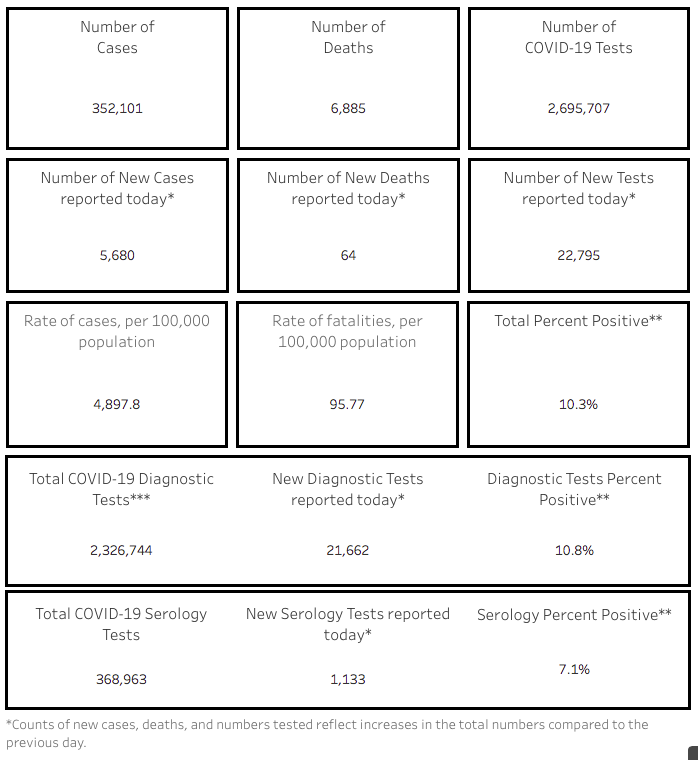
With more than 5,600 new cases reported today, the number of Arizona’s confirmed novel coronavirus cases topped 352,000 as of Friday, Dec. 4, according to the Arizona Department of Health Services.

Pima County, which reported 816 new cases today, has seen 42,698 of the state’s 352,101 confirmed cases.
With 64 new deaths reported yesterday, a total of 6,885 Arizonans had died after contracting COVID-19, including 722 deaths in Pima County, according to the Dec. 4 report.
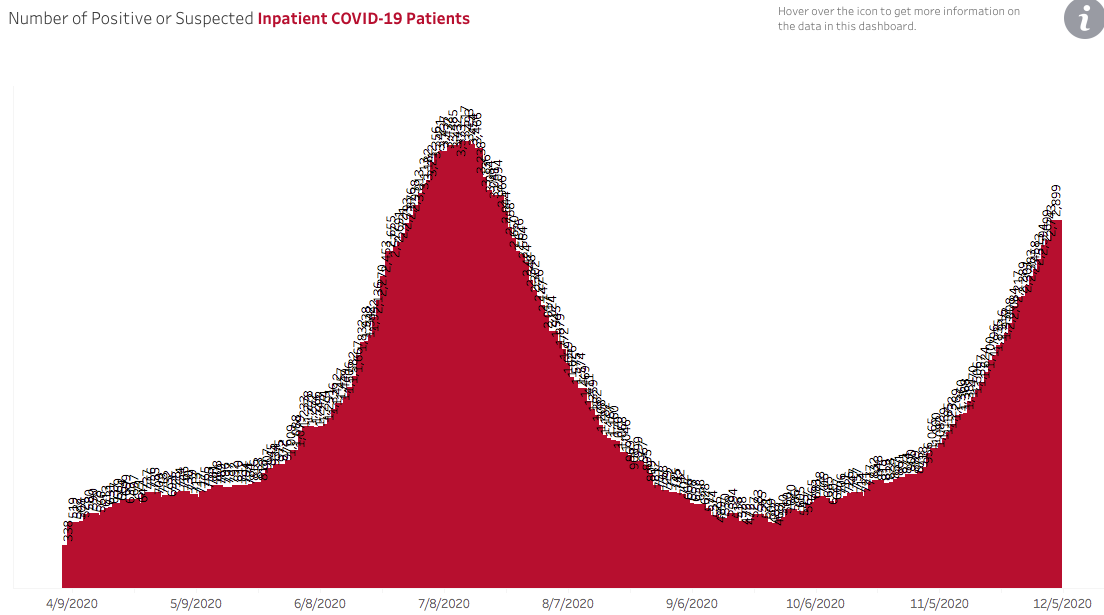
The number of hospitalized COVID cases statewide continues to soar upward as the virus has begun to spread more rapidly, putting stress on Arizona’s hospitals. ADHS reported that as of Dec. 3, 2,899 COVID patients were hospitalized in the state, the highest that number has been since July 22. That number peaked with 3,517 hospitalized COVID patients on July 13; it hit a subsequent low of 468 on Sept. 27.
A total of 1,7743 people visited emergency rooms on Dec. 3 with COVID symptoms. That number peaked at 2,008 on July 7; it hit a subsequent low of 653 on Sept. 28.
A total of 666 COVID-19 patients were in intensive care unit beds on Dec. 3, the highest that number has been since Aug. 1. The number of COVID patients in ICUs peaked at 970 on July 13 and hit a subsequent low of 114 on Sept. 22.
Judy Rich, president and CEO of Tucson Medical Center, told the Tucson City Council this week that local hospitals are near or at capacity.
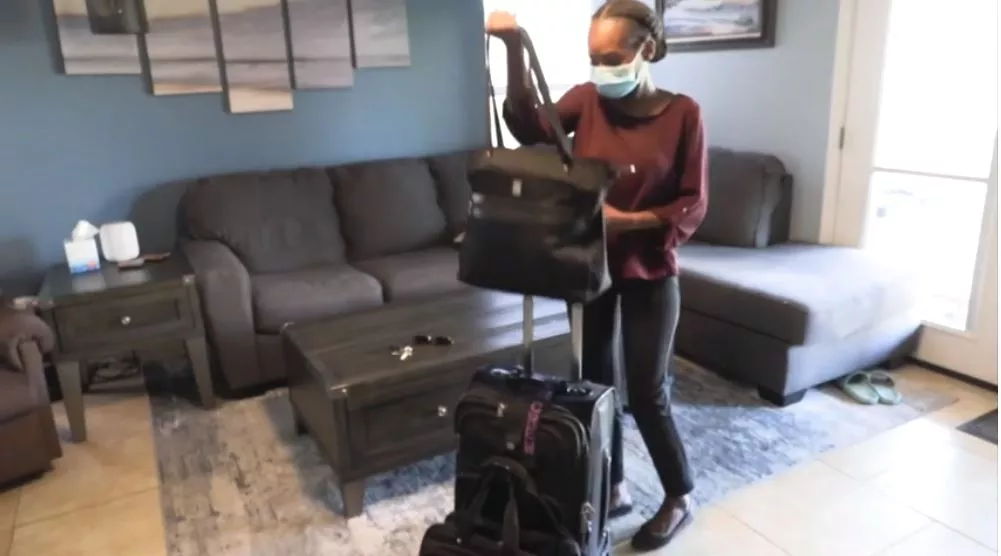
PHOENIX – More than half of young adults 18 to 29 now live at home – the highest rate since the end of the Great Depression 80 years ago – and researchers say many were motivated by the pandemic.
Many families already were multigenerational before the pandemic began in March, causing widespread job losses and deep economic disruption. In February, about 47% of young adults lived with their parents, but by July, that number jumped to an all-time high of 52%, according to Pew Research Center.
Keysia Colenburg, 27, was a full-time flight attendant living in Utah before COVID-19 began to spread, but she took a leave of absence and moved back home as travel bans and a drastic downturn in tourism crippled air travel.
“No matter how secure you think you are with your life and how settled in you think you are, one little thing can change it all,” said Colenburg, who’s among the 18% of young adults who have had to move back home to Surprise due to financial reasons.
The 52% of young adults living at home is the highest number since the end of the Great Depression, but researchers don’t know the true percentage during the Depression, which began in fall 1929.
Thursday, December 3, 2020
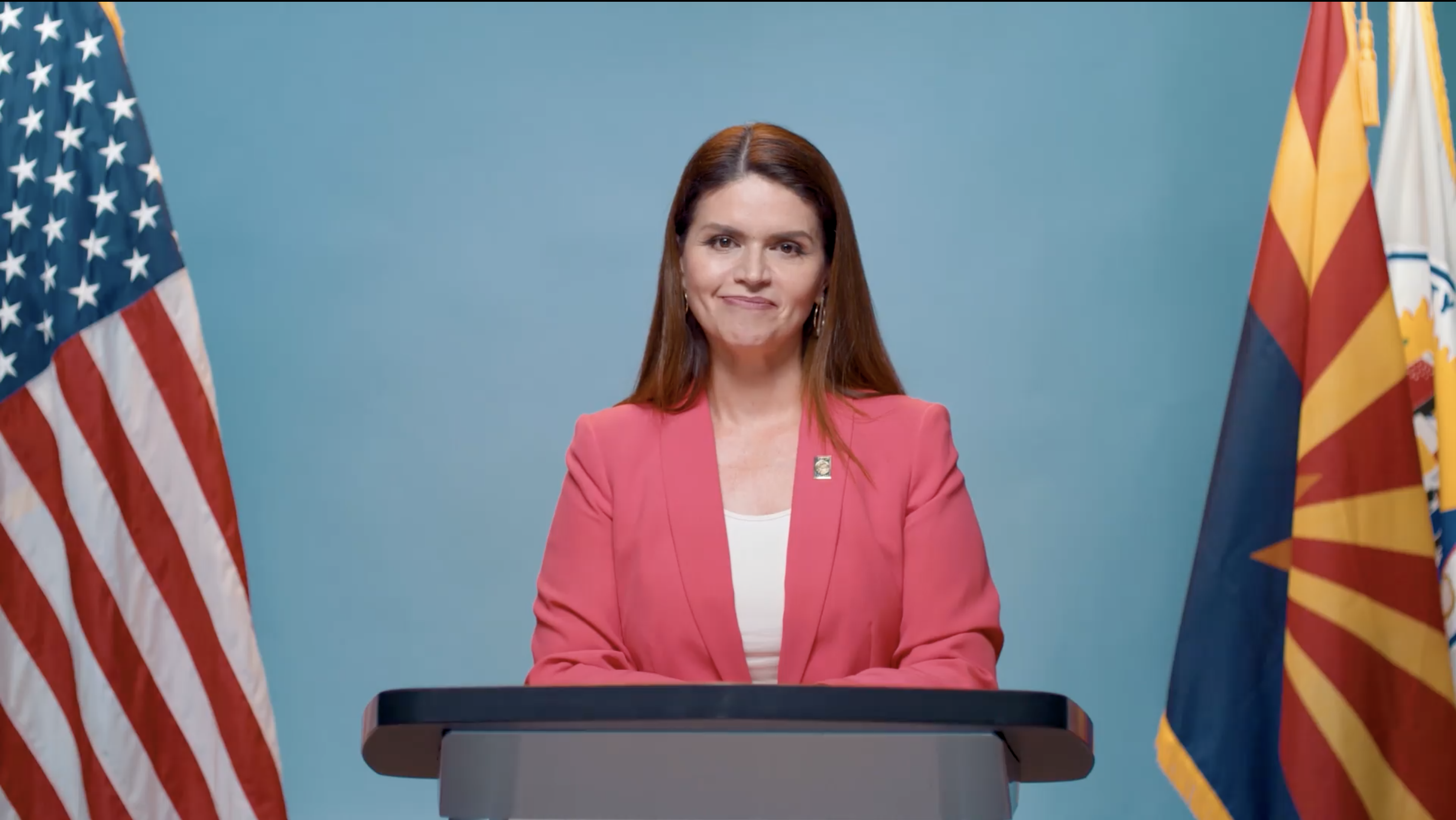
Tucson Mayor Regina Romero delivered a State of the City address last night providing a message of hope in the face of an unprecedented pandemic while discussing key issues such as climate change, public safety and housing.
After she was sworn into the mayor’s office in December 2019, one of Romero’s first priorities was to create quality core services and work Tucsonan’s needs into the city’s budget.
Then, the coronavirus pandemic hit.
“With priorities set and goals in hand, we began to take action. Shortly after, our city, our state, and our nation was confronted with the worst health crisis our world has seen in recent history,” Romero said. “Despite the challenges that COVID-19 has presented, we banded together as one city, one community, and made immeasurable sacrifices to protect the health of our loved ones and fellow Tucsonans.”
As of Tuesday, Pima County has reported 695 coronavirus deaths and 40,803 cases.
“Each and every one of those lives is much more than just a statistic,” the mayor said. “They were parents, grandparents, sons and daughters, aunts and uncles, friends and neighbors. They were our fellow Tucsonans. The best way we can honor their memory is through maintaining our resolve by continuing to follow public health guidelines.”
Romero said despite a lack of guidance, Tucson was “several steps ahead” of the state and federal government, saving millions in its budget for COVID-19 testing.
But as coronavirus cases reach levels higher than Arizona saw in its summer surge in cases, the mayor pushed a message of hope.
“All of us have sacrificed so much to protect the health of our most vulnerable Tucsonans...Although it is difficult to see, the collective sacrifices of all of us have saved lives,” she said. “I understand how exhausted and fatigued you are with this pandemic, I am too, but we need to stay the course. Brighter days are ahead, there is light at the end of the tunnel.”
Romero lauds Tucson’s economic relief measures during the pandemic
Romero acknowledged the devastating toll the virus has taken on the economy but said the city council’s allocation of $55 million in relief funds through the federal CARES Act money has ensured “those with the greatest need received timely help.”
With more than 5,400 new cases reported today, the number of Arizona’s confirmed novel coronavirus cases topped 346,000 as of Thursday, Dec. 3, according to the Arizona Department of Health Services.
Pima County, which reported 569 new cases today, has seen 41,882 of the state’s 346,421 confirmed cases.
With 82 new deaths reported yesterday, a total of 6,821 Arizonans have died after contracting COVID-19, including 717 deaths in Pima County, according to the Dec. 3 report.
The number of hospitalized COVID cases statewide continues to climb upward as the virus has begun to spread more rapidly, putting stress on Arizona’s hospitals. ADHS reported that as of Dec. 1, 2,743 COVID patients were hospitalized in the state, the highest that number has been since July 24 That number peaked with 3,517 hospitalized COVID patients on July 13; it hit a subsequent low of 468 on Sept. 27.
A total of 1,774 people visited emergency rooms on Dec. 2 with COVID symptoms. That number peaked at 2,008 on July 7; it hit a subsequent low of 653 on Sept. 28.
A total of 642 COVID-19 patients were in intensive care unit beds on Dec. 2, the highest that number has been since Aug. 1. The number of COVID patients in ICUs peaked at 970 on July 13 and hit a subsequent low of 114 on Sept. 22.
Judy Rich, president and CEO of Tucson Medical Center, told the Tucson City Council this week that local hospitals are near or at capacity.
“I believe stricter measures, like the ones we used earlier this year, are the only path to avert the impending crisis,” Rich told the council. “I recognize that the City might not have the legal authority to mandate such actions, but it should be the position of the City to advocate to state leadership that it is required to prevent unnecessary loss of life and illness.”
On a week-by-week basis in Pima County, the number of positive COVID tests peaked the week ending July 4 with 2,452 cases, according to a Nov. 25 report from the Pima County Health Department. (Numbers in this report are subject to revision.)
Pima County is seeing a dramatic rise in cases in recent weeks. For the week ending Oct. 31, 1,348 cases were reported; for the week ending Nov. 7, 2,119 cases were reported; and for the week ending Nov. 14, 2,578 cases were reported; for the week ending Nov. 21, 3,313 cases were reported.
COVID-related deaths in Pima County are down from a peak of 54 in the week ending July 4 but are on the rise. There were three deaths in the week ending Oct 10, one in week ending Oct. 17, six in the week ending Oct. 24; 10 in the week ending Oct. 31 and five in the week ending Nov. 7.
Hospitalization admission peaked the week ending July 18 with 221 COVID patients admitted to Pima County hospitals, but those numbers have been on the rise in recent weeks. In the week ending Oct. 31, 66 people were admitted; in the week ending Nov. 7, 90 people were admitted; in the week ending Nov. 14, 127 people were admitted; and in the week ending Nov. 21, 139 people were admitted.
Tucson City Council enacts 10 p.m. to 5 a.m. curfew
Ducey says he doesn’t support stricter restrictions for Arizonans but provides more funding for hospitals, restaurants
Gov. Doug Ducey revealed a batch of new COVID-19 safety measures at a press conference yesterday as coronavirus cases rise to higher levels than Arizona saw in its summer surge.
Many healthcare workers and experts have called for increased statewide mitigation, but the measures Ducey introduced yesterday fail to completely meet their demands.
More than 155 Arizona physicians, health professionals and educators called upon the governor to instate a statewide mask mandate and prohibit indoor gatherings at venues where crowds of people can gather indoors in an appeal letter today.
Eight leaders from the state’s hospital systems wrote a letter to Arizona Department of Health Services Director Dr. Cara Christ Tuesday pleading for statewide COVID-19 mitigation policies such as a ban on indoor dining and establishing a curfew.
On Monday, experts from the COVID-19 modeling team at the University of Arizona called for a shelter-in-place order and mask mandate to slow the spread of the virus.
Instead, Ducey issued executive orders allowing restaurants to utilize public right-of-ways to expand outdoor dining while giving them $1.2 million to do so and requiring public events with over 50 attendees to enforce mitigation strategies.
The governor also implemented an executive order to ensure when a COVID-19 vaccine arrives, it will be free of charge to those who take it.
Ducey also announced an additional $60 million in funding to increase hospital staffing—an addition to the $25 million in funds for staffing announced Nov. 18, which Ducey said brought 300 additional health care workers into the state.
Ducey said the new influx of funds will provide funding for 500 nurses through January.
“It will ensure our hospitals can care for those who need it and that the existing staff in our hospitals are properly compensated for their dedication and commitment,” Ducey said.
Arizona faces alarming COVID-19 numbers; Ducey criticizes Tucson’s curfew
At the press conference, Christ shared Arizona has reported 340,979 COVID-19 cases and 6,739 coronavirus deaths to date. Key metrics such as case counts, percent positivity and ICU and inpatient hospital bed usage are all trending upward.
Last week, the state had a coronavirus percent positivity of 15%, and Christ said this number is expected to increase this week.
Despite the alarming metrics and calls from healthcare experts from across the state, Ducey declined to mandate masks statewide, and claimed, “Independent sources have Arizona’s mask usage rate at 91%.”
“There’s almost nowhere you can go in the state of Arizona and no part of our economy that you can participate in without wearing a mask,” the governor said.
Ducey made clear he is adamantly opposed to statewide shutdowns or stay-at-home orders.
“Some have called for additional mitigation measures, shutdowns of entire industries, and curfews on our citizens,” he said. “I believe we should instead focus on accountability and enforcing the rules we have in place now and taking a targeted approach to ensure we all participate in the safety precautions we know work.”
The governor criticized the curfew Tucson’s city council passed last night and refuted claims from Mayor Regina Romero that she hasn’t been able to communicate with the governor since March.
“I disagree with the [curfew], I don’t think it’s the right approach... We believe that if we continue the mitigation steps that we’ve laid out, and there will be enforcement around those mitigation steps, those would be the best things that we could do to continue to slow the spread,” Ducey said. “If mayor Romero wants to talk, she knows where to find me, and every time she’s reached out she gets a call back.”
Arizona could receive COVID-19 vaccines by mid-December
Ducey called news of the Pfizer and Moderna COVID-19 vaccines reporting 95% effectiveness “incredible news” and said Arizona will have access to the vaccines by mid to late December.
According to Christ, the number of vaccines Arizona receives by the end of December could be in the “hundreds of thousands.”
The governor said he visited with insurance company leaders yesterday who agreed the vaccine should be free to those who need it. Today, Ducey issued an executive order ensuring the vaccine is free and said Christ will reveal the state’s complete vaccination plan later this week.
Ducey said teachers will be at the front of the list when the vaccine arrives.
“I’ve asked [Christ] to prioritize teachers as among the first individuals in the state who will receive the vaccine. We want our schools open and our teachers protected,” Ducey said. “Teachers are essential to our state, so under our plan, they will be prioritized along with our healthcare works, doctors, nurses, hospital staff, long-term care, and of course our most vulnerable, and critical law enforcement officers.”
Christ said Arizona will likely receive weekly allocations of vaccines based on the state’s population.
“We’ll be working with our county health departments to get that out...that first priority group, those healthcare workers and long term care facilities, we will be working with the healthcare systems to ensure they can get their employees vaccinated.”
Arizona’s health department director said the state will set up sites for essential workers to receive the vaccine.
“We will also be setting up sites, though they may be industry-specific, as we get into those essential workers,” Christ said. “So there will be locations where either people can go, or if the business is big enough, we may go to them and vaccinate them.”
The Pfizer vaccine has to be kept in temperatures of negative 70 degrees Celsius, while Moderna’s vaccine must be kept frozen at negative 20 degrees Celsius.
Christ said the federal government will directly ship Pfizer’s vaccines directly to their intended locations in rechargeable storage containers to maintain the temperature.
Moderna’s vaccine can be stored in regular refrigeration or freezer spaces and will arrive “a week or two” after Pfizer’s, according to Christ.
“Those will likely be the vaccines that will be prioritized for the rural areas since they don’t have such stringent temperature requirements,” she said.
Ducey said Arizonans won’t be mandated to take the vaccine but will be encouraged to do so through “a public service announcement” and “public education.”
“Much like masks, we want to see the maximum level of compliance,” he said. “These vaccinations are our road back to a normal life, a safe life where we are protected and our loved ones are protected.”
Ducey issues executive order to aid restaurants
The governor announced an executive order allowing restaurants to extend their outdoor dining areas to public sidewalks and right-of-ways.
Ducey also announced a partnership with the Arizona Restaurant Association to create $1.2 million in funds “to help small Arizona-owned and operated businesses buy heaters, barriers, outdoor furniture and other supplies in order to move operations outside.”
“This allows our local restaurants to expand outdoor dining and create additional space for people to dine out safely while still following all the health and safety requirements,” he said.
Executive order on public gatherings
Ducey also announced an executive order for local jurisdictions to announce public gatherings of more than 50 people and to post details of the event’s COVID-19 mitigation strategies on the jurisdiction’s website.
“These should include an agreement by the hosts that they will implement these mitigation strategies and that they will be enforced by the organizers and local law enforcement,” Ducey said.
Dr. Christ said the health department has responded to more than 2,800 unique complaints about establishments violating public health guidelines such as mask-wearing and social distancing, and that 90% of the cases have been resolved.
Ducey announced a revised policy today that when a business receives two substantiated claims, it will be given a warning and the opportunity to comply. If the business does not comply, they will face closure.
Christ urged Arizonans to alert the state health department of issues of noncompliance at azhealth.gov/compliancecovid-19 or by calling the Arizona COVID-19 hotline at 1-844-542-8201.
“Our businesses have done a great job and it’s not right and it’s not fair to those that are playing by the rules for others to openly ignore them,” Ducey said. “The outliers are few and far between, but we need fairness and an even playing field.”
However, despite the requests of many medical workers across the state, Ducey will not impose a statewide lockdown. Instead, the financial security of the state is on the governor’s mind.
“I hear the very loud calls from folks yelling lockdowns, and I just don’t think it’s the right policy. I think that we have put aggressive mitigation out there, we know that we can slow the spread, but when you say the word lockdown, you’re talking about shutting down entire industries, closing classrooms, bankrupting small businesses,” Ducey said. “I don’t think the right answer is to throw hundreds of thousands out of work before the holidays to slow the spread, because I don’t think it will slow the spread.”
Get tested: Pima County opening new sites alongside existing spots for free COVID testing
Pima County offers a number of testing centers around town.
You’ll have a nasal swab test at the Kino Event Center (2805 E. Ajo Way) the Udall Center (7200 E. Tanque Verde Road) and downtown (88 E. Broadway).
The center at the northside Ellie Towne Flowing Wells Community Center, 1660 W. Ruthrauff Road, involves a saliva test designed by ASU.
In addition, the Pima County Health Department, Pima Community College and Arizona State University have partnered to create new drive-thru COVID-19 testing sites at three Pima Community College locations. At the drive-thru sites, COVID-19 testing will be offered through spit samples instead of nasal canal swabs. Each site will conduct testing from 9 a.m. to noon, and registration is required in advance. Only patients 5 years or older can be tested.
Schedule an appointment at pima.gov/covid19testing.
The University of Arizona’s antibody testing has been opened to all Arizonans as the state attempts to get a handle on how many people have been exposed to COVID-19 but were asymptomatic or otherwise did not get a test while they were ill. To sign up for testing, visit https://covid19antibodytesting.arizona.edu/home.
—with additional reporting from Austin Counts, Jeff Gardner, Nicole Ludden and Mike Truelsen
WASHINGTON – Mark Kelly can drop “senator-elect” from his title.
Less than a month after Election Day, Kelly was sworn in as the junior senator from Arizona on Wednesday and will serve the remaining two years of the late Sen. John McCain’s term.
Kelly, who ran on a promise to be a bipartisan voice in the Senate, also cast his first vote Wednesday – a straight party-line vote on the nomination of Judge Kathryn C. Davis to the U.S. Court of Federal Claims that passed 51-45.
It was the end of almost two years of campaigning and a whirlwind few weeks, with Kelly sworn in a month earlier than other new senators because he is taking over for McCain, who died in 2018. Republican Martha McSally, who was appointed in 2018 to hold McCain’s seat, stepped down when this month’s election results were certified.
Kelly joins Sen. Kyrsten Sinema, D-Ariz., giving the state two Democratic senators for the first time in almost 70 years.
Kelly was not available for comment Wednesday, but Sinema said in a statement after his swearing-in that she looked forward to “partnering with Mark Kelly to cut through Washington dysfunction and deliver results for everyday Arizonans.”
It was Sinema, in purple hair and a zebra-striped sweater, who escorted Kelly to the well of the Senate and held the Bible on which he was sworn in by Vice President Mike Pence.
The Bible belonged to the grandmother of Kelly’s wife, the former Rep. Gabrielle Giffords, who held it at a separate ceremonial swearing-in a short time later in the old Senate chamber, also with Pence.
Senate Minority Leader Chuck Schumer, D-N.Y., welcomed Kelly, a former Navy pilot and former astronaut. While those jobs likely did not prepare Kelly for his new job, Schumer’s statement said, his wife’s time on Capitol Hill already made him a “part of the family” in Congress.
Schumer went on to call Kelly “a devoted and honorable man, and we are delighted to welcome him to the Senate Democratic caucus and the wider Senate family.”
Kelly was joined by Giffords, his two daughters and his twin brother Scott, a fellow astronaut. After the swearing in, they conversed with Pence about Mark Kelly’s time in space before posing for photos.
The day before his swearing-in, Kelly visited McCain’s grave at the U.S. Naval Academy, drawing praise from McCain’s daughter, Meghan, who called the gesture “lovely and touching.”
Schumer acknowledged in his statement the difficult journey Kelly and Giffords took to return to Washington.
Giffords was attending a constituent event in Tucson in January 2011 when a gunman opened fire, killing six people and wounding 13, including the congresswoman, who was shot in the head at close range in the assassination attempt.
“Everyone continues to be inspired by Gabby’s recovery, by Mark’s devotion, and the courage it took for their family to re-enter public life and public service,” Schumer said.
Wednesday, December 2, 2020
Gov. Doug Ducey revealed a batch of new COVID-19 safety measures at a press conference today as coronavirus cases rise to higher levels than Arizona saw in its summer surge.
Many healthcare workers and experts have called for increased statewide mitigation, but the measures Ducey introduced today fail to completely meet their demands.
More than 155 Arizona physicians, health professionals and educators called upon the governor to instate a statewide mask mandate and prohibit indoor gatherings at venues where crowds of people can gather indoors in an appeal letter today.
Eight leaders from the state’s hospital systems wrote a letter to Arizona Department of Health Services Director Dr. Cara Christ Tuesday pleading for statewide COVID-19 mitigation policies such as a ban on indoor dining and establishing a curfew.
On Monday, experts from the COVID-19 modeling team at the University of Arizona called for a shelter-in-place order and mask mandate to slow the spread of the virus.
Instead, Ducey issued executive orders allowing restaurants to utilize public right-of-ways to expand outdoor dining while giving them $1.2 million to do so and requiring public events with over 50 attendees to enforce mitigation strategies.
The governor also implemented an executive order to ensure when a COVID-19 vaccine arrives, it will be free of charge to those who take it.
Ducey also announced an additional $60 million in funding to increase hospital staffing—an addition to the $25 million in funds for staffing announced Nov. 18, which Ducey said brought 300 additional health care workers into the state.
Ducey said the new influx of funds will provide funding for 500 nurses through January.
“It will ensure our hospitals can care for those who need it and that the existing staff in our hospitals are properly compensated for their dedication and commitment,” Ducey said.
Arizona faces alarming COVID-19 numbers; Ducey criticizes Tucson’s curfew
At the press conference, Christ shared Arizona has reported 340,979 COVID-19 cases and 6,739 coronavirus deaths to date. Key metrics such as case counts, percent positivity and ICU and inpatient hospital bed usage are all trending upward.
Last week, the state had a coronavirus percent positivity of 15%, and Christ said this number is expected to increase this week.
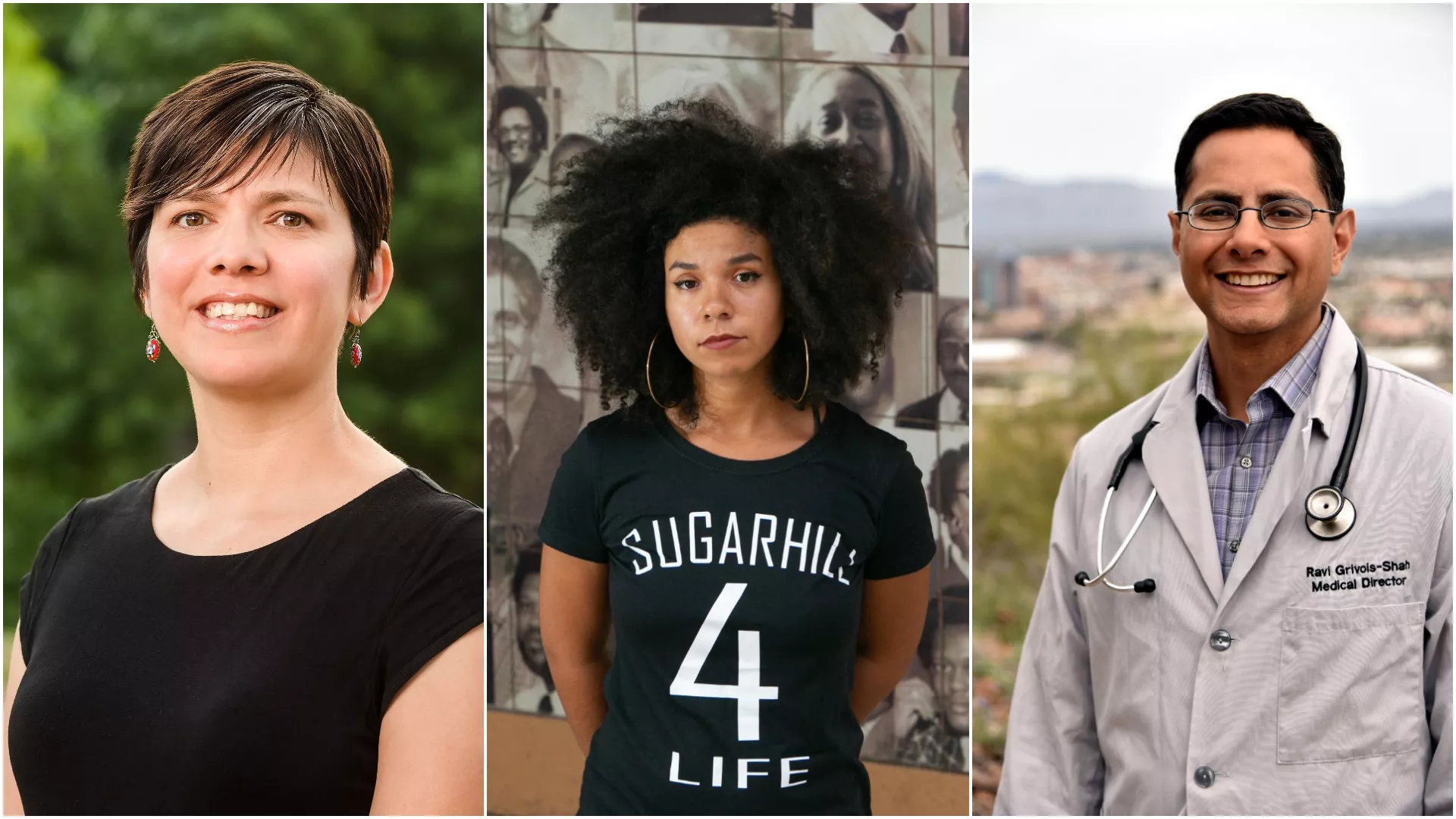
Pima County’s voters elected three new board members to Tucson’s largest school district this November, bringing a variety of new faces and experiences to the school board.
Of the three new board members elected to Tucson Unified School District’s Governing Board, Natalie Luna Rose was elected with 24% of the vote, Sadie Shaw with 18% of the vote and Ravi Grivois-Shah with 17%.
All three new board members have children in the district and will be joining current TUSD parents and board members Adelita Grijalva and Leila Counts, whose terms expire December 31, 2022.
All the incoming board members agree with Superintendent Gabriel Trujillo’s decision to delay implementing a hybrid learning plan throughout the district until January as COVID-19 spreads substantially throughout the county.
Luna Rose, the communications and outreach manager for the Arizona Center for Disability Law, is considering the possibility of the entire school year being remote as metrics tracking the spread of coronavirus reach alarming levels.
“Frankly, judging by the numbers right now, I don't think we're going back Jan. 4, and I'd be really surprised if we're even going to be going back at all,” Luna Rose said. “I saw news reports that they're going to try to start rolling out the vaccine very soon, probably after the first of the year, but even then, that's going to take months for it to even reach Tucson and how are they going to distribute that?”
Shaw, an artist, was pleased with the superintendent's decision due to concerns for students and staff members, but she doesn’t agree with the hybrid model the TUSD school board approved on Oct. 6, which has been put on hold until January.

