

Tuesday, November 17, 2020
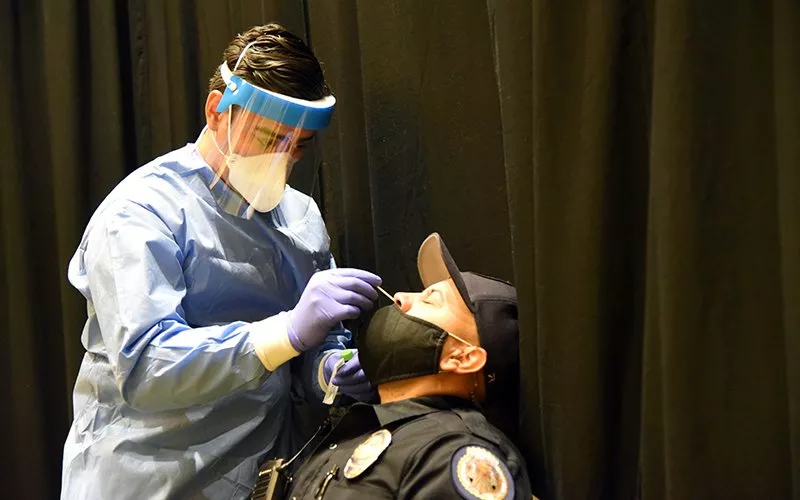
Rapid antigen testing is a mess. The federal government pushed it out without a plan, and then spent weeks denying problems with false positives.
The promise of antigen tests emerged as a miracle this summer. With repeated use, the theory went, these rapid and cheap coronavirus tests would identify highly infectious people while giving healthy Americans a green light to return to offices, schools and restaurants. The idea of on-the-spot tests with near-instant results was an appealing alternative to the slow, lab-based testing that couldn’t meet public demand.
By September, the U.S. Department of Health and Human Services had purchased more than 150 million tests for nursing homes and schools, spending more than $760 million. But it soon became clear that antigen testing — named for the viral proteins, or antigens, that the test detects — posed a new set of problems. Unlike lab-based, molecular PCR tests, which detect snippets of the virus’s genetic material, antigen tests are less sensitive because they can only detect samples with a higher viral load. The tests were prone to more false negatives and false positives. As problems emerged, officials were slow to acknowledge the evidence.
With the benefit of hindsight, experts said the Trump administration should have released antigen tests primarily to communities with outbreaks instead of expecting them to work just as well in large groups of asymptomatic people. Understanding they can produce false results, the government could have ensured that clinics had enough for repeat testing to reduce false negatives and access to more precise PCR tests to weed out false positives. Government agencies, which were aware of the tests’ limitations, could have built up trust by being more transparent about them and how to interpret results, scientists said.
Monday, November 16, 2020
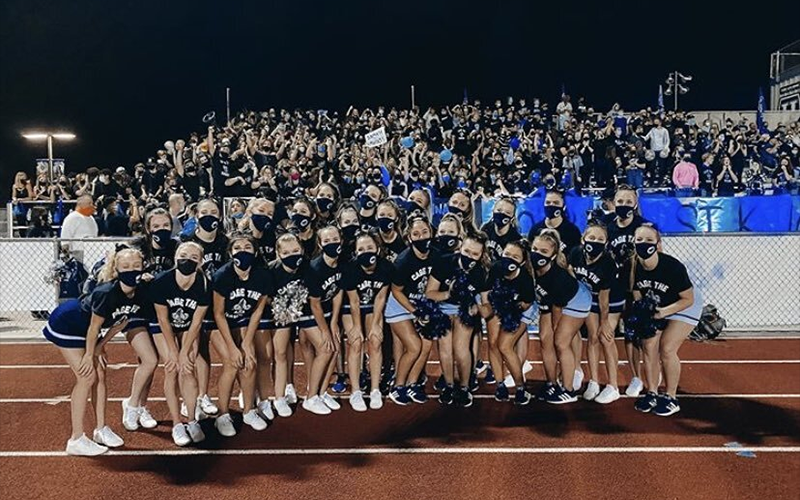
GILBERT – With several schools experiencing outbreaks of COVID-19 during the high school football season, social media has served as a platform for those pointing fingers at programs that appear to have stands packed with fans, many without face coverings.
But David Hines, executive director of the Arizona Interscholastic Association, which oversees high school sports in the state, said that the AIA can only issue protocols for players, coaches and officials on the field during the season.
It’s up to school districts to establish guidelines for fans, based on the recommendations of county health departments.
Photos of big crowds at schools such as Highland High, Higley High and Williams Field High in Gilbert and the private school Northwest Christian in Phoenix have surfaced on Twitter. Some are from fans and others from media members and they are often accompanied by comments about how closely fans are packed into the stands or the apparent lack of masks.
Hines said he is aware of the tweets, but noted that the crowds are outside the AIA’s jurisdiction.
“We put out a Return to Play document to get kids and coaches back to play,” Hines said. “We also have modifications, which are required for the schools to follow. Now part of our modifications is that the coaches, bench players, bench personnel, etc. all have to be in a mask all the time.
“Obviously, we have kids that come in and out of the game, that’s a little different story. The fans themselves are really under the purview of the school. During the regular season, the schools are in charge of those games.”
While the AIA does not have jurisdiction over how schools handle spectators, Hines said some schools are more diligent about ensuring that their fans are social distancing and wearing masks.
“Our recommendation is that all fans have a mask when they come in and keep a mask on when they are in that facility, especially in indoor facilities, because now we’re closer together, we have less ventilation, and all those criteria,” Hines said. “However, we have had some schools that aren’t quite as diligent as others with the requirement to their fans.

As the University of Arizona conducts a pre-fall break testing blitz, its coronavirus numbers are remaining relatively steady, UA President Robert C. Robbins shared in a news conference Monday, Nov. 16.
From Nov. 6 through Nov. 15, UA found 76 positive coronavirus cases after administering 8,651 tests for a positivity rate of 0.9%, the same rate the university reported the previous 10-day period.
On Nov. 9, the university began its “testing blitz” to reduce the spread of COVID-19 as travel is likely to increase over the holiday season. Testing will run through Nov. 25, and students are asked to register for an appointment-only test after completing a survey with their traveling plans.
Robbins said this week, the university has administered 7,541 tests as part of this program, a 34% increase in COVID-19 tests since last week.
If students travel outside the Tucson area over fall break, the university is asking them to complete the semester outside the area or remotely online. Those who don’t travel can complete the semester from their student residences.
All students will complete the semester remotely when classes resume Nov. 30. In January, the university will return to stage two of its reentry plan with up to 50 students attending classes in person, according to Robbins.
All students who attend in-person classes in the spring semester will be required to get tested for COVID-19. Robbins said UA will only require tests for on-campus students because they “cannot legally mandate testing for other students as a prerequisite for enrollment.”
Reentry Task Force Director Richard Carmona went over statewide COVID-19 data that shows a 14-day increase in cases of 75%, a 29% increase in deaths and a 57% increase in hospitalizations throughout Arizona.
Pima County’s current R0, pronounced “R naught”—which indicates how contagious a virus is by showing the average number of people who will contract the virus from an infected person—is at 1.68. The transmissibility rate for the zip code surrounding the university has decreased from 2.22 last week to 1.33 this week, according to Carmona.
“We feel confident that some of our public health practices have been manifest in better numbers, but we are also very concerned of what’s happening in the bigger environment, and this is continuing to spread in spite of these good practices,” Carmona said.
UA’s CART team, a collaboration with the UA and Tucson police departments that looks for noncompliance to COVID-19 precautions, responded to 14 incidents of large gatherings last week. The week prior, they reported 7 incidents.
“That tells us that there are still people in our university community who are not taking this seriously,” Carmona said. “They’re going to social events, which are the cause of the spread... We must do all we can to prevent the spread.”
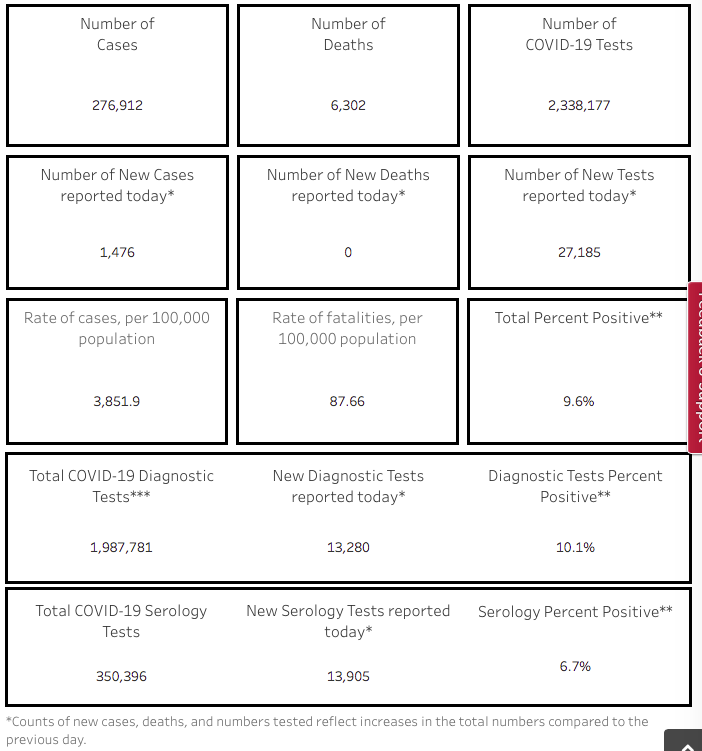
With more than 7,300 new cases reported since Friday morning, the number of Arizona’s confirmed novel coronavirus cases climbed to nearly 277,000 as of Monday, Nov. 16, according to the Arizona Department of Health Services.

Pima County, which reported 285 new cases today, has seen 33,087 of the state’s 276,912 confirmed cases.
A total of 6,302 Arizonans had died after contracting COVID-19, including 670 deaths in Pima County, according to the Nov. 16 report.
The number of hospitalized COVID cases statewide continues to climb upward as the virus has begun to spread more rapidly. ADHS reported that as of Nov. 15, 1,557 COVID patients were hospitalized in the state, the highest that number has been since Aug. 10. That number peaked with 3,517 hospitalized COVID patients on July 13; it hit a subsequent low of 468 on Sept. 27.
A total of 1,038 people visited emergency rooms on Nov. 15 with COVID symptoms. That number peaked at 2,008 on July 7; it hit a subsequent low of 653 on Sept. 28.
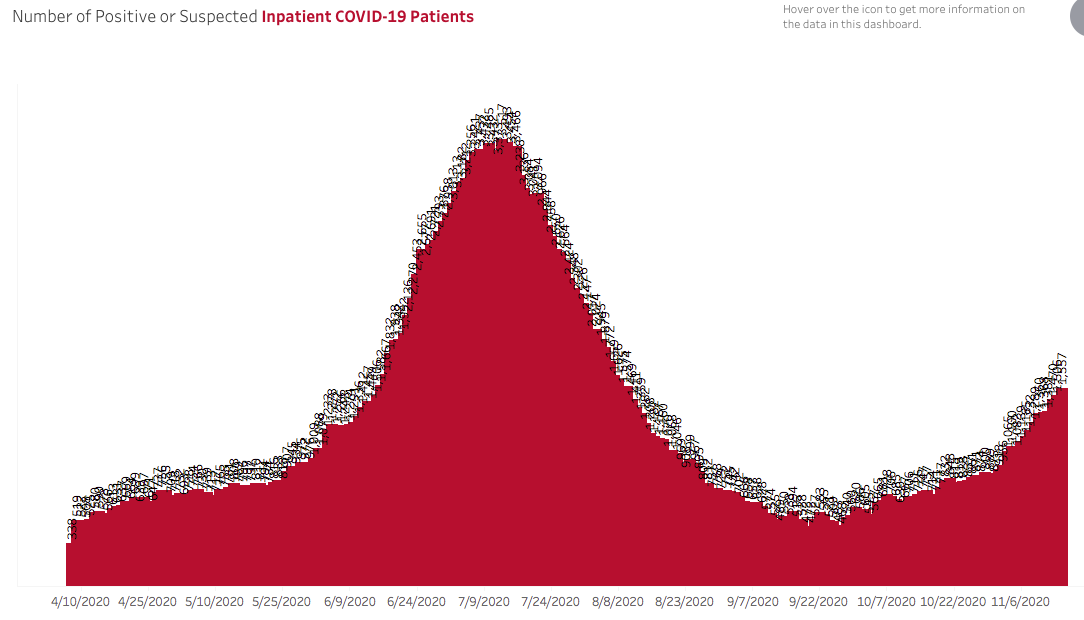
A total of 374 COVID-19 patients were in intensive care unit beds on Nov. 15, the highest that number has been since Aug. 19. The number of COVID patients in ICUs peaked at 970 on July 13 and hit a subsequent low of 114 on Sept. 22.
On a week-by-week basis in Pima County, the number of positive COVID tests peaked the week ending July 4 with 2,452 cases, according to an Nov. 9 report from the Pima County Health Department. (Numbers in this report are subject to revision.)
Pima County is seeing a steady rise in cases in recent weeks. For the week ending Oct. 17, 545 cases were reported; for the week ending Oct. 24, 911 cases were reported; for the week ending Oct. 31, 1,247 cases were reported; and for the week ending Nov. 7, 1,227 cases were reported.
Saturday, November 14, 2020

With all the votes counted in Pima County, Democrat Rex Scott has won the District 1 seat on the Pima County Board of Supervisors by a mere 730 votes.
The district, representing Marana, Casa Adobes, Oro Valley, and the Catalina Foothills, has reliably voted for Republicans in recent decades but with an open seat up for grabs, the voters supported the Democratic candidate over GOP nominee Steve Spain, who had the endorsement of retiring incumbent Republican Supervisor Ally Miller.
The Board of Supervisors is responsible for a wide range of public policy in the county. The five-member board represents each district, approves the county budget, sets health regulations such as the current mask mandate to combat the spread of the coronavirus. The board also oversees development issues such as rezoning and permitting and manages the county sewer system along with roads in unincorporated areas, among other responsibilities.
Scott began running for District 1 supervisor in September 2019, three months before current supervisor Ally Miller announced she wouldn’t seek another term.
The new District 1 supervisor has worked in public schools as both a teacher and administrator for 30 years and said he felt “a combination of honored and humbled” when he learned he won the race.
“It’s a tremendous honor to be able to represent people in a place that I know very well, and that has deep meaning for me, but I’m also very humbled because of the challenges that we're going to be taking on, especially dealing with the remainder of the pandemic and the recovery from it.”
Coronavirus recovery is Scott’s top priority when entering the office. As a supervisor, he says he’ll start by addressing “people who have suffered the most,” such as those struggling to make rent as coronavirus’ economic toll continues.
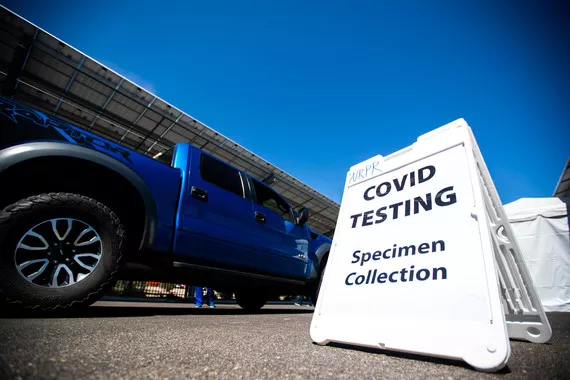
Within the next three weeks, new drive-thru COVID-19 testing sites will be available at three Pima Community College locations, the county health department announced in a press release Friday.
The Pima County Health Department, Pima Community College and Arizona State University have partnered to create three new testing sites in an extension of the current ASU testing site at the Ellie Towne Flowing Wells Community Center.
At the drive-thru sites, COVID-19 testing will be offered through spit samples instead of nasal canal swabs.
Each site will conduct testing from 9 a.m. to noon, and registration is required in advance. Only patients 5 years or older can be tested.
“As cases rise, we are eager to increase available testing for the people of Pima County,” Pima County Public Health Director Theresa Cullen said in the press release. “If you know or suspect you have been exposed to COVID-19, we encourage you to get tested.”
The first testing site will open Monday, Nov. 16, at the Pima Community College West Campus.
Here are the three drive-thru locations that will be offering COVID-19 testing:
Friday, November 13, 2020
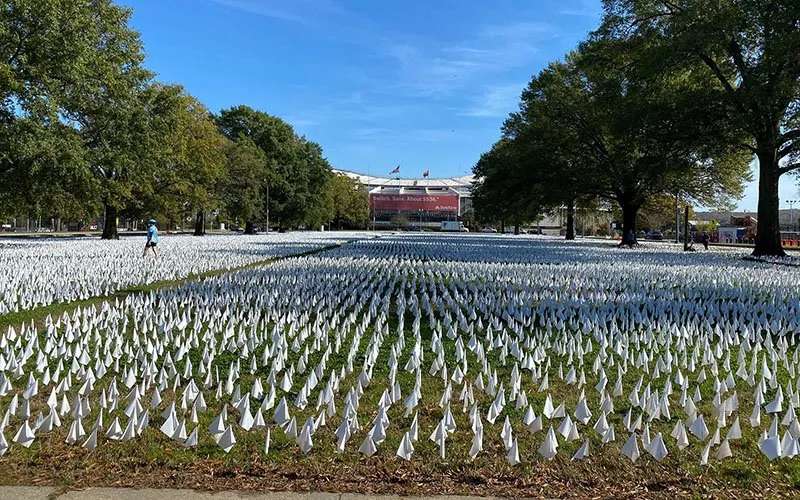
WASHINGTON – The hardest part of Suzanne Firstenberg’s day is when she changes the numbers on the board – each number representing an American who has died as a result of COVID-19.
She climbs on a concrete ledge, pulls off a large poster with one number on it and replaces it with a higher number – 241,949 as of Thursday – on a billboard in front of a field of nearly as many little, white flags, each representing a victim of the pandemic.
It’s all part of Firstenberg’s exhibit, “In America: How could this happen…”, an installation that sprawls over the parade grounds at the D.C. Armory. Firstenberg said she was inspired to create the exhibit “to help people understand the number, to make sense of it.”
“So that we would not just release it (the death toll) and say, it is what it is, but rather, we would be inspired to take care of each other,” she said recently.
It comes as the number of new cases is spiking across the country, with more than 100,000 new cases every day for the past nine days, according to Johns Hopkins University’s Coronavirus Resource Center.
The trend is reflected in Arizona, where cases have started to surge again after falling sharply from this summer, when the state was a national hotspot for the spread of the disease.
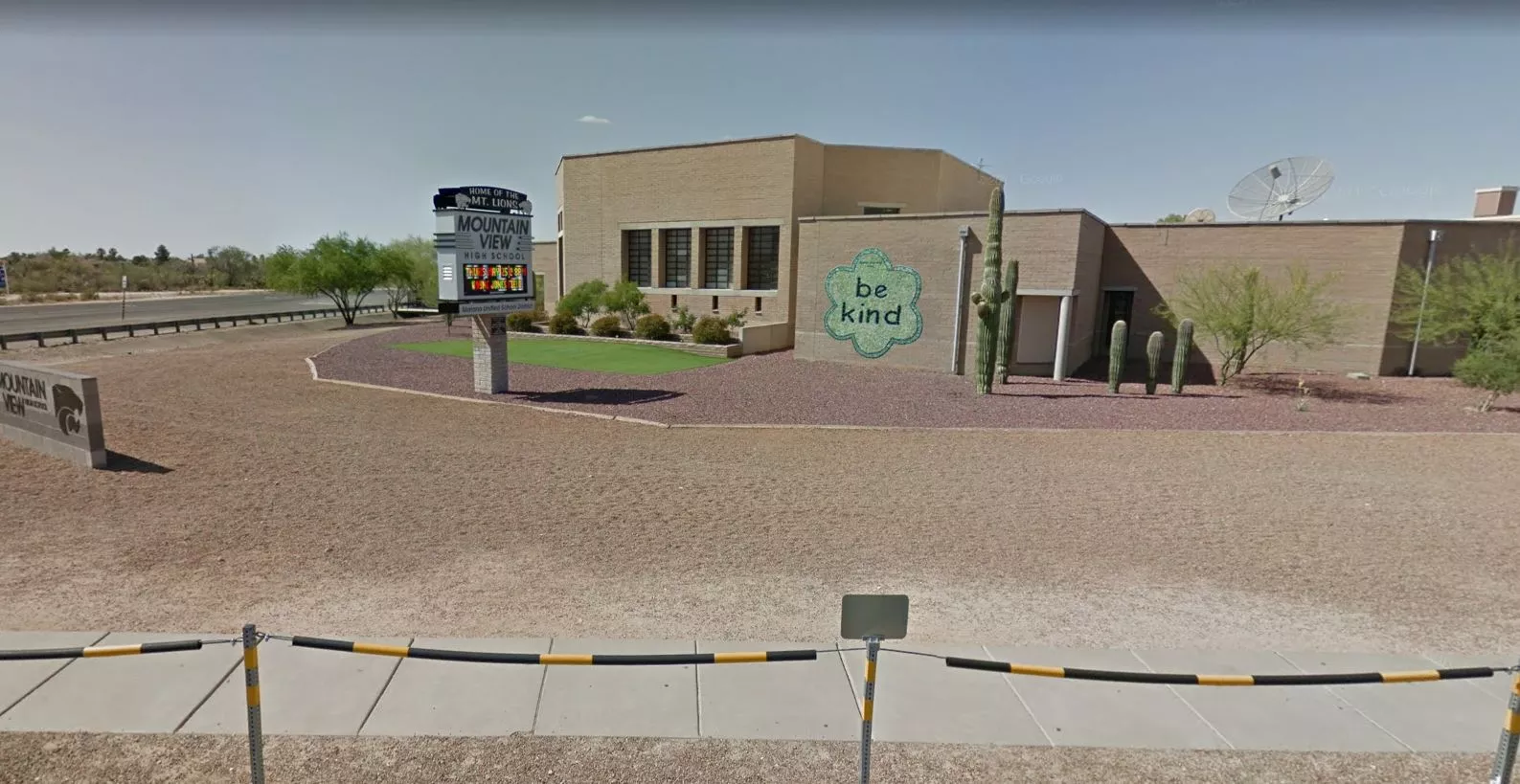
Since opening in a hybrid model on Oct. 12, the Amphitheater Unified School District has reported 32 total COVID-19 cases causing 234 individuals to resultantly quarantine, according to Communications Director Michelle Valenzuela.
Coronavirus cases have reached 14 different school sites, and 11 of those cases are still active. From Nov. 1-9, Amphitheater reported 12 coronavirus cases resulting in 43 students and staff members quarantining.
Here are all the Amphitheater schools that have reported positive coronavirus cases since reopening:
Amphitheater High School
Two positive student cases reported on Nov. 1; 34 quarantined as a result.
Canyon del Oro High School
One positive employee case reported on Nov. 7; no individuals quarantined as a result.
One positive student case reported on Nov. 2; one quarantined as a result.
One positive student case reported on Oct. 19; 12 quarantined as a result. This case is no longer active.
Ironwood Ridge High School

With more than 3,000 new cases reported today, the number of Arizona’s confirmed novel coronavirus cases climbed past 269,000 as of Friday, Nov. 13, according to the Arizona Department of Health Services.

Pima County, which reported 191 new cases today, has seen 31,874 of the state’s 269,577 confirmed cases.
After 17 new deaths were reported today, a total of 6,257 Arizonans had died after contracting COVID-19, including 669 deaths in Pima County, according to the Nov. 13 report.
The number of hospitalized COVID cases statewide continues to climb upward as the virus has begun to spread more rapidly. ADHS reported that as of Nov. 12, 1,381 COVID patients were hospitalized in the state, the highest that number has been since Aug. 12. That number peaked with 3,517 hospitalized COVID patients on July 13; it hit a subsequent low of 468 on Sept. 27.

A total of 1,105 people visited emergency rooms on Nov. 12 with COVID symptoms. That number peaked at 2,008 on July 7; it hit a subsequent low of 653 on Sept. 28.
A total of 335 COVID-19 patients were in intensive care unit beds on Nov. 12, the highest that number has been since Aug. 23. The number of COVID patients in ICUs peaked at 970 on July 13 and hit a subsequent low of 114 on Sept. 22.
On a week-by-week basis in Pima County, the number of positive COVID tests peaked the week ending July 4 with 2,452 cases, according to an Nov. 9 report from the Pima County Health Department. (Numbers in this report are subject to revision.)
Pima County is seeing a steady rise in cases in recent weeks. For the week ending Oct. 17, 545 cases were reported; for the week ending Oct. 24, 911 cases were reported; for the week ending Oct. 31, 1,247 cases were reported; and for the week ending Nov. 7, 1,227 cases were reported.
Thursday, November 12, 2020

PHOENIX – If fans look a little, well, stiff at Saturday’s Arizona State game, don’t be alarmed.
They’re not real.
The Pacific-12 Conference’s decision to allow only family members to attend football games this season prompted the university to follow the lead of professional teams by allowing fans to buy cardboard cutouts of themselves and loved ones.
Those loved ones include dogs, cats and yes, even iguanas.
Chandler’s Sherry Brooks bought four cutouts, one for each member of her family.
“Someone sent me a photo and we are already in our seats,” she said. “We like to get to games early.”
Gilbert’s Megan Foutz, 28, has attended ASU games for years and was disappointed at the direction the season took. She was grateful when her parents bought a cutout of her although she mused, “I would have preferred to see my dog, Bailey.”
The cutouts cost $40 for faculty and season-ticket holders, and $50 for everyone else. About 1,000 have been produced for students and another 1,000 for other fans.
ASU will also place cardboard cutouts of famous alums in the stands. The university’s student spirit group, the 942 Crew, will determine who they will be.
Cutouts of band members will be there, too, so that the group that provides game-day entertainment will have a presence.
The university turned to the ASU Print and Imaging Lab instead of sourcing the orders out to cut down on cost and provide more money to the athletic department. After printing, the lab delivers large pallets with the cutouts so they can be installed in the stadium.
We were blown away by the response,” said Michael Meitin, ASU senior associate athletic director. “We kind of predicted it would get good response based on what we’d seen in the professional leagues, but we were still surprised at just how excited people were.”
If Saturday’s game against California will be played remains a mystery. The decision to allow the Golden Bears to compete is in the hands of Berkeley Public Health, which has required players from one entire position group to quarantine for up to 14 days after being exposed to a teammate who has tested positive for COVID-19.
Kickoff is set for 8:30 MST and will be televised by ESPN2 if the game is allowed to go forward.

