

Friday, October 2, 2020
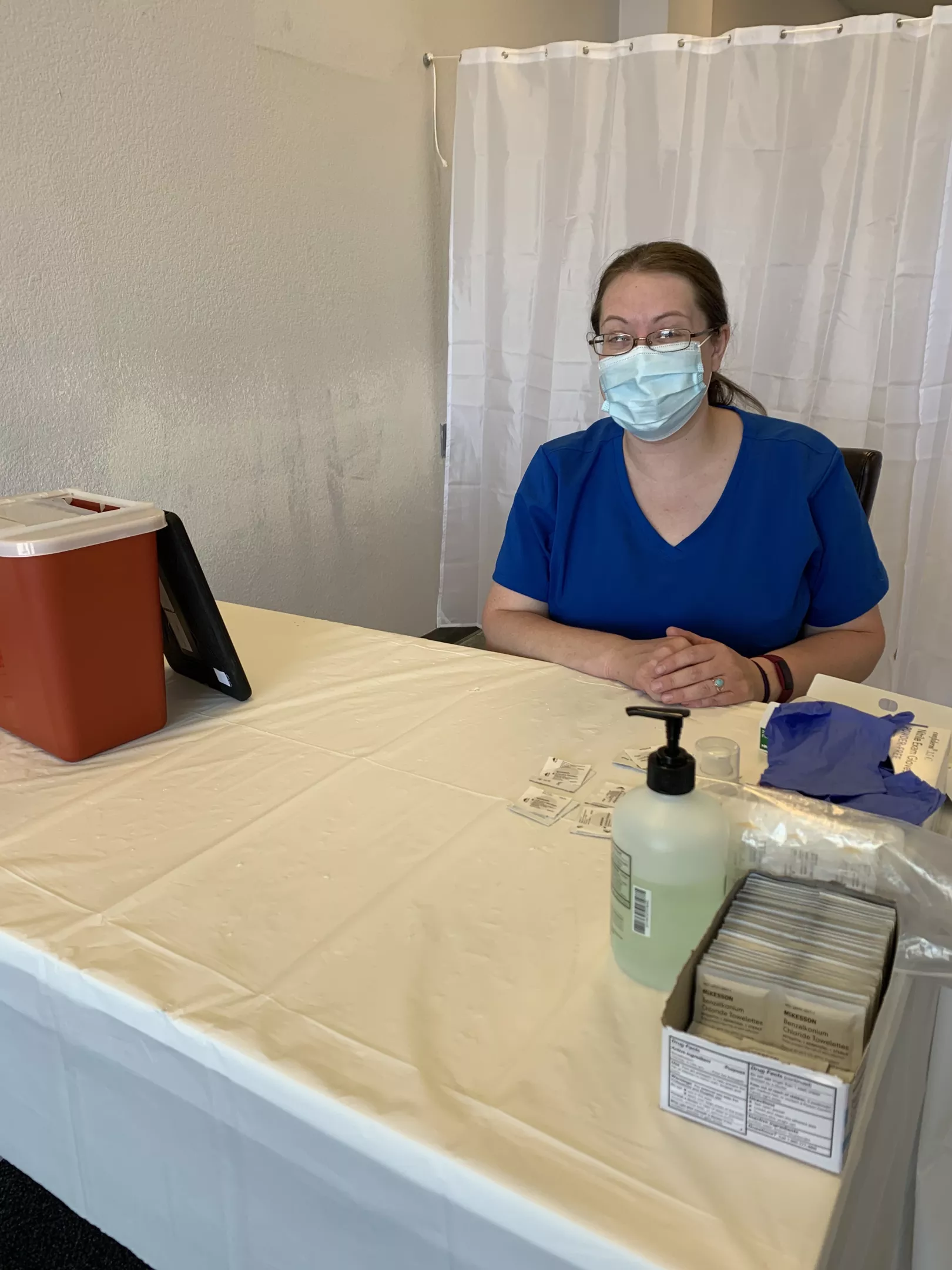
The Pima County Health Department opened a free flu shot clinic late last September in an effort to get Tucsonans vaccinated ahead of flu season.
The problem: The public isn’t coming in.
Registered nurse Heather Webber said she typically sees fewer than 10 patents a day during an eight-hour shift at Passport Health Clinic, located at 6383 E. 22nd St. Suite 101. The most she has helped in one day is 13 people, she said.
“There hasn’t been a line to get a shot since I started,” Webber said. “We have lots of time available for people to come in. They need to start coming in.”
The registered nurse said getting a flu shot is especially important this year so as to not overwhelm hospitals around Pima County. While the shot isn’t 100 percent effective, it does reduce the risk of flu illness by 60 percent, according to the Centers for Disease Control website.
“Getting a flu shot is extremely important not only for the flu but if you get sick you’ll know it’s most likely something else because you got a flu shot,” Webber said.
The 22nd Street clinic is open from 9 a.m. to 5 p.m. Monday through Friday.
Pima County Health Department encourages all people over the age of 6 months old to get a flu shot this season, especially the elderly, low-income and uninsured.In addition to the free clinic on 22nd Street, Pima County Health is also offering free flu shots to the public at their eastside office at 6920 E Broadway, Suite E; their northside office at 3550 N. First Ave and at Theresa Lee Clinic at 1493 W. Commerce Court. Offices are open from 8 a.m. to 5 p.m. (closed for lunch between noon to 1 p.m.).
Reservations are recommended by health department officials, but you’ll probably be fine just walking in. Click here to reserve a space.
For more information, check out the Pima County Health website.
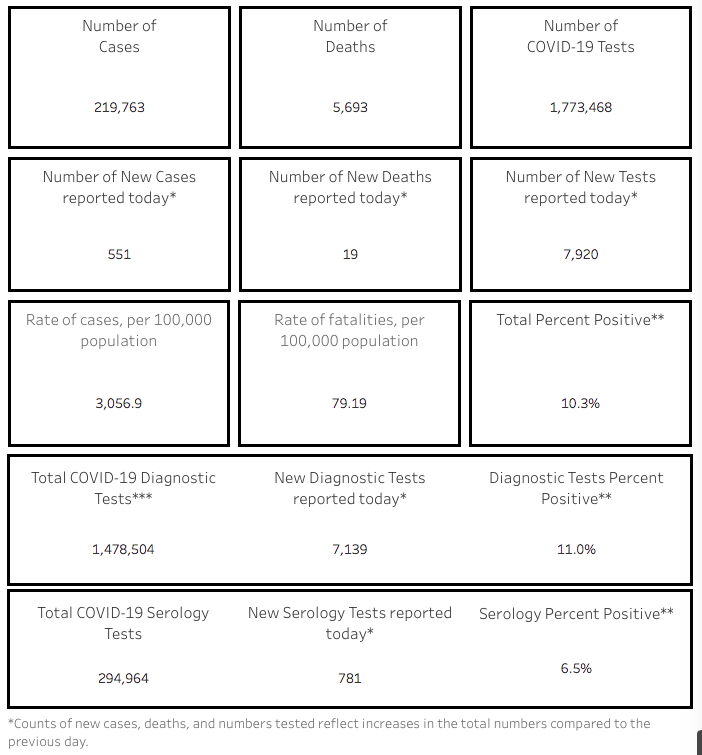
Pima County had seen 25,784 of the state’s 219,793 confirmed cases.

With 19 new deaths today, a total of 5,693 Arizonans had died after contracting COVID-19, including 627 deaths in Pima County, according to the Oct. 2 report.
The number of hospitalized COVID cases continues to decline from July peaks. ADHS reported that as of Oct. 1, 586 COVID patients were hospitalized in the state. The number of hospitalized COVID patients peaked at 3,517 on July 13.
A total of 760 people visited emergency rooms on Oct. 1 with COVID symptoms. That number peaked at 2,008 on July 7.
A total of 125 COVID-19 patients were in intensive care unit beds on Oct. 1. The number of COVID patients in ICUs peaked at 970 on July 13.
On a week-by-week basis in Pima County, the number of positive COVID tests peaked the week ending July 4 with 2,453 cases, according to a Sept. 29 report from the Pima County Health Department. While a vocal minority continues to insist that masks do no good, the spread of the virus began to decline within weeks of Pima County’s mask mandate, as more people began wearing them in public, although the level of new cases has creeped back up in recent weeks with the return of UA students. For the week ending Aug. 29, 569 new cases were reported; for the week ending Sept. 5, a total of 859 cases were reported; for the week ending Sept. 12, 1,102 cases were reported; for the week ending Sept. 19, 1,203 cases were reported; and for the week ending Sept. 26, 470 cases were reported. (Recent weeks are subject to revision.)
Deaths in Pima County are down from a peak of 55 in the week ending July 4 to 19 for the week ending Aug. 15, 13 in the week ending Aug. 22, 10 in the week ending Aug. 29, zero in the week ending Sept. 5, two in the week ending Sept. 12 and two in the week ending Sept. 19. (Recent weeks are subject to revision.)
Hospitalization peaked the week ending July 18 with 234 COVID patients admitted to Pima County hospitals. In the week ending Aug. 29, 37 COVID patients were admitted to Pima County hospitals; in the week ending Sept. 5, 25 patients were admitted to Pima County hospitals; in the week ending Sept. 12, 19 patients were admitted; in the week ending Sept. 19, 14 patients were admitted; and in the week ending Sept. 26, five people were admitted. (Numbers are subject to revision.)
Trump tests positive for coronavirus
President Donald Trump announced via Twitter last night that he and First Lady Melania Trump had both tested positive for COVID-19.
“Tonight, @FLOTUS and I tested positive for COVID-19,” Trump said. “We will begin our quarantine and recovery process immediately. We will get through this TOGETHER!”
White House officials said the President and First Lady were suffering mild symptoms.
The diagnosis may require Trump, who has frequently downplayed the risk of catching the virus and who has dismissed the idea of wearing masks to limit COVID’s spread, to self-quarantine with less than five weeks left in the presidential campaign. A planned visit to Tucson and Flagstaff next week is expected to be canceled as a result.
Democratic presidential nominee Joe Biden said he and his wife Jill Biden wished the president a “swift recovery” via Twitter.
“Jill and I send our thoughts to President Trump and First Lady Melania Trump for a swift recovery,” Biden tweeted. “We will continue to pray for the health and safety of the president and his family.”
Final Arizona counties hit benchmarks indicated moderate spread of the virus
As of yesterday, all Arizona counties have reached the status of “moderate spread” of the coronavirus, meaning most businesses can reopen with restrictions.
Wednesday, September 30, 2020
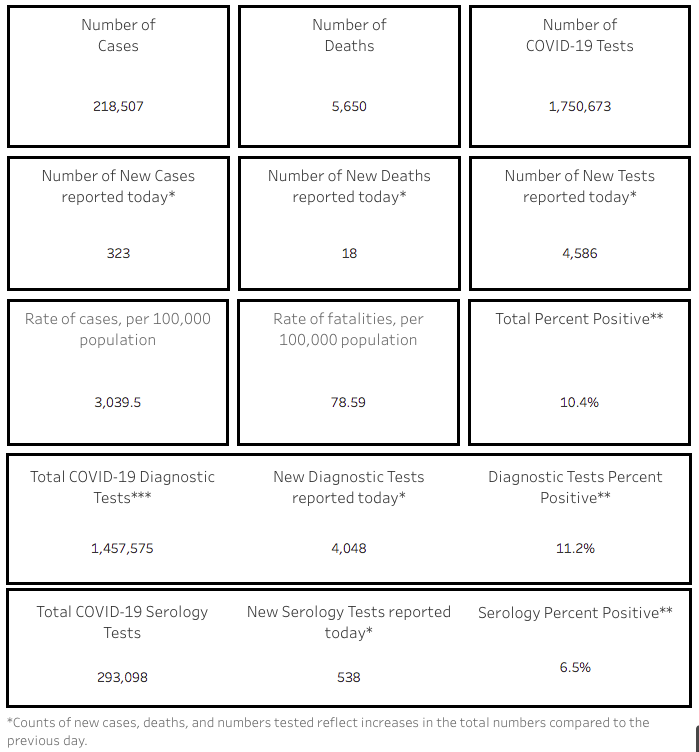
With 323 new cases reported today, the number of Arizona’s confirmed novel coronaviru s cases reached 218,507 as of Wednesday, Sept. 30, according to the Arizona Department of Health Services.

Pima County had seen 25,628 confirmed cases.
With 18 new deaths today, a total of 5,650 Arizonans had died after contracting COVID-19, including 620 deaths in Pima County, according to the Sept. 29 report.
The number of hospitalized COVID cases continues to decline from July peaks. ADHS reported that as of Sept. 29, 560 COVID patients were hospitalized in the state. The number of hospitalized COVID patients peaked at 3,517 on July 13.
A total of 725 people visited emergency rooms on Sept. 29 with COVID symptoms. That number peaked at 2,008 on July 7.
A total of 115 COVID-19 patients were in intensive care unit beds on Sept. 28. The number of COVID patients in ICUs peaked at 970 on July 13.
On a week-by-week basis in Pima County, the number of positive COVID tests peaked the week ending July 4 with 2,453 cases, according to a Sept. 25 report from the Pima County Health Department. While a vocal minority continues to insist that masks do no good, the spread of the virus began to decline within weeks of Pima County’s mask mandate, as more people began wearing them in public, although the level of new cases has creeped back up in recent weeks with the return of UA students. For the week ending Aug. 29, 569 new cases were reported; for the week ending Sept. 5, a total of 861 cases were reported; for the week ending Sept. 12, 1,103 cases were reported; for the week ending Sept. 19, 1,203 cases were reported. (Recent weeks are subject to revision.)
Deaths in Pima County are down from a peak of 55 in the week ending July 4 to 19 for the week ending Aug. 15, 13 in the week ending Aug. 22, 10 in the week ending Aug. 29, zero in the week ending Sept. 5, and two in the week ending Sept. 12. (Recent weeks are subject to revision.)
Hospitalization peaked the week ending July 18 with 234 COVID patients admitted to Pima County hospitals. In the week ending Aug. 29, 37 COVID patients were admitted to Pima County hospitals; in the week ending Sept. 5, 25 patients were admitted to Pima County hospitals; in the week ending Sept. 12, 19 patients were admitted; and in the week ending Sept. 19, 14 patients were admitted. (Numbers are subject to revision.)
Get a Flu Shot
Monday, September 28, 2020

Although the number of positive coronavirus cases on campus is trending downward, the University of Arizona will again delay phase 2 of its reentry plan and remain open only for in-person instruction of essential courses through the week of Oct. 5, UA President Dr. Robert C. Robbins said in a news conference this morning.
According to the university’s data, on Friday, Sept. 25, UA had a COVID-19 positivity rate of 3.4 percent, with 36 new positive cases out of 1,051 new tests.
This is a significant improvement from a week prior, on Friday, Sept. 18, which saw a 6.4 percent positivity rate and evidence of off-campus gatherings lacking safety precautions against COVID-19.
“We certainly like to see it down under 5 percent, so well done everyone,” Robbins said. “I’m pleased to report that our outreach and enforcement initiatives are having a very positive effect on compliance with public health guidelines.”
The university had 252 students in isolation housing as of Friday evening, with 348 isolation beds available and 43 dorm students isolating off-campus.
According to Robbins, around 5,200 students are attending in-person classes with strict guidelines in place for social distancing, use of protective gear and frequent sanitation. He says cases are not being transmitted in the classroom, but rather, “in off-campus large gatherings.”
The university has a staged plan for reopening but still remains in phase one of the plan, which allows students to attend essential in-person classes only.
Robbins recognized some students’ and faculty’s desire to slowly integrate to more in-person learning, noting it may help improve mental health amid isolating conditions. However, he said the university is not yet ready to move into the next stage of reopening the university.
Robbins says the university is seeing fewer off-campus gatherings and calls regarding public health violations—an important step in quelling the transmission of the virus.
The university responded to 13 properties for violations throughout Thursday, Friday and Saturday nights, which Robbins said is four fewer than the week prior.
The previous week, the university issued three university-related red tags, 10 citations and 13 code of conduct referrals to the dean of students. Last weekend, 10 red tags, 19 citations and 25 code of conduct violations were issued.
“This is not a time to become complacent, however,” Robbins warned. “I continue to see groups of students around University Boulevard and elsewhere without face coverings. I beg you, please listen and follow the guidelines.”
Robbins also announced the university’s voluntary 14-day self-quarantine program, in which students were asked to stay home and avoid unnecessary trips, will end tomorrow, Sept. 29.
“We believe there has been a significant positive impact. If case numbers begin to rise again, there may be a need to reinstate this self-imposed quarantine, but if the cases skyrocket again, then working with the county health department, more legal quarantine issues may need to be enacted,” Robbins said.
All asymptomatic students, faculty and staff have access to COVID-19 testing through the university’s “test all test smart” program, while symptomatic individuals can be tested at a campus health center.
According to the university’s Reentry Task Force Director, Dr. Richard Carmona, the number of tests administered by day has decreased toward the end of September. In the future, this could lead to calls for mandatory coronavirus testing on campus.
“As students start to see that as they test positive, they may be quarantined, they’re less likely to want to be tested. So it maybe we have to consider mandatory testing for students who come on campus,” Carmona said.
According to Robbins, the university has the capacity to administer nearly 10,000 tests a week.
“My hope would be that the technology evolves quickly and by the coming months, by January when we all come, that we have the capability of testing at least all the students who come to classes in person,” Robbins said.
While satisfied with a seemingly increased compliance to public health guidelines throughout the university, Robbins still stresses the importance of maintaining public health safety protocols even as the campus’s COVID-19 positivity rate slows.
“I encourage all of you, students, faculty, staff and other members of our southern Arizona community, to continue to follow to rules so we can protect one and another and move forward,” Robbins said. “We cannot control the virus on our own.”
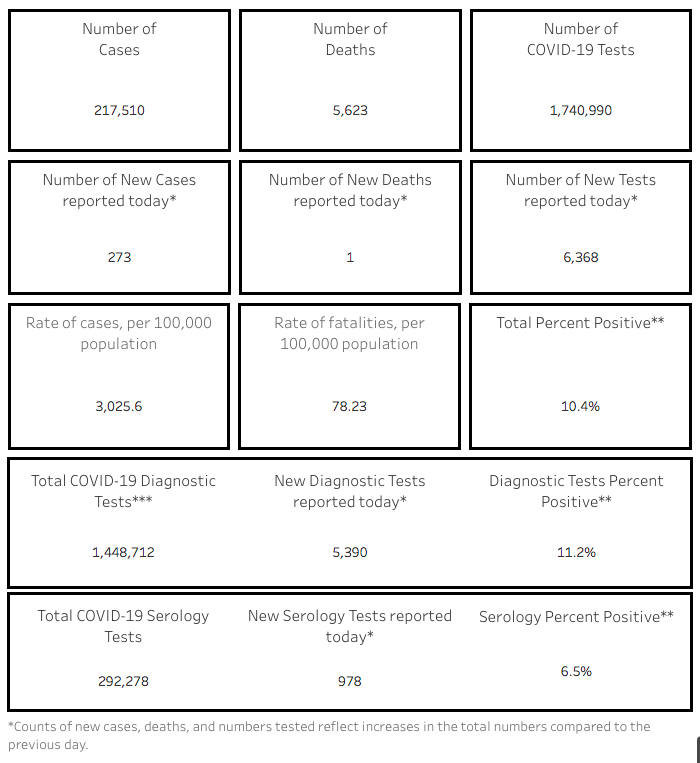
With 273 new cases reported today, the number of Arizona’s confirmed novel coronavirus cases topped 217,000 as of Monday, Sept. 28, according to the Arizona Department of Health Services.
Pima County had seen 25,445 of the state’s 217,510 confirmed cases.
With one new deaths today, a total of 5,623 Arizonans had died after contracting COVID-19, including 622 deaths in Pima County, according to the Sept. 28 report.
The number of hospitalized COVID cases continues to decline from July peaks, ADHS reported that as of Sept. 27, 468 COVID patients were hospitalized in the state, the lowest that number has been since April 8, when 338 people were hospitalized with COVID symptoms. The number of hospitalized COVID patients peaked at 3,517 on July 13.
A total of 684 people visited emergency rooms on Sept. 27 with COVID symptoms. That number peaked at 2,008 on July 7.
A total of 115 COVID-19 patients were in intensive care unit beds on Sept. 27. The number of COVID patients in ICUs peaked at 970 on July 13.
On a week-by-week basis in Pima County, the number of positive COVID tests peaked the week ending July 4 with 2,453 cases, according to a Sept. 25 report from the Pima County Health Department. While a vocal minority continues to insist that masks do no good, the spread of the virus began to decline within weeks of Pima County’s mask mandate, as more people began wearing them in public, although the level of new cases has more than doubled in recent weeks with the return of UA students. For the week ending Aug. 29, 569 new cases were reported; for the week ending Sept. 5, a total of 861 cases were reported; for the week ending Sept. 12, 1,103 cases were reported; for the week ending Sept. 19, 1,203 cases were reported. (Recent weeks are subject to revision.)
Deaths in Pima County are down from a peak of 55 in the week ending July 4 to 19 for the week ending Aug. 15, 13 in the week ending Aug. 22, 10 in the week ending Aug. 29, zero in the week ending Sept. 5, and two in the week ending Sept. 12. (Recent weeks are subject to revision.)
Friday, September 25, 2020

Thousands of students across Pima County will soon return to their classrooms as local public school districts solidify their plans for new hybrid models of instruction.
According to the county health department’s COVID-19 Progress Report, five of the nine health criteria are making “progress” and three have been officially “met.” The progress report tracks local disease data, healthcare capacity and public health capacity.
As COVID-19 data trends downward from its spike in June and July, many families have expressed interest in sending their children back to school. As a precaution, most districts are preparing to offer a hybrid model of in-person and remote instruction.
However, the Marana Unified School District is planning to offer families a fully in-person traditional learning option beginning Monday, Oct. 19.
“This is a critical topic, it’s a challenging topic, it’s a topic that’s proven to be emotional and divisive at times, but I think this community has an opportunity to come out the other end together and stronger together as we work through this process,” said Superintendent Dan Streeter during the Sept. 17 special board meeting.
MUSD received about 12,000 responses to a parent survey about learning model preferences. Streeter reported about 70 percent of families want to return to in-person classroom instruction and 30 percent want to remain in remote learning.
These numbers allow the district to begin planning logistically about class sizes, physical distancing in schools and other mitigation strategies.
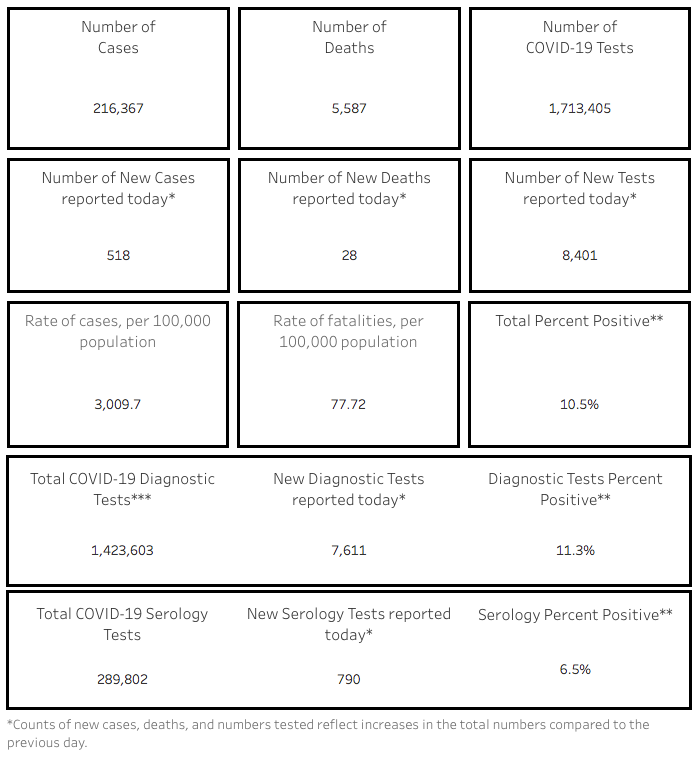
With 518 new cases reported today, the number of Arizona’s confirmed novel coronavirus cases topped 216,000 as of Friday, Sept. 25, according to the Arizona Department of Health Services.

Pima County had seen 25,265 of the state’s 216,367 confirmed cases.
With 28 new deaths today, a total of 5,587 Arizonans had died after contracting COVID-19, including 622 deaths in Pima County, according to the Sept. 24 report.
The number of hospitalized COVID cases continues to decline from July peaks, although it has ticked upward over the last week. ADHS reported that as of Sept. 24, 521 COVID patients were hospitalized in the state. The number of hospitalized COVID patients peaked at 3,517 on July 13.
A total of 721 people visited emergency rooms on Sept. 24 with COVID symptoms. That number peaked at 2,008 on July 7.
A total of 119 COVID-19 patients were in intensive care unit beds on Sept. 23. The number of COVID patients in ICUs peaked at 970 on July 13.
On a week-by-week basis in Pima County, the number of positive COVID tests peaked the week ending July 4 with 2,396 cases, according to a Sept. 17 report from the Pima County Health Department. While a vocal minority continues to insist that masks do no good, the spread of the virus began to decline within weeks of Pima County’s mask mandate, as more people began wearing them in public, although the level of new cases has creeped back up in recent weeks with the return of UA students. For the week ending Aug. 29, 507 new cases were reported; for the week ending Sept. 5, a total of 667 cases were reported; for the week ending Sept. 12, 584 cases were reported. (Recent weeks are subject to revision.)
Deaths in Pima County are down from a peak of 55 in the week ending July 4 to 19 for the week ending Aug. 15, 13 in the week ending Aug. 22, 10 in the week ending Aug. 29 and three in the week ending Sept. 5. (As above, these numbers are subject to revision as recent deaths may not have been reported.)
Thursday, September 24, 2020
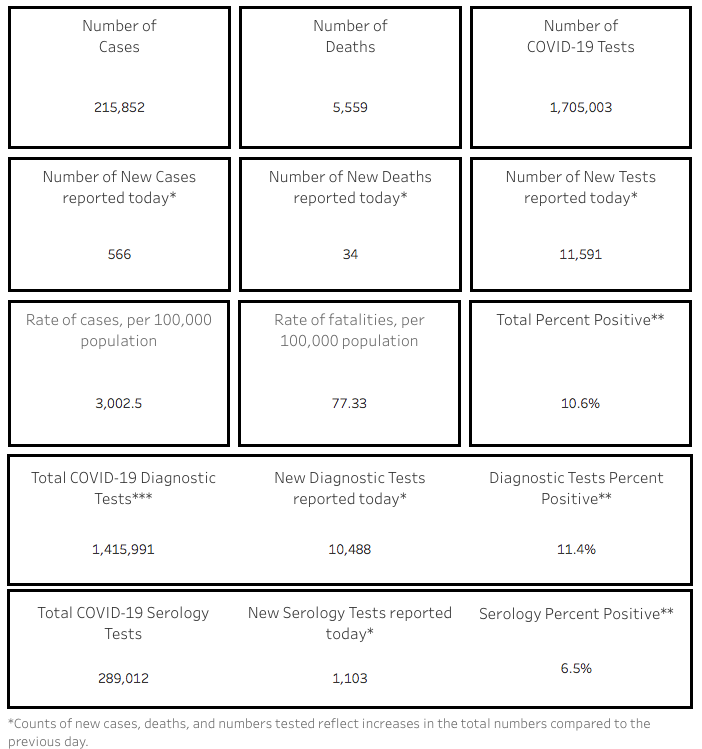
With 566 new cases reported today, the number of Arizona’s confirmed novel coronavirus cases closed in on 216,000 as of Thursday, Sept. 24, according to the Arizona Department of Health Services.

Pima County had seen 25,140 of the state’s 215,852 confirmed cases.
With 34 new deaths today, a total of 5,559 Arizonans had died after contracting COVID-19, including 617 deaths in Pima County, according to the Sept. 24 report.
The number of hospitalized COVID cases continues to decline from July peaks, although it has ticked upward over the last week. ADHS reported that as of Sept. 23, 565 COVID patients were hospitalized in the state. The number of hospitalized COVID patients peaked at 3,517 on July 13.
A total of 680 people visited emergency rooms on Sept. 23 with COVID symptoms, the lowest that number has been since June 3, when 638 people visited ERs. That number peaked at 2,008 on July 7.
A total of 122 COVID-19 patients were in intensive care unit beds on Sept. 23. The number of COVID patients in ICUs peaked at 970 on July 13.
On a week-by-week basis in Pima County, the number of positive COVID tests peaked the week ending July 4 with 2,396 cases, according to a Sept. 17 report from the Pima County Health Department. While a vocal minority continues to insist that masks do no good, the spread of the virus began to decline within weeks of Pima County’s mask mandate, as more people began wearing them in public, although the level of new cases has creeped back up in recent weeks with the return of UA students. For the week ending Aug. 29, 507 new cases were reported; for the week ending Sept. 5, a total of 667 cases were reported; for the week ending Sept. 12, 584 cases were reported. (Recent weeks are subject to revision.)
Deaths in Pima County are down from a peak of 55 in the week ending July 4 to 19 for the week ending Aug. 15, 13 in the week ending Aug. 22, 10 in the week ending Aug. 29 and three in the week ending Sept. 5. (As above, these numbers are subject to revision as recent deaths may not have been reported.)
Hospitalization peaked the week ending July 18 with 237 COVID patients admitted to Pima County hospitals. For the week ending Aug. 29, 38 COVID patients were admitted to Pima County hospitals; in the week ending Sept. 5, 24 patients were admitted to Pima County hospitals; and in the week ending Sept. 12, 16 patients were admitted. (Numbers are subject to revision.)
Campus cases push Pima County school benchmarks over the line
The increase in cases around the University of Arizona has pushed one of Pima County’s benchmarks for school reopening back into the red zone.
As of the week ending Sept. 6, Pima County no longer had fewer than 100 cases per 100,000 individuals or a decline in cases for two consecutive weeks.
Wednesday, September 23, 2020
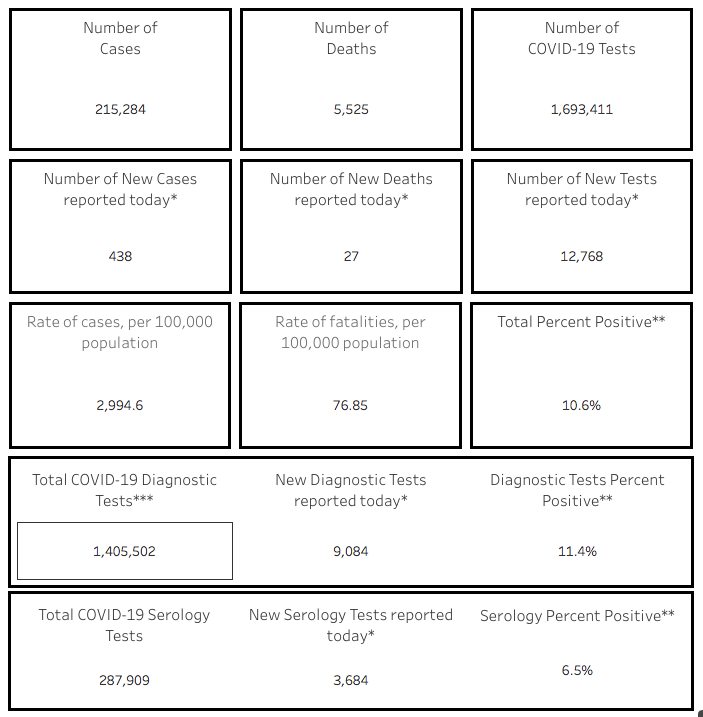
With 438 new cases reported today, the number of Arizona’s confirmed novel coronavirus cases topped 215,000 as of Wednesday, Sept. 23, according to the Arizona Department of Health Services.

Pima County had seen 25,004 of the state’s 215,284 confirmed cases.
With 27 new deaths today, a total of 5,525 Arizonans had died after contracting COVID-19, including 613 deaths in Pima County, according to the Sept. 23 report.
The number of hospitalized COVID cases continues to decline from July peaks, although the total has jumped by more than 100 people since Sunday. ADHS reported that as of Sept. 22, 583 COVID patients were hospitalized in the state. The number of hospitalized COVID patients peaked at 3,517 on July 13.
A total of 701 people visited emergency rooms on Sept. 22 with COVID symptoms, the lowest that number has been since June 2, when 587 people visited ERs. That number peaked at 2,008 on July 7.
A total of 114 COVID-19 patients were in intensive care unit beds on Sept. 22. The number of COVID patients in ICUs peaked at 970 on July 13.
On a week-by-week basis in Pima County, the number of positive COVID tests peaked the week ending July 4 with 2,396 cases, according to a Sept. 17 report from the Pima County Health Department. While a vocal minority continues to insist that masks do no good, the spread of the virus began to decline within weeks of Pima County’s mask mandate, as more people began wearing them in public, although the level of new cases has creeped back up in recent weeks with the return of UA students. For the week ending Aug. 29, 507 new cases were reported; for the week ending Sept. 5, a total of 667 cases were reported; for the week ending Sept. 12, 584 cases were reported. (Recent weeks are subject to revision.)
Deaths in Pima County are down from a peak of 55 in the week ending July 4 to 19 for the week ending Aug. 15, 13 in the week ending Aug. 22, 10 in the week ending Aug. 29 and three in the week ending Sept. 5. (As above, these numbers are subject to revision as recent deaths may not have been reported.)
Hospitalization peaked the week ending July 18 with 237 COVID patients admitted to Pima County hospitals. For the week ending Aug. 29, 38 COVID patients were admitted to Pima County hospitals; in the week ending Sept. 5, 24 patients were admitted to Pima County hospitals; and in the week ending Sept. 12, 16 patients were admitted. (Numbers are subject to revision.)
Get a Flu Shot
The Arizona Department of Health Services is implementing an aggressive plan of action during this flu season by distributing free flu shots vaccination to all Arizonans through doctor’s offices, pharmacies, local health departments and community healthcare centers statewide.
Tuesday, September 22, 2020

PHOENIX – Civil rights marches. Anti-war protests. Rallies against gun violence.
Public demonstrations historically have involved the “mass mobilization of bodies,” according to Tiera Rainey, program director for the Tucson Second Chance Community Bail Fund and an organizer with Black Lives Matter Tucson.
But when the novel coronavirus struck, prompting warnings against crowds and close contact, Arizona’s new reality of social distancing forced organizers to rethink that framework.

