

Tuesday, July 28, 2020
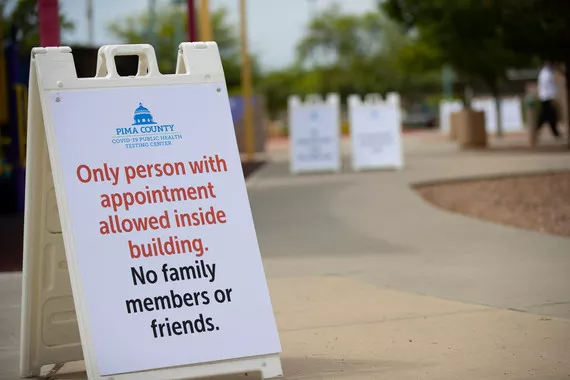
On Wednesday, July 29, the Pima County Health Department will begin offering free saliva testing for COVID-19 at the Ellie Towne Flowing Wells Community Center, 1660 W. Ruthrauff Road. The testing requires pre-registration and is conducted by Arizona State University in partnership with the Arizona Department of Health Services.
PCHD continues to offer free COVID-19 testing via nasal swabs at the Kino Event Center by appointment only.
To register for a test, go to pima.gov/covid19testing, then:
Staff located at the Ellie Towne Center will provide assistance for anyone who has trouble registering ahead of time. Other important reminders:
Pima County also plans to offer a third testing site on eastside at Udall Park and a mobile testing site in the coming weeks. Visit pima.gov/covid19testing for details.
Meanwhile, Pima County is one of several regions in the country where a new COVID-19 vaccine is being tested. The National Institutes of Health is conducting phase 3 trials on a vaccine co-developed by Moderna, Inc. and the National Insitute of Allergy and Infectious Diseases.
“I am hopeful that the phase 3 clinical announced will be an effective way to protect Americans from the wrath of COVID-19, and I am pleased that the National Institutes for Health has selected a diverse location like Pima County as one of the sites for this vaccine trial,” said U.S. Rep. Raúl M. Grijalva in a prepared statement. “Latinos are being hospitalized at four times the rate of white people, and we’ve seen in communities across the country that Black, Latino, and Native individuals are more likely to contract severe cases of COVID-19 and ultimately succumb to it. These vaccine trials are an important step toward ensuring that we can quickly develop a safe, effective vaccine to stop the spread of COVID-19, keep our communities safe, and get back to some semblance of normalcy. It’s essential that diverse individuals are included in the trial so that we can ensure an appropriate response across the board.”
If you’re interested in volunteering, visit www.coronaviruspreventionnetwork.org or ClinicalTrials.gov and search identifier NCT04470427 to find a study center.
- Click the link Schedule my test.
- Click the “Pre-register” button for the Ellie Towne Community Center
- Use Agency code: FvCmy1fGe
- Create a username (email address) and password.
Staff located at the Ellie Towne Center will provide assistance for anyone who has trouble registering ahead of time. Other important reminders:
- You must bring a photo ID and the QR code shown in your confirmation email.
- Make sure you are well hydrated at least 30 minutes ahead of your appointment time.
- At 30 minutes prior to your appointment, rinse your mouth with plain water for 20-30 seconds and then spit out the water.
- Please do not eat, drink (even water), smoke, vape, or chew gum for at least 30 minutes prior to your appointment.
- When you arrive at the site, wear a protective face covering - either cloth or surgical mask.
- To cancel or reschedule your appointment, log in to your account at asubioempportal.pointnclick.com
Pima County also plans to offer a third testing site on eastside at Udall Park and a mobile testing site in the coming weeks. Visit pima.gov/covid19testing for details.
Meanwhile, Pima County is one of several regions in the country where a new COVID-19 vaccine is being tested. The National Institutes of Health is conducting phase 3 trials on a vaccine co-developed by Moderna, Inc. and the National Insitute of Allergy and Infectious Diseases.
“I am hopeful that the phase 3 clinical announced will be an effective way to protect Americans from the wrath of COVID-19, and I am pleased that the National Institutes for Health has selected a diverse location like Pima County as one of the sites for this vaccine trial,” said U.S. Rep. Raúl M. Grijalva in a prepared statement. “Latinos are being hospitalized at four times the rate of white people, and we’ve seen in communities across the country that Black, Latino, and Native individuals are more likely to contract severe cases of COVID-19 and ultimately succumb to it. These vaccine trials are an important step toward ensuring that we can quickly develop a safe, effective vaccine to stop the spread of COVID-19, keep our communities safe, and get back to some semblance of normalcy. It’s essential that diverse individuals are included in the trial so that we can ensure an appropriate response across the board.”
If you’re interested in volunteering, visit www.coronaviruspreventionnetwork.org or ClinicalTrials.gov and search identifier NCT04470427 to find a study center.
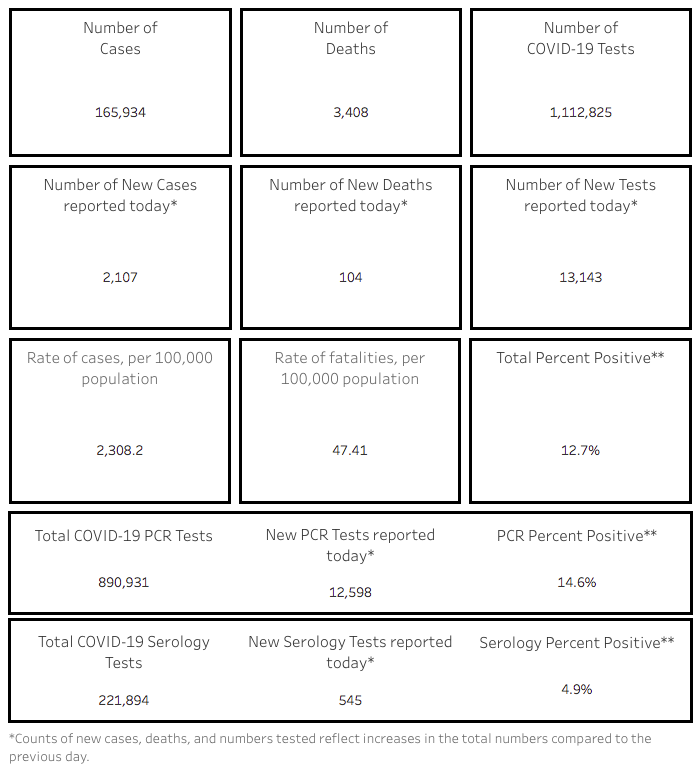
The total number of confirmed coronavirus cases in Arizona climbed past 165,000 as of Tuesday, July 28, after the state reported 2,107 new cases this morning, according to the Arizona Department of Health Services.
Pima County had seen 15,292 of the state's 165,934 confirmed cases.

A total of 3,408 people have died after contracting the virus, including 431 in Pima County.
Maricopa County had 111,446 of the state's cases.
Hospitals remain under pressure, although they report a slight decrease in the number of Arizonans hospitalized with COVID-19-related symptoms. The report shows that 2,564 COVID patients were hospitalized yesterday in the state, down from a peak of 3,517 on July 13. That’s the lowest number of hospitalized COViD patients since June 24, when 2,453 people were in hospital beds.
A total of 1,158 people visited ERs yesterday with COVID symptoms, the lowest that number has dipped since June 29, when 1,077 people sought help in ERs for COVID symptoms. That number peaked at 2,008 on July 7.
A total of 814 COVID-19 patients were in ICU beds yesterday, the lowest number since July 3, when 796 COVID patients were in ICU. The number of COVID patients in ICUs peaked at 970 on July 13.
COVID’S AZ SPREAD MAY BE ON DECLINE
With a drop in the total number of cases on a week-to-week basis along with declining hospitalizations, it appears Arizona’s COVID spread may have reached a peak. But with flu season around the corner, there remains the possibility that the current trend could easily reverse.
Gov. Doug Ducey last week credited mask-wearing and steps to reduce the interaction of people in large groups had resulted in some positive signs regarding the spread of the virus. While he once again sidestepped an opportunity to pass a statewide mask mandate, he did roll out TV commercials featuring a boxer who wears a mask.
Monday, July 27, 2020
ICYMI, here are the stories we covered today.
Don't forget to vote for the winners of Best of Tucson® 2020!

Don't forget to vote for the winners of Best of Tucson® 2020!
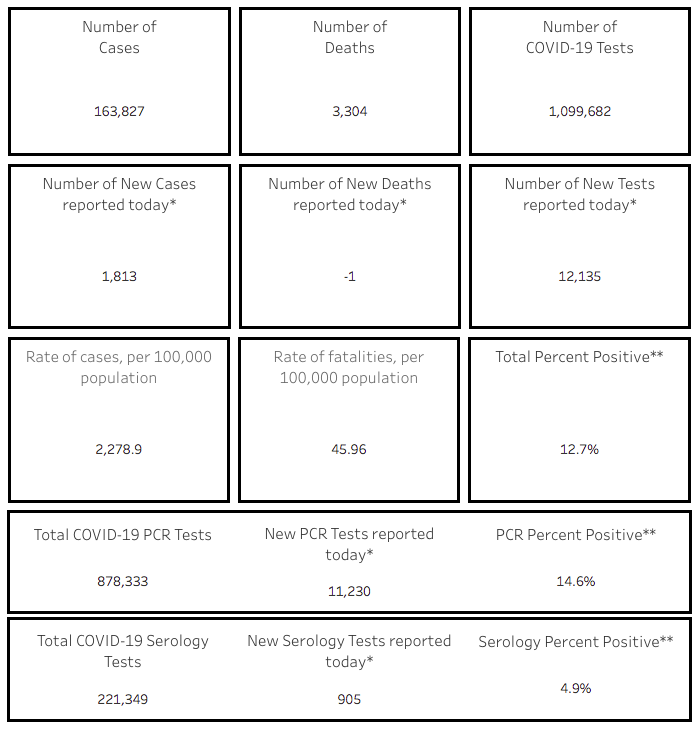
- The total number of confirmed coronavirus cases in Arizona climbed past 163K as of Monday, July 27, after the state reported 1,813 new cases this morning, according to the Arizona Department of Health Services.
- When he announced an extension Thursday of his order closing bars, gyms, movie theaters and more, Gov. Doug Ducey acknowledged that “businesses and employees have sacrificed” as the state fights the spread of COVID-19.
- An accidental shooting at Canyon Del Oro High School has left one man dead and placed the school on lockdown while Oro Valley Police conduct an investigation into how the shooting occurred on Monday, July 27.
- As COVID-19 cases continue to rise in the state, testing sites have experienced inconsistencies in the number of Arizonans seeking tests and in the time it takes to get results.
PHOENIX – As COVID-19 cases continue to rise in the state, testing sites have experienced inconsistencies in the number of Arizonans seeking tests and in the time it takes to get results.
Some testing sites, such as one in west Phoenix and another in south Phoenix, have appointments available and wait times as short as 30 minutes, KJZZ reported. These testing “blitz” sites can process more than 1,000 tests per day and return results from a California lab in 24 to 48 hours. They’ll operate from 6 a.m. to 2 p.m. daily through Tuesday at Maryvale High School and South Mountain Park.
In a news conference Thursday, Gov. Doug Ducey mentioned the Maryvale High site as an example of inconsistent testing demand, noting that turnout was 28% of capacity.
But as opportunities to get tested grow in Arizona, some test results are taking more than a week to be returned, and delays longer than three weeks have been reported.
Sonora Quest Laboratories is experiencing a major backlog in its testing protocols, with some tests taking nearly two weeks to return results, according to ABC15. Sonora Quest said Wednesday that 61,700 tests had not yet been processed. The company said that most results come back in nine to 12 days, though reports have indicated some results taking far longer.

Some testing sites, such as one in west Phoenix and another in south Phoenix, have appointments available and wait times as short as 30 minutes, KJZZ reported. These testing “blitz” sites can process more than 1,000 tests per day and return results from a California lab in 24 to 48 hours. They’ll operate from 6 a.m. to 2 p.m. daily through Tuesday at Maryvale High School and South Mountain Park.
In a news conference Thursday, Gov. Doug Ducey mentioned the Maryvale High site as an example of inconsistent testing demand, noting that turnout was 28% of capacity.
But as opportunities to get tested grow in Arizona, some test results are taking more than a week to be returned, and delays longer than three weeks have been reported.
Sonora Quest Laboratories is experiencing a major backlog in its testing protocols, with some tests taking nearly two weeks to return results, according to ABC15. Sonora Quest said Wednesday that 61,700 tests had not yet been processed. The company said that most results come back in nine to 12 days, though reports have indicated some results taking far longer.
When he announced an extension Thursday of his order closing bars, gyms, movie theaters and more, Gov. Doug Ducey acknowledged that “businesses and employees have sacrificed” as the state fights the spread of COVID-19.
But some of those businesses are tired of sacrificing.
A lawsuit filed with the Arizona Supreme Court by 50 owners of 44 bars claims Ducey’s order, first filed June 29, is unconstitutional. The bars in the suit come from cities around the state, including Chandler, Mesa, Phoenix, Prescott, Sedona and Tucson, among others.
“They’re all complying with the order,” said Ilan Wurman, the attorney representing the bar owners. “But the reality is that if this goes on for much longer, some of them will just have to open up and risk the enforcement authorities.”
Wurman, an associate professor at Arizona State University’s Sandra Day O’Connor College of Law, claims in his filing that the closure order is unconstitutional because it is unevenly applied and it denies bar owners their due process. He also claims that only the Legislature has the power to issue the order and that laws cannot be subject to “the whims of one man.”

But some of those businesses are tired of sacrificing.
A lawsuit filed with the Arizona Supreme Court by 50 owners of 44 bars claims Ducey’s order, first filed June 29, is unconstitutional. The bars in the suit come from cities around the state, including Chandler, Mesa, Phoenix, Prescott, Sedona and Tucson, among others.
“They’re all complying with the order,” said Ilan Wurman, the attorney representing the bar owners. “But the reality is that if this goes on for much longer, some of them will just have to open up and risk the enforcement authorities.”
Wurman, an associate professor at Arizona State University’s Sandra Day O’Connor College of Law, claims in his filing that the closure order is unconstitutional because it is unevenly applied and it denies bar owners their due process. He also claims that only the Legislature has the power to issue the order and that laws cannot be subject to “the whims of one man.”
The total number of confirmed coronavirus cases in Arizona climbed past 163K as of Monday, July 27, after the state reported 1,813 new cases this morning, according to the Arizona Department of Health Services.
Pima County had seen 15,109 of the state's 163,827 confirmed cases.
A total of 3,304 people have died after contracting the virus, including 418 in Pima County.
Maricopa County had 109,988 of the state's cases.
Hospitals remain under pressure, although they report a slight decrease in the number of Arizonans hospitalized with COVID-19-related symptoms. The report shows that 2,626 COVID patients were hospitalized yesterday in the state, down from a peak of 3,517 on July 13. It's the lowest number of hospitalized COVID-19 patients since June 26, when 2,577 people were hospitalized.
A total of 1,189 people visited ERs yesterday with COVID symptoms, the lowest number since June 29, when 1,077 people visited emergency rooms. That number peaked at 2,008 on July 7.
A total of 820 COVID-19 patients were in ICU beds yesterday, the lowest number since July 3, when 796 people were in ICU beds. The number of COVID patients in ICUs peaked at 970 on July 13.
NEW SCHOOL RULES
Gov. Doug Ducey and State Superintendent of Public Instruction Kathy Hoffman announced last week that while school districts have to open up “learning centers” in schools by Aug. 17, they do not have to provide in-class instruction. Instead, the schools can open up for students who need a place to go during the day but offer all-online courses, as Tucson Unified School District announced it would do earlier this month.
Ducey said he agreed with Hoffman’s plan to use metrics regarding the spread of the virus to determine whether schools are safe to reopen. The Arizona Department of Health Services is working with education leaders to develop the standards before Aug. 7.
Hoffman had proposed using metrics rather than a calendar date to determine whether schools could reopen safely. Her suggested metrics included a downward trajectory of confirmed new cases, a decrease in positivity rates in testing, and widespread availability of tests.
Pima County had seen 15,109 of the state's 163,827 confirmed cases.

A total of 3,304 people have died after contracting the virus, including 418 in Pima County.
Maricopa County had 109,988 of the state's cases.
Hospitals remain under pressure, although they report a slight decrease in the number of Arizonans hospitalized with COVID-19-related symptoms. The report shows that 2,626 COVID patients were hospitalized yesterday in the state, down from a peak of 3,517 on July 13. It's the lowest number of hospitalized COVID-19 patients since June 26, when 2,577 people were hospitalized.
A total of 1,189 people visited ERs yesterday with COVID symptoms, the lowest number since June 29, when 1,077 people visited emergency rooms. That number peaked at 2,008 on July 7.
A total of 820 COVID-19 patients were in ICU beds yesterday, the lowest number since July 3, when 796 people were in ICU beds. The number of COVID patients in ICUs peaked at 970 on July 13.
NEW SCHOOL RULES
Gov. Doug Ducey and State Superintendent of Public Instruction Kathy Hoffman announced last week that while school districts have to open up “learning centers” in schools by Aug. 17, they do not have to provide in-class instruction. Instead, the schools can open up for students who need a place to go during the day but offer all-online courses, as Tucson Unified School District announced it would do earlier this month.
Ducey said he agreed with Hoffman’s plan to use metrics regarding the spread of the virus to determine whether schools are safe to reopen. The Arizona Department of Health Services is working with education leaders to develop the standards before Aug. 7.
Hoffman had proposed using metrics rather than a calendar date to determine whether schools could reopen safely. Her suggested metrics included a downward trajectory of confirmed new cases, a decrease in positivity rates in testing, and widespread availability of tests.
Friday, July 24, 2020
ICYMI, here are the stories we covered today.

- The total number of confirmed coronavirus cases in Arizona climbed past 156K as of Friday, July 24, after the state reported 3,349 new cases this morning, according to the Arizona Department of Health Services.
- The Sundance Film Festival Shorts Tour “Virtual Edition” is coming to you via The Loft’s streaming series, and this collection is a winner. The Festival has helped launch the likes of Paul Thomas Anderson, Wes Anderson (Both Andersons!), Lynn Ramsay, and Taika Waititi, and this year’s selection has some new candidates for greatness.
- As activists nationwide vandalize, topple and demand the removal of Confederate statues and memorials, the United Daughters of the Confederacy on Wednesday removed two monuments from the Capitol complex and along U.S. 60 near Gold Canyon.
- Arizona skywatchers have been over the moon about a comet that has graced the night sky since July 11.
- Arizona schools must open their doors to at least some of their students on Aug. 17, state officials said Thursday, but districts will have the flexibility to offer alternative schooling to students who want to stay home.
- Professional spring sports are back after COVID-19 delayed or canceled numerous leagues' seasons.
- Gyms, bars, nightclubs and more will remain closed past next week as the state continues to fight a disease that is “highly contagious and in every part of the state,” Gov. Doug Ducey said Thursday.
- Downtown Tucson will be getting another fantastic taproom, by a fantastic local brewery in one fantastic location by 2021.
- The WNBA and NBA have allowed players to choose a variety of social justice messages they would like on the back of their jerseys once regular season basketball resumes.
PHOENIX – The WNBA and NBA have allowed players to choose a variety of social justice messages they would like on the back of their jerseys once regular season basketball resumes.
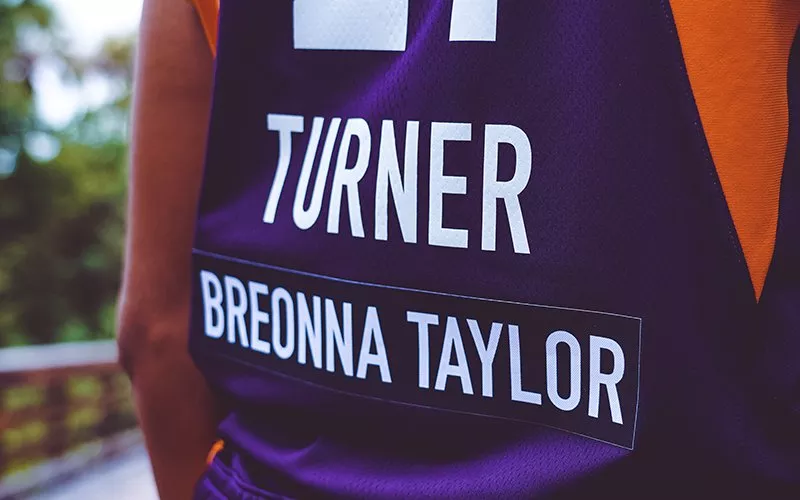
Play Ball! Diamondbacks Start Season Tucson Tonight, FC Tucson Is Back on Soccer Field Sunday The Phoenix Mercury will be honoring the life of Breonna Taylor by showcasing her name on the back of every player’s uniform when their season begins Saturday against the L.A. Sparks in Bradenton, Fla., the team announced.
And the Suns’ Deandre Ayton told the media on a Zoom webinar call on Thursday that he plans to have the messaging “respect us” on the back of his jersey.
Taylor was a 26-year-old Black woman who was fatally shot by police when Louisville officers came into her apartment abruptly on March 13 while using a no-knock warrant to search for drugs during a narcotics investigation. No drugs were found in Taylor’s apartment and the warrant was made in connection with a suspect who did not share the apartment with Taylor in any way.
Play Ball! Diamondbacks Start Season Tucson Tonight, FC Tucson Is Back on Soccer Field Sunday The Phoenix Mercury will be honoring the life of Breonna Taylor by showcasing her name on the back of every player’s uniform when their season begins Saturday against the L.A. Sparks in Bradenton, Fla., the team announced.
And the Suns’ Deandre Ayton told the media on a Zoom webinar call on Thursday that he plans to have the messaging “respect us” on the back of his jersey.
Taylor was a 26-year-old Black woman who was fatally shot by police when Louisville officers came into her apartment abruptly on March 13 while using a no-knock warrant to search for drugs during a narcotics investigation. No drugs were found in Taylor’s apartment and the warrant was made in connection with a suspect who did not share the apartment with Taylor in any way.
PHOENIX – Gyms, bars, nightclubs and more will remain closed past next week as the state continues to fight a disease that is “highly contagious and in every part of the state,” Gov. Doug Ducey said Thursday.
But even as he urged people to stay home and practice safe hygiene, Ducey declined to require the use of masks statewide, instead unveiling an advertising campaign, “Tougher than COVID,” that urges people to wear masks voluntarily.
“I’d ask you to continue to be vigilant,” Ducey said. “Whether you’re in Phoenix or Tucson or a rural area, the virus is still present.”
The comments came in a wide-ranging news conference in which the governor tried to walk a tightrope between touting improvements in the state’s number of COVID-19 cases and warning residents that the virus still presents a threat and people need to brace for what Ducey called a new normal.
They also came the same day that the state crossed the 3,000 threshold for deaths. The Arizona Department of Health Services reported 84 deaths Thursday to bring the total for the state to 3,063.
“There’s no victory lap today, there’s no celebration,” said Ducey, who extended condolences to the thousands of Arizona families who have lost a loved one to the disease.

But even as he urged people to stay home and practice safe hygiene, Ducey declined to require the use of masks statewide, instead unveiling an advertising campaign, “Tougher than COVID,” that urges people to wear masks voluntarily.
“I’d ask you to continue to be vigilant,” Ducey said. “Whether you’re in Phoenix or Tucson or a rural area, the virus is still present.”
The comments came in a wide-ranging news conference in which the governor tried to walk a tightrope between touting improvements in the state’s number of COVID-19 cases and warning residents that the virus still presents a threat and people need to brace for what Ducey called a new normal.
They also came the same day that the state crossed the 3,000 threshold for deaths. The Arizona Department of Health Services reported 84 deaths Thursday to bring the total for the state to 3,063.
“There’s no victory lap today, there’s no celebration,” said Ducey, who extended condolences to the thousands of Arizona families who have lost a loved one to the disease.
PHOENIX – Arizona schools must open their doors to at least some of their students on Aug. 17, state officials said Thursday, but districts will have the flexibility to offer alternative schooling to students who want to stay home.
The announcement by Gov. Doug Ducey and State Schools Superintendent Kathy Hoffman follows weeks of uncertainty for school officials around the state, many of whom called the Aug. 17 reopening – already delayed two weeks – unrealistic and unsafe.
“School leaders and educators are under a tremendous amount of stress as they plan for the upcoming school year,” Hoffman said. “I cannot ask our educators and families to enter this school year without critical assurances, policies and resources to set them up for safety and success.”
The executive order Ducey issued Thursday says public health benchmarks for reopening will be released by Aug. 7 – just 10 days before the scheduled reopening. Ducey also announced an additional $370 million to help high-need schools reopen, including $40 million to expand broadband in rural communities.
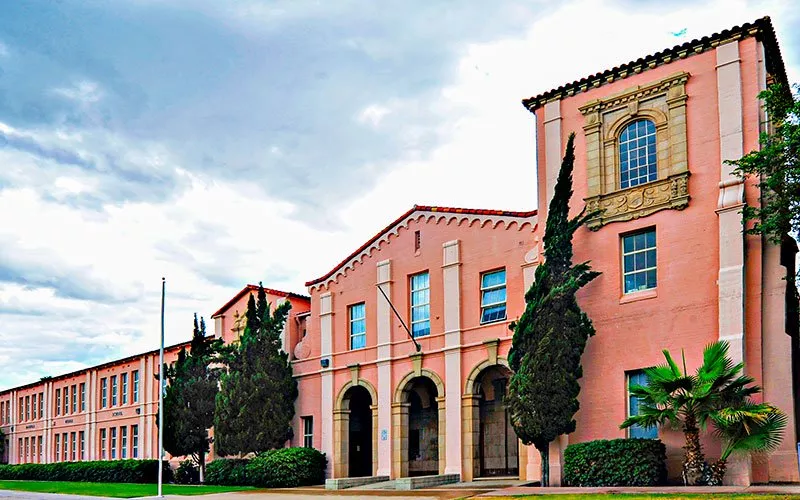
The announcement by Gov. Doug Ducey and State Schools Superintendent Kathy Hoffman follows weeks of uncertainty for school officials around the state, many of whom called the Aug. 17 reopening – already delayed two weeks – unrealistic and unsafe.
“School leaders and educators are under a tremendous amount of stress as they plan for the upcoming school year,” Hoffman said. “I cannot ask our educators and families to enter this school year without critical assurances, policies and resources to set them up for safety and success.”
The executive order Ducey issued Thursday says public health benchmarks for reopening will be released by Aug. 7 – just 10 days before the scheduled reopening. Ducey also announced an additional $370 million to help high-need schools reopen, including $40 million to expand broadband in rural communities.

